Quest 3S (128GB) is usually $300. If you include the bundled content value ($60) with the deal, the effective sale price is $140 ($155 for non-members), which is a 53% discount (48% for non-members).
Best Meta Quest 3S (256GB) Black Friday Sale: Amazon – $330
Quest 3S (256GB) is usually $400. If you include the bundled content value ($74) with the deal, the effective sale price is $256, which is a 36% discount.
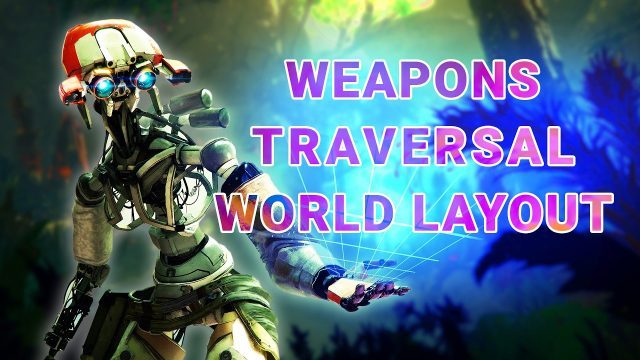
Our series Inside XR Design examines specific examples of great immersive design. Today we’re looking at the clever design of Stormland’s weapons, multi-modal locomotion, and open-world.
Editor’s Note: Stormland was released six years ago today! In celebration of the its release anniversary, we’re bumping this episode of Inside XR Design back up to our front page to highlight the game’s clever approach to weapons, multi-modal locomotion, and its unique open-world architecture. Despite its age, there’s still lots to learn from Stormland’s thoughtful design.
You can find the complete video below, or continue reading for an adapted text version.
By the time the studio began development on Stormland, it had already built three VR games prior. That experience shows through clearly in many of Stormland’s cleverly designed systems and interactions.
In this article we’re going to explore the game’s unique take on weapon reloading and inventory management, its use of multi-modal locomotion, and its novel open-world design. Let’s start with weapons.
Weapons
Like many VR games, one of the primary modes of interaction in Stormland is between the player and their weapons. For the most part, this works like you’d expect: you pull your gun out of a holster, you can hold it with one hand or two, and you pull the trigger to fire. But when your gun runs out of ammo, you do something different than we see in most VR games… you rip them in half.
Ripping guns apart gives you both ammo for that weapon type and crafting materials which are used to upgrade your weapons and abilities in the game. In that sense, this gun-ripping pulls double-duty as a way to replenish ammo and collect useful resources after a battle.
Most gun games in VR use magazines to replenish a weapon’s ammo, and while this can certainly work well and feel realistic, it’s also fairly complex and prone to error, especially when the player is under pressure.
Dropping a magazine to the ground in the middle of a firefight and needing to bend over to pick it up might feel reasonable in a slower-paced simulation game, but Stormland aims for a run-and-gun pace, and therefore opted for a reloading interaction that’s visceral, fun, and easy to perform, no matter which weapon the player is using.
This ‘ripping’ interaction, combined with some great visual and sound effects, is honestly fun no matter how many times you do it.
Interestingly, Stormland’s Lead Designer, Mike Daly, told me he wasn’t convinced when one of the game’s designers first pitched the idea for ripping guns apart. The designer worked with a programmer to prototype the idea and eventually sold Mike and the rest of the team on implementing it into the game. They liked it so much that they even decided to use the same interaction for non-gun items like health and energy canisters.
A streamlined approach to weapon reloading isn’t the only thing that Stormland does to make things easier for the player in order to maintain a run-and-gun pace; there’s also a very deliberate convenience added for weapon handling.
If dropping a magazine in the middle of a fight can hurt the pace of gameplay, dropping the gun itself can stop it outright. In Stormland, the designers chose not to punish players for accidentally dropping their gun, by instead having the weapon simply float in place for a few seconds to give the player a chance to grab it again without bending down to pick it up from the floor.
And if they simply leave it there the gun will kindly return to its holster. This is a great way to maintain realistic interactivity with the weapons while avoiding the problem of players losing weapons in the heat of combat or by accidentally not holstering them.
Allowing the weapons to float also has the added benefit of making inventory management easier. If your weapon holsters are already full but you need to shuffle your guns, the floating mechanic works almost like a helpful third-hand to hold onto items for you while you make adjustments.
Multi-modal Locomotion
Locomotion design in VR is complex because of the need to keep players comfortable while still achieving gameplay goals. Being an open-world game, Stormland needed an approach to locomotion that would allow players to move large distances, both horizontally and vertically.
Instead of sticking with just one approach, the game mixes distinct modes of locomotion and encourages players to switch between them on the fly. Stormland uses thumbstick movement when you’re on firm ground, climbing when you need to scale tall structures, and gliding for large scale movement across the map.
Thumbstick movement works pretty much how you’d expect, but climbing and gliding have some smart design details worth talking about.
Climbing in Stormland works very similarly to what you may have seen in other VR games, with the exception that your hand doesn’t need to be directly touching a surface in order to climb. You can actually ‘grab’ the wall from several feet away. This makes it easier to climb quickly by requiring less precision between hand placement and grip timing. It also keeps the player’s face from being right up against the wall, which is more comfortable, and means they don’t need to strain their neck quite as much when looking up for their next hand-hold.
And then there’s Stormland’s gliding locomotion which lets players quickly travel from one end of the map to another. This fast movement seems like it would be a recipe for dizziness, but that doesn’t seem to be the case—and I’ll talk more about why in a moment.
With these three modes of locomotion—thumbstick movement, climbing, and gliding—Stormland does an excellent job of making players feel like they’re free to fluidly move wherever they want and whenever they want, especially because of the way they work in tandem.
VR-centric Open World Design
Open world VR games are very challenging to make because filling a huge map with interesting things to do is extremely resource intensive for developers—not to mention that slowly walking long distances in VR is rarely that much fun. But feeling like you’re exploring a large environment is a key part of the open-world genre.
Stormland came up with a genius compromise which gives players the feeling of exploration without expecting them to walk for minutes at a time with nothing to do. The game achieves this by representing its points-of-interest as literal islands, and then spreading them far apart while giving players a fast and fun way to navigate between them. Throughout the game players are given upgrades that make their traversal experience even more fun, like the ability to create a ramp in the clouds to launch themselves onto an island.
Most VR games never move the player as fast as Stormland’s cloud gliding. Upon first seeing it you might understanbly assume there’s no way it would be comfortable. But it turns out to be very comfortable, and that’s thanks to a few clever tricks. First, let’s talk about vection.
Vection is the sense of motion implied by what’s in your visual field. Normally when we’re moving through the world we visually see things moving past us and this aligns with the rest of our body’s senses of motion. In VR, if you have lots of motion in your visual field but your body’s other senses think you are static, the conflict between those sensations can lead to dizziness.
That’s why VR games where you exclusively stand still tend to be perfectly comfortable, while games with lots of motion can be dizzying.
In order to maintain comfort, Stormland is careful to avoid excessive vection when using high-speed locomotion. It does this by minimizing the amount of fast moving imagery across your visual field.
The game’s fast movement is only accessible on the clouds; this means that only the lower part of your visual field is moving quickly, and even then, the flat, low contrast texture of the clouds reduces the sense of vection. On the other hand, having trees whizzing past the player’s head for too long would lead to significant vection and potentially dizziness.
Another key comfort trick is that the high-speed gliding is controlled not with the thumbstick, but with your arms. Stormland’s Lead Designer, Mike Daly, told me that this was a very intentional choice. Physically involving the player’s body in locomotion has been consistently demonstrated to be more comfortable than the same locomotion with less physical involvement. Both speed and direction while gliding are controlled by how far the player outstretches their arms and which direction they point them.
There’s plenty more great VR design to be found in Stormland, but that’s all for today—maybe we’ll revisit the game in the future.
The fourth iteration of the VR Games Showcase just wrapped up, delivering massive new game reveals including the launch of Vampire Survivors but it’s in virtual reality and the reveal of Orcs Must Die: By The Blade. Plus we pulled back the curtain on new IP from veteran VR developers like CharacterBank with Knights of Fiona and Spectral Games with The Lightkeepers.
Missed the show? Fear not, we’ve wrapped up every announcement for you right here, including all trailers show in both the main and pre-show. Enjoy!
VR Games Showcase Main Show Titles
1. Vampire Survivors but it’s in virtual reality Revealed, Available Now
Game Name: Vampire Survivors but it’s in virtual reality Developer: poncle Publisher: poncle Platforms: Meta Quest Release Date: 13th November, 2025
Synopsis: Vampire Survivors VR is a time survival game with minimalistic gameplay and roguelite elements, except now, it’s in Virtual Reality! The supernatural indie phenomenon that lets you be the bullet hell, on your face!
2. Explore The Teenage Mutant Ninja Turtles’ Lair In New Empire City Gameplay
Game Name: Teenage Mutant Ninja Turtles: Empire City Developer: Beyond Frames Publisher: Beyond Frames Platforms:META, STEAM Release Date: 2026
Synopsis: In the vacuum left by Shredder’s demise, the Foot Clan’s grip tightens on the streets you once called home. It’s time to reclaim what’s yours. Don the mask of Leonardo, Raphael, Donatello, or Michelangelo in the first ever Teenage Mutant Ninja Turtles VR game.
3. Co-Op VR Survival Game The Lightkeepers Revealed from Medieval Dynasty: New Settlement Dev
Game Name: The Lightkeepers Developer: Spectral Games Publisher: Meta Platforms: Meta Quest Release Date: 2026
Synopsis: Explore, strategize and fight for survival in this VR action co-op game. The day invites discovery, the night commands vigilance. Stand united with your team against tides of foes straight from nightmares, wielding light against the shadows’ threats.
4. Lushfoil Photography Simulator VR Launches Dec 5 On Steam As A Free Update
Game Name: Lushfoil Photography Simulator VR Developer: Matt Newell Publisher: Annapurna Interactive Platforms: STEAM Release Date: December 5, 2025
Synopsis: A tranquil exploration and photography experience set across a vast selection of faithfully detailed landscapes
5. Moss Multiplayer Spin-Off Glassbreakers Gets A Deep Dive, Available Today
Game Name: Glassbreakers: Champions of Moss Developer: Polyarc Publisher: Polyarc Platforms: APPLE, META, STEAM
Release Date: November 13, 2025
Synopsis: Lead your squad of Champions into a fast-paced and tactile competitive arena where tactics, magic, and power collide. Command your team, protect the glass, and dominate the battlefield in this real-time clash of Champions!
6. Syberia VR Debuts Launch Trailer, Available Today
Game Name: Syberia VR Developer: Microids Publisher: Microids Platforms:META Release Date: November 13, 2025
Synopsis: Kate Walker, a brilliant lawyer from New York, is sent to a remote village in the French Alps to finalize the sale of an old automaton factory. But what begins as a routine assignment soon turns into an extraordinary journey across Eastern Europe and its snow-covered landscapes.
7. A New Look At Tracked: Shoot to Survive, Available Today
Game Name: Tracked: Shoot to Survive Developer: People Can Fly Publisher: People Can Fly Platforms:META Release Date: November 13, 2025
Synopsis: You survived that crash… Now what? Shot down in a violent attack, you’re alone and stranded far from civilization. And all the while, you’re looking for your sister to rescue her from the ruthless drug smugglers who brought you down.
8. Star Trek: Infection Debuts New Trailer For Survival Horror Twist On The Franchise
Game Name: Star Trek: Infection Developer: Played With Fire Publisher: Played With Fire Platforms: META, STEAM VR
Release Date: TBA
Synopsis: A VR full-body narrative survival experience set in the Star Trek universe. You’re a Vulcan Starfleet officer, sent on a special mission aboard the U.S.S. Lumen, but something has gone horribly wrong. There’s no crew in sight, and an unknown entity has infested the ship. Now it’s inside your body, physically mutating you, unlocking dangerous new abilities at the cost of your sanity.
9. Primal Rumble Combines Tactical Card Gameplay With The Animal Kingdom
Game Name: Primal Rumble Developer: Play XD Publisher: Impact Inked Store Page:META Release Date: TBD
Game Name: Wrath: Aeon of Ruin VR Developer: Team Beef, Flat2VR Studios Publisher: Flat2VR Studios, 3D Realms Platforms: META QUEST, STEAM, PS VR2 Release Date: 2026
Synopsis: Hunt the corrupted Guardians and purge a dying world in Wrath: Aeon of Ruin VR, a brutal old-school FPS built in the legendary Quake engine and reimagined for virtual reality. With dual-wielding combat, physical reloading, and deadly artifacts at your command, the darkness doesn’t stand a chance.
11. EXOSHOCK Launches Free Playtest App
Game Name: EXOSHOCK Developer: POLARITYONE Publisher: VRAL Games Platforms: META QUEST, STEAM Release Date: Q1 2026
Synopsis: Exoshock is a cooperative sci-fi PvE shooter that redefines VR combat with intense firefights, squad tactics, and dynamic battlefields.
12. Project Freefall Launches First Ever VRGS Content Drop
Game Name: Project Freefall Developer: Schell Games Publisher: Schell Games Platforms: META QUEST, STEAM Release Date: Out Now
Synopsis: Dive into Project Freefall, where the stakes are as high as the altitude. You and up to seven friends are plummeting towards the earth in this adrenaline-pumping game of tag… but there’s only ONE parachute.
13. Among Us 3D Details Tracker Update
Game Name: Among Us 3D Developer: Schell Games, Innersloth, Robot Teddy Publisher: Innersloth Platforms:META, STEAM, PS VR2 Release Date: Out Now
Synopsis: Teamwork and betrayal in space! In this PC & VR party game, Crewmates work together to complete tasks before one or more Impostors kill everyone aboard. Experience all of the same deception and deceit as the original Among Us, but now in all three dimensions.
14. Golf 5 Launches Visual Update In the Playoff Edition
Game Name: Golf 5 Developer: AAA Game Studios Publisher: AAA Game Studios Platforms: META, STEAM, PICO Release Date: Out Now
Synopsis: In the Playoff Edition Update, enjoy bite-sized, 3-hole rounds of competition in Flash 3 Holes Mode. Aim for the green as a four-person team in Scramble Mode, or opt for 2 vs. 2 Fourball Mode, where duos only count the best scores each hole.
15. Bootstrap Island Launches Brand New Visions Update Today
Game Name: Bootstrap Island Developer: Maru VR Publisher: Maru VR Platforms: STEAM
Release Date: Out Now In Early Access
Synopsis: Stranded in the 17th century after a brutal shipwreck, you awaken alone on a deadly tropical island. To survive, you’ll need to learn fast – facing wild beasts, nature’s wrath, and uncovering secrets hidden deep in the jungle. Every step is a fight for your life.
16. Deadly Delivery Reveals December 4 Release Date On Quest & PC
Game Name: Deadly Delivery Developer: Flat Head Studio Publisher: Flat Head Studio, Creature Platforms: META, STEAM Release Date: December 4, 2025
Synopsis: An online VR co-op horror game about delivering parcels into haunted mines. Avoid monsters, drop off packages, and pray you reach the quota! Team up with up to 3 other delivery goblins, survive your shift and pay back your student loans.
17. Penguin Island Shows Another Look At Adorable Gameplay, Fall 2026 Release Window
Game Name: Penguin Festival Developer: Cozy Cube Games Publisher: Cozy Cube Games Platforms:STEAM, Pico & SideQuest Release Date: Fall 2026 on Steam (Pico & SideQuest release later)
Synopsis: You are a penguin! Lend a helping flipper to your community as it prepares for an annual festival. Complete some last-minute festival to-dos during the day while you explore the vibrant penguin town. When night falls, join everyone and enjoy the festivities with games and music!
18. Ready Or Not VRO Mod Arrives Tomorrow
Game Name: Ready or Not VRO Mod Developer: VR Oasis & KITT (Modders), VOID Interactive (Original) Publisher: VOID Interactive Platforms:STEAM Release Date: November 14, 2025
Synopsis: Ready or Not is an intense, tactical, first-person shooter that depicts a modern-day world in which SWAT police units are called to defuse hostile and confronting situations.
19. Orcs Must Die: By The Blade Revealed, Launching January 2026
Game Name: Orcs Must Die: By The Blade Developer: Teravision Games Publisher: Teravision Games Platforms: META Release Date: 22nd January 2026
Synopsis: The Orcs are back! Louder, dumber, and smellier than ever. And this time… They’re in your face. Literally! Orcs Must Die: By The Blade brings the legendary trap-slaughter franchise into fully immersive VR. Become a War Mage and Defend Stormwreck Island in an all-new story as rotten rifts unleash corrupted orcs.
20. Knights Of Fiona Revealed, Coming To Quest And PC, 2026
Game Name: Knights Of Fiona Developer: CharacterBank Publisher: CharacterBank Platforms: META, STEAM Release Date: 2026
Synopsis: “Knights of Fiona” brings players to the vibrant world of Gallia where they join Fiona and her sworn knights to fight against an ancient evil threatening the safety of the realm. Players can adventure either solo or with two friends as they embark on this epic quest.
21. Gunman Contracts Stand-Alone Leads Exciting Line-Up Of SteamVR Games
Game Name: Gunman Contracts Stand-Alone Developer: ANB_Seth Publisher: 2080 Games Platforms:STEAM Release Date: Coming Soon
Synopsis: Having started as two popular Half-Life Alyx mods, this game has been made from the ground up over the last three years in the Unity engine with PCVR in mind. In it, Players step into the role of the Gunman — a highly trained operative working for an ancient organization that delivers justice within the criminal underworld, where no one else can.
VR Games Showcase Pre-Show Titles
1. Banners & Bastions Launches New Update
Game Name: Banners & Bastions Developer: Not Suspicious Publisher: Not Suspicious Platforms: META Release Date: Out Now (Early Access), Full Launch December 26
Synopsis: Banners & Bastions is a real-time tactics roguelite in tabletop mixed reality. Fortify your kingdom, command your troops to take full tactical advantage of the procedural terrain, and outmaneuver the enemy in dynamic, strategic and epic battles!
2. VR Giants Sets December Release Date For Quest Version
Game Name: VR Giants Developer: Risa Interactive Publisher: Risa Interactive Platforms: META, STEAM Release Date: December 11, 2025
Synopsis: Step into VR Giants, a cooperative VR adventure where two players become David and Goliath. Solve puzzles, navigate hazards, and rescue lost sheep across deserts, glaciers, lava caves, and pastures. David jumps, collects coins, and activates switches, while Goliath lifts, shields, and bridges gaps. Teamwork, timing, and creativity are key in this joyful, family-friendly VR co-op experience.
4. Kartoffl Is The Latest MR Title To Come To Apple Vision Pro
Game Name: Kartoffl Developer: Breach Publisher: Breach Platforms: META, STEAM, APPLE VISION PRO Release Date: Out Now
Synopsis: Embark on a whimsical adventure in Kartoffl, where you guide a group of clumsy yet lovable spuds through 60 diverse levels. Every level brings new surprises, challenges, and opportunities for creativity. Use quick reflexes, clever thinking, and the tools at your disposal to manipulate the world and keep your spuds out of trouble.
5. Get A New Look At Tools-Based Adventure, Fixer Undercover
Game Name: Fixer Undercover Developer: Creativity AR Publisher: Creativity AR Platforms: META, STEAM Release Date: Q1 2026
Synopsis: Fixer Undercover is a VR puzzle adventure where you get real tools: screwdriver, grinder, pliers, hammer and wrench. You know how they work. But now you’ll combine them, experiment wildly, and think outside the box to progress through impossible situations. Your mission: Go undercover as a handyman with fake credentials. Infiltrate Kozlov’s redemption prison—where stone-cold criminals mysteriously become feeling-sharing origami enthusiasts. Something’s very wrong. Find out what.
Your partner: Winston—a drone who’s more than a helper. He’s witty, clever, and your literal partner in crime, helping you crack problems that seem impossible.
6. Breach Reveals New VR Flight Game, Aerosurfer
Game Name: Aerosurfer Developer: Breach Publisher: Breach Platforms: Meta Quest Release Date: Coming Soon
Synopsis: Glide and surf through handcrafted tracks at breakneck speed. The closer you fly to the ground, the faster you go! Chase your best times, race against your ghost, and climb the global leaderboards in a high speed journey of control and flow.
7. Full Steam Undead Is A Zombie Shooter… On A Steam Train
Game Name: Full Steam Undead Developer: Crooks Peak Publisher: Crooks Peak Platforms: META, STEAM Release Date: Spring 2026
Synopsis: STEAM TRAIN + ZOMBIE VR ACTION. Zombies are everywhere and Queen Victoria is not best pleased. Ride the rune train, cleanse the crypts and slay the undead. Grab your shotgun, it’s time to roll. All aboard for undead destruction!
8. Espire MR Missions Is A Standalone Version Of The Stealth Series’ Mixed Reality Challenges
Game Name: Espire MR Missions Developer: Digital Lode Publisher: Digital Lode Platforms: META Release Date: December 16, 2025
Synopsis: Transform your home into the ultimate stealth battlefield. In the world’s first MR stealth-action game, your room is the level. Sneak past OPHIS guards, dodge lasers, and get in intense shootouts using your real furniture for cover. Our “Espire Spatial Adaptation System” dynamically adapts 30 varied missions around your unique environment. Guards hide behind your sofa, objectives sit on your tables, and every location you play in offers a completely new tactical challenge.
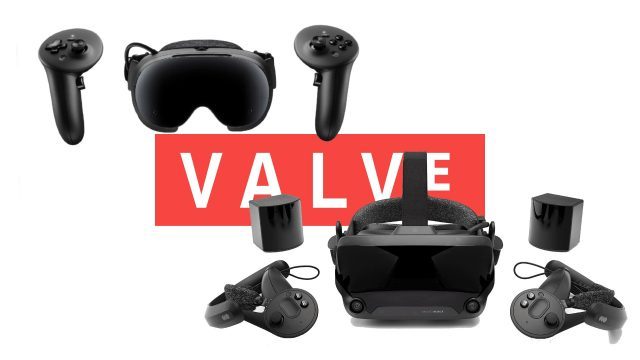
Valve announced Steam Frame today, but what’s the difference between the company’s first VR headset, Valve Index? Read on to find out.
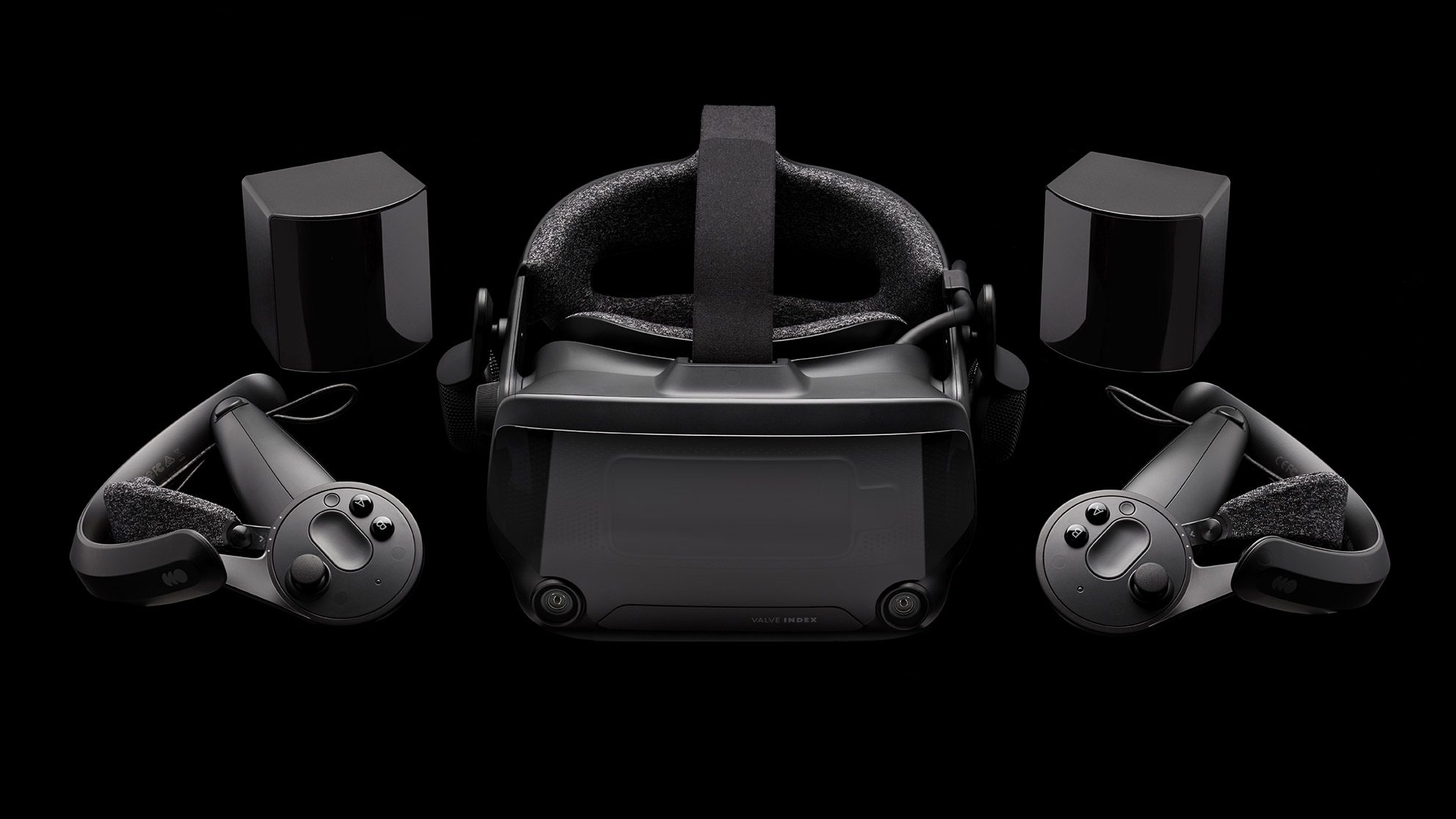
Index is a tethered PC VR headset that uses the company’s SteamVR tracking standard, requiring laser-emitting basestations that the headset and Index controllers use to localize spatially for room-scale gameplay. You also need a VR-ready PC, since it’s not a standalone device.
When it was launched in 2019, there were a few VR headsets on the market that made use of optical tracking, sometimes called ‘inside-out’ tracking, like Rift S, Windows Mixed Reality, and the original Quest—which weren’t as precise as SteamVR’s decidedly more cumbersome tracking standard. If you were primarily a PC VR gamer looking for the best all-around headset at the time though, Index was a no-brainer.
Valve Index | Image courtesy Valve
But PC VR headsets are lighter now, and the ‘no-brainer’ award for users in the SteamVR tracking ecosystem has moved on to slim and light PC VR headsets—like Bigscreen Beyond 2, which supports the full gamut of SteamVR tracking devices, like Tundra trackers, Index controllers (aka ‘Knuckles’) and more.
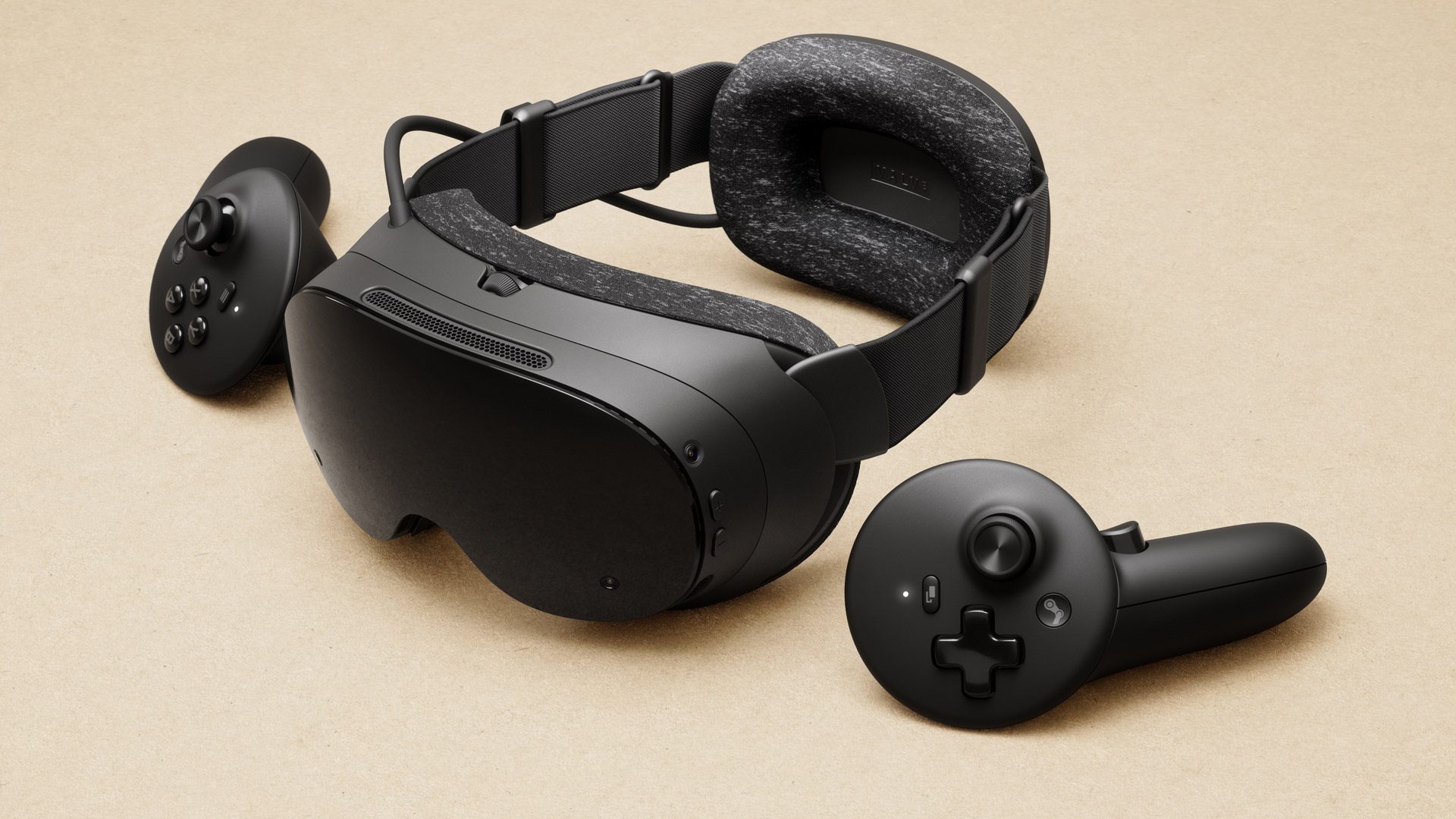
Early next year though, there will be a new headset in town: Steam Frame. Like Index, Steam Frame can play PC VR games, although you can ditch the basestations and two-meter tether, because Valve’s latest and greatest uses optical tracking and comes packed with a Wi-Fi 6E dongle in the box, which plugs into your computer for directly streaming Steam games (VR or otherwise). That means you’ll be sacrificing those hard-earned SteamVR tracking accessories, but maybe going fully wireless will be worth it.
Since it’s a standalone sporting a Qualcomm Snapdragon Series 8 Gen 3 (released in 2023) running SteamOS, you can actually directly download flatscreen and PC VR games to play natively. No wires, PC, or anything else required. While not all PC VR games played natively are guaranteed to work well out of the box, Valve seems to have a plan.
Image courtesy Valve
Valve says flatscreen games should play on Frame just fine, although more demanding PC VR games will need to be optimized by developers first: exactly why the company is first releasing dev kits to studios. We also expect to see some sort of badging system on Steam in the future (à la Steam Deck) that lets you know when natively downloaded PC VR titles run great, okay, or not at all. Whatever the case, Valve isn’t stopping you from trying.
But because dev kits are only now just heading out the door, that means price and release info is still MIA, due to come in “early 2026,” Valve says. In the meantime though, you can have a look at just what Valve has cooked up for its long-awaited first standalone VR headset in our hands-on with Frame—which handily beats Index in nearly every measurable category.
Nearly. While Frame’s 2,160 × 2,160 per-eye LCDs and pancake lenses beat Index’s 1,440 × 1, 600 per-eye LCDs and Fresnel lenses by a long shot, Frame’s monochrome passthrough definitely feels last (last) gen over the full-color passthrough on Index.
Hackers may be able to remedy that by jacking into the gen 4 PCIe slot in the user-accessible port, which supports up to two 2.5Gbps camera sensors. Like Index’s ‘frunk’ USB port, Valve isn’t making anything first-party for the PCIe slot, which is a bummer. Whatever the case, gen 4 PCIe certainly has more bandwidth than the ol’ frunkster.
Steam Frame vs. Valve Index Specs
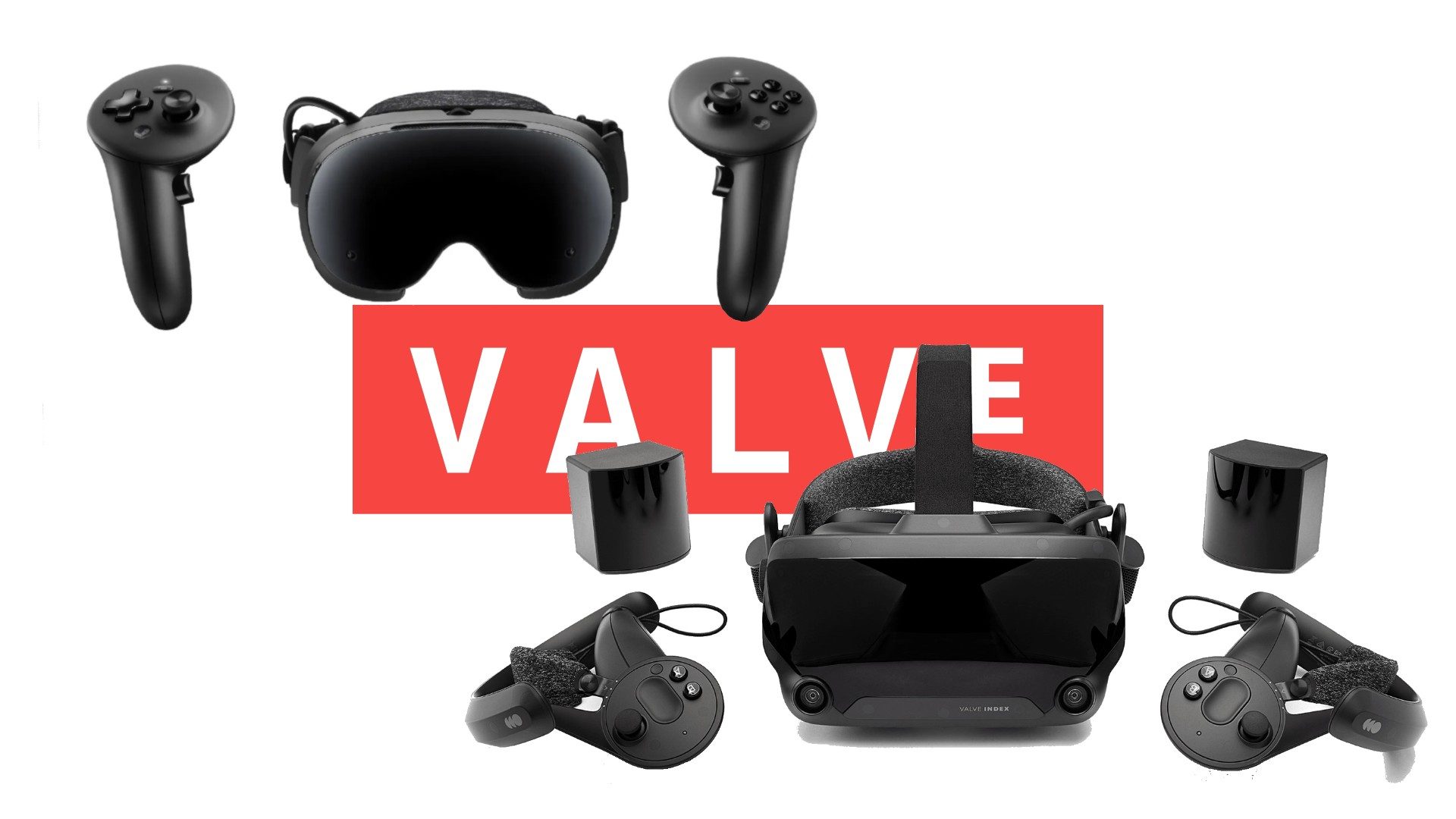
Steam Frame (top), Valve Index (below) | Images courtesy Valve
Steam Frame
Valve Index
Base Retail Price
Expected lower than Index (TBD early 2026)
$1,000 (headset, controllers, 2 SteamVR basestations) Gaming PC required.
Studio Chyr, the team behind flatscreen puzzler Manifold Garden (2019), is bringing an enigmatic VR follow-up to Quest and PSVR 2 this week.
Called Hotel Infinity, the game lets you explore the winding halls and grand ballrooms of a mysterious hotel using your own two feet, letting you wander vast areas from your living room without the need of controller-based movement or teleportation.
“Through seamless blend of portals, lifts, impossibly winding hallways, and other architectural deceptions, Hotel Infinity allows you to explore vast areas by physically walking around your play area,” Studio Chyr says.
The cornerstone of Hotel Infinity’s design is its constantly changing hallways and rooms, ostensibly inspired by M.C. Escher’s art, which of course includes a bevy of mind-bending puzzles to solve.
While Hotel Infinity shares “a lot of the same impossible architecture DNA” as Manifold Garden, “they’re not directly related,” the studio explains.
“Our hope is that folks who like Manifold Garden find something special in Hotel Infinity, but playing Manifold Garden is in no way required for folks to fully enjoy Hotel Infinity,” Chyr Studio says.
Notably, the studio says Hotel Infinity is best experienced in a room-scale environment with a play area of 2 m × 2 m (~ 6 ft × 6 ft), however alternative locomotion controls will also be available at launch for those who aren’t able to play in room-scale.
Hotel Infinity is launching on Quest and PSVR 2 on November 13th. You can find it over on the Horizon Store for Quest 1 and above and the PlayStation Store for PSVR 2.
Trace, a startup founded by former Magic Leap engineers, today announced the launch of a new augmented reality creation platform the company hopes will become the “Canva of AR”.
The News
Trace says it’s targeting everyone from global brands to independent creators wanting to build location-based immersive AR content, according to a recent press statement.
Notably, the platform doesn’t require coding or advanced design expertise, allowing users to design, drop, and share interactive AR experiences across mobile devices, headsets, and AR glasses.
To boot, Trace says it’s launching the platform at a pivotal moment; Adobe has officially discontinued its Aero AR platform, and Meta’s Spark AR platform was retired in January 2025. To seize the moment, Trace is offering three free months of its premium plan to Aero and Spark users who migrate to its platform.
“Even as XR devices become more capable, the creator ecosystem is still really limited,” said Martin Smith, Trace’s CTO and co-founder. “Empowering creators to build and share their vision is such an important part of the picture, whether they’re an educator, an artist, or a Fortune 500 brand. Trace runs anywhere, scales instantly, and supports the fidelity AR deserves.”
Founded in 2021, Trace has already worked with a host of early enterprise adopters, including ESPN, T-Mobile, Qualcomm, Telefónica, Lenovo, and Deutsche Telekom, who have used Trace for marketing, visualization, employee training, and trade show installations at Mobile World Congress and the Hip Hop 50 Summit.
Trace’s creation platform is available to download for free on iPhone and iPad through the App Store, with an optional premium subscription available starting at $20 per month. Creations can currently be viewed through the Trace Viewer app available for free on the App Store and Google Play, and users can import their existing 3D assets in the Web Studio, available at studio.trace3d.app.
My Take
There’s a reason Meta and Adobe haven’t put a massive amount of effort into their respective AR creation platforms lately: all-day AR glasses are still relatively far away, as the usual cadre of XR headset and glasses creators are only now stepping into smart glasses ahead of what could be a multi-year leadup to all-day AR glasses of the future.
Still, enterprise-level AR activations on mobile and mixed reality headsets, like Apple Vision Pro and Quest 3, can turn more than a few heads, making a quick and easy no-code solution ideal for companies and independent creators looking for a selective reach.
Quest 3 (left) and Apple Vision Pro (right) | Based on images courtesy Meta, Apple
I would consider Trace’s strategy of offering former Adobe Aero AR and Meta Spark AR a pretty shrewd move to get some market share out of the gate too, which is increasingly important since it’s the company’s sole occupation—and not a side project like it was for Adobe and Meta.
The more challenging test will be to see how Trace grows in that interminable leadup to wide-spread AR glasses though, and how it weathers the competition sure to come from platform holders looking to offer similarly easy-to-use AR creations suites of the future.
While the platform’s wide target and ease of use are big pluses, I can see it more squarely fitting in the enterprise space than something regular consumers might latch onto—which is probably the ideal fit for a company founded by Magic Leap alumni, who have undoubtedly learned a sharp lesson first hand. Magic Leap’s early flirtations with prosumers in 2018 with the launch of Magic Leap One eventually forced the company to pivot to enterprise two years later.
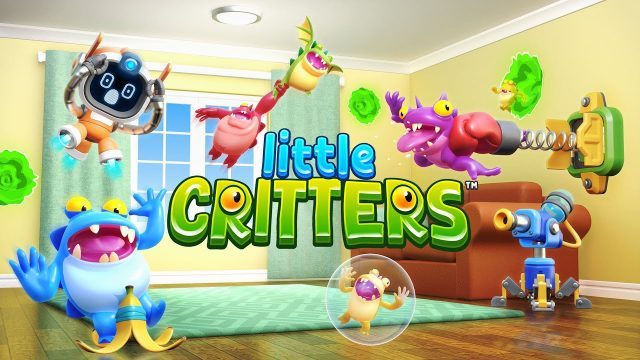
Purple Yonder, the studio behind VR city simulator Little Cities (2022), today released a mixed reality action-strategy game for Quest 3 and 3S that challenges you to fortify your real-world home against waves of dastardly little critters.
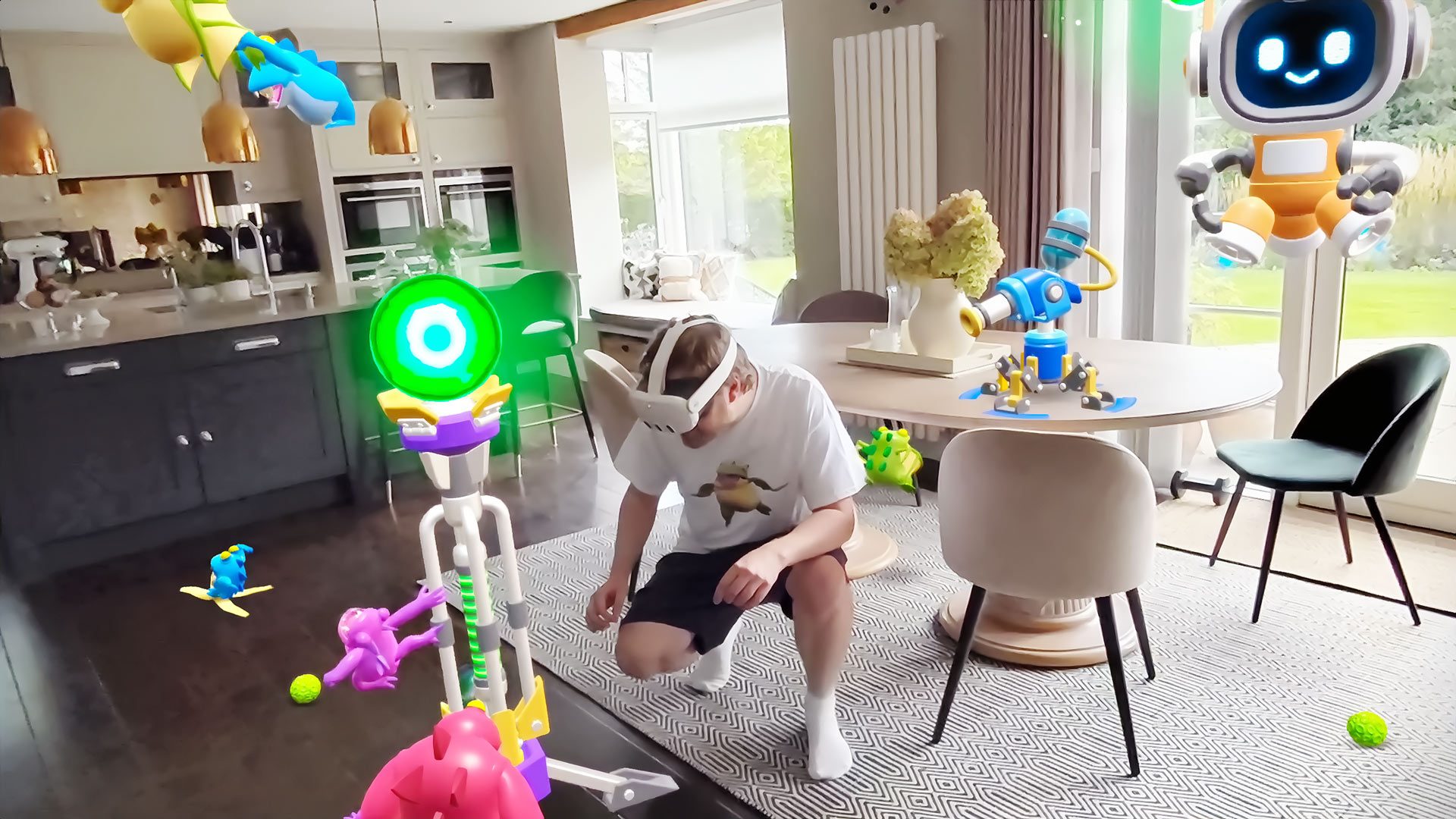
Called Little Critters, the game pits you against a legion of invaders, arming you with a host of virtual traps that you can attach to your walls, ceilings, floors and furniture.
The pint-sized army can crawl, swoop and attack from every direction, increasing in difficulty as you move through each wave. Level progression also means new critter types with unique attack patterns to defend against, but also new traps, upgrades and weapons to defend your home—all of which adapts to any size or shape of room.
Image courtesy Purple Yonder
“Innovative scene tracking maps the player’s surroundings, turning their actual room into a core component of the game,” the studio says, describing the tech behind Little Critters. “Depth occlusion allows critters to run under tables and behind furniture. With hand tracking, players can slap, squash, throw and poke the critters.”
In addition to hand-tracking, studio further notes that Touch Plus controllers are also supported.
You can find Little Critters today over on the Horizon Store, priced at $20/£15/€18. Purple Yonder notes that Little Critters will get regular updates, including new language localizations and additional content designed to keep the gameplay fresh and engaging.
Little Critters was created by the same team behind casual city simulator Little Cities, which started out in life as a VR-only experience, published by VR veteran studio nDreams. Since its launch in 2022, Purple Yonder has released a number of updates to Little Cities, including a Quest 3 update as well as a hand-tracking update.
Then, in late 2024, Purple Yonder brought a mixed reality version of Little Critters to Apple Vision Pro, accessible through Apple Arcade, the games subscription service.