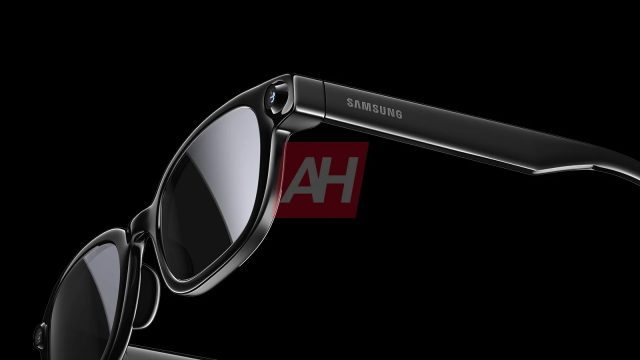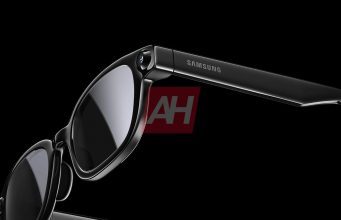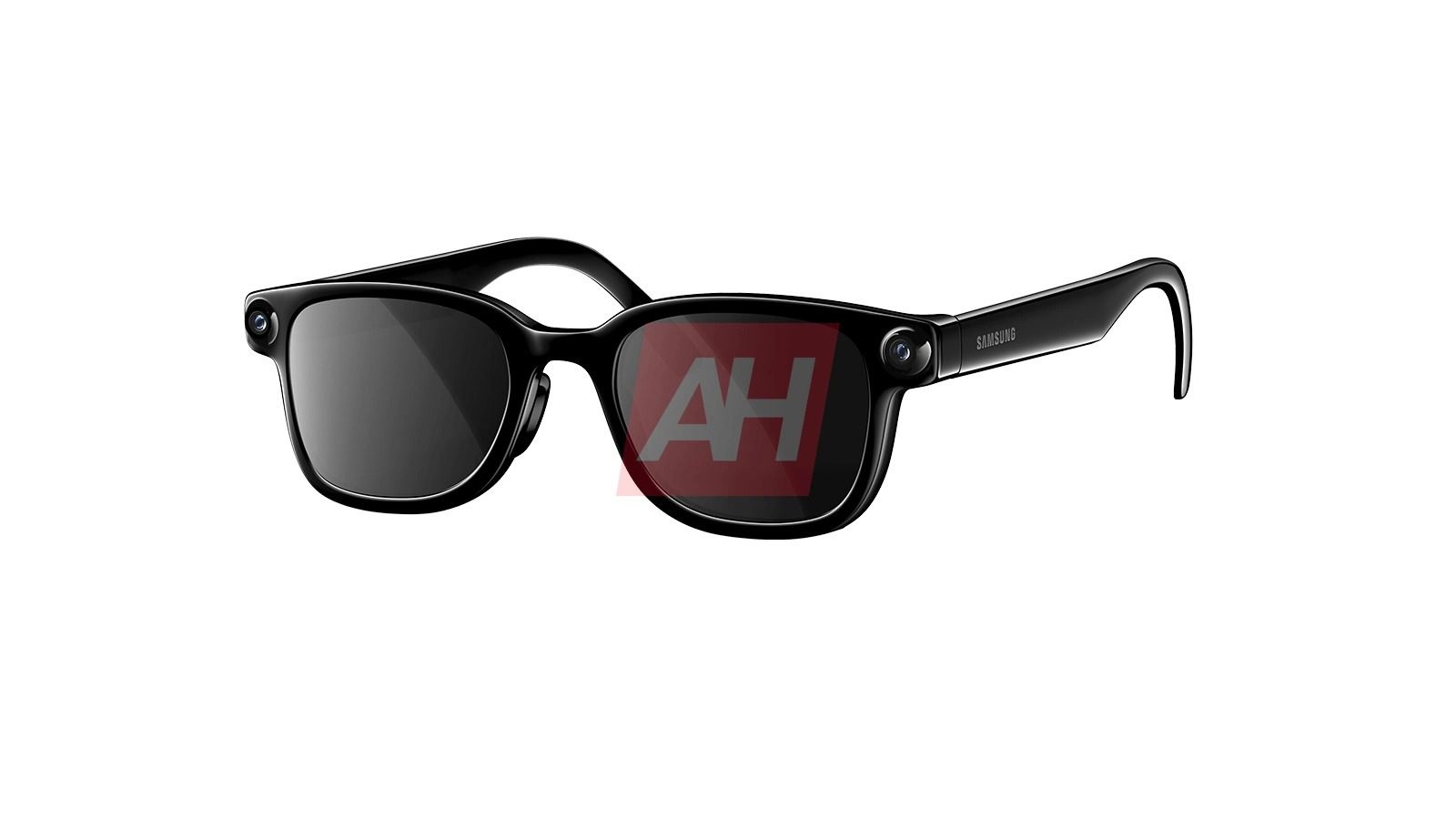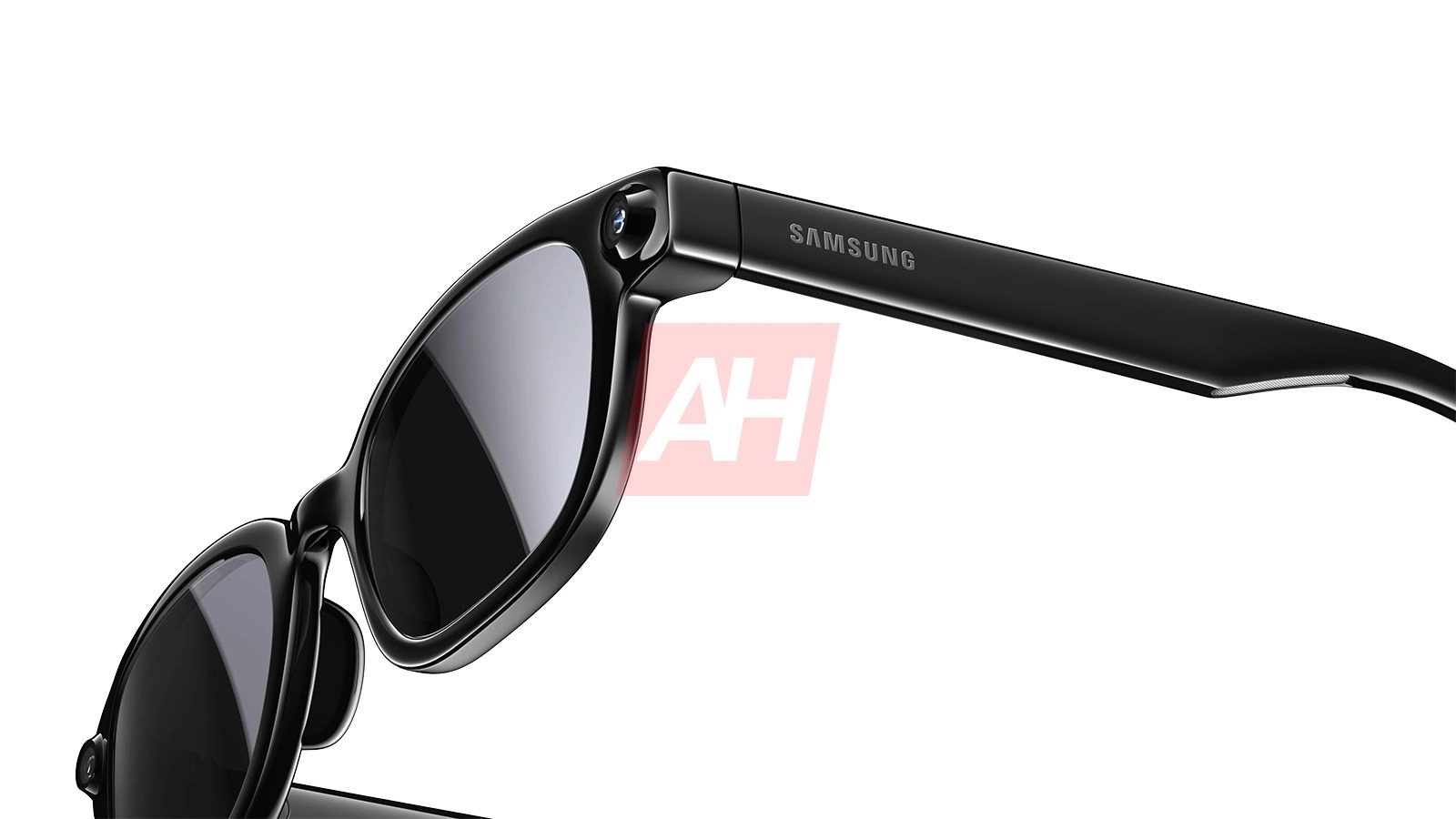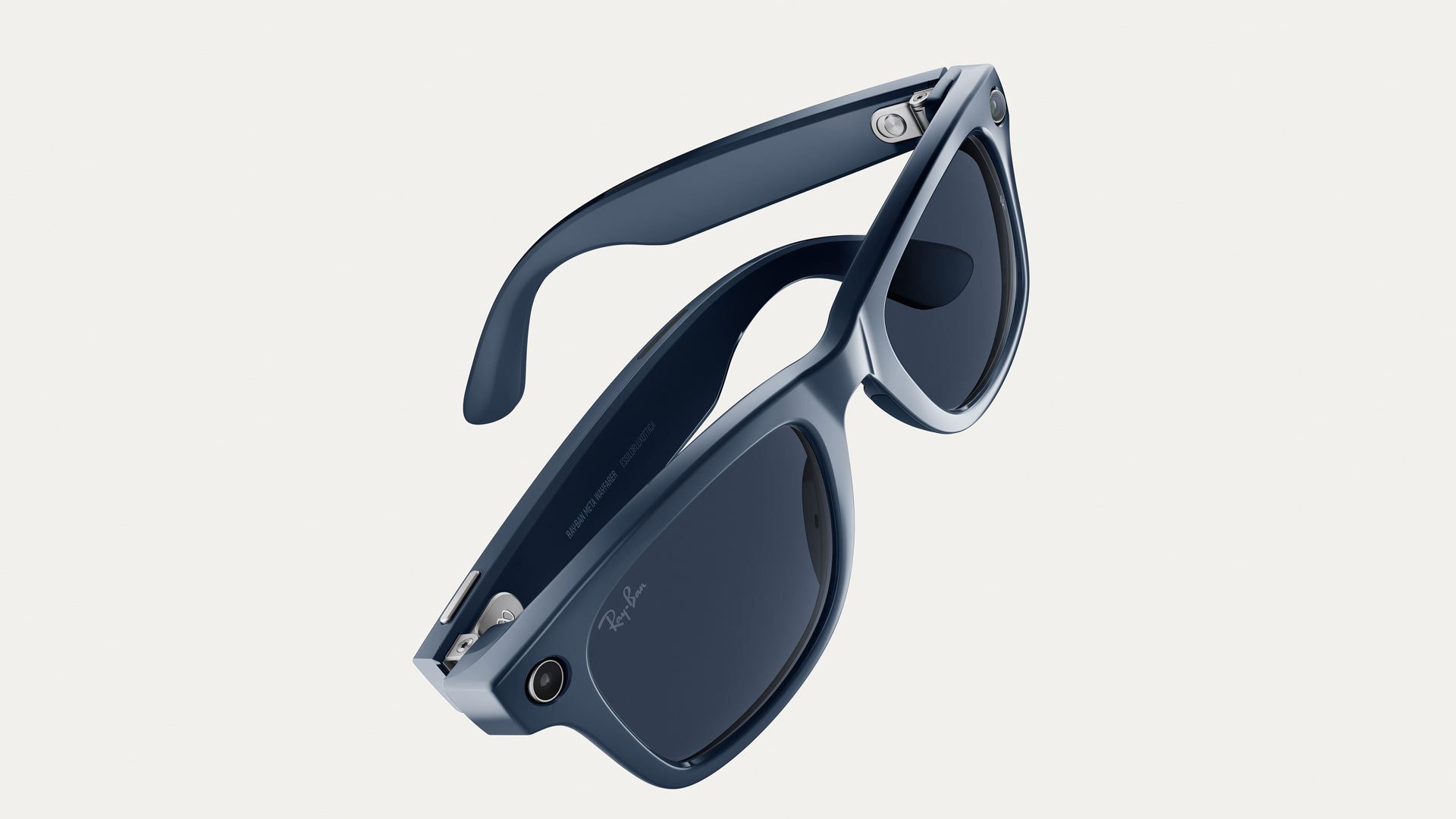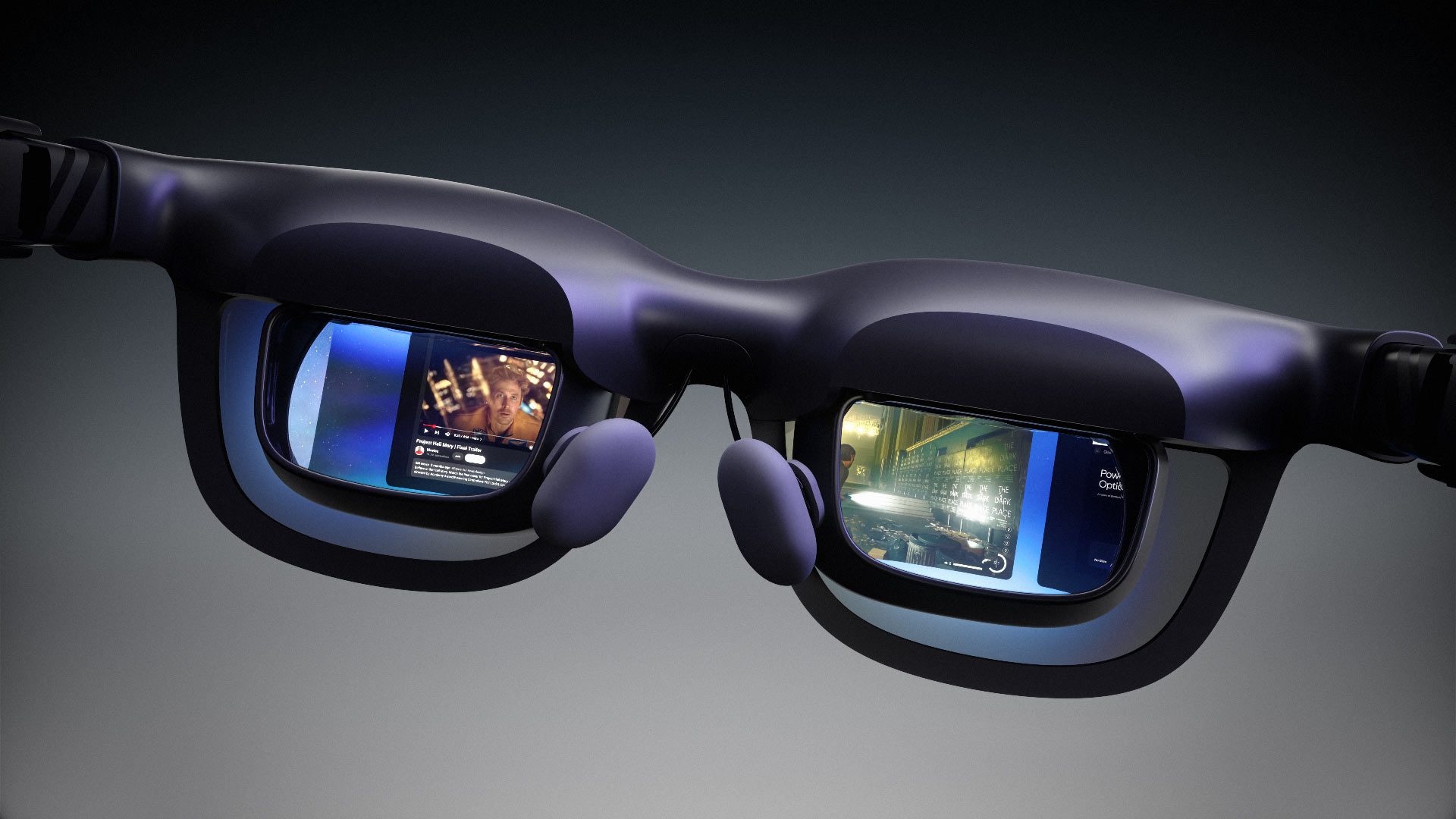

Samsung is reportedly working on a pair of smart glasses that could be more advanced than its forthcoming competitors to Ray-Ban Meta.
Android Authority maintains it’s found evidence of a third pair of smart glasses in the source code of Samsung’s upcoming One UI 9 firmware, revealing a new model number: ‘SM-O500’, code named ‘Haean’.
Notably, two model numbers are already known: ‘SM-O200P’ and ‘SM-O200J’, code named ‘Jinju’, which are likely to be associated with the Android XR-based smart glasses Samsung recently confirmed will release sometime this year.
Those are expected to be similar to Ray-Ban Meta, in that they’ll essentially be ‘audio-only’, including microphones, camera, speakers, but no form of display.
Prototype Android XR smartglasses | Image courtesy Google
As SM-O500 follows the same numbering and lettering scheme as those two known smart glasses models, it could indicate Samsung is already working on ecosystem support for the ostensible next-gen device.
Based off prior rumors, SamMobile further suggests it may even be a display-clad version coming in 2027, similar to Meta Ray-Ban Display ($800) released late last year in the US.
Granted, as Android Authority notes, its source code sweep of One UI 9 isn’t a smoking gun. APK teardowns of the sort can be useful in revealing future releases, but may also not make it to a public release.
What we do know thus far: Google, the creator of Android XR, announced last year it was partnering with Samsung as well as Gentle Monster and US-based eyewear brand Warby Parker to release the company’s first generation of Android XR-based smart glasses.
Google also hopes to release a model with built-in displays for visual output. The company showed off two prototypes last year, including both a monocular and stereoscopic model to demonstrate Android XR’s ability to adapt to multiple hardware configurations.
Still, there’s no release date in sight for any of the Android XR-running smart glasses. The inclusion of ecosystem tie-ins in One UI 9 (based on Android 17) could mean we’ll find out more soon, however. Android 17 is expected to release in June 2026, with One UI 9 expected a month later, which could hold more clues.
Forefront has been in early access for only a few months now, although Breachers (2023) developer Triangle Factory is releasing the game’s 1.0 update on April 23rd, which includes a new map, a few new weapons, class perks, and more. While it’s not a truly massive content drop, Forefront is still one of the best VR takes on Battlefield yet.
Brimming with fellow journos, YouTubers and Triangle Factory staff—most of whom I would say have spent a lot more time aiming down the game’s realistic iron sights—I can say with no hesitation that I had my ass absolutely handed to me last week in the three 20-minute matches I played in preview of the upcoming 1.0 release.
Granted, while it wasn’t my first time playing Forefront, my kill-death ratio certainly made it seem that way in the game’s 16v16 mass battles, which also gave me an opportunity to try out the game’s new map and all of the new gear before it releases tomorrow.
If you’ve played the early access version, here’s what’s coming. If you haven’t, consider this a mini-review of the game, and why Battlefield fans might consider picking it up.
You’ve Played Before (even if you haven’t)
Maybe you haven’t played Forefront before, although if you’ve ever played any of the Battlefield games over the past 20 years, you know the score: four main classes, gads of unlockable progression-based weapons, and plenty of vehicles to jump into, like Apache helicopters, Humvees, self-propelled anti-aircraft armor, and even four-wheelers for quick getaways.
Let’s put the new stuff at the forefront though for those of you who have, and want to know what the 1.0 update is all about.
The first addition you’ll notice when jumping in is ‘Clearwater’, the new expansive map that makes for another smart addition to the game’s lineup of seven maps, most of which can be played in Rush or Conquest mode.
Image captured by Road to VR
At its core is a flooded town, flanked by high vantage points, mountainous terrain, and industrial wreckage from the ongoing battle between the two factions. There are a ton of areas to hide in and around, giving players an opportunity for close-quarters combat and long-distance blasting, with a lot of it converging in the water-logged town center.
Other new things include a pilotable drone for the Engineer class, which is by far my favorite addition, if only because, hey. It’s a dang drone. The drone comes with a single slot for cargo, so you could airlift a medkit or ammo box to your buddies below. It also gives Engineers a minor role as a scout, letting them suss out where enemies are amassing when helicopters are all taken up or respawning. Yes, I tried to put a C4 charge on it. No, it didn’t get it to work. Quest 3 footage below:
There’s also a new combat bow for Recon. It’s stupid powerful. While it probably gives you a more stealthy approach, I think it’s mostly bragging rights that you killed someone with a pointy stick. Just remember to grab an arrow from your chest inventory slot, knock the arrow and aim carefully.
If you’re a dyed-in-the-wool Forefront player, I don’t need to tell you there’s definitely fun to be had exploring this admittedly modest content drop. Still, I can’t say I wasn’t expecting a little more in the class-based gadgets department.
While primary and secondary weaponry are all the same (save the bow), the 1.0 drop does include a new training ground so you can get to grips with everything the game has to offer, as well as a quick matchmaking function that wasn’t previously available. It’s something I wish I had before heading into my first match, which left me more wrecked than my hands-on with the 1.0 preview.
Here’s a look at Clearwater from the pilot seat of an Apache on Quest 3 to get a sense of the map’s size and its general perf. New to the game is also manual in-cockpit controls for helicopters, which give you two sticks: a main stick for direction and a elevation stick to raise or lower:
Notably, the Quest version of Clearwater (and the rest of the game) feels detailed enough when you’re playing, as maps seem to be built around the headset’s rendering ability by using clever terrain changes that keep a good amount of the action fairly close.
Trees and texture loading are pretty noticeable though when in a quick vehicle in addition to a slightly less detailed landscape overall. It’s nothing game breaking, although I could see the potential for some unwelcome surprises as Quest users go head-to-head with PC VR users, which have better overall rendering ability. To boot, the 1.0 update also brings dynamic shadows and better visual effects to the PC version.
Now for the SteamVR version on my desktop running—a fairly middling RTX 3060 (12GB) and 16 GB of RAM, which is admittedly in need of an upgrade eventually. For clarity, I’m using Steam Link to my Quest 3.
As a whole, it looks… actually pretty alright, considering it has to play cross-platform with both Quest and Pico standalone headsets. The dynamic lighting does increase immersion, and the overall sharpness of the visuals definitely make it my preferred way to play, although you’ll still see some geometry popping here and there.
If that were it, I’d say this a fairly small update. Maybe not even enough to be called a 1.0 release on its own. One thing I didn’t expect going in though was a healthy chunk of the update centers around four new perks for all classes. More ammo, increased movement speed, increased grenade throwing distance, the ability to reduce repair rate on vehicles—it’s a long list of new things that could measurably change combat moving forward, and give you a chance to better customize your soldier. I’m interested to see this in action tomorrow when everyone gets 1.0 though to see just how much of an effect it has on gameplay in the long-term.
For a deeper dive, Gamertag VR, who was in the same lobby as me, does a great job of explaining each perk in his full 20-minute preview, including his general impressions of the game and 1.0 update. You might even see one of my many deaths (and maybe a kill or two).
Conclusion
When I say you’ve played this before, I think it’s pretty clear I don’t mean Forefront is some sort of glorified VR mod of Battlefield. It’s a real VR native that makes some smart choices when it comes to translating the genre, maps, weapons, everything into something that works in VR.
That said, it doesn’t have a massive player pool by traditional shooter standards (more on that below) even if it’s cross-play between standalone and PC VR. That also means it also doesn’t do ranked matches. The handful of official global servers are it for now.
Still, that’s not such a massive drawback. The most important thing you should know before hitting the buy button though is shooting in VR is a serious skill check, and doubly so (or triply) since Forefront treads the all too familiar line between arcade shooter and military sim.
Image courtesy Triangle Factory
Realistic iron sight shooting, manual reloading, and a body-worn inventory of gadgets all make it the sort of VR shooting experience genre fans will instantly click with, or conversely decide it just isn’t a right fit.
As glowing as my experience with Forefront has been, decidedly less immersive is the audio experience. Spatial audio seems to be fairly binary. You may have three friendlies behind you and three enemies in front, but all of it sounds like piped-in, in-your-ear chatter with no measurable directionality or distance fall off. Which is part of the reason I tend to not only mute my mic, but also all other players. Yeah, I’m that guy.
And while I had fun traversing the new map and playing with the new gear, tactically placed ziplines, and every core vehicle you can think of, I left feeling like the 1.0 update as a whole wasn’t such a massive value add.
Sure, it adds a measure of polish to the PC VR version and its new gadgets are fun, but I think the core of the argument is that Forefront is already a pretty full-featured experience to begin with. I’m not defaulting to my usual proviso with multiplayer VR shooters; there doesn’t seem to be any shortage of players on servers at any time I checked the last few days, so I don’t think low concurrents will be an issue in Forefront’s near-term if they keep pumping out maps and more reasons to come back like we’re seeing with tomorrow’s drop.
Whatever the case, the best matches you’ll ever find will undoubtedly be with a good group of people if you can wrangle them. There aren’t dedicated servers though, so I’ve found the ‘mute all’ option to be my number one defense from staying sane, as kids make up a good portion of the game’s player base. Don’t say I didn’t warn you.
In the meantime, you can find Forefront over on the Quest Store, Steam and the Pico Store right now with its early access pricing of $24. Starting tomorrow, April 23rd, that price goes up to $28. There’s still no word on exactly when to expect it on PSVR 2.
Veteran director and writer Jon Favreau revealed he fully integrated Apple Vision Pro into the production pipeline for his upcoming Star Wars film coming out this May, The Mandalorian and Grogu.
Speaking to The Town’s Matt Belloni on stage at CinemaCon in Las Vegas this week, Favreau revealed he regularly used Vision Pro while filming The Mandalorian and Grogu, the upcoming Star Wars film which will be the first to hit cinemas in seven years.
“So I’m making an IMAX movie and I’m looking at a TV screen. No matter how big your TV screen is, it’s not an IMAX screen,” Favreau says, describing directing from traditional on-set monitors.
But Favreau saw the potential to leverage Vision Pro to drive a pre-production mocap and the pre-vis pipeline, he says, which included building a piece of software from scratch to view on-set action in a larger format.
“We built software so that I could pop on my Apple Vision Pro and be sitting in an IMAX movie theater and see the full aspect ratio when we’re lining a shot up and I could watch that take and see what people will see,” Favreau explains.
“There’s so much great consumer-facing tech that could be utilized for film making in just the planning process. Forget about whether you show it in the show it in the movie theaters on the big screen. That’s going to help collapse costs and it’s going to also help you get more precise creatively. And this is what the animation industry has understood from the beginning. Get it right before you ever paint a cell.”
Notably, Favreau’s television production company Golem Creations was behind a host of Star Wars shows filmed for Disney+, including The Mandalorian, The Book of Boba Fett, Ahsoka, and Star Wars: Skeleton Crew.
Besides having the requisite Star Wars chops, Favreau is also no stranger to VR. In his 2016, he produced two 360 promotional videos for The Jungle Book (2016) using Nokia’s OZO 360 camera rig.
That same year, Favreau’s Golem Creations partnered with WEVR to create Gnomes & Goblins (2020), an admittedly not-great fantasy adventure for PC VR that did manage to push the visual envelope at the time.
Concurrent to production on Gnomes & Goblins, Favreau also began using VR directly in the film production pipeline with The Lion King (2019), which used HTC Vive headsets to pre-visualize the scene, characters, and animations—something to make it easier to line up shots, rethink lighting, and make other changes as if the virtual set was entirely real.
You can catch the full interview below, timestamped during his chat on Vision Pro:
Apple announced that CEO Tim Cook is stepping down, and John Ternus, a long-time Apple veteran, is set to take his place. As head of hardware engineering, Ternus oversaw the launch of Vision Pro in addition to a slew of core Apple products over the years, although the new CEO may have some reservations about the company’s premium XR headset moving forward.
Fresh out of the University of Pennsylvania, where he majored in mechanical engineering, the soon-to-be Apple CEO actually did a four-year stint at Virtual Research Systems, a now-defunct hardware company making some of the first commercially available VR headsets.
Virtual Research’s PC VR headsets were decidedly of a different era, although they helped spark the latest generation. Just three years prior to the release of Oculus Rift DK1, in 2010 Oculus founder Palmer Luckey even called an owner of a Virtual Research V8 a “lucky bastard”, noting the device’s 60-degree field-of-view was “pretty fantastic” more than a decade after the headset’s release.
Virtual Reality Systems V8 | Image courtesy ResearchGate
Notably, as Ternus was a mechanical engineer at Virtual Research Systems from 1997-2001, he likely worked on the V8, which came out at the tail end of the VR craze of the ’90s.
Leaving Virtual Research Systems in 2001 for Apple, Ternus worked his way up through a number of the company’s hardware teams, contributing to the development of multiple generations of core products, including iPhone, iPad, and Mac.
His biggest role came in 2021, when Ternus became Apple’s Senior Vice President of Hardware Engineering, taking over from Dan Riccio. As a result, Ternus also inherited the company’s long-term gamble in XR, which spanned more than a decade in the making, as he oversaw Vision Pro’s launch in 2023.
John Ternus | Image courtesy Apple
Still, despite his XR lineage, Ternus seems to be skeptical of Vision Pro’s place in Apple’s lineup.
As mentioned by Bloomberg’s Mark Gurman last month, Ternus has shown some trepidation around Apple’s previous moves in the past, including the now-cancelled Apple Car project as well as Vision Pro, which has underperformed relative to other hardware launched under Ternus, including the Apple Watch and AirPods.
“When the company has taken swings at big new product categories in recent years, Ternus has often been in the conservative camp,” Gurman says. “He was circumspect about Apple building a car, fearing it would distract the company, drain profits and pull engineers from core products. He was similarly wary of the mixed-reality headset that became the Vision Pro, drawing on his experience of trying to create a virtual-reality head-worn device at a startup in the 1990s. In both of those cases his skepticism was prescient. Apple eventually killed the car, and the Vision Pro has been a bust.”
Slated to take over as CEO once Cook officially steps down this summer, he’s also inheriting the company’s years-long efforts in developing AR glasses, which Cook reportedly hopes they can release before Meta.
“Tim cares about nothing else,” Bloomberg reported last year. “It’s the only thing he’s really spending his time on from a product development standpoint.”
Apple Vision Pro (M5) | Image courtesy Apple
It remains to be seen just how enthusiastic Apple’s new CEO will be on pushing those segment-defining XR devices though. Heading into the second half of the decade, the Cupertino tech giant is ostensibly now balancing ambitions across more segments than ever, including the new consumer-friendly Mac Neo ($600) which is making headway in stripping market share from a host of mid-tier Windows laptops.
Meanwhile, the company’s XR hardware roadmap may be taking a slightly unexpected turn. Last month a separate report from Gurman detailed a move by Apple to more heavily invest in a competitor to Ray-Ban Meta smart glasses—a stark departure from Apple’s initial XR strategy, which supposedly include three distinct categories: an iPhone-tethered AR headset with wireless controller, a high-end mixed reality headset, and standalone AR glasses.
Whatever the case, Ternus’s entry as CEO marks a decisive next chapter as the company. And we’ll be watching to see how he ultimately views Vision Pro, be it a dead end or a launchpad to sleeker, more consumer-friendly XR devices in the future. As it is, we’re still waiting to hear more about the reported follow-ups to Vision Pro, which supply chain leaks suggest could include two new headsets.
In a Microsoft Flight Simulator’s monthly Developer Stream, Asobo Studio revealed that it could finally release support for PSVR 2 as early as this week.
The studio announced last month its ‘Sim 5’ update was coming in April, which is set to bring PSVR 2 support to the PS5 version of the game alongside a number of other improvements, although it wasn’t clear exactly when the update was planned to release.
Now, in the studio’s April 2026 Developer Stream, Asobo confirmed the game has now passed Sony certification, and is “down to three must-fix bugs or something” Head of Microsoft Flight Simulator Jorg Neumann says.
The studio isn’t ready to say just when it plans to launch the update, although Neumann says they’re “super close.”
“It has a little bit to do with trying to get the final career specialization going, and
it’s like one or two more bugs, and that’s it. So, we’re we’re hoping that it’s next week,” Neumann said in last week’s broadcast.
Microsoft and Asobo previously confirmed that the PSVR 2 version of the game will support its 125 different aircraft, which includes Sense controller-supported cockpits for increased immersion.
The studios also spoke a bit about their 2026 roadmap, which includes a number of planned updates throughout 2026, which will focus on avionics, new aircraft, as well as a variety of World and City updates.
Bigscreen has revealed a major redesign to Bigscreen Beyond 2’s long-promised halo headstrap mount, which the company says will begin shipping out starting in June.
After months of waiting, Bigscreen has finally shown off the long-awaited Halo Mount for Beyond 2 and 2e, its thin and light PC VR headset which shipped in March 2025.
According to a company blog post, improvements over the old Halo Mount design include a new clip-on mechanism which requires no adhesives, as well as support for third-party accessories thanks to an M3 brass-threaded screw hole for mods.
It also features an improved flip-up mechanism, extra USB extension for better cable travel, and easier vertical adjustment for better forehead positioning, the company says.
Bigscreen’s newly redesigned Halo Mount | Image courtesy Bigscreen
“After a year of iterating on prototypes, we built the first production versions of the Halo Mount last year,” Bigscreen explains. “The early units (commonly known as “DVTs”) met most but not all of our goals. We shipped these DVTs to customers for testing and received both positive and negative feedback.”
Then, in December, the company says it made the call at “a very significant financial cost” to delay the Halo Mount’s mass production due to negative feedback from testers, which prompted the company to go back to the drawing board. See the previous Halo Mount design below:
Bigscreen’s previous Halo Mount design | Image courtesy Bigscreen
Now, Bigscreen says it’s aiming to ship a “small volume” first batch in June, with a greater run of 10,000 units starting in July. The Halo Mount is currently available for pre-order, priced at $180/€169.
“Due to the large volume of demand for the Halo Mount, it will take a couple of months to complete all Halo Mount preorders,” Bigscreen says. “We expect to achieve this goal by the end of the summer, and will have sufficient inventory for fast shipping thereafter.”
Notably, Bigscreen’s Halo Mount can be used with any Beyond strap, including the supplied Soft Strap, optional Audio Strap, as well as third-party modded straps, such as Apple Vision Pro’s Knit Band.
Bigscreen’s newly redesigned Halo Mount | Image courtesy Bigscreen
Additionally, it can be used with all facial interfaces offered by Bigscreen, including the Custom-Fit Cushion and the Universal-Fit Cushion, as well as without a cushion for greater peripheral vision.
As a part of the update, the company also announced that Beyond 2 and Beyond 2e orders are generally shipping within 1–3 business days, with most Universal-Fit configurations sometimes shipping the same day, following major improvements in production and logistics.
Due to recent supply chain disruptions linked to Middle East conflicts and rising air freight costs, which the company says has caused temporary shortages of the Crystal Clear Beyond 2e and Universal-Fit Cushions, shipping times for those units have been delayed by 2–4 weeks.
Bigscreen says these issues are being resolved and expects normal shipping speeds to resume by late April.
University researchers at KU Leuven in Belgium have shown that monkeys can navigate complex virtual environments using a brain-computer interface (BCI) setup, which remarkably involves relatively little user training.
As reported in New Scientist, three rhesus macaques were implanted with Utah array BCI devices containing 96 electrodes in each of three brain regions: the primary motor cortex and the dorsal and ventral premotor cortices.
While the primary motor cortex is involved in voluntary movement, a region of the brain Elon Musk’s Neuralink taps into through its various animal research models and recent human clinical trials, the premotor cortices are thought to be dedicated to planning, organizing, and initiating those movements.
Image courtesy Peter Janssen et al
The key innovation isn’t the hardware itself though, as Utah arrays are widely used in research when reading neuronal activity, but rather the method the study goes about decoding that information, and making it actionable in 3D environments.
In the study, which was lead by KU Leuven’s Peter Janssen, the rhesus macaques were initially trained once from a short passive observation phase, and then were given a variety of virtual tasks while wearing 3D shutter glasses and monitor with stereoscopic images. Tasks included moving various objects in a virtual space, including a sphere, a monkey avatar, and even themselves via a first-person perspective.
Image courtesy Peter Janssen et al
As noted by New Scientist, many previous human trials involve asking people to actively think of a physical movement, like raising or lowering a finger to move a cursor on a screen, which is then translated to on-screen movement. Janssen believes however the study’s specific placement of the BCI has accessed what could be a more intuitive connection to movement, potentially requiring less training.
“We cannot ask these monkeys, of course, but we just think that it’s a more intuitive way of controlling an a computer, basically,” Janssen tells New Scientist, who notes that current methods can feel as foreign to implant recipients as “trying to move your ears.”
While the study hopes to pave the way for similar results in humans, which could unlock things like controlling electric wheelchairs, Janssen also believes it could allow people with paralysis to intuitively navigate virtual worlds.
“There’s a bit of work necessary to know exactly where to implant a human because a lot of these areas are not very well known in humans, where they are exactly,” Janssen says. “But once we figure that out, it should be possible. It should actually be easier because you can explain to the human what they are supposed to do.”
Meta announced it’s hiking prices for both Quest 3 and Quest 3S headsets, which includes both new and refurbished units, as the company cites the global surge in the price of memory as a main factor.
Starting on April 19th, US-based consumers will see both Quest 3S variants (128 GB and 256 GB) bumped up by $50 respectively, while the 512GB variant of Meta’s Quest 3 flagship headset will go up by $100. Here’s the new pricing below:
Quest 3S (128 GB): $350
Quest 3S (256 GB): $450
Quest 3 (512 GB): $600
For clarity, Quest 3 is currently priced at $500 for the 512GB variant, while Quest 3S is priced at $300 for 128GB and $400 for the 256GB versions. You’ll find the new international pricing tiers at the bottom of this article.
“We’re making this change because the cost of building high-performance VR hardware has risen significantly,” Meta says in a blog post. “The global surge in the price of critical components—specifically memory chips—is impacting almost every category of consumer electronics, including VR. To keep delivering the quality of hardware, software, and support you expect from the Quest platform, we need to adjust our pricing.”
Image courtesy Redditor Vast_Front259
Meta says it’s also updating pricing for refurbished Quest units, although the company hasn’t said by how much just yet. Meta further said Quest accessories will stay at their current prices, ostensibly because they don’t include either RAM or SSD, which have recently seen massive memory price increases relative to years prior.
This isn’t the first time Meta has hiked prices for Quest. In 2022, the company raised the price of Quest 2 by $100 just months after launch, citing similar pressures around rising production and component costs—before later reversing the increase as market conditions stabilized.
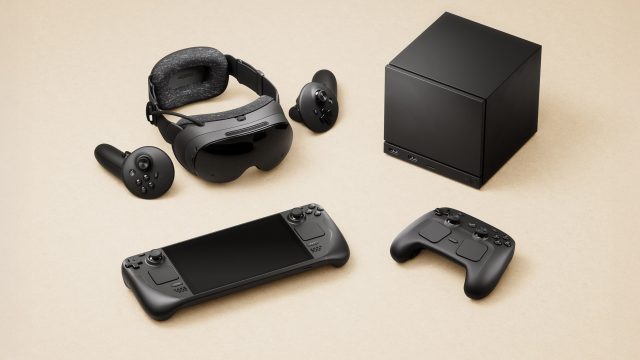
Notably, Valve may have found itself in a similar bind resultant from the memory crisis, as the company announced in February it had to revise both price and release date of its upcoming Steam Frame VR headset—still slated to release in the first half of 2026.
Virtual woes notwithstanding, Meta says in the blog post it “remains committed to investing in VR and leading the category because we believe this is the future of computing. We have a long-term roadmap full of new hardware and experiences, and this adjustment helps us stay on track to deliver that future.”
The company previously said that, despite the shift, it’s still funding third-party titles in addition to its current plans to release two new VR headsets—a possible successor to Quest 3 as well as a thin and light headset that tethers to a compute puck.
The new international pricing scheme for Quest 3 and Quest 3S follows below:
AWE USA 2026 is returning to Long Beach, CA on June 15–18. As the event’s Premiere Media Partner, we’re excited to give our readers the opportunity to win one of several free passes.
AWE USA is our ‘must-go’ annual XR event. This year’s rendition is expected to draw more than 5,000 attendees, 3,250 exhibitors, 400 speakers, and will feature a 150,000 sqft expo floor.
We’re giving away several General Admission passes which offer access to all four days of the event, including talks, panels, and the expo floor.
To enter for a chance to win a free General admission pass to AWE USA 2026, join our Daily Roundup Newsletter below (even if you’re already a subscriber!).
By submitting the form above, you agree to allow us to send you the Daily Roundup Newsletter and communications about AWE events. You may alternatively enter to win a pass by emailing AWEUSA2026@roadtovr.com with the subject line “Entry”. Only one submission per entrant will be considered. Winners will be selected randomly and notified via the email they signed up with. Passes are non-transferrable and non-refundable.
Snap is laying off around 1,000 employees, the Snapchat parent confirmed today. Specs Inc., its recently formed AR glasses subsidiary, is reportedly not being affected, however, as the cuts are aimed at further insulating the traditional Snapchat business from its new AR subsidiary.
Spiegel announced the news in an internal memo, published by Business Insider, which is confirmed to affect 1,000 team members, including 16% of Snap’s full-time employees. Spiegel also confirmed Snap has now closed more than 300 open roles.
“Last fall, I described Snap as facing a crucible moment, requiring a new way of working that is faster and more efficient, while pivoting towards profitable growth,” Spiegel says in the memo. “Over the past several months, we have carefully reviewed the work required to best serve our community and partners, and made tough choices to prioritize the investments we believe are most likely to create long-term value. As a result of these changes, we expect to reduce our annualized cost base by more than $500 million by the second half of 2026, helping to establish a clearer path to net-income profitability.”
Snap Spectacles (gen 5) | Image courtesy Snap Inc
While Spiegel hasn’t confirmed the fate of Specs Inc. specifically, according to a report by Alex Heath’s Sources the company’s AR glasses subsidiary is slated to actually add employees ahead of launch of its sixth-gen Specs AR glasses, which is expected sometime this fall.
The report further maintains Snap was unable to secure a proposed $1 billion to fund its Specs division, although the company is still hoping to raise capital once its AR glasses release.
The next-gen Specs AR glasses are slated to be revealed “in the next couple of months, loosely modeled on Apple’s Vision Pro rollout, followed by a consumer release in the fall,” Heath writes.
The comes weeks after Irenic Capital Management, which holds economic interest of about 2.5% in Snap, put pressure on the company to either spin off or shut down Specs Inc.
According to a Reuters last month, the activist investor also called on Snap to consider cutting costs through layoffs and to buy back more discounted stock, among other moves, which at the time of this writing seems to be the course the company has taken.
This follows recent news that Specs Inc. and chip maker Qualcomm have signed a multi-year partnership for Snap’s upcoming AR glasses, with Qualcomm pledging Snapdragon chips for future iterations—seemingly signaling confidence that Snap is betting on the success of Specs.
Read the full memo from Snap CEO Evan Spiegel below, courtesy Business Insider:
Dear Team,
Today we are announcing changes that will impact approximately 1,000 team members at Snap, including 16% of our full time employees, in addition to closing more than 300 open roles. This is an incredibly difficult decision, and I am deeply sorry to the colleagues who will be leaving us. You have made important contributions to Snap, and we are committed to supporting you through this transition.
Last fall, I described Snap as facing a crucible moment, requiring a new way of working that is faster and more efficient, while pivoting towards profitable growth. Over the past several months, we have carefully reviewed the work required to best serve our community and partners, and made tough choices to prioritize the investments we believe are most likely to create long-term value. As a result of these changes, we expect to reduce our annualized cost base by more than $500 million by the second half of 2026, helping to establish a clearer path to net-income profitability.
While these changes are necessary to realize Snap’s long-term potential, we believe that rapid advancements in artificial intelligence enable our teams to reduce repetitive work, increase velocity, and better support our community, partners, and advertisers. We have already witnessed small squads leveraging AI tools to drive meaningful progress across several important initiatives, including Snapchat+, enhanced ad platform performance, and efficiency improvements in our Snap Lite infrastructure.
If you are part of our North America team, please work from home today. In the US, impacted team members will receive an email notification within the next hour, including information about next steps. For non-US locations, you will receive additional details about next steps from leadership and HR.
To our departing colleagues: thank you. Your hard work has helped shape Snap, and we are deeply grateful for your contributions. For U.S.-based team members who are leaving, we will provide four months of severance, healthcare coverage, and equity vesting, along with career transition support.
Outside the U.S., we will follow local processes and seek to provide comparable support aligned with local norms.
To everyone continuing on this journey: change of this magnitude and at this speed is never easy and it will not be seamless. Thank you for your resilience, compassion, and commitment to one another, and to the community and partners we serve. Our responsibility is to move forward with clarity, empathy, and determination as we build a faster, stronger, and more durable Snap for the long term.
An ACLU-led coalition representing more than 70 civil liberties advocacy groups are pushing back against Meta’s reported plans to bring facial recognition to its smart glasses.
The New York Timesinitially reported in February that Meta is currently exploring who should be recognizable through its smart glasses, as the company ostensibly hopes to bring some form of facial recognition to Ray-Ban and Oakley smart glasses.
According to the NYT report, possible options include “recognizing people a user knows because they are connected on a Meta platform, and identifying people whom the user may not know but who have a public account on a Meta site like Instagram.”
Now, as reported by Wired, an ACLU-led coalition hopes to oppose those plans, which the group says could turn Meta’s smart glasses into ad hoc “surveillance glasses,” capable of endangering consumers and vulnerable communities, and broadly undermining civil rights and civil liberties.
Ray-Ban Meta ‘Scriber’ model | Image courtesy Meta, EssilorLuxottica
The group, which also includes the Electronic Privacy Information Center (EPIC), Fight for the Future, Access Now, and the Leadership Conference on Civil and Human Rights, issued an open letter to Meta CEO Mark Zuckerberg on Monday urging the company to stop and publicly disavow its plans.
“People should be able to move through their daily lives without fear that stalkers, scammers, abusers, federal agents, and activists across the political spectrum are silently and invisibly verifying their identities and potentially matching their names to a wealth of readily available data about their habits, hobbies, relationships, health, and behaviors,” the letter reads.
Meta Ray-Ban Display Glasses & Neural Band | Image courtesy Meta
“It isn’t hard to see how easily this technology could be abused by corporations, private individuals, and the government to target immigrants, LGBTQIA+ people, and other vulnerable groups,” an ACLU petition adds. “It also puts domestic violence and stalking survivors at risk and could even be used to go after protestors or people who criticize the government.”
Meta has bowed to public pressure before, albeit after years of costly litigation. As mentioned by Wired, in November 2021 the company ended Facebook’s photo-tagging system and said it would delete the facial recognition templates of more than a billion users, which at the time was called “a company-wide move to limit the use of facial recognition in our products.”
Neither Meta, nor its hardware partner EssilorLuxottica responded to Wired’s request for comment.
This follows news in February that Meta’s smart glasses partner EssilorLuxottica sold over seven million smart glasses in 2025 alone; that year the companies not only shipped a hardware refresh of Ray-Ban Meta, but also Oakley Meta HSTN, Oakley Meta Vanguard, and the $800 Meta Ray-Ban Display glasses—the company’s first smart glasses to include a heads-up display.
It’s not just Meta making smart glasses though. Meanwhile, a rash of competitors are currently preparing their own smart glasses for consumer release; Google, Samsung and Amazon have all announced their own devices, while Apple is also reportedly developing multiple pairs.
Pimax recently announced it was being forced to change a key component in all Crystal Super PC VR headsets and display accessories moving forward, effectively making one of VR’s most modular headsets decidedly less so.
The News
Crystal Super is renowned for being highly modular thanks to its ability to swap optical engines, which includes a 50 PPD, 57 PPD, micro-OLED, and ultrawide (140° FOV) modules.
Launched just last year, Crystal Super initially shipped with a custom 70-pin connector, which married up to all of those accessories on offer. Simply swap out a module, and you suddenly have a PC VR headset with a higher pixel density, better clarity, or wider field-of-view.
Now, Pimax says in a blog post its supplier for those 70-pin connectors is discontinuing the part, which has left the company in the lurch, forcing it to change the key component that made its optical display ecosystem so modular in the first place.
Pimax Crystal Super Optical Engine | Image courtesy Pimax
In the blog post, Pimax says it’s now allocated “all remaining stock of this connector to the Crystal Super to ensure compatibility with all optical engine variants,” noting that there will now be two (incompatible) variants of the Crystal Super in production and circulation.
Pimax says it’s going to ameliorate this by matching headsets and optical engines at the time of purchase, which it’s doing both from the factory with full kits and by matching user-provided headset serial numbers when headset owners return to buy single modules.
While Pimax bought all of the last remaining stock of those original 70-pin connectors and maintains it has “ample inventory”, it’s admittedly a number that will only get smaller. Pimax’s Head of Communication Jaap Grolleman is optimistic though that supplies will last.
“Based on previous headset sales and survey data (and sales estimations), we think we have enough stock to supply current (70-pin) Crystal Super owners with matching optical engines throughout their product lifetime,” Jaap Grolleman tells Road to VR.
Pimax Crystal Super | Image courtesy Pimax
“This was also one of the reasons why we delayed the Crystal Super Lighthouse, as that model swapped the 70-pin for a USB-C connector—and it’s also one of the reasons that now new Crystal Super headsets are produced with the new pin; to keep enough stock of the 70-pin for optical engine production for those owners,” Grolleman says.
A very real wrinkle in all of this: there’s no visual indicator of which pin style you might have just by looking at it, which puts the onus entirely on the user. Although Pimax’s solution is to simply provide the headset’s serial number when ordering directly from the company, that makes buying on the secondhand market a bit more tricky.
“There is no visual difference (and no performance difference), although the pins have a different width. Telling them apart is very difficult for users unless the optical engines are directly compared side by side,” Grolleman says.
Image courtesy Pimax
Notably, Pimax says you can contact them when encountering compatibility issues with secondhand modules, although that’s going to have to be after the fact since it’s so difficult to tell between the two. Pimax hasn’t said whether more modular optical engines are on the way besides the ones already released.
That said, the pin connector switch is not entirely out of the blue, as the company warned users late last year that sourcing the 70-pin connector could be an issue. Still, Grolleman says around 10 to 20 optical engines with the new connector pin were shipped prior to the company’s announcement, which was released on Monday.
“We knew this change would come in the future, but with multiple teams working in parallel, there was an information gap and the first batch had already been shipped out. We’ll do an internal review, and we’ll also contact these users as soon as possible,” Grolleman says.
My Take
The question isn’t whether this all leads to fragmentation, resale risk, or consumer confusion for Crystal Super, because it plainly does. It’s whether Pimax users are willing to continue to invest in a modular ecosystem that’s been so uncomfortably split mid-generation.
I can’t answer that question for you, although I can highlight this: we don’t know whether the company has plans for more optical engines, which could make issues worse for users with a 70-pin connector headset, as it will strain supplies even further. We also don’t know how long the company expects to produce Crystal Super before it goes onto its next big gamble. And if there’s one thing I’ve learned about Pimax over the past decade, there’s always something new on the horizon.
Which is weird. If any other company absolutely borked sourcing a key component like Pimax did with its linchpin connector—undoubtedly putting a big asterisk next to the word “modular” when talking about Crystal Super—it would be a serious sign that something is wrong. But for Pimax, these sort of perpetual teething issues just seems like the price of innovation. So, I just can’t say I’m surprised.
AWE USA 2026 is returning to the Long Beach, CA on June 15–18. As the most important annual XR event on our calendar, we’re excited to once again be able to offer a 20% discount on tickets to AWE USA 2026 as the event’s Premiere Media Partner. Here’s a look at why we’re going (and think you should too).
The key thing that makes AWE USA our ‘must-go’ event is its scope and focus. While there are many great annual events out there in the world of tech, XR is often only a small segment of a broader event. Meanwhile, AWE USA is focused entirely on XR.
Whether you’re a headset maker, startup founder, game developer, enterprise solution seeker, immersive artist, investor, or even just a diehard XR enthusiast, there’s something for everyone. Here’s an overview to see where you or your company fits in:
Indies and startups can get big discounts on passes, stage time in the expo hall, and networking with mentors and investors.
Plus there’s an opportunity to pitch in front of a panel of XR experts and investors and get exclusive access to a dedicated networking event through the Startup Pitch Competition. Winners will be awarded the ‘Start-up to Watch’ title at the Auggie Award ceremony.
The annual Auggie Awards have been the most recognized AR & VR industry awards in the world since 2010. Now in their 17th year, the Auggies continue to showcase the best of the best in augmented, virtual and mixed reality. Winners will be presented with a prestigious Auggie Award at the Auggie Awards Ceremony during the conference.
There are 18 distinct categories in which to compete, including two new ones this year: ‘Best Reality Capture’, a new category for the hardware and software recreating our physical world in 3D, from LiDAR and photogrammetry to Gaussian splats and digital twins. We’ve also teamed up with The XR Guild to launch the ‘Most Ethical Product’ award, which honors an XR product that demonstrates exceptional commitment to ethical design, responsible data practices, user safety, and positive societal impact, proving that immersive technology can advance innovation without compromising human values.
Gaming and location-based XR experiences are getting an expanded focused this year at AWE USA. Thanks to an even bigger dedicated show floor area, there are still open slots available for showcasing new games and LBE experiences. Studios confirmed already include nDreams, Mighty Coconut, Kluge Interactive, Odders Lab, and Chicken Waffle. Confirmed XR influencers include:Nathie, Cas and Chary XR, GingasVR, TigressX, KaleahVR, and Fix My Oculus.
AWE USA is the premier stage to demonstrate your market leadership to the entire XR ecosystem. Join the world’s most influential tech providers to solidify your position, drive industry adoption, and set the roadmap for the future of XR. Exhibit your platform to more than 5,000 attendees on the bustling 150,000 sq ft expo floor. Road to VR readers can get an exclusive 10% discount on sponsors and exhibitor packages at AWE USA.
Enterprise leaders are looking for partners who can turn the cutting edge of spatial technology into genuine ROI. AWE USA is the world’s largest gathering of decision-makers seeking the expertise of agencies, studios, and consultancies. Position your firm at the center of the ecosystem to win new business, showcase your portfolio, and stay ahead of the technology curve.
AWE USA’s 150,000 sq ft expo floor is your chance to preview the bleeding-edge of XR, find new opportunities, and get involved with the XR community. And, if you’re willing to lend a hand, you can apply to volunteer at the event in exchange for a 4-day All Access pass.
AWE USA will be held at the Long Beach Convention Center in California from June 15–18, and it’s expected to draw more than 5,000 attendees, 3,250 exhibitors, 400 speakers, and will feature a 150,000 sqft expo floor. If you’re planning to attend, don’t miss our exclusive 20% discount on tickets!