Wednesday, 20 May 2026

Apple Acquires Key Talent & Patents Behind AI Avatar Company ‘Animato’

https://ift.tt/z3Mgw0v

According to an official EU filing spotted by Apple Insider, Apple has recently acquired key talent and IP behind Animato, a Bay Area startup creating AI avatars.

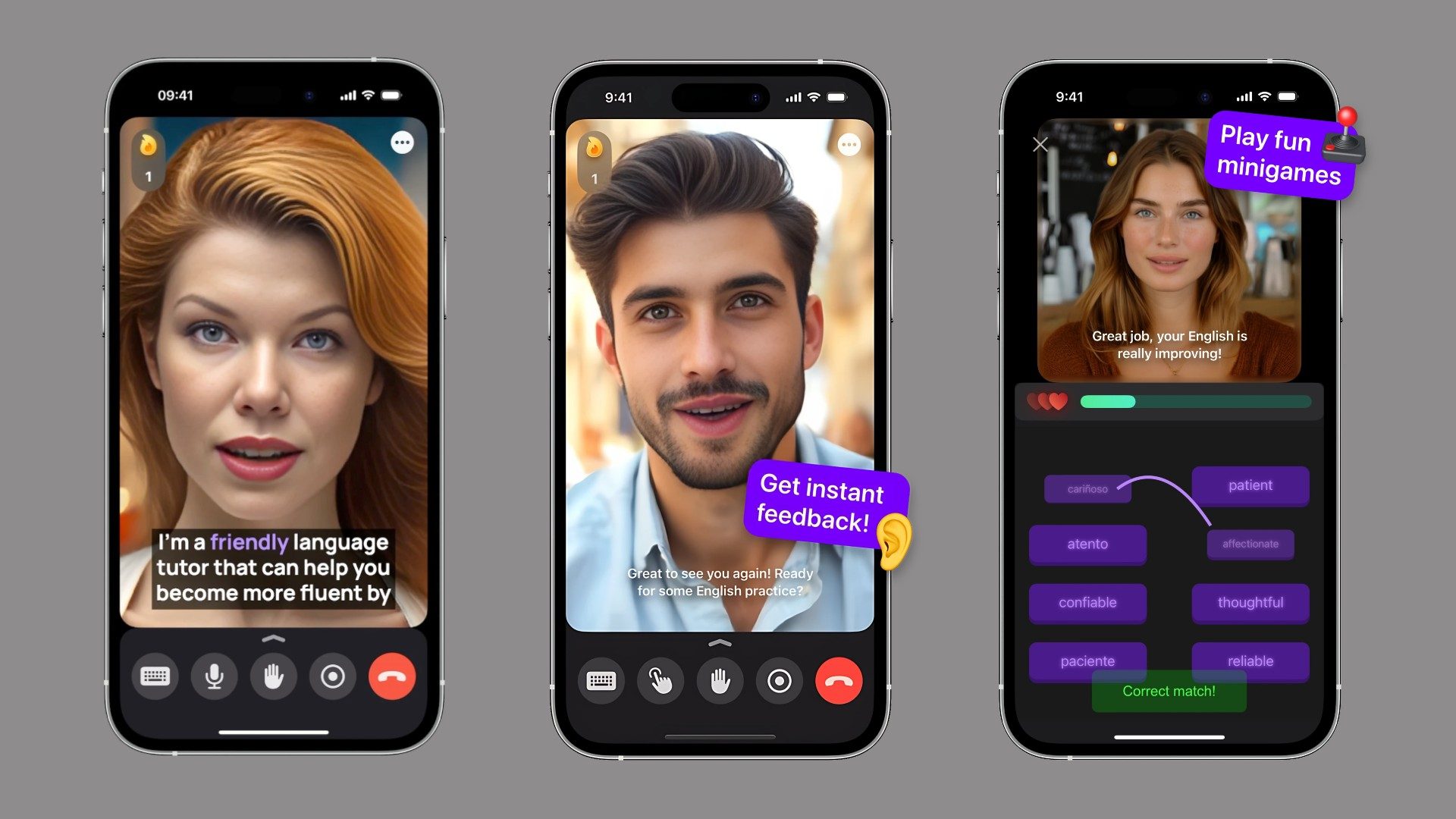
Animato was known for the now-defunct AI video calling app Call Annie, which paired 3D avatars with AI for face-to-face tutoring and language learning.

According to the filing (seen below), Apple isn’t outright acquiring Animato, but rather reserving the right to hire certain employees, get non-exclusive licenses to Animato’s intellectual property rights, and acquire Animato’s patent applications.

Here’s the January 19th filing via the European Commission’s Digital Markets Act:

Apple Inc. (“Apple”) will have the right to make employment offers to and hire certain employees of Animato, Inc. (“Animato”), receive a non-exclusive license to Animato’s intellectual property rights, and acquire Animato’s patent applications. Animato develops and distributes software that creates virtual avatars for video chats and tutoring. Apple (together with its group companies) designs, manufactures and markets smartphones, personal computers, tablets, wearables and accessories, and sells a variety of related services.

According to LinkedIn, Animato was founded by Francesco Rossi, who worked at Apple from 2015-2022 in the company’s computer vision R&D department, which included work on machine learning.

Having left Apple in 2022 to found Animato, the company released two now-defunct apps, Call Annie and BeSanta, the latter of which let users create impersonate Santa Claus and record videos for playback.

‘Call Annie’ | Images courtesy Animato Inc

This isn’t the first avatar-related acquisition (or in Animato’s case acqui-hire) Apple has undertaken following the 2024 launch of Vision Pro.

In early 2025, Apple quietly acquired 3D avatar company TrueMeeting, having obtained its 3D avatar tech stack and a number of its employees. At the time, the deal was thought to support the company’s photorealistic avatars for Vision Pro, aka ‘Personas’.

Notably, Personas are some of the most realistic 3D avatars in the XR space right now. Based on facial scans, Personas are animated with the help of Vision Pro’s various sensors; the downward-facing camera tracks mouth movement, internal sensors track your eyes and facial micro-expressions, and a particularly advanced machine learning stack blends all of this together into a realistic 3D avatar.

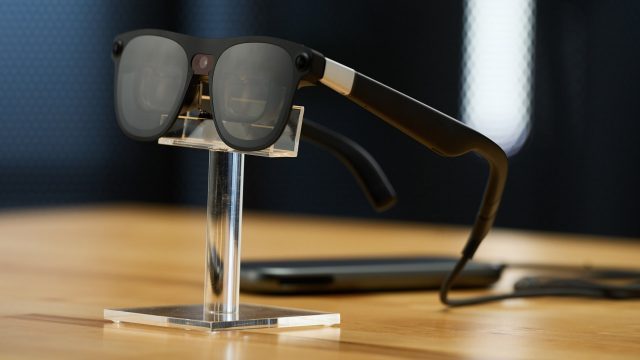
At least in terms of what we’ve seen in Call Annie, Animato’s tech seems to be more targeted at creating realistic AI avatars, which is something Apple may be after as the company further develops not only XR headsets like Vision Pro, but its forthcoming AR glasses, which are rumored to follow its first smart glasses—still in development behind closed doors.

The post Apple Acquires Key Talent & Patents Behind AI Avatar Company ‘Animato’ appeared first on Road to VR.


from Road to VR https://ift.tt/74nz1Gp
via IFTTT
Tuesday, 19 May 2026

Google & Samsung Reveal Smart Glasses for Fall Launch, Aiming to go Head-to-head with Meta

https://ift.tt/tnahce1

Google and Samsung today gave the first official glimpse of an upcoming pair of smart glasses which are set to go head-to-head with Meta’s own AI-based smart glasses.

The News

The new smart glasses revealed by the companies at Google I/O today are seemingly unnamed at this point but generally referred to as “intelligent eyewear.” Like most of Meta’s smart glasses lineup, this pair is limited to audio input & output. A camera exists for visual input, but there’s no built-in display for visual output, unlike Meta’s Ray-Ban Display glasses.

Image courtesy Google & Samsung

The new smart glasses from Google and Samsung come in two styles: one made in collaboration with eyewear brand Warby Parker and another made in collaboration with Gentle Monster. Last year Google reportedly invested $100 million in Gentle Monster as part of its growing smart glasses ambitions.

Image courtesy Google & Samsung

Google and Samsung say the glasses are designed to work as a companion device to a mobile phone—similar to Meta’s smart glasses—suggesting it will have limited capabilities when worn by itself. The companies say the glasses will work with both Android and iOS phones, though it’s likely that some limitations may exist on iOS.

As part of the announcement, the companies offered a tease of the device’s capabilities:

Users can access navigation assistance by simply asking Gemini with their voices, receive personalized suggestions such as a nearby coffee shop on their walking route, or even place an order for pickup. Users can also receive summarized notifications for important texts and add events to their calendars. Additional features include real-time translations with audio that matches the speaker’s voice, as well as the ability to translate text on menus or signs in the user’s line of sight. Working seamlessly within the Galaxy ecosystem, the device helps users easily manage everyday tasks or effortlessly capture photos, all without taking their phone out.

On stage at Google I/O, the company showed that some requests (like ordering food from a restaurant) pass the request to Gemini on the user’s phone, which actually navigates the Doordash app by itself to place the order. It’s unclear how widespread this ‘Gemini app control’ capability will be, but it could be a huge breakthrough for the usefulness of AI through smart glasses and beyond.

Pricing and detailed specs have not been announced at this time, though the companies say the Google and Samsung smart glasses will launch this Fall “in select markets.”

My Take

Meta has already been seen to double-down on its smart glasses business after seeing greater than expected adoption, and this announcement of new smart glasses coming from Google and Samsung shows a growing belief in head-worn devices as the ideal place to capitalize on increasingly useful AI agents that have motivated the tech sector in recent years.

While the initial focus is on audio as the primary output modality of these glasses, Google has already confirmed its intentions to also bring smart glasses with displays to market, though it’s unclear if that will happen in 2026 or beyond. Adding a display to smart glasses vastly increases its range of uses, but adds significant cost and UX complexity. Meta even saw the need to pair its Ray-Ban Display smart glasses with a neural control band to make it easier for users to control the glasses.

I find it interesting that Google and Samsung were ready to show the design of these upcoming smart glasses but haven’t actually given them a proper name yet. Perhaps they are aiming to call the glasses by a combination of the company name and the corresponding eyewear brand, ie: Samsung Warby Parker glasses and Samsung Gentle Monster Glasses (like Meta has done with the “Meta Ray-Ban” glasses and “Oakley Meta” glasses).

Interestingly, the announcement accompanying this news doesn’t include any mention of “Android XR,” which tells us that Google is likely to position smart glasses separately from more immersive and interactive AR glasses like those coming from XREAL.

It’s been nearly 14 years since Google introduced its first pair of smart glasses, Google Glass. Equipped with significantly more advanced AI capabilities and a form-factor that looks much closer to actual glasses, this era of smart glasses has a much better chance of taking off.

The post Google & Samsung Reveal Smart Glasses for Fall Launch, Aiming to go Head-to-head with Meta appeared first on Road to VR.


from Road to VR https://ift.tt/9q5EcBL
via IFTTT
Google Announces New Android XR Developer Program with AR Glasses Dev Kits

https://ift.tt/Z0Le7ya

Google today announced at its I/O developer conference that it’s launching a new Android XR developer program, which will include XREAL’s upcoming AR glasses.

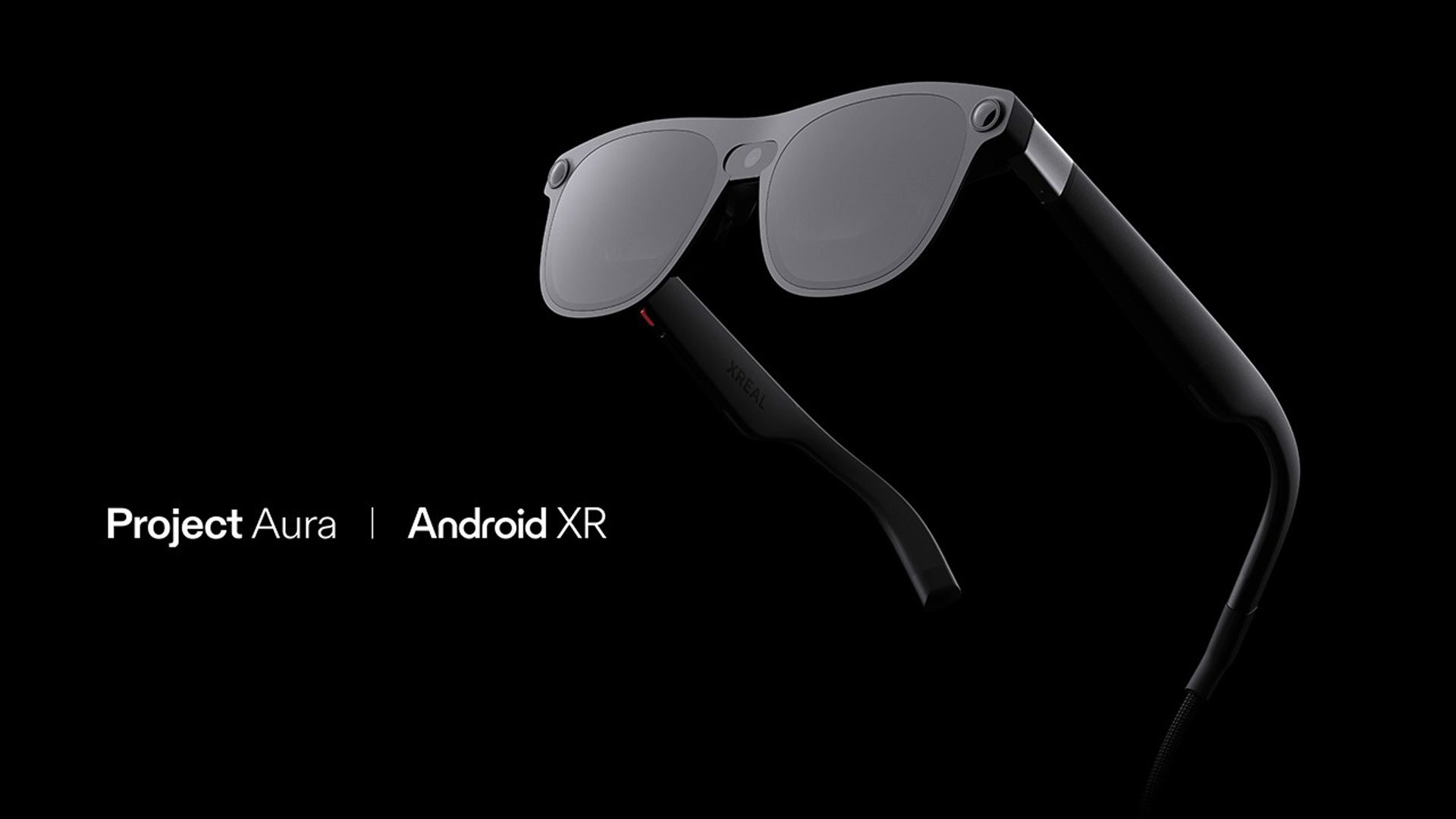
Called the ‘Android XR Developer Catalyst Program’, Google and AR hardware partner Xreal say they’ll be seeding program applicants with Project Aura dev kits, as well as tools and additional resources to get them creating fresh XR content.

Project Aura is the first pair of AR glasses running Google’s Android XR operating system, which the companies confirmed will ship sometime this year.

XREAL Project Aura | Image courtesy XREAL

“As part of the program, Project Aura developer kits will become available globally, giving select developers early access to hardware along with tools and resources designed specifically for Android XR development on Project Aura,” Xreal and Google said.

“The goal is simple: empower developers to start building the XR apps and experiences they’ve always imagined.”

Developers hoping to join the program can apply today at g.co/dev/catalyst, and Google/Xreal will review submissions and provide Project Aura developer kits in the coming weeks.

The post Google Announces New Android XR Developer Program with AR Glasses Dev Kits appeared first on Road to VR.


from Road to VR https://ift.tt/DzhZ2X3
via IFTTT
LG-Backed AR Lens Startup LetinAR Raises $18.5M Ahead of Planned IPO Next Year

https://ift.tt/CzTwxHA

South Korean augmented reality startup LetinAR has raised $18.5 million in fresh funding ahead of its planned IPO next year, something the company says will help scale production and accelerate commercialization of its AR optics.

As first reported by TechCrunch, LetinAR’s latest round was led by Korea Development Bank and included participation from Lotte Ventures, the investment arm of retail conglomerate Lotte Group, alongside additional undisclosed investors.

The funding brings LetinAR’s total raise to approximately $41.7 million, with previous investors including LG Electronics.

Founded in 2016 by CEO Jaehyeok Kim and CTO Jeonghun Ha, LetinAR develops compact optical modules for AR and smart glasses. Its proprietary ‘PinTILT’ technology is designed to deliver brighter images in thinner, lighter, and more power-efficient lenses than conventional waveguide or birdbath optics systems.

“We see AI glasses as that next platform,” Kim said, speaking to TechCrunch. “And the optical module is the hardest part to get right as AI glasses makers will need a lens that is thinner, lighter, and more power-efficient than what exists today.”

Notably, the company doesn’t manufacture complete AR or smart glasses, instead focusing on the sort of optical engines already in use with a few early collaborations, including NTT QONOQ Devices and Dynabook, formerly Toshiba Client Solutions.

The startup also said it’s engaged in R&D discussions with several major global tech companies regarding next-gen smart glasses platforms, with one such partner including Aegis Rider, a spinout from ETH Zurich Computer Vision Lab developing AI-powered augmented reality motorcycle helmets.

The funding round comes amid accelerating investment across the smart glasses sector. Companies including Meta, Google, Samsung, Apple, Huawei, Alibaba Group, and Xiaomi are all working on display-clad glasses of some sort.

The company plans to pursue a public listing in South Korea in 2027.

The post LG-Backed AR Lens Startup LetinAR Raises $18.5M Ahead of Planned IPO Next Year appeared first on Road to VR.


from Road to VR https://ift.tt/atRZSoL
via IFTTT

Monday, 18 May 2026

Pimax Starts Sending Out ‘Dream Air SE’ PC VR Headsets, But Fulfillment Could Take Weeks

https://ift.tt/3ZX0WqE

Pimax announced it’s finally started shipping out the first batches of Dream Air SE, the younger sibling to its thin and light PC VR flagship. Despite officially launching Dream Air SE last week, most customers will probably still be waiting a bit longer—even if you pre-ordered a year ago.

The company revealed in its big launch day event last week that Dream Air SE is technically now shipping, which has been over a year in the making. Still, you won’t find a big ‘buy now’ button on the website just yet, as the company is still taking pre-orders for its cheapest thin and light PC VR headset to date.

That said, it’s unclear when batches pre-ordered today will actually ship out without actually putting money down to find out yourself. Whatever the case, if you pre-ordered on day one, you may be waiting a matter of weeks, not days.

Dream Air – Thin and light PC VR headset containing Sony microOLED panels (3,840 × 3,552 pixels per eye) and concave-view pancake optics, delivering 110° horizontal FOV, eye-tracking, auto-IPD adjustment, spatial audio, and DisplayLink.

• Versions: Lighthouse tracked and no controllers ($2,000) – SLAM tracked with controllers ($2,300)

Dream Air SE – Lower resolution version of Dream Air containing Sony microOLED panels (2,560 × 2,560 pixels per eye) and all of the above, except with 105° horizonal FOV.

• Versions: Lighthouse tracked and no controllers ($900), SLAM tracked with controllers ($1,200)

One such pre-order customer, Reddit user ‘Aitch_5’, says they’ve received an email indicating their May 2025 pre-order is currently in production, however delivery was estimated to take “another 4-5 weeks,” putting the UK-based delivery sometime in mid-to-late June.

Pimax Dream Air SE (Lighthouse) | Image courtesy Pimax

Pimax tells Road to VR that the first batch has been shipped out however—a bulk shipping to local warehouses—so the company expects the first users to receive their headset in two-to-four weeks. The company says it’s going to provide more clarity around shipping in an update on the official website “soon.”

As the flowchart goes, Pimax says that early pre-order orders will be fulfilled first, then early reservation fee orders (pending full payment), and then additional pre-orders to follow.

The company says it’s offering a few benefits for customers pre-ordering Dream Air SE right now. Effective between May 14th – May 31st, Pimax is including:

  • Free shipping to selected regions
  • Two face masks (new & old, new is shipped separately later)
  • Discount coupon (DMAS Hardstrap 50% off, 50% off ringless controllers)
  • US-only Regional Surcharge: $50 USD

Both Dream Air and Dream Air SE have been subject to multiple delays, so at least for some, this will feel like a long-awaited relief.

Notably, Pimax first announced Dream Air in December 2024. Before it could even be shipped out to external beta testers, the company announced in May 2025 it was releasing a more budget-friendly version with Dream Air SE.

The post Pimax Starts Sending Out ‘Dream Air SE’ PC VR Headsets, But Fulfillment Could Take Weeks appeared first on Road to VR.


from Road to VR https://ift.tt/Hx3Tekq
via IFTTT

Friday, 15 May 2026

How to Play ‘Subnautica 2’ in VR, Although You May Want to Wait

https://ift.tt/yxv4r2Z

Subnautica 2 launched into early access yesterday, already having sold over two million copies in the first 12 hours. While it doesn’t include native VR support, that hasn’t stopped the most intrepid of us, who are already swimming around the depths in VR.

It’s no surprise that many Subnautica 2 owners have quite literally already popped their heads into the non-VR game. Like many games built in Unreal Engine, Subnautica 2 can be played in VR already thanks to PrayDog’s UEVR mod suite.

One such user was YouTuber ‘LunchAndVR’, who showed off some of the first footage of playing the game in immersive VR. Here’s the quick, spoiler-free video:

LunchAndVR notes that for now, they’re only able to play in VR with 3DOF and head aiming, which is admittedly less than ideal when it comes to user comfort and immersion, since most VR gamers expect 6DOF and immersive hand controls.

Some pitfalls to avoid include disabling autosave in the game’s accessibility settings, LunchAndVR says, otherwise the game crashes repeatedly. To do that, simply go to Subnautica 2 settings > Debug Settings > Disable Auto Save. At least for now, that means you’ll need to disable VR mode, save whilst in flatscreen, and then re-enable VR.

LunchAndVR also warns that the game isn’t “so good performance wise,” forcing them to lower settings for better stability.

While UEVR isn’t a plug-and-play solution—i.e. you can’t expect perfect results right out of the box—the modding community is currently hard at work generating more immersive mod profiles, which we expect to see in the coming days.

To boot, the Flat2VR modding team even teased a more advanced UEVR profile on the official Discord (invite link), showing Subnautica 2 in action with what appears to be basic motion controls.


Still, as tantalizing as it may seem, you may be better off waiting if you’re hoping to play from start to finish in VR—and that goes beyond the ad hoc VR implementations we’re seeing today.

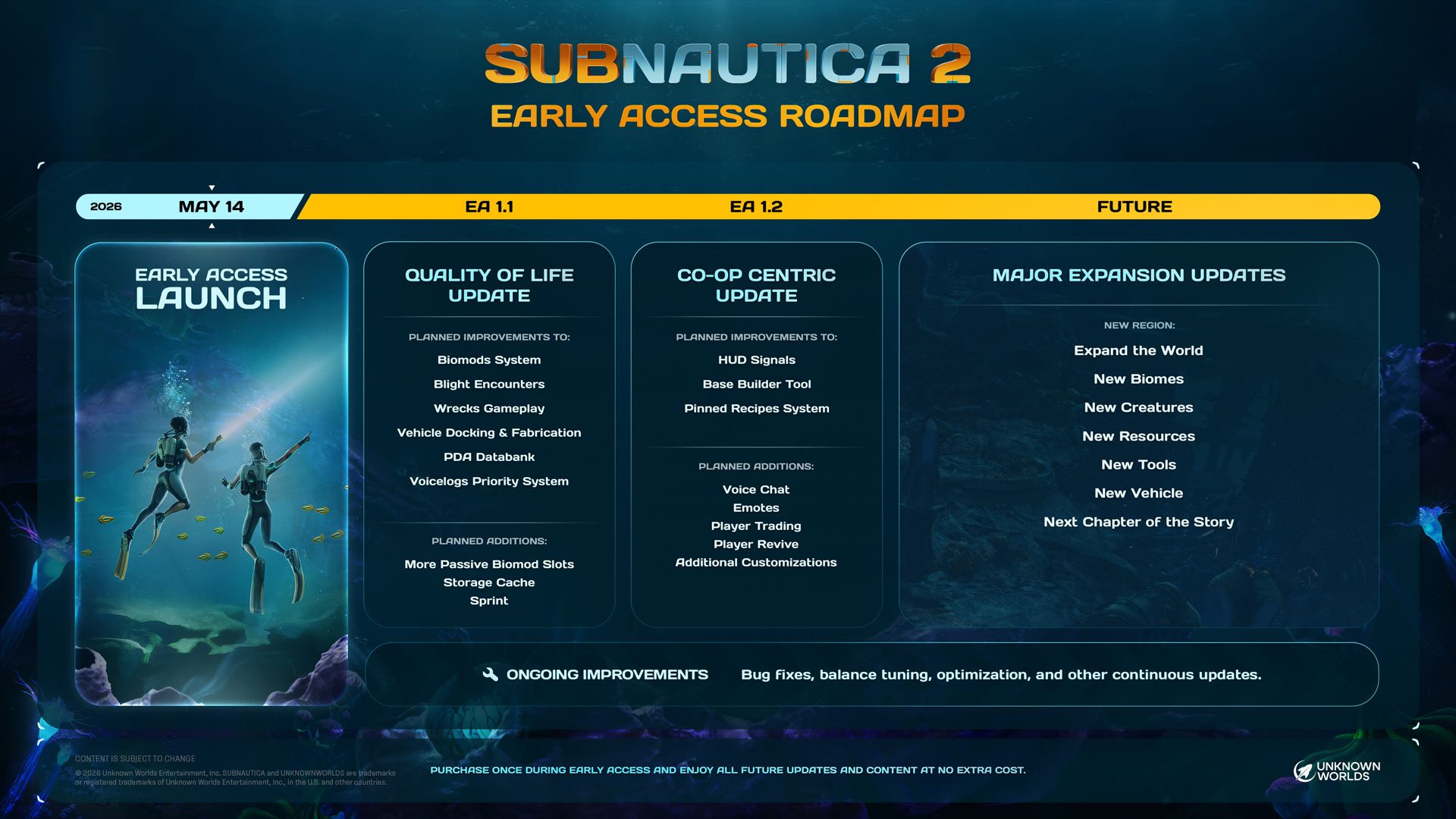
Although the game is impressively polished at this early date, it’s going to be in Early Access over the course of the next two to three years, developer Unknown Worlds says, which means we’re sure to get plenty more content between now and then.

Image courtesy Unknown Worlds Entertainment

That said, there’s nothing holding you back from doing it right now, or actively contributing to the modding community to make it better for everyone else. Just be warned that updates are likely coming down the pipeline quickly, which could throw UEVR profiles out of whack.

As it is, the studio says official VR support “seems unlikely” and that they’re not currently working on it—something that also seems to be even more clear in the early access roadmap released today.

How to Play Subnautica 2 in VR

From what we’ve heard so far, you’ll need to download the nightly build of UEVR to mess around in Subnautica 2—mess around being the operative words. Of course, you’ll need the PC version of Subnautica 2 as well.

Extract the UEVR.zip to a folder of your choice, then:

  1. Launch the frontend GUI (UEVRInjector.exe)
  2. Launch Subnautica 2
  3. Locate Subnautica 2 in the process dropdown list
  4. Select your desired runtime (OpenVR/OpenXR)
  5. Toggle existing VR plugin nullification (if necessary)
  6. Configure pre-injection settings
  7. Inject

PrayDog advises that more information and troubleshooting can be found on the Documentation page. In any case, we’ll be keeping our eyes peeled for some of the quick and dirty fixes the modding community will come up with, and add them here.

The post How to Play ‘Subnautica 2’ in VR, Although You May Want to Wait appeared first on Road to VR.


from Road to VR https://ift.tt/c2bNsRi
via IFTTT

Thursday, 14 May 2026

VR Platformer ‘Moss’ is Getting a Flatscreen Port Following Cancellation of “major project”

https://ift.tt/zcuV09n

Polyarc Games today revealed it’s releasing a flatscreen adaptation of VR puzzle-platformer series Moss, which follows the cancellation of a “major project” last month.

The News

Polyarc announced it’s bringing Moss (2018) and its sequel Moss: Book II (2022) to console and PC in a new flatscreen game called Moss: The Forgotten Relic, slated to arrive sometime this year.

In the game’s Steam page, Polyarc says Moss: The Forgotten Relic brings both previously VR-only games as “one complete, enhanced experience debuting on PC for first time.”

Moss: The Forgotten Relic is also slated to arrive on PS5, Nintendo Switch and Switch 2, and Xbox.

In addition to being a flatscreen port of both games, Moss: The Forgotten Relic promises enhanced visuals and performance, new handcrafted cutscenes, a “smart follow” camera, the ability to skip combat, and all ‘Twilight Garden’ DLC.

This follows recent turmoil at Seattle-based Polyarc, as the studio announced last month it was reducing headcount by two-thirds following an “unsuccessful team-wide effort to secure funding following the cancellation of a major project,” the studio said in April.

Notably, Meta’s recent shift in priorities at its Reality Labs XR division not only prompted the closure of a number of several internal game studios, but also the revelation it was pulling funding from a number of third-party VR projects.

This includes the closure of Meta-owned studios Sanzaru Games, Armature Studio (Resident Evil 4 VR port) and Twisted Pixel (Deadpool VR), with affected games including the reported cancellation of a Harry Potter VR game for Quest, which was supposedly being developed by Skydance Games.

My Take

While both are distinctly VR natives, Moss and Moss: Book II are one of the handful of VR games to use a third-person POV, which could make for a smoother transition to flatscreen.

Moss does engage players with first-person tasks, like reaching into the world for direct interactions, although most of the action is directed at controlling the series’ pint-sized protagonist Quill via gamepad controls, so it’s not difficult to see how the games might be adapted for flatscreen.

I definitely don’t want to conflate a few flatscreen release to an outright abandonment of VR games, although we have seen a few high profile exits in the past, specifically from studios behind popular VR platformers—which is worrying.

One of the firsts was Playful’s Lucky’s Tale (2016). It was one of the most talked-about VR games of its era, as it came for free with the original Oculus Rift as a platform exclusive, and successfully mashed up 360 immersion with traditional platforming action.

Lucky’s Tale eventually came to PSVR and SteamVR headsets in 2022, although not after the studio released Super Lucky’s Tale for console and flatscreen PC in 2017 and its re-imagining New Super Lucky’s Tale in 2020. Yes, the studio did eventually bring the original game to Quest, PSVR and SteamVR headsets, but it was essentially just a remaster with a drip of additional content at that point.

Then there was ASTRO BOT Rescue Mission (2018), Road to VR’s first [10/10] game, which was created by Sony’s Tokyo-based Japan Studio. When Team Asobi, the studio’s spiritual successor, announced a sequel was coming in 2024, VR fans were basically left in the dust, as the studio implicitly told VR players not to hold out hope for support.

Neither Playful nor Team Asobi have produced anything in VR after their respective forays. And frankly, it’s hard not to see this as a Hail Mary by Polyarc, as a flatscreen adaptation is a cheap way of putting out something following its major downsizing in April.

That said, it remains to be seen whether the studio’s recent project cancellation was indeed another mainline entry into the Moss franchise, or something altogether different. Whatever the case, it seems to have taken the wind right out of the VR veteran’s sails.

The post VR Platformer ‘Moss’ is Getting a Flatscreen Port Following Cancellation of “major project” appeared first on Road to VR.


from Road to VR https://ift.tt/nszomg0
via IFTTT

Wednesday, 13 May 2026

‘Blade Runner’ Immersive Experience Coming to VR Destinations Next Year

https://ift.tt/6Y4BubQ

Behaviour Interactive, the studio behind asymmetrical multiplayer Dead by Daylight (2016), announced it’s developing an immersive experience based on iconic cyberpunk sci-fi Blade Runner.

The studio revealed it’s working with original IP holder Alcon Entertainment as well as Montreal-based PHI Studio, known for co-producing location-based VR experience Space Explorers: THE INFINITE and mixed reality theater experience BLUR. The news was first reported by Heise Online.

According to the experience’s description, Blade Runner: The Immersive Experience will include a “multisensory exploration blending dystopian environments with deep storytelling.”

“Staying true to the original vision of Alcon Entertainment, this project explores the contrasts between humanity and technology through cutting-edge digital scenography and an immersive soundscape,” the studios say.

While the team hasn’t revealed locations or launch dates yet, the project is being backed by Montreal-based VR destination Infinity Experiences, which previously worked with Univrse and Banijay Live Studio to launch an immersive experience based on sci-fi anthology BLACK MIRROR.

Notably, Infinity Experiences operates locations across North America, including locations in Montreal, Edmonton, Calgary, Quebec, and Mississauga in Canada, and locations in Chicago, Atlanta, and Houston in the US.

Blade Runner: The Immersive Experience is already in production, and scheduled for a North American premiere in 2027, the studios say, noting we’ll hear more details in the coming months.

The post ‘Blade Runner’ Immersive Experience Coming to VR Destinations Next Year appeared first on Road to VR.


from Road to VR https://ift.tt/b0cQvnj
via IFTTT

Tuesday, 12 May 2026

Meta Connect Event Set for September 23–24 Alongside New Glasses Tease

https://ift.tt/X1fldHJ

Meta’s annual Connect event is set to return on September 23–24. The company teased what appears to be a new pair of smart glasses, and said its event will focus on “the latest in VR, wearables, metaverse, and AI.” All eyes will be on the event this year as the XR industry watches to gauge Meta’s next moves after a year of major reorganization and shifting priorities.

The News

Meta Connect 2026 will be hosted from September 23–24. The company’s annual event highlights its latest news and priorities in XR and AI. As with previous years, the event will be held at the Menlo Park campus, with significant keynotes and announcements being streamed online.

Alongside the Connect date announcement, Meta CEO Mark Zuckerberg shared a photo on social media teasing what’s likely to be a new pair of the company’s smart glasses which now span audio-only and a pair with a monocular display. In the photo the glasses were scratched out with blue markings to hide any identifying features.

Image courtesy Mark Zuckerberg

My Take

While it’s no surprise that Meta is hosting Connect once again this year, the 2026 edition of the event feels especially important for both the company and the XR industry at large.

The last 12 months have been anything but smooth sailing for those who are part of the XR industry. Canceled projects, layoffs, and closures at many of Meta’s internal XR studios have shown the company’s shifting of priorities away from XR and more toward its smart glasses business. Against the backdrop of similar struggles among external XR studios, the future hasn’t been looking very bright.

Meta insists it’s still committed to building and investing in XR, positioning its moves as necessary steps to course-correct on initiatives that didn’t pan out as expected.

Meta Connect will be the company’s next clear opportunity to give developers and customers confidence in the future of the Meta XR ecosystem.

One major thing driving uncertainty in XR right now is that Meta has announced several new pairs of smart glasses, but has not been clear about plans for upcoming Quest devices (the last of which, Quest 3S, was launched more than a year-and-a-half ago). Reporting suggests Meta’s headset plans have been shifting internally; rumors have been swirling about a high-end puck-focused headset that would be a Vision Pro competitor, or a more affordable next-gen Quest.

Meta announcing a new headset at Connect is probably the strongest signal the company could send to show both confidence and direction in its ecosystem. If a new headset isn’t announced, it will surely have the opposite effect.

The post Meta Connect Event Set for September 23–24 Alongside New Glasses Tease appeared first on Road to VR.


from Road to VR https://ift.tt/dNV7qmv
via IFTTT

Samsung Reportedly to Debut First Smart Glasses at Galaxy Unpacked on July 22nd

https://ift.tt/RdNLO9c

Images and specs of Samsung’s upcoming smart glasses may have already leaked, however a new report suggests we may get an eye-full at the company’s Galaxy Unpacked product event in July.

At the time of this writing, Samsung hasn’t confirmed when its next Unpacked event will be, however according to Seoul Economic Daily, the South Korean tech giant is reportedly getting ready to hold its its next big product launch event in London on July 22nd.

There, we can expect to see a first look at the Galaxy Z Fold8 and Flip8 next-gen foldables, Galaxy Watch9 series, as well as its first smart glasses, which the company confirmed will arrive sometime this year.

Citing industry sources, Samsung is reportedly working with South Korea-based eyewear brand Gentle Monster “to enhance design and practical competitiveness” of the device, which is set to run Google’s Android XR operating system.

Render based on reportedly leaked images | Image courtesy Android Headlines

At Google’s I/O developer conference in May, Google announced it was partnering with Gentle Monster in addition to separate efforts with Warby Parker, Gucci parent company Kering, and Samsung to produce the first slate of Android XR smart glasses, which are expected to compete with Ray-Ban Meta.

Late last year however, Samsung announced it was working with Gentle Monster and Warby Parker on styling, making it less clear what devices we’ll see and which company is principally behind them.

Like Ray-Ban Meta and Oakley Meta smart glasses, those initial units are expected to be audio-only, i.e. not include a display of any kind, but instead include microphones, camera, speakers, and onboard AI.

The report notes Samsung’s smart glasses, which some have dubbed ‘Galaxy Glasses’, are expected to launch in Q3 of this year.

Notably, they will be positioned “not as a mere wearable device but as a core ‘edge device’ that completes its AI ecosystem, entering into full-scale competition with global companies such as Meta of the U.S. and Xiaomi of China,” the report maintains.

Additionally, Samsung is expected to connect its smart glasses with its broader device ecosystem, including smartphones and SmartThings home appliances, the report says.

This follows a supposed leak of images and specs of Samsung’s first smart glasses, which is reportedly including specs very similar to the latest Ray-Ban Meta (Gen 2).

The company is also reportedly working on more advanced units, as per code mined from the most recent One UI 9 firmware, which revealed a new and wholly distinct model number that some have speculated could be a pair of smart glasses with built-in display.

The post Samsung Reportedly to Debut First Smart Glasses at Galaxy Unpacked on July 22nd appeared first on Road to VR.


from Road to VR https://ift.tt/lXbQCmx
via IFTTT

‘Subnautica 2’ Devs: Don’t Hold Your Breath for Official VR Support

https://ift.tt/Oih6IvW

Believe it or not, the original Subnautica (2018) actually included basic PC VR support well before its 1.0 launch. With its long-awaited sequel coming out this week though, you probably shouldn’t hold your breath waiting for official VR support.

Unknown Worlds Entertainment is releasing Subnautica 2 in early access on May 14th, which, as we’ve heard for years now, won’t include any official VR support of any kind.

As far back at game’s 2024 FAQ, the studio said adding VR support to Subnautica 2 “seems unlikely.”

Striking more of a conciliatory tone, the game’s Creative Producer Scott MacDonald more recently said this in a developer Q&A last summer:

“While we’re big fans of VR, and I have loads of headsets myself, we’re not currently working on VR support, but who knows what could happen in the future.”

Notably, the original Subnautica got rudimentary Oculus Rift DK2 support just one week after its early access launch in 2014, and even launched on Oculus Home in 2016 alongside the first consumer Oculus Rift.

Still, the game’s VR implementation left much to be desired, feeling unfinished, especially by today’s standards. Despite being extremely atmospheric and (at times) pretty immersive, it ultimately lacks many of the native VR touches you’d expect for more than a quick jaunt, such as awkward UI, weak controller support, and performance problems abound, requiring mods to get into a sufficiently playable state.

What’s more, Unknown Worlds Entertainment hasn’t shown any real signs of interest in building out first-party VR support for any of its games beyond the first Subnautica; the studio’s first big follow-up, Subnautica: Below Zero (2021), was even released at the height of the COVID-19 VR boom—the same year Facebook rebranded to Meta—but never gained official VR support.

There is still hope though that you’ll be able to jump into the deep waters of Subnautica 2 in VR. Because it’s being built in Unreal Engine 5, VR injector tools like Praydog’s UEVR are probably going to be your best bet while waiting (possibly indefinitely) for official VR support. Community-sourced settings usually crop up closely after launch too, like we saw with Bethesda’s remaster of The Elder Scrolls IV: Oblivion last year.

Early access also means we can expect more features over the course of the next two to three years, as the studio says it will likely be that long before we see an official 1.0 release, although official VR implementation doesn’t look likely at this point. Whatever the case, we’ll have our eyes peeled for mods and more tips on how to play Subnautica 2 in VR.

The post ‘Subnautica 2’ Devs: Don’t Hold Your Breath for Official VR Support appeared first on Road to VR.


from Road to VR https://ift.tt/WwXsT1Z
via IFTTT
Monday, 11 May 2026

Meta’s New AI-Powered VR Toolkit Lets Anyone Build WebXR Experiences Without Coding

https://ift.tt/Ys7x5hQ

Meta announced a major update to its open-source Immersive Web SDK (IWSDK) framework, which lets developers build VR experiences on the web using WebXR—now including an “agentic workflow” powered by AI coding assistants which aims to reduce

Originally launched at Meta Connect last year, IWSDK aimed to simplify VR development tasks like physics, hand-tracking, movement, grab interactions, and spatial UI, something Meta says allows creators can focus on ideas instead of low-level engineering.

The new addition, which Meta announced in a developer blog post, now includes an “agentic workflow” powered by AI coding assistants such as Claude Code, Cursor, GitHub Copilot, and Codex.


“In practice, agentic workflows mean the AI does more than generate code; it also tests and validates it. This closed-loop system is essential for high-quality, reliable results. IWSDK’s AI integration closes this loop entirely, offering developers maximum productivity,” Meta says.

To demonstrate the system, Meta rebuilt its 2022 VR gardening demo ‘Project Flowerbed‘, previously made up of tens of thousands of lines of custom code. Using IWSDK’s AI workflow and existing art assets, the entire application was recreated in only 15 hours, the company says, noting the tool isn’t about “fixing a typo or generating boilerplate. It’s a full, interactive VR experience for web, rebuilt by AI using IWSDK.”

Meta’s main reasoning behind its latest (and certainly not last) injection of AI is mainly centered around ease of deployment. Web-based VR can be tested instantly in a browser without lengthy compile times, and can also be deployed across desktop and VR headsets via a simple URL, bypassing app stores and downloads. Notably, the company says over one million monthly users already access WebXR content on Quest.

If you’re looking to learn more, or explore Meta’s new AI workflow, check out IWSDK here. You can also find the open-source project (under MIT licensing) over on GitHub.

The post Meta’s New AI-Powered VR Toolkit Lets Anyone Build WebXR Experiences Without Coding appeared first on Road to VR.


from Road to VR https://ift.tt/8Q2Wxc6
via IFTTT

Wednesday, 6 May 2026

Everything Announced at Today’s Creature Feature & Friends VR Showcase

https://ift.tt/gB4owEc

We got an eye-full of VR stuff during today’s Creature and VR Games Showcase livestream, which showed off a bevy of new VR games and updates coming to a headset near you.

Here’s the full drop, frontloaded with a very obvious headliner: the upcoming sequel to Hot Dogs, Horseshoes & Hand Grenades.

Hot Dogs, Horseshoes & Hand Grenades Sequel

Get ready to shoot, loot, and scoot as a sentient hot dog in the sequel to Hot Dogs, Horseshoes & Hand Grenades (H3VR), the award-winning, best-selling immersive FPS. Hot Dogs, Horseshoes & Hand Grenades 2 is heading to Quest 3/3S and Steam.

Read all about the upcoming sequel here, including gameplay details and an interview with Rust Ltd’s Anton Hand for more.

Adventure Compass Release Date

Trebuchet just announced its open world VR flight adventure Compass now has a release date on Quest 3/3S & Steam: May 28th.

Wordbound Coming to VR and PC

Viral words-to-life puzzler Wordbound prepare you to become a powerful wordsmith. Canadian studio Kettle Games unveiled a brand-new gameplay teaser trailer for its language puzzler Wordbound and confirmed a Steam release. Wordbound is also heading to Quest 3/3S and SteamVR.

Janet’s Planets Revealed

https://www.youtube.com/watch?v=0Tn4lH3kx6k

Welcome to the best VR terraforming service in the Milky Way! Really Interactive (Toran, Virtuoso) revealed its next game, intergalactic narrative adventure Janet’s Planets, is heading to Quest 3/3S and Steam.

Crêpe Master!

The colorful VR beat ‘em up adventure from indie French Developer Halluination Studio shared a timely reminder that the game releases tomorrow, May 7th, on Quest 3/3S.

Crêpe Master! sees you play as Hana, a magical girl who embodies the reincarnation of the Crêpe Goddess. Wielding her Sacred Pan and performing magic by striking poses, you must defend your home from an alien invasion and stop the ruthless tyrant threatening the Earth’s most beloved treat.

Sock Puppet Superstar

Creature has announced that the next game from Brandon Montell, Sock Puppet Superstar, will be published by the Creature Label.

Control a singing sock puppet with your hand in VR on Quest and Steam. Open the mouth to make it sing, and match the notes flying towards you to stay on pitch. Perform solos or two-handed duets, unlock ridiculous voices and accessories, and put on the greatest sock concert of all time.

Laser Dance ‘Mimic Update’

Thomas Van Bouwel (creator of the critically acclaimed VR game Cubism) announced that Laser Dance, currently out in Early Access on Quest, will be getting a new update, which adds six new levels to Laser Dance, the MR game that turns your living room into a laser obstacle course. These levels feature a new green laser, which moves only when the player moves.

The Mimic Update is planned to be released later this summer, but players who already own Laser Dance can join the Discord (invite link) to try an early beta.

Deadly Delivery: The Goldmoon Update

Indie team Flat Head Studio (We Are One) today announced their VR horror co-op Deadly Delivery, where you avoid monsters, drop off packages, and pray you reach the quota, is getting new content today on Quest and Steam.

CROSSINGS Updates

Indie developer Neat Corp (Budget Cuts, Garden of the Sea) showcased a developer interview for VR Norse epic CROSSINGS, showcasing a number of post-launch QOL updates and improvements to multiplayer.

Delve into the afterlife and take on the weavers of fate in this Norse-inspired first-person VR soulslike. CROSSINGS is out now on Steam and Quest 3/3S.

Sweet Surrender Update

Image courtesy Salmi Games

Indie VR studio Salmi Games announced that Sweet Surrender is getting a brand new update today. This is Update 16 for the game that is out now on Quest, PSVR 2 and Steam and includes a third chip slot, 55 new chips, including medical precision, cross contamination, and after shocks, among TONS more.

Sweet Surrender is a frenetic roguelite shooter fully in VR. Battle to the top floor of a dystopian megatower using a vast array of weapons, tools and upgrades, pushing through treacherous environments and waging war against an army of hostile machines.

Beat the Beats Level Editor

Image courtesy Parallel Circles

Get ready to feel the rhythm with Beat the Beats, the VR rhythm game that’s out on Quest, Steam and Pico 4. In today’s teaser trailer, Parallel Circles (Flat Heroes) revealed that the game will be getting a Level Editor, coming soon to Steam Workshop.

Beat the Beats is an electric mix of rhythm and boxing. Use realistic punches to pound your way through over 90 musical arcade levels across 45 electronic tracks, all in hypnotic VR. Get pumped, get moving and beat the beats.

Spymaster Coming Tomorrow

Spy fans, get ready, as InnerspaceVR’s Spymaster is preparing its first mission briefing for you! In the world of counterintelligence, where every second counts, Spymaster arrives tomorrow, May 7th, as an Early Access title for Quest and SteamVR.

Spymaster is a high-stakes action-narrative VR game filled with exciting set sequences, puzzles and humor. Step into the shoes of operatives TIC, Mulligan, and OSCR, each with their own skills, gadgets, and irreverent dialogue. From NODE’s secret command center hidden inside a trawler boat, you’ll be assigned missions taking you all over the world.

The post Everything Announced at Today’s Creature Feature & Friends VR Showcase appeared first on Road to VR.


from Road to VR https://ift.tt/5XQvHoZ
via IFTTT

Sequel to Acclaimed VR Shooter ‘Hot Dogs, Horseshoes & Hand Grenades’ Coming to Quest & PC VR

https://ift.tt/wZVbc1r

Hot Dogs, Horseshoes and Hand Grenades (H3VR) is one of those silly, but surprisingly realistic PC VR shooters that kept on giving well after its release on Steam Early Access in 2016. Now, developer Rust Ltd announced a sequel is coming, and it’s a “full fledged” extraction shooter.

Revealed during the Creature Feature & Friends 2026 showcase, H3VR2 is coming to Quest 3 and 3S as well as PC VR headsets via Steam. Since the original is a PC VR-only game, this means Quest users will finally get a crack at operating the game’s highly realistic gun models when it releases—when, we still don’t know.

Alongside the announcement trailer, the studio says the upcoming VR extraction shooter will challenge you to “master an arsenal of the best guns in VR, fight your way through an endless procedurally generated megastructure, or just chill out and plink on the range.”

And like the original H3VR, you can of course expect hot dog-based enemies to battleagainst, as the game’s ‘Facility’ mode sees you take on missions, extract resources and gain loot for subsequent runs.

“Test those skills against other players in the competitive Combat mode, giving each player the same run as you fight across online leaderboards. Combined with daily challenges, runs and leaderboards you’ll find a ton of guns, gear, cosmetics and toys to unlock and collect as you go,” the studio says.

That means the sequel will not only include a tactical action roguelike, which comes with procedural-generation for endless runs, as well as guns, gear, cosmetics and toys to unlock and collect—but also all of the sandbox stuff on the side too.

We sat down with Rust founder and principal developer Anton Hand to learn a little more about the upcoming sequel, and why it’s now targeting Quest after years of Hand maintaining H3VR couldn’t run on the standalone platform.

Image courtesy Rust Ltd

To Hand, Quest 3 has finally crossed a critical threshold of processing power to make it possible. He tells Road to VR however it isn’t just raw processing power.

“Yes, Quest 3 is 100% an ‘over the power threshold to be truly interesting’ device. Granted, to make something as sophisticated as we have run on it, it’s still taken a significant, absolutely top class engineering team to make it happen,” Hand says.

There were also several major ‘ah ha’ moments along the way to developing the sequel for Quest 3, which Hand reveals has been in development over the past two and a half years.

“I basically heard from dev friends once [Quest 3] came out ‘yo you need to check this out, it’s easy more powerful than you think. I think the stuff you’re interested in making can (barely) run on this’.”

To boot, Hand says the studio is targeting 72 fps on Quest 3, which means the game won’t need to in constant space-warp to run.

Image courtesy Rust Ltd

Although there are “plenty of things about the Quest platform” he thinks could be radically improved, to Hand, it’s also about meeting users where they’re at: Quest 3 and Quest 3S.

“[I]t’s where the larger audience of customers are for sure, and shipping there for us is about targeting two modern devices that are for sale, as opposed to other contexts. In the end it’ll probably end up being the least stressful platform to ship on, even if the technical constraints of standalone make things properly challenging.”

Hand also revealed that Meta gave the studio “a significant amount of support” to build the H3VR2, which is notably “not a port. It’s not a ‘mini’ version of H3VR1 shushed down into standalone.”

As for H3VR1, which is still in early access, Hand says they’re still working on the 1.0 release, which is “all about making sure modding and user generated content using our custom tools is setup to have the community make cool stuff for H3 for as long as they love to,” Hand says.

The studio will also continue supporting the original game with bug fixes, maintenance related to platforms and new devices “for the foreseeable future,” noting there may be a “little holiday thing here and there,” Hand says.

There’s no specific release date yet for H3VR2, although you can wishlist it now on the Horizon Store for Quest 3 and 3S, and Steam for PC VR headsets.

The post Sequel to Acclaimed VR Shooter ‘Hot Dogs, Horseshoes & Hand Grenades’ Coming to Quest & PC VR appeared first on Road to VR.


from Road to VR https://ift.tt/QKV2Mqy
via IFTTT

The 50 Best-selling Quest Games of All Time – 2026 Analysis

https://ift.tt/0hZC1k4

It’s been a little over a year since Meta revealed its top 50 best-selling games of all time. Here’s the rankings as they stand today, and why they haven’t really changed that much.

Not a lot has changed in Quest’s top 50 best-selling games list, which is partially to be expected since Meta’s list ostensibly covers sales since the original Quest was initially released in 2019.

Note: If you want to skip the analysis, you’ll find the full list at the bottom of the article.

Some of those oldies (but goldies) have years of sales behind them, which makes it tough for newcomers to break through, especially since the list doesn’t reflect the money earned from DLC or in-game purchases, just initial sales. That means those high-earning free-to-play games aren’t represented.

Those oldies also make for great first-time experiences that newcomers can instantly latch onto. Granted, with Meta increasing Quest 3 and 3S prices by $50-$100 last month, that may not be such an important factor moving forward, as it’s bound to have some effect on Quest adoption.

Still, in comparison to this time last year, only three games have managed to crack the top 50: NightClub Simulator VR (2022), Green Hell VR (2022), and MotoX (2021)—none of which are technically even new. That’s right. Not a single game released in 2026 has broken the top 50 yet.

What is interesting though is those three high-action games just so happened to have bumped three decidedly more chill puzzle games off the list: Angry Birds VR: Isle of Pigs (2019), Moss (2019), and Please, Don’t Touch Anything (2019).

Although many games only traded places by a few spots up or down, there were some big movers too. Games with notable upward momentum included a handful of sims: delightful kitty cat sim I Am Cat (2024), seminal boxing sim Thrill of the Fight (2019), nightclub bouncer sim I Am Security (2024), and team-based shooter Pavlov Shack (2023).

There were also a few that dropped a fair bit too. Travel sim Wander (2019) and fruit-slicing Fruit Ninja (2019) both showed a downward trajectory.

As promised, here’s the list, which includes rankings as they are today and movement from last time we checked in last year.

50 Top-selling Quest Games (May 2026)


  1. Beat Saber →0
  2. Job Simulator →0
  3. Blade & Sorcery: Nomad ↑1
  4. SUPERHOT VR ↓1
  5. Virtual Desktop ↑1
  6. Among Us 3D ↑1
  7. The Thrill of the Fight ↓2
  8. Vader Immortal: Episode I ↑1
  9. BONELAB ↑2
  10. Onward ↓2
  11. The Walking Dead: Saints & Sinners ↓1
  12. Creed: Rise to Glory – Championship Edition →0
  13. Five Nights at Freddy’s: Help Wanted ↑1
  14. Vader Immortal: Episode III ↓1
  15. GOLF+ ↑2
  16. Vader Immortal: Episode II →0
  17. Eleven Table Tennis ↑1
  18. POPULATION: ONE ↓2
  19. I Am Cat ↑4
  20. Drunkn Bar Fight →0
  21. Walkabout Mini Golf ↓1
  22. Contractors →0
  23. GORN ↓2
  24. The Thrill of the Fight 2 ↑5
  25. Resident Evil 4 ↓1
  26. NFL PRO ERA →0
  27. Pistol Whip ↓2
  28. Ghosts of Tabor ↑2
  29. Vacation Simulator ↓2
  30. Waltz of the Wizard ↑4
  31. Real VR Fishing →0
  32. I Am Security ↑10
  33. Pavlov Shack ↑6
  34. Wander ↓6
  35. A Township Tale ↓3
  36. The Climb 2 ↓3
  37. Star Wars: Tales from the Galaxy’s Edge ↓1
  38. NightClub Simulator VR NEW
  39. Fruit Ninja ↓4
  40. Hand Physics Lab ↓3
  41. Arizona Sunshine ↓3
  42. I Expect You To Die ↓1
  43. Gun Club VR ↓3
  44. Shave & Stuff ↑1
  45. Warplanes: WW1 Fighters ↓2
  46. The Room VR: A Dark Matter ↓2
  47. SKYBOX VR Video Player →0
  48. Green Hell VR NEW
  49. The Climb ↓3
  50. MotoX NEW


The post The 50 Best-selling Quest Games of All Time – 2026 Analysis appeared first on Road to VR.


from Road to VR https://ift.tt/kVe4zbl
via IFTTT
Related Posts Plugin for WordPress, Blogger...