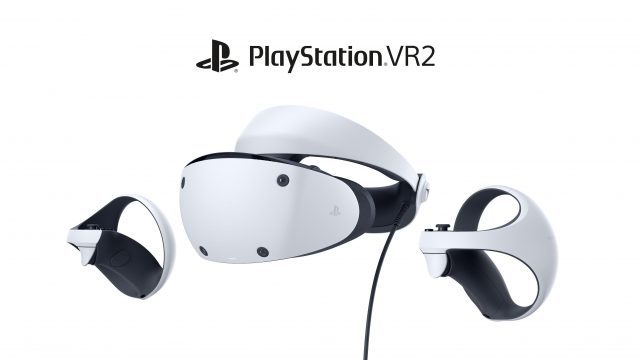
Black Friday is still a week away, but Sony has already released its Black Friday deals, including the best PSVR 2 sale we’ve seen. You can now get the PSVR 2 Horizon Call of the Mountain bundle for just $350, a 42% discount over the usual price.
The bundle includes the PSVR 2 headset, controllers, and a digital copy of Horizon Call of the Mountain, a flagship title for the platform which we scored an 8.5 out of 10 in our review. The headset, originally released in early 2023, features OLED displays, impressive haptics, a resolution of 2,000 × 2,040 per-eye, and inside-out tracking.
While the PSVR 2 headset itself has dipped to $350 previously, this is the first time we’ve seen the Horizon Call of the Mountain bundle drop to this price. Curiously, the PSVR 2 headset itself is also on sale for $350. That’s the same price, but without the bundled game… so definitely got for the bundle if you’re planning to jump on this deal.
This discount follows the release of Sony’s PC VR adapter, which became available in August for $60. The adapter allows the PSVR 2 to be used with SteamVR on compatible gaming PCs, although certain features like HDR, headset haptics, and adaptive triggers are not supported when used with PC.
The $350 deal is currently listed as a limited-time offer. If you can’t find stock on Amazon, we’re also seeing the deal at Target, Walmart, Best Buy, and direct from PlayStation.
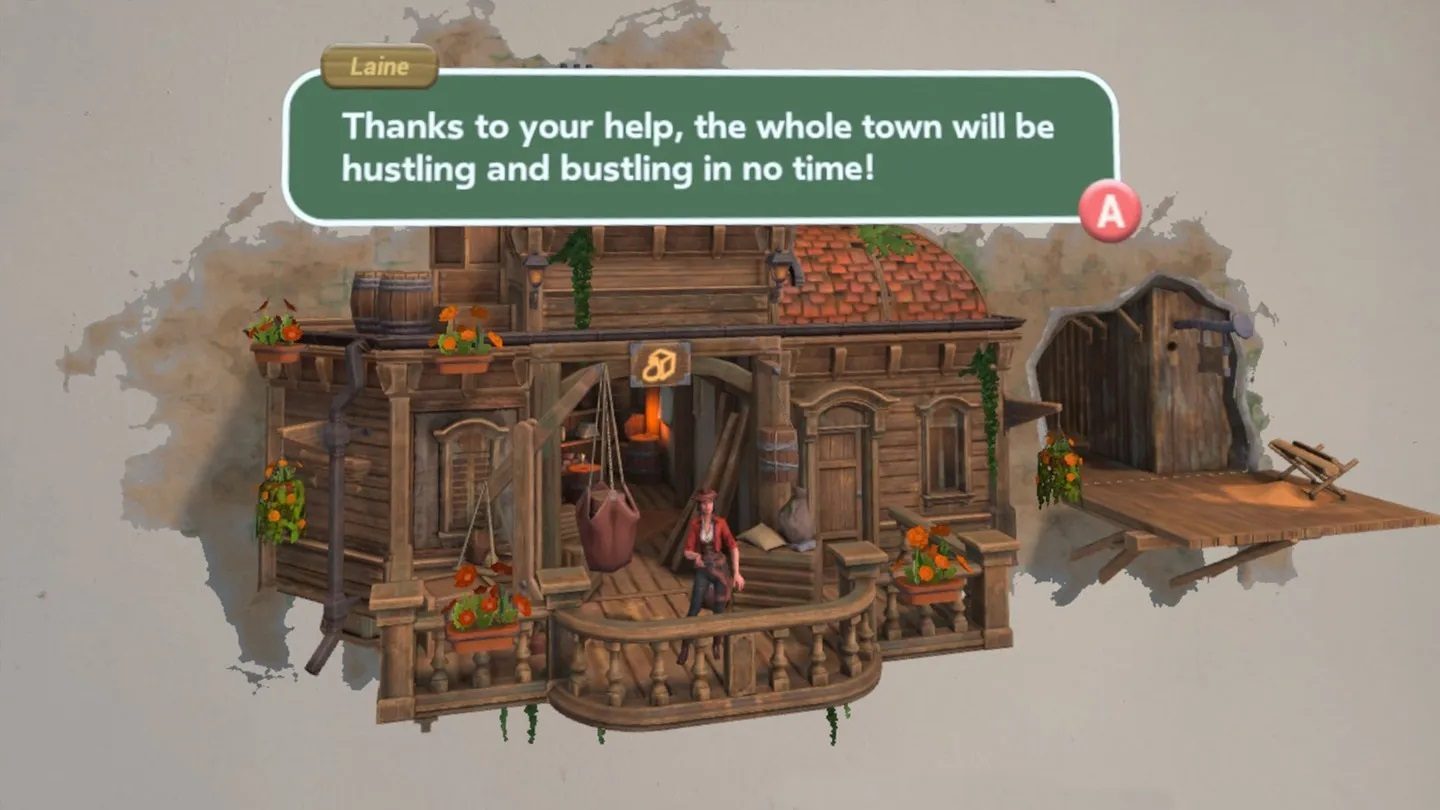
Wall Town Wonders feels like a casual game from the future, when all-day AR glasses are the norm, and you can manage your growing town of tiny Sim-like inhabitants as they fly around your room in hot air balloons and live out their tiny lives as you live out yours. While visually captivating, the depth of gameplay isn’t enough to keep my attention for long, raising the question whether the genre is simply too early for the current generation of XR headsets.
Wall Town Wonders Details:
Publisher: Cyborn Available On: Quest 3/3S Reviewed On: Quest 3 Release Date: November 21st, 2024 Price: $20
Gameplay
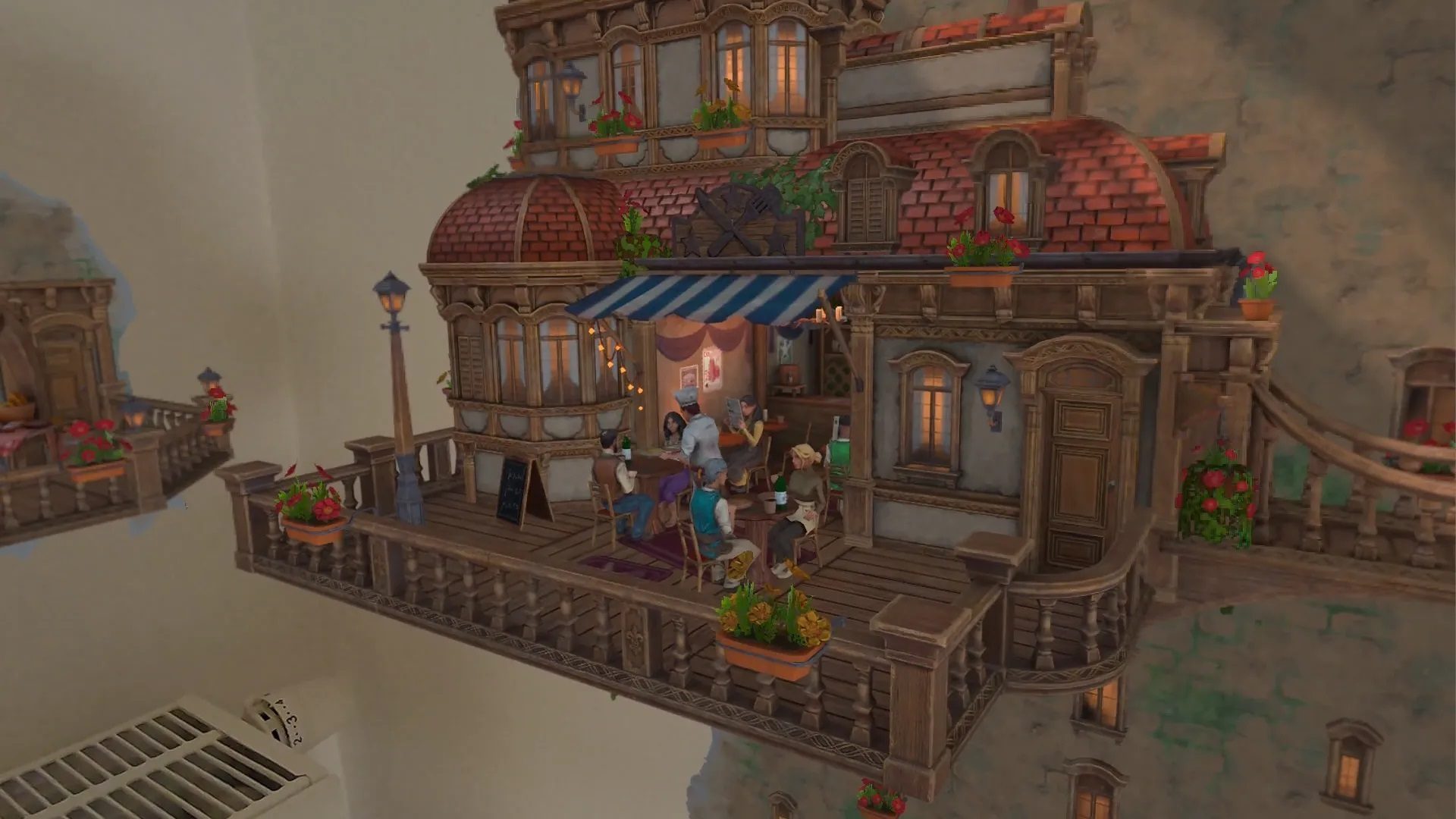
As you’d expect from a casual game, difficulty is very low with Wall Town Wonders, which comes part and parcel with the relaxing vibe it wants to create. Most of the early fun is in popping your head into the various buildings to see villagers go about their tasks, like observing a tiny chef busily prepare a pizza, or following two villagers zipping around on a bi-plane in your living room.
After ramping past the tutorial, which takes about an hour, I found that a good portion of Wall Town Wonders centers around its various mini-games, which are doled out when you unlock new structures. You’ll do things like defend a vertical farm from skittering bugs that you have to shoot with a mini-crossbow mounted to your wrist, fish at the pond on your floor, and guide airplanes around your room with your hand movements.
A bulk of the time though you’ll be waiting for your villagers to dispense various resources, such as wood, money, and food, which are automatically produced by your inhabitants. The gameplay loop is heavily centered around filling out your basic building types and upgrade existing structures, making for over 100 buildings to browse through. You can also repaint and reposition buildings to your liking, letting you design a unique setup around you. The end result is a visually impressive collection of neat set pieces that integrate dynamically, which really brings your room to life with the bustle of activity.
Image courtesy Cyborn
At the same time, you wouldn’t be off base saying the game “plays itself”, as villagers have a level of autonomy in completing their tasks, letting you choose when to engage, or simply watch your new vertical villagers mill about like fish in a tank, or ants in one of those plastic ant farms. You can interact with villagers, help them mine, farm, and explore your room as you build new structures, although these typically presented as mini-games, take it or leave it.
It didn’t take long though for my attention to wane, and wish I could just ignore the town and get back to something more engaging while their activity swirls around me—which makes me hesitant to pop back in beyond the three hours I played over the course of a few sessions. The mini-games are meant to be the engaging bits during these resource wait times, but I felt they were little more than random chores to complete.
Immersion
I’ve always loved virtual dioramas; they can feel so lifelike because they shrink the level of detail, making everything feel more dense and vibrant. The cozy like little European village motifs sprung to life on your walls is a recipe for “awww”.
For all the advancements in virtual desktops and XR productivity environments, I’m not writing this review in-headset. Like you, I typically only have a few hours at the end of the day to pop into my favorite games and social apps—but hardly ever during work unless, you know, I’m reviewing something.
Image courtesy Cyborn
I can imagine a near future when display resolutions are high enough so I can type as comfortably as I do on a monitor, and all-day comfort lets me forget I’m even wearing a headset—key limiters for these types of casual ‘pick-up, put-down’ games.
I would love to play for a few minutes, and go back to something else, like you might on your smartphone, but for now Wall Town Wonders feels like wants us to forget these very real XR hardware bottlenecks, as its random collection of mini-games and meditative fish tank vibe feels just a little too casual for dedicated play sessions in Quest.
Image courtesy Cyborn
I’m not saying you won’t click with Wall Town Wonders. Players of games like The Sims or Townscaper will take my experience above and suggest I’m the problem, not the chill and stupidly charming Wall Town Wonders. Fair enough!
Objectively though, Wall Town Wonders relies too heavily on point-and-click laser pointers for interactions, giving you a few precious moments to pick up villagers for one-off exploration missions, or automatically spawn gadgets from your wrist to do things like shoot arrows at bugs, or water plants with a watering gun.
It also tries to prioritize hand-tracking input from the start, although all of these precise point-and-click interactions made me default back to controllers for ease of use. Its laser pointer-centric UI does make it ‘easier’ to interact with your town from afar, but it also feels like a missed opportunity to create more immersive gadgets than the random assortment of single-use gadgets it gives you during mini-games.
Comfort
The sheer number of buildings available forces you on your feet, tasking you to constantly peruse all of the open wall space available in your room. Although you could play seated, you’ll more than likely be wandering around.
While you can keep most buildings at head-height for ease of use, there are a number of ground-facing activities, which can be straining on the neck if you’re particularly sensitive. That said, Wall Town Wonder’s key innovation is putting the village at a more comfortable position on your walls, which feels so much better than leaning over a tiny map, or having to constantly reposition the virtual world for a better look. I would love to see more town sims take this approach in XR in the future.
‘Wall Town Wonders’ Comfort Settings – November 21st, 2024
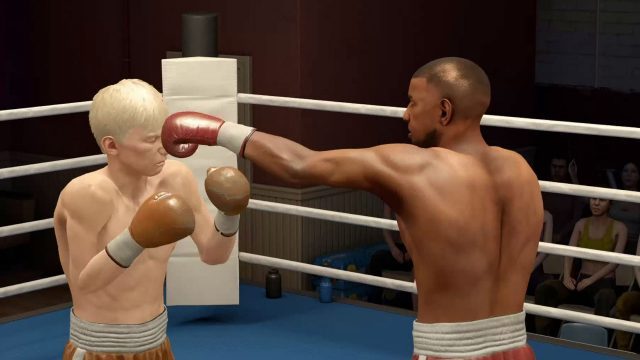
Halfbrick Studios and The Thrill of the Fight (2016) original creator Ian Fitz today released the long-awaited sequel to the popular boxing sim, available now on Quest in Early Access.
A fully-reimagined sequel to the original game, The Thrill of the Fight 2 is now live on Quest headsets, including Quest 2, Quest 3, Quest 3S, and Quest Pro.
While the original was all about PvE battles, the sequel is launching in Early Access today with one of the most anticipated features: online PvP boxing.
“This early release of the game will include only multiplayer modes, giving fans eager for online play the chance to jump in without delay,” Halfbrick Studios says. “Single player content and further improvements to multiplayer are in development and will be added over time during early access.”
The studio says development will continue into 2025 with the addition of single player content including competitive AI with dynamically generated behaviors and appearances, additional training modes, and more. Further updates will be released during Early Access that continue to add content and refinement to the full immersive experience of the game, the studio says.
As it is today, the game features customizable avatars, online PvP mode with skill-based matchmaking, and true-to-life physics for what the studio promises will be another “realistic boxing feel.”
The Thrill of the Fight 2 also comes along with a spectator camera, letting onlookers watch your matches with a ‘live sports’ style camera on a connected PC.
You can grab The Thrill of the Fight 2 on Quest today on the Horizon Store, priced at $10.
One of VR’s biggest hits, Gorilla Tag, is expanding a previously tested level creation mode and making it a permanent part of the game. The so-called ‘Monke Blocks’ allow friends to build together and then play inside of their shared creations. Meanwhile, the studio behind the up-and-coming Digigods social VR game recently snagged a $2.6 million investment. Both developments show that user-generated content (or UGC) has become a central pillar to successful social VR games.
VRChat, Rec Room, Roblox, and Horizon Worlds are all social VR games that have found major traction. And all of them share a common thread: user-generated content. Friends that build together, stay together… apparently.
From the outside, indie VR hit Gorilla Tag might look more like a straightforward multiplayer game than a social VR app. But the title’s seamless multiplayer framework (where players can literally wander from one lobby to another) and free-form rules have made it as much of a hang-out and playground as it is a pure game.
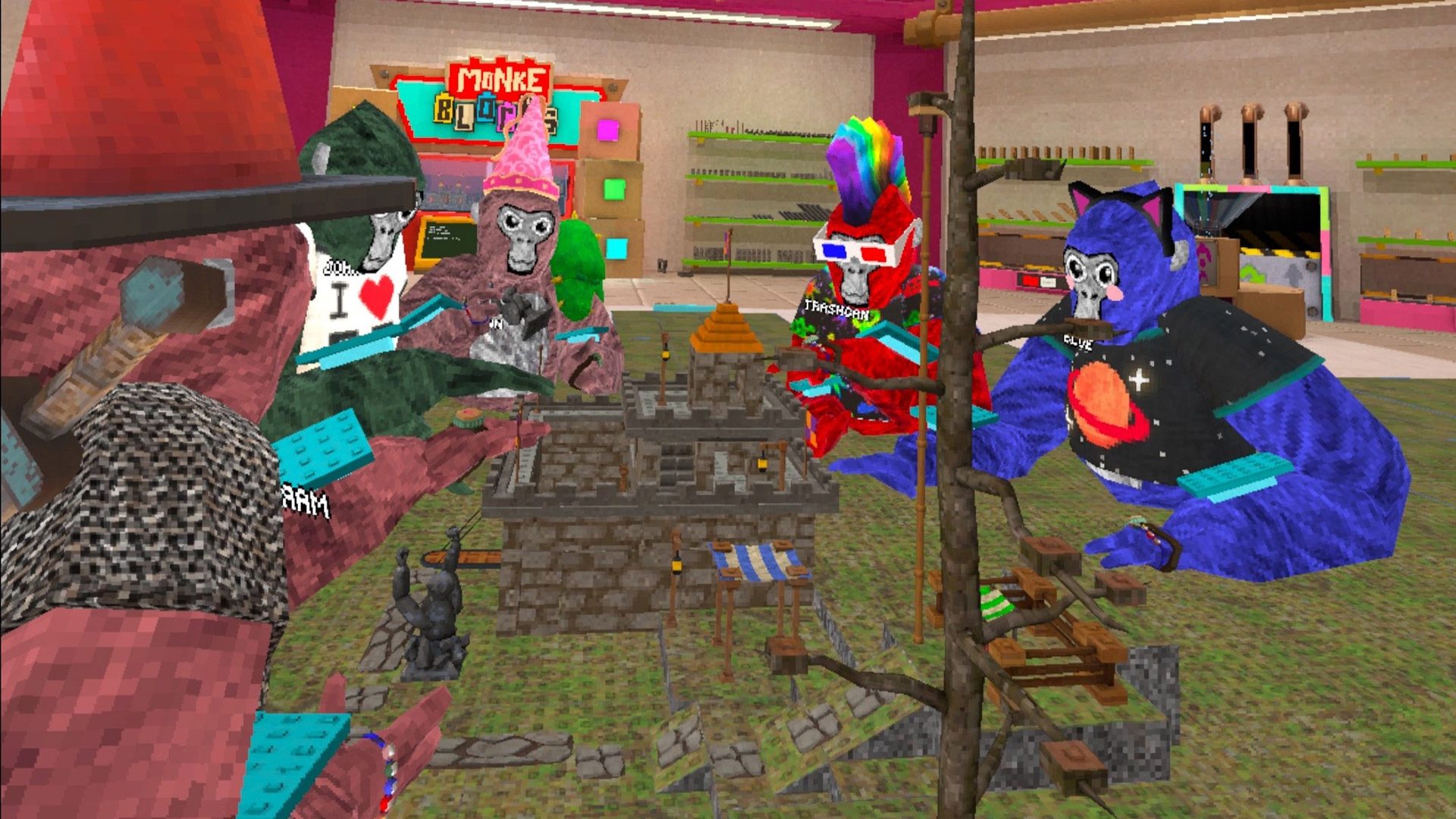
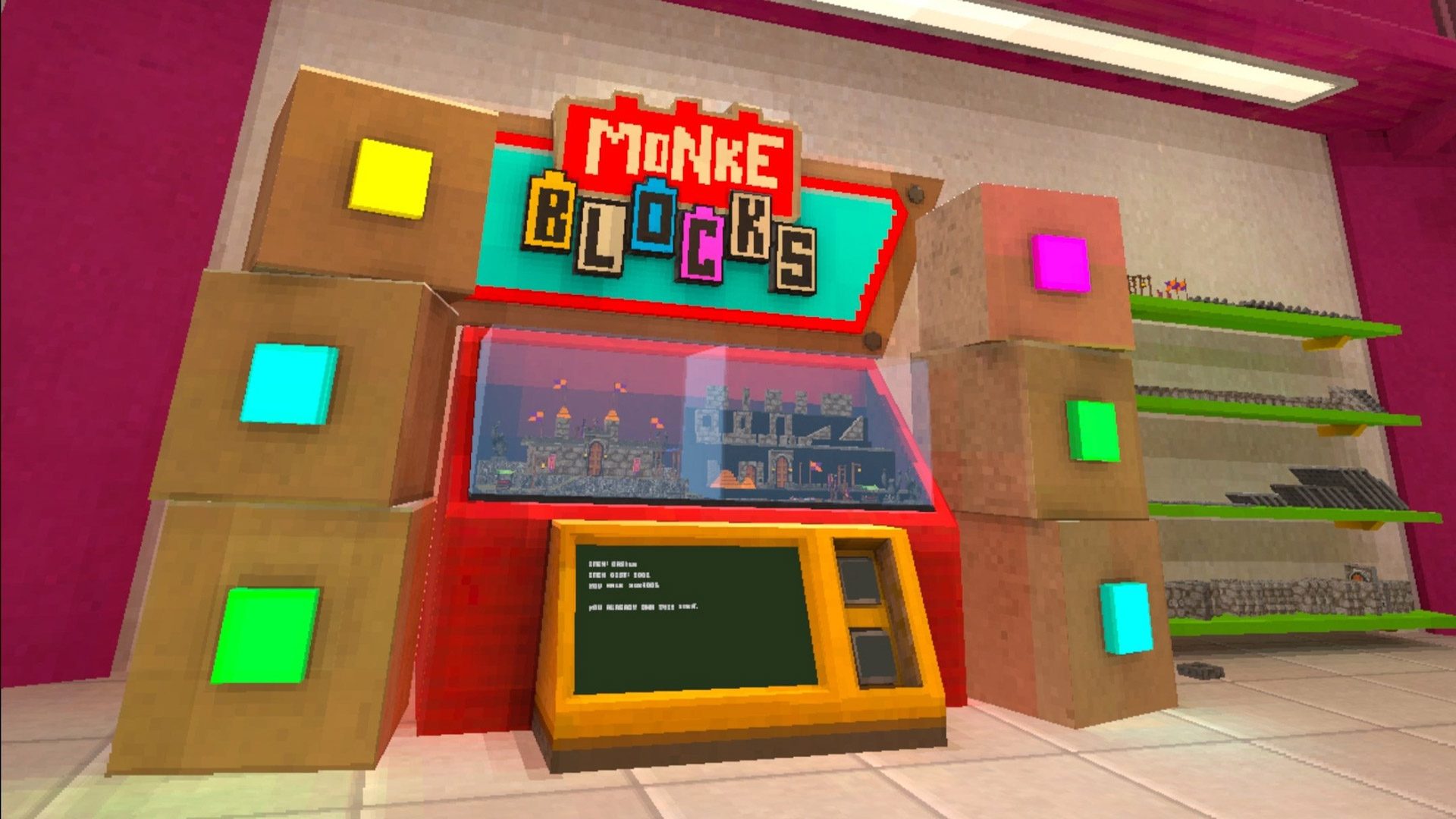
And now, with the inclusion of the ‘Monke Blocks‘ feature as a permanent mode, Gorilla Tag is taking yet another step into the realm of social VR by giving players the ability to build and play within their own creations.
Image courtesy Another Axiom
Using a block-based system, players can collaboratively snap pieces together to build new levels, then shrink themselves down to jump around those levels just like they would in any normal round of Gorilla Tag. In fact, while some players are normal-sized and busy constructing their blocks, other players can be shrunk down and exploring the ongoing creation at the same time.
To monetize this new feature, players will be able to purchase new sets of blocks (to expand the look and feel of their creations) using Gorilla Tag’s premium currency called ‘Shiny Rocks’. The first set will have “medieval castle-themed pieces” and be priced at 6,000 SR (about $30).
Image courtesy Another Axiom
This kind of ‘build and play’ setup is known as user-generated content (or UGC), and it has become a central pillar of successful social VR games, both old and new.
And the next title from Another Axion (the studio behind Gorilla Tag), called Orion Drift, aims to do something similar, by giving players access to a huge playground and letting them decide where to go and what to do. In the future, the studio says players will be able to make their own mini-games and rules within.
We reported earlier this year that the UGC-focused Yeeps had already reached 360,000 monthly active users. This month Squido Studio, the developer of another UGC-focused game called Digigods, raised a $3 million seed investment from Triptyq Capital, with participation from Grishin Robotics, FJ Labs, Hartmann Capital, Fairway Capital, Earthling VC, and the Canada Media Fund (CMF), according to VentureBeat.
Digigods launched in April 2024, less than a year ago. Even so, its UGC-centric design has already attracted 100,000 unique players, according to VentureBeat. Not to mention more than 10,600 user reviews, averaging 4.8 out of 5 stars (a rare feat among games on the Quest platform). It remains in Early Access for now, but could be poised for accelerated growth once it reaches its full release.
While UGC is the clear unifying theme across all the most successful social VR games, there’s also a clear division between old and new: the way players move.
While the older generation of social VR games like Rec Room, VRChat, and Horizon Worlds all use traditional thumbstick or teleport locomotion, the newer generation (Orion Drift, Yeeps, and Digigods) all lean heavily into the arm-based locomotion that was popularized by Gorilla Tag. That makes Gorilla Tag the dividing line between old-school and new-school when it comes to social VR games.
In many ways, that same division in locomotion method seems to also be a division in demographic. The new-school, which their arm-based locomotion, seem to have populations that lean more toward Gen Z than the millennial and older crowd.
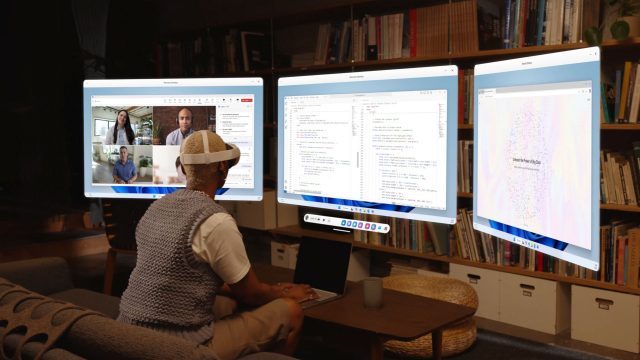
Meta announced at Connect in September it was working with Microsoft to bring Windows 11 PCs the ability to automatically pair with Quest wirelessly. Now, the companies say we can expect preview access in December.
The feature will allow Quest 3 and Quest 3S to connect to Windows 11 PCs for a multi-monitor work environment—pretty familiar territory to anyone who owns a Vision Pro and some flavor of Mac, as Apple’s XR headset has been able to similarly connect via Mac Virtual Display since launch in February 2024.
Microsoft says it’s launching the feature in public preview at some point in December, which they hope will appeal to users looking to increase productivity.
“Windows in mixed reality brings the full capabilities of Windows 11 to mixed reality headsets, starting with Meta Quest 3 and Quest 3S. Access to your local Windows PC or Windows 365 Cloud PC from a Quest headset is seamless and it takes only seconds to connect to a private, high-quality, multiple-monitor workstation,” said Melissa Grant, Microsoft 365’s Senior Director of Product Marketing in a blog post.
At the feature’s unveiling at Connect in September, Meta teased the ability to seamlessly connect to the PC by simply looking at the keyboard, allowing you to instantly access the computer and drag windows across the multiple virtual monitors—a notable departure from the Remote Desktop experience available when using Meta’s own Air Link.
And while Quest has largely filled the role as VR’s premier standalone game console, Meta CEO Mark Zuckerberg thinks greater Windows integration is a step in the right direction for Quest.
“This is the path to building a general computing platform,” Zuckerberg said. “It’s not just games, although [Quest] is really good at that. You’re also going to be to use it for apps, watching videos, and all of the different things you would do with a general purpose computer. Quest is the full package.”
We’ll be keeping an eye out for release dates, and will update this piece when we learn more.
VR veteran studio Fast Travel Games today announced that its Superhot-inspired VR shooter Action Hero is set to arrive on Quest next month.
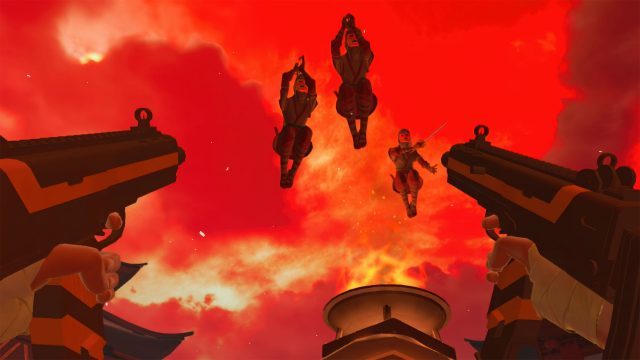
Action Hero sets the stage by integrating the same time-stopping movement mechanic seen in Superhot and Superhot VR; time only moves when you do, letting you tactically plan out flourishing gun kata worthy of John Wick himself.
Coming December 12th to Quest 2 headsets and above, Action Hero instead puts players into the role of the protagonist of five different ‘movies’ which span multiple genres.
“Every film consists of four acts, each featuring five scenes. Players progress through scenes by defeating enemies, and dodging obstacles in cinematic slow-motion, with time speeding up when players move faster. Quick reflexes and skillful planning are essential; take a hit and you’ll go back to the beginning of the given act,” the studio says.
Fast Travel Games has revealed a few genres so far, including a heist movie, an Indiana Jones-style adventure, something with cyborgs, and a ninja flick, the latter of which was featured in the game’s latest trailer, seen above.
Besides blasting various baddies in slow-mo, Action Hero is set to include boss encounters and different weapons for each movie, which the studio says will include five additional ‘Director’s Cuts’, letting you dive into a modified version of each level for “new, more challenging and wacky scenarios.”
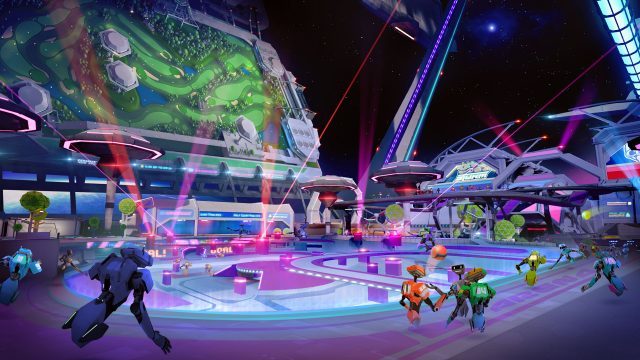
Another Axiom, the indie studio behind VR phenomenon Gorilla Tag, is opening up its next project Orion Drift to all Quest users tomorrow for its first server scalability test.
Currently in closed early access, Orion Drift packages in Gorilla Tag’s immersive movement mechanic with some of the action of the now-defunct sports game Echo VR, promising to serve up an activity-packed social VR space for up to 200 players.
Now, Another Axiom says it’s opening Orion Drift to Quest users for a server scalability test that’s set to last two days: November 20th – 21st. Doors open at 10AM PST on November 20th—check your local time here.
The studio says the test is primarily to see how the game’s servers auto scale with a large population of players, which will be limited to 75 players per-server during this test.
“As we get further into development we will continue to raise that number higher with a target goal of 200,” the studio says on the game’s Discord (invite link).
During the test, players will be able to explore each district and play in all available game modes, which will also include work-in-progress activities. Driftball, the game’s high-flying team sport, is “the furthest along in development in both features and art,” the studio says.
The test will be open to users in North America and Europe, however the studio says it’s currently investigating whether it can offer support to Oceania as well.
If you’re looking to pop in, Another Axiom says there will be developers present, who will be on-site to answer questions and concerns.