We’ve been hoping to see Thrill of the Fight 2 in action since it was announced last year, the upcoming sequel to Quest’s most popular VR boxing sim. Now, studios Sealost Interactive and Halfbrick Studios released the game’s first proper trailer, further announcing it’s headed to Quest in early access on November 21st.
The early access version on Quest is set to launch with online multiplayer, which includes with skill-based matchmaking and direct matching, as well as customizable avatars and what the studio calls “responsive, true to life physics.”
Sealost Interactive’s Ian Fitz says on the game’s Discord (invite link) the team plans to bring it to other platforms eventually, which he notes isn’t due to “any contractual exclusivity or anything like that.”
And unlike the original Thrill of the Fight (2016), the sequel’s biggest claim to fame is its online multiplayer, although a single player ‘career’ mode has been confirmed to arrive at some point.
“Single player is important to us and I want to take it WAY beyond what’s in Thrill 1, but multiplayer is the shiny new feature that Thrill 1 couldn’t do that is going to hog the spotlight for awhile,” Fitz says.
We’ve reached out to learn more about the upcoming career mode, and will update this article when we hear back.
In the meantime, you can now wishlist Thrill of the Fight 2 on the Horizon Store.
The fast approaching Microsoft Flight Simulator 2024 is landing on PC and Xbox consoles November 19th. While it wasn’t clear at its initial unveiling last summer whether Asobo’s next-gen flight sim would include VR support, the studio says it’s definitely coming, and even showed it off in action.
Asobo confirmed in a developer Q&A earlier this year that VR support was indeed coming, and that, in Executive Producer Martial Bossard’s words, it would be “spectacular.”
And while you still won’t find mention of VR support buried anywhere in the marketing material, the studio showed off VR support in action during the MFS 2024 Preview event, letting press and creators fly around using a Pimax Crystal Light headset.
Image courtesy Pimax
According YouTuber ‘theVRpilot’, VR support will include fixed foveated rendering, and you can check it out in action in their video below:
Additionally, the studio detailed a number of new features coming to Microsoft Flight Simulator 2024 at launch, including worldwide Aviation Careers, a Challenge League system, and a brand-new World Photographer mode.
Upping the realism, developer Asobo boasts an all-new enhancement of the ground detail.
“We can basically get every rock on Earth now; it’s unbelievable. We updated the aerial imagery for the entire world, and we set up a team of specialists that gather digital elevation maps from across the planet. The result of these last four years of work is that we now have an unprecedented level of ground detail. Nobody else has anything like this,” says Head of Microsoft Flight Simulator, Jorg Neumann.
The game will also include worldwide ship traffic, helipads, glider airports, oil rigs, vertical obstructions, and “dozens of animal species worldwide.”
Tokyo Game Show (TGS), the annual video game trade fair and convention, is getting set to kick off next week, and with it comes its own digital event space: TGS Digital World, now available on Quest and PC VR headsets.
Now in its fourth year running, TGS Digital World is back, packing in another year of quests, collectibles, and digital booths dedicated to some of the most popular game franchises.
The large-format social space also lets you snap virtual pictures, see upcoming game trailers, and meet up and chat with your fellow players.
This year’s TGS Digital World takes place essentially on the same collection of floating islands as last year, however includes a total of 34 new quests, and new booths from a host of studios, including Survios, SQUARE ENIX, Palworld, MyDearest and more.
Image courtesy Tokyo Game Show
While TGS in Tokyo proper takes place from September 26th – 29th, the VR-supported app is live from today until October 6th.
If you’re on Quest, you can download the free app over on the Horizon Store. If you’re joining on PC VR, TGS Digital World can be downloaded via an executable available on the TGS website.
You can also access on flatscreen via both Android and iOS mobile devices, as well as Windows PCs, which you can find on the TGS website linked above.
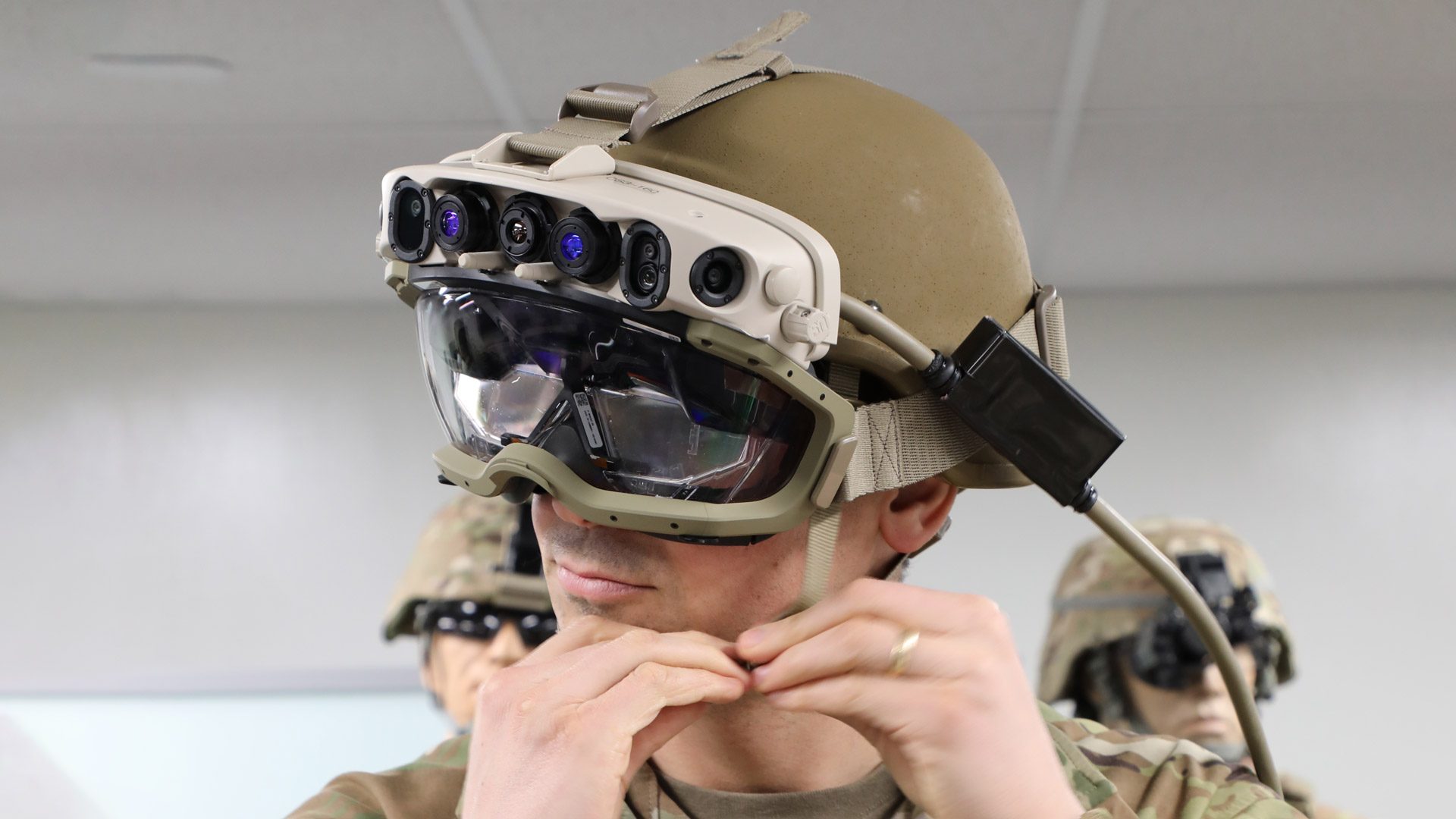
Anduril Industries, the defense tech company founded by Oculus founder Palmer Luckey, announced it’s partnering with Microsoft to boost the company’s militarized, HoloLens 2-based AR headset, which is currently under contract by the United States Army.
The company maintains its Lattice platform, integrated into Microsoft’s Integrated Visual Augmentation System (IVAS), will provide soldiers real-time threat detection, aiming to improve battlefield awareness and survivability by looping in data from sources such as drones, ground vehicles, or aerial defense systems, Wired writes.
As noted on the Anduril website, Lattice uses a host of technologies—including sensor fusion, computer vision, edge computing, machine learning and AI—to autonomously parse data from thousands of sensors and data sources into “an intelligent common operating picture in a single pane of glass.”
Image courtesy Microsoft
“Soldiers wearing Lattice-enabled IVAS headsets are rapidly warned of incoming autonomously-detected airborne threats, enhancing survivability in complex, contested environments,” Anduril says in a press release. “The integration of Anduril’s systems, alongside third-party technologies, is set to propel the IVAS mission capabilities forward.”
Luckey, who was ousted from Meta (ex-Facebook) in 2017 following backlash over his donation to a pro-Trump group, emphasized the importance of the collaboration, highlighting its potential to revolutionize military operations.
“This project is my top priority at Anduril, and it has been for some time now. It’s one of the Army’s most critical programs being fielded in the near future, with the goal of getting the right data to the right people at the right time,” Luckey says. “This is Anduril’s bread and butter, and we’ve been building the backbone for this for years. I can’t wait to show our customers what’s next — I’m incredibly excited about what’s to come.”
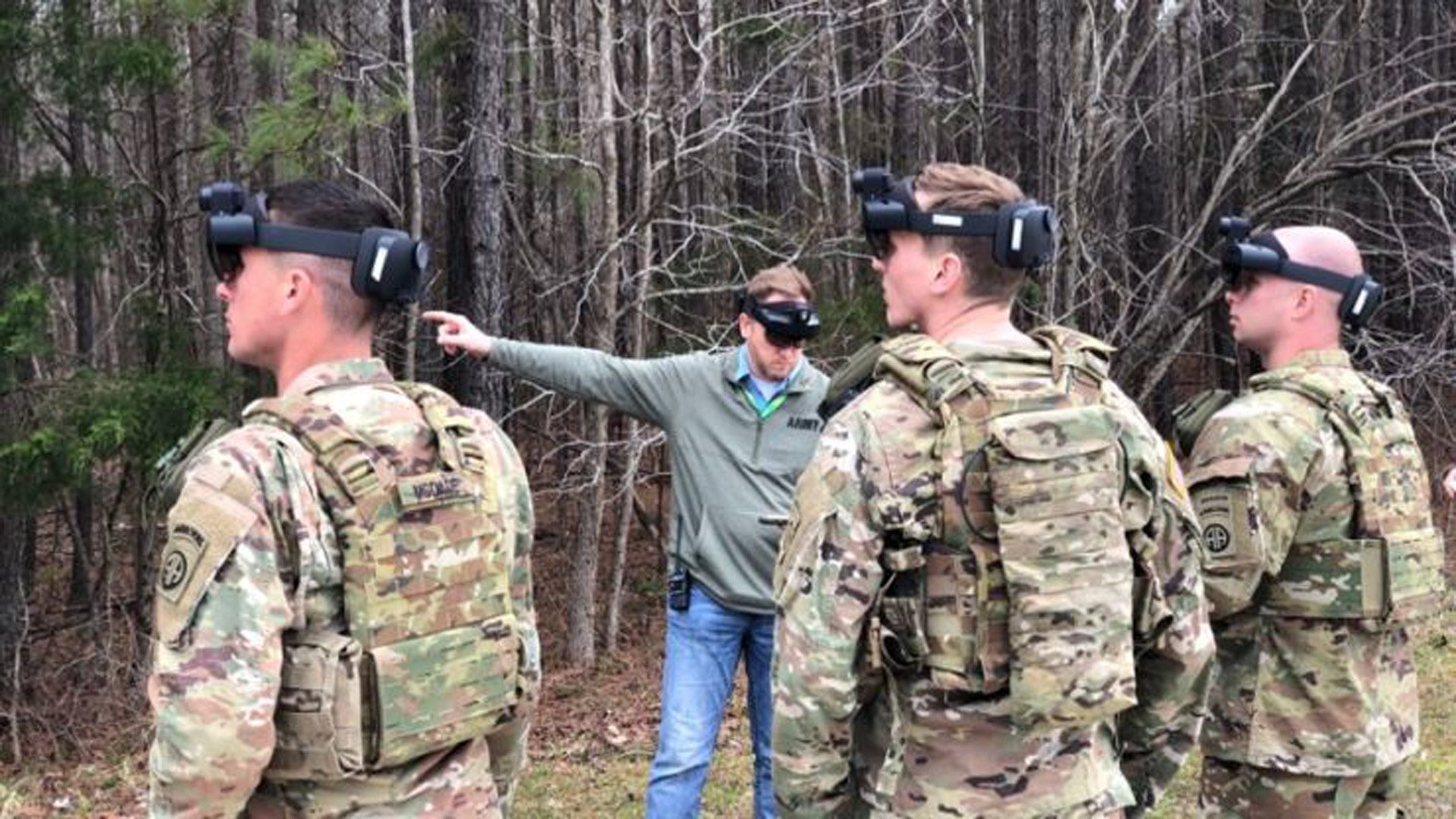
Microsoft’s HoloLens 2-based IVAS has faced a number of challenges since it was first awarded the U.S. Army defense contract in 2019, worth up to $22 billion.
According to Breaking Defense, in 2019 the Pentagon’s testing arm reported that early units garnered poor ratings during initial field testing, which was primarily due to reliability and ruggedness concerns, specifically citing a lack of rain resistance. At the time, IVAS was seemingly based on off-the-shelf units, augmented with additional sensors.
Concept testing in 2019, Image courtesy CNBC
In 2022, newer, more ruggedized versions reportedly received another round of negative field testing, owing to issues with the device’s low-light and thermal imaging performance, as well as soldiers’ experience with headaches, eye strain, and nausea.
Then, in late 2023, 1.2 versions of IVAS demonstrated critical improvements in “reliability, low light sensor performance, and form factor,” a U.S. Army spokesperson told Bloomberg at the time, further stating that “soldier feedback was positive.”
Still, the U.S. Army hasn’t ordered Microsoft to scale up its IVAS efforts despite continuous improvements, which more recently included replacing 1.2’s helmet-style form factor with a less cumbersome flip-up display, reportedly shrinking the 70-degree field of view to 60-degrees in the process, but also providing better clarity.
Furthermore, a recent report from Breaking Defensesuggests the U.S. Army is preparing a new open competition, called “IVAS Next”, meaning Microsoft’s IVAS could be replaced entirely if it’s outcompeted by other manufacturers, such as Kopin—or even Anduril if it decides to enter. Industry solicitation could happen later this year, Breaking Defense reports, so it’s possible we’ll learn more then.
Meta and eyewear conglomerate EssilorLuxottica announced they’re expanding their smartglasses partnership into 2030, which promises to see further development of “multi-generational smart eyewear products” from the companies.
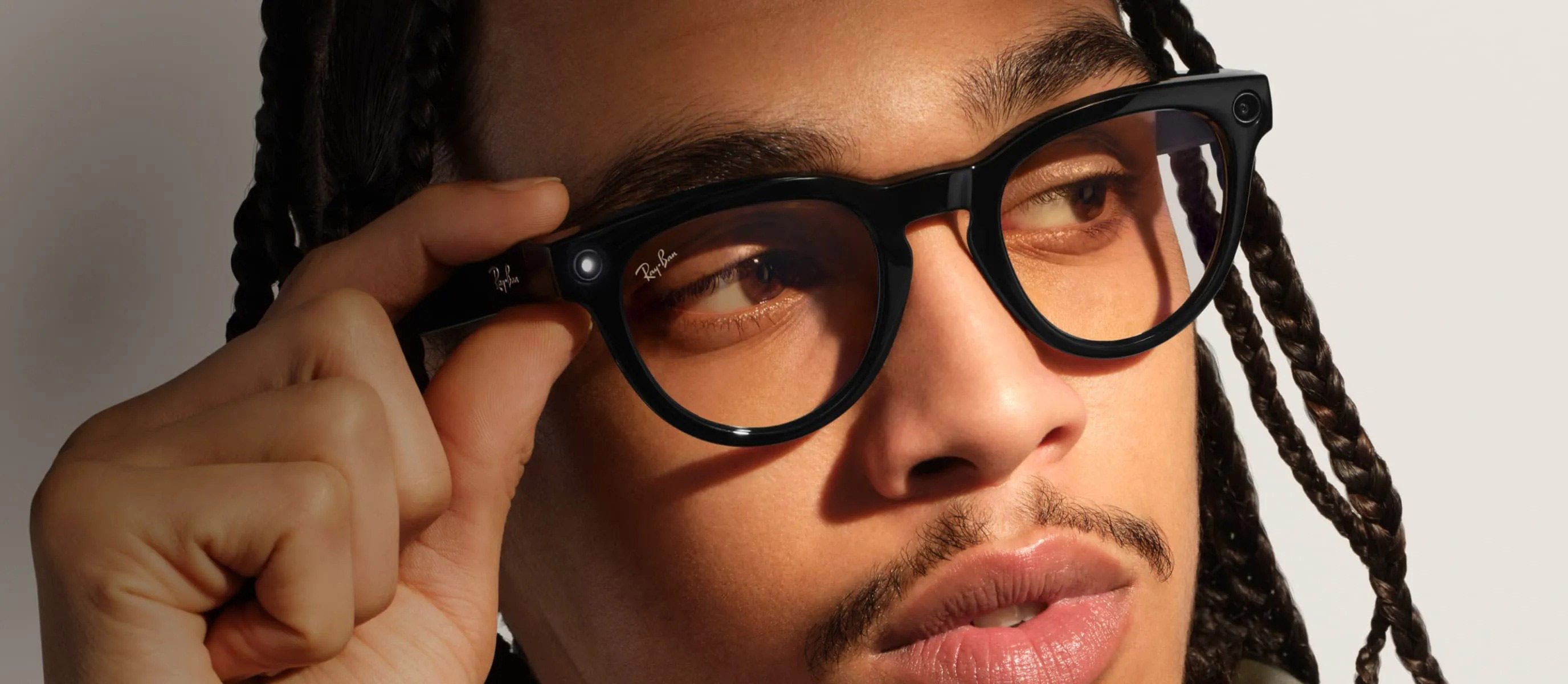
Working together since 2019, Meta and EssilorLuxottica released the first-gen Facebook Ray-Ban Stories glasses back in 2021, later launching the follow-up Ray-Ban Meta Glasses in fall 2023, which included improved cameras, audio and more design options.
Notably, Ray-Ban Meta Glasses don’t include displays, instead offering input through voice assistant and touch on the glasses’ struts for things like taking pictures, videos, and listening to music. Since the launch of its second-gen Ray-Ban smartglasses, Meta has also released AI-powered object recognition from Microsoft’s Bing.
Meta Ray-Ban Glasses, Image courtesy Meta, EssilorLuxottica
Besides Ray-Ban, EssilorLuxottica also owns Oakley, Persol, Oliver Peoples, and Vogue Eyewear, as well as eyewear retailers LensCrafters, Pearle Vision, and Sunglass Hut.
“The incredible work we’ve done with Meta, still in its early stages, has already proven to be an important milestone in our journey to making glasses the gateway to the connected world,” EssilorLuxottica CEO Francesco Milleri says in a press statement, further noting the company is looking forward to “continuing to chart the future of the category together.”
Meta CEO Mark Zuckerberg expressed excitement about the companies “long term roadmap ahead,” noting Meta and the Italian-French luxury eyewear group have “the opportunity to turn glasses into the next major technology platform, and make it fashionable in the process.”
An alleged internal memo from Andrew ‘Boz’ Bosworth, Meta CTO and head of Reality Labs, maintained the company was “doubling down on finding a strong product market fit for wearable Meta AI, building a business around it, and expanding the audience. Our north star to overlay digital content seamlessly onto the physical world remains the same, but the steps on that path just got a lot more exciting.”
Then, in July, the Wall Street Journal reported that Meta was considering a minority stake of about 5% in the company, worth an estimated €4.33 billion euros (~$4.73 billion). At the time of this writing, the deal still hasn’t been confirmed, however it’s clear Meta is well on its way to deepening ties to EssilorLuxottica in effort to make smartglasses, and possibly AR glasses, an undeniably fashionable accessory.
Ember Souls is getting ready to toss you head-first into its very Prince of Persia-inspired hack-and-slash action, which blends melee combat, parkour, climbing, and environmental puzzles—coming to Quest 2/3/Pro and SteamVR headsets soon.
Inspired by Prince of Persia and Assassin’s Creed, Ember Souls puts you in the shoes of the last Immortal, thrusting you into battle against the mysterious Shadow Sultan through five distinctly Persian locations, ranging from the opulent sultan’s baths to serene gardens.
The singe-player game is now slated to arrive sometime this Fall, delivering intense sword fighting with over 20 different weapons against a host of enemies, each with unique combat styles.
Ember Souls also boasts environmental puzzles, deadly traps, and super powers given to you by ember stones, giving you the power to slow down time, use an energy shield or release a shock wave to stun your enemies.
There’s no release date yet, however developer VirtualAge (Guardians Frontline, Gladius VR) have kicked off pre-orders on Quest, which comes with a 16% discount off the $25 launch price. You can wishlist it over on Steam to be notified when it launches.
‘Dumb Ways to Die’ isn’t just a railway safety campaign with odd little bean-people. Soon, it will be a VR game too packed with a ton multiplayer mini-games.
Called Dumb Ways: Free for All, the game lets up to six Beans work their way through various challenges across the globe, taking you to “usually safe destinations” where you earn coins, which you can spend on avatar outfits to glam up your Bean before taking on your friends.
The game also lets you play solo, but then you won’t be able to steal points from your friends while playing a host of mini-games—a total of 50 at launch.
Developed by PlaySide Studios, Dumb Ways: Free for All is coming exclusively to Quest 3 on November 7th, priced at $20. You can now wishlist it on the Horizon Store.
Additionally, the studio is planning two free DLCs coming in December and January that are slated to bring an additional 50 more mini-games (25 per DLC).
Started in 2012 as an Australian railway safety PSA for Metro Trains in Melbourne, Dumb Ways to Die has expanded beyond its viral success in the following the franchise’s sale to PlaySide Studios, which released a host of mobile games for iOS and Android.