Thursday, 27 January 2022

Wanderer Review: An Enormously Enjoyable Adventure

https://ift.tt/3g0qoqW

Some design bumps and bugs don’t stop Wanderer from delivering an enormously enjoyable adventure. Here’s our full Wanderer review.


At its heart, Wanderer is an escape room game but, please, trust me when I say that shouldn’t put you off. Even if you’re not a fan of puzzle games — and I’m certainly no great admirer of them — M-Theory and Oddboy’s debut game is more than worth a look. That’s partly because it manages to disguise many of its brain-teasers more as fun, interactive problem solving, and partly because it’s one of the best-looking and most immersive VR games to release in recent memory. Put simply, Wanderer is a shot in the arm for VR fidelity.

We’re in the future, and the future isn’t looking very bright. Wanderer is all about traveling back to the past to right wrongs and ultimately ‘fix’ the post-apocalyptic present the game opens to. To do this, you uncover your grandfather’s secret hideout hidden amongst the ruins of Boston, befriend a talking watch called Samuel, and then hop back and forth between the moon, wartime Germany, ancient civilizations, and more as you’re hunted by evil space cops that don’t like you messing with time.

It’s a lot to take in and Wanderer is, indeed, a lot. There are a thousand different threads to follow at any one time and the overarching plot definitely falls victim to lengthy exposition and multiple underdeveloped characters, but the game itself expertly realizes the potential of time-spanning puzzles and the ability to bring different items to different points in history.

Wanderer Review The Facts

What is it?: A VR escape room adventure in which you travel through time, solving puzzles to fix the present.
Platforms: PC VR, PSVR
Release Date: Out now
Price: $39.99

For example, to hop around the timeline, you find special items that you essentially feed to Samuel. A brilliant white light and a Hans Zimmer ‘bwarm’ then near-instantly transport you to your new destination. Playing on PC, it’s pretty incredible to take in just how responsive the time-traveling is; in one moment I can be standing in front of an ancient temple and then, within the space of about 10 seconds, I can remove an item to travel back to my hideout, insert another item and find myself standing in front of Nikola Tesla.

It’s a truly impressive achievement that capitalizes on the joy of immersing yourself in a wide variety of environments in VR, bolstered by the fact that every element of Wanderer’s world — from its characters to its level design — is tightly crafted. Samuel, in particular, is a wonderful creation, with the air of a southern prospector funneling through his wonderfully bushy digital mustache. Press a button on the side of your wrist and he jettisons out of your watch strap, deploying tiny propellers to keep him airborne as he surveys the environment to give you hints. He’s just a really, really brilliant creation.

Of course, it also helps that the game is a real treat for the eyes. Wanderer is easily the best-looking VR game since Lone Echo 2 and, given that was an Oculus PC exclusive, probably the best-looking title many have seen since Alyx. The game’s opening in a flooded Boston hits that home with crisp, dense vegetation that reminds you of the Seattle sequence in The Last of Us Part 2, and each of its levels is similarly littered with convincing detail. Not only that but practically everything can be picked up and used in some way, shape or form, really rooting you inside the world.

Wanderer

Puzzles, meanwhile, are mostly well-paced and rewarding, often involving mechanics that utilize VR in varying ways. One early highlight involves lining up projections of constellations with a security panel and then tracing the outlines with your other hand, and there’s also obsessive note-taking on a blackboard as you study morse code, steering explosive RC cars, and, uh, licking frogs among other ideas. At its best, the game disguises any trite repetition and doubles down on these immersive solutions, delivering something that often doesn’t actually feel like an escape room experience.

It’s only when you take a step back from a play session that you realize that’s what you’ve essentially been doing for the last few hours. And, impressively, Wanderer runs at around 10 hours and only repeats a handful of these ideas throughout – there’s not much room for any of them to grow stale.

Inevitably, you’re going to hit a wall now and again and I felt that familiar frustration as I paced back and forth trying to make sense of some challenges but, as someone that would nope out of most other puzzle games after a few hours of roadblocks, the pacing here felt mostly on-point.

In fact, the only thing holding the game back in these moments are some of its bugs and design issues. Samuel’s hints, for example, don’t always match up with where you are in the game, and I lost an hour or two wondering what to do next when simply reloading the game would bring him back up to speed and give me the right advice.

Wanderer also has a persistent item system, meaning wherever you place an object is usually where it stays until you pick it up again. In theory, it’s a great idea to give the world consistency and another impressive technical undertaking, but the reality is a fair bit more frustrating. There’s no easier way to ruin a lightbulb moment than by realizing you can’t remember where the item you need to solve a puzzle is located across — quite literally — space and time, and at one point I even had to reset a chapter to put things back where they were originally found.

Wanderer Review – Nitpicks

Beyond the bugs I’ve mentioned in the core review, Wanderer also has some other issues. I encountered two hard crashes in my playthrough that required me to reset the game. I also had issues with sound cutting out in the opening menu and when I first booted up a save file. A lack of manual saving also meant having to repeat some tasks when I returned to the game after some time.

Nitpicks are issues we’ve found in a game that are likely to be cleared out in an upcoming patch. We don’t generally let them affect a game’s score if they don’t massively upset the overall experience, but you might want to check that they’ve been addressed before deciding to pick something up.

There is a limited inventory system that starts out with letting you hold one additional item and ramps up to five items as you collect hidden objects used to upgrade Samuel’s storage. While it’s nice to have a meaningful upgrade system embedded in the game, it slows progress to a crawl having to constantly jump back and forth between worlds with different items because your inventory is full, and even the maxed-out amount of slots fill up fast.

Wanderer Drums

Controls are another sticky point. A lot of interactions in Wanderer work as expected, but some repeated mechanics need work. Turning dials, for example, seems to struggle with the position of your hand, and either twists in the wrong direction or simply doesn’t move, and I struggled to steer the RC car.

These issues hold Wanderer back to some degree but this is a game about instances that transcend those more trivial aspects. Bringing together a bunch of sulking bandmates from a psychedelic rock band and then heading onstage to a crowd of thousands, or standing next to Tesla as he makes a life-changing discovery are just a few of the moments in which the game shines.

Wanderer Review – Final Impressions

Wanderer stumbles in a few important areas. It’s so focused on delivering a believable experience that some of its design decisions don’t sit well, and its story gets lost amongst the time-hopping spectacle. But it’s also a ridiculously ambitious game that somehow achieves almost everything else it sets out to accomplish. It’s a technical marvel that offers up dense, highly-detailed worlds that you can jump between in a blink of an eye, with deep interactivity embedded into each. Its puzzles are often finely tuned for VR and are well-paced to minimize frustrating roadblocks, and you have a tangible presence in each world thanks to smart interactions. The result is an enormously enjoyable 10+ hour adventure that makes the normal trials and tribulations of the escape room genre often feel like a distant memory.


Wanderer Review Points


For more on how we arrived at this rating, read our review guidelines. What did you make of our Wanderer review? Let us know in the comments below!


from UploadVR https://ift.tt/35nHVY1
via IFTTT

Meta Abandons Oculus Branding On Twitter

https://ift.tt/eA8V8J

Meta just made another big step towards almost entirely replacing the Oculus brand, switching its Twitter accounts to its new name.

The official Oculus account is now called Meta Quest with the handle @MetaQuestVR and the Oculus Gaming account has its original name but now uses the @MetaQuestGaming handle. Other Oculus accounts like Oculus Support and Oculus Developers remain as they are for now. Needless to say the decision hasn’t gone down very well with vocal Oculus fans on Twitter. Our thoughts are with the Meta community mods having to sift through those comments.

Meta has slowly been switching out the Oculus branding since its Connect event last October, where it revealed Meta as the new name for the entire Facebook corporation. But, while Facebook, WhatsApp and other services keep their names, Oculus is slowly being switched over the Meta to reflect the company’s push towards the metaverse.

We’re not expecting every element of the Oculus brand to completely disappear, though, as its possible that labels like Oculus Studios might keep their name. The Twitter accounts also all retain the Oculus logo, though it’s unclear if this might be replaced at any point.

All the same, it’s almost certain that the Oculus name will be mostly a distant memory by the end of 2022. Expect the upcoming new standalone headset, codenamed Project Cambria, to carry that label as well as any other future hardware efforts.

What do you make of the switch to Meta on Twitter? Let us know in the comments below!


from UploadVR https://ift.tt/3L0wLJl
via IFTTT

Wednesday, 26 January 2022

Project Cambria – Everything We Know!

https://ift.tt/eA8V8J


from UploadVR https://ift.tt/3H9MVgX
via IFTTT

Varjo Aero Review: A Powerhouse Headset With Some Question Marks (Updated 2022)

https://ift.tt/3G7sa5C

When it works, the Varjo Aero offers a tantalizing glimpse of the future of VR. But a prevalent issue makes it hard to recommend right now. Read on for our Varjo Aero review.


Note: This review was originally published on October 21, 2021.

The Varjo Aero arrives much sooner than I thought it would. A recurring theme in my tech event calendar (back when that was a thing) was an annual stop to one of the Finnish company’s booths to gawk at its latest, ridiculously impressive and equally expensive enterprise-focused VR headsets. I’d then ask the team if this was the year they planned to bring these devices to a consumer market, they’d say no, and we’d do it all again 12 months later.

Well, this year is a little different.

Varjo Aero Review Update – 01/26/2

As promised, we’ve gone back to testing the Aero ever since Varjo released the launch version of its Base software in December 2021, which the company said would improve the distortion when moving your head.

From what I’ve seen, there’s definitive improvement on this front. Blurring has been reduced and, crucially, the quality of an image seems to remain consistent across the entire field of view, and not distort at the edges.

But the issue isn’t entirely resolved. At this level of clarity, its still possible to point out blurring when you turn your neck, or outlines of objects ghosting. You’ll still see more distortion here than you would in lower resolution headsets made by bigger companies. I’d just note that, on the whole, it seems to be a lot less distracting than it was a few months ago.

You can read the rest of our original review below, which points out the big benefits to the Varjo Aero, like the amazing clarity, and some other cons, like the curious shape of the lenses. Ultimately it’s still an immensley performant and comfortable device that will give you the sharpest image quality yet seen in consumer VR, but the $2,000 price point makes it a device only for those ready to spare no expense, given stiff competition like new Pimax headsets are more are on the way.

No Varjo booth, obviously, but there is the Varjo Aero, a new high-end PC VR headset that the company is aiming at smaller commercial markets and — crucially — VR enthusiasts. You don’t need to be a business to order one and you don’t need to sign up to the company’s expensive subscription software either.

In truth, I thought we’d be waiting many more years before Varjo would make its tech available to anyone and, in a sense that’s still the case. The Aero is an eye-watering $1,990 for just the headset – VR controllers and the required base stations aren’t included. It’s not ‘Varjo For All‘ so much as ‘Varjo For Those With The Biggest Wallets’.

But the specs show where your money’s going; on paper the Varjo Aero is nothing short of a VR powerhouse. The dual mini LED displays deliver a monstrous 2880 x 2720 resolution per eye with a 90Hz refresh rate and there’s eye-tracking and automatic IPD adjustment too. With those specs and that price, you’d be well within your rights to assume the Varjo Aero offers nothing but the very best in consumer VR headsets today. And in many ways it does, but there’s one important area that — currently at least — it falls short in. Let’s get to that first.

Resolution & Clarity

Varjo Aero Headshot

Normally in a review I’d talk about the comfort and design upfront, but there’s a sticking point to what I’ve experienced with the Varjo Aero that I thought was vital to highlight to give you context going forward.

So let’s start with what has been my biggest issue in my time testing the headset. Yes the Aero is impeccably clear and I’ll touch on that in a second, but over the past four weeks using the headset I’ve noticed significant peripheral distortion when rotating my head. As I look away from a virtual object or surface, it appears to warp as if not entirely solid. Only the very center of my view looks stable. It’s incredibly distracting (which, ironically, is only enhanced by the clarity of the display).

In pretty much all the apps I’ve tested, including big-budget titles like Half-Life: Alyx and The Walking Dead: Saints & Sinners and indie projects like Gorn and Sweet Surrender, it’s been a noticeable issue.

Crucially, Varjo itself knows about this. I’ve been on multiple troubleshooting calls with the company over the past few weeks to talk about it and have been repeatedly assured that this is a software issue it’s aiming to fix with subsequent updates. In fact, the company says it expects to have its Base software fully ready for the Aero in December, which is when it also expects the first units ordered today to arrive.

I’m in a bit of a conundrum on this front, as my review loaner has to go back to Varjo, but I have asked for the opportunity to test the kit again around the launch of this latest software and, if that happens, I’ll update this review. For now though, all I can say is that if the issue persists it would be incredibly tough to recommend the Varjo Aero given its pricing. There’s really very little room for error in the enthusiast scene and this is too big of an issue to overlook.

And that’s a real shame because, even if there are other issues, the fidelity the Aero otherwise provides is second to none. The 2880 x 2720 per eye resolution beats out the Oculus Quest 2, HP Reverb G2, and even the current leader (and just a few months old) HTC Vive Pro 2. I haven’t tested the latter headset, but the difference over the Quest 2 and Reverb G2 is nothing short of remarkable. For the first time in VR, I could line up the sights on a gun in Alyx or recent releases like Sweet Surrender and see a crisp, faultless and completely solid weapon model that gave me pinpoint precision when aiming.

When I reviewed the Reverb G2 I said that, for the first time, I got a sense of sharpness from something like an arrow tip but, inside the Aero, I’m even noticing the tiniest of imperfections that are lined along the arrowhead itself. At times it’s so clear that I genuinely felt like I was staring at real-life objects. It’s an incredible experience to say the least.

Lenses And Performance

Varjo Aero Lenses (1)

There are other nice perks to the display system too. The IPD adjustment, for example, is entirely automatic, using eye-tracking to read your distance and then shifting the lenses itself to get the right fit. It’s pretty impressive to see in action although very much a luxury feature that I could have done without if it meant simplifying the device and bringing the price down.

Less impressive are the lenses, which offer a 115-degree horizontal field of view or 134 degrees diagonally. They’re a bit of an odd shape compared to basically any other VR lens design I’ve encountered, with a rigid horizontal line at the bottom. When wearing the headset your field of view has a distinctly noticeable, unnatural shape compared to basically any other headset I’ve used. You can clearly see a staircase-shaped diagonal edge at the top and a shadow-like horizontal line at the bottom. Both UploadVR’s Zeena Al-Obaidi and David Heaney both said the same upon testing.

I’ve found this to be less of an issue once I dive into a game and start focusing on the experience, but it’s always one of the first things I notice when I boot up the Aero and jump into the Base environment.

Obviously, to power all of this high-fidelity decadence, you’re going to need a good PC. Really good, in fact. Varjo recommends an RTX 3070 if you’re going to be using the Aero but, as I mentioned, I’ve been using the 3060 Ti supplied by Varjo itself most of the time and had good results in most titles, with more demanding experiences like Alyx requiring me to lower the render resolution as far down as 40%. I saw yet another jump with recent testing on a 3070 Ti but, even then, there have been regular technical hiccups trying to fire the headset on all cylinders. ‘Can it run Varjo’ might become the 2021 equivalent of ‘Can it run Crysis?’.

The headset also has onboard cooling, which does cause some noise from within the visor, including a quiet rattle when moving your head, as if a fan was coming into contact with something as I turned. The air also gets blown into the lenses, which didn’t cause an issue for me but others that tried it found it distracting.

As for tracking? Well, this is a SteamVR headset so you should already know what to expect; near-faultless positional tracking using at least two external base stations and either the Vive wands or Valve Index controllers.

Design & Comfort

If there’s an area where the Aero really succeeds, it’s with the comfort. The kit features a halo strap design, with an adjustable back dial to fit the ring around your head. But the design then goes an extra step with a small, padded plate to rest on top of your head. This leaves very little of the 487g visor weight resting on the front of your face, and I could wear Aero comfortably for hours without much hassle.

There are two head-mounted buttons for basic interactions and summoning a menu, though you have to imagine those are more for simple commercial applications or interfacing directly with the headset when using a steering wheel or HOTAS in a similar experience. There’s also a 3.5mm jack for headphones and Varjo does include a pair with a microphone in the package, though these weren’t made available for review. Overall the headset build is quite solid, even if the materials used don’t feel as premium as, say the Valve Index.

Software & Compatibility

The Aero is tracked by SteamVR base stations and thus all its software runs through Steam too. Despite this, Varjo has its own Base launcher, where you can tailor your experience in specific ways. Base allows you to set a fixed IPD, enable performance-boosting options in supported software and much more. It even has a camera display of the user’s eyes when in-headset.

Eye-tracking, meanwhile, brings two distinct possibilities. The first is a form of input, like aiming where you’re throwing or selecting menu options, and the other is foveated rendering, which improves performance by only fully rendering the area of the display the user’s eyes are directly looking at. Both are promising features not just for Aero but the entire industry, but software compatibility is extremely limited right now, and I’ve only tested the features in the two demos the company itself supplied. Varjo itself pointed out to me that it hopes to see other headsets with similar functionality release over the next 12 – 24 months that will help expand that list.

Price

Okay, let’s get to it. At $2,000, you’re probably not buying a Varjo Aero. Commercial market aside, that price puts it squarely in the range of only the most dedicated of VR enthusiasts – the type that probably already bought the $799 base Vive Pro 2 a few months ago and wouldn’t bat an eyelid at then throwing down thousands more to replace it. I wouldn’t exactly expect this thing to be storming the Steam Hardware Survey charts in the next few months.

Oh, and that’s just for the headset. Varjo is assuming you already have SteamVR base stations and either the Vive wands or Index controllers. Add those onto the price and you’re looking at over $2,500. And you thought HTC headsets were expensive. And then there’s the top-end PC you’ll need to own too. You already know if you’re putting this down on your Christmas wishlist or not.

So, aside from smaller businesses that will likely have the lion’s share of sales, who exactly is the Varjo Aero for? Well, if you’re reading this review from your simulation racing chair on a motorized motion platform, staring up from your top-of-the-line steering wheel with our webpage in the center of your three ultra-wide monitors, powered by the high-end GPU, then you’re probably in Varjo’s target market. But for pretty much everyone else, the Aero is a tantalizing glimpse of what the future of VR holds.

Varjo Aero Review – Final Impressions

It’s important to remember that, while anyone can buy the Aero, it’s still primarily a commercial product, and it ticks pretty much all the boxes for delivering incredibly powerful VR experiences in that context. It’s when you come to judge the Aero as a consumer product that the issues really come to pass.

On the one hand, the Varjo Aero offers unmatched visual clarity in VR. In terms of raw specs, the headset delivers a powerhouse experience, with per eye resolution that will have you marveling at the tiniest details of virtual worlds that you’d simply miss in any other headset. Testing the device, I constantly caught myself off guard as I inspected creases in garbage bags in Half-Life: Alyx, for example. It really is that big of a jump. But, in its current form, this enthusiast headset has issues that its target market simply wouldn’t accept, the biggest of which being the very noticeable distortion when turning your head. If Varjo is able to address this issue like it says it will, it’ll be a real turnaround for the Aero and we’ll update this review accordingly. But the prosumer market is (quite rightly) an unforgiving one and, at $2,000, there’s little room for error with the Varjo Aero. As it stands, the blemishes are too tough to ignore.


from UploadVR https://ift.tt/3psp5XJ
via IFTTT

‘Township Tale’ Studio Raises $12.4 Million to Expand Studio & Development

https://ift.tt/3pNFuEb

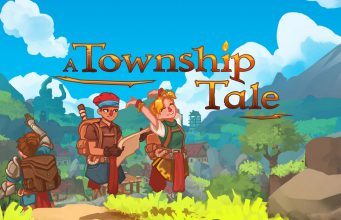
Australia-based Studio Alta, the developer behind A Township Tale, today announced it has raised a $12.4 million seed investment to expand its studio and accelerate development of the game.

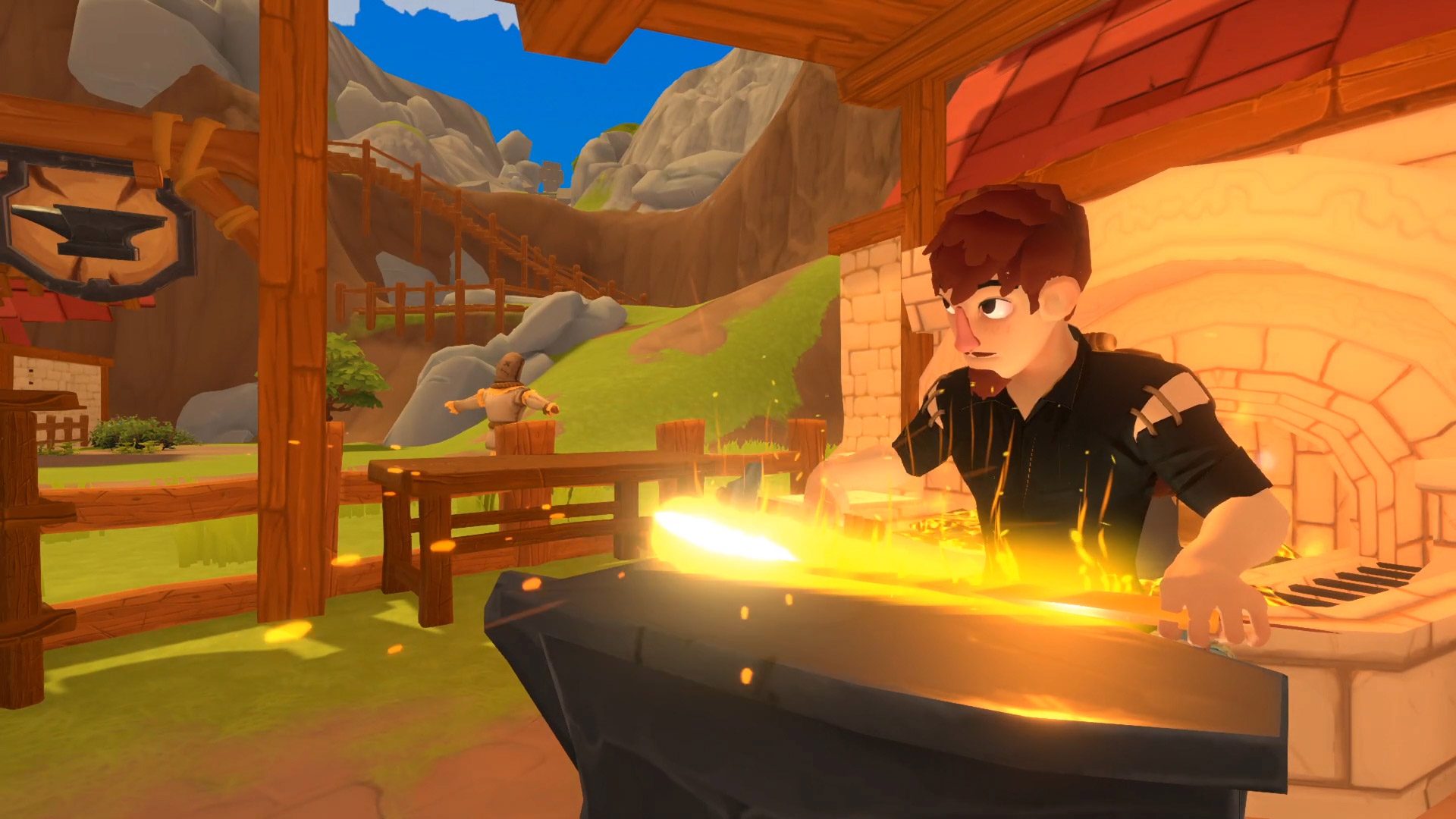
Studio Alta had been quietly developing its brilliant co-op focused VR game A Township Tale for years on PC as a small indie team. Though it was loved by many who played it, the title remained something of a sleeper, likely due in part to the fact that the studio has only ever distributed it independently rather than through storefronts like SteamVR or Oculus PC.

Through an impressive effort the studio managed to port A Township Tale to Quest where it seems the game has found the right conditions to thrive. The studio says the game spent “seven weeks at #1 on the Oculus charts” and “produced historical engagement metrics for the platform […]” at its debut.

And it would seem investors took notice. The studio today announced it has raised a $12.4 million seed round… and not just from any old investors either; the round was co-led by Makers Fund and Andreessen Horowitz, the latter being a well known name in the venture capital space—with nearly $20 billion in assets under management—and an early investor in Oculus. The round also saw participation by Pioneer Fund, Boost VC, muru-D, and Thomas Rice.

Image courtesy Alta

Alta says it plans to use the funds to “further develop proprietary content and IP, expand the team, and position the game for new platforms.”

“Alta started out with a single quest: to create worlds that bring people together,” said Tima Anoshechkin, CEO and co-founder of Alta. “This funding helps us expand that vision beyond just growing our flagship game, and allows us to expand the team, create new opportunities and partnerships to collaborate with, and continue to develop world-class technology whether with VR or other platforms. Whenever and wherever you are playing, our experience will always be engaging, seamless and fun.”

Road to VR further spoke with Anoshechkin in to learn more about the studio’s priorities and aim for the future, including a hint that the game could come to PSVR or PSVR 2.

Q: What’s the biggest focus for A Township Tale development in 2022?

A: We have accumulated a lot of technical debt. The goal is to clean everything up, so we can release features faster to the community and bring A Township Tale to as many platforms as possible. Also we are really focusing on onboarding experience and explaining the game to the new players in a very friendly way.

Q: What’s the long-term vision for A Township Tale?

A: Our long term vision to create a unique experience where there is always reason for players to stay. I don’t like to use metaverse as much, but if we can deliver a unique world experience to each user that they have agency over, can share with their friends and visit their friend’s world seamlessly that would be a worthwhile goal to build towards.

Q: What’s the long term plan for the studio (plan to work on multiple projects or focus solely on A Township Tale)?

A: For now focus is solely on A Township Tale.

Q: What can you tell me about the game’s reception on Quest?

A: We can’t share many metrics as we in preparation for our next round, but studio is cash flow positive and definitely there is enough users in VR space to support mid size studios.

Q: How large is the studio?

A: More than two-dozen and growing. We can’t provide exact number, as a lot of people have joined, but still in on-boarding phase or just waiting for their notice periods to end. But studio tripled in size since the game launch.

Q: Do you expect A Township Tale to come to PSVR / PSVR 2?

A: We would love to.

Q: What are you long-term plans for in-app purchases (IAP) in A Township Tale?

A: We are pretty much open to everything as long as the game is not P2W and our community is on board with IAP strategy.

Q: What’s the most surprising/interesting thing you’ve seen players do in A Township Tale?

A: I am still surprised by number of people in VR ecosystem that only have mobile and Quest devices. As a result it really forces you to re-examine how games are build and how to onboard players. For a lot of this people Quest is their first high end gaming device, which is mind boggling to me.

Alongside the announcement Alta says it is actively hiring. While it will take time for the studio to ramp up, we’d expect updates to A Township Tale to expand in scope going forward. The Quest version is missing some major parts of the game compared to the PC version, so there’s some catching up to do before genuine progress is made to move both versions forward. The studio has also said previously that it hopes to add cross-play support with PC players eventually.

The post ‘Township Tale’ Studio Raises $12.4 Million to Expand Studio & Development appeared first on Road to VR.


from Road to VR https://ift.tt/3AGgvIv
via IFTTT

Watch: Best Forklift Operator’s VR Support Shown Off In New Trailer

https://ift.tt/eA8V8J

Forget Zenith, Wanderer and GTA: San Andreas – there’s a VR forklift simulator on the way.

Best Forklift Operator is being published by Yupitergrad developer, Gamedust, and is developed by Setapp, adapted from its work on professional-level driving simulators. It’s going to be a flatscreen game with optional VR support, and should be arriving sometime in 2022. Check out the new trailer below.

Best Forklift Operator VR Trailer

This, then, is pretty much what it says on the tin. You’ll need to master immersive forklift controls as you transport cargo to and fro in a warehouse. The game has a full campaign mode in which you can earn money for unlocks, as well as an arcade mode for a more sandbox approach. The trailer shows you having full hand control in VR, but also running up against the game’s realistic physics. It’s safe to assume you’ll be making a fair few spillages.

Best Forklift Operator will first release in early access, where it will have most of its features included. Over the course of the following two to three months, Setapp anticipates polishing the game, adding new forklift types and other content. It’ll come to PC first, though there’s no word on possilbe Quest or PSVR versions right now.

Are you going to be checking out Best Forklift Operator? Let us know in the comments below!


from UploadVR https://ift.tt/3Hbmjwg
via IFTTT

Tuesday, 25 January 2022

Ultrawings 2 Quest 2 Release Date Confirmed

https://ift.tt/eA8V8J

Bit Planet Games is launching Ultrawings 2 on Quest 2 at the beginning of February.

The flight game follow-up launches on the standalone headset on February 3rd, a new trailer below confirms. A wishlist page has also gone live on the Oculus Store. To be clear, this is just for the standalone version of the game – Ultrawings 2 is also coming to PC but a final release date for that version hasn’t been confirmed yet.

Ultrawings 2 Quest 2 Release Date Revealed

The Ultrawings games strike a balance between simulation and arcade gameplay. They don’t have a fully realistic approach like a Microsoft Flight Simulator, for example, but you do still have to familarize yourself with a cockpit, master tricky landings, and perfect the controls to progress in the game. We’ve been hands-on with the game extensively already, and it’s shaping up nicely. The virtual flight stick controls work well and there are multiple islands to fly between.

As you play you’ll unlock new aircraft to master, each presenting its own unqiue challenges. Plus, Bit Planet is adding new combat missions to the game, enabling dogfights in the series for the first time. Combined with the usual stunt and race missions as well as other objective types, the developer promises that the game is going to keep you busy for some time.

Elsewhere the game may come to PSVR, though an official version for that platform hasn’t been confirmed at this time. Are you going to be picking up Ultrawings 2 on Quest 2? Let us know in the comments below!


from UploadVR https://ift.tt/3nShtfF
via IFTTT
Related Posts Plugin for WordPress, Blogger...