Wednesday, 29 April 2020

Arizona Sunshine’s Latest Oculus Quest Expansion ‘The Damned’ Is Its Biggest Yet

https://ift.tt/2W9BDTD

The celebrated zombie shooter is now available on Oculus Quest in its entirety.

Arizona Sunshine’s final story expansion “The Damned” is now available on Oculus Quest, marking the end of five months of scheduled content releases from developer Vertigo Games. In that time we’ve been introduced to new weapons, horde maps, missions, and protagonists, but nothing quite as ambitious as “The Damned.”

For those of you who may be out of the loop, here’s a quick recap: this past December Arizona Sunshine launched on Oculus Quest. That same month Vertigo launched its free “Two-Handed Weapons Update,” offering players a selection of more powerful weaponry, such as the AK-47, M1 Carbine, and M1A1 Thompson just to name a few. This was followed by the free “Old Mine Update,” which introduced a new dimly-lit map for horde mode.

In February we received the last free update, “Undead Valley,” a more complex horde map inspired by games like Call of Duty’s “Nazi Zombies.” Finally, in March, Vertigo released the “Dead Man” story expansion for $2.49, introducing players to a brand new protagonist who’s been sent on a suicide mission to launch a nuclear missile in hopes of quelling the growing zombie threat.
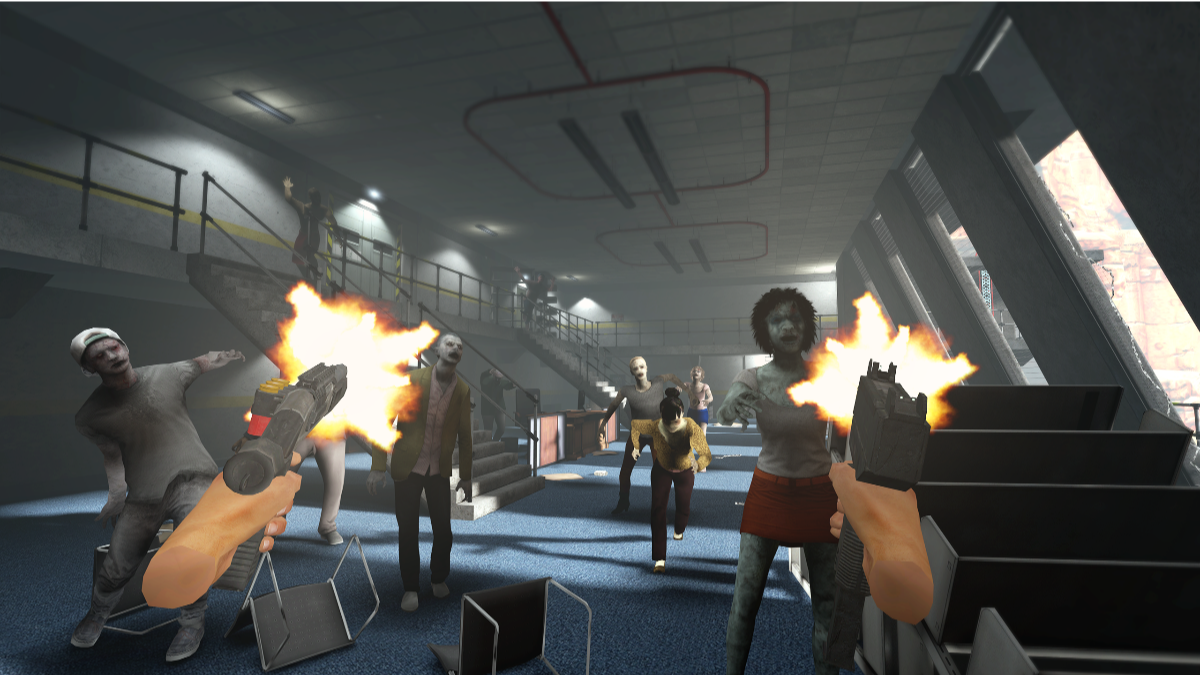
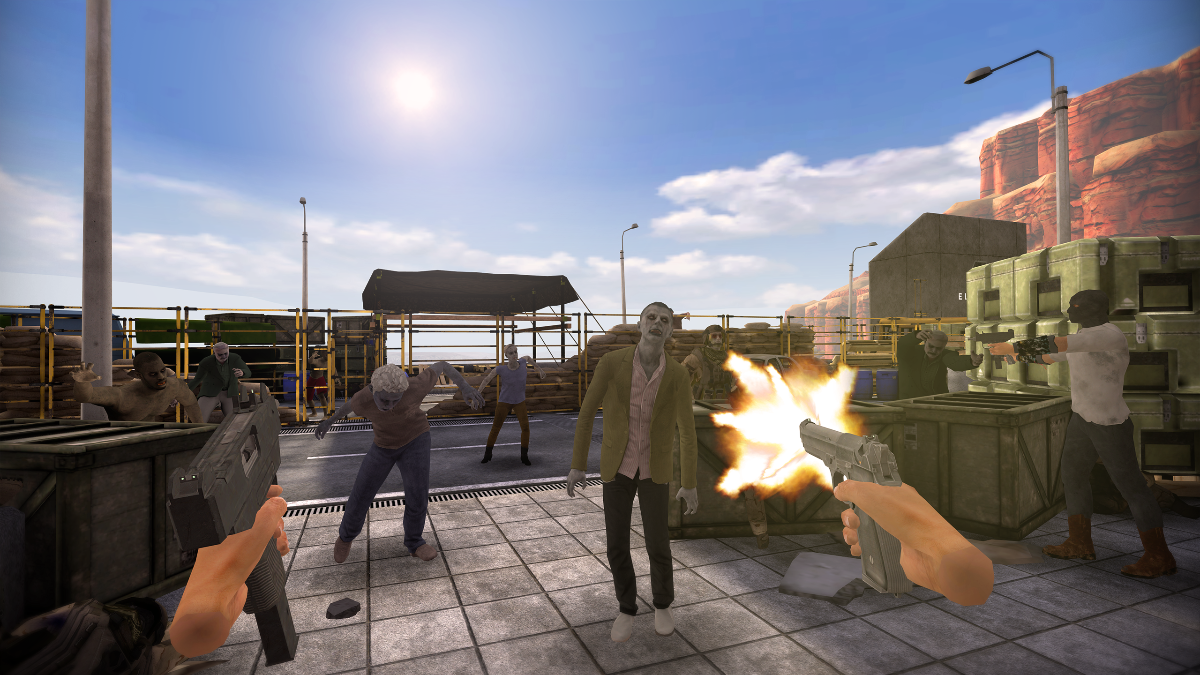
Today’s final update, “The Damned,” ends things with a bang, offering what could easily be considered the largest expansion so far. Set before the events of both the main Arizona Sunshine campaign as well as the Dead Man prequel, The Damned has you once again taking on the role of a US Special Forces operative sent on a dangerous mission through a dimly-lit facility chock full of flesh-hungry marauders. Unlike Dead Man, however, The Damned features a much wider variety of environments to explore.
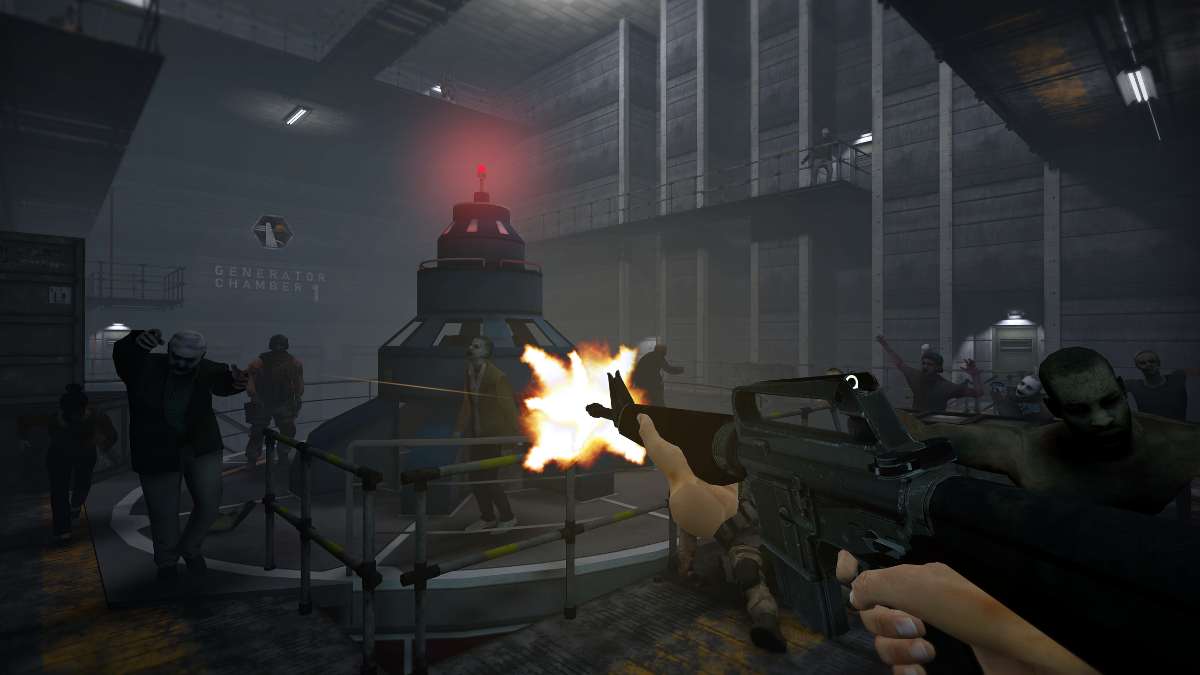
The mission begins with you weaving through hordes of the undead as you navigate your way through a dark tunnel packed with random debris. Upon exiting the tunnel, you’ll find yourself staring out at a massive hydroelectric damn surrounded by vast network of canyons. The Damned takes great pleasure in moving you back-and-forth between claustraphopic underground facilities and large open spaces with epic scenery.
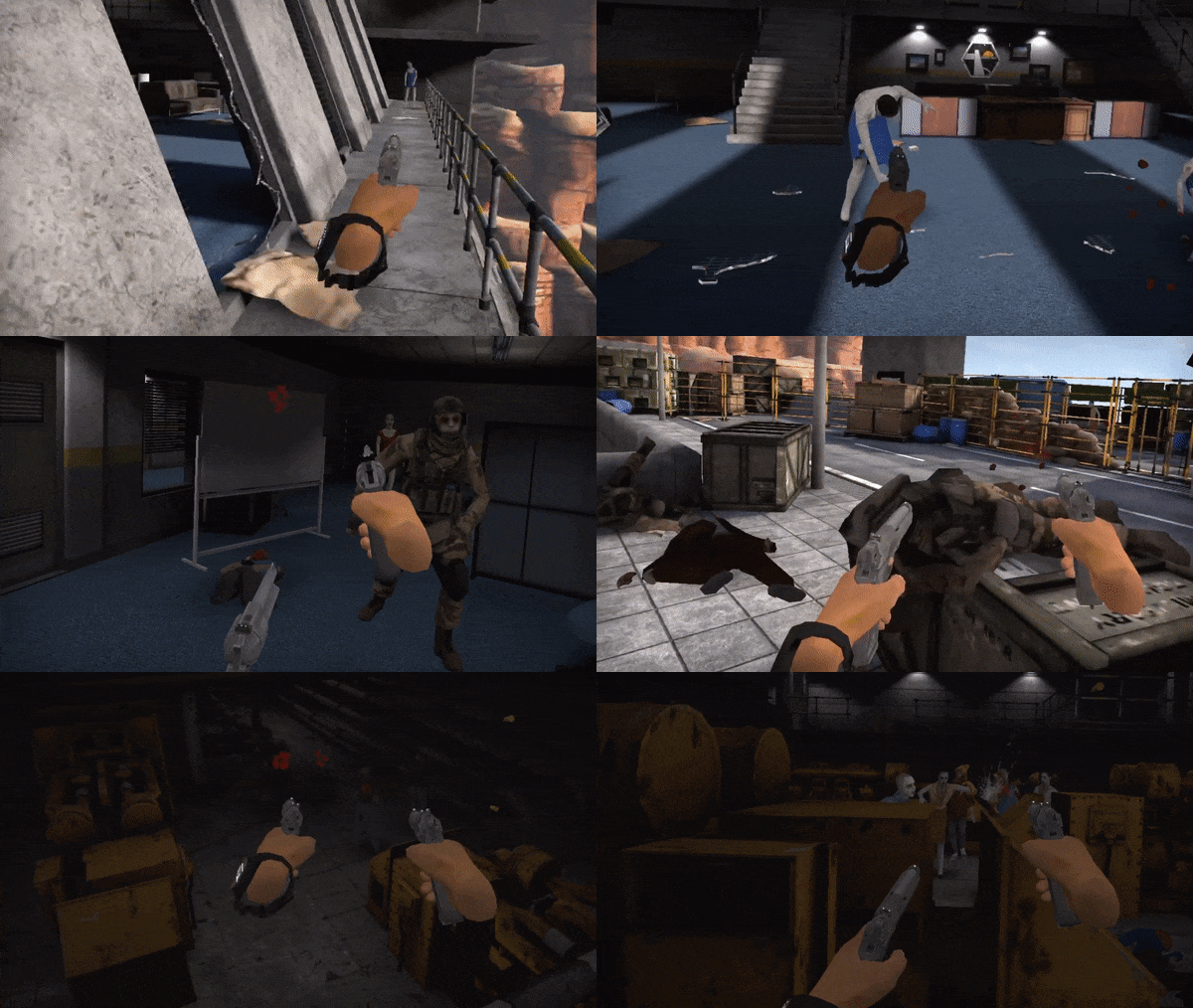
While the writing won’t be winning any awards any time soon, the jaw-dropping set pieces and impressive number of enemiesis more than enought o keepo you constantly entertained throughout your mission to restart the hydroelectric dam. Having already played through the entirety of Arizona Sunshine as well as the DLC and horde mode, I thought my days of fearing the undead were behind me. But after battling through the massive hordes of marauders littered throughout this gargantuan hydroelectric dam, I have a new-found respect for my flesh-hungry foes.
As for any future updatese, we’ll just have to wait and see. No doubt Vertigo is currently focusing its efforts on its upcoming co-op survival game After the Fall, which is scheduled to arrive on headsets sometime this year. Still, I hope this isn’t the last we see from the legendary zombie shooter. Arizona Sunshine is largely considered to be one of the first AAA VR experiences ever released, offering players a fully fleshed-out campaign unlike anything available at the time. Personally, it remains one of my favorite VR shooters, especially when played cooperatively with a friend.

Arizona Sunshine “The Damned” is available now on Oculus Quest for $4.99. You will need to own the base game first in order to play.

Image Credit: Vertigo Games

The post Arizona Sunshine’s Latest Oculus Quest Expansion ‘The Damned’ Is Its Biggest Yet appeared first on VRScout.


from VRScout https://ift.tt/2SjYAm9
via IFTTT

Arizona Sunshine’s Final Expansion Launches On Quest Today

https://ift.tt/eA8V8J

And so the circle is complete; the very last story expansion to Arizona Sunshine launches on Oculus Quest today.

The Damned, which we first revealed for PC VR and PSVR headsets at last year’s E3 VR Showcase, is now live (or soon will be) on Facebook’s standalone headset. As the name suggests, this expansion is set on an enormous dam. Taking place before the original game, you play as a US Special Forces agent that must reactive the facility’s generators. It’s easier said than done; zombies litter the place as you’d expect. Check it out in the trailer below.

And thus about another hour of headshots and dual-wielding VR antics ensues. As with the rest of the game, The Damned can be played in single-player or co-op with a friend.

Arizona came to Quest last year, and Vertigo has been regularly rolling out its DLC plan since. With the arrival of The Damned, however, the complete Arizona Sunshine experience is now available on Oculus Quest, nearly four years after the base game originally launched on Steam.

Elsewhere, we’re looking forward to getting an update on Vertigo’s next big zombie shooter, After The Fall, at some point. It’s been a while since the team last talked about it.

The Damned costs $4.99 and, although Arizona Sunshine itself doesn’t support cross-buy on Quest, each DLC pack does. So if you already own The Damned on the Oculus Rift store you’ll get it for free here.

Will you be picking up The Damned on Quest? Let us know in the comments below!

The post Arizona Sunshine’s Final Expansion Launches On Quest Today appeared first on UploadVR.


from UploadVR https://ift.tt/2SksV3J
via IFTTT

Wireality is an Experimental Haptic Feedback Device Using Shoulder-mounted Strings

https://ift.tt/3eZY9XD

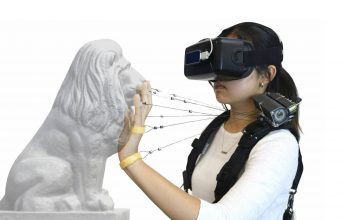
Carnegie Mellon University researchers published a paper recently that proposes a novel VR haptic feedback device, which unlike strictly hand-worn haptic devices, lets you feel objects in VR with a measure of ‘positional’ resistance.

Researchers Cathy Fang, Yang Zhang, Matthew Dworman, and Chris Harrison call it Wireality. It’s basically a self-contained, shoulder-worn device that allows you to feel resistance in your hands and fingers when you encounter larger obstacles in VR.

Retractable wires connect to your finger and hand joints, and are locked into place by shoulder-mounted solenoids when you encounter an object, letting you ‘feel’ the solidity of the object in its relation to the user.

Using a sort of exoskeleton (or exotendon) isn’t really a new concept when it comes to haptic gloves, as gloves such as HaptX and Dexmo are similarly designed to lock your joints in place, however this is the first we’ve seen that actually takes that self-contained concept and pushes it further into the third dimension. The gloves listed above create resistance and lock your individual fingers in place, which is helpful for manipulating small, singular objects, but not when it comes to larger objects such as walls, railings, and furniture. With both traditional motion controller buzz haptics and finger-only force feedback gloves, larger objects are essentially immaterial.

It’s an interesting concept, although there are admittedly some drawbacks. The researchers highlight Wireality’s inability to provide resistive force in any other direction than perpendicular to the wearer’s body. Also, Wireality can’t fully simulate small ‘two-stage’ virtual devices such as buttons and switches because the shoulder-based solenoids can’t reposition themselves without first being released, meaning you won’t be able to feel a button or piano key and naturally depress it like you might in reality.

That said, the researchers have developed a lightweight, low-power device that they were able to create for only $35; one of the key design goals was to make it fit for consumers. Whether the design catches on, or finds itself integrated into another haptic controller still remains to be seen.

If you want a more in-depth look at Wireality, check out the full research paper here.

The post Wireality is an Experimental Haptic Feedback Device Using Shoulder-mounted Strings appeared first on Road to VR.


from Road to VR https://ift.tt/2VLQNPS
via IFTTT

John Legend, Tinashe to Play Live Shows in Social VR Platform ‘Wave’

https://ift.tt/3bRm2yS

Wave isn’t your garden variety social VR platform. With an emphasis on virtual raves, replete with immersive visualizations and regular live performances, it’s become the de facto concert platform for VR users. Now Wave says it’s bringing more artists this summer via its One Wave concert series, which will include artists such as John Legend, Tinashe, Jauz, Galantis, and more.

The series begins on Thursday, April 30th at 3PM PT (local time here) with a live show from the Church of Galantis. Wave says more show dates will be announced and rolled out over the next several months.

The One Wave series promises to bring more of the platform’s wild visualizations and custom environments, giving VR users access to a concert-going experience that simply isn’t possible outside of VR—especially now that large in-person events aren’t an option.

Performances are said to also stream across other social media and gaming platforms, something the studio says will let fans “socialize and interact with the artists as they perform, cheer as part of a global avatar audience, voting on key show moments, play mini games, and socialize with each other.”

“We are now living in a digital avatar culture. Through our proprietary technology and core gaming capabilities, Wave can go beyond the traditional live streaming concerts and create artist avatars, virtual environments and interactive experiences that truly immerse audiences at the nexus of gaming and entertainment,” said Wave CEO Adam Arrigo in a press statement. “The shows we’ve done with Tinashe, Lindsey Stirilng and Galantis are good examples of how we’ve successfully leveraged these technologies and we are excited to welcome John Legend and others who are joining the platform to elevate how they are creating, distributing and monetizing performances for their fans.”

To top it off, Wave is giving proceeds from the One Wave series to non-profit organizations that are in need of support during the current global COVID-19 pandemic, the studio says.

“The Ad Council will also be providing important public service messaging around mental health awareness and resources as an extension of its COVID-19 response efforts,” the studio says.

Wave is a free app that supports SteamVR headsets via Steam and Oculus Rift via the Oculus Store.

The post John Legend, Tinashe to Play Live Shows in Social VR Platform ‘Wave’ appeared first on Road to VR.


from Road to VR https://ift.tt/3f3SVKs
via IFTTT

Walking Dead Dev: VR Physics Standardization Will Lead To ‘Second Generation’ Games

https://ift.tt/eA8V8J

The creators of The Walking Dead: Saints & Sinners belives its work with VR physics, along with other projects, will lead to a “second generation” of VR games.

Skydance Interactive chief technologist and co-founder Peter Akeman said as much in a recent interview with VentureBeat (see below). “Let’s take three titles that just launched and do physical things,” Akeman said. “Let’s say Boneworks, we’ll take Walking Dead: Saints & Sinners, we’ll take Half-Life. All of us have games where we’re interacting with physical objects. Each one of us had to solve that problem on our own, in isolation. It’s like the early days of 3D where no one had done it and everyone was at home writing their own graphics engine.”

But, now that games with those basics are releasing, Akeman believes the next generation of VR games will go even deeper.

“So everyone is inventing the basics now, but then they’re out there and once they’re out there and a few different kicks have been had at it, these things are gonna standardize,” he explained. “And what you’ll then see is you’ll go from Quake to Half-Life, to put ancient metaphors to work here. Once the vocabulary of shooters gets developed, you’ll see a story emerge, you’ll get second-tier gameplay and deeper stuff emerging and I think the same thing’s going to be true here where, as the basic vocabulary gets laid down, we’re going to see second generation product that evolves and takes much deeper hand-play. It’s built on top of those mechanical rules that become standardized and people become familiar with.”

We’ve written along the lines of what Akeman is talking about before. The advances these games make in terms of physical interaction is unlocking a new type of native VR right before our eyes. The question is where it goes from here; can developers unlock this same potential on more accessible, lower-powered headsets like Oculus Quest? Saints & Sinners is coming to the platform and a Boneworks spin-off is in the works, so hopefully, we’ll have an answer soon.

The post Walking Dead Dev: VR Physics Standardization Will Lead To ‘Second Generation’ Games appeared first on UploadVR.


from UploadVR https://ift.tt/3bOzjI9
via IFTTT

Wireality Is A Low-Cost VR Haptics System That Turns You Into A Puppet

https://ift.tt/eA8V8J

We’ve seen a lot of different approaches to solving VR haptics over the past few years. It’s safe to say that Wireality is unlike any other, though.

Revealed earlier this month from researchers at Carnegie Mellon University and the Future Interfaces Group, Wireality attaches spring-loaded cables to your fingers a little like a puppet. Connected to a shoulder-mounted device, the kit works with a given VR world to sense when your hand is about to come into contact with a virtual object and stop your fingers in the relevant position.

The aim is to give you the illusion of, say, resting your hand on a wall or wrapping your fingers around a railing. Check it out in the video below. It’s like VR haptics by way of puppetry.

This approach, the researchers say, has a lot of benefits. For starters, the system locks your fingers in place when touching a virtual object, but doesn’t require more power to keep it there. Researchers say it uses 0.024 mWh per actuation.

Perhaps most importantly, though, the entire system was created using less than $35 worth of components, whereas other VR haptics systems currently cost in the thousands.

But, fairly obviously, there’s a lot of hurdles for Wireality to overcome. A lot of what makes consumer VR haptics tough is making it simple and accessible for users. Hooking up an array of cables to your digits and mounting a device to your shoulder before putting on a headset is anything but convenient. It’s also bound to limit how freely you can move your hands in VR, which isn’t something we’d be quick to trade-off.

Plus the system can only apply the illusion of touching a surface to a few parts of the hand; if you were to press your hand flat against a wall, say, you wouldn’t actually feel it on most of your palm with the current setup.

But it’s certainly an interesting avenue for future research.

The post Wireality Is A Low-Cost VR Haptics System That Turns You Into A Puppet appeared first on UploadVR.


from UploadVR https://ift.tt/2SjB2xB
via IFTTT

Rhythm-shooter ‘Pistol Whip’ to Launch on PSVR This Summer

https://ift.tt/3f67QEe

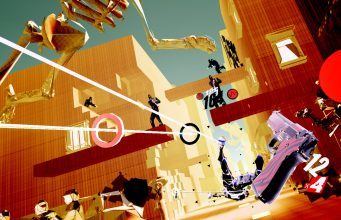
Pistol Whip (2019), the VR rhythm-shooter from Cloudhead Games, has been available on Oculus Quest and SteamVR-compatible headsets since late last year. However it seems PSVR owners will soon be able to get into the stylish shooting action too.

Cloudhead hasn’t said specifically when it will arrive on PSVR this summer, however the studio says it will continue supporting the game in the months following its release on PSVR with fresh content updates, new levels, customization options, “and more to be revealed,” the studio teases in a PS blog post.

In case you haven’t heard of it before, or seen the game’s cinematic-style action, we gave Pistol Whip Road to VR’s 2019 SteamVR Game of the Year Award for good reason. It has an uncanny ability to marry rhythm and shooting, and does so with a really unique flair. It’s one of those games that inspires the flow state, where you sync up with the game and simply react; you shoot baddies on the beat and automatically move forward at a constant, frenetic clip to the punchy beats of each level.

Cloudhead has been issuing regular monthly updates since its release in November 2019 that bring new content to the game, much of it inspired by different film genres each time. This comes part and parcel with new game modes, weapons, skins, etc—all of it free.

Make sure to check out our review of Pistol Whip to find out why we gave it a really solid [8/10].

The post Rhythm-shooter ‘Pistol Whip’ to Launch on PSVR This Summer appeared first on Road to VR.


from Road to VR https://ift.tt/2Wdgkk0
via IFTTT
Related Posts Plugin for WordPress, Blogger...