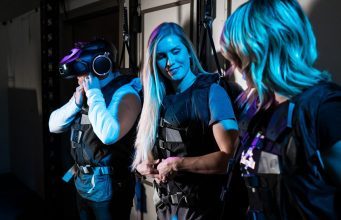
Minnesota’s Mall of America, the United States largest mall, is getting the popular VR out-of-home experience The VOID soon.
According to a report by Attractions Magazine, The Void will be opening at the Mall of America first with its successful VR experience Star Wars: Secrets of the Empire, which was created in partnership with Lucasfilm’s ILMxLAB.
The Void combines physical spaces with wireless VR headsets (via backpack-mounted PCs) and tracked peripherals to create its seamless blending of the virtual and the physical world. The Star Wars VR experience itself puts blasters in your hands, and allows up to four players to head in at the same time.
“The Void brings a new level of immersive experience and storytelling to Mall of American through its state-of-the-art technology,” said Heather Brechbill-Swilley, vice president of real estate and leasing. “We’re excited to offer guests the chance to be the hero of their own adventure in a variety of beloved universes through The Void’s unique attraction model.”
We went hands-on with the Secrets of the Empire at The Void late last year, and it provided an experience that Road to VR’s Garret Bullard says “definitely nailed the feeling of Star Wars.”
Walking around the corridors on Mustafar felt like we were really sneaking into an Imperial stronghold dressed as Stormtroopers. We were greeted with the familiar cold steel and clean lined interior of an imperial base patrolled by Stormtroopers. Needless to say, the sneaking around didn’t last terribly long, and soon after landing we were engaged in combat with Stormtroopers all around us. Grabbing a physical blaster and returning fire on a group of enemies brought me back to one of my favorite scenes in A New Hope (1977) where Luke and Leia are trapped on the Death Star and must defend themselves from Stormtroopers shooting up at them from below.
The opening mark’s The Void’s first location in the Midwest. New locations coming in the near future include Atlanta, Austin, Hollywood, New York City, Philadelphia, Santa Monica, and Washington D.C.
Its uncertain when the Mall of America location is set to open, although Mall organizers state it’s “opening soon.”
The verdict is in: Hellblade VR is a triumph. Ninja Theory’s BAFTA-winning adventure was already worth your time on a flat screen, but it soars in VR and is simply unmissable if you own an Oculus Rift or HTC Vive. Good news, then: you can currently pick it up for almost half the price.
The original version of Hellblade: Senua’s Sacrifice is on sale on the Humble Store for the next week priced at $17.99/£14.99. That’s 40% off of the original price of $29.99/£24.99. Crucially, you can claim the game on Steam, meaning you’ll still get the free VR update when it goes live later today.
We loved what Ninja Theory did with Hellblade VR, calling it a “remarkable achievement in visual and sound design.”
“It’s a great example of how to port a non-VR third-person action game to the immersive realm of HMDs that not only stays true to the source material, but enhances the experience in meaningful ways,” Games Editor David Jagneaux wrote. “If you haven’t played Hellblade before, there is no better time than now and if you have, then this is an engrossing way to re-experience Senua’s journey from a new perspective.”
Elsewhere, Ninja Theory also confirmed that anyone that picked the game up on GOG instead of Steam will also be getting the VR version free. Yay!
The head of Sony's virtual reality efforts has left the company after 19 years and moved to another California-based tech giant: Google. Richard Marks headed Sony's Magic Lab, the group behind the PlayStation VR headset, and served as the company's v...
from Engadget RSS Feed https://ift.tt/2v2GkBN
via IFTTT
When you think of “Firefox,” you probably think of something that looks like this:
Or, perhaps, something like this:
That logo (or some iteration between the two) has been the browser’s logo since it launched back in 2002. Its time for change, Mozilla says.
In a blog post about “evolving the Firefox brand,” Mozilla Creative Director Tim Murray outlines the company’s thinking: Firefox isn’t just one browser now. With side projects like Firefox Rocket (the company’s browser for connections with less bandwidth) and Firefox Reality (Firefox, but for virtual reality), the company is finding it needs a bit more wiggle room with its design language.
While they shared a few work-in-progress potential logos, they were quick to note that none of them are final. They might tweak things over time (and they’re asking for feedback), or just go back to the drawing board all together.
The whole thing might sound a bit up-in-the-air right now, and that’s mostly intentional — it’s still pretty early days in the process. But eventually, Firefox will be getting a new logo; or, more accurately, new logos.
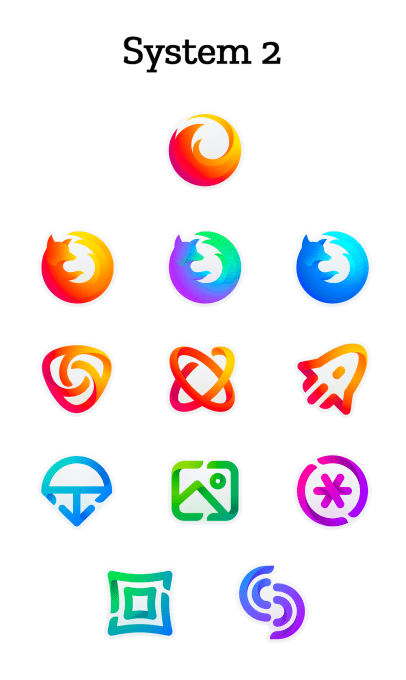
The work was presented in two potential “systems,” each composed of one “Masterbrand” logo and 11 auxiliary logos. The masterbrand would be the primary one used for representing the brand as a whole, while those beneath it could each represent an individual product.
The two new “Systems” of icons:
If it’s a choice between the two systems, I like System 2 — but I’ve always liked the existing Firefox logo, and that’s the set that feels like more of an update and less of a complete replacement. It’s more “Firefox”, less just “fox.”
Firefox says the branding shift should come together “over the next few months” — so if you’re a fan of the classic logo, it’ll still be hanging around for a while.
I remember the moment that I realized playing a game like Hellblade in VR would be unlike everything else I’ve played before. During a tense fight with an enemy early on in the game I was very low on health. One of the voices in my head that’s constantly taunting, nagging, and whispering to Senua throughout her journey yelped “Behind you!” and I physically spun my head around to see another enemy lunging with a sword, so I pressed the block button and parried the blow perfectly. Had it not been for that ability to turn and look — and my instinct to follow directions from the voice in my head — I likely would have died.
Small moments like that are great examples of how VR can be used to enhance an otherwise non-VR game. Not every game needs VR support, but most games would be more immersive and engrossing if it was done well. Hellblade: Senua’s Sacrifice outside of VR was already one of the best games this entire generation with ominous psychological overtones and a highly atmospheric setting, so adapting that world to VR only enhances what already made it so great to begin with.
In Hellblade you take on the role of Senua as she descends into the depths of Nordic Hell, otherwise known as Helheim, on a quest to save the soul of her lost lover. Throughout the adventure you’re besieged by twisted, demonic creatures that engage you in ferocious melee combat. The journey consists of battling back these deranged creatures, exploring dark, twisted worlds, and uncovering the meaning behind cryptic symbols and puzzles.
What underscores everything though is the bold and brilliant presentation. Visually it’s one of the most stunning games (VR or otherwise) that I’ve ever played and I’m honestly hard-pressed to think of a better looking experience inside of a VR headset. The sound design is second-to-none as voices race through Senua’s head and across each of your ears. One voice may whisper words of encouragement while another sneers insults and discredits your actions. Flickers of images and brief hallucinations appear on-screen and you’re constantly questioning everything that you do and see for the entire 6-8 hour journey.
Combat in Hellblade is thrilling and intense. It’s nowhere near as deep as other third-person action games you may have played recently, but it doesn’t need to be. Senua can issue light and heavy attacks, dodge, block, and parry. Eventually you unlock some otherworldly abilities and time manipulation, which looks amazing in VR, but that’s the gist of it. You time your blocks to parry attacks, string together combos, and juggle multiple enemies that quickly try to surround and overwhelm you.
Being able to crane your neck around and marvel at the amazing environment is a huge reason why playing Hellblade in VR is so magical, but the change of perspective actually helps out combat as well. As explained at the start of this review, you can look around while fighting to avoid getting flanked by unseen enemies.
And while you can certainly play Hellblade outside of VR with headphones to experience the chilling audio and whispering voices, it’s not the same. When those voices giggle and prod my psyche mid-gameplay it really causes me to keep my head on a swivel, looking all around. It affects you on a much deeper level than just some creepy voices in your earbuds. They feel like they’re part of your mind.
In terms of VR-exclusive features, Hellblade actually has a few surprising bits. For starters, there are two experimental camera angles in the settings menu. The standard camera view follows Senua from behind just like in the non-VR game, but then there’s also a Tabletop-style camera that’s aimed down from the sky that makes Senua look like a miniature figure and a Giant-style camera that puts you at her ankles, looking up. It made me feel like I was a dog by her side.
Even when using the standard camera view the sense of scale is incredible. Instead of flicking an analog stick to look around I can actually crane my neck to gasp at enormous mountains, decrepit landscapes, or rotting piles of flesh in the depths of Hell. It’s just a shame more hadn’t been done to make it feel fresh or at least offer motion controller support in some way.
I never felt sick at all while playing Hellblade in VR, but I’ve also never felt sick when in VR at all. There are lots of options to pick from and tweak to make things as comfortable as possible, such as snap turning, camera snapping during combat, and even a nifty feature that lets you turn Senua while moving using just your head while exploring. It plays great with full smooth rotation on as well, which is how I preferred to play.
However, no matter which comfort options you pick all cutscenes that move the camera around a scene will zoom into a letterbox-style presentation. I couldn’t find an option to disable this. It was clearly done to maintain a sense of comfort, but it would have been nice to be able to remove that. It got annoying after a while.
Final Score:9/10 – Amazing
Hellblade: Senua’s Sacrifice VR Edition is a remarkable achievement in visual and sound design. It’s a great example of how to port a non-VR third-person action game to the immersive realm of HMDs that not only stays true to the source material, but enhances the experience in meaningful ways. If you haven’t played Hellblade before, there is no better time than now and if you have, then this is an engrossing way to re-experience Senua’s journey from a new perspective.
Hellblade: Senua’s Sacrifice is currently available on Steam for $29.99. The VR edition, which this review is based on, releases on July 31st. All owners of the non-VR edition receive the VR version for free. Check out these official review guidelines to find out more about our process.


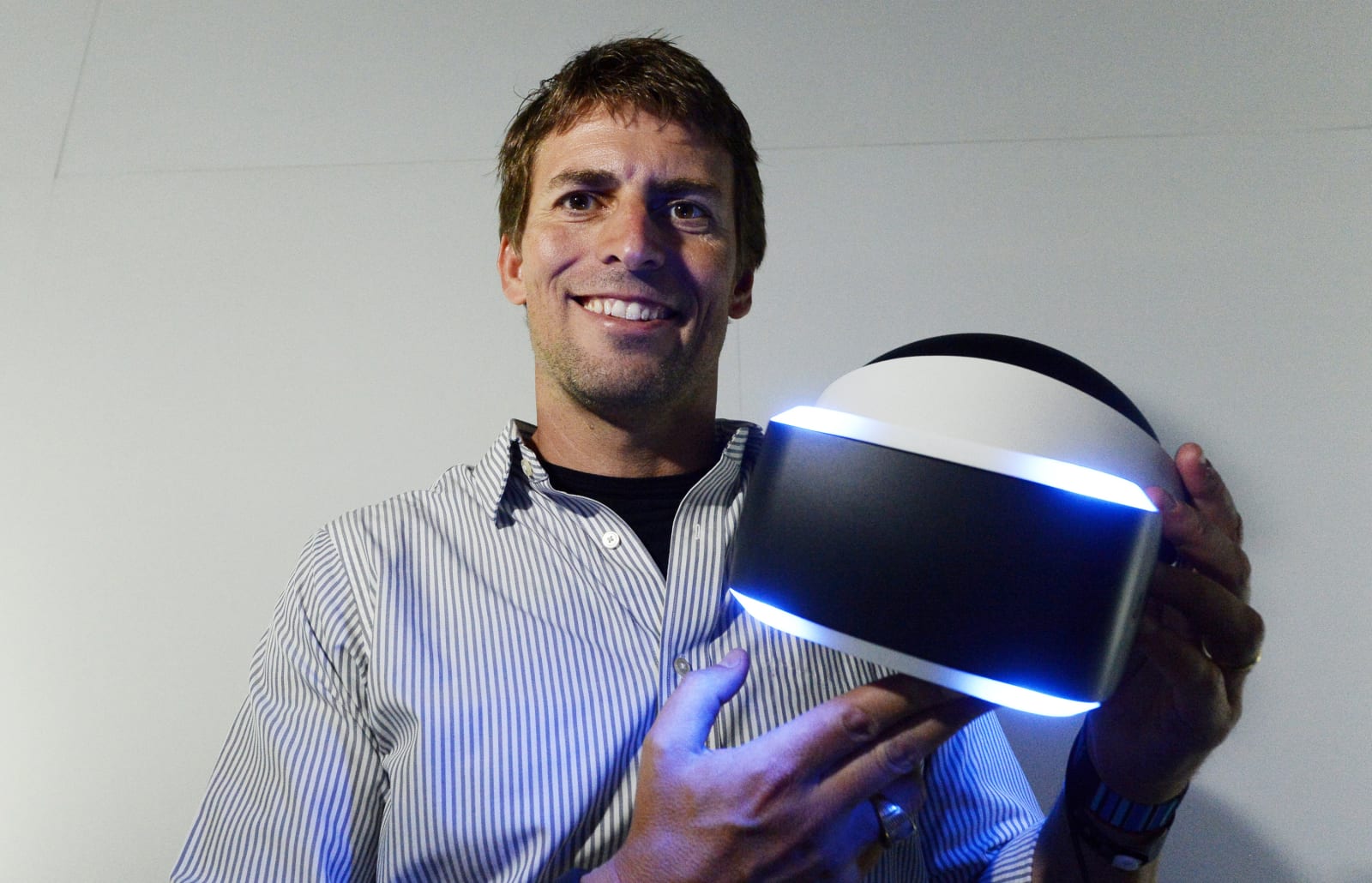 The head of Sony's virtual reality efforts has left the company after 19 years and moved to another California-based tech giant: Google. Richard Marks headed Sony's Magic Lab, the group behind the PlayStation VR headset, and served as the company's v...