Wednesday, 6 May 2026

The 50 Best-selling Quest Games of All Time – 2026 Analysis

https://ift.tt/0hZC1k4

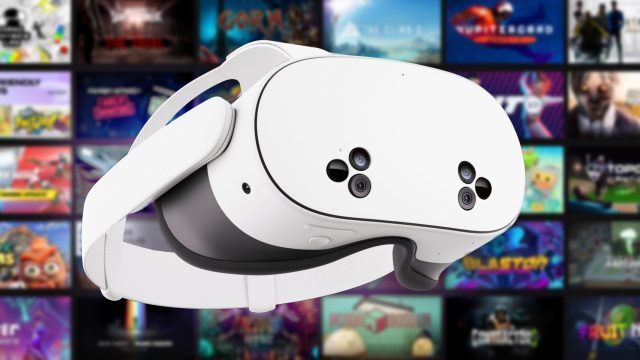
It’s been a little over a year since Meta revealed its top 50 best-selling games of all time. Here’s the rankings as they stand today, and why they haven’t really changed that much.

Not a lot has changed in Quest’s top 50 best-selling games list, which is partially to be expected since Meta’s list ostensibly covers sales since the original Quest was initially released in 2019.

Note: If you want to skip the analysis, you’ll find the full list at the bottom of the article.

Some of those oldies (but goldies) have years of sales behind them, which makes it tough for newcomers to break through, especially since the list doesn’t reflect the money earned from DLC or in-game purchases, just initial sales. That means those high-earning free-to-play games aren’t represented.

Those oldies also make for great first-time experiences that newcomers can instantly latch onto. Granted, with Meta increasing Quest 3 and 3S prices by $50-$100 last month, that may not be such an important factor moving forward, as it’s bound to have some effect on Quest adoption.

Still, in comparison to this time last year, only three games have managed to crack the top 50: NightClub Simulator VR (2022), Green Hell VR (2022), and MotoX (2021)—none of which are technically even new. That’s right. Not a single game released in 2026 has broken the top 50 yet.

What is interesting though is those three high-action games just so happened to have bumped three decidedly more chill puzzle games off the list: Angry Birds VR: Isle of Pigs (2019), Moss (2019), and Please, Don’t Touch Anything (2019).

Although many games only traded places by a few spots up or down, there were some big movers too. Games with notable upward momentum included a handful of sims: delightful kitty cat sim I Am Cat (2024), seminal boxing sim Thrill of the Fight (2019), nightclub bouncer sim I Am Security (2024), and team-based shooter Pavlov Shack (2023).

There were also a few that dropped a fair bit too. Travel sim Wander (2019) and fruit-slicing Fruit Ninja (2019) both showed a downward trajectory.

As promised, here’s the list, which includes rankings as they are today and movement from last time we checked in last year.

50 Top-selling Quest Games (May 2026)


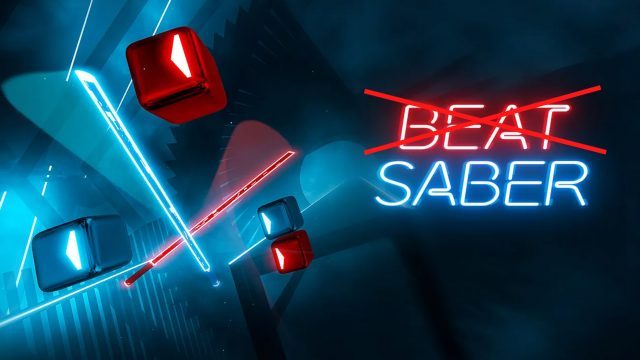
  1. Beat Saber →0
  2. Job Simulator →0
  3. Blade & Sorcery: Nomad ↑1
  4. SUPERHOT VR ↓1
  5. Virtual Desktop ↑1
  6. Among Us 3D ↑1
  7. The Thrill of the Fight ↓2
  8. Vader Immortal: Episode I ↑1
  9. BONELAB ↑2
  10. Onward ↓2
  11. The Walking Dead: Saints & Sinners ↓1
  12. Creed: Rise to Glory – Championship Edition →0
  13. Five Nights at Freddy’s: Help Wanted ↑1
  14. Vader Immortal: Episode III ↓1
  15. GOLF+ ↑2
  16. Vader Immortal: Episode II →0
  17. Eleven Table Tennis ↑1
  18. POPULATION: ONE ↓2
  19. I Am Cat ↑4
  20. Drunkn Bar Fight →0
  21. Walkabout Mini Golf ↓1
  22. Contractors →0
  23. GORN ↓2
  24. The Thrill of the Fight 2 ↑5
  25. Resident Evil 4 ↓1
  26. NFL PRO ERA →0
  27. Pistol Whip ↓2
  28. Ghosts of Tabor ↑2
  29. Vacation Simulator ↓2
  30. Waltz of the Wizard ↑4
  31. Real VR Fishing →0
  32. I Am Security ↑10
  33. Pavlov Shack ↑6
  34. Wander ↓6
  35. A Township Tale ↓3
  36. The Climb 2 ↓3
  37. Star Wars: Tales from the Galaxy’s Edge ↓1
  38. NightClub Simulator VR NEW
  39. Fruit Ninja ↓4
  40. Hand Physics Lab ↓3
  41. Arizona Sunshine ↓3
  42. I Expect You To Die ↓1
  43. Gun Club VR ↓3
  44. Shave & Stuff ↑1
  45. Warplanes: WW1 Fighters ↓2
  46. The Room VR: A Dark Matter ↓2
  47. SKYBOX VR Video Player →0
  48. Green Hell VR NEW
  49. The Climb ↓3
  50. MotoX NEW


The post The 50 Best-selling Quest Games of All Time – 2026 Analysis appeared first on Road to VR.


from Road to VR https://ift.tt/kVe4zbl
via IFTTT

Remakes of Iconic ’90s Puzzle Games ‘MYST’ & ‘RIVEN’ Finally Come to PSVR 2 This Month

https://ift.tt/yn0LzC6

Cyan Worlds announced it’s finally bringing remakes of the studio’s most iconic puzzle adventures, MYST (1993) and RIVEN (1997), to PS5 and PSVR 2 this month.

Like the remakes on PC, which were released in 2021 and 2024 respectively, Myst and Riven will support both flatscreen and VR gameplay at launch, which is coming May 19th.

As you’d imagine, both games are very much products of their time, as original puzzles are faithfully recreated alongside adapted visuals, which transforms the games’ original point-and-click still frames into fully explorable 3D environments.

They really are classics for a reason too. If you’ve never played either, you may be surprised to find out just how much of a head-scratcher a majority of puzzles are, often requiring pen and paper so you can keep track of everything.

In case you’ve never actually heard of either game: Myst is a first-person puzzle adventure where you explore a mysterious island by solving intricate, logic-based challenges with almost no hand-holding, piecing together the story through environmental clues and journals.

Its sequel, Riven, builds on that formula with a more complex, interconnected world and deeper narrative, which you might find demands even more careful observation and deduction as you uncover the secrets of a fractured, surreal civilization.

You can learn more about both in our full reviews of Myst on Quest and Riven on Quest and PC VR headsets.

Both remakes are landing on the PlayStation Store on May 19th, priced at $35 each. You can also now wishlist Myst and Riven.

The post Remakes of Iconic ’90s Puzzle Games ‘MYST’ & ‘RIVEN’ Finally Come to PSVR 2 This Month appeared first on Road to VR.


from Road to VR https://ift.tt/zmkisqY
via IFTTT

Tuesday, 5 May 2026

XPANCEO is Hoping to Solve AR Contact Lens Challenge with Ultra Tiny Solid-State Batteries

https://ift.tt/hg9reaB

If augmented reality glasses are the future, AR contact lenses are probably a bit farther away. Still, smart contact lens startup XPANCEO says it’s hoping to address at least one of the technology’s main issues with the inclusion of miniature solid-state batteries.

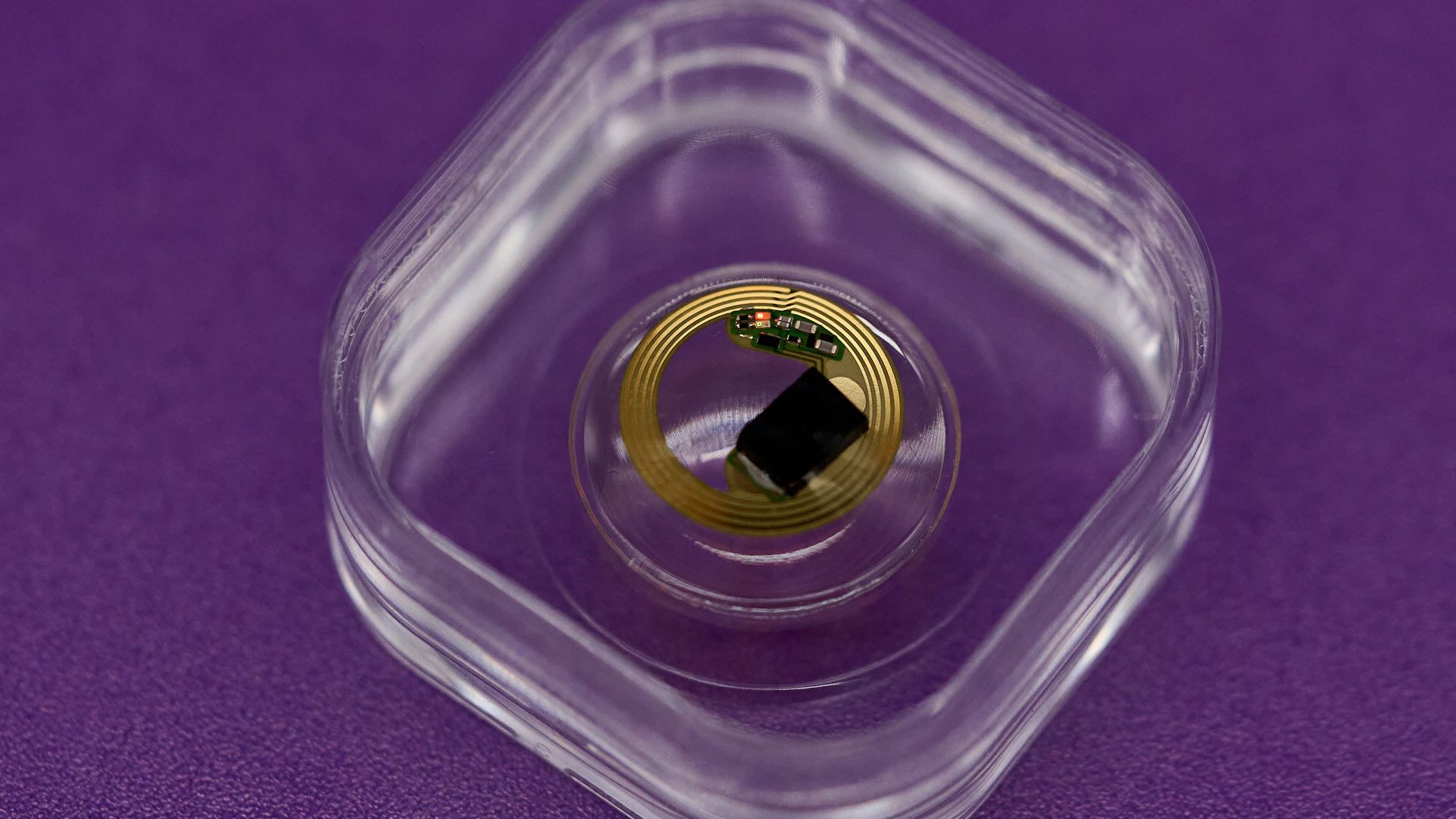
In partnership with France-based solid-state battery startup ITEN, XPANCEO announced it’s developing a proof of concept AR contact lens with a built-in microbattery—something the companies hope will solve a main challenge in ocular wearables right now: conventional batteries are thick, not durable enough, and aren’t suitable to be used in in devices worn directly on the human eye.

XPANCEO has been developing smart contact lenses with AR and health monitoring capabilities since its founding in 2021. Along the way, the UAE-based unicorn has been attempting to address the sort of strict design constraints inherent to XR contact lenses, such as thickness, mass, heat generation, and material selection, with biocompatibility and user safety.

When it comes to powering smart contacts, the company says that a number of tasks can be powered by simply harvesting energy from the user’s body, like the mechanical energy from blinking, thermal differences across the lens, electrochemical reactions with tear fluid, and integrated solar cells.

Prototype Microbattery for smart contacts | Image courtesy XPANCEO,

High-energy functions, like displaying AR imagery, require sustained “milliwatt-level power,” the company says, making high-density energy storage a must for future AR contacts. And at least one part of that challenge could be overcome with solid-state batteries, the companies maintain, which unlike lithium-ion cells, cannot leak, swell, or explode.

“If a failure occurs, the system simply stops supplying power. ITEN solutions can be engineered in ultra-thin, flexible formats compatible with soft contact-lens substrates, while still providing high enough power density for the short bursts of energy required by AR displays and wireless connectivity, without rapid degradation,” XPANCEO says.

Although promising, and potentially safer and more energy-dense than current battery tech, solid-state batteries are also expensive, hard to manufacture at scale, and not yet widely available despite active development by companies like Toyota and QuantumScape.

ITEN isn’t producing the sort of solid-state batteries you might find in future electric vehicles or home energy storage though; the Dardilly, France-based startup specializes in nanomaterial fabrication to produce fully ceramic electrodes with a patented “mesoporous structure”—essentially allowing small batteries to deliver higher power and charge and discharge more efficiently.

Since May 2025, ITEN has been mass-producing its first-gen solid-state ceramic microbatteries, which will find its way into XPANCEO’s in-development smart contacts.

“The ITEN–XPANCEO proof of concept demonstrates that high-power-density energy storage can now be manufactured in volume production and safely integrated into a contact lens, marking a crucial milestone in making smart contact lenses commercially viable,” XPANCEO says.

“By combining ITEN’s solid-state energy storage technology with cutting-edge smart lens innovation, the ITEN partnership with XPANCEO opens a new frontier in compact, high-power energy solutions,” adds Vincent CobĂ©e, CEO of ITEN. “Together, we are enabling a new generation of intelligent and highly integrated systems that demand both performance and reliability—delivering power where space is limited and expectations are high, with the added assurance of full safety enabled by inherently stable, non-flammable product architecture.”

This follows XPANCEO’s latest (and largest) funding round to date, a Series A round last July which brought to the company $250 million in addition to giving it a $1.35 billion valuation.

The post XPANCEO is Hoping to Solve AR Contact Lens Challenge with Ultra Tiny Solid-State Batteries appeared first on Road to VR.


from Road to VR https://ift.tt/SlP9NUK
via IFTTT

Monday, 4 May 2026

VR Veteran Behind ‘Alien: Rogue Incursion’ & ‘Creed: Rise to Glory’ Reportedly Shutting Down

https://ift.tt/dNFrOho

Survios, one of VR’s most senior game studios and developer behind Alien: Rogue Incursion (2024), is reportedly shutting down, as a majority of staff have been laid off.

While Survios hasn’t publicly announced the shutdown at the time of this writing, the reduction in headcount appears to be drastic enough to all but confirm that the VR veteran studio is closing up shop.

Dylan Ralston, previously a Combat Designer at Survios, says in a LinkedIn post on Saturday the studio is “essentially shuttered, with all of the team members responsible for development being let go, including myself.”

Tim Schumann, Senior Technical Sound Designer at Survios, also maintains the studio is shutting down.

Survios released over a dozen games since its founding in 2013, which started with breakout co-cop combat game Raw Data (2016), notably one of the first VR games to pass $1 million in revenue.

As a pioneer of the space, Survios explored a variety of genres, some of which were based on its own IP, including foot racing game Sprint Vector (2018), immersive song-making game Electronauts (2018), and ship-based battle arena Battlewake (2019).

The studio also released a number of VR games based on popular franchises and IPs, including boxing game Creed: Rise to Glory (2018), narrative-driven adventure Westworld Awakening (2019), zombie shooter The Walking Dead: Onslaught (2020), puzzle game Puzzle Bobble VR: Vacation Odyssey (2021), an upgraded re-release with Creed: Rise to Glory – Championship Edition (2023), and Alien franchise shooter Alien: Rogue Incursion (2024).

In late 2024, Survios announced the sequel to Alien: Rogue Incursion was already in development, which was slated to resolve the game’s cliffhanger while offering up what the studio called “deadlier enemies and more difficult challenges.”

Shortly after the game’s release on Quest 3 in early 2025, Survios paused work on the sequel to release a flatscreen version of the game, which saw a measure of success across console and PC. Worryingly enough, the studio hasn’t publicly spoke about the game’s sequel, even after launch of the flatscreen adaptation.

This follows a broader industry trend of studio shutdowns and mass layoffs, the largest of which was Meta’s revelation earlier this year it was shutting down a number of internal VR studios amid a wider shift in its Reality Labs XR division to instead focus on AI and smart glasses.

Following Meta’s pivot, a reported number of in-progress VR games have been cancelled, including as an unannounced Batman: Arkham Shadow sequel from Meta’s Sanzaru Games, an unannounced Harry Potter VR game for Quest from Skydance Games, and a major project from Moss developers Polyarc.

More recently, social VR platform Rec Room, once valued at $3.5 billion, announced it will be shutting down in June. Additionally, Meta says its own social VR platform, Horizon Worlds, will be focusing “almost exclusively” on mobile in the future as Quest players will no longer have access to future content.

The post VR Veteran Behind ‘Alien: Rogue Incursion’ & ‘Creed: Rise to Glory’ Reportedly Shutting Down appeared first on Road to VR.


from Road to VR https://ift.tt/kjCqgDU
via IFTTT

Saturday, 2 May 2026

VR Extraction Dungeon Crawler ‘Reave’ Has Been Cancelled After Months in Open Beta

https://ift.tt/kxmTyhs

Reave was an upcoming VR extraction dungeon crawler from Alta, the studio behind Township Tale. The company announced that the game has been cancelled despite the game being in a mature enough state for months of open playtesting.

Following the successful launch of Township Tale on Quest in 2021, studio Alta announced it had raised more than $12 million in investment to expand its studio and accelerate development of the game.

In April 2024 the studio revealed it was working on a new game, at the time codenamed ‘Project 2’. About a year later, the game got its official name, Reave, and was said to mix dungeon crawling with extraction-style PvPvE gameplay.

The studio underwent several rounds of closed alpha testing, following a series of open beta testing rounds which began in late 2025. Through development diaries consistently published by the studio during testing, it was easy to see the game’s steady evolution as the developers refined mechanics, enemies, art, lighting, and more.

While the game appeared to be on a steady trajectory toward launch, this week the studio unexpectedly announced that Reave is being cancelled before ever making it to market. Here is the full announcement as published on the game’s official Discord server:

This is not an easy announcement to make but we want to be direct with you: Reave is ceasing development.

Like many teams across the games industry, and especially within the VR space, we have faced increasingly difficult market conditions alongside the rising cost of development. Despite every effort, we have reached the difficult decision to end development of Reave at Alta. While this may appear as though Reave is being left behind, that could not be further from the truth. If circumstances had allowed, we would have continued building and expanding Reave alongside all of you for years to come.

This unfortunately means that the current playtest will be the final playtest for Reave.

 On Monday, Reave’s gates will close for the final time: May 4, 2026

Between now and then is the final opportunity to step into Reave before the gates close forever.

This Discord server will remain open for a short while so the community has some time together, though it too will likely close soon after.

From everyone who worked on Reave: Thank You!

This team cared deeply about what we were building. Every update, every environment, every feature, every creature, every balance pass, every late night and long discussion came from people who genuinely wanted to create something special: a dark fantasy PvPvE extraction game built for VR.

We are incredibly proud of what Reave became, even at this stage of development, and endlessly grateful for the support, feedback, excitement, clips, bug reports, encouragement, and passion you gave us throughout the journey. We are deeply sorry that we cannot continue it with you all.

In the time remaining, we’d encourage you to share other games, communities, and places to adventure with the friends you made in Reave’s Encampment and Fallen Bastion, so those bonds can continue beyond these walls.

And one final thing, from me to all of you: You were fantastic. Absolutely fantastic. And you know what? So was Reave! 

At this time it’s unclear what the news means for the Australia-based studio more broadly. Layoffs have not been confirmed, but it’s hard to imagine that things are running smoothly behind the scenes with the cancellation of a project that’s been in development for at least two years and was expected to launch this year. Also unclear is what the closure of Reave means for the studio’s previous title, Township Tale.

I’ve reached out to the studio for more info and will report back if any additional details become available.

The post VR Extraction Dungeon Crawler ‘Reave’ Has Been Cancelled After Months in Open Beta appeared first on Road to VR.


from Road to VR https://ift.tt/aDxUs8F
via IFTTT

Friday, 1 May 2026

Making a Punchier User Interface for VR in ‘Beat the Beats’

https://ift.tt/ltqU6Ep

When we started working on Beat the Beats, we had one clear mission: we wanted a super cohesive experience from the moment you start up the game. This implies treating UI and menu time as seriously as the gameplay itself.

Guest Article by Lucas González Hernanz

Lucas González Hernanz is a Spanish game developer with over 15 years of experience, having worked on titles such as Lego Star Wars Saga, Lego Marvel, Little Big Planet, and Limbo. In 2016, he co-founded Parallel Circles, a massively small indie studio focused on creating highly polished gameplay experiences with a strong emphasis on interactivity and feel. The studio’s latest title, Beat the Beats is available on Meta Quest and PSVR 2.

Spending time in menus may not be where the ‘core fun’ happens, but it is fundamental to creating a solid immersive experience and setting the tone. UI time is the prelude to the match and helps to get you in the mood for jumping into the boxing action.

Here is a breakdown of the most relevant points we followed to integrate our UI and make the most of VR’s special qualities, from creating elements you can punch to avoiding all kinds of black transition screens.

Depth

Virtual reality offers something that no other media has: a real sense of depth.

However, most of the VR interfaces don’t use it further than implementing curved 2D menus. That makes sense, as most of them come from 2D systems, but we wanted to integrate out UI into the medium as much as possible to create a very different experience. We utilise the depth in menus as part of our main design language. Here are a few examples of the main uses for it:

  • Highlight elements: Depth animations help catch the player’s attention without overlapping other elements or requiring additional shaders.
  • Hover elements: Bringing the selected element slightly forward is both intuitive and effective.
  • Menu layers: When multiple layers are present, the active one moves forward while background layers are pushed back. Making the context more readable.
  • Positioning: Elements enter and exit with depth-based animations. The direction reflects their layer, helping players build a coherent structure of where they are within the menu.
  • Movement without overlap: A common UI issue is moving elements within a list without overlapping others. This is often solved with hide/show transitions. In our case, elements simply move forward in depth, allowing smooth repositioning without conflicts.

View post on imgur.com

For developers, the implications of using the Z (depth) position in UI depend heavily on the engine’s UI . Most UI systems were originally designed for flat screens and operate purely in 2D. To introduce depth, there are a few approaches: rewriting the UI system, combining traditional UI elements with 3D objects, or (as we did) building the entire UI using standard 3D objects.

This can represent a significant amount of work depending on the project. If you choose this path, it’s important to have a clear understanding of all the elements you’ll need from the start. I’d recommend beginning with prototyping on the engine UI system and only committing to this approach once the menu structure and flow are well defined and stable.

Our choice to use standard 3D objects as UI, helped us with the next point.

Physical Interaction

VR allows richer and more diverse interactions than flat screens ever could. This opens up a vast field to explore, especially in a playful medium like games. In this aspect, some titles have done a great job, such as Superhot VR, but there are still many games that could benefit from integrating more physical interaction.

In our case, since we were developing a boxing game, it felt natural to incorporate this kind of physical interaction into the interface. The perfect opportunity presented itself with the Album Unlocking moment. Instead of pressing a floating button, you actually punch to unlock it, you shatter it, you destroy it like an enemy. The UI becomes something you engage with physically, not through an abstraction.

View post on imgur.com

Once the idea was clear, it took less than a week to implement it in the game and we have been receiving a lot of positive feedback, so I really think that the effort was worth it.

Fluidity

UI flow is extremely important for creating a pleasing experience from the moment the player starts any game. This requires offering a smooth, responsive, and juicy interface. It’s something we’ve done in the past, we love making every transition feel fluid and alive.

But beyond that, for fluidity, it is also important to take loading times into account. Loading times always tend to bother players, but this is even more critical in VR for two reasons:

  • They break the physical presence and thus the magic of VR
  • The player is effectively blindfolded, and thus has nothing to fill the downtime with (like a phone or a drink)

To make a fully undisturbed flow possible, we took this quite seriously in Beat the Beats. We decided to fully avoid loading screens altogether and instead transition seamlessly into each album’s world, taking inspiration from the shop transitions in Splatoon.

View post on imgur.com

This required a bit of planning and extra technical development. Our minimal style turned out to be a perfect match, as we do not depend on complex meshes or tons of textures to create the atmosphere we are after. In a way, it is like the demo scene techniques. We rely heavily on specific algorithms (mainly shaders) and re-use of the same assets to create the mood while at the same time keeping a low resource budget. It took some extra effort, but the result is a super smooth and solid experience.

Closing Thoughts

Designing for VR means rethinking assumptions. It has been an interesting journey, and it definitely took extra work and planning to create a distinctive interface, but I think the result is totally worth it.

It’s not about translating flat interfaces into 3D space. By treating UI elements as physical, spatial, and dynamic components of the world, we ensure that immersion doesn’t start when the gameplay begins. It starts the second you put the headset on. I truly think that UI has a lot of potential to expand in VR media. The wide range of interaction possibilities creates a brilliant landscape to explore. Each game could bring its own style and personality to this field. From our perspective, the interface isn’t a layer on top of the game. It is part of the game itself.

The post Making a Punchier User Interface for VR in ‘Beat the Beats’ appeared first on Road to VR.


from Road to VR https://ift.tt/G0kIt7O
via IFTTT

VR Design Unpacked: The Secret to Beat Saber’s Fun Isn’t What You Think

https://ift.tt/LZcYq8T

Our series Inside XR Design highlights and unpacks examples of great XR design. Today we’re looking at Beat Saber (2019) and why its most essential design element can be used to make great VR games that have nothing to do with music or rhythm.

Editor’s Note: Today marks the eight year anniversary of Beat Saber’s Early Access release.

I still remember playing the game for the very first time in a secluded corner in the lobby of a San Francisco hotel. The game hadn’t even been released; but after playing just a single level I knew it was something special. Even so, nobody at the time—not me, nor the tiny indie team building it—could imagine it would go on to become one of VR’s most successful games ever.

Beat Saber has earned hundreds of millions of dollars and continues to top ‘Most Popular’ and ‘Best Selling’ charts among VR games even eight years after its release. In fact, the game just released another new music pack, this time from The Prodigy.

In celebration of the game’s lasting legacy, we’re re-publishing our episode of Inside XR Design which explores the secret to Beat Saber’s fun, and how it can be applied to VR games which have nothing to do with music.

You can find the complete video below, or continue reading for an adapted text version.

More Than Music

Welcome back to another episode of Inside XR Design. Now listen, I’m going to say something that doesn’t seem to make any sense at all. But by the end of this article, I guarantee you’ll understand exactly what I’m talking about.

Beat Saber… is not a rhythm game.

Now just wait a second before you call me insane.

Beat Saber has music, and it has rhythm, yes. But the defining characteristic of a rhythm game is not just music, but also a scoring system that’s based on timing. The better your timing, the higher your score.

Now here’s the part most people don’t actually realize. Beat Saber doesn’t have any timing component to its scoring system.

That’s right. You could reach forward and chop a block right as it comes into range. Or you could hit it at the last second before it goes completely behind you, and in both cases you could earn the same number of points.

So if Beat Saber scoring isn’t about timing, then how does it work? The scoring system is actually based on motion. In fact, it’s actually designed to make you move in specific ways if you want the highest score.

The key scoring factors are how broad your swing is and how even your cut is through the center of the block. So Beat Saber throws these cubes at you and challenges you to swing broadly and precisely.

And while Beat Saber has music that certain helps you know when to move, more than a rhythm game… it’s a motion game.

Specifically, Beat Saber is built around a VR design concept that I like to call ‘Instructed Motion’, which is when a game asks you to move your body in specific ways.

And I’m going to make the case that Instructed Motion is a design concept that can be completely separated from games with music. That is to say: the thing that makes Beat Saber so fun can be used to design great VR games that have nothing to do with music or rhythm.

Instructed Motion

Ok so to understand how you can use Instructed Motion in a game that’s not music-based let’s take a look at Until You Fall (2020) from developer Schell Games. This is not remotely a rhythm game—although it has an awesome soundtrack—but it uses the same Instruction Motion concept that makes Beat Saber so much fun.

While many VR combat games use physics-based systems that allow players to approach combat with arbitrary motions, Until You Fall is built from the ground up with a notion of how it wants players to move.

And before you say that physics-based VR combat is objectively the better choice in all cases, I want you to consider what Beat Saber would be like if players could cut blocks in any direction they wanted at all times.

Sure, you would still be cutting blocks to music, and yet, it would be significantly harder to find the fun and flow that makes the game feel so great. Beat Saber uses intentional patterns that cause players to move in ways that are fluid and enjoyable. Without the arrows, player movements would be chaotic and they’d be flailing randomly.

So just like Beat Saber benefits by guiding a player to make motions that are particularly satisfying, combat in VR can benefit too. In the case of Until You Fall, the game uses Instructed Motion not only to make players move a certain way, but also to make them feel a certain way.

When it comes to blocking, players feel vulnerable because they are forced into a defensive position. Unlike a physics-based combat game where you can always decide when to hit back, enemies in Until You Fall have specific attack phases, and the player must block while it happens, otherwise you risk taking a hit and losing one of just three hit points.

Thanks to this approach, the game can adjust the intensity the player feels by varying the number, position, and speed of blocks that must be made. Weak enemies might hit slowly and without much variation in their attacks. While strong enemies will send a flurry of attacks that make the player really feel like they’re under pressure.

This gives the developer very precise control over the intensity, challenge, and feeling of each encounter. And it’s that control that makes Instructed Motion such a useful tool.

Dodging is similar to blocking, but instead of raising your weapon to the indicated position, you need to move your whole body out of the way. And this feels completely different from just blocking.

While some VR combat games would let the player ‘dodge’ just by moving their thumbstick to slide out of the way, Until You Fall uses Instructed Motion to make the act of dodging much more physically engaging.

And when it comes to attacking, players can squeeze in hits wherever they can until an enemy’s shield is broken, which then opens an opportunity to deal a bunch of damage.

And while another VR game might have just left this opening for players to hit the enemy as many times as they can, Until You Fall uses Instruced Motion to ask players to swing in specific ways.

Swinging in wide arcs and along particular angles deals the most damage and makes you move in a way that feels really powerful and confident. It’s like the opposite feeling of when you’re under attack. It really feels great when you land all the combo hits.

Continue on Page 2: Motion = Emotion

The post VR Design Unpacked: The Secret to Beat Saber’s Fun Isn’t What You Think appeared first on Road to VR.


from Road to VR https://ift.tt/2WSYjeR
via IFTTT
Related Posts Plugin for WordPress, Blogger...