Tuesday, 14 April 2026

One of VR’s Most Modular Headsets Gets a Little Less Modular Following Key Component Switch

https://ift.tt/IMAX3JF

Pimax recently announced it was being forced to change a key component in all Crystal Super PC VR headsets and display accessories moving forward, effectively making one of VR’s most modular headsets decidedly less so.

The News

Crystal Super is renowned for being highly modular thanks to its ability to swap optical engines, which includes a 50 PPD, 57 PPD, micro-OLED, and ultrawide (140° FOV) modules.

Launched just last year, Crystal Super initially shipped with a custom 70-pin connector, which married up to all of those accessories on offer. Simply swap out a module, and you suddenly have a PC VR headset with a higher pixel density, better clarity, or wider field-of-view.

Now, Pimax says in a blog post its supplier for those 70-pin connectors is discontinuing the part, which has left the company in the lurch, forcing it to change the key component that made its optical display ecosystem so modular in the first place.

Pimax Crystal Super Optical Engine | Image courtesy Pimax

In the blog post, Pimax says it’s now allocated “all remaining stock of this connector to the Crystal Super to ensure compatibility with all optical engine variants,” noting that there will now be two (incompatible) variants of the Crystal Super in production and circulation.

Pimax says it’s going to ameliorate this by matching headsets and optical engines at the time of purchase, which it’s doing both from the factory with full kits and by matching user-provided headset serial numbers when headset owners return to buy single modules.

While Pimax bought all of the last remaining stock of those original 70-pin connectors and maintains it has “ample inventory”, it’s admittedly a number that will only get smaller. Pimax’s Head of Communication Jaap Grolleman is optimistic though that supplies will last.

“Based on previous headset sales and survey data (and sales estimations), we think we have enough stock to supply current (70-pin) Crystal Super owners with matching optical engines throughout their product lifetime,” Jaap Grolleman tells Road to VR.

Pimax Crystal Super | Image courtesy Pimax

“This was also one of the reasons why we delayed the Crystal Super Lighthouse, as that model swapped the 70-pin for a USB-C connector—and it’s also one of the reasons that now new Crystal Super headsets are produced with the new pin; to keep enough stock of the 70-pin for optical engine production for those owners,” Grolleman says.

A very real wrinkle in all of this: there’s no visual indicator of which pin style you might have just by looking at it, which puts the onus entirely on the user. Although Pimax’s solution is to simply provide the headset’s serial number when ordering directly from the company, that makes buying on the secondhand market a bit more tricky.

“There is no visual difference (and no performance difference), although the pins have a different width. Telling them apart is very difficult for users unless the optical engines are directly compared side by side,” Grolleman says.

Image courtesy Pimax

Notably, Pimax says you can contact them when encountering compatibility issues with secondhand modules, although that’s going to have to be after the fact since it’s so difficult to tell between the two. Pimax hasn’t said whether more modular optical engines are on the way besides the ones already released.

That said, the pin connector switch is not entirely out of the blue, as the company warned users late last year that sourcing the 70-pin connector could be an issue. Still, Grolleman says around 10 to 20 optical engines with the new connector pin were shipped prior to the company’s announcement, which was released on Monday.

“We knew this change would come in the future, but with multiple teams working in parallel, there was an information gap and the first batch had already been shipped out. We’ll do an internal review, and we’ll also contact these users as soon as possible,” Grolleman says.

My Take

The question isn’t whether this all leads to fragmentation, resale risk, or consumer confusion for Crystal Super, because it plainly does. It’s whether Pimax users are willing to continue to invest in a modular ecosystem that’s been so uncomfortably split mid-generation.

I can’t answer that question for you, although I can highlight this: we don’t know whether the company has plans for more optical engines, which could make issues worse for users with a 70-pin connector headset, as it will strain supplies even further. We also don’t know how long the company expects to produce Crystal Super before it goes onto its next big gamble. And if there’s one thing I’ve learned about Pimax over the past decade, there’s always something new on the horizon.

Which is weird. If any other company absolutely borked sourcing a key component like Pimax did with its linchpin connector—undoubtedly putting a big asterisk next to the word “modular” when talking about Crystal Super—it would be a serious sign that something is wrong. But for Pimax, these sort of perpetual teething issues just seems like the price of innovation. So, I just can’t say I’m surprised.

The post One of VR’s Most Modular Headsets Gets a Little Less Modular Following Key Component Switch appeared first on Road to VR.


from Road to VR https://ift.tt/4PxHCIU
via IFTTT

Monday, 13 April 2026

What Makes AWE USA the ‘Must-go’ Event For the XR Industry

https://ift.tt/JmM5kxF

AWE USA 2026 is returning to the Long Beach, CA on June 15–18. As the most important annual XR event on our calendar, we’re excited to once again be able to offer a 20% discount on tickets to AWE USA 2026 as the event’s Premiere Media Partner. Here’s a look at why we’re going (and think you should too).

The key thing that makes AWE USA our ‘must-go’ event is its scope and focus. While there are many great annual events out there in the world of tech, XR is often only a small segment of a broader event. Meanwhile, AWE USA is focused entirely on XR.

Whether you’re a headset maker, startup founder, game developer, enterprise solution seeker, immersive artist, investor, or even just a diehard XR enthusiast, there’s something for everyone. Here’s an overview to see where you or your company fits in:

Builders & Startups

Indies and startups can get big discounts on passes, stage time in the expo hall, and networking with mentors and investors.

Plus there’s an opportunity to pitch in front of a panel of XR experts and investors and get exclusive access to a dedicated networking event through the Startup Pitch Competition. Winners will be awarded the ‘Start-up to Watch’ title at the Auggie Award ceremony.

Get Recognized with an Auggie Award

The annual Auggie Awards have been the most recognized AR & VR industry awards in the world since 2010. Now in their 17th year, the Auggies continue to showcase the best of the best in augmented, virtual and mixed reality. Winners will be presented with a prestigious Auggie Award at the Auggie Awards Ceremony during the conference.

There are 18 distinct categories in which to compete, including two new ones this year: ‘Best Reality Capture’, a new category for the hardware and software recreating our physical world in 3D, from LiDAR and photogrammetry to Gaussian splats and digital twins. We’ve also teamed up with The XR Guild to launch the ‘Most Ethical Product’ award, which honors an XR product that demonstrates exceptional commitment to ethical design, responsible data practices, user safety, and positive societal impact, proving that immersive technology can advance innovation without compromising human values.

Gaming & LBE

Gaming and location-based XR experiences are getting an expanded focused this year at AWE USA. Thanks to an even bigger dedicated show floor area, there are still open slots available for showcasing new games and LBE experiences. Studios confirmed already include nDreams, Mighty Coconut, Kluge Interactive, Odders Lab, and Chicken Waffle. Confirmed XR influencers include: Nathie, Cas and Chary XR, GingasVR, TigressX, KaleahVR, and Fix My Oculus.

Platforms

AWE USA is the premier stage to demonstrate your market leadership to the entire XR ecosystem. Join the world’s most influential tech providers to solidify your position, drive industry adoption, and set the roadmap for the future of XR. Exhibit your platform to more than 5,000 attendees on the bustling 150,000 sq ft expo floor. Road to VR readers can get an exclusive 10% discount on sponsors and exhibitor packages at AWE USA.

Connecting Enterprises and XR Solution Providers

Enterprise leaders are looking for partners who can turn the cutting edge of spatial technology into genuine ROI. AWE USA is the world’s largest gathering of decision-makers seeking the expertise of agencies, studios, and consultancies. Position your firm at the center of the ecosystem to win new business, showcase your portfolio, and stay ahead of the technology curve.

Freelancers & Enthusiasts

AWE USA’s 150,000 sq ft expo floor is your chance to preview the bleeding-edge of XR, find new opportunities, and get involved with the XR community. And, if you’re willing to lend a hand, you can apply to volunteer at the event in exchange for a 4-day All Access pass.


AWE USA will be held at the Long Beach Convention Center in California from June 15–18, and it’s expected to draw more than 5,000 attendees, 3,250 exhibitors, 400 speakers, and will feature a 150,000 sqft expo floor. If you’re planning to attend, don’t miss our exclusive 20% discount on tickets!

The post What Makes AWE USA the ‘Must-go’ Event For the XR Industry appeared first on Road to VR.


from Road to VR https://ift.tt/aJxlZtN
via IFTTT

Apple Reportedly Preparing Several Styles of Smart Glasses with Distinct Camera Lens

https://ift.tt/8FfVcie

Apple is ostensibly gearing up to release its first pair of smart glasses next year. A new report from Bloomberg’s Mark Gurman however maintains the Cupertino tech giant is now evaluating several styles and color combinations, as well as a distinct camera lens shape.

The report largely echoes previous rumors, which maintain the device (internally codenamed N50) could be unveiled at the end of 2026 or early 2027, with launch slated for sometime in 2027.

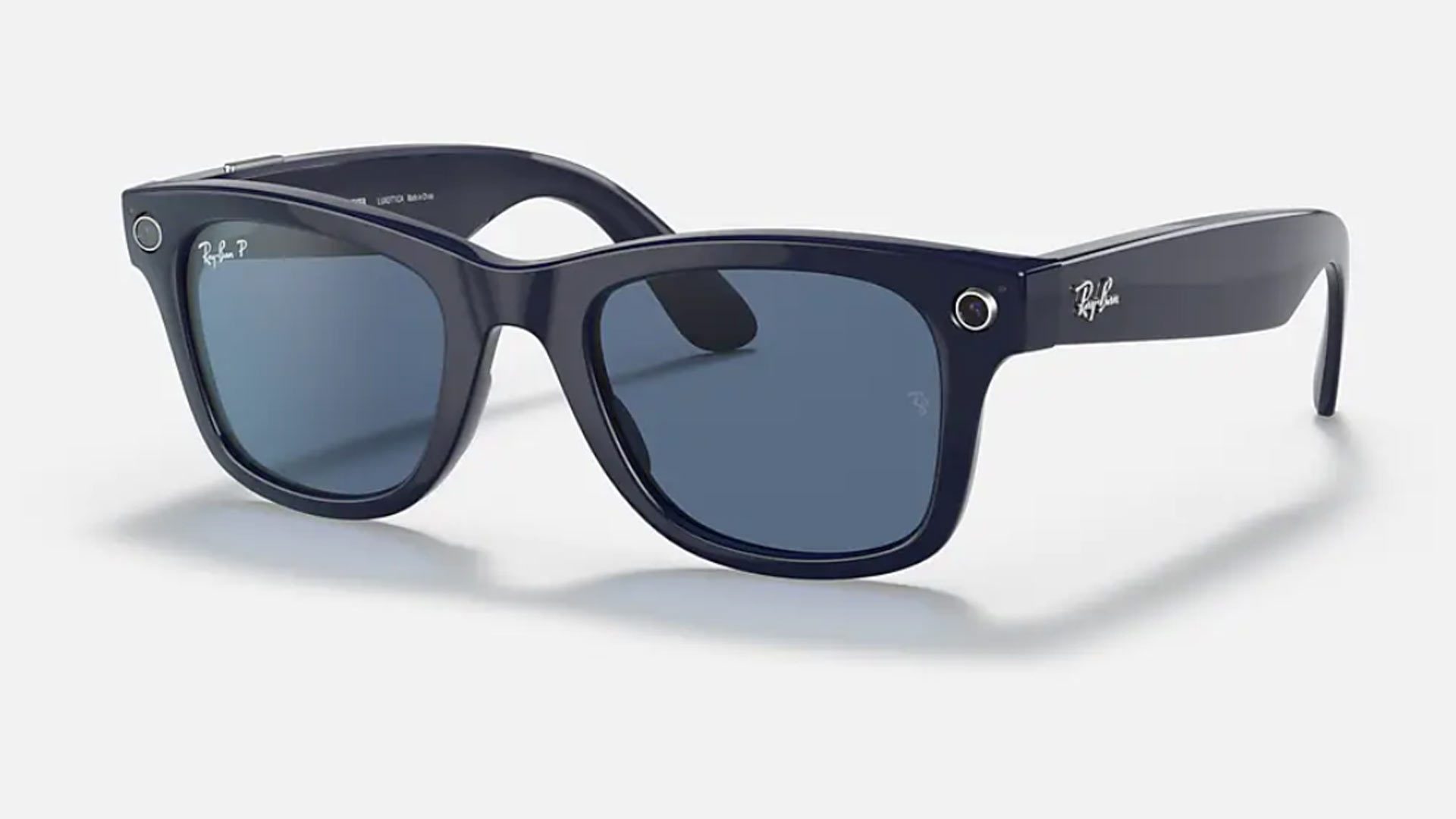
Like Meta’s audio-only smart glasses from Ray-Ban and Oakley though, Apple’s smart glasses are reportedly said to omit any sort of display. Instead, they’ll primarily focus on capturing photos and videos, making phone calls, listening to notifications and music, and interacting with an AI voice assistant—a better version of Siri coming to iOS 27, the report maintains.

According to Bloomberg’s sources, Apple’s design team now has at least four different styles in play, with plans to launch some or all of them. Styes are said to include:

  • A large rectangular frame, reminiscent of Ray-Ban Wayfarers
  • A slimmer rectangular design, similar to the glasses worn by Apple Chief Executive Officer Tim Cook
  • Larger oval or circular frames
  • A smaller, more refined oval or circular option

The glasses are said to be made from acetate, a higher-quality plastic than the thermoplastic used in Ray-Ban Meta smart glasses. Additionally, Apple is reportedly planning “many” color options in addition to exploring “a range of finishes, including black, ocean blue and light brown.”

Unlike Ray-Ban Meta, Apple’s first smart glasses are said to include a new camera lens shape, which Bloomberg maintains will be “vertically oriented oval lenses with surrounding lights,” a break from Meta’s circular camera lens design.

Facebook Ray-Ban Stories (2021) | Image courtesy Meta, EssilorLuxottica

Apple’s forthcoming glasses are reportedly a part of a broader, “three-pronged AI wearables strategy,” which is slated to include new AirPods and a camera-equipped pendant. Like with all of its accessories, Apple hopes to achieve an “instantly recognizable” design, which the company refers to as “icon” internally.

Notably, Apple’s smart glasses plans mark a stark departure from its initial XR strategy when it first formed the product division around a decade ago. Back then, the company reportedly hoped to develop three distinct categories: an iPhone-tethered AR headset with wireless controller, a high-end mixed reality headset, and standalone AR glasses.

The company has only released two iterations of Vision Pro though—ostensibly a different product from the high-end MR headset the company envisioned. Meanwhile, industry insiders suggest Apple is years away from the release of standalone AR glasses, making its audio-only smart glasses a first step of many.


Confused about the smart glasses and AR glasses? Check out our handy primer on the key differences here.

The post Apple Reportedly Preparing Several Styles of Smart Glasses with Distinct Camera Lens appeared first on Road to VR.


from Road to VR https://ift.tt/W2y3KNu
via IFTTT

Friday, 10 April 2026

Snap & Qualcomm Announce Long-term Partnership, Affirm 2026 Launch for ‘Specs’ Consumer AR Glasses

https://ift.tt/WlG4h7L

Snap’s new XR subsidiary Specs Inc and Qualcomm announced a multi-year partnership for Snap’s upcoming AR glasses, with Qualcomm pledging Snapdragon chips for future iterations. The companies also reaffirmed that Snap’s next-gen Specs are coming “later this year.”

Specs Inc, which was formed by Snap in January to handle its XR efforts, is working with Qualcomm in what the companies call a “long-term strategic roadmap” which aims to rapidly bring things like “on-device AI, cutting-edge graphics, and advanced multiuser digital experiences,” the companies said in a joint press statement.

“Snap Inc. and Qualcomm Technologies have a strong track record of powering advanced immersive technology. This agreement builds on more than five years of innovation and collaboration, as Snapdragon platforms have powered multiple previous generations of Snap’s Spectacles,” the companies said.

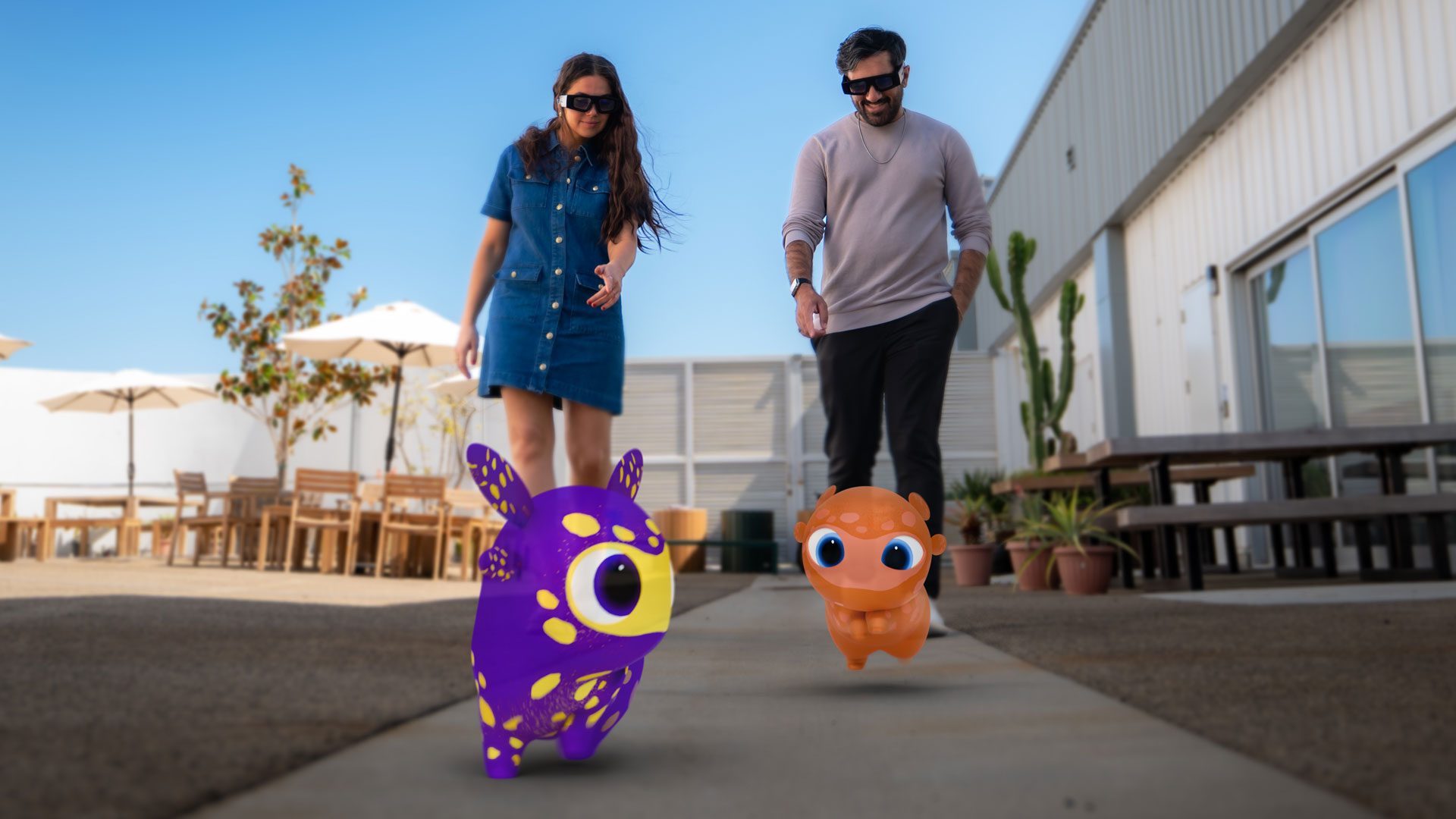
Image courtesy Snap Inc, Niantic

Snap’s sixth gen Specs are looking to appeal to consumers while also possibly also frontrunning its largest competitors, including Meta, Samsung, Google, and Apple.

While Snap hasn’t shown off its next-gen Specs yet, the company seems to be leaning heavily into the device’s built-in AI, something that “uses its understanding of you and your world to help get things done on your behalf while protecting and respecting your privacy,” Snap said earlier this year.

“The next era of computing will be defined by devices that understand what you see, hear and say as well as context, and respond instantly to the world around you,” said  Qualcomm President and CEO Cristiano Amon. “Our work on future generations of Specs will enable power-efficient interactive AR devices that deliver agentic experiences that feel natural, intuitive and integrate seamlessly into daily life.”

Aiming for release sometime this year, the next iteration of Spec will technically be the company’s second pair of AR glasses, following its fifth-gen release in 2024.

Besides Snap noting the new AR device will be smaller and lighter, feature see-through AR optics, and be powered by some form of Snapdragon XR SoC, its specs are largely still a mystery.


Confused about the smart glasses and AR glasses? Check out our handy primer on the key differences here.

The post Snap & Qualcomm Announce Long-term Partnership, Affirm 2026 Launch for ‘Specs’ Consumer AR Glasses appeared first on Road to VR.


from Road to VR https://ift.tt/zldieMS
via IFTTT

Thursday, 9 April 2026

Android XR Update Adds Deep Enterprise Support, Auto-3D Conversion & More

https://ift.tt/HunTtL4

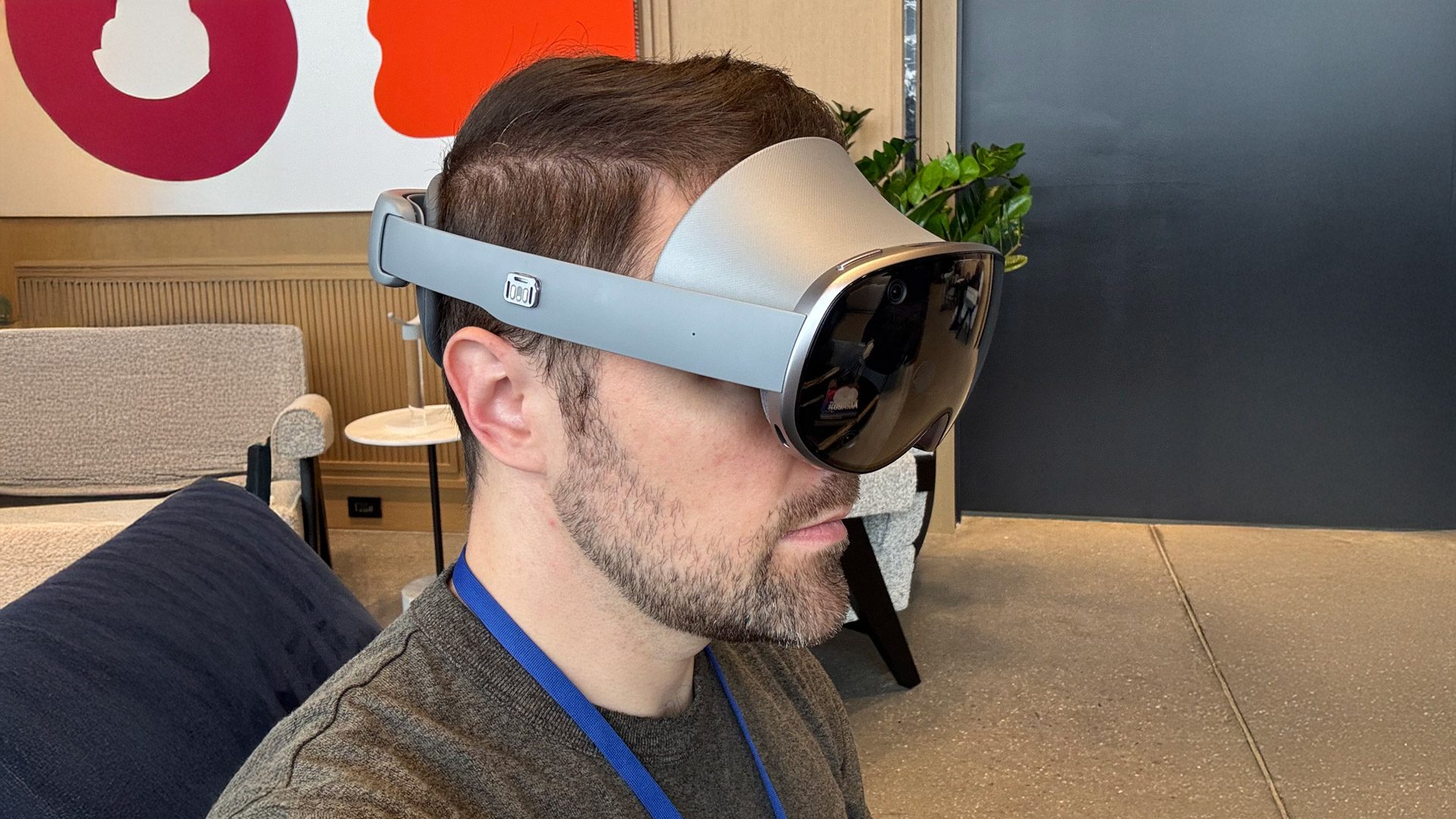
Samsung and Google announced a major software update to Galaxy XR, the Android XR-based headset, which includes deep enterprise support, automatic 3D conversion of photos and videos, and more.

One of the biggest bits in the update, now available on Samsung Galaxy XR, is the inclusion of Android Enterprise, the Google-led initiative that includes built-in security, management, and app deployment tools for workplace-focused Android devices.

This includes support for fully managed deployments with flexible enrollment options like zero-touch, QR setup, and DPC provisioning, aimed at making large-scale rollouts easier.

It also includes enterprise app management, robust device controls, and hardware-level security to protect sensitive data and meet compliance standards, the company says in a press statement.

Photo by Road to VR

In addition to enterprise features, the latest Android XR update also includes improvements targeting everyday usability, such as customizable virtual keyboard positioning, desktop session restore for up to three apps after reboot, expanded accessibility tools such as single-eye tracking, and improved spatial alignment of on-screen content.

What’s more, the Android XR update now brings auto spatialization to Chrome and YouTube, which automatically converts 2D media into immersive 3D experiences. This comes in addition to the previously available auto spatalization feature for Google Photos.

Notably, as a part of the new update, Android XR is now set to receive regular software updates, including security patches, for up to five years.

Released in October 2025 for $1,800, Samsung Galaxy XR looks to fill a middle ground of price and features between Meta Quest 3 ($500) and Apple Vision Pro ($3,500).

Much like how Vision Pro taps into the library of iOS apps in addition to native visionOS apps, Android XR-based Galaxy XR makes use of Android’s vast app ecosystem. Still, Galaxy XR is only the first full-feature XR headset to adopt Android XR, seems to be filling out software features as we speak.

The post Android XR Update Adds Deep Enterprise Support, Auto-3D Conversion & More appeared first on Road to VR.


from Road to VR https://ift.tt/RsVrUOc
via IFTTT

‘Project Hail Mary’ is Getting a Mixed Reality Game for Quest & Pico This Year

https://ift.tt/gUp1N4A

Maze Theory, the XR studio behind Peaky Blinders: The King’s Ransom and Doctor Who: The Edge of Time, announced it’s working on a mixed reality game based on Andy Weir’s novel and recent film, Project Hail Mary (2026).

Developed in partnership with Amazon MGM Studios, Project Hail Mary: Journey Among the Stars is slated to feature an entirely new, original chapter developed in collaboration with Andy Weir specifically for the game.

Image courtesy Maze Theory

“Project Hail Mary: Journey Among the Stars goes somewhere completely new,” the studios say. “Player’s step into the role of Ryland Grace at a pivotal, untold moment in the Hail Mary mission. The ship’s systems are failing. Deep space grows increasingly uncertain.”

As a mixed reality game, Hail Mary “bleeds into the player’s physical environment,” the studio says, noting that players will diagnose problems, improvise fixes, and “push the limits of what science and engineering can do under pressure.”

Image courtesy Maze Theory

Of course, at the heart of the experience is Rocky, the alien intelligence whose partnership with Grace defines the film’s action.

“In Project Hail Mary: Journey Among the Stars, that bond isn’t something you watch develop. You build it yourself, through cooperation, problem-solving, and evolving trust. It is, as Weir intended, a story about the first true friendship between species, and mixed reality makes that feel real in an entirely new way,” the studio says.

Image courtesy Maze Theory

Andy Weir, Project Hail Mary author calls it “the first step outside of what happens in the book and movie, something you can only experience in mixed reality.”

While Project Hail Mary: Journey Among the Stars will launch on Quest and Pico headsets in late 2026, there’s also mention of “major mixed reality and VR platforms,” suggesting that list may grow. The studios say we expect more details on gameplay, platforms, and preorders in the coming months.

The studios included a short clip of mixed reality gameplay, seen below:

The post ‘Project Hail Mary’ is Getting a Mixed Reality Game for Quest & Pico This Year appeared first on Road to VR.


from Road to VR https://ift.tt/6faKPGs
via IFTTT

Wednesday, 8 April 2026

Meta Extends Commitment to Making XR Development First-class Citizen in Unity Game Engine

https://ift.tt/CfcL8MO

Meta and game engine creator Unity announced they’re extending multi‑year platform support and an enterprise agreement that aims to deepen the companies’ VR partnership.

The News

The companies’ collaboration dates back to the early Oculus Rift era of the mid-2010s, when Unity became one of the first engines to support consumer VR alongside Epic Games’ Unreal Engine.

While neither Meta nor Unity has previously disclosed the timing of any sort of formal multi-year partnership agreements, Meta has clearly encouraged Unity in the past to develop tools so developers could more easily create VR games.

Now, Unity and Meta say in a press statement they’re extending this partnership, as Unity has pledged to continue to provide support for Meta’s VR platform.

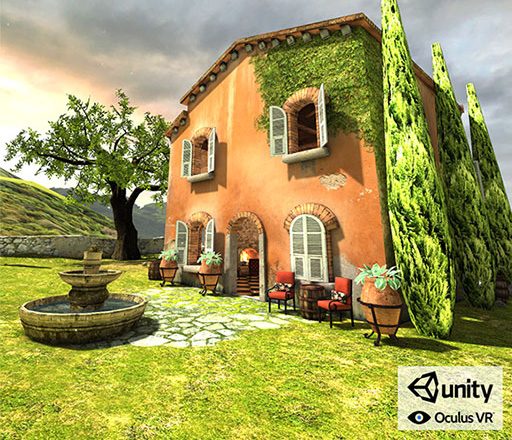
Oculus World SDK Tuscany
The Unity – Oculus World Demo, a VR tech demo included with the Oculus integration.

“Meta is the world’s leading VR platform, and we’re proud that Unity powers the majority of its top‑selling VR games,” said Unity COO Alex Blum. “Great content is what makes VR successful. By pairing Meta’s hardware and OS leadership with Unity’s role as the assembly point for interactive content creation, we’re making VR accessible to more developers so they can develop, deploy, and grow their games and business applications on Meta’s VR devices.”

“Unity is a critical partner for Meta across multiple initiatives, including our investment in the VR developer community,” said Ryan Cairns, VP of VR at Meta. “By extending our long-standing partnership, we’re making it easier for developers to bring high‑quality, performant experiences to the millions of people who use Meta’s VR devices.”

My Take

Meta may be trimming its consumer VR ambitions, but it’s not entirely cutting the lifeline to its biggest, most influential software partner Unity, who is the maker behind what’s arguably the dominant game engine in VR today.

Neither company has specified just what went into the partnership, although I’s hazard a guess that some amount of cash was handed over for Unity to develop tools for VR—which it notably did well before the first big boom in consumer VR.

Unity helped develop things like early VR editors that allowed devs to create and test their games in-headset in addition to some of the more seemingly mundane things we take for granted today, like cross-platform build pipelines, single-pass stereo rendering—things that have benefitted everyone.

Granted, this partnership extension may be just as simple as Meta not actively letting an important partnership wither on the vine, although I’d consider it a promising signal that all is not lost, and that consumer VR will live on, albeit just not at the scale we saw before—because Meta shut down some of its most influential internal game studios.

The post Meta Extends Commitment to Making XR Development First-class Citizen in Unity Game Engine appeared first on Road to VR.


from Road to VR https://ift.tt/fUEGVaX
via IFTTT
Related Posts Plugin for WordPress, Blogger...