Wednesday, 10 December 2025

Meta Delays Puck-Tethered XR Headset to 2027, Next Quest “Large Upgrade” to Current Gen

https://ift.tt/yUTSgHc

Meta may be pushing back the release of an upcoming XR headset that tethers to a pocketable compute puck. Meanwhile, the company says its next-gen Quest will be a “large upgrade” over the current generation.

The News

Meta supposedly planned to release the device, codenamed ‘Phoenix’, in the second half of 2026, which is said to include a goggle-like form factor—also slated to offload compute and battery to a puck-like unit tethered to the headset.

Now, according to internal memos obtained by Business Insider, the release timeline of Phoenix has been pushed back to the first half of 2027.

Maher Saba, VP of Reality Labs Foundation, announced the change in an internal memo released December 4th, further noting that the decision arose from a meeting with Reality Labs leaders and CEO Mark Zuckerberg.
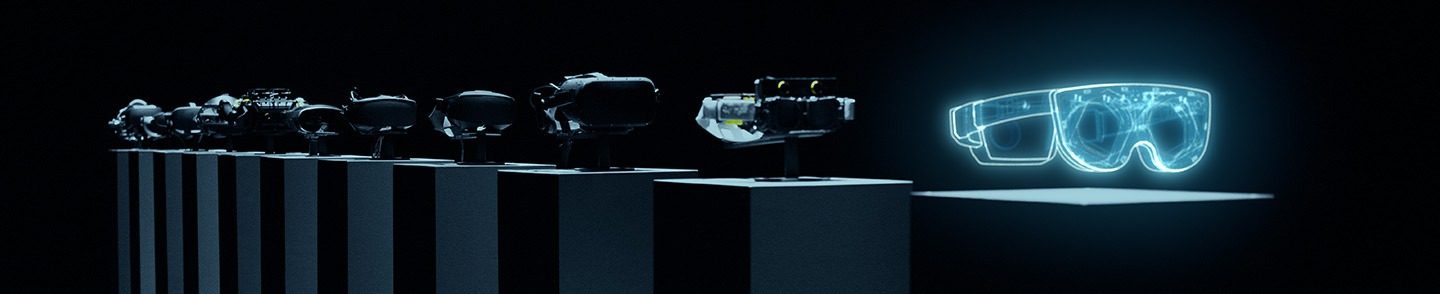
Successive XR prototypes | Image courtesy Meta

Saba maintained that the project should be “focused on making the business sustainable and taking extra time to deliver our experiences with higher quality.”

“Based on that, many teams in RL will need to adjust their plans and timelines,” Saba added. “Extending timelines is not an opportunity for us to add more features or take on additional work.”

A separate memo from metaverse leaders Gabriel Aul and Ryan Cairns added that the release date was pushed back in order to “give us a lot more breathing room to get the details right.”

Continuing: “There’s a lot coming in hot with tight bring-up schedules and big changes to our core UX, and we won’t compromise on landing a fully polished and reliable experience,” the memo said.

Additionally, Aul and Cairns’ memo maintained the company is currently working on its next-gen Quest, which is said to focus on immersive gaming. It’s also said to represent a “large upgrade” in capabilities from current devices, and will “significantly improve unit economics.”

Meta is reportedly also planning to release what Business Insider maintains will be a new “limited edition” XR device in 2026, codenamed ‘Malibu 2’. It’s uncertain what sort of device Malibu 2 is at this time.

My Take

It’s difficult to say what the next Quest will shape up to be. Meta tends to run competing prototypes to see what fits best in the market, and may have a different strategy than anyone expects.

Here’s my current hunch: Quest 3S represents the company’s best chance to reach the low end of the market at $300 (cheaper on sale), and it may be in that position for at least another year. I don’t expect a cheap and cheerful headset from Meta for a while, even with the claim that the next Quest will “significantly improve unit economics.” Relative to what? Quest 3S? A potential Quest Pro 2? We simply don’t know.

Meta’s next real headset (not the limited edition thing) may likely be a high-end headset—think around $800 or $1,000 range—which ought to keep some hardcore Quest platform adherents on the upgrade pathway while possibly offering competition some new(ish) faces: namely Samsung Galaxy XR, Valve’s Steam Frame, and the current Apple Vision Pro M5 refresh. Okay, that’s less of a hunch, and more of a consensus from what everyone’s heard.

What is marginally more certain though is Meta doesn’t seem to be in the manufacturing stage just yet of anything, at least not according to the most recent supply chain leaks, or lack thereof, so I’d expect for a lot more hubbub midway through next year. Whatever the case, I’ve got my eye out for all of the above.

The post Meta Delays Puck-Tethered XR Headset to 2027, Next Quest “Large Upgrade” to Current Gen appeared first on Road to VR.


from Road to VR https://ift.tt/ifHVMej
via IFTTT

Tuesday, 9 December 2025

HTC ‘VIVERSE’ Immersive Social Platform Hits 1 Million Monthly-active Users

https://ift.tt/R7VqEkz

HTC announced today that its VIVERSE immersive social platform has reached 1 million monthly-active users, a major milestone. The platform is accessible on flatscreens and VR, so it’s unclear what portion of users are visiting with headsets.

The News

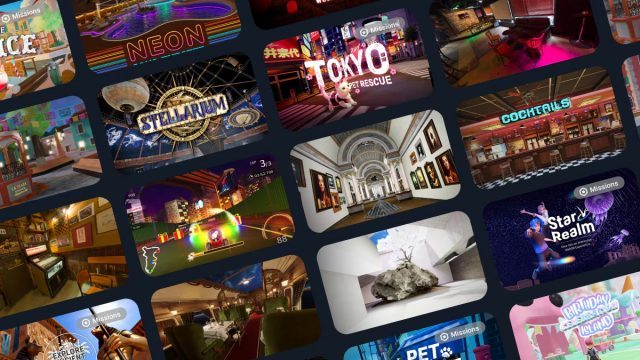
HTC’s Viverse is a user-generated immersive social platform, quite similar to Meta’s Horizon Worlds. It was launched less than a year ago, but the company says the platform has already reached 1 million monthly-active users. While still miles from the likes of Roblox, that’s still a pretty big milestone.

The milestone was helped, no doubt, by the platform’s web-based approach. Viverse worlds can be visited on any device with a compatible browser, including browsers on VR headsets with WebXR support.

The announcement of the 1 million monthly-active user milestone comes alongside the culmination of a Viverse student hackathon, which saw students from some 40 schools submitting experiences powered by Viverse across three categories:

HTC also recently announced that it has teamed up with Open Brush to make it easy for artists to share their immersive artwork. Open Brush is an immersive art tool which allows people to paint and sketch in 3D. Historically, it’s been difficult to share this kind of immersive artwork in a way that’s widely accessible. But a new version of Open Brush now has one-click sharing to Viverse, meaning immersive artwork can easily be viewed on the web across a wide variety of devices (including VR headsets). Here’s one such scene if you want to check it out!

My Take

Similar to issues faced by Horizon Worlds, the cross-device nature of Viverse means creators building for the platform are faced with the challenge of creating interesting content for vastly different modalities (flatscreen, mobile, and VR).

While HTC hasn’t shared the breakdown of flatscreen vs. VR players, a quick look through the platform’s top content shows few experiences that are marked as specifically compatible with VR headsets. That means they’re either sub-par experiences when seen in VR, or outright incompatible.

It’s great seeing the web-based approach working, and HTC’s commitment to maintaining WebXR compatibility, but it doesn’t look like VR makes up a meaningful portion of users on the platform to date. That probably won’t change with the Open Brush integration, but it’s a win-win for both; Viverse gets some cool immersive artwork and Open Brush users get an easy way to share their works.

The post HTC ‘VIVERSE’ Immersive Social Platform Hits 1 Million Monthly-active Users appeared first on Road to VR.


from Road to VR https://ift.tt/12Lsumc
via IFTTT

Google Launches First-party ‘PC Connect’ Virtual Desktop App for PC Productivity & Gaming on Android XR

https://ift.tt/6SElGjx

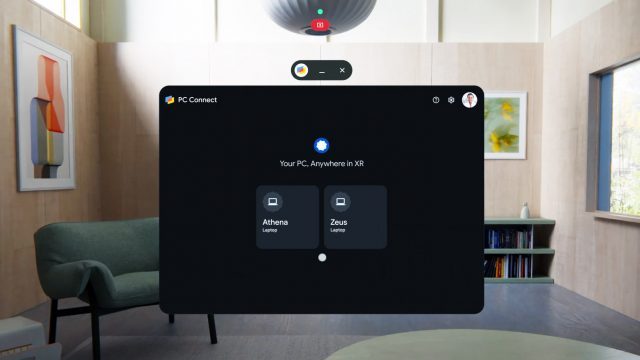
Google is rolling out a beta version of PC Connect, a free first-party virtual desktop app for Android XR. With the app, users can stream content from their Windows PC. Desktop apps work, of course, but Google says it has also optimized PC Connect for streaming flat games, and ensured that content on the screen works with Gemini.

The News

Google announced PC Connect this week, saying it is rolling out in beta form. It will presumably require the latest version of Android XR (also rolling out this week), as well as a companion app installed on the Windows PC you want to connect to.

Google says PC Connect is optimized to stream desktop apps, with a focus on low latency and high framerate to make flat games streamed from the PC feel responsive.

View post on imgur.com

With input crossover, you can control the PC Connect virtual desktop with input from the headset, or from the keyboard & mouse (or gamepad) on the host computer. And, Google says, your computer mouse & keyboard extend into Android XR itself, letting you control the whole system from one input device.

In a brief demo I saw of PC Connect, Google showed desktop applications and games running from a nearby laptop. They showed how the system-level Gemini assistant can ‘see’ the streamed apps (just like local apps) which means you can seamlessly use Gemini on anything you stream to the headset.

More impressively, Google showed me Android XR’s new ‘auto-stereo’ feature working on flat games streamed from the laptop. Auto-stereo converts flat content into stereoscopic 3D in real-time, and it works at the system level. That means any window you open on Android XR (including the PC Connect window) can be converted to stereoscopic 3D.

I got to play Stray (2022) streaming from the laptop, using a gamepad. Considering the auto-stereo feature has no data other than the flat frames being provided from the game in real-time, I was quite impressed with how well it was able to add stereo depth to the game’s complex world. And, because auto-stereo is running on the headset itself, it adds no overhead to the game’s rendering on the host device.

However, there were some performance stutters as I played. It’s unclear to me at the moment if this was due to the streaming laptop not rendering the game smoothly, Wi-Fi stability, or the auto-stereo feature not quite keeping up. I look forward to putting both PC Connect and the auto-stereo feature through their paces once I have them on my own headset.

My Take

PC Connect is far from the first virtual desktop streaming application available on XR headsets. In fact, the longstanding Virtual Desktop itself has been available on Android XR since day one.

However, the launch of PC Connect shows that Google is recognizing that virtual desktop streaming is something that Android XR users want. And it’s free (compared to Virtual Desktop’s $25 pricetag), which makes it a good value-add to users who have never used a virtual desktop app and wouldn’t see the need to spend money on one.

At launch, PC Connect can’t stream PC VR content to the headset (an advantage for Virtual Desktop), but Google suggested this may be added to PC Connect in the future.

The combination of PC Connect with the auto-stereo feature is really interesting. If it works well enough across a wide variety of games, stereoscopic 3D feels like a real enhancement to flat PC games, and gives a genuine reason I’d want to play them in the headset rather than on a traditional monitor. Most likely the accuracy of the auto-stereo feature will be hit-or-miss with some games, but there’s reason to believe it will only get better over time as Android XR headsets become more powerful.

One big question that I’m waiting to hear back from Google about is if the PC Connect creates a direct Wi-Fi link between the PC and the headset (like with Vision Pro), or if both devices need to be connected to an intermediary Wi-Fi network. The former is ideal, as a direct wireless connection between the PC and headset is generally more reliable. And importantly, it means you can stream from your laptop to your headset even when Wi-Fi is inaccessible (or not high performance). Working or streaming media on a plane, for instance, is much easier if you don’t need to count on the plane’s saturated Wi-Fi network.

And last but not least, Mac support for PC Connect was not mentioned. I expect it isn’t included at launch, but it wouldn’t be unheard of for Google to add it in the future.

The post Google Launches First-party ‘PC Connect’ Virtual Desktop App for PC Productivity & Gaming on Android XR appeared first on Road to VR.


from Road to VR https://ift.tt/LjoYzx1
via IFTTT

‘Teenage Mutant Ninja Turtles: Empire City’ Hands-on – A Radical VR Beat’em Up in the Making

https://ift.tt/Pqp1GxL

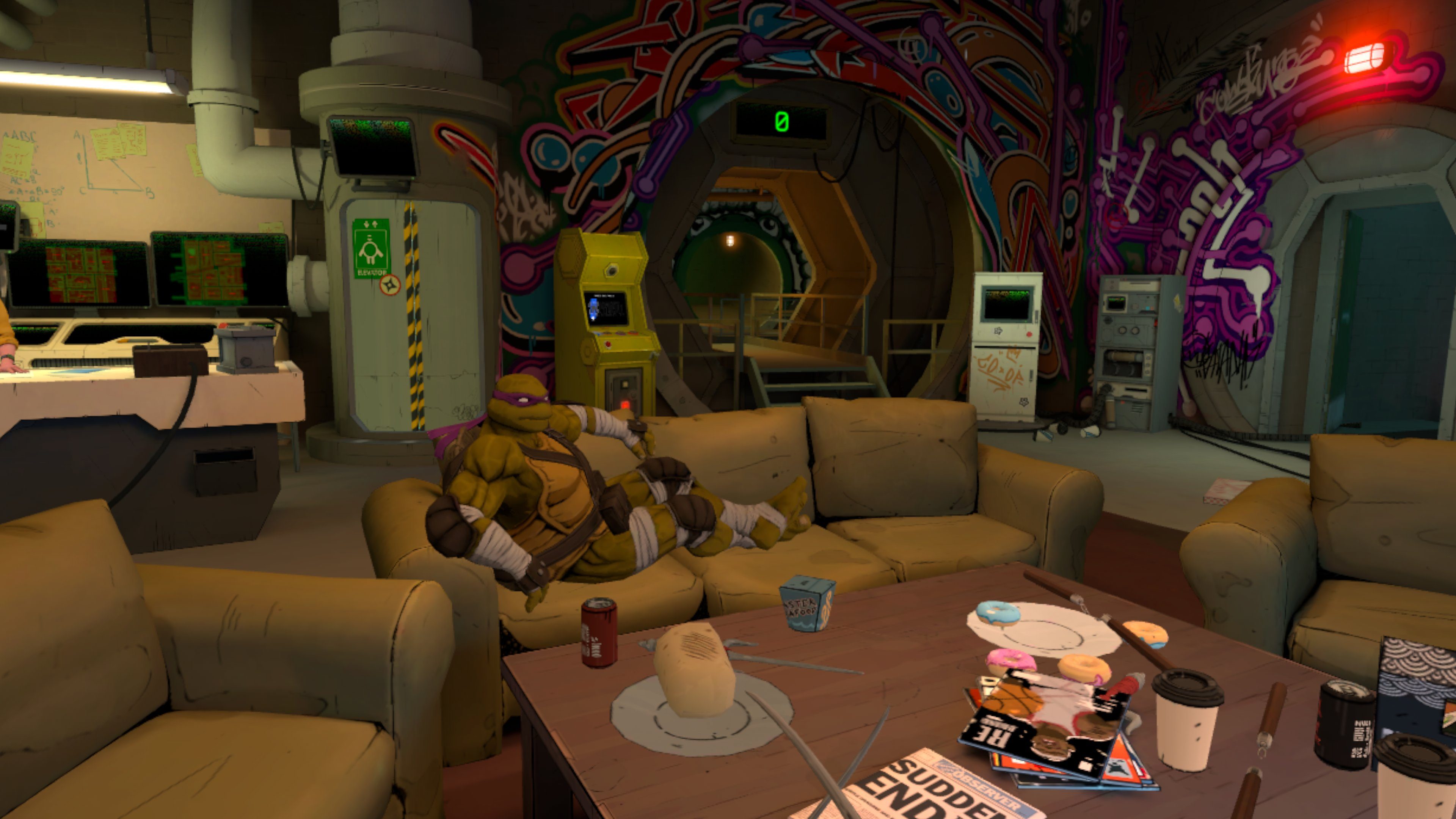
Teenage Mutant Ninja Turtles: Empire City is coming to Quest, Pico and SteamVR headsets sometime next year, making it the first Turtles game in VR. Ahead of launch, Cortopia Studios gave us a 15-minute demo on Quest to show off just what sort of radical action this co-op beat’em up has in store.

In TMNT: Empire City, you get to tackle the Foot Clan with all four titular Turtles—Leonardo, Raphael, Donatello, and Michelangelo—which also means getting to grips with with each of their signature weapons: katanta, sai, bo staff and nunchaku.

And just like the cartoons (and live action films), you won’t be actually ganking dudes, but rather knocking them out as you explore deeper into the various levels, be it alone or with up to three other friends.

Image captured by Road to VR

I can’t say I was expecting much more beyond combat in the game, although there seems to be a fair share of adventure-style objectives too, like solving casual puzzles, exploring levels for specific items, and scavenging craftable bits to bring back to your humble sewer abode, which lets you craft upgrades for each Turtle.

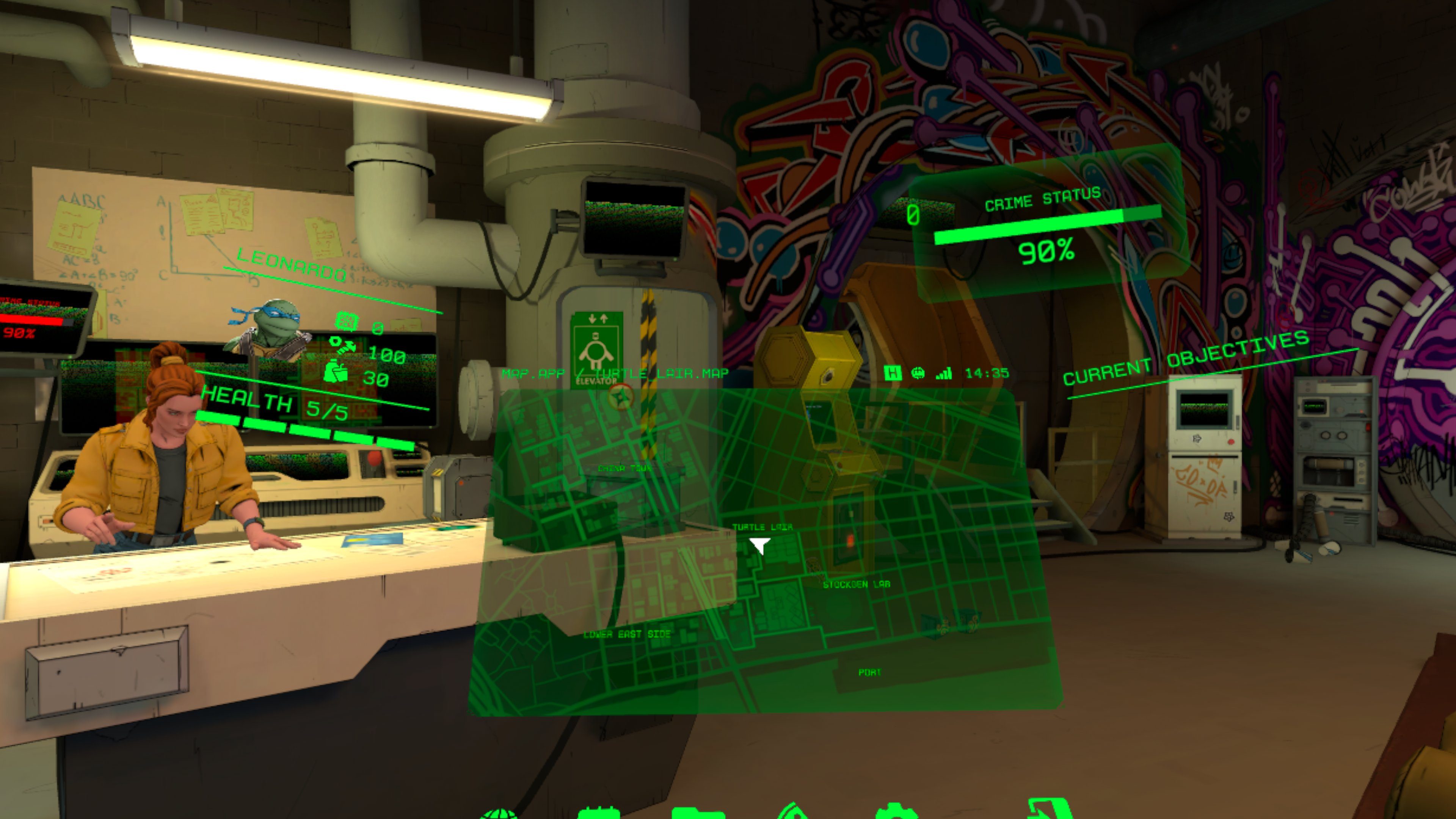
You also have a nifty smart watch that can display your health bars, real-world time, and a map to help you navigate through what promises to be a good smattering of NYC-inspired levels. I saw tunnels (blocked off for me) to China Town, the Lower East Side, and some sort of ‘Port’.

Image captured by Road to VR

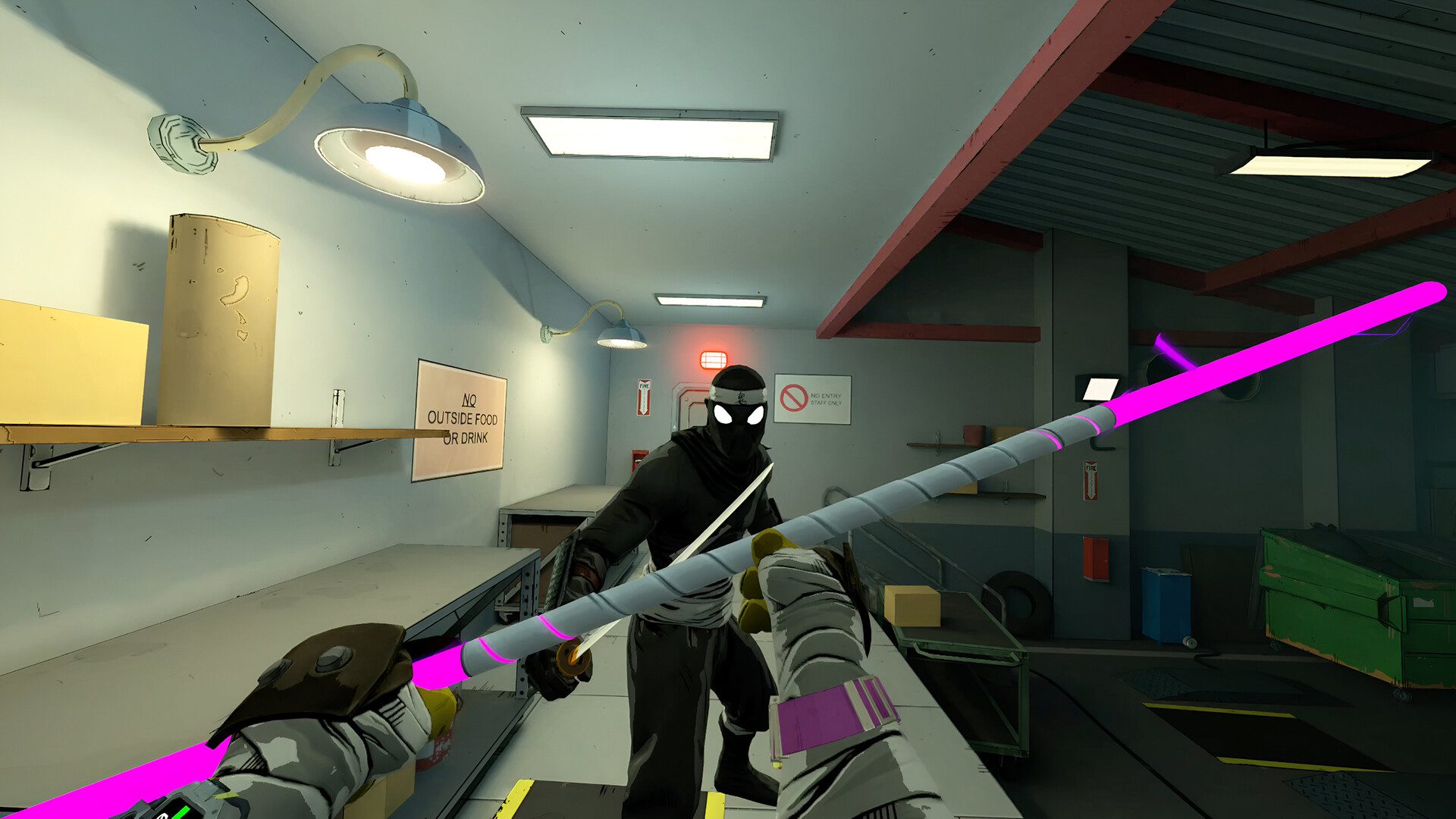
What’s more, the demo does an awesome job of showing off the game’s decidedly ’90s sidescroller roots, making it definitively Turtles to the core: you can jump, kick, dash, and ping around the place at high speed as you take on the dreaded Foot.

While melee isn’t physics-based, there is a block, parry and strike system in place that feels like it needs a little more refinement before I’d consider it super reliable.

Image courtesy Cortopia Studios

You can technically ‘play it by the books’ and engage with enemies like the game wants you to, i.e. by blocking or parrying and then striking them when dazed. Or you can do what I did, and just slice around without a care until dudes fell over.

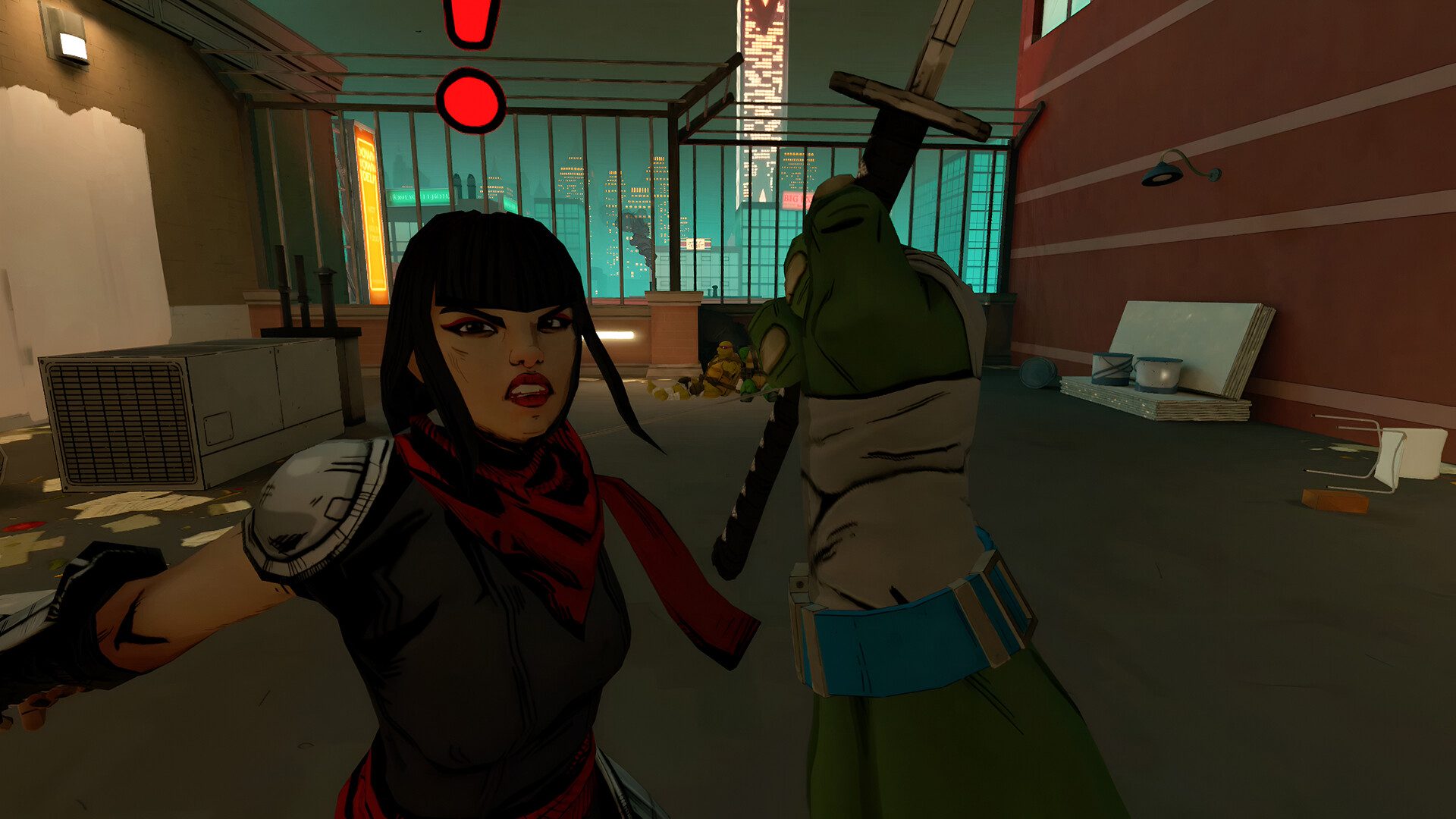
That said, I’ll need to play a lot more to see how combat actually shakes out, although it has the potential to be a pretty good experience provided more difficult enemies can stop me from cheesing the combat system. As it is, some enemies do have unblockable moves, like the demo’s level boss, which could make combat a lot more tactical than the low level Foot displayed.

Image courtesy Cortopia Studios

It’s hard to tell for now if this is the Turtles VR game of my dreams, since the 15-minute demo is pretty heavy on the tutorialization of each Turtle’s weapon and secondary move, although it seems pretty promising at this point. I want to see more of the story, and also get in with a crew of three other heroes in a half-shell to see how multiplayer will work.

Reservations aside, one thing I can say for sure is it has absolutely nailed the Turtles aesthetic and vibe. Visually, the game has a consistently cool cel shading throughout, making it feel like it’s been ripped out of the comic books. Voice acting is also spot on, and really reminds me of the ’90s cartoons more than the various reboots.

While we don’t know exactly when TMNT: Empire City is set to launch, in the meantime you can wishlist on the Horizon Store for Quest, the Pico Store for Pico 4 and above, and Steam for PC VR headsets.

The post ‘Teenage Mutant Ninja Turtles: Empire City’ Hands-on – A Radical VR Beat’em Up in the Making appeared first on Road to VR.


from Road to VR https://ift.tt/cuZP1Tq
via IFTTT

‘The Boys’ is Coming to Quest & PSVR 2 in Spring 2026, Trailer Here

https://ift.tt/6lA7Eov

Amazon’s hit TV series ‘The Boys’ is coming to VR for the first time next year in an immersive adventure called The Boys: Trigger Warning.

Slated to land on Quest and PSVR 2 sometime in Spring 2026, The Boys: Trigger Warning lets you ‘juice some Temp V’ and become a Supe, as you take on Vought alongside Butcher, Mother’s Milk, and the gang.

As a non-Supe, the story puts you in the shoes of Lucas, whose life has crumbled around him after his family is killed by the Armstrongs, a group of Vought Superheroes. Led by Butcher and Mother’s Milk, you get thrown headfirst into an underground battle against Vought, as you go on a no-mercy hunt to end the Armstrongs for good.

Although the trailer features a sort of on-rails ride, the game’s description maintains that users will be able to “reach, grab, break, pull, crush and fling enemies using telekinesis,” in addition to “break out hand blades, vanish in heavy-duty camouflage, or go full Homelander with laser eyes” as you can take on levels either with stealth or full-force.

Image courtesy ARVORE, Sony Pictures Virtual Reality

The Boys: Trigger Warning is currently being developed by XR veteran studio ARVORE, known for the Pixel Ripped series and interactive experience The Line, and is being published by Sony Pictures Virtual Reality (SPVR).

The series’ cast are also lending their voices to the game,  including Laz Alonso (Mother’s Milk), Jensen Ackles (Soldier Boy), Colby Minifie (Ashley Barrett), and P.J. Byrne (Adam Bourke).

You can pre-order The Boys: Trigger Warning on the Horizon Store for Quest, priced at $24, and wishlist the game on the PlayStation Store for PSVR 2.

The post ‘The Boys’ is Coming to Quest & PSVR 2 in Spring 2026, Trailer Here appeared first on Road to VR.


from Road to VR https://ift.tt/0c5gzYF
via IFTTT

Monday, 8 December 2025

Hands-on: XREAL Aura AR Glasses with Android XR and a 70-degree Field-of-view, Launching Next Year

https://ift.tt/pi7kLEQ

Set to launch in 2026, XREAL Aura is the first pair of see-through AR glasses to run Android XR. Here are the impressions from my first hands-on.

During a recent meeting with Google, the company shared with me a range of updates relating to Android XR, including the first look at XREAL Aura. Unfortunately I wasn’t allowed to take any photos or videos during the demo.

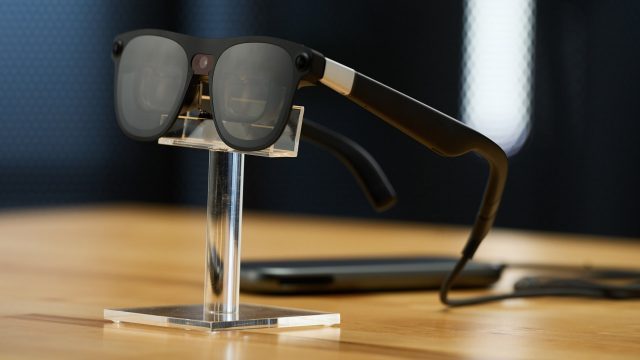
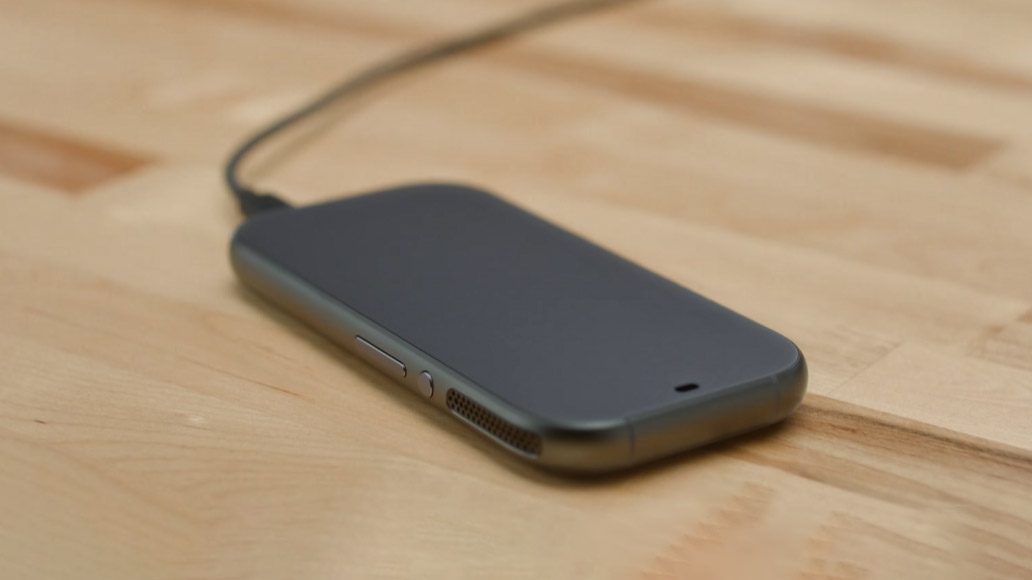
XREAL Aura will be the first pair of see-through glasses running the full-blown immersive version of Android XR. Considering the immersion they offer, the glasses are impressively compact. Much of this is thanks to offloading weight, battery, and compute onto a tethered puck which can slip into your pocket. Interestingly, the puck looks like the size and shape of a typical smartphone, but instead, the entire screen area is a giant trackpad which can be used for mouse-like input (in addition to hand-tracking).

Image courtesy Google

Compared to prior models of XREAL glasses with bird-bath style optics, the optics in the XREAL Aura are a bit more compact, allowing you to bring your eyes closer to the lens. XREAL is finally getting close to AR glasses which actually look like glasses without the lenses being so far from your eyes that it looks goofy. They’re still look a little funky because of the distance, but we’re getting there.

Putting on the glasses, I was presented with the same Android XR experience I’m used to from Galaxy XR, except this time the background I was seeing was the real world (albeit, a fairly dim version of the real world due to the light loss through the lenses). Unfortunately, Aura doesn’t include eye-tracking, which means I couldn’t use my preferred look+pinch method of input (which is supported on Galaxy XR); I had to use the default laser-pointer input style which feels more cumbersome.

The quoted 70-degree field-of-view (I assume diagonal, but they didn’t specify) felt usable, but seems like the bare minimum field-of-view needed to get real value out of an immersive operating system like Android XR. If Google hasn’t already specified that any immersive Android XR device needs at least this wide of an FoV, they absolutely should.

I was impressed with the sharpness and brightness of the Aura’s display. It looked pretty good for virtual screen usage (ie: viewing websites, videos, photos, etc). But I also saw obvious pupil swim (which looks like warping as you move your head around). This will be more noticeable in fully immersive experiences or multi-tasking where there’s lots of head movement. For some people, pupil swim is just a visual annoyance, but for others it can be dizzying over time. It’s unclear if this can be improved before launch, especially without any on-board eye-tracking hardware.

One particularly cool feature of Aura is the electronically-controlled dimming lenses. A button on the stem of the glasses allows you to dim the real world from 0% to nearly 100%, blocking out almost all light.

This isn’t the first pair of AR glasses to include electronic lens dimming, but the way it’s integrated into Android XR is a clever value-add. If you launch a fully immersive application (like a VR game), the software can automatically switch the dimming to 100% so the virtual content doesn’t conflict with your real-world background. Or, in applications that would like to dim the user’s background (like a media app), it can set the dimming to 50%. With a passthrough headset like Galaxy XR, this dimming would normally be done digitally, but with the Aura glasses it’s done physically. And Google says developers don’t need to worry about the distinction; if their app asks Android XR to dim the background, it’ll automatically do so through whatever means are available to the device.

Of course, Aura is a ‘glasses-style’ device, so even when dimming is set to 100%, you’ll still see lots of the real-world in your peripheral vision. But still, having the feature makes fully immersive applications usable in a way they wouldn’t on a see-through AR device.

Considering its capabilities, Aura looks strikingly close to a normal enough pair of sunglasses that you might not get a double take by people passing by, though anyone talking to you face-to-face would surely know there is something strange going on behind the lenses.

Even with dimming set to 0%, the real world is still made fairly dim; like wearing sunglasses inside. Whether by design (to account for not enough display brightness) or happenstance (as a result of light loss from the optics), it still feels like you’re wearing sunglasses inside, which limits some of the indoor use-cases you might want to do with a pair of AR glasses. For instance, I’d like to have AR glasses which work as a cooking companion in the kitchen so I can reference recipes while preparing food. But like a regular pair of sunglasses, Aura dims the world too much that I wouldn’t want to use them in the kitchen.

I look forward to trying the finished version. In my brief hands-on, I came away feeling like Aura is the first clear look at the eventual convergence of AR and VR headsets. It feels like a full-fledged Android XR headset but in a much more compact package that will be way more portable and less conspicuous. I could actually see myself using Aura on a plane or in a coffee shop without feeling like everyone would be staring at me.

Indeed, Google is thinking the same. Alongside my look at Aura, the company also announced that it’s rolling out a first-party PC Connect application for Android XR to make it easy to stream your Windows desktop to the glasses for productivity, media, or gaming.

There’s still some key things we don’t know about Aura. The company hasn’t revealed a full set of specifications yet, and we don’t know if there will be any controller support (which would mean incompatibility with many immersive VR games). We also don’t have a price or specific release date, but XREAL has confirmed that Aura will launch in 2026.

The post Hands-on: XREAL Aura AR Glasses with Android XR and a 70-degree Field-of-view, Launching Next Year appeared first on Road to VR.


from Road to VR https://ift.tt/Fh4xKUj
via IFTTT

Friday, 5 December 2025

Apple Design Lead Heads to Meta, Hopefully to Fix Longstanding Quest UX Issues

https://ift.tt/HCmuLaI

Apple’s Vice President of Human Interface design, Alan Dye, is leaving the company to lead a new studio within Meta’s Reality Labs division. The move appears to be aimed at raising the bar on the user experience of Meta’s glasses and headsets.

The News

According to his LinkedIn profile, Alan Dye spent nearly 20 years as Apple’s Vice President of Human Interface Design. He was a driving force behind the company’s UI and UX direction, including Apple’s most recent ‘Liquid Glass’ interface overhaul and the VisionOS interface that’s the foundation of Vision Pro.

Now Dye is heading to Meta to lead a “new creative studio within Reality Labs,” according to an announcement by Meta CEO Mark Zuckerberg.

“The new studio [led by Dye] will bring together design, fashion, and technology to define the next generation of our products and experiences. Our idea is to treat intelligence as a new design material and imagine what becomes possible when it is abundant, capable, and human-centered,” Zuckerberg said. “We plan to elevate design within Meta, and pull together a talented group with a combination of craft, creative vision, systems thinking, and deep experience building iconic products that bridge hardware and software.”

The new studio within Reality Labs will also include Billy Sorrentino, another high level Apple designer; Joshua To, who has led interface design at Reality Labs; Meta’s industrial design team, led by Pete Bristol; and art teams led by Jason Rubin, a longtime Meta executive that has been with the company since its 2014 acquisition of Oculus.

“We’re entering a new era where AI glasses and other devices will change how we connect with technology and each other. The potential is enormous, but what matters most is making these experiences feel natural and truly centered around people. With this new studio, we’re focused on making every interaction thoughtful, intuitive, and built to serve people,” said Zuckerberg.

My Take

I’ve been ranting about the fundamental issues of the Quest user experience and interface (UX & UI) for literally years at this point. Meta has largely hit it out of the park with its hardware design, but the software side of things has lagged far behind what we would expect from one of the world’s leading software companies. A post on X from less than a month ago sums up my thoughts:

It’s crazy to see Meta take one step forward with its Quest UI and two steps back, over and over again for years.

They keep piling on new features with seemingly no top-down vision for how the interface should work or feel. The Quest interface is as scattered, confusing, and unpolished as ever.

The new Navigator is an improvement for simply accessing app icons, but it feels like it’s using a completely different paradigm than the rest of the window / panel management interface. Not to mention that the system interface speaks a vastly different language than the Horizon interface.

I have completely lost faith that Meta will ever get a handle on this after watching the interface meander in random directions year after year, punctuated by “refreshes” that look promising but end up being forgotten about 6 months later.

It seems Meta is trying to course-correct before things get further out of hand. If pulling in one of the world’s most experienced individuals at creating cohesive UX & UI at scale is what it takes, then I’m glad to see it happening.

Apple has set a high bar for how easy a headset should be to use. I use both Vision Pro and Quest on a regular basis, and moving between them is a night-and-day difference in usability and polish. And as I’ve said before, the high cost of Vision Pro has little to do with why its interface works so much better; the high level design decisions—which would work similarly well on any headset—are a much more significant factor.

Back when Meta was still called Facebook, the company had a famous motto: “Move fast and break things.” Although the company no longer champions this motto, it seems like it has had a hard time leaving it behind. The scattered, unpolished, and constantly shifting nature of the Quest interface could hardly embody the motto more clearly.

“Move fast and break things” might have worked great in the world of web development, but when it comes to creating a completely new interface paradigm for the brand new medium of VR, it hasn’t worked so well.

Of course, Dye’s onboarding and the new studio within Reality Labs isn’t only about Quest. In fact, it might not even be mostly about Quest. If I’ve learned anything about Zuckerberg over the years, it’s that he’s a very long-term thinker and does what he can to move his company where it needs to go to be in the right place 5 or 10 years down the road.

And in 5 to 10 years, Zuckerberg hopes Meta will be dominant, not just with immersive headsets, but AI smart glasses (and likely unreleased devices) too. This new team will likely not be focused on fixing the current state of the Quest interface, but instead trying to define a cohesive UX & UI for the company’s entire ecosystem of devices.

With Alan Dye heading to Meta, there’s a good chance that he will bring with him decades of Apple design processes that have worked well for the company over many years. But I have a feeling it will be a significant challenge for him to change “move fast and break things” to “move slow and polish things” within Meta.

The post Apple Design Lead Heads to Meta, Hopefully to Fix Longstanding Quest UX Issues appeared first on Road to VR.


from Road to VR https://ift.tt/FUD2nTM
via IFTTT
Related Posts Plugin for WordPress, Blogger...