We at New Folder Games—creators of I Am Cat, I Am Security, and I Am Monkey—are expanding our series with a new VR experience built around dynamic, natural-feeling flight.
Industry Direct by New Folder Games
Industry Direct is our program for sponsors who want to speak directly to the Road to VR newsletter audience. Industry Direct posts are written by sponsors with no involvement from the Road to VR editorial team and do not appear in our front-page editorial feed. Industry Direct sponsors help make Road to VR possible.
A New Way to Explore VR Worlds
Our latest title, I Am Bird, is available now on Meta Quest! In this game, players step into the role of a super-powered bird and freely fly across a large vertical city full of activities and exploration.
Flight Built Around Natural Movement
We designed a gesture-based flight system that lets players control movement intuitively:
Spread your arms to glide
Tilt to change direction
Lean forward to dive
Use quick motions for dashes and fast turns
The system supports both smooth gliding and tight technical flying through narrow streets. Comfort options allow players to adjust assist levels and motion sensitivity.
A Vertical Open City
We built the city around height, speed, and momentum. Each district has its own identity and traversal flow-from wide avenues suited for fast glides to dense blocks crafted for precision flying. Rooftops, ledges, and tall structures hide shortcuts, collectibles, and optional challenges.
Become a Watchful Protector
As an aerial guardian, players respond to various events across the city, including:
High-speed chases
Street-level disruptions
Rescue scenarios
Quick-response encounters
Support missions for bird allies
All action sequences revolve around timing and positioning, making movement central to every encounter.
Tools for a Super-Bird
We equipped the game with a range of gadgets that expand player abilities and support different mission types. Gadgets can distract enemies, enhance mobility, highlight objectives, or help solve environmental tasks. All tools are gesture-based to keep the flight flow uninterrupted.
Activities Across Every District
Beyond main objectives, the city contains:
Races
Obstacle courses
Light side stories
Rooftop collectibles
Small events that appear during exploration
These optional activities encourage repeated visits to familiar areas from different altitudes and angles.
Available now
With I Am Bird, we aimed to create a VR experience centered entirely on the joy of free flight and open-world exploration. Intuitive controls, a vertical city full of content, and a wide variety of missions combine to offer a fresh take on movement-driven VR gameplay.
Thief VR: Legacy of Shadow does a respectable job of bringing the storied series to VR for the first time, all the while offering up one of the best stealth games currently in the medium. Some stumbling blocks keep it from being the end-all VR stealth game of my dreams, and it’s painful to know how surprisingly close it actually got.
Developer: Maze Theory Publisher: Vertigo Games Available On:Quest, PSVR 2, SteamVR Reviewed On: Quest 3, SteamVR Release Date: December 4th, 2025 Price: $30
Gameplay
We’ve been waiting more than a decade for the next Thief game, with the last having landed on console and PC back in 2014. I wish I could say that playing the VR installment feels like a long-awaited homecoming, although I’ve never actually played any of the older titles, which reach back to Thief: The Dark Project (1998).
I did however have an hour-long hands-on with Thief VR back in September, which left me pretty impressed with what developer Maze Theory was building towards, and also curious as to what it could become.
Now, with the full game under my belt, I can say the studio has delivered on many of the promises: great visuals, immersive storytelling, world-class voice talent, and (mostly) well constructed missions that feel like lived-in places. While I initially called its object interaction “smart”, continue to the Immersion section below for more on why I think that isn’t exactly the case. There are more gripes beyond object interaction, but nothing that made me want to hate Thief VR—maybe just not love it as much as I could.
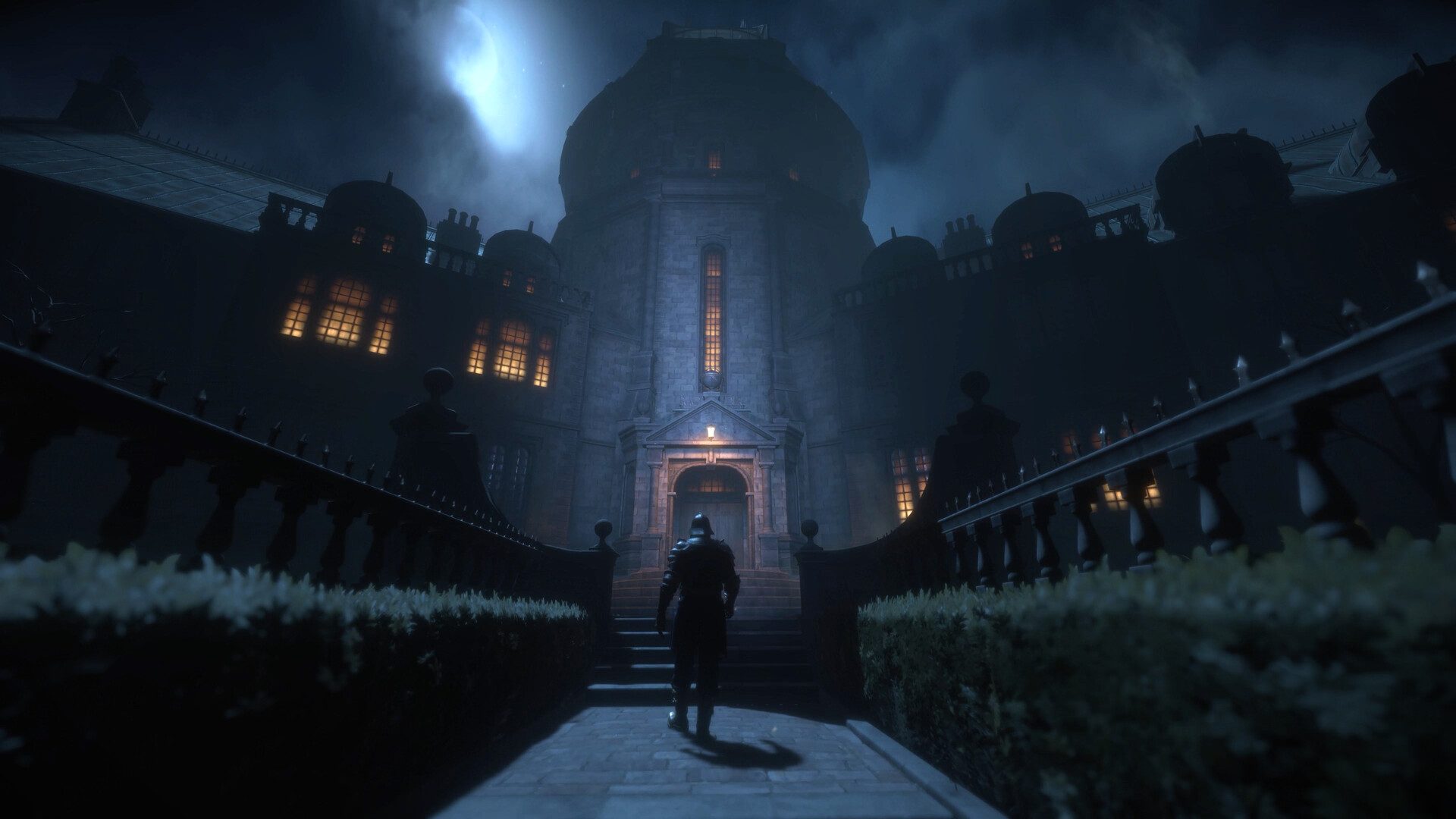
Image courtesy Maze Theory, Vertigo Games
Anyway, here’s the setup: your name is Magpie, a professional thief who finds a magical relic, turning you from your standard sticky-fingered prowler into something of a Super Thief. At the behest of your fixer and chief mission-giver Cassandra, you need to dig deeper into why Baron Northcrest is so intent on gathering up relics for some surely evil plan. I mean, he’s evil, so of course he’s doing evil things, but you have to stop him somehow.
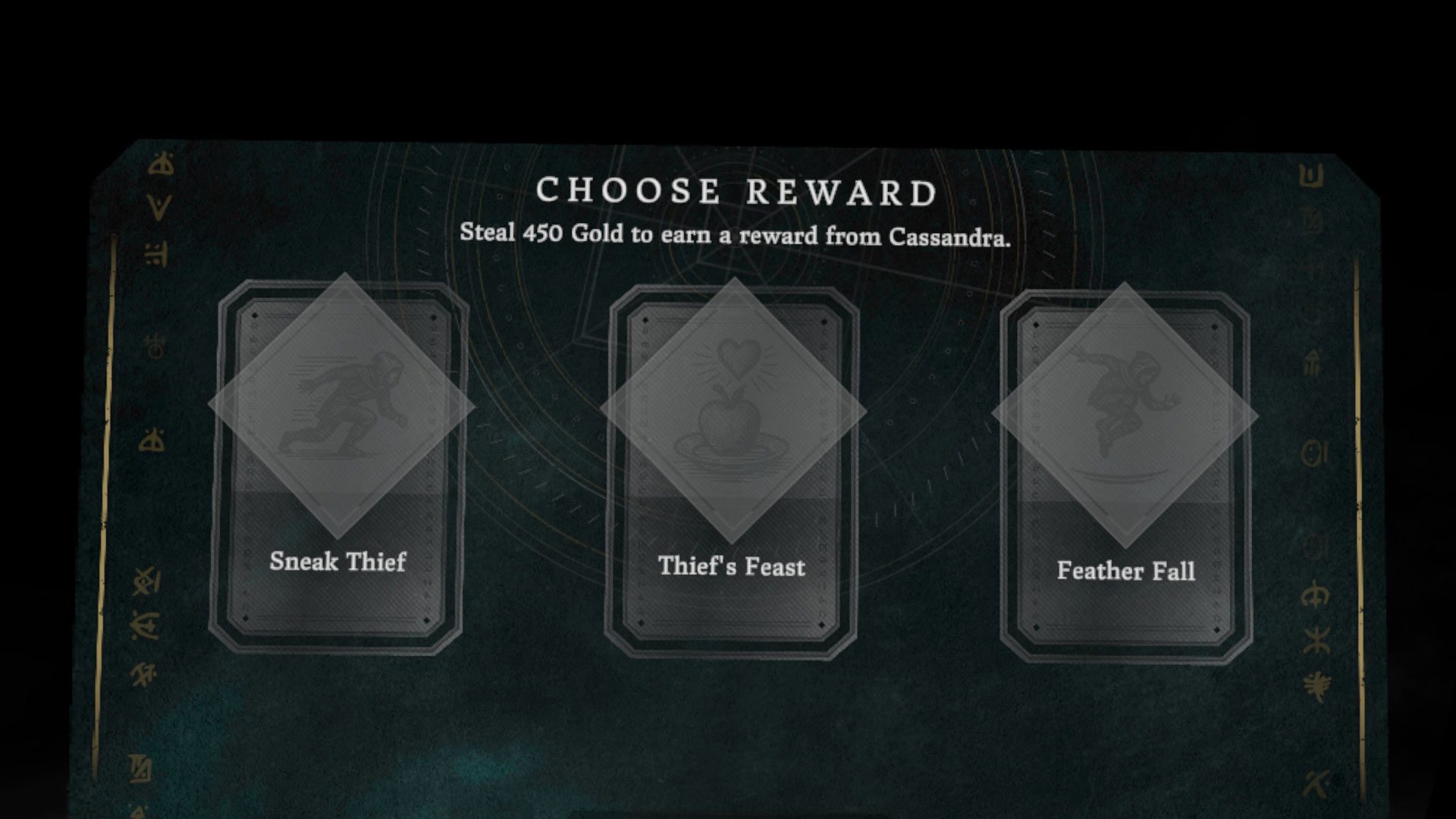
Gameplay mostly follows this pattern: you’re placed outside of a large building that needs infiltrating, of course covered with guards walking their various circuitous routes. Most of the guards can be knocked out and dragged away into the cover of darkness, while a small minority are essentially immortal tanks that need to be avoided entirely. It’s up to you whether you want to knock out, kill, or avoid any guard. Not killing one of the armor-clad goons, doing a mission undetected, or sweeping up a specific amount of loot can unlock more abilities to choose from at the end of each level.
Image captured by Road to VR
While you don’t need any of the abilities, they certainly make life a lot easier: better heath regen when eating food, quieter movement when crouching or jumping from high ledges, and a ready supply of arrows that you would normally have to scavenge levels to find.
I always stole everything I saw regardless of whether it was gold, silver, bronze, or whatever. That tactic worked until around the halfway mark, when levels get a little larger, and you need to explore a lot more beyond the main mission objectives. There’s no time limit, so it entirely depends on your appetite for completionism.
While you can hunt secondary objectives, thwack guards and turn each level upside down for hours until you’ve shaken out every last coin and golden goblet, the most scarce resource of all is invariably arrows. You have a black jack for knocking out guards, a lockpick for opening pickable doors and chests, and your inherent Glyph Vision, which lets you temporarily highlight important things and reveal otherwise invisible secret areas.
But it’s the bow and (lack of) arrow that could mean the difference between you restarting from an automatic checkpoint, or restarting the mission entirely.
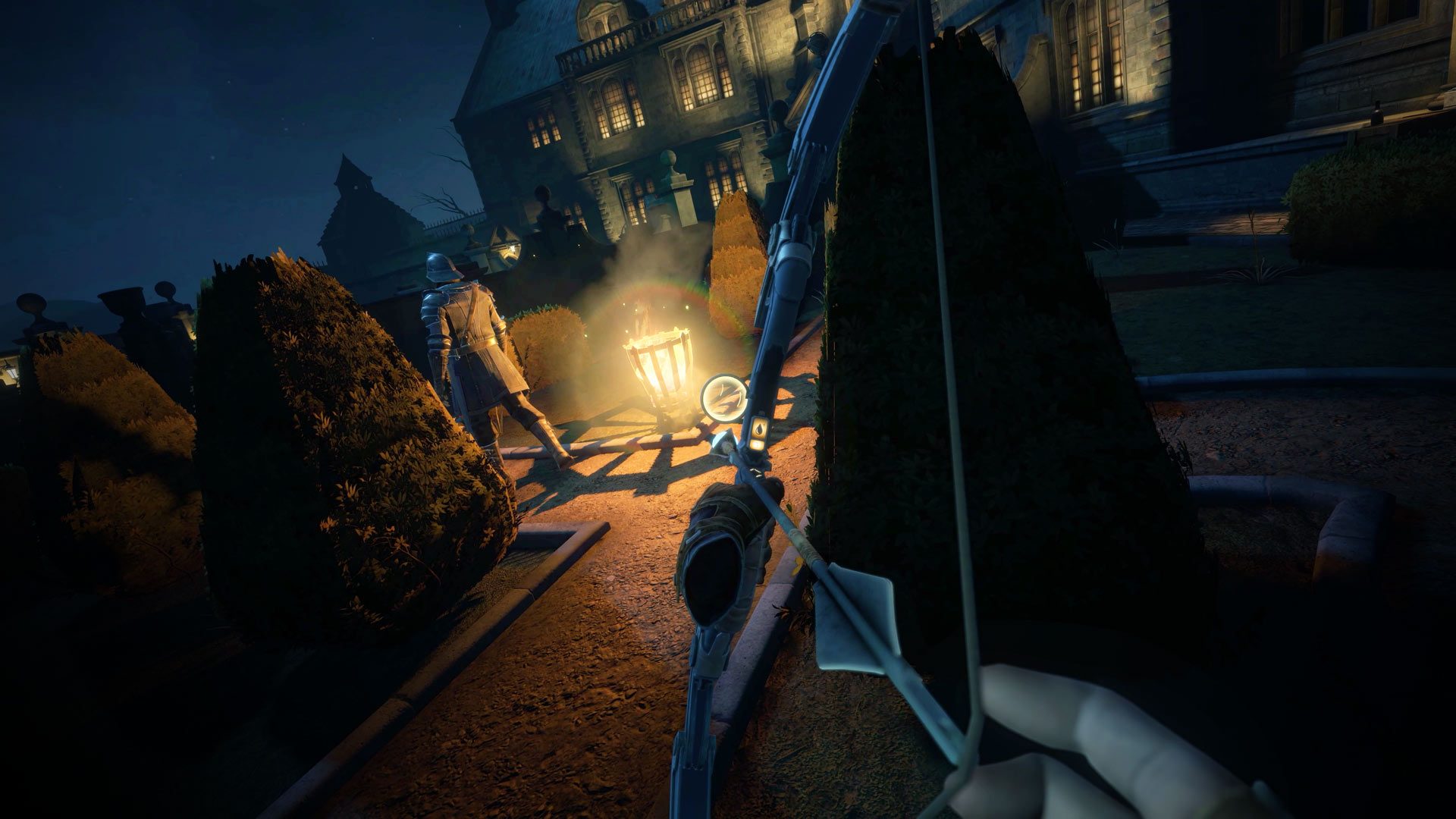
Arrow types include a water arrow to put out fire, a fire arrow to light key items on fire, a blunt arrow for knocking out guards, regular arrows for killing and disabling lights, and rope arrow, which lets you spawn vertical ropes to climb up on specific attachment points. While the game usually serves up the arrow you need at the time, levels are chock-full of byways and different ingress points, making variety an important factor. The bow works well, although I think the aiming angle is somewhat odd, making shooting the thing a bit of a chore.
Image courtesy Maze Theory, Vertigo Games
Missions often serve up a good amount of variety, save the last two, which I talk more about below. Levels are often multilayered buildings with high and low ingress points, which means you can mostly tackle them in any style you want—or at least it appeared to be that way to me. Granted, Thief VR doesn’t give you the sort of freedom you get in Hitman, but it’s also a built-for-VR game that doesn’t need to make any of the weird affordances you see in the various Hitman ports/VR modes.
In all, it took me a little over five hours to play the campaign all the way through, although your mileage may vary according to how safe you want to play it, or how much loot you’re willing to hunt for. That said, missions are replayable once you’ve beaten the game, so you can go back and try to get high scores and unlock more abilities.
I rarely include impressions of end levels for the sake of spoilers, but this unfortunately bears mentioning: the ending of Thief VR was such a massive letdown, I just had to say something. In the missions leading up to the ending, the game reuses two previous levels, which aren’t really mixed up to feel like anything new—possible signs that the game was rushed out the door.
Then, once you’re tromped through the last mission, and are finally served up what should be the cherry on top of the cake, it all basically ends in five minutes. You don’t get to apply any of the skills you honed throughout the entire game: just a few rando button presses and you’re done. Insult to injury: the game unceremoniously tosses you back to your home base after this short encounter, placing you in front of a mission screen to you can replay whatever.
Immersion
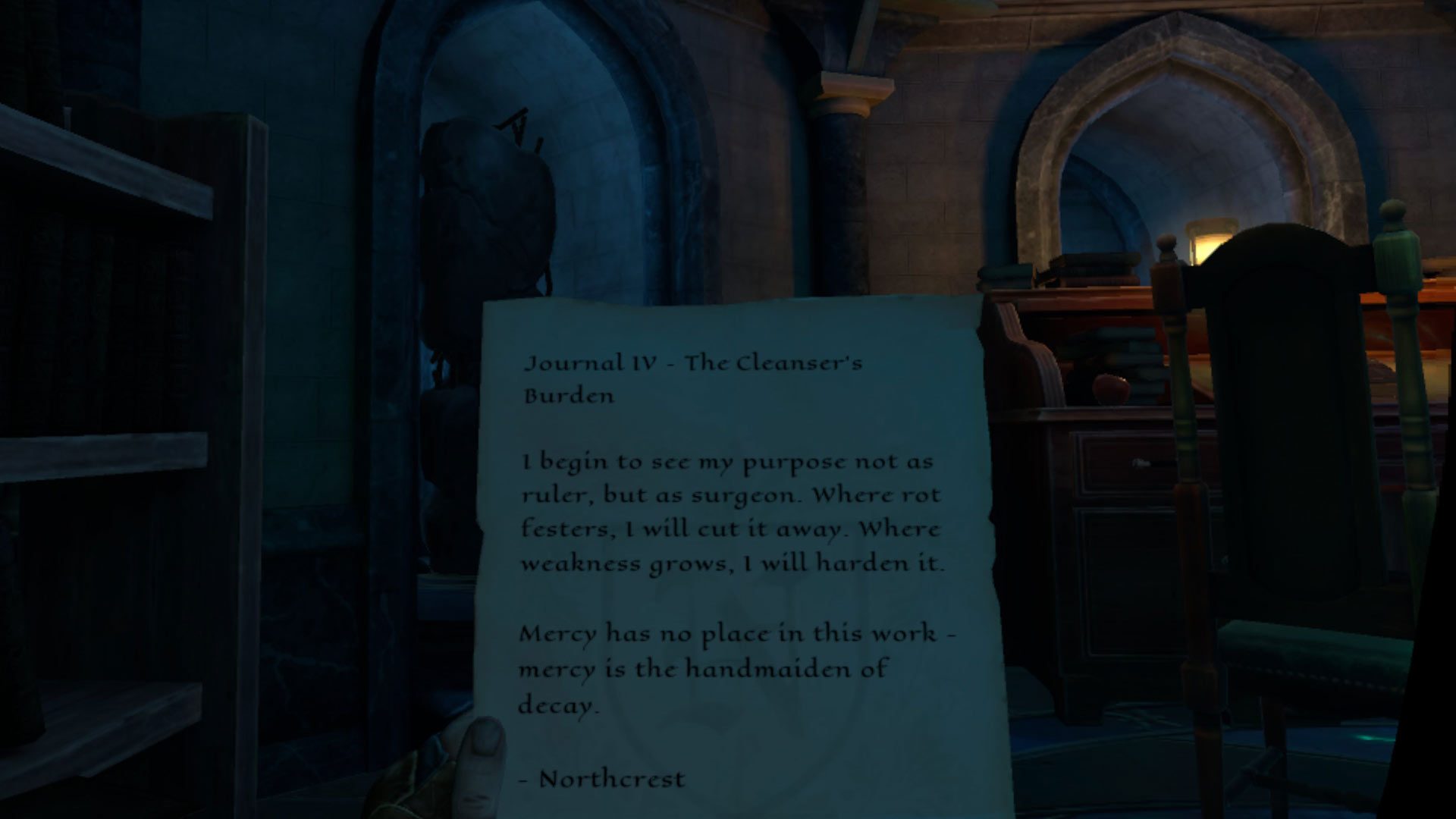
Thief VR looks awesome, as it’s densely packed with tons of environmental storytelling stuff, like posters, graffiti, and found notes all over the place, all of which help you understand the story beyond the periodic conversations you can eavesdrop on before guards head out on planned patrol routes.
Levels offer a ton of places to hide and explore, making it feel like a lived-in place. And what’s more, it also looks good and performs mostly well, even on Quest, which is likely the lowest tier version of the game. Notably, while it’s been a while since I played the demo, which was on PSVR 2, one remarkable thing is every version of the game feels a little too dark for my liking. Like, I need just a bit more light to read and see comfortably.
Image captured by Road to VR
Voice acting is also some of the best you’ll find in any game, VR or otherwise. Stephen Russell reprises his role as Garrett—notably lacking from the 2014 game, which tapped fellow voice acting veteran Romano Orzari instead. In any case, Thief VR’s whole cast seem to have been directed to deliver lines naturally, and less gamey than they might have otherwise.
Immersion is a fickle thing though, and can be quickly broken. For example, walls aren’t always capable of stopping or otherwise muffling noise. This seems to be more buggy behavior than something planned, as I noticed in some levels that guards would be somewhat muffled through doors, while other levels I could hear a guard snoozing from above or below me, as if he were in the same room. At one point, I could hear a half-dozen guards having conversations in possibly three different rooms, many of them featuring the same voice actor.
Guards are also stupid as sin—much dumber than those from analogue series, such as Hitman. I initially went into the game trying to play it as quietly and as far away from baddies as possible, but if I had known I could just run past a guy and then hide somewhere else for 10 seconds before he gives up and goes back about his pre-planned route, I wouldn’t have been so ginger. Here I am (sped up) alarming a guard, which brings their indicator to red before I make a daring escape up a regular ladder, which as we all know, can only be used by Super Thieves.
Really. A miscreant has entered an impenetrable palace, knocked out a bunch of dudes, and just showed their face before hiding under a table and you’re not able to alarm other guards? To me, Thief VR seems more content using the carrot rather than the stick: you’ll lose a valuable achievement, but guards won’t go five-star mode on your ass to hunt you down, which means you’ll mostly only ever replay a mission to get an achievement, and not save yourself from getting twacked to death.
Notably, even if a guard is on you, there’s a way of parrying their hits with your trusty black jack. Simply parry in the direction of their hit three times in a row, and guards will be knocked on their knees, allowing you to pop them on the head for a quick dirt nap. I don’t dislike that, as it gives you some recourse in a game fundamentally eschewing melee combat.
Object interaction is also a bit of a sore spot too—more than I thought it would be from my initial hands-on back in September. Most objects are interactable, which is a big plus in the immersion department, but grabbing them feels just a little too fumbly to be reliable. For example, even getting your lockpicks out of your inventory can be hit or miss, which can be frustrating when you need to quickly open a chest or door between you and freedom. Items include what feel like a singular point in the middle that you need to grab for, otherwise you might just paw at it ineffectually.
Okay, questionable game logic and weird bits aside: I think Thief VR’s overall strengths help compensate for some of its weaker moments, as they just become background static to what otherwise is a fun and enjoyable game. Many of these things may be subjects of future patches, although this is the game as it is at launch.
Comfort
Thief VR is a very comfortable game, as it doesn’t include any sort of vehicle rides, or other ways of forcing your perspective in uncomfortable ways.
At times, I did find myself struggling to reach items, even when artificially crouched, which made it slightly less comfortable to play seated than standing and physically crouching, or using a combo of physical and artificial crouch to grab things on the floor.
Thief VR: Legacy of Shadow Comfort Settings – December 4th, 2025
Valve says that Steam Frame won’t be able to display traditional (‘flat’) games in stereoscopic 3D at launch, but they are looking into the feature for future development.
The News
The announcement of Steam Frame came with a lot of info but equally as many unanswered questions. One thing on my mind is whether or not the headset will be able to render flat games in stereoscopic 3D (assuming the game supports it). A Valve spokesperson told me that such a feature doesn’t currently exist, but the company is looking into it.
“For […] stereoscopic 3D content on [Frame], we don’t currently support it, but it’s on our list.”
The company further said it’s considering a system-level implementation that could display any stereoscopic 3D content, whether it’s stereoscopically rendered games, videos, or photos. Should the stereoscopic 3D feature be built, Valve told me it would “be our goal” to be able to display such content when streamed from a PC or rendered directly on the headset itself.
In an age of impressive conversion of 2D content into 3D content (like we’ve seen on headsets from Apple and Samsung), I also asked if the company was exploring any technology to automatically convert flat Steam games into stereoscopic output for viewing in 3D on Frame; unfortunately Valve said it isn’t something they’re currently looking into.
My Take
Without any automatic stereoscopic 3D conversion, the big question becomes: what content is actually available to users in stereoscopic 3D?
In 2025, there are very few flat games that natively support stereoscopic 3D rendering. But there’s a handful of third-party mods that inject themselves into the rendering pipeline to generate stereoscopic 3D frames from flat games. Since these aren’t developer-level integrations, such mods can work well for some games but not others.
Side-by-side stereoscopic rendering (where the left and right eye views are packed into a single, final frame) is the most widely compatible format for stereoscopic 3D content today. So the lowest hanging fruit for Valve would be to allow Frame to view any arbitrary side-by-side content in stereoscopic 3D, whether rendered in real-time from a game or pre-rendered images or videos.
While there isn’t a singular and widely available marketplace of professional stereoscopic 3D media, some modern phones and XR headsets can capture stereoscopic 3D images and videos. And automatic 2D-to-3D conversions of photos and videos is becoming increasingly accessible. Most of these can be viewed in one way or another on modern XR headsets and Steam Frame could eventually be among them.
Alibaba released a pair of display-clad smart glasses, ostensibly looking to go toe-to-toe with Meta Ray-Ban Display, which launched in the US for $800 back in September.
The News
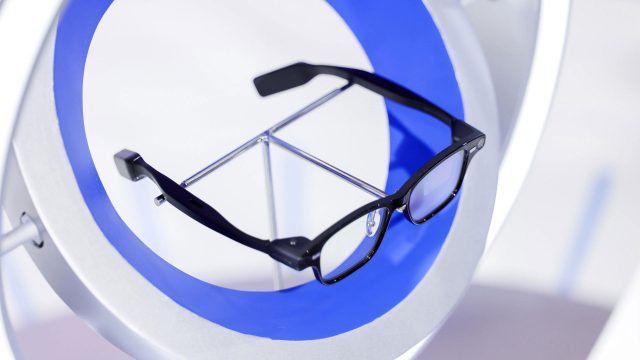
China’s Alibaba, one the world’s largest retailers and e-commerce companies, just released its first smart glasses, called Quark AI Glasses, which run the company’s own Qwen AI model.
Seemingly China-only devices for now, Alibaba is now offering Quark AI in two fundamental versions across Chinese online and brick-and-mortar retailers:
Quark AI Glasses S1: starting at ¥3,799 (~$540 USD), includes dual monochrome green displays
Quark AI Glasses G1: starting at ¥1,899 (~$270 USD), no displays, sharing core technology of ‘S1’ model
Quark AI Glasses S1 is equipped with a Qualcomm Snapdragon AR1 chipset and a low-power co-processor which drive dual monochrome green micro-OLED displays, boasting a brightness of up to 4,000 nits, according to South China Morning Post.
It also features a five-microphone array with bone conduction, 3K video recording which can be automatically upscaled to 4K, as well as low-light enhancement tech said to bring mobile phone-level imaging to smart glasses. Additionally, Quark AI Glasses S1 include hot-swappable batteries, which plug into the glasses’ stem piece.
You can see the English dubbed version of the Chinese language announcement below:
My Take
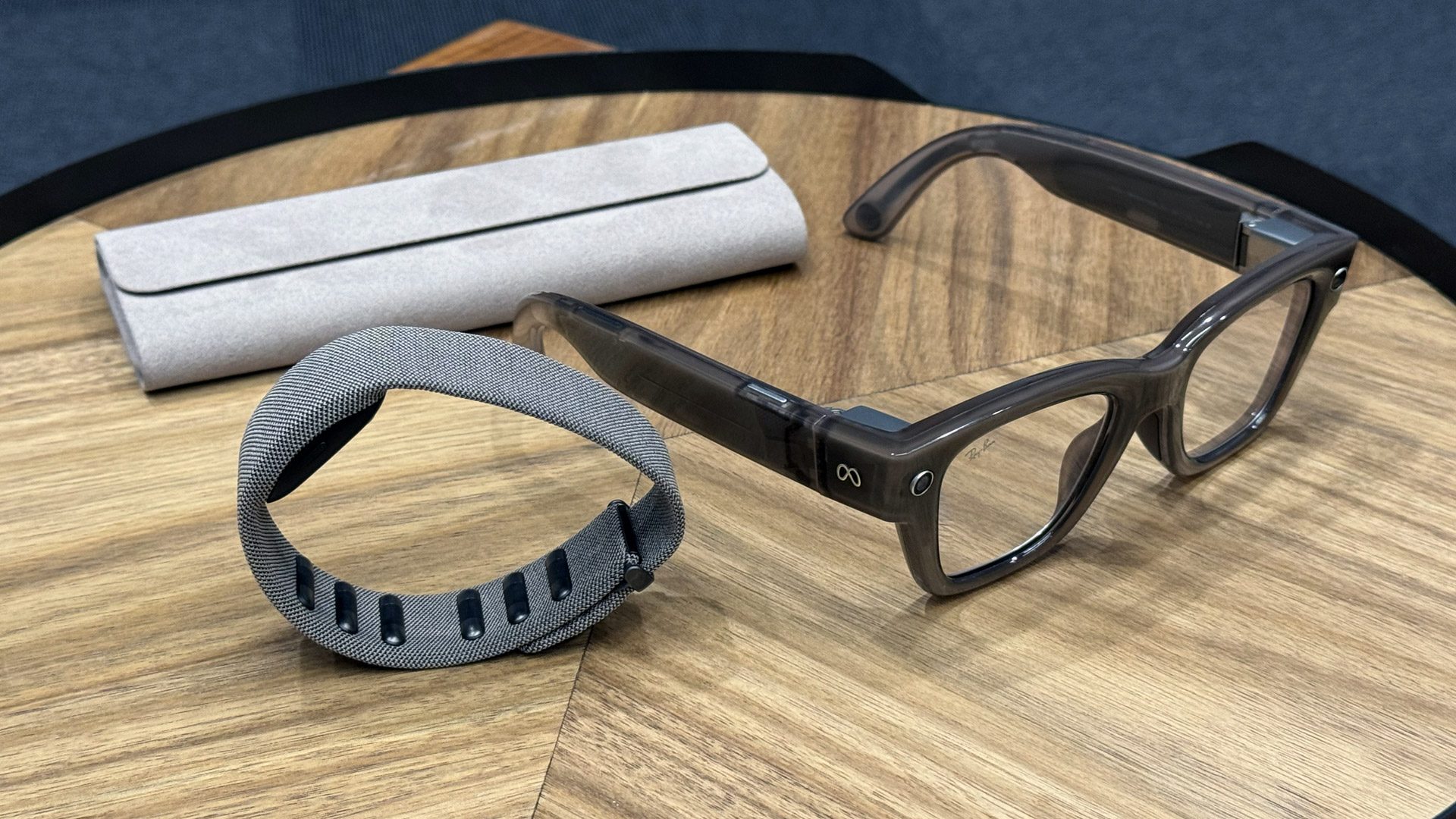
At least when it comes to on-paper specs, Quark AI Glasses S1 aren’t exactly a 1:1 rival with Meta Ray-Ban Display, even though both technically include display(s), onboard AI, and the ability to take photos and video.
While Meta Ray-Ban Display only feature a single full-color display, Quark S1’s dual displays only offer monochrome green output, which limits the sort of information that can be seen.
Meta Ray-Ban Display & Neural Band | Photo by Road to VR
Quark S1 also doesn’t come with an input device, like Meta Ray-Ban’s Neural Band, limiting it to only voice and touch input. That means Quark S1 user won’t be scrolling social media, pinching and zooming content, or other nifty UI manipulation.
Still, that might be just enough—at least one of the world’s largest e-commerce, cloud infrastructure, and FinTech companies thinks so. Also not worth overlooking is Quark S1’s unique benefit of being tightly integrated into the Qwen AI ecosystem, as well as the Chinese payment infrastructure for fast and easy QR code-based payments with Alipay; that last one is something most Chinese smart glasses are trying to hook into, like Xiaomi’s own Ray-Ban Meta competitors.
Although the company’s Qwen AI model is available globally, I find it pretty unlikely that Alibaba will ever bring its first-gen models of Quark AI Glasses S1/G1 outside of its usual sphere of influence, or meaningfully intersect with Meta’s supported regions.
Alta, the studio behind A Township Tale (2021), is getting ready to launch open playtesting for its upcoming dungeon-crawler extraction game REAVE.
The News
While Reave has technically had a number of playtests starting earlier this year, they’ve required users to sign up for the game’s Discord (invite link) and get approval first.
Now, the studio is opening up playtesting to anyone with the launch of Reave: Limited Access, which is coming to Quest on December 4th. You can find it on the Horizon Store for Quest 3, a special invite for Quest 2, and also on Steam for PC VR headsets.
This means users won’t need to follow the Discord, get approvals or sign up, as anyone will be able to install and join playtests going forward. While playtests are still going to be time limited, Alta says they’re be “more open, frequent, and easy to join.”
And if you haven’t heard of Reave, here’s the skinny: Reave is all about facing off against terrifying monsters as you fight your way back to the surface with your bag of loot—which can be tough, since you’ll also encounter fellow players looking for an easy score.
For the most up-to-date look at Reave, check out the studio’s latest devlog below:
My Take
I am genuinely excited for Reave. A Township Tale revealed just how much expertise Alta has in creating immersive, object-oriented VR experiences, and I’m definitely expecting the same care and attention here.
I think I love the concept not only for how cool dungeoning in multiplayer is, but also because it promises to serve up authentic emergent encounters. You could be fighting for your life on the edge of victory against a monster as a fresh squad of bandits smash in, looking to rob you blind. It all sounds like bringing an episode of Delicious in Dungeon to life. So far, cooking hasn’t been confirmed to be an in-game feature, which so far doesn’t seem like a core gameplay element anyway, but it could still be pretty neat.
That said, I’ve purposefully not played any of the playtests as I was initially hoping to drop in at early access launch, although I that might change come this week, as the game looks like it’s very nearly ready.
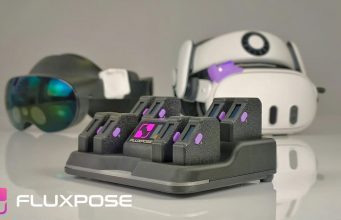
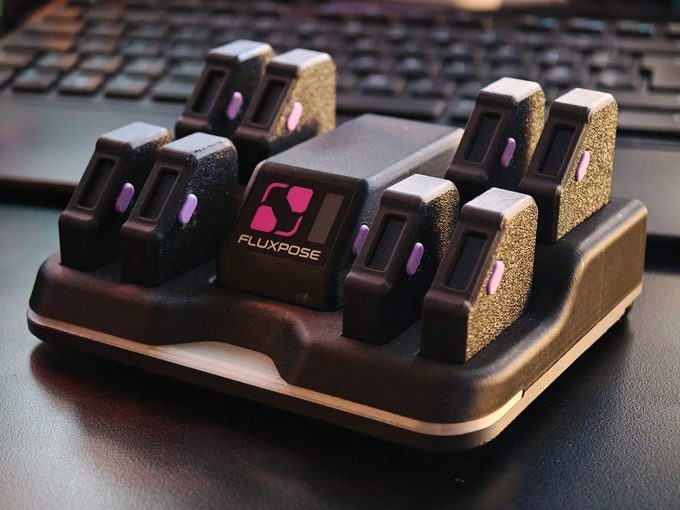
FluxPose is a 6DOF tracking solution for full-body tracking that seems to be picking up speed on Kickstarter, having now garnered over $2 million in crowdfunding since its initial launch on November 29th.
The News
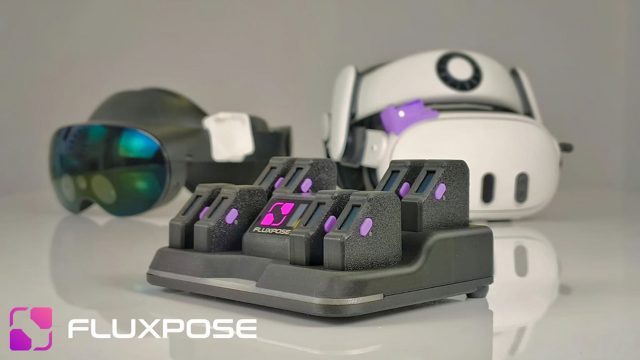
FluxPose is a full-body tracking system that’s said to deliver occlusion-free positional tracking without the need of externally mounted base stations or sensors. It does this by way of a wearable beacon, which generates magnetic fields, the team explains on the FluxPose Kickstarter campaign.
“It’s completely occlusion-free, incredibly compact, drift-free, and the trackers last up to 24 hours on a single charge, offering high-end performance in the smallest, lightest form factor possible,” the Logrono, Spain-based team says.
Image courtesy FluxPose
And because the beacon is worn on your body, and automatically synchronizes the tracking space with VR headsets without any additional software, it essentially means the tracking volume moves with you as you move (or more likely, dance) in VR.
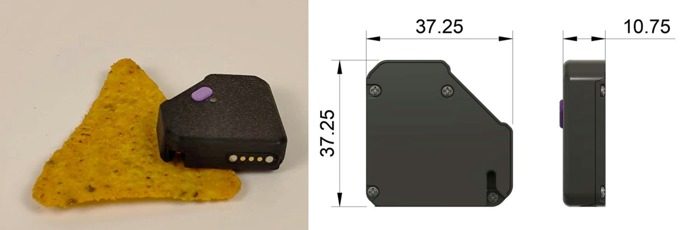
Weighing in at 85 grams, the trackers are also impressively compact: a Dorito for scale.
Image courtesy FluxPose
At the time of this writing, the cheapest support tier is the ‘Lite Kit’ for €339 (~$394 USD), which comes with three tracking points (straps sold separately). At the higher end is the ‘Pro Kit’ for €689 (~$800 USD), which includes eight tracking points. Notably, those prices do not include taxes or import tariffs.
VR headset mounts provided through the Kickstarter are said to include Quest 2/3/3S/Pro, Pico 4/4 Ultra, Samsung Galaxy XR, HTC Vive Pro/Pro 2/Focus/XR Elite, Bigscreen Beyond 1/2, Valve Index, and Steam Frame. Backers will have the chance to select the exact headset model on a survey after the Kickstarter ends, and again a few months before delivery.
You can find out more over on the FluxPose Kickstarter, which we’ll be following for the campaign’s remaining 58 days, ending on January 28th, 2026. The earliest delivery is expected in August 2026 for early bird supporters, and October 2026 for late comers to the Kickstarter.
My Take
Magnetically-tracked peripherals aren’t anything new in VR; I’ve seen a number of solutions come and go, with the emphasis mostly on go: Razer Hydra, Sixense Stem, Atraxa, Magic Leap 1 controllers—these implementations seem to be good enough in optimal conditions, but not rock solid across the board.
In short, magnetic trackers position themselves in 3D space by measuring the intensity of the magnetic field in various directions, which (as mentioned above) is generated by a beacon. When the trackers’ measurement point is rotated, the distribution of the magnetic field changes across its various axes, allowing for it to be positionally tracked.
And while those magnetically-tracked peripherals listed above don’t suffer from optical occlusion, they can be affected by external magnetic fields, ferromagnetic materials in the tracking volume, and conductive materials near the emitter or sensor. These things typically reduce tracking quality, making them less reliably accurate than optical (Quest 3) or laser-positioned systems (SteamVR base stations).
Granted, I haven’t tried FluxPose yet, although I don’t think those drawbacks are nearly as important in fully-body tracking than they might be in actual motion controllers, which require much higher accuracy. A few millimeter’s discrepancy in your foot’s position really doesn’t matter as much as it might if you were reaching out and trying to grab something with a magnetically-tracked controller.
Provided Road to VR doesn’t get to go hands-on in the coming months, I’ll be keeping my eyes peeled for videos and articles as we move closer to the campaign’s close next month.


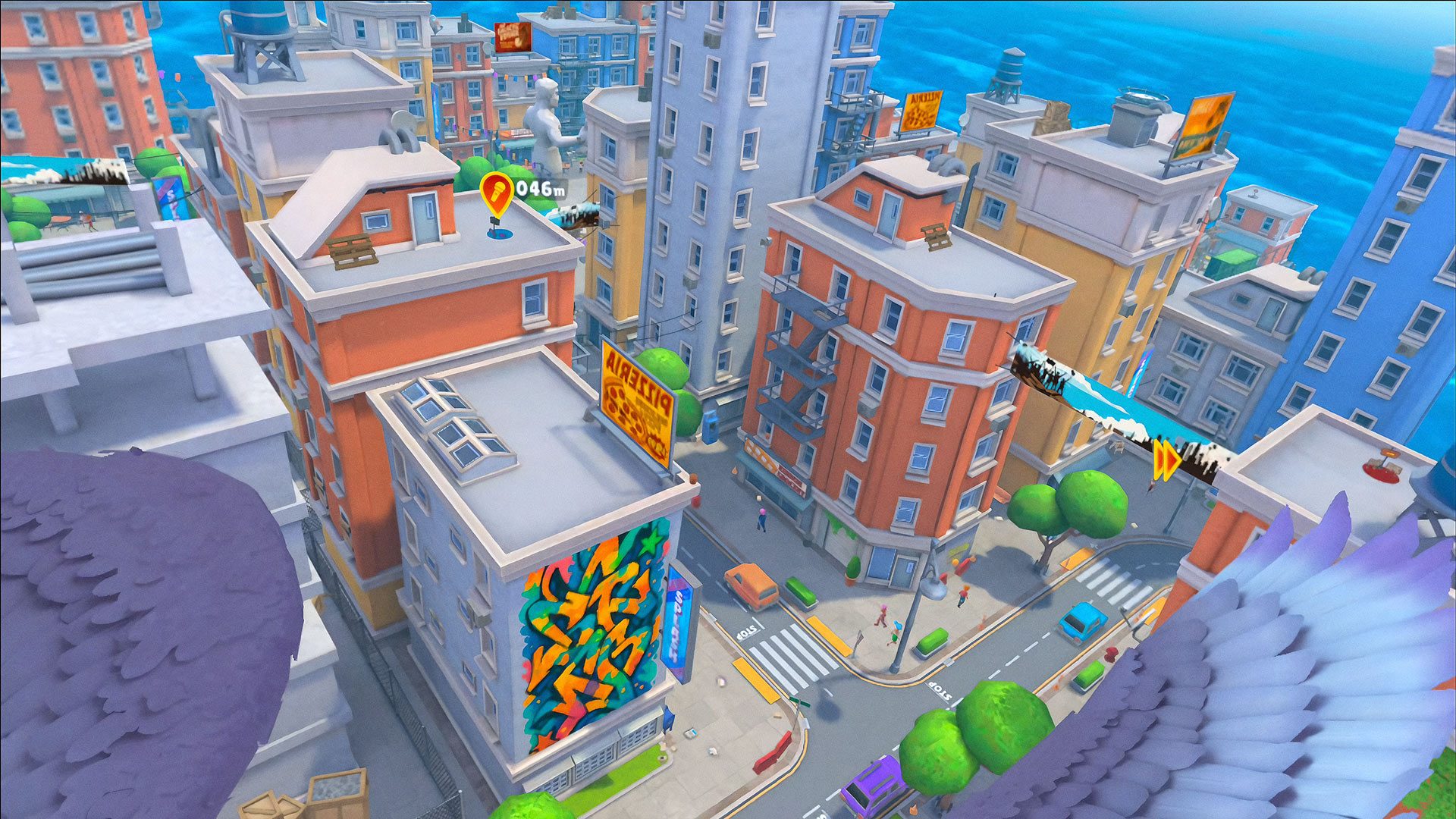 We built the city around height, speed, and momentum. Each district has its own identity and traversal flow-from wide avenues suited for fast glides to dense blocks crafted for precision flying. Rooftops, ledges, and tall structures hide shortcuts, collectibles, and optional challenges.
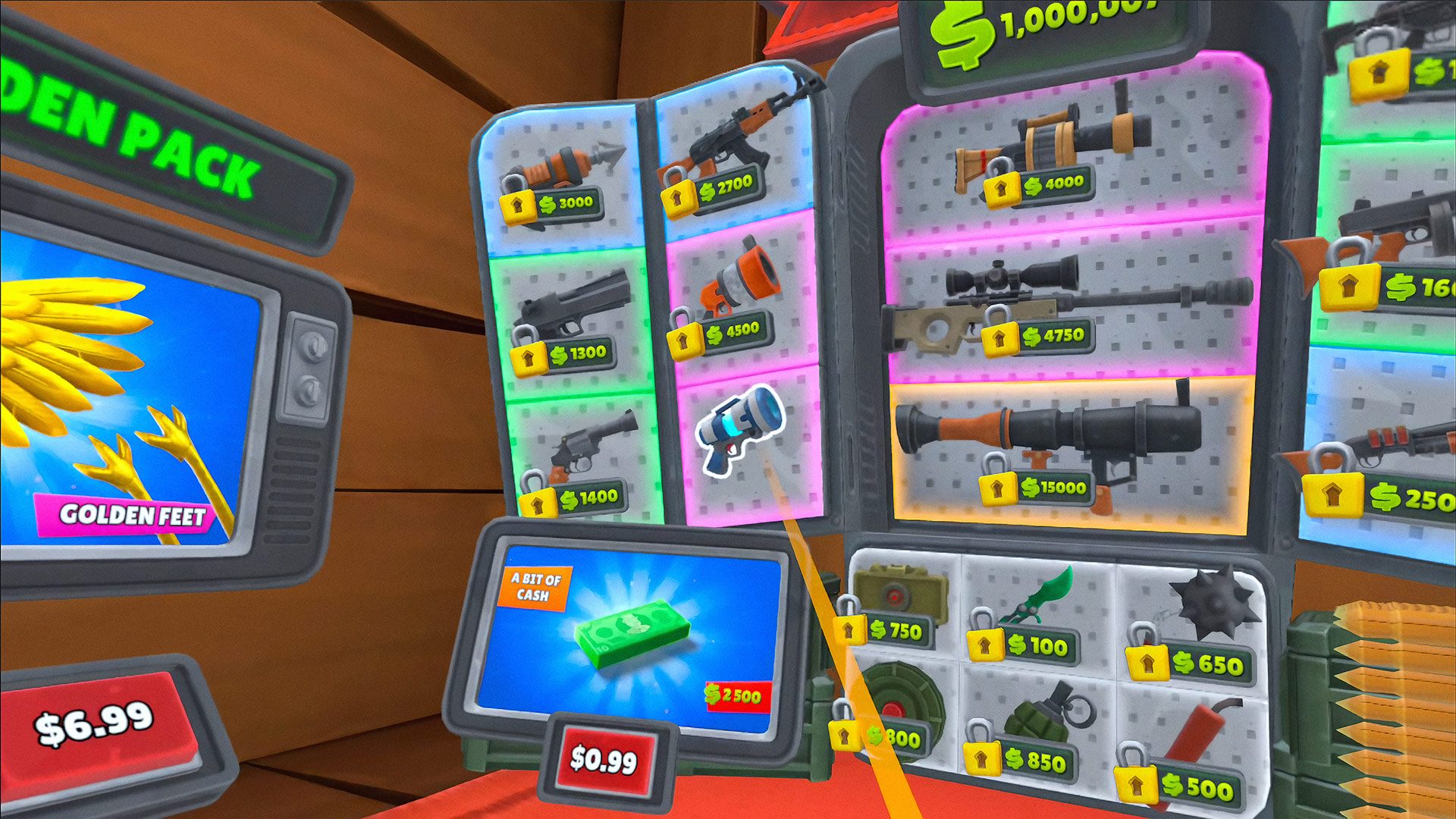 We equipped the game with a range of gadgets that expand player abilities and support different mission types. Gadgets can distract enemies, enhance mobility, highlight objectives, or help solve environmental tasks. All tools are gesture-based to keep the flight flow uninterrupted.
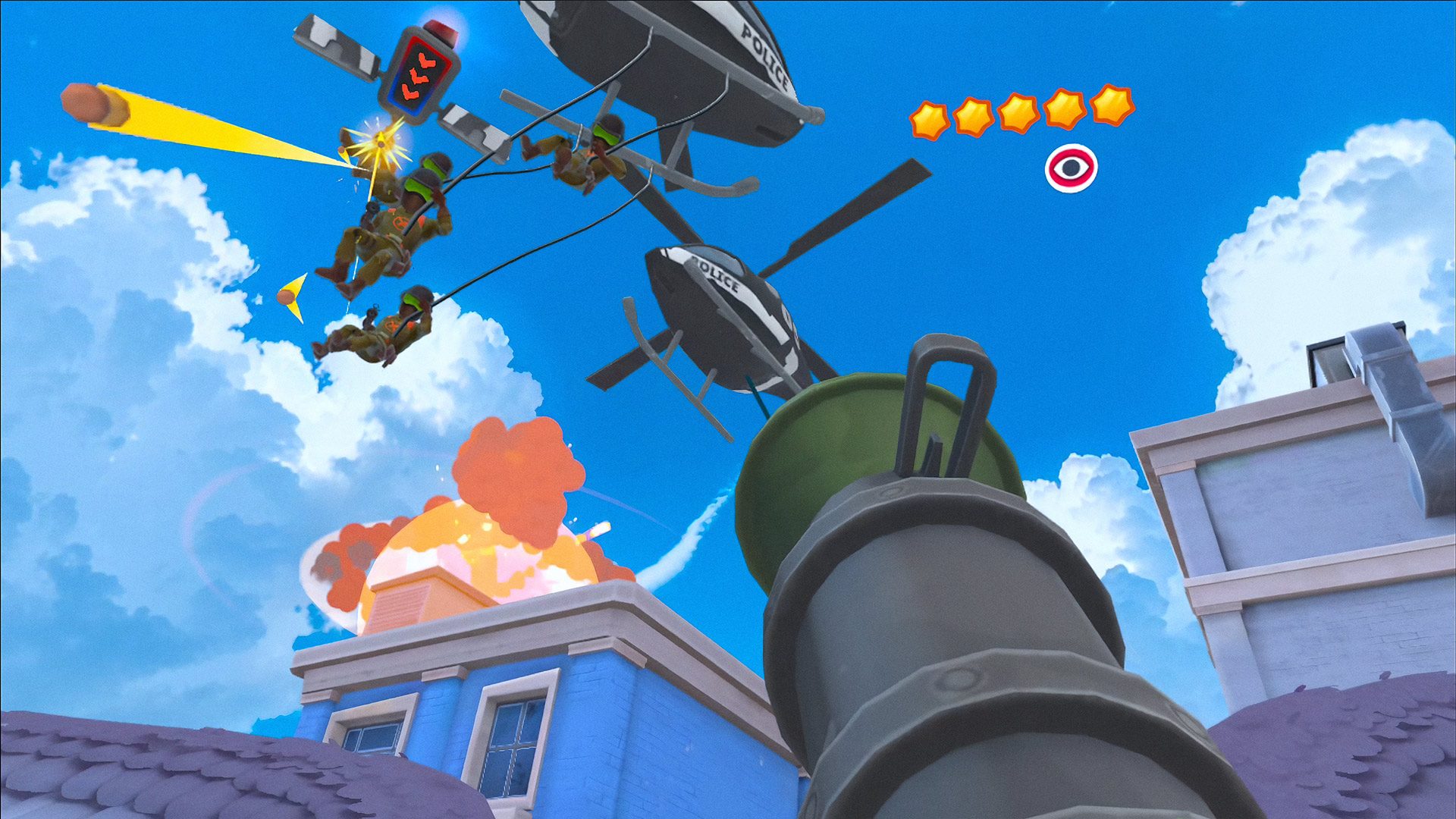 Beyond main objectives, the city contains: