Wednesday, 10 September 2025

Amazon Reportedly Developing Smart Glasses with Display to Rival Meta

https://ift.tt/qjCP2MV

Amazon is reportedly developing a pair of consumer smart glasses which is slated to rival Meta’s rumored ‘Hypernova’ smart glasses with display, according to a report by The Information.

Citing two people with direct knowledge of the plans, The Information maintains the glasses, internally codenamed ‘Jayhawk’, are set to include include microphones, speakers, a camera, and a monocular, full-color display.

The report maintains Amazon is eyeing a consumer launch of Jayhawk in late 2026 or early 2027, however the price point is currently unknown.

Equally uncertain is whether Jayhawk will be marketed under Amazon’s ‘Echo Frames’ line, first introduced in 2019, including voice-controlled frames and music playback, calls, and smart home control powered by Alexa.
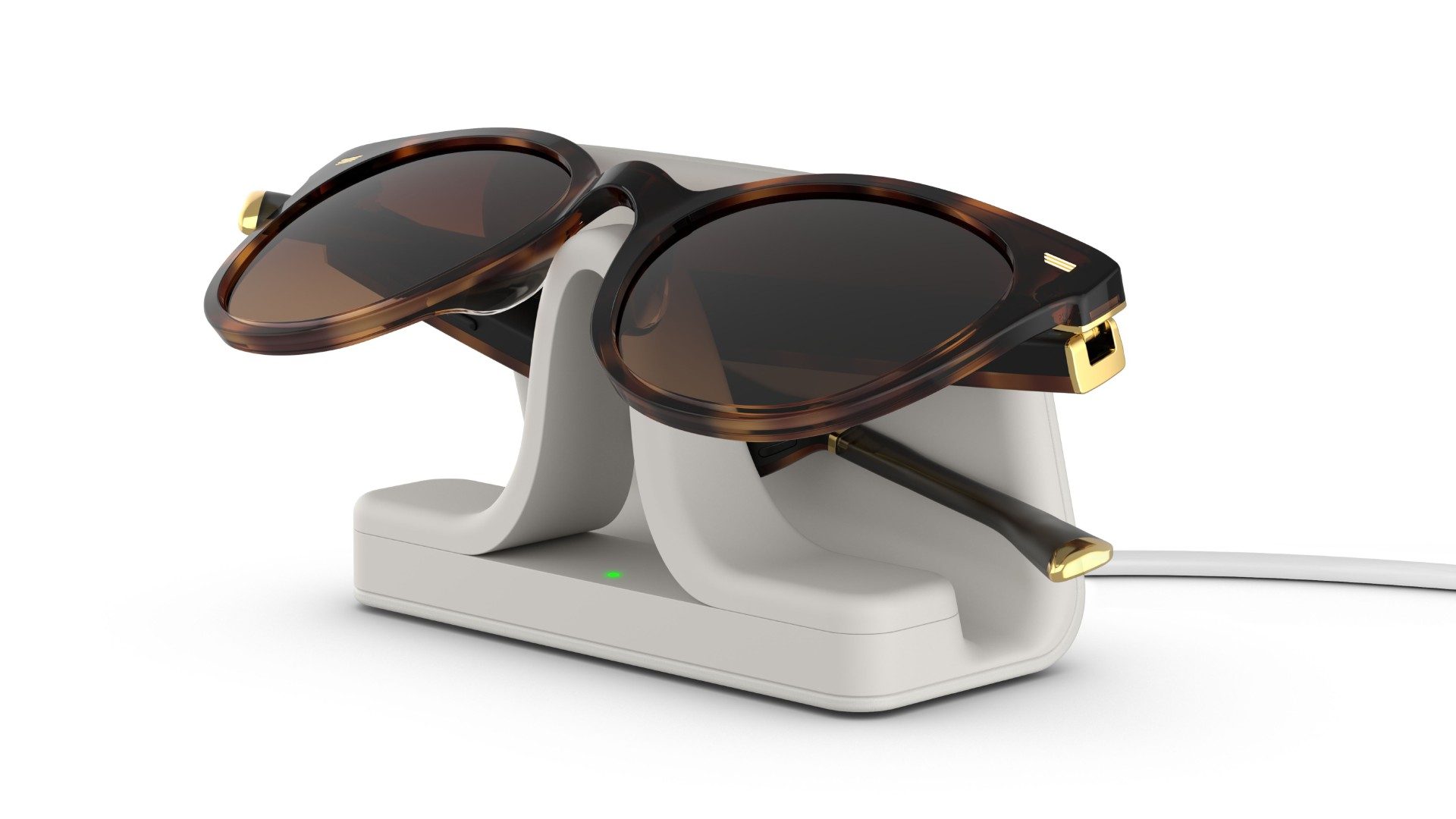
Third-gen Echo Frames | Image courtesy Amazon

Now in its third generation, launched in late 2023, Echo Frames offer essentially the same set of features as the first and second, with the notable outlier being any sort of camera (or display) for photos and video capture.

Additionally, The Information reports that Amazon is also creating smart glasses for its delivery drivers, said to be bulkier and less sleek than the consumer ‘Jayhawk’ model for consumers.

Codenamed ‘Amelia’, the glasses are reportedly set to provide instructions to help sort and deliver packages. Those are said to rollout as soon as Q2 2026, and include an initial production run of 100,000 units.

In contrast, recent reports from supply chain analyst Ming-Chi Kuo and Bloomberg’s Mark Gurman maintain Meta is nearly ready to begin mass production of its own smart glasses with monocular display.

Internally codenamed ‘Hypernova’, and possibly marketed as ‘Celeste’, Meta’s forthcoming smart glasses are expected to cost around $800, according to Kuo.

– – — – –

The Information maintains in its reporting that the glasses will be “augmented reality”, however the device’s description puts it squarely in the smart glasses segment.

In short, AR glasses overlay spatially anchored 3D digital content into the real environment, while smart glasses mainly provide heads-up information or notifications, either by monoscopic or even stereoscopic displays. You can learn more about the difference between AR and smart glasses here.

The post Amazon Reportedly Developing Smart Glasses with Display to Rival Meta appeared first on Road to VR.


from Road to VR https://ift.tt/4zvtxy8
via IFTTT

‘Star Wars: Beyond Victory’ Mixed Reality Game Comes to Quest 3 in October

https://ift.tt/nYXU3wi

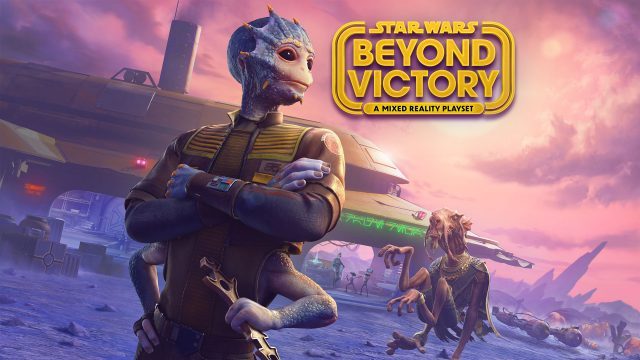
ILM and Lucasfilm announced that Star Wars: Beyond Victory – A Mixed Reality Playset is set to launch next month, coming exclusively to Quest 3 and 3S.

The studios released a new trailer for Star Wars: Beyond Victory, revealing the game’s release date of October 7th.

Set during the Reign of the Empire, this time around the studios are offering up a good slice of podracing and what they call a “powerful narrative” that combines both virtual and mixed reality gameplay.

Image courtesy ILM, Lucasfilm, Meta

“This experience is designed to celebrate storytelling, action, imagination and everything we love about Star Wars,” said Jose Perez III, Director of Star Wars: Beyond Victory. “We wanted to give players a new way to step inside the galaxy and make it their own.”

Three modes are set to be available at launch:

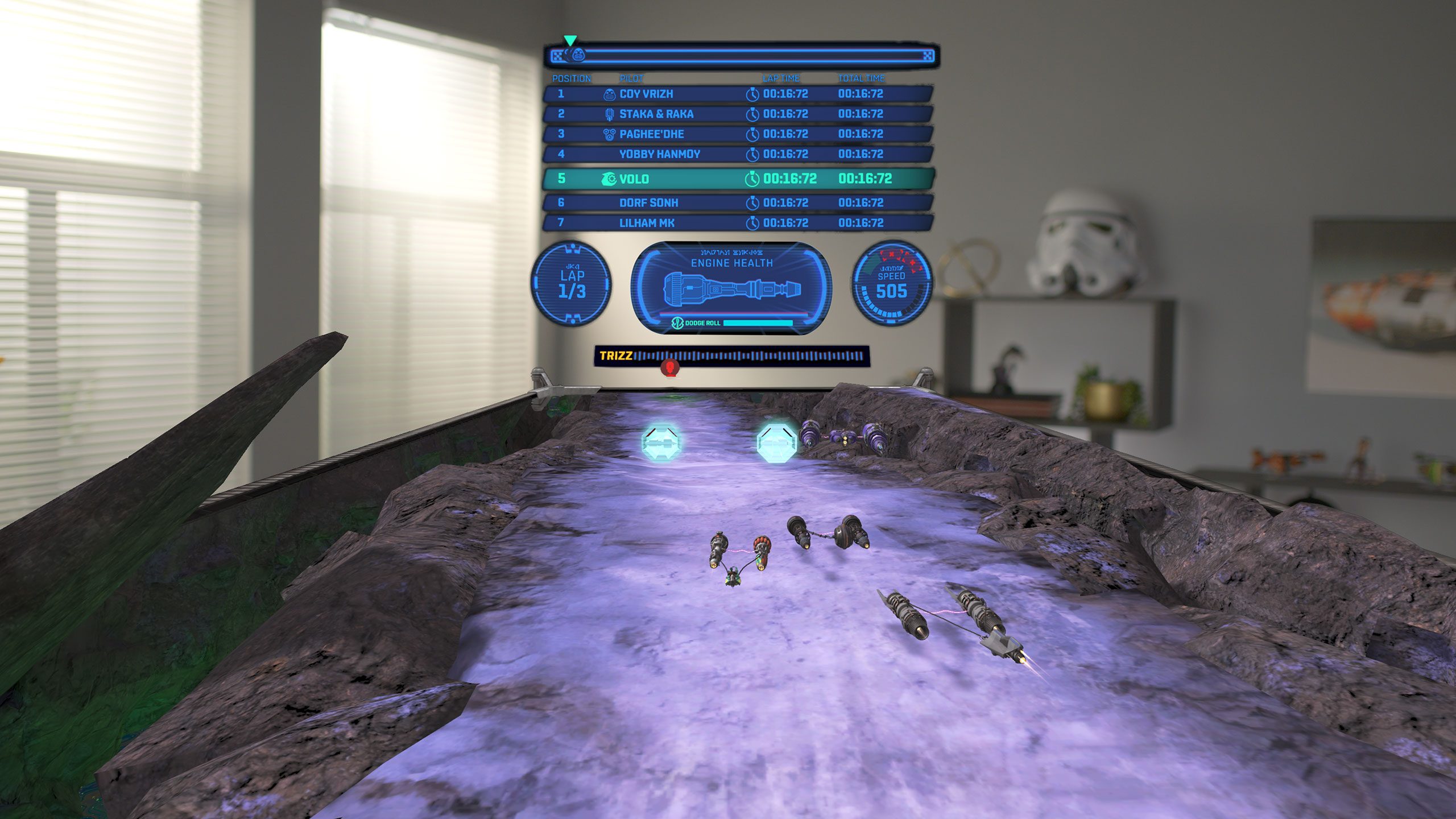
  • Adventure Mode: delivers the primary narrative journey placing players in the role of Volo Bolus, an ambitious pilot mentored by none other than podracing legend Sebulba. Through a mix of fully immersive VR and MR, players will experience an epic Star Wars story from a bold new perspective.
  • Arcade Mode: transforms the player’s physical space into a holotable-style racing arena where high-speed podraces are controlled from a top-down view. Each track features multiple paths to the finish line providing fast, replayable fun for fans of classic arcade gameplay.
  • Playset Mode: invites players to unleash their creativity in a dynamic sandbox from a galaxy far, far away. Using unlockable digital action figures, including vehicles and iconic characters, fans can populate their physical environment and stage their own Star Wars stories.

What’s more, the game features a cast of recognizable voice talent too, including Fin Argus (Queer as Folk), Greg Proops (Whose Line is it Anyway?), Lilimar Hernandez (Inside Out 2), Lewis MacLeod (Star Wars: Episode 1), and Bobby Moynihan (Saturday Night Live).

Star Wars: Beyond Victory – A Mixed Reality Playset is set to launch on October 7th on the Horizon Store for Quest 3 and 3S, priced at $19.99. You can wishlist the game here.

The post ‘Star Wars: Beyond Victory’ Mixed Reality Game Comes to Quest 3 in October appeared first on Road to VR.


from Road to VR https://ift.tt/XLVWl4i
via IFTTT

Tuesday, 9 September 2025

Mojo Vision Secures $75M Investment to Commercialize Micro-LED Displays for XR Glasses

https://ift.tt/LNqjBwD

Mojo Vision announced it’s secured a $75 million Series B Prime investment round, which the company says will support the commercialization of its powerful and flexible micro-LED platform for XR glasses.

The round was led by Vanedge Capital, and included investments from current shareholders Edge Venture Capital, New Enterprise Associates (NEA), Fusion Fund, Knollwood Capital, Dolby Family Ventures, and Khosla Ventures, and new shareholders, including imec.xpand, Keymaker, Ohio Innovation Fund, and Hyperlink Ventures.

This brings the company’s overall funding to $345 million, according to Crunch Base data; Mojo Vision’s penultimate round came in late 2023, amounting to $43.5 million.

While previously geared towards producing smart contact lenses, Mojo Vision is now all about the underlying micro-LED technology that initially generated headlines back in 2022.

Image courtesy Mojo Vision

At the time, it was expected Mojo Vision would commercialize a contact lens with embedded micro-LED display, however in April 2023 the company announced it was pivoting.

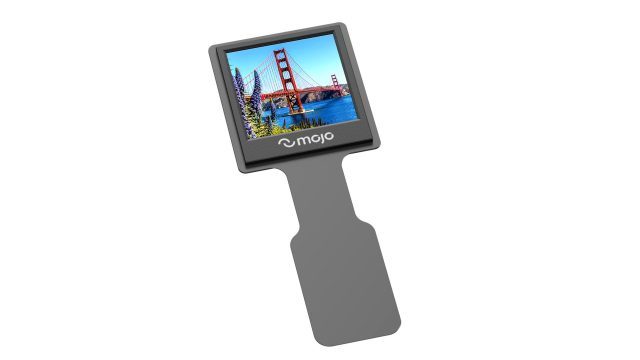
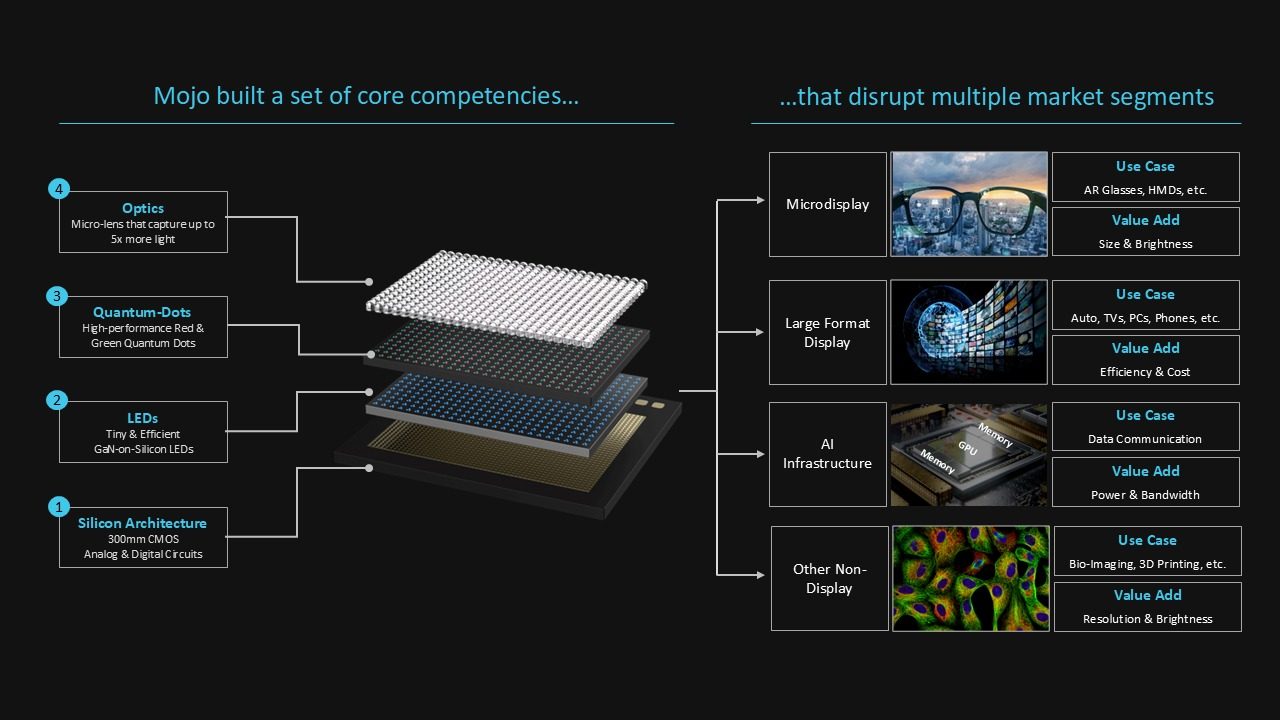
Founded in 2015, Mojo Vision is now building a type of micro-LED technology that allows the mass-production of them onto silicon chips, combining advanced components like gallium nitride (GaN) on silicon emitters, quantum dots, and micro-lens arrays. According to Mojo Vision, this makes the displays very bright, very small, and energy-efficient.

“Through our micro-LED technology development, Mojo has made significant advancements in establishing breakthrough performance standards while laying the foundation for micro-LEDs as a platform for AI innovation in large market segments,” said Nikhil Balram, CEO of Mojo Vision. “This oversubscribed funding round and strong industry support mark a new phase in the design and production of our next-generation micro-LED platform. The company is on an accelerated path to commercialize micro-LED applications that can power AI.”

The company says it’s targeting the micro-LED platform to build displays for XR glasses, but also large format displays and optical interconnects for AI infrastructure.

The post Mojo Vision Secures $75M Investment to Commercialize Micro-LED Displays for XR Glasses appeared first on Road to VR.


from Road to VR https://ift.tt/bWtzs5i
via IFTTT

Monday, 8 September 2025

U.S. Army Reportedly Taps Anduril & Rivet to Compete in Revamped XR Headset Military Contract

https://ift.tt/P8WUSgO

According to a Breaking Defense report, the U.S. Army has chosen defense startups Anduril and Rivet to compete in its revamped Integrated Visual Augmentation System (IVAS) project, now called the Soldier Borne Mission Command (SBMC), which is slated to integrate AR headsets into combat roles.

Rivet, partly funded by Palantir and led by former Microsoft IVAS lead David Marra, announced last week it’s secured a $195 million, 18-month contract to prototype and produce 470 “production representative” devices in the new SBMC program.

At present, the company produces an XR platform, called Rivet Hard Spec, which is designed for frontline professionals in defense and industrial sectors. Information is thin on the ground surrounding Hard Spec, and whether the system is playing a central role in the SBMC bid.

Rivet notes however the company will “help the Army field [SBMC] to the Infantry through rigorous iteration with Soldiers, ensuring an adaptable and extensible platform for lethality and overmatch against evolving threats.”

Rivet Hard Spec | Image courtesy Rivet

While Rivet has confirmed it’s secured the $195 million contract for the batch of XR prototypes, Rivet still faces strong competition from a possible Anduril + Meta partnership. In May, Anduril and Meta announced the companies were aiming to make “the world’s best AR and VR systems for the US military.”

Anduril CEO Palmer Luckey, known for creating Oculus Rift and selling the company to Meta (then Facebook) in 2014 for more than $2 billion, teased a military-focused XR device called Eagle Eye, which is said to serve as central component in their SBMC bid.

At the time of this writing, Anduril has not publicly confirmed a contract with the U.S. Army, however Breaking Defense reports Army sources have confirmed their selection alongside Rivet.

The SBMC recompete follows years of challenges with IVAS, which was initially awarded to Microsoft in 2018 to produce a combat-ready AR headset based on HoloLens 2 capable of fulfilling the $22 billion, 10-year production deal.

Microsoft’s IVAS ultimately suffered multiple challenges in the following years, including poor field testing results due to comfort, reliability and ruggedness issues, ultimately leading to Anduril taking over development of IVAS’ software earlier this year.

At the time, it was seen as a way of potentially giving Luckey’s defense company valuable time to work with Army leaders in preparation to recompete for the new, revamped SBMC program.

The post U.S. Army Reportedly Taps Anduril & Rivet to Compete in Revamped XR Headset Military Contract appeared first on Road to VR.


from Road to VR https://ift.tt/W0D63Sq
via IFTTT

‘VEX MAGE’ Combines Spellcasting and Co-op Arena Action on Quest & PC VR Next Month

https://ift.tt/NVfRJz3

Nervous Systems and Fast Travel Games announced that VEX MAGE is coming to Quest and PC VR headsets next month, bringing spellcasting abilities to Quake-style arenas.

Vex Mage is all about fast-twitch shooting action, albeit with the ability to cast (and combine) magical elements, such as magma, lightning, and water.

But it’s not only defensive: magical spells let you move around the arena too, letting you execute some high-flying rocket jumps using your various spells. Check out the demo gameplay below:

Here’s how Nervous Systems describes it:

Twin elements. Infinite momentum. Danger from every direction. Merge spells, cross dimensions, and dance through deadly arenas in this lightning-fast shooter. Alone or together – Claim your immortality on cross-platform leaderboards. Your name is eternal.

What’s more, the game’s campaign lets you go solo, or squad up with two other players to take on the hordes in co-op mode.

You can pre-order Vex Mage on the Horizon Store for Quest 2 and above, launching October 16th for $10. You can also wishlist on on Steam, which will include both flatscreen and PC VR gameplay, coming October 21st.

In the meantime, you can also play the free demo, which you’ll find linked to the store pages above.

The post ‘VEX MAGE’ Combines Spellcasting and Co-op Arena Action on Quest & PC VR Next Month appeared first on Road to VR.


from Road to VR https://ift.tt/VT6pt4q
via IFTTT

Friday, 5 September 2025

‘Project Moohan’ Android XR Headset is Launching by Year’s End, But Still No Official Name or Release Date

https://ift.tt/m4CbP9N

Project Moohan was a no-show at Samsung’s Galaxy product event yesterday, giving the company even fewer opportunities to announce and release the Vision Pro competitor by year’s end.

Samsung confirmed in early August that Project Moohan is coming before the end of the year, although we still don’t know its name, release date, or price.

At its recent Galaxy event, the company unveiled a number of mobile devices, including Galaxy S25 FE, Galaxy Tab S11, and Galaxy Tab S11 Ultra. Just not Project Moohan.

A recent report from Korea’s Newsworks maintained Moohan would be featured at Samsung Unpacked, which is rumored to take place on September 29th. Still, that’s awfully close to the Galaxy product event, which took place yesterday.

The Newswork report maintains Project Moohan—which means ‘Infinite’ in Korean—is rumored to launch first in South Korea on October 13th, priced at somewhere between ₩2.5 and ₩4 million South Korean won, or between $1,800 and $2,900 USD.

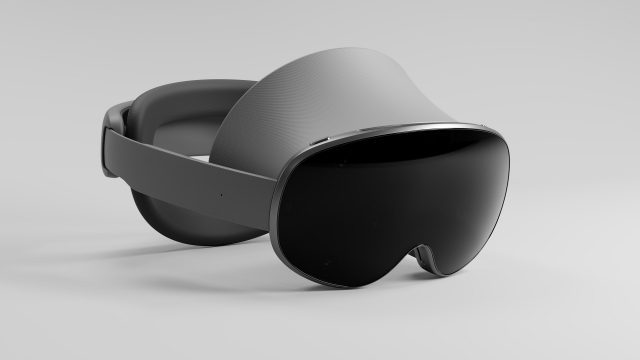
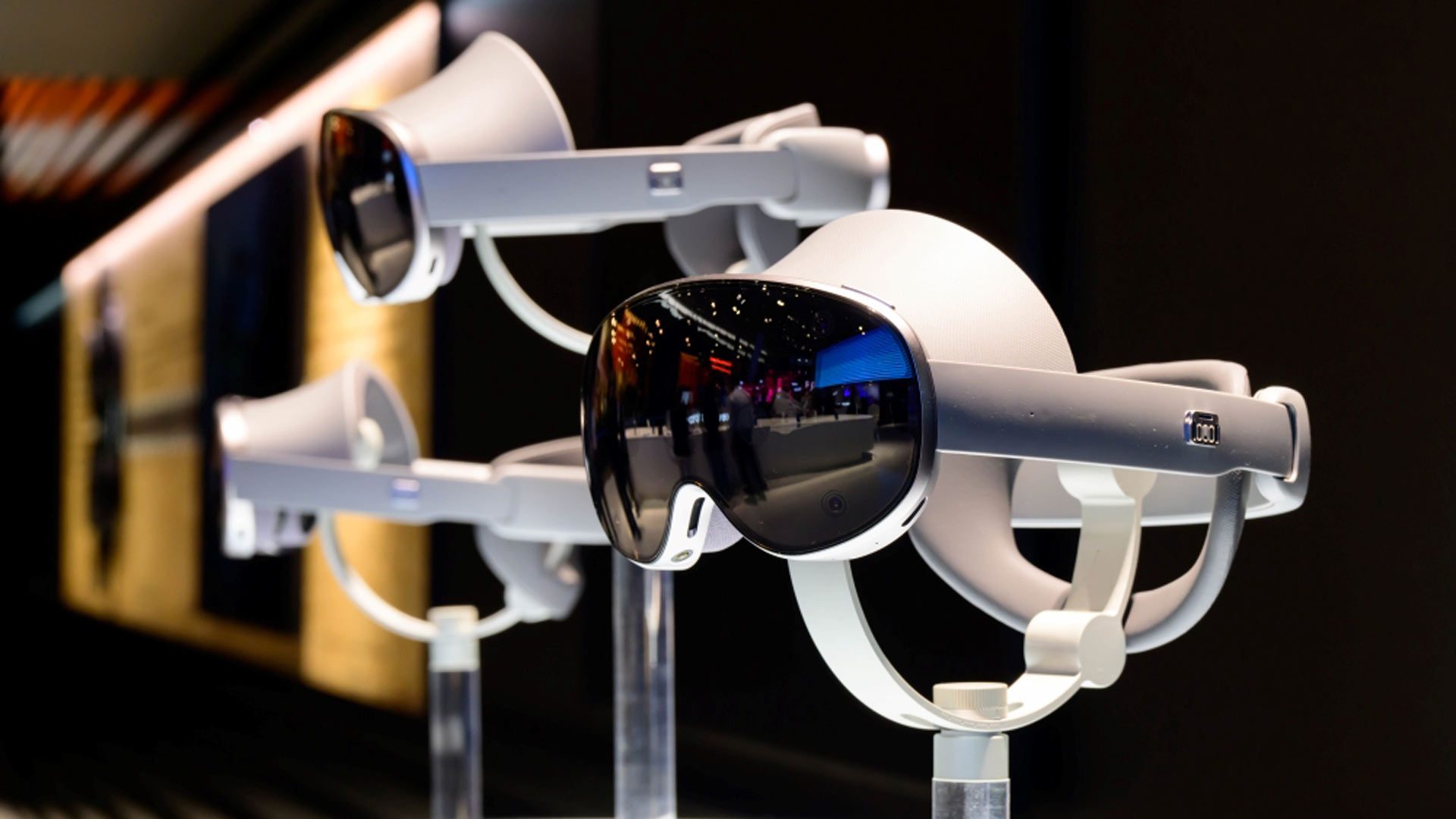
Samsung Project Moohan | Image courtesy Samsung

Still, it’s fairly odd that Samsung hasn’t taken more of an opportunity to hype the mixed reality headset, which will be the first to run Google’s Android XR operating system.

Samsung has essentially kept the lid fairly tight on Moohan since it was announced in December 2024; it was often available for demo behind closed doors at events like MWC in March and Google I/O in June, although it was conspicuously absent from Unpacked in January and the second Unpacked in July… and now the Galaxy product event.

With claims of launching in South Korea first, and at around $2,000, it could be that Samsung is expecting fairly low sales volumes from the standalone MR headset, which admittedly has some fairly good specs under the hood.

Here’s the short of it: Moohan packs in a Qualcomm Snapdragon XR2 + Gen 2, dual micro‑OLED panels (resolution specs yet), pancake lenses, automatic interpupillary distance (IPD) adjustment, support for eye and hand-tracking, optional magnetically-attached light shield, and a removable external battery pack. It’s also getting VR motion controllers of some sort, but we still haven’t seen those either.

You can learn more by checking out our hands-on with Project Moohan from December 2024, which includes everything from comfort, display clarity, and how Android XR looks a lot like Horizon OS combined with VisionOS.

The post ‘Project Moohan’ Android XR Headset is Launching by Year’s End, But Still No Official Name or Release Date appeared first on Road to VR.


from Road to VR https://ift.tt/tGxXzgN
via IFTTT

‘Evangelion: Cross Reflections’ VR Game Officially Announced, Planned for Release in 2026

https://ift.tt/KrgI3Dc

Korea-based studio Pixelity officially revealed the name of its XR game based on popular ’90s anime Neon Genesis Evangelion (1995): “EVANGELION: Δ CROSS REFLECTIONS”

Previously teased earlier this year, Evangelion: Cross Reflections is said to be set in the locations from the anime, serving up battles between Evangelions and Angels, various interactive elements, and “engaging, captivating storylines with original characters,” Pixelity says.

As a new story set within the timeline of all 26 episodes of the anime, Cross Reflections will only be the first of a trilogy, which will center on events from Episode 1 – 11.

“Its standout feature is the intricate weaving of key episodes from the existing storyline with completely new, game-original narrative content,” Pixelity says.

Evangelion: Cross Reflections is slated for release in 2026. The studio hasn’t announced specific platforms yet, however they say the game will use both VR and MR, which points to release on Quest. A demo of the game is planned to release is scheduled for the first half of 2026, so we should know more then.

Founded in 2017, Pixelity has created a number of VR games, including Puttzzle (2023), Crazyworld VR (2022), and Rise of the Fallen (2018). The studio is also currently working on two other VR games, The Patcher and Teahouse of Souls.

The post ‘Evangelion: Cross Reflections’ VR Game Officially Announced, Planned for Release in 2026 appeared first on Road to VR.


from Road to VR https://ift.tt/JdZOcoG
via IFTTT
Related Posts Plugin for WordPress, Blogger...