Thursday, 4 September 2025

SteamVR Beta Restores Windows VR Headset Support on Windows 11 Thanks to Third-party Driver

https://ift.tt/oSYGV4I

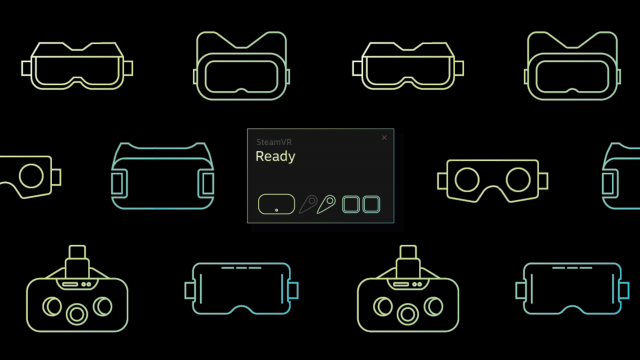
The latest version of the SteamVR Beta automatically installs the third-party ‘Oasis’ driver, enabling compatibility with Windows VR headsets after Microsoft discontinued their support in the latest versions of Windows 11.

For years Valve has sought to support as many VR headsets as possible on SteamVR. That included Windows VR headsets from a wide range of companies including Acer, Asus, Dell, Lenovo, HP, and Samsung.

But Microsoft itself made the decision to end support for WMR headsets on the latest versions of Windows 11, making them not just incompatible with SteamVR, but the operating system entirely. For WMR users running Windows 11, 24H2 and beyond, that rendered their headsets useless.

But now the third-party ‘Oasis Driver for Windows Mixed Reality‘ has been released, which restores support for WMR headsets on SteamVR, without requiring the installation of the Mixed Reality Portal application, which is no longer available on the latest versions of Windows. Note: a major caveat of the Oasis driver is that it only supports NVIDIA GPUs, due to a lack of developer support by AMD.

Valve is taking things one step further to make sure that WMR headsets work well on SteamVR. In the latest SteamVR Beta (v2.13.1) the software will automatically install the third-party Oasis driver for users with WMR headsets that are running a version of Windows 11 that no longer supports supports the official driver from Microsoft. You can find instructions here for installing the SteamVR Beta if you’d like to check out the update for yourself.

The move is the latest in a respectable list of pro-consumer moves Valve has made to ensure seamless compatibility between SteamVR and third-party headsets. That includes making its flagship VR game, Half-Life: Alyx (2020), compatible with all SteamVR-supported headsets, and even launching a Steam Link app on Quest for wireless SteamVR play.

The post SteamVR Beta Restores Windows VR Headset Support on Windows 11 Thanks to Third-party Driver appeared first on Road to VR.


from Road to VR https://ift.tt/AK18znN
via IFTTT

Ambitious Tactical Shooter ‘Falcon Fall’ Aims for AAA Quality, Coming to PC VR in Late 2026

https://ift.tt/T208Imh

Falcon Fall is an upcoming co-op tactical shooter from new indie studio Infinit Entertainment, which says it’s aiming to deliver “AAA quality in VR—with a focus on visuals, immersion, authenticity, and next-generation presence.”

Developed in Unreal Engine 5 by a team of VR veterans and combat-experienced advisors, Falcon Fall just got a reveal trailer, showing off action the studio says is inspired by modern tactical shooters, such as Ready or Not (2023) and Onward (2020), and films like Black Hawk Down (2001).

It’s difficult to tell whether we’re seeing any actual gameplay in the trailer, guided cinematics, or a mix of both. Still, it’s early days, so we’ll be following the studio’s YouTube channel and Discord (invite link) for more leading up to release.

Image courtesy Infinit Entertainment

Aiming for a real-world battlefield experience, Infinit Entertainment says Falcon Fall is combining “handcrafted missions with dynamic systems to create a sense of living, breathing combat operations.”

“We’re not just making another VR shooter—we’re building something that feels alive, unpredictable, and unforgettable,” says Infinit Entertainment’s ‘Echo Charlie’. “This is about tension, presence, and the kind of authenticity that only comes from stories told by those who lived them.”

In the meantime, you can wishlist Falcon Fall on Steam for PC VR headsets; the studio says it’s launching there first in late 2026, although it may support other headsets at a later point.

The post Ambitious Tactical Shooter ‘Falcon Fall’ Aims for AAA Quality, Coming to PC VR in Late 2026 appeared first on Road to VR.


from Road to VR https://ift.tt/re4DIn5
via IFTTT

VR’s Favorite Melee Combat Game is Getting Katanas, Ninja Stars, and More in Asian-themed Update

https://ift.tt/SWxCXTv

While Blade & Sorcery (2024) studio Warpfrog is already developing its next “modder friendly” title, the studio isn’t done with VR’s favorite melee combat game just yet.

Now, the studio announced its releasing the ‘Rakta Update’, which patches in a fresh slate of East Asia-inspired weaponry, magic, and armor.

As the studio describes it on Steam, Rakta includes katanas, throwing stars, sai, kama (a type of hand scythe), kanabō (a long metal club), a bladed spear, zhanmadao (Chinese cavalry sword), and a dual-crystal bō staff capable of spitting out magic on both sides.


There is also a new piece of ‘Raike’ armor, although Warpfrog hasn’t revealed just what to expect yet. There is some cool concept art though, seen above the article.

Notably, the Rakta Update is only the first in its slate of free ‘Byeth Updates’, which will be rolling out from now until the end of 2026, adding more weapons, armor and what the studio calls “some small features to the sandbox and crystal hunt gamemodes.”

Other updates in Byeth include the ‘Sentara Update’, ‘Khar-Tib Update’ and ‘Madlu Update’, all of which will come at some point next year.

There’s no release date for Rakta yet, as the team says they’re still bug fixing, although the studio is aiming for release sometime in October across all supported platforms, including PC VR headsets via Steam and Quest 2 and above via the Horizon Store.

The post VR’s Favorite Melee Combat Game is Getting Katanas, Ninja Stars, and More in Asian-themed Update appeared first on Road to VR.


from Road to VR https://ift.tt/4otkFDN
via IFTTT

Wednesday, 3 September 2025

Pimax Promises Development Update on Delayed Dream Air Headset Later This Month

https://ift.tt/YPqUn5e

Pimax announced Dream Air last December, aiming to take on the emerging segment of compact high-end PC VR headsets, such as Bigscreen Beyond and Shiftall MaganeX Superlight 8K. Initially planned for launch in May, the headset was delayed until Q3 2025. As we head into the tail-end of Q3, Pimax says it has reached “several exciting milestones” for the headset, and promises a substantial update before the end of September.

In a post on the company’s blog last week, Pimax said it is planning a “detailed presentation” with updates on the development of the Dream Air and Dream Air SE (a cheaper variant). It’s unclear if the company will have a final launch date for the headsets or offer a further delay.

The product pages for the Dream headsets still say they will “Start shipping [in] Q3 2025.” Pimax has been taking pre-orders for Dream Air since its announcement in December 2024, and Dream Air SE since its announcement in May.

Pimax has attributed the ‘May’ to ‘Q3’ delay of Dream Air to issues getting its hands on Sony’s high-end micro-OLED panels which have a 13.6MP (3,840 × 3,552) per-eye resolution. They are purportedly the same panels used in Apple’s Vision Pro headset.

However, Dream Air SE, the less expensive variant of the headset, uses 6.5MP (2,560 × 2,560) per-eye displays. It’s unclear if these displays are any easier for the company to source. If so, we could see the Dream Air SE (which was announced months after the higher-end Dream Air) ship ahead of its more expensive sibling.

In addition to the promised update, Pimax’s blog post says that the wireless streaming update for the original Pimax Crystal headset will begin rolling out this month. And the company detailed its latest work on GPU upscaling features for its headsets, which complement an array of features the company offers to help users optimize the visuals and performance of their Pimax headsets.

The post Pimax Promises Development Update on Delayed Dream Air Headset Later This Month appeared first on Road to VR.


from Road to VR https://ift.tt/P1JbeZy
via IFTTT

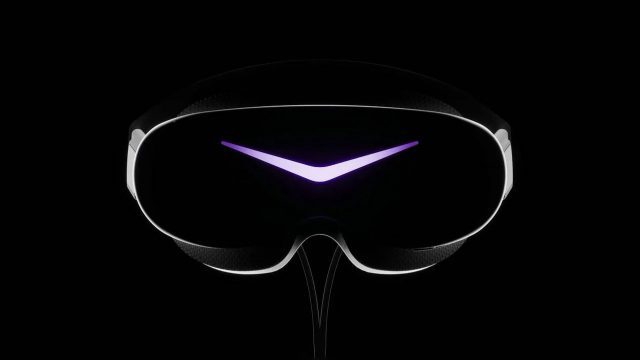
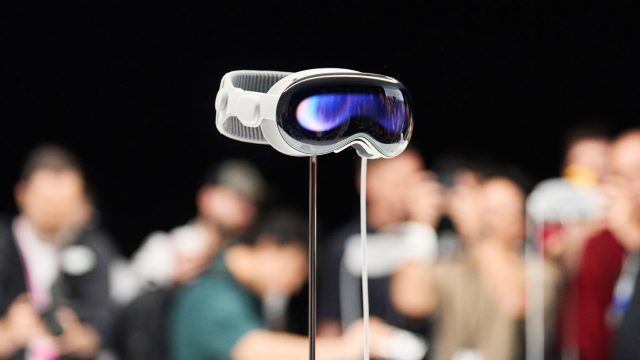
Apple ‘Vision Air’ Rumored for 2027, Reportedly 40% Lighter and 50% Cheaper Than Vision Pro

https://ift.tt/ZPzNQhc

Independent supply chain analyst Ming-Chi Kuo released a report claiming that Apple is gearing up to launch a cheaper and lighter version of Vision Pro in 2027, which is expected to be called ‘Vision Air’.

Ostensibly leaked from supply chain sources, Kuo claims Vision Air is estimated to be “over 40% lighter and more than 50% cheaper” than Vision Pro, which weighs in at around 600g, and is priced at $3,500.

Notably, that weight figure doesn’t take into account the external battery pack, which weighs 350g. Provided Kuo is only quoting that ~600g on-head weight of Vision Pro itself, this would put the rumored Vision Air at less than 400g, and priced at less than $1,750.

At least by Kuo’s description of the headset’s weight, it’s also sounds like Vision Air is sticking with the external battery; the inclusion of an internal battery, like that found in Quest 3 and Quest 3S (both around 515g), would make it difficult to reach that sub-400g weight.

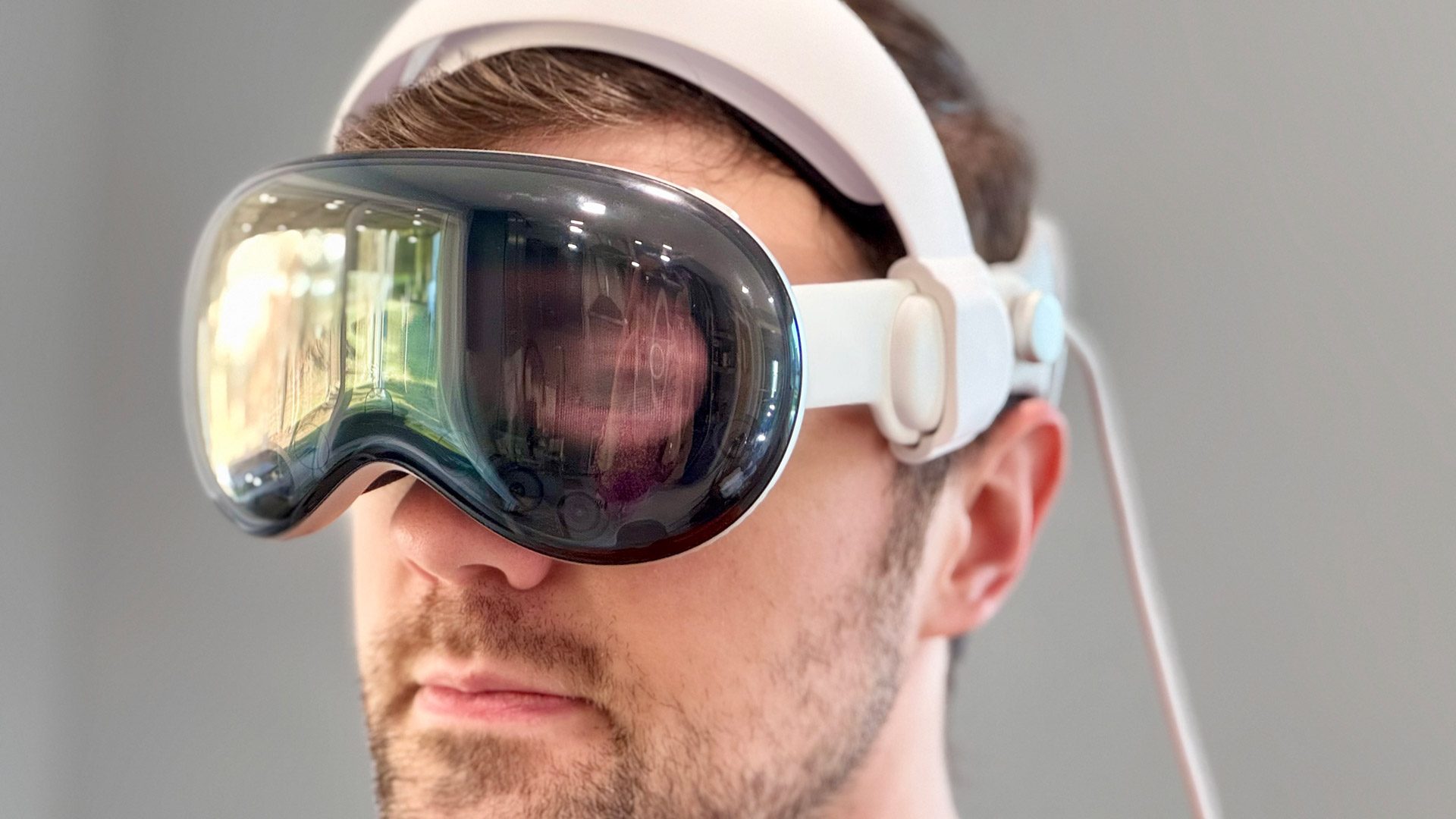
One of the biggest features likely to be on the chopping block for a cheaper and lighter Vision Pro is undoubtedly the headset’s glass-covered EyeSight front display, which provides a sort of virtualized representation of the user’s eyes.

Photo by Road to VR

Vision Pro is also made with out of premium materials, such as aluminum and magnesium, which could be lightened by replacing them with plastic. That may be a bridge too far though, as it could sacrifice Apple’s premium design aesthetic.

According to the report, it also appears the Cupertino tech giant is hoping to make a bigger splash with Vision Pro’s lighter and cheaper follow-up—not to be confused the with reported M5 hardware refresh of Vision Pro expected to arrive sometime later this year.

Kuo maintains Apple is internally targeting anticipated shipments of Vision Air to reach one million units in 2027. While Apple hasn’t released Vision Pro sales data any time following the device’s initial launch in February 2024, an October 2024 report from The Information claimed Apple was eyeing a sales target of 420,000 units for its first year.

Additionally, Kuo maintains General Interface Solution (GIS), the Taiwan-based company involved in the lamination process of Vision Pro’s pancake lenses, will broaden its role to become the exclusive supplier of pancake lenses.

The post Apple ‘Vision Air’ Rumored for 2027, Reportedly 40% Lighter and 50% Cheaper Than Vision Pro appeared first on Road to VR.


from Road to VR https://ift.tt/f7K65Ob
via IFTTT

Tuesday, 2 September 2025

Meta Connect is Shaping Up to Be Very Much About Smart Glasses This Year

https://ift.tt/yfnNUuo

Meta has now released details of its upcoming Connect developer conference, which takes place September 17th – 18th. Following its success with Ray-Ban Meta, the company appears to again be putting smart glasses front and center this year.

The company has released brief descriptions of a few sessions, including the September 17th keynote featuring Meta CEO Mark Zuckerberg, as well as the September 18th developer keynote, and a conversation on “the future of computing.”

Undoubtedly, the mention of its smart glasses (which Meta ‘AI glasses’) are high on the list, and it may be for good reason.

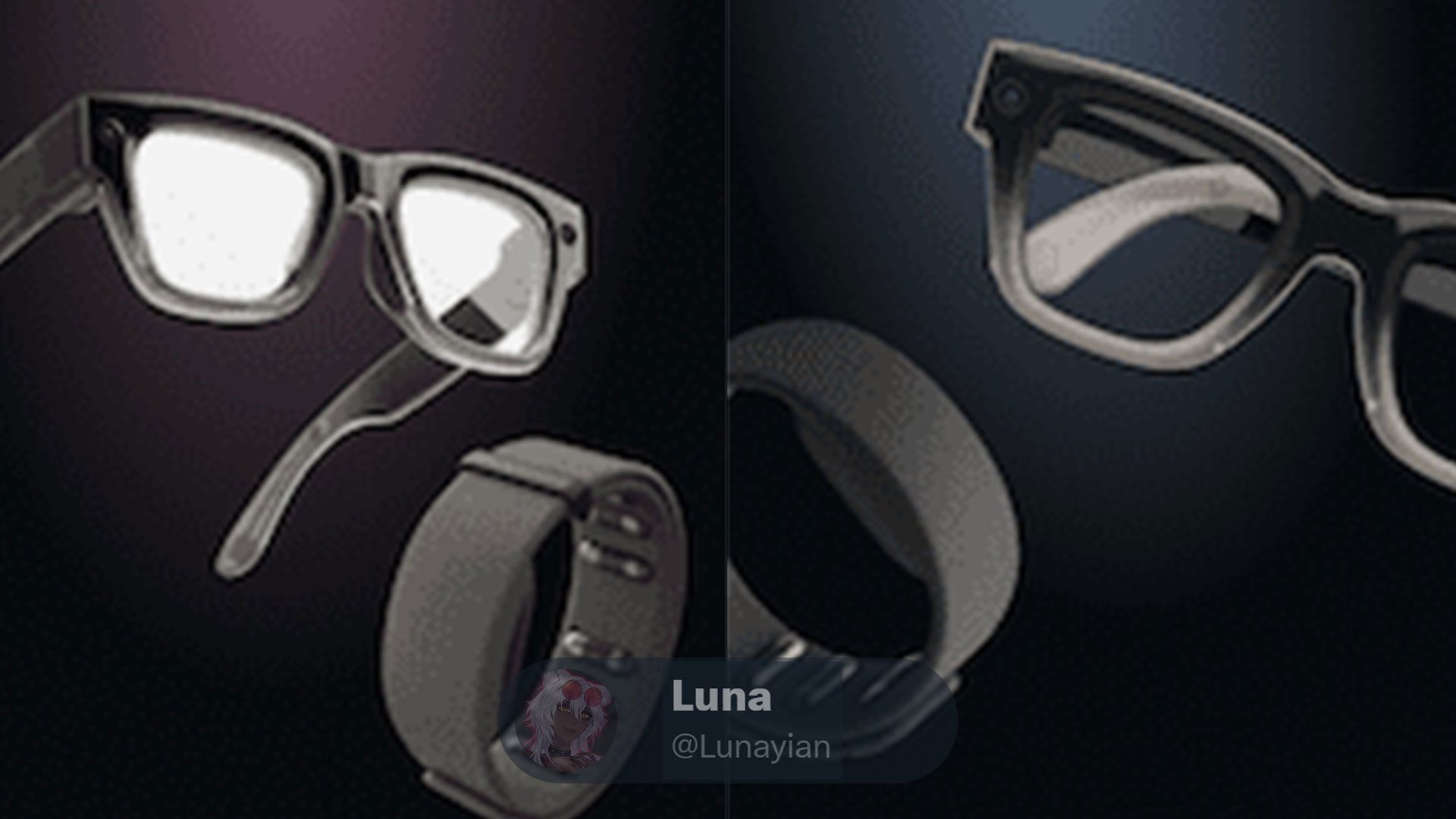
According to previous reports from a number of outlets and supply chain analyst Ming-Chi Kuo, Meta is preparing a new pair of smart glasses with a display, codenamed ‘Hypernova’, which are expected to cost around $800.

Image courtesy Luna

Notably, a rash of leaks provided by data miner ‘Luna’ starting in late June seem to show the glasses in full (seen above), suggesting that Hypernova (aka ‘Celeste’) could be a solo project not marketed in conjunction with Ray-Ban and Oakley maker EssilorLuxottica.

They’re also said to include a single monocular heads-up display and a wrist-worn electromyography (EMG) based controller for input. As you’d expect, the information contained in these reports have not been confirmed by Meta, so we’ll just have to tune in and see for ourselves.

Still, something is coming, and a new pair of smart glasses is a good bet. As covered by UploadVR in early August, Meta CTO Andrew Bosworth noted that Connect 2025 will include a “big wearables announcement”.

Sessions will also (of course) feature the company’s progress on AI and well as its metaverse ambitions with social VR platform Horizon Worlds. You can check out the times and descriptions below:

Connect Keynote

  • Wednesday, September 17 at 5:00 pm PST (local time)
  • Join Mark Zuckerberg as he shares the latest on AI glasses and lays out Meta’s vision for artificial intelligence and the metaverse.

Developer Keynote

  • Thursday, September 18 at 10:00 am PST (local time)
  • Hear from executives across Meta on how our latest technologies are creating opportunities for developers to build new experiences for people. 

Spotlight conversation: the future of computing

  • Thursday, September 18 at 10:45 am PST (local time)
  • As Meta announces its latest line of new products and updates that takes the next steps on the journey to the next computing platform, we look even further into the future. Join visionaries Michael Abrash and Richard Newcombe as they reveal the exciting future of glasses with contextual AI, and how Meta is poised to transform the future of computing.

There are also a number of developer talks on the books, which Meta appears to still be filling out as we approach kickoff. You can check out all of the above on the Meta Connect website.

The post Meta Connect is Shaping Up to Be Very Much About Smart Glasses This Year appeared first on Road to VR.


from Road to VR https://ift.tt/He9g4Lb
via IFTTT

Monday, 1 September 2025

Rokid Glasses Raise Over $1M in First Week, Proving Strong Demand for Display-clad Smart Glasses

https://ift.tt/k5vlqSu

Rokid, the China and US-based AR startup, launched a Kickstarter campaign last week for Rokid Glasses, frontrunning the competition with a pair of smart glasses housing green monochrome displays. Now, the crowdfunding campaign has surpasses $1 million, doubling the amount it garnered within its first 24 hours.

If Rokid Glases’ recent performance on Kickstarter is anything to go by, there’s going to be an unmistakable demand for smart glasses that offer more than an ‘audio-only’ experience, like you get with Ray-Ban Meta and the recently launched Oakley Meta HSTN glasses. Google is planning them, and Meta is rumored to have their own in the works.

Now, less than a week since its launch on Kickstarter, the display-clad smart glasses have topped $8.7 million Hong Kong dollars (~$1.2 million USD). And there’s still 38 days to go in the campaign, leaving plenty of room to run until close on October 10th.

Rokid Glasses | Image courtesy Rokid

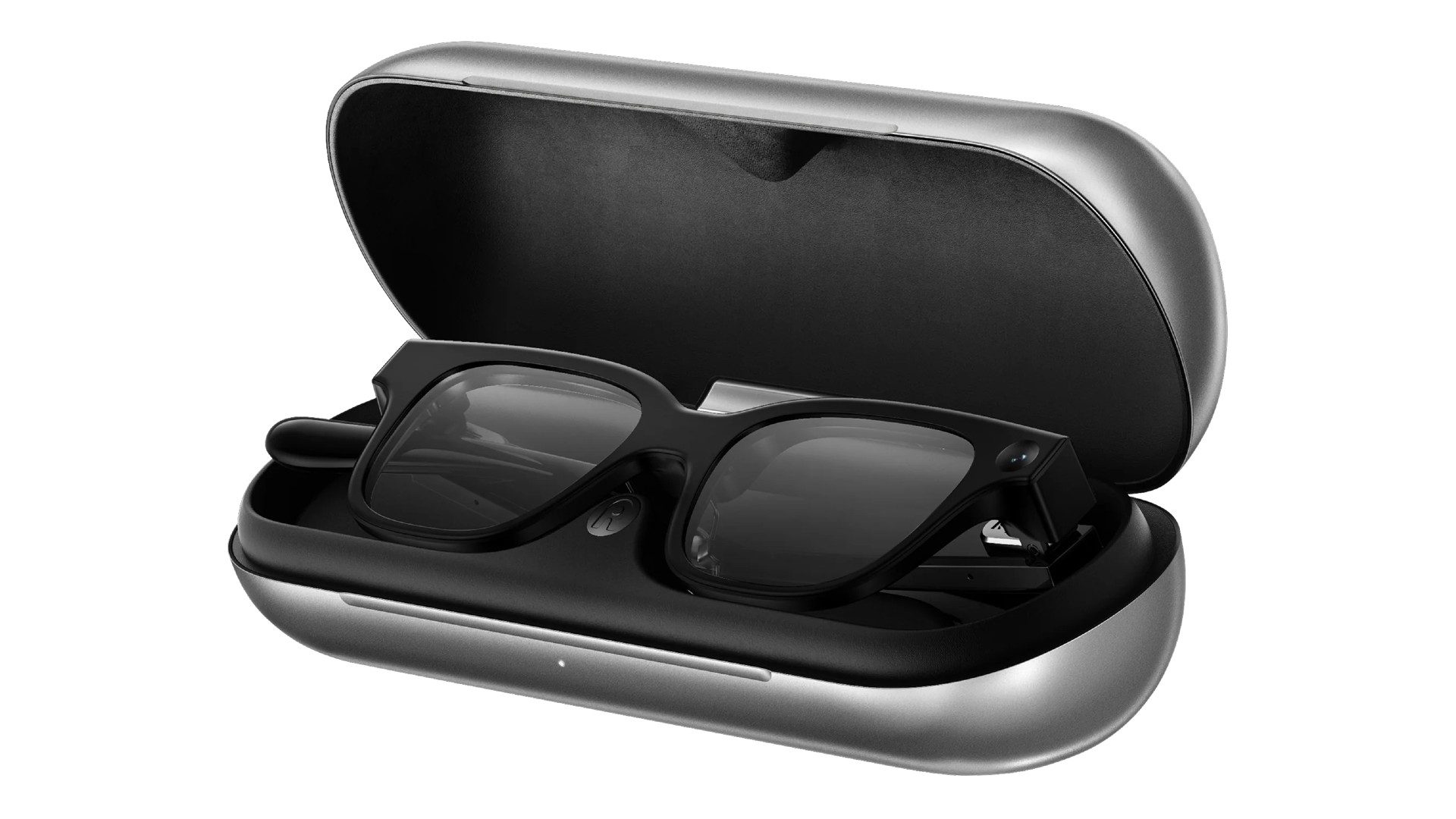
You can catch all of the specs and features here, although here’s the short of it: Rokid Glasses run a Qualcomm Snapdragon AR1 and NXP’s RT600, which drive its dual green micro-LED displays, which Rokid says can deliver 1500 nits of brightness—all at 49g and a formfactor that’s impressively normal.

Onboard is a single 12MP camera sensor, which features a 109° field of view, low-light HDR and digital video stabilization. Multiple formats will be available, letting you shoot up to 1200p photos and 2,400 × 1,800 video.

Relying on both ChatGPT and an internal LLM for queries and live text and voice translation, the glasses also promise things like turn-by-turn directions, music playback and voice calls through dual AAC speakers. Again, that’s abridged version. You can learn more about battery, photo and video quality, and early hands-ons here.

Image courtesy Rokid

And now that the campaign has surpassed $1 million, all backers will also get a free Charging Case, valued at $99. That said, the lowest funding tier ($479) is already gone, leaving the next cheapest tier at $549, which already comes with the Charging Case in addition to a magnetic Prescription Frame so you can fit in your prescription.

In the meantime, we’ll be following the Rokid Glasses Kickstarter as it makes headway until its October 10th close.

The post Rokid Glasses Raise Over $1M in First Week, Proving Strong Demand for Display-clad Smart Glasses appeared first on Road to VR.


from Road to VR https://ift.tt/Bf7EdOo
via IFTTT
Related Posts Plugin for WordPress, Blogger...