Wednesday, 27 August 2025

Rokid Glasses Kickstarter Tops $500K Amid Growing Demand for Smart Glasses with Displays

https://ift.tt/N2tjimI

Chinese AR startup Rokid launched a Kickstarter campaign yesterday for Rokid Glasses, a new version of the company’s smart glasses with green monochrome displays which previously launched in China. Now, after 24 hours, the project has already garnered over $500,000, marking an undeniable demand for smart glasses that go beyond the audio-only experience of Ray-Ban Meta and Oakley Meta HSTN glasses.

Starting at the base tier of $479, representing a 20% discount of its $599 MSRP, Rokid Glasses boast a bevy of familiar features, including AI voice queries (via ChatGPT), music listening, calls, and photo and video capture.

Rokid Glasses’ biggest feature though is undoubtedly its integrated dual waveguides, which output a monochrome green heads-up display for things like turn-by-turn directions, teleprompter, and real-time text and voice translation with 89 languages (five offline via Rokid’s own LLM).
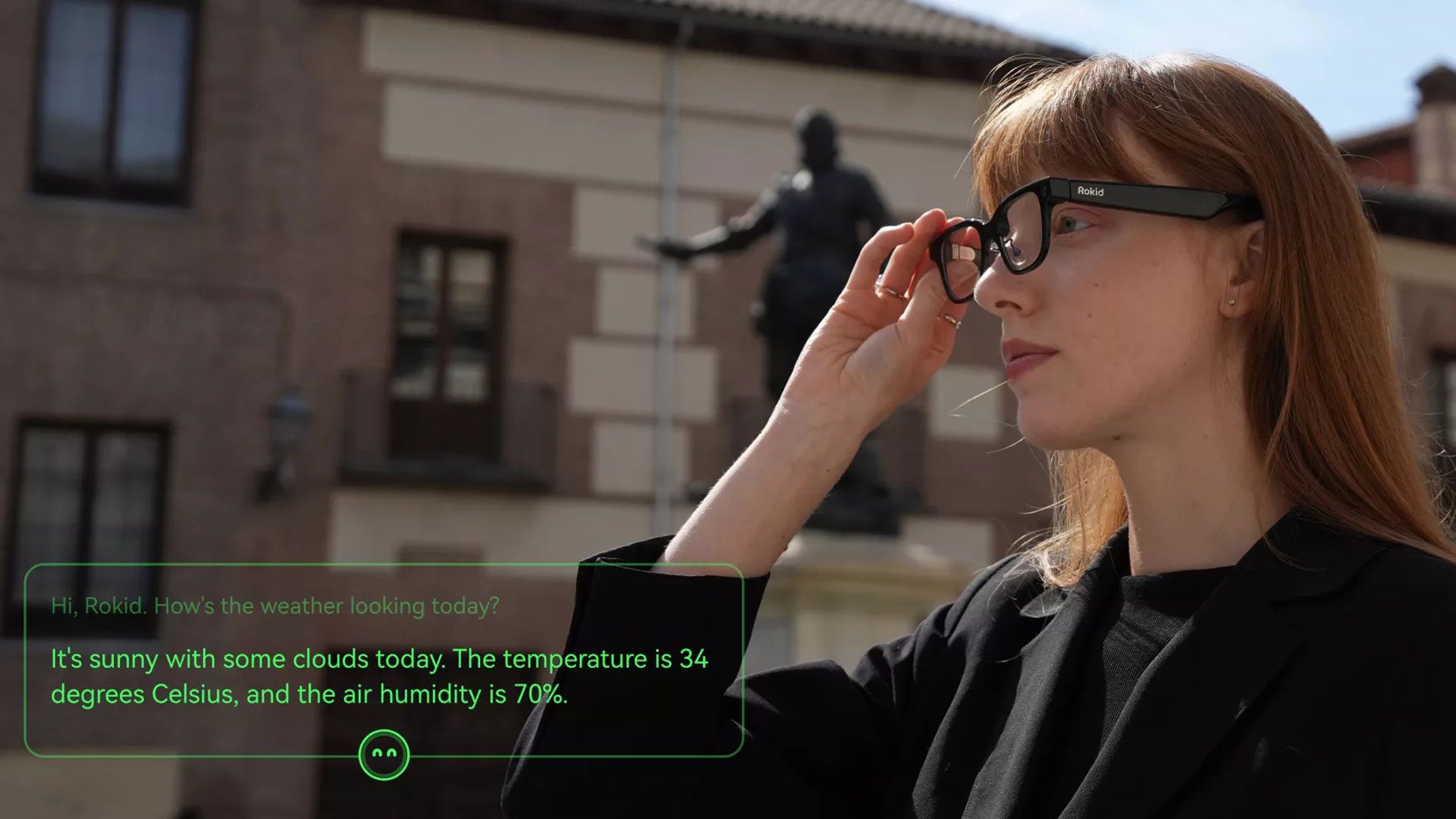
Image courtesy Rokid

Notably, there are a few smart glasses coming to market promising ostensibly similar heads-up displays. Google is promising future availability in its slate of forthcoming Android XR smart glasses. Meta is also rumored to release a display version of its smart glasses, likely also built in partnership with EssilorLuxottica like Ray-Ban Meta and Oakley Meta. Reports also point to Apple developing smart glasses, although rumors haven’t specified whether these also include display(s).

But Rokid is one of the first big names in the XR space looking to serve consumers with its display-clad smart glasses. And the results so far suggest we’re going to see multi-million dollars flood into its Kickstarter campaign, which is slated to continue until October 10th.

Billed as the “world’s lightest full-function AI & AR glasses” (they aren’t actually augmented reality, more on why here), the device is built around Qualcomm’s Snapdragon AR1 and NXP’s RT600 processors, featuring dual micro-LED displays delivering 1500 nits of brightness.
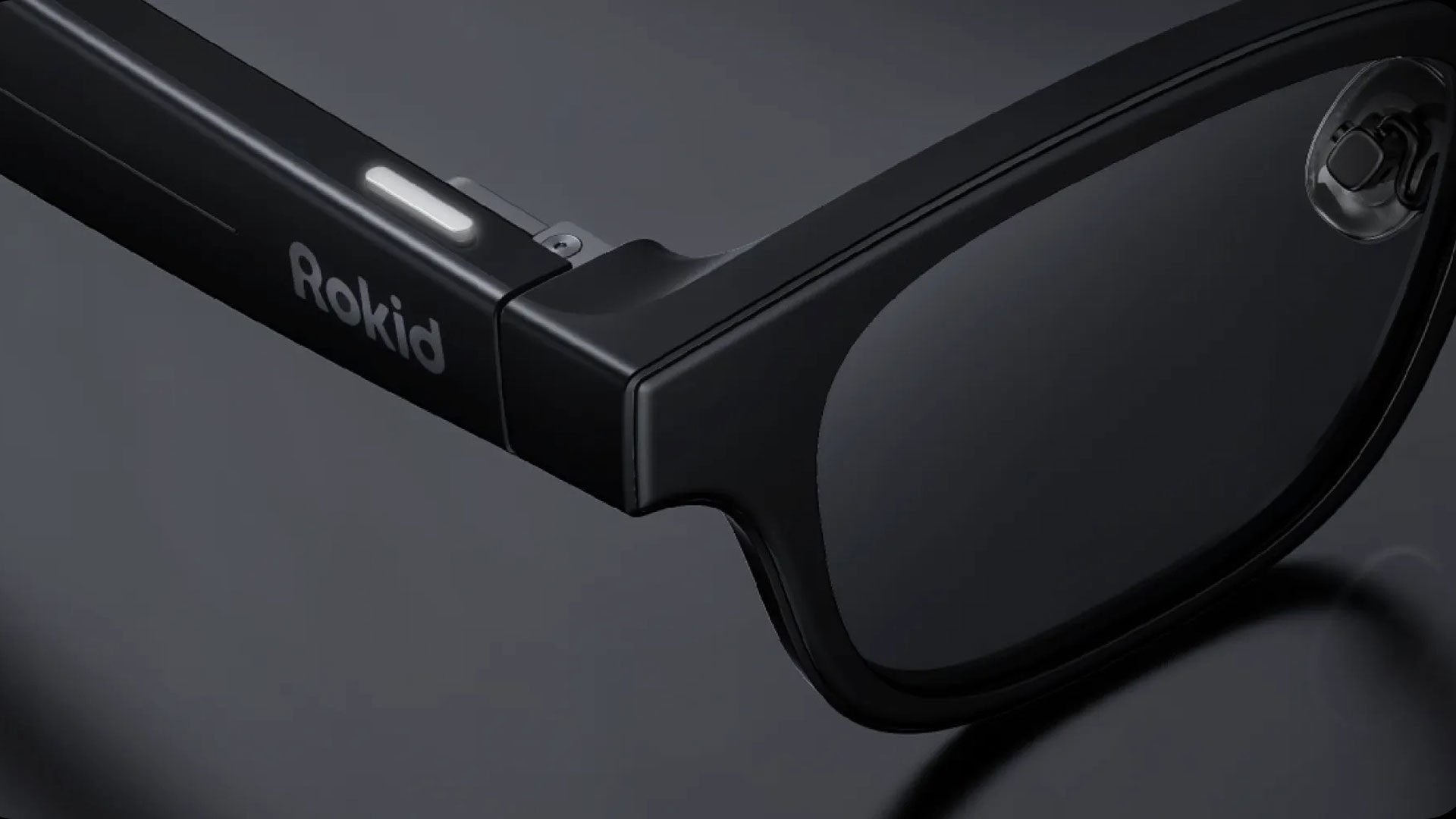
Image courtesy Rokid

Sporting a single 12MP Sony IMX681 camera sensor, which captures a 109° field of view via its f/2.25 aperture, promising low-light HDR and digital video stabilization.

Through both voice prompts (“Hey Rokid!”) and pressing the right-mounted shutter button, users can shoot photos in multiple formats—3:4 at 1,200p, 9:16 at 900p, and 4:3 at 680p—and video in 3:4 at 1,800 × 2,400, 9:16 at 1,350 × 2,400, and 4:3 at 2,400 × 1,800. Yes, it also has internal and external capture lights, which indicates when a user is recording.

Integrated audio comes via near-ear AAC speakers, also featuring a four mic array that boasts integrated noise reduction for wind noise.

As for battery life, Rokid Glasses feature a 210 mAh internal battery, which the company says will offer 8–10 hours of mixed use, 5–6 hours of music, 2 hours of always-on display, and 45 minutes of “intensive recording.” A 3,000 mAh charging case is available in some tiers, or as a stretch goal provided the campaign reaches $1 million.

What’s more, the 49 gram smart glasses also feature a magnetic clip-on frame design for prescription lenses, which Rokid is supplying in its $519 backer tier.
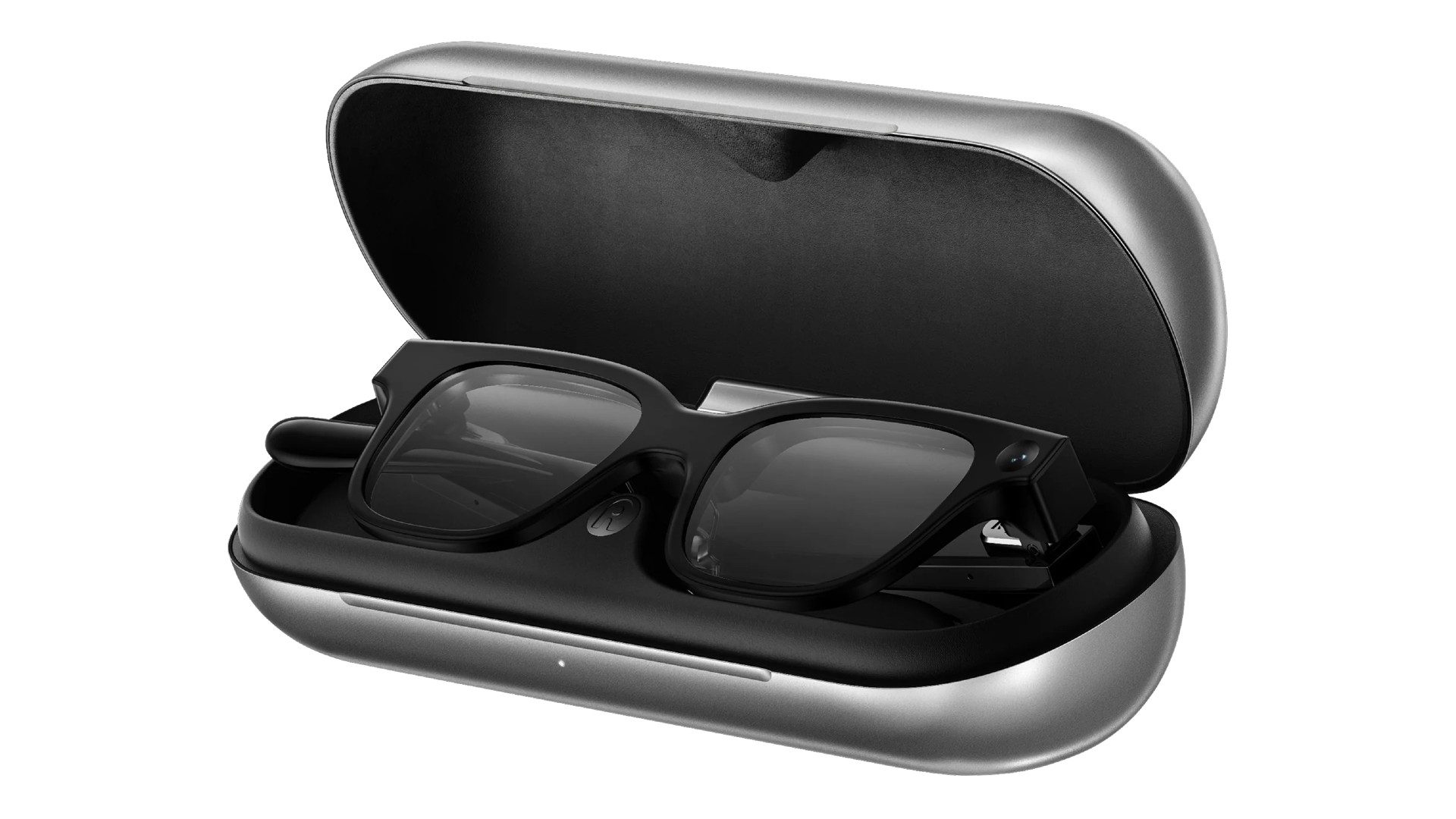
Image courtesy Rokid

We haven’t gone hands-on yet, although Tyriel Wood previewed an early unit (seen below) that suggests Rokid Glasses are indeed the real deal. As it is, Rokid is an established name in AR, having delivered multiple devices over the years following its founding in 2014.

Notably, shipping for Rokid Glasses is estimated for November 2025, which could leave some space before year’s end for other creators to announce their own competitors in the space.

Events to watch out for include is a rumored follow-up to Samsung Unpacked (reportedly on September 29th) and Meta Connect (September 17th). Its uncertain when Google and its eyewear partners hope to unveil the first slate of Android XR glasses, coming from Warby Parker, South Korea’s Gentle Monster, and ostensibly Google themselves.

In the meantime, you can learn more about Rokid Glasses over on the Kickstarter campaign, which goes until October 10th.

The post Rokid Glasses Kickstarter Tops $500K Amid Growing Demand for Smart Glasses with Displays appeared first on Road to VR.


from Road to VR https://ift.tt/pGXsRcV
via IFTTT

Tuesday, 26 August 2025

Social VR’s Most Powerful Creator Platform Just Got a New Lease on Life

https://ift.tt/LcN5sdf

When it comes to social VR platforms, Resonite isn’t exactly a household name, although the studio behind it is making some serious efforts to change that. The powerful PC VR social creation platform just got its biggest update yet, bringing massive improvements to performance across the board.

Launched into early access on Steam back in 2023, Resonite is a PC VR-only app, which has critically limited it from hitting the glut of VR users over on Quest. Its worlds can be pretty big and complex, making PC VR the only real fit in its current form.

Still, developer Yellow Dog Man Studios has carried on, further refining the app’s admittedly dizzying array of tools so its users can build, create, and script anything—all in-world, meaning users don’t technically need to rely on third-party software, such as Blender, AutoDesk Maya, or the Unity game engine.

To boot, in its August 20th performance update the studio is actively trying to uncouple from Unity altogether, as the studio has moved its native ‘FrooxEngine’ out of Unity and onto the modern .NET 9 runtime, which is said to have dramatically improved framerate, reduced hitching, and sped up startup and loading times.

According to the app’s latest update on Steam, Resonite is essentially shifting toward a fully independent engine, enabling deeper optimizations like multi-threading, variable rate updates, and potentially replacing Unity’s renderer entirely at some point in the future.

Beyond raw performance, the update introduces a host of bug fixes, as well as a new Help Tab in the dashboard to ease onboarding, although that really only touches on some of what’s keeping Resonite squarely in its current niche.

Besides being a PC-only social platform, the app can be intimidating for users not used to the sort of depth its in-world tools can bring, notably its ‘ProtoFlux’ visual scripting tool, or its ability to import assets from third-party creation tools. In short, the truly amazing things you see still require an advanced skill level to create, which is ameliorated somewhat by the fact Resonite encourages social creation, and not just solo, offline tinkering.

It’s difficult to say whether Resonite will ever truly be able to scale to the size of its main competitors one day, such as VRChat or Rec Room. It’s a different animal, albeit one with a core foundation of hardcore maker types and contributors via the app’s Patreon. As it is, the app’s Patreon is bringing its creators over $11,000 per month—a testament to the community’s commitment to keep Resonite their social platform of choice.

You can find Resonite over on Steam for free. Hardcore users looking for more storage space for their avatars, items, assets and worlds can opt for paid tiers, ranging from $5 to $75 per month.

The post Social VR’s Most Powerful Creator Platform Just Got a New Lease on Life appeared first on Road to VR.


from Road to VR https://ift.tt/8lAVbg4
via IFTTT

Social VR Platform ‘Rec Room’ Lays Off Half Its Staff Amid Surge of Low-Quality Content

https://ift.tt/jEcANOa

Social VR platform Rec Room announced it’s laying off around half of its staff, citing low-level content which has flooded the platform from users on mobile and console.

Founded in 2016, the studio was once valued at $3.5 billion following its most recent funding round in 2021, which brought the Seattle-based company $145 million, making it one of the most valuable XR companies to date.

As an early adopter of user-generated content (UGC), Rec Room was also one of the first in the space to incentivize creators by letting them sell their creations for in-game tokens, which could be exchanged for real cash—following a monetization strategy similar to Roblox.

Now, the company has announced wide-sweeping layoffs in a blogpost, authored by company co-founders Cameron Brown and Nick Fajt. According to a statement provided to GeekWireRec Room now has just over 100 employees following the cuts.

The studio says departing employees will receive three months of pay, six months of health benefits, and the option to keep their computers.

According to Rec Room leadership, layoffs stem from its overly ambitious attempt to make the app a universal creation platform across VR, PC, consoles, and mobile. Top creators on PC and VR drove growth, however efforts to expand creation tools to mobile and consoles underdelivered, creating technical strain and financial instability.

“While we did see creation happening on mobile and consoles, we never got to the point where those devices were good for building stuff that other players engaged with. And some of our efforts to bridge that gap (e.g., Maker AI) just frustrated our more impactful creators,” Brown says in the blogpost.

In short, user-generated content created through its mobile and console pipelines tended to be numerous, but fairly low in quality and optimization:

At the same time, those lower-powered devices still produced millions of pieces of content. This put a huge strain on the team, who had to figure out tools and procedures to review it all. Making all this run across every device was a massive technical challenge and burden. While our most skilled creators optimized their content cleverly, most creators didn’t – couldn’t, really, because we didn’t provide them with the necessary tooling. Supporting all this scope stretched us way too thin, and our attempt at building one big scalable platform (Rooms 2.0) didn’t land like we needed it to. The vision made sense, but we got crushed under the scale.

So we ended up in a tough spot. Too small to realize the “anyone can build anywhere” vision, but too big to pivot to a more focused experience that was more reactive to what our players wanted and would pay for. The result was that we started to dig a financial hole that was getting larger every day.

Rec Room says moving forward it will empower its best (most revenue-generating) creators in an ostensible bid to refocus the core of its content.

“These folks are driving most of the growth and revenue already. In July, players spent more on [user-generated content] than ever. Creators had their highest earning month ever. This segment is actually growing nicely, but it’s heavily focused on PC – so that’s where we’ll focus our UGC efforts,” Brown says.

Brown further notes Rec Room is “not abandoning UGC,” however “narrowing our focus away from ‘everyone can create’ in favor of serving our very best creators.”

The company says it also hopes to boost the platform not only by improving PC-based tools, but by hosting more curated events, featured content, and fewer but higher-quality updates.

This follows a layoff round in March 2025, which affected 16 percent of staff. At the time, Rec Room leadership maintained layoff were necessary to control costs to ensure the platform’s long-term survival. The studio said fifficulties included a slowing gaming market growth, higher interest rates, and a tougher fundraising climate.

You can read Brown and Fajt’s full statement on the recent layoff round here.

The post Social VR Platform ‘Rec Room’ Lays Off Half Its Staff Amid Surge of Low-Quality Content appeared first on Road to VR.


from Road to VR https://ift.tt/ICwed8z
via IFTTT

Monday, 25 August 2025

Samsung’s Answer to Vision Pro Reportedly Landing First in Korea This October for Around $2,000

https://ift.tt/d9J3ZTK

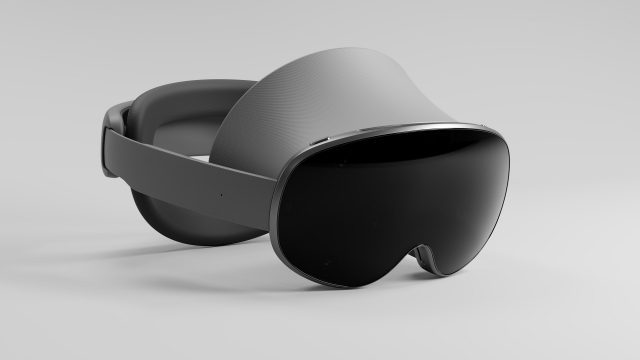
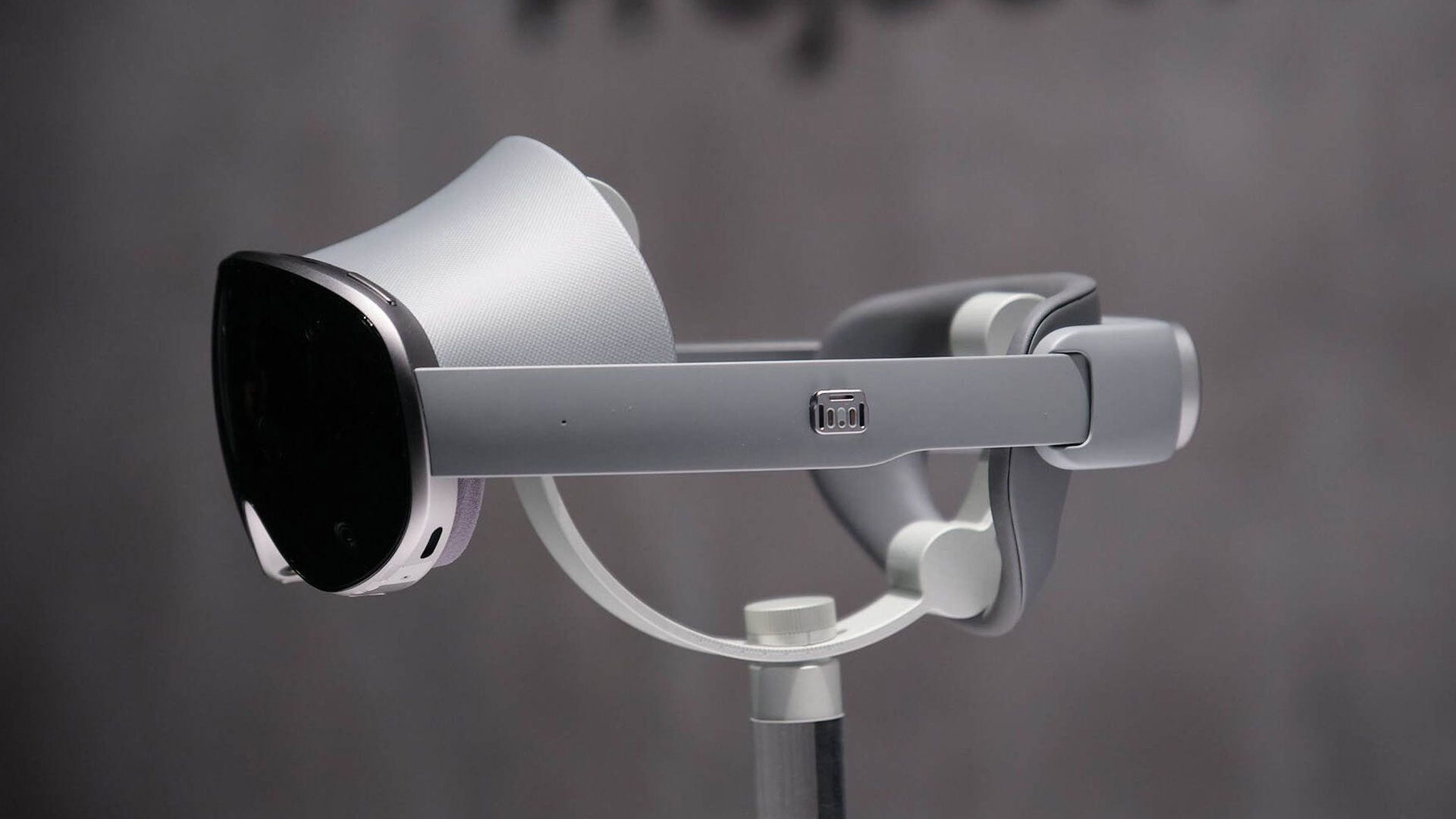
Samsung’s upcoming mixed reality headset Project Moohan has largely been out of the spotlight since its unveiling late last year. According to South Korean outlet Newsworks (Korean), the headset’s launch could be right around the corner.

Citing industry sources, Project Moohan is reportedly set to be featured at Samsung’s upcoming Unpacked event, which is expected to take place in South Korea on September 29th.

The report maintains the headset is set to launch soon thereafter, coming first to South Korea on October 13th, and later to global markets. There’s no word on when or how the alleged global rollout will work.

The device is expected to be priced somewhere between ₩2.5 and ₩4 million South Korean won, or around $1,800 and $2,900 USD, Newsworks maintains.

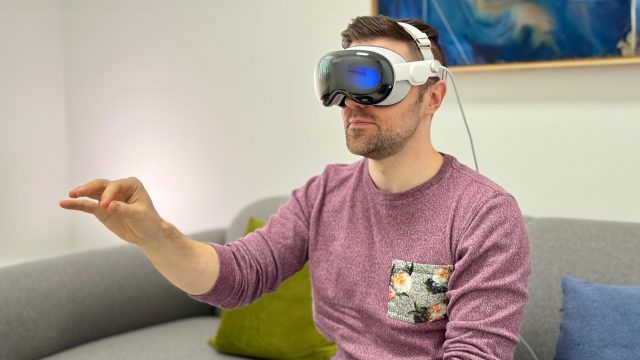
While markedly cheaper than Apple Vision Pro, which still sells for its early 2024 launch price of $3,500, that still puts Moohan pretty squarely on the prosumer end of the spectrum.

Samsung Project Moohan | Image courtesy The Verge

Ostensibly looking to serve up competition to Vision Pro, Project Moohan is set to be the first mixed reality headset to run Google’s Android XR operating system.

According to its current spec sheet, the headset sports a Qualcomm Snapdragon XR2 + Gen 2, Sony-sourced micro‑OLED panels (no resolution specs yet), pancake lenses, automatic interpupillary distance (IPD) adjustment, and support for eye and hand-tracking. It’s also set to support VR motion controllers of some sortalthough we haven’t seen them yet.

Make sure to check out our hands-on with Project Moohan from December 2024 to learn more, including notes on comfort, display clarity, and our experience with Android XR—which really looks a lot like Horizon OS combined with VisionOS.

Newsworks reports that Samsung is only expecting to ship “around 100,000 units” of the device this year—significantly less than Apple’s alleged 2024 targets for Vision Pro, which third-party analyst Ming-Chi Kuo reported last year ranged between 400–450k units. Granted, Samsung doesn’t have a lot of runway left until year’s end, so there’s no telling what it hopes to achieve with Moohan.

Still, industry sources expect Samsung’s XR headset to act as more of stepping stone to its wider smart glasses ambitions, Newsworks says.

Notably, Samsung has yet to announce its own smart glasses amidst a flurry of companies looking to enter the space, including Google’s Android XR smart glasses launching in partnership with America’s Warby Parker and South Korea’s Gentle Monster.

Following the recent launch of Oakley Meta HSTN, Meta is also reportedly expected to release a new pair of smart glasses, this time including a built-in display and wrist-worn controller, according to a recent report.

Chinese tech giant Xiaomi also recently launched its own smart glasses, which go toe-to-toe with Ray-Ban Meta, although appear to be exclusive to Mainland China.

Meanwhile, HTC unveiled its ‘VIVE Eagle’ smart glasses, which is shipping first in the company’s native Taiwan at NT$15,600 ($520 USD).

The post Samsung’s Answer to Vision Pro Reportedly Landing First in Korea This October for Around $2,000 appeared first on Road to VR.


from Road to VR https://ift.tt/TJNdqV6
via IFTTT

‘BeamXR’ Returns Quest’s Lost Livestreaming Functionality – No PC Required

https://ift.tt/mRK8uJT

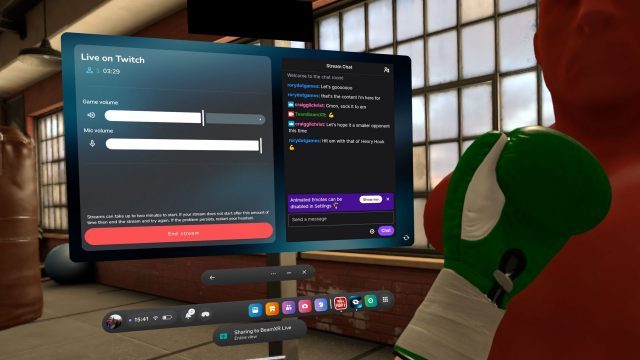
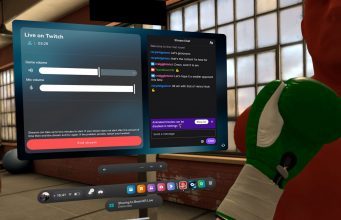
Meta quietly dropped support for native livestreaming from Quest to Facebook a few years ago, and never got around to officially supporting other platforms. Now, early access tool BeamXR Live is available for free on the Horizon Store, letting you do just that—and all without needing a PC to act as a middleman.

Okay, so it doesn’t let you stream to Facebook, although BeamXR users can stream VR or MR gameplay directly from their Quest to the two most popular livestreaming platforms: Twitch and YouTube.

Notably, the app works across the entire Quest game library, making it a simple plug and play solution to capture any game and have your chat floating next to you. Check it out in action below:

Since it’s a native solution, you don’t need a PC either, which is typically done by jumping through a few hoops to cast to those platforms via OBS, or any number of PC-side capture software using Link or Air Link.

Developer BeamXR says that while the app is in its early access phase, the team is “actively building and implementing new features, encouraging users and the streaming community to help shape the roadmap of the product with feedback directly influencing upcoming features.”

What’s more, all of its currently available functions are free to use. BeamXR says the studio is building “Pro level features”, however the app will “always have a free access tier for streaming with no usage limits.”

In the meantime, you can find BeamXR over on the Horizon Store for Quest 2 and above.

The post ‘BeamXR’ Returns Quest’s Lost Livestreaming Functionality – No PC Required appeared first on Road to VR.


from Road to VR https://ift.tt/NuO4ay1
via IFTTT

Friday, 22 August 2025

Apple Code Suggests M5 Hardware Refresh of Vision Pro Could Come Later This Year

https://ift.tt/tgWFHDc

Code shared by Apple and discovered by MacRumors has seemingly confirmed that Vision Pro isn’t getting a massive overhaul in its next generation, instead pointing to a hardware refresh that will feature Apple’s upcoming M5 chipset.

This follows previous reports from last year, including those from independent analyst Ming-Chi Kuo and Bloomberg’s Mark Gurman, that suggested Apple was getting some flavor of Apple’s M-chip in its next release; Kuo reported it was M5, and Gurman reported M4.

Additionally, MacRumors reports that the refreshed Vision Pro “isn’t expected to feature any design changes or hardware updates aside from the new chip,” although it could feature a new, more comfortable head strap.

Considering Vision Pro might include the company’s flagship mobile chipset, we probably shouldn’t expect it to be any cheaper than the original, which went on sale in February 2024 for $3,500, and included its older M2 chipset, which was released in June 2022.

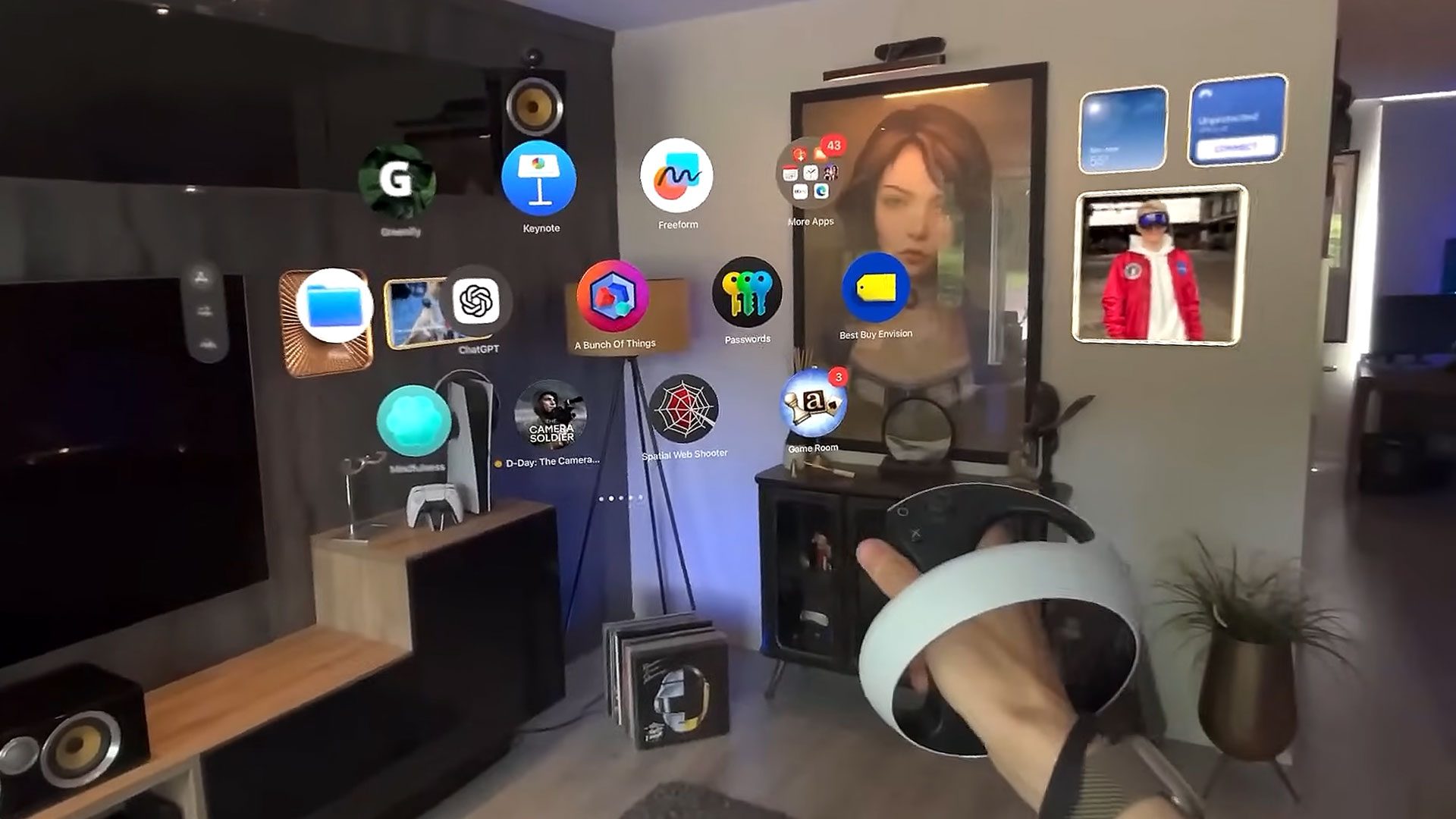
Vision Pro officially supporting PSVR 2 Sense Controllers | Image courtesy Nathie

Notably, in Kuo’s report from late 2024, he suggested a cheaper version of Vision Pro was delayed “beyond 2027”, which conflicted with an earlier report from The Information in mid-2024 that alleged Apple was on track to release something more affordable first, and then release a more powerful Vision Pro 2 at a later point.

And while releasing an M5 refresh of Vision Pro could be seen as ‘kicking the can down the road’ somewhat, having Apple’s latest and greatest chipset may be a bigger deal than might think.

Besides better overall performance, M5 would effectively be the most powerful standalone headset to date. It would allow XR developers to not only port previous controller-focused games to the headset, thanks to official support for Sony’s PSVR 2 Sense controller, but also develop even more visually rich XR games and apps for the device.

It also effectively aligns Vision Pro with Apple’s core products for the first time. Apple’s M5 is also reportedly coming to iPad Pro, Mac mini, iMac, and MacBook Pro, which would let developers build apps that perform consistently across its latest devices—maybe even including things like access to desktop-class apps running natively on the headset, such as Final Cut Pro.

The post Apple Code Suggests M5 Hardware Refresh of Vision Pro Could Come Later This Year appeared first on Road to VR.


from Road to VR https://ift.tt/qGzCMyH
via IFTTT

Varjo Secures $5.8M Investment to Accelerate Military-Grade XR Hardware

https://ift.tt/GM0NrOI

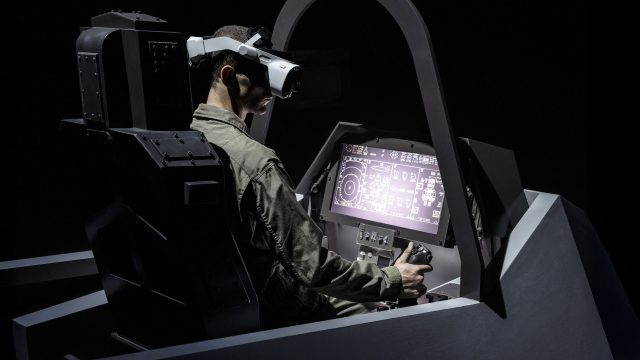
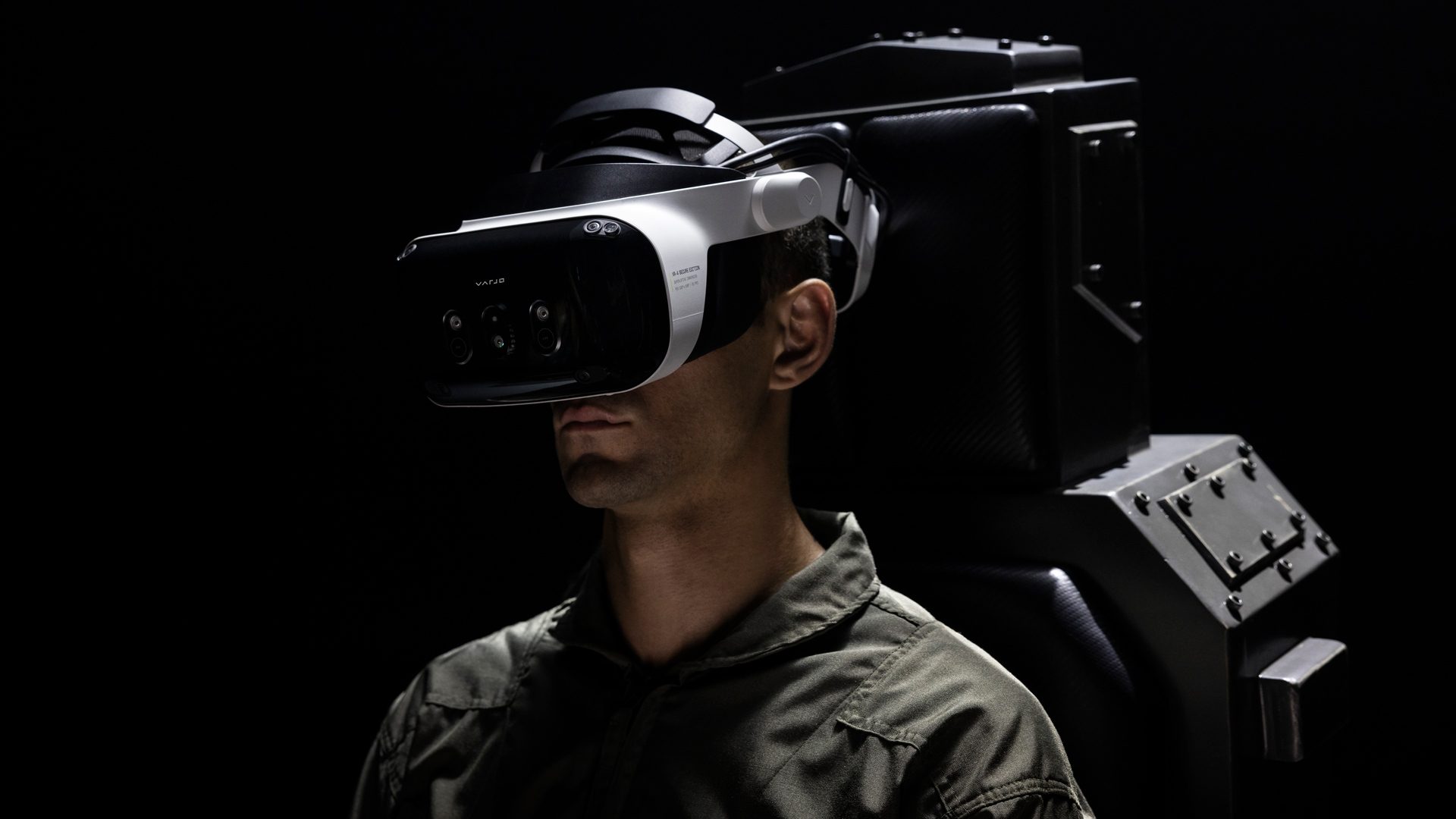
Varjo, the Finland-based maker of high-end XR headsets, announced it’s secured a €5 million (~$5.8 million) minority investment from THEON, the Greece-based manufacturer of military imaging systems.

Structured as a convertible loan, the €5 million investment also includes the option to secure an additional €5 million under the same terms, the companies say in a joint press release. Additionally, as a result of the strategic partnership, Varjo and Theon have agreed to collaborate closely on multiple product and business initiatives.

Founded in 1997, Theon develops and manufactures customizable night vision, thermal imaging systems and Electro-Optical ISR systems for military and security applications in Europe.

Varjo says the investment will strengthen the company’s capabilities to deliver “military-grade realism through next-generation immersive technologies.”

Varjo XR-4 | Image courtesy Varjo

“We are proud to welcome THEON as a strategic investor in Varjo,” said Timo Toikkanen, CEO of Varjo. “Since our inception, we have been creating the most advanced VR/XR military systems globally. THEON’s extensive experience and leadership in the defense sector make them an ideal partner as we expand our impact in mission-critical training and simulation, enabling unprecedented levels of realism, readiness, and operational effectiveness.”

Theon CEO Christian Hadjiminas says the investment “deepens our reach into the European innovation ecosystem and gives THEON access to unique capabilities in visual display systems and projecting technology. Together, we are pushing the frontier of digital defense technology.”

Theon’s investment in Varjo comes as part of its broader ‘THEON NEXT’ initiative, which is taking the company beyond imaging, as Theon seeks to expand into digital and AR-driven soldier systems.

Through Theon Next, the company has also invested $15 million in US/UK-based XR display manufacturer Kopin, signed a multi-year supply agreement with US-based XR display manufacturer eMagin, and announced a strategic partnership with ALEREON, the US-based creator of ultra-wide-band wireless technology.

This follows news last month that Varjo is pulling support for its older XR headsets starting next year, and putting its main focus on its XR-4 Series headsets, effectively marking a return to enterprise-first offerings following the release of its first and only consumer-focused headset, Varjo Aero.

Released in late 2023, the XR-4 Series includes the standard XR‑4 ($5,990), XR‑4 Focal Edition ($9,990), and its military-compliant XR‑4 Secure Edition, which comes in three variants (~$18,00 – $32,000).

The post Varjo Secures $5.8M Investment to Accelerate Military-Grade XR Hardware appeared first on Road to VR.


from Road to VR https://ift.tt/lwSCLNv
via IFTTT
Related Posts Plugin for WordPress, Blogger...