Thursday, 21 August 2025

VR Design Unpacked: How These Clever Tools in ‘Red Matter 2’ Boost Immersion

https://ift.tt/YSzeqgh

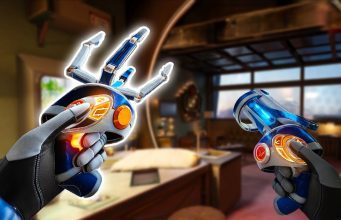
In Inside XR Design we examine specific examples of great VR design. Today we’re looking at the clever design of Red Matter 2’s ‘grabber tools’ and the many ways that they contribute to immersion.

Editor’s Note: Red Matter 2 was released three years ago this week! It was featured in the premiere episode of the reboot of our Inside XR Design series. In celebration of the game’s release anniversary, we’re bumping this episode back up to our front page to highlight the game’s clever use of ‘grabber tools’, which turned out to be a standout design choice that bolsters Red Matter 2’s immersion and interactivity.

You can find the complete video below, or continue reading for an adapted text version.

Intro

Today we’re going to talk about Red Matter 2 (2022), an adventure puzzle game set in a retro-future sci-fi world. The game is full of great VR design, but those paying close attention will know that some of its innovations were actually pioneered all the way back in 2018 with the release of the original Red Matter. But hey, that’s why we’re making this video series—there’s incredible VR design out there that everyone can learn from.

We’re going to look at Red Matter 2’s ingenious grabber tools, and the surprising number of ways they contribute to immersion.

What You See is What You Get

At first glance, the grabber tools in Red Matter 2 might just look like sci-fi set-dressing, but they are so much more than that.

At a basic level, the grabber tools take on the shape of the user’s controller. If you’re playing on Quest, Index, or PSVR 2, you’ll see a custom grabber tool that matches the shape of your specific controller.
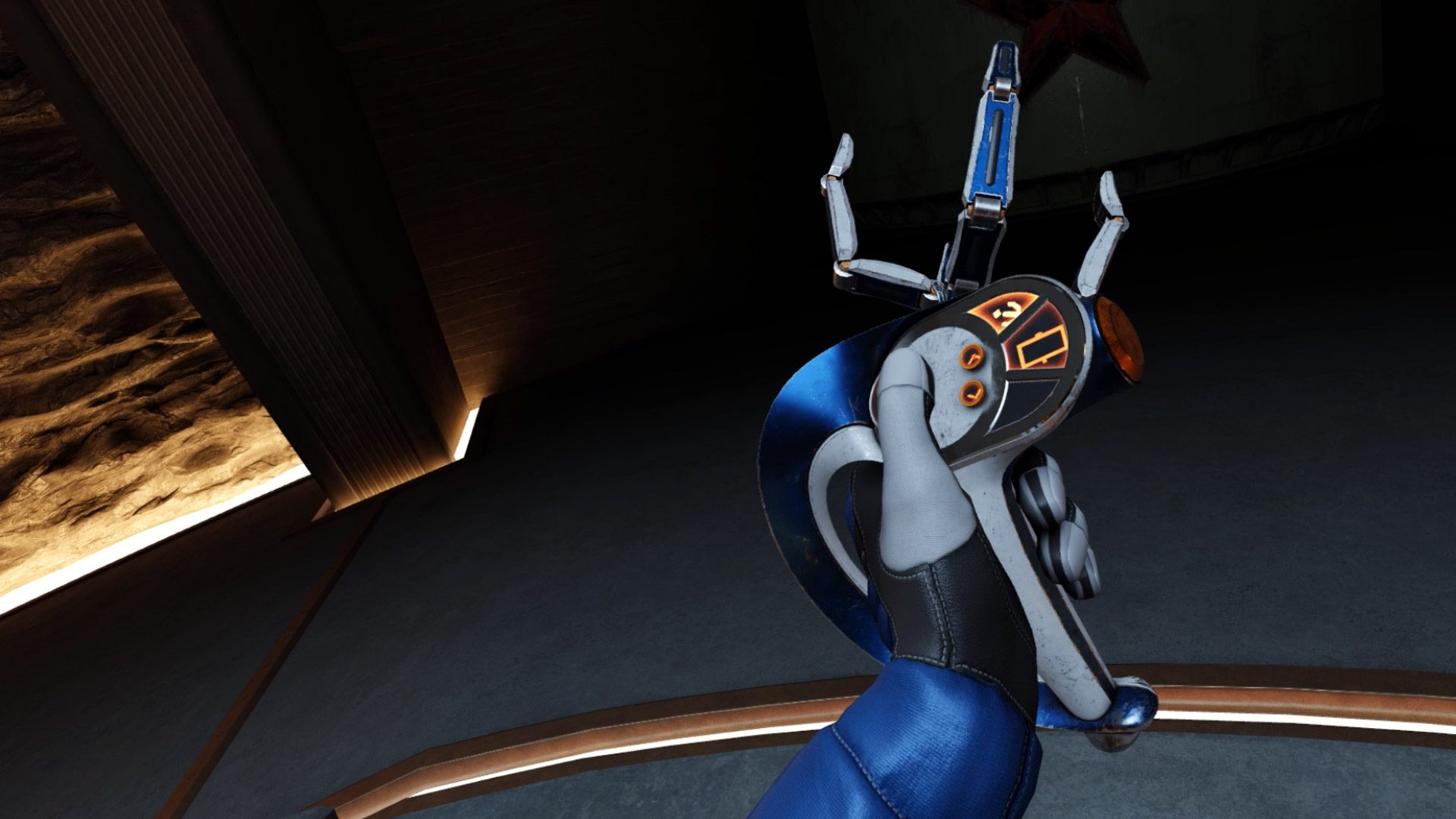
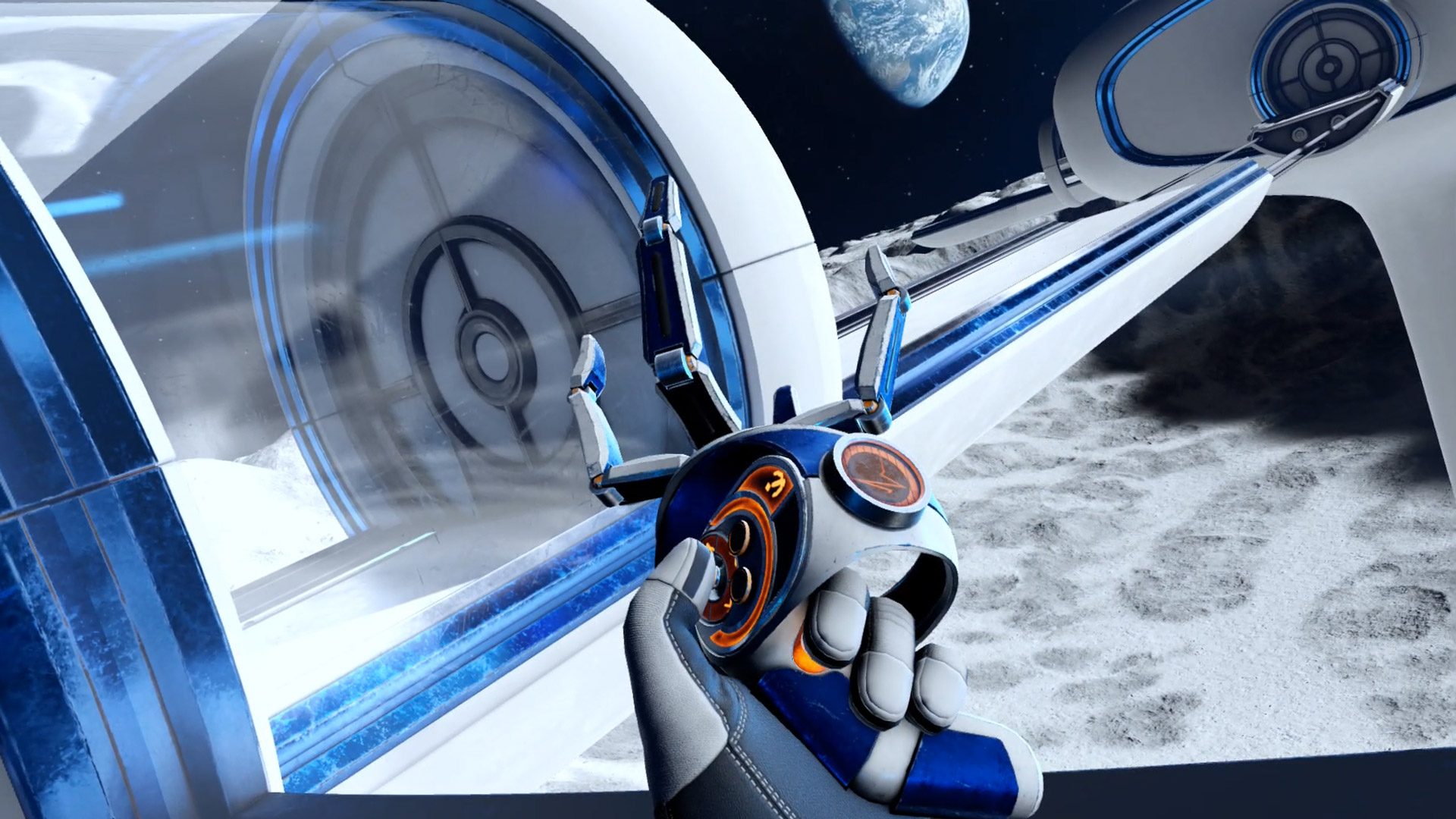
First and foremost, this means that players’ in-game hand pose matches their actual hand pose and the feeling of holding something in their hands. The shape you see in-game even matches the center of gravity as you feel it in your real hand.

Compare that to most VR games which show an open hand pose and nothing in your hand by default… that creates a disconnect between what you see in VR and what you actually feel in your hand.

And of course because you’re holding a tool that looks just like your controller, you can look down to see all the buttons and what they do.

I don’t know about you, but I’ve been using VR for years now, and I still couldn’t reliably tell you off the top of my head which button is the Y button on a VR controller. Is it on the left or right controller? Top or bottom button? Take your own guess in the comments and then let us know if you got it right!
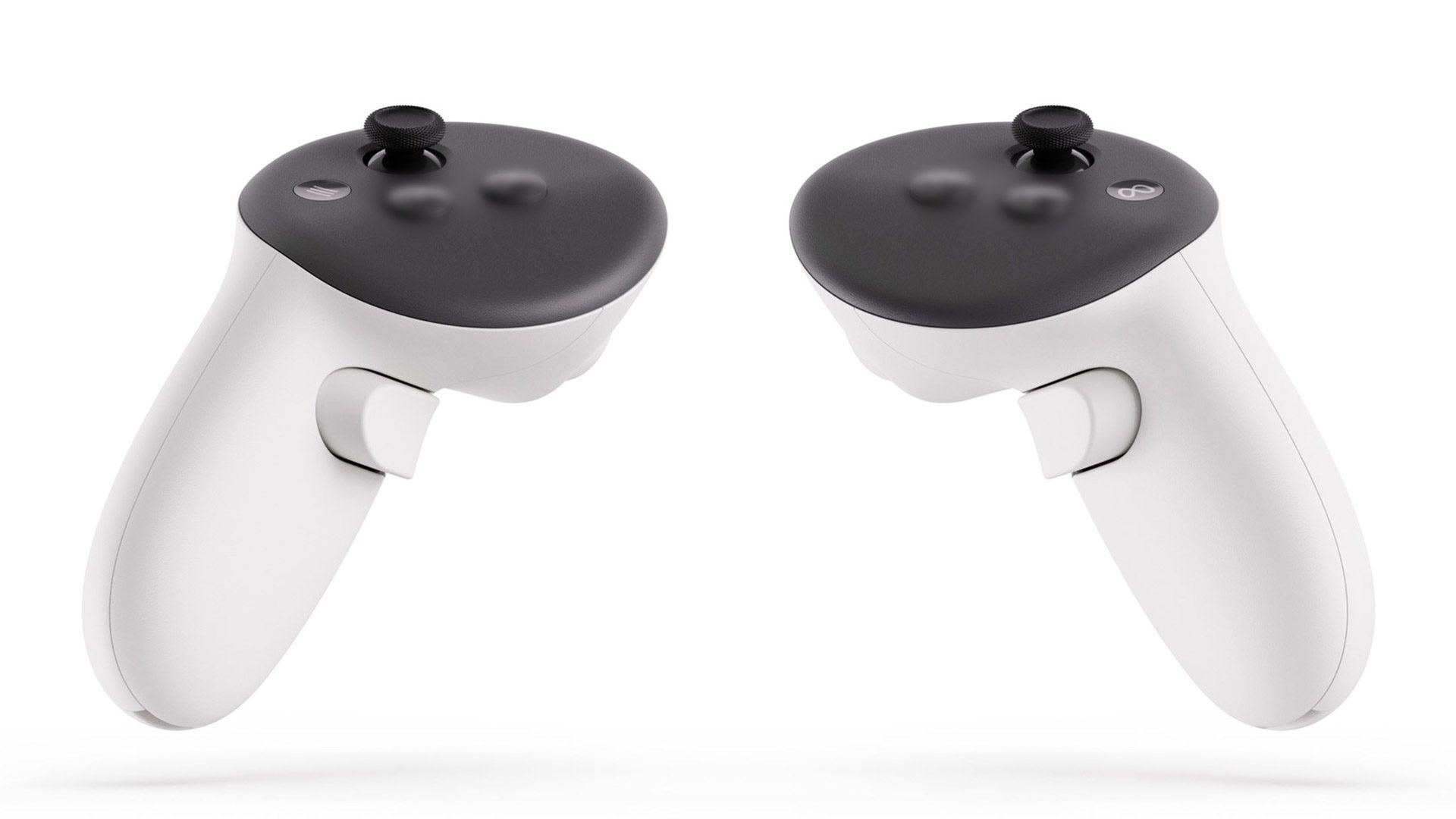
Being able to look down and reference the buttons—and which ones your finger is touching at any given moment—means players can always get an instant reminder of the controls without breaking immersion by opening a game menu or peeking out of their headset to see which button is where.

This is what’s called a diegetic interface—that’s an interface that’s contextualized within the game world, instead of some kind of floating text box that isn’t actually supposed to exist as part of the game’s narrative.

In fact, you’ll notice that there’s absolutely no on-screen interface in the footage you see from Red Matter 2. And that’s not because I had access to some special debug mode for filming. It’s by design.

When I spoke with Red Matter 2 Game Director Norman Schaar, he told me, “I personally detest UI—quite passionately, in fact! In my mind, the best UI is no UI at all.”

Schaar also told me that a goal of Red Matter 2’s design is to keep the player immersed at all times.

So it’s not surprising that we also see that the grabber tools used as a literal interface within the game, allowing you to physically connect to terminals to gather information. To the player this feels like a believable way that someone would interact with the game’s world—under the surface we’re actually just looking at a clever and immersive way of replacing the ‘press X to interact’ mechanics that are common in flat games.

The game’s grabber tools do even more for immersion than just replicating the feel of a controller in your hand or acting as a diegetic interface in the game. Crucially, they also replicate the limited interaction fidelity that players actually have in VR.

Coarse Hand Input

So let me break this down. In most VR games when you look at your hands you see… a human hand. That hand of course is supposed to represent your hand. But, there’s a big disconnect between what your real hands are capable of and what the virtual hands can do. Your real hands each have five fingers and can dexterously manipulate objects in ways that even today’s most advanced robots have trouble replicating.

So while your real hand has five fingers to grab and manipulate objects, your virtual hand essentially only has one point of input—a single point with which to grab objects.

If you think about it, the grabber tool in Red Matter 2 exactly represents this single point of input to the player. Diegetically, it’s obvious upon looking at the tool that you can’t manipulate the fingers, so your only option is to ‘grab’ at a one point.

That’s a long way of saying that the grabber tools in Red Matter 2 reflect the coarse hand input that’s actually available to us in VR, instead of showing us a virtual hand with lots of fingers that we can’t actually use.

So, In Red Matter 2, the grabber tools contextualize the inability to use our fingers. The result is that instead of feeling silly that we have to rotate and manipulate objects in somewhat strange ways, you actually feel like you’re learning how to deftly operate these futuristic tools.

Immersion Insulation Gap

And believe it or not, there’s still more to talk about why Red Matter 2’s grabber tools are so freaking smart.

Physics interactions are a huge part of the game, and the grabber tools again work to maintain immersion when handling objects. Like many VR games, Red Matter 2 uses an inertia-like system to imply the weight of an object in your hand. Small objects move quickly and easily, while large objects are sluggish and their inertia fights against your movement.

Rather than imagining the force our hands would feel when moving these virtual objects, the grabber tools create a sort of immersion insulation gap by providing a mechanical pivot point between the tool and the object.
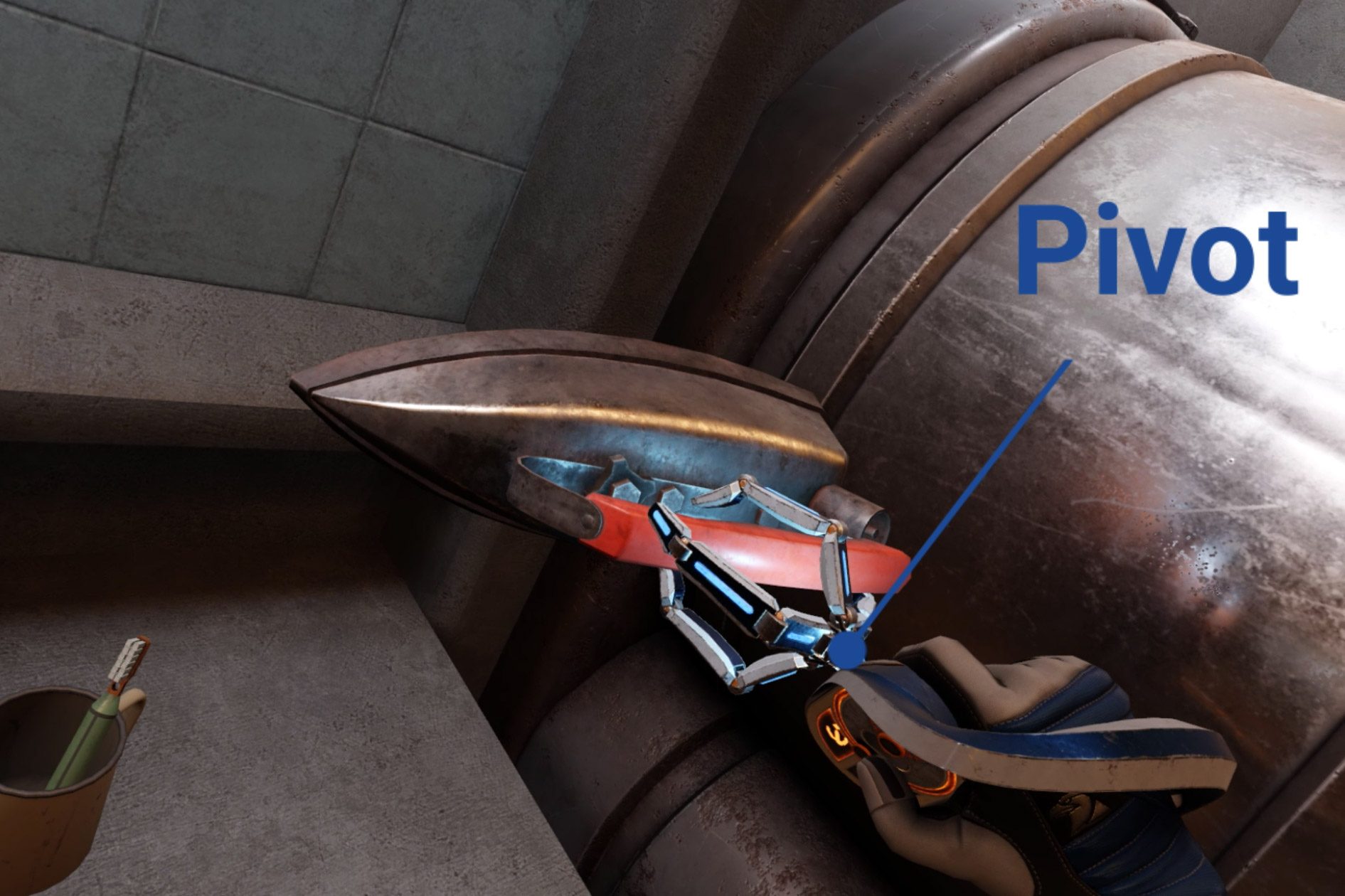
This visually ‘explains’ why we can’t feel the forces of the object against our fingers, especially when the object is very heavy. The disconnect between the object and our hand—with the grabber tool as the insulator in the middle—alleviates some of the expectation of the forces that we’d normally feel in real life, thereby preserving immersion just a little bit more.

Unassuming Inventory

And if it wasn’t clear already, the grabber tools are actually… your inventory. Not only do they store all of your tools—like the flashlight, hacking tool, and your gun—you can even use them to temporarily stow objects. Handling inventory this way means that players can never accidentally drop or lose their tools, which is an issue we see in lots of other VR games, even those which use ‘holsters’ to hold things.

Inhuman Hands

And last but not least…the grabber tools can actually do some interesting things that our hands can’t. For example, the rotating grabber actually makes the motion of turning wheels like this one easier than doing it with two normal hands.

It’s no coincidence that the design of the grabber tools in Red Matter 2 is so smartly thought through… after all, the game is all about interacting with the virtual world around you… so it makes sense that the main way in which players interact with the world would be carefully considered.

To take full advantage of the grabbers, the developers built a wide variety of detailed objects for the game which are consistently interactive. You can pick up pretty much anything that looks like you should be able to.

And here’s a great little detail that I love to see: in cases where things aren’t interactive, all you have to do is not imply that they are! Here in Red Matter 2 the developers simply removed handles from this cabinet… a clear but non-intrusive way to tell players it can’t be opened.

Somewhat uniquely to VR, just seeing cool stuff up close like it’s right in front of you can be a rewarding experience all on its own. To that end, Red Matter 2 makes a conscious effort to sprinkle in handful of visually interesting objects, whether it’s this resin eyeball, papers with reactive physics, or this incredible scene where you watch your weapon form from hundreds of little balls right in your hand.

– – — – –

Red Matter 2’s grabber tool design is so beneficial to the game’s overall immersion that, frankly, I’m surprised we haven’t seen this sort of thing become more common in VR games.

If you want to check all of this out for yourself, you can find Red Matter 2 on Quest, PSVR 2, and PC VR.

Enjoyed this breakdown? Check out the rest of our Inside XR Design series and our Insights & Artwork series.

And if you’re still reading, how about dropping a comment to let us know which game or app you think we should cover next?

The post VR Design Unpacked: How These Clever Tools in ‘Red Matter 2’ Boost Immersion appeared first on Road to VR.


from Road to VR https://ift.tt/UyOxYZC
via IFTTT

nDreams’ New VR Action-adventure Game ‘Reach’ Gets an October Release Date

https://ift.tt/u5jhnb6

Not long after offering an extended look at the gameplay of Reach, nDreams has announced an October 16th, 2025 release date for the anticipated game.

Reach is one of the biggest single-player VR games to launch in 2025, and now we know exactly when: October 16th, 2025, priced at $40. Reach is confirmed to be headed to Quest 3 & 3S, PC VR, and PSVR 2.

Reach is promising to be a VR action-adventure game that leans into mobility with climbing & platforming, and combat with ranged and melee components. The extended gameplay look shown earlier this month paints a picture of some clever design that makes weapons also useful as tools: like being able to climb on arrows or your shield that you’ve stuck into a wall.

This will be the debut title from nDreams ‘Elevation’ studio. We’re looking forward to seeing if the game’s movement and combat flows as smoothly together as it looks in the trailers.

The post nDreams’ New VR Action-adventure Game ‘Reach’ Gets an October Release Date appeared first on Road to VR.


from Road to VR https://ift.tt/pyzdFkn
via IFTTT

Wednesday, 20 August 2025

‘Deadpool VR’ Gets November Release Date Alongside New Trailer

https://ift.tt/TrVAnY2

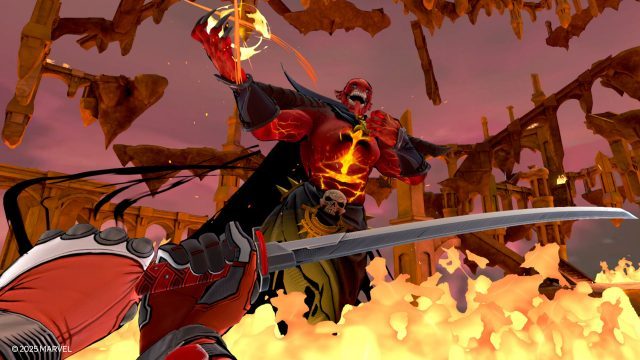
As revealed in a new story trailer, Marvel’s Deadpool VR is officially set for release on November 18th. It will be the latest first-party release from Twisted Pixel, one of Meta’s VR game studios.

A new trailer shown during Gamescom’s Opening Night Live revealed the release date and price for Deadpool VR: November 18th, 2025, priced at $50. The game will be exclusively available on Quest 3 and Quest 3S.

The trailer gives context for the game’s story, as Meta explains:

Mojo’s looking for a hit new show for his “massive, galaxy-spanning streaming network,” and taps Deadpool to recruit new talent. By “recruit,” we of course mean kidnap some of the toughest villains in the galaxy and force them to fight for their lives on an unhinged game show—but recruit is less of a mouthful.

You’ll face off against Marvel fan-favorites like Mephisto, Lady Deathstrike, and Omega Red (and uh…Ultimo) as you try to fulfill Deadpool’s contract and become really (really) rich. Mojo’s galactic audience is watching your every move, so try to have fun with it, you know? Throw your sword into a guy’s chest, or throw him off a ledge, or decapitate him and recite the “Alas, poor Yorick” monologue.

We previewed Deadpool VR back at its initial reveal in June, and found that it nailed the look and vibe but still needed tuning to make the gameplay and combat click. We’re hopeful to see it all come together when the game launches in late November.

The post ‘Deadpool VR’ Gets November Release Date Alongside New Trailer appeared first on Road to VR.


from Road to VR https://ift.tt/U2vkemq
via IFTTT

Tuesday, 19 August 2025

HTC Enters the Smartglasses Race with VIVE Eagle

https://ift.tt/SanGzE0

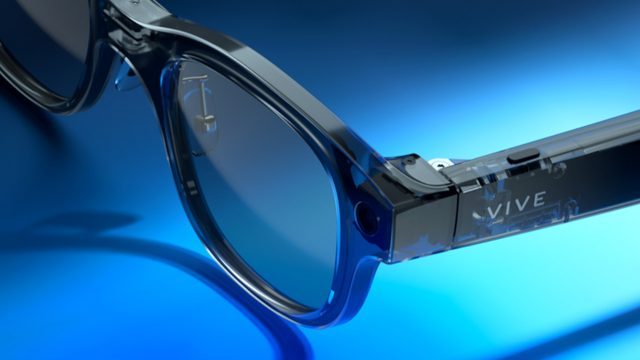
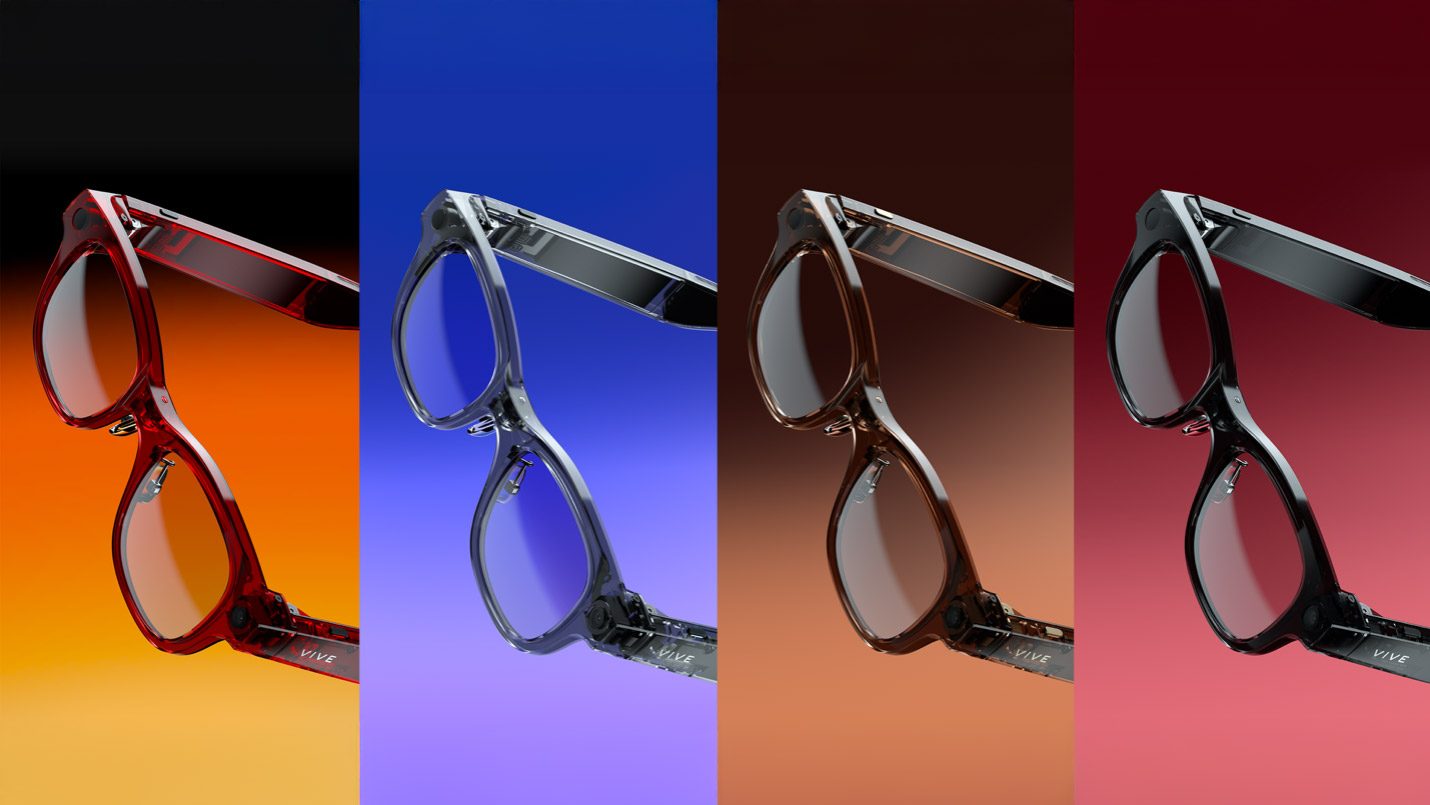
HTC is joining Meta and others in the rapidly heating smartglasses space with its newest product, the VIVE Eagle. Like other smartglasses, the Eagle lacks any kind of display, being positioned instead as a vehicle for AI voice assistance and media capture.

Smartglasses have been around in one form or another for more than a decade. But the rise of AI assistants based on large language models has caused a resurgence of interest in the category. Today’s smartglasses represent the form-factor that the XR industry is ultimately seeking for the ultimate XR glasses, but they lack the powerful immersive features of bulkier headsets. On the other hand, today’s XR headsets have many of the immersive features and advanced sensing capabilities that the industry wants for the ultimate XR glasses, but they lack the compact and comfortable form-factor of proper glasses.

Practically speaking, smartglasses show the industry burning the candle on both ends: working from a small form-factor and figuring out how to add more capabilities, whihle also working from a larger form-factor with more features and figuring out how to shrink the size. In the end, it looks certain that smartglasses and XR headsets will converge somewhere along the way as the ideal balance of form-factor and capabilities is found.

So it’s not surprising to see HTC—one of the most recognizable players in the XR space—jump on the smartglasses train with the recently announced Vive Eagle.

Unlike Meta—which has so far kept its smartglasses separate from its Quest & Horizon brands—HTC is making its smartglasses part of its Vive brand, which has traditionally been reserved for its immersive headsets.

Weighing in at just 49 grams, Vive Eagle has a familiar set of capabilities compared to smartglasses like the Meta Ray-Bans: a helpful AI chatbot and a camera for capturing photos & video; there’s even the same little button for activating the camera, and an LED light to show observers when the camera is in use.

The camera is said to be 12MP (3,024 × 4,032) and capable of taking HDR photos. Videos are captured at 3MP (1,512 × 2,016) at 30 FPS. The glasses include 32GB of storage which HTC says can store some 3,000 photos or 50 videos up to three minutes each.

HTC is calling the chatbot that underpins the headset “Vive AI,” which it says can handle “everyday commands like taking a photo, playing music, or launching an app completely offline.” The company says Vive Eagle’s intelligence can be extended with the likes of OpenAI’s ChatGPT or Google’s Gemini for more complex queries, with “anonymized requests” to maintain privacy.

HTC also says Vive Eagle offers “real-time translation of text from over 13 languages,” including photo-based translation, as well as “voice control for phone apps, scheduling events, playing music, and more.” While both iOS and Android are said to be supported, it’s likely that Android users will see some extra functionality thanks to the more open nature of the OS.

As for battery life, HTC says Vive Eagle can play music for up to 4.5 hours. It doesn’t sound like the included case will double as a charger (a nice convenience for the Meta Ray-Bans), but at least the Eagle can be juiced up quickly in a pinch, with a claimed 0–50% charge in just 10 minutes via the included magnetic charger.

Image courtesy HTC

The Eagle will be equipped with ZEISS UV400 lenses, which provide UV protection without significant tinting (making them usable both indoors and out). Prescription lenses will also be offered for those needing vision correction.

Eagle will be “available in Taiwan first” on September 1st, says HTC. While this implies it will come to other countries in the future, no firm release date for other regions has been shared. The Taiwan version is priced at NT$15,600 ($520)

The post HTC Enters the Smartglasses Race with VIVE Eagle appeared first on Road to VR.


from Road to VR https://ift.tt/T7DPjmt
via IFTTT

Tuesday, 12 August 2025

VR Flight Combat Sim ‘Aces of Thunder’ Confirms Solo Campaign and “Imminent” Release Date

https://ift.tt/yLN8fs1

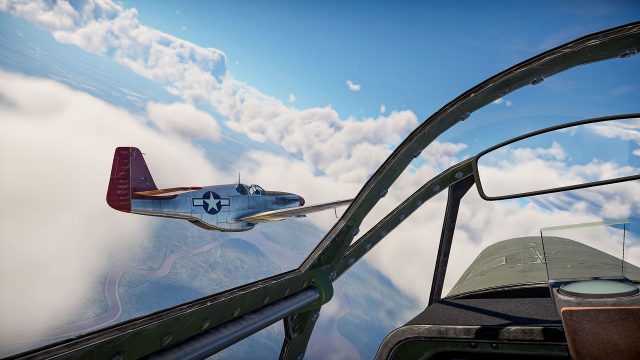
VR flight combat simulator Aces of Thunder will not only include full-featured multiplayer, but players can also expect a solo campaign. While a specific release date hasn’t been given, the studio says it’s “imminent.”

Aces of Thunder is a VR exclusive comes from studio Gaijin Entertainment, well known for its flight combat sim War Thunder (2013). Although it was initially supposed to launch in late 2024, a new trailer confirms the game will finally launch this year, apparently “imminently.” The trailer also confirms a solo campaign alongside the expected multiplayer mode.

Aces of Thunder is planned for release on PSVR 2 and PC VR.

The post VR Flight Combat Sim ‘Aces of Thunder’ Confirms Solo Campaign and “Imminent” Release Date appeared first on Road to VR.


from Road to VR https://ift.tt/F2xJD4o
via IFTTT

VR Games Showcase Starts at 12PM ET with 30+ Mins of VR Game Announcements for Quest, PSVR 2, & PC VR

https://ift.tt/l3KwVFH

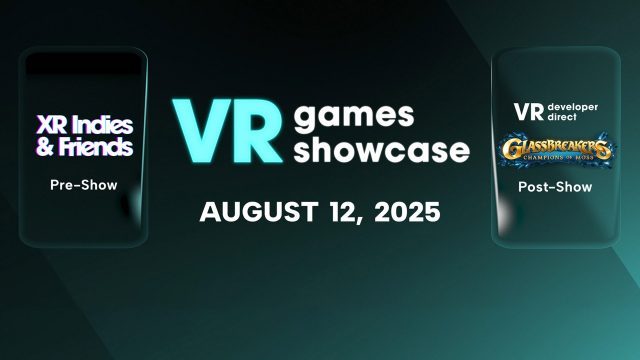
The next show from friends at VR Games Showcase is nearly here, with more than 30 minutes of trailers and info on upcoming VR games and updates for Quest, PSVR 2, and PC VR. Watch the premiere starting at 12PM ET, and tune in 20 minutes early for the XR Indies & Friends pre-show.

Watch the full VR Games Showcase stream below, starting at 12PM ET (your timezone here):

VR Games Showcase is presented and produced by VR industry veterans Jamie Feltham and Zeena Al-Obaidi.

The Summer 2025 show promises the following:

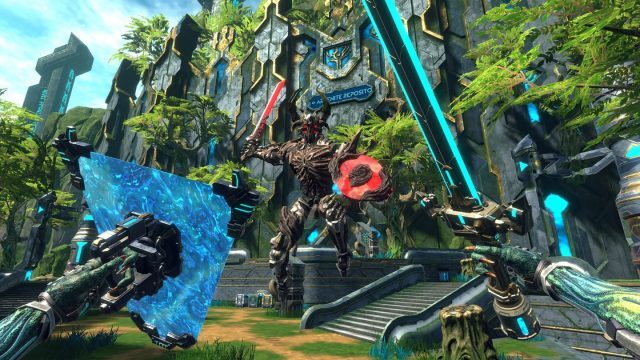
  • The return of Glassbreakers: Champions of Moss – Polyarc pulls back the curtain on its multiplayer real-time action strategy battler spin-off to the iconic Moss franchise.
  • The latest on Forefront – Triangle Factory stops by with updates on its highly anticipated multiplayer VR shooter.
  • A new look at Reach – nDreams Elevation provides a deeper look into one of the biggest VR games of the year with an all-new trailer.
  • Updates from Flat2VR Studios – The VRGS mainstays return with more exciting reveals, including the announcement of a new development initiative.

And plenty more!

The post VR Games Showcase Starts at 12PM ET with 30+ Mins of VR Game Announcements for Quest, PSVR 2, & PC VR appeared first on Road to VR.


from Road to VR https://ift.tt/7ydE4K8
via IFTTT

Monday, 11 August 2025

One of the Best Single-player VR Games of 2025 is Heading to Quest 3 in November

https://ift.tt/mvMTriJ

Originally released on PSVR 2 and PC VR earlier this year, Arken Age is headed to Quest 3 and Quest 3S this November. This well-regarded title is one of the most immersive and engaging single-player games we’ve played this year, and the Quest port looks surprisingly good.

Arken Age feels like a game made by developers that have played lots of VR games themselves and have drawn inspiration from some of the best. Out of the gate it’s got vibes of Stormland (2019) and Lone Echo (2017), single-player VR games that are well regarded for their ‘hands-on’ gameplay which brings high levels of immersion.

Arken Age features ranged and melee combat along with exploration and significant verticality thanks to some great climbing mechanics. The game’s immersion is driven by its deft use of two concepts we’ve covered extensively in our Inside XR Design series: embodiment and diegetic design.

The game also has better looking graphics than the average VR game, and we’re glad to see that appears to carry over well to the Quest version. It’s not one-for-one with the tethered VR platforms, but it looks surprisingly good compared to many other games ported to Quest, at least from what we can see so far in the trailer:

A likely reason why Arken Age looks good on Quest is because the game will only support the more powerful Quest 3 and Quest 3S headsets, leaving behind the nearly five year-old Quest 2.

Arken Age is planned for release on Quest in just a few months, with a release window currently set for November. The price has not been announced, but you can wishlist the game on the Horizon store to be notified when it releases.

The post One of the Best Single-player VR Games of 2025 is Heading to Quest 3 in November appeared first on Road to VR.


from Road to VR https://ift.tt/zaMGi82
via IFTTT
Related Posts Plugin for WordPress, Blogger...