
Thursday, 7 August 2025

Operator XR Secures $3.7M VR Training Contract with Texas Department of Public Safety

https://ift.tt/jU6DIbB

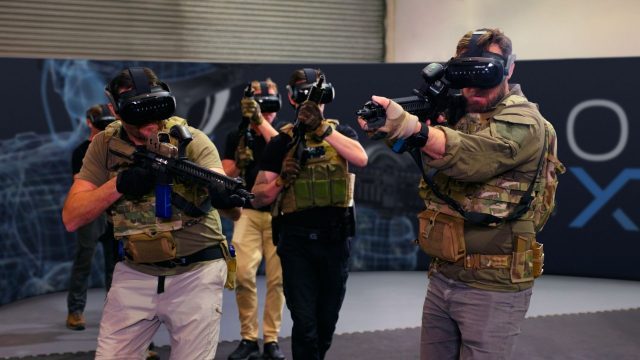
Australian immersive training technology company xReality Group announced its subsidiary Operator XR has secured a contract with the Texas Department of Public Safety (Texas DPS) worth up to AUD $5.71 million (~$3.7 million USD), which will see the rollout of it VR police training system across the state.

According to a press statement, Operator XR’s OP-2 system enables immersive, scenario-based training designed to improve tactical decision-making, de-escalation techniques, multi-officer coordination, and mission planning.

Texas DPS, one of the largest law enforcement agencies in the U.S. serving 30 million residents, is slated to use the system to enhance officer readiness and safety through more frequent and realistic training experiences.

xReality Group CEO Wayne Jones described the deal as a “strategic milestone,” citing Texas DPS’s high profile as a key reference point for further expansion into other state agencies. “This partnership reinforces our U.S. growth strategy and validates the OP-2 platform for large-scale deployment,” Jones said.

The initial portion of the deal, worth AUD $4.3 million ($2.8 million USD), is said to cover delivery of OP-2 hardware and software, along with onboarding and two years of technical support—slated to start in Q2 2026.

The contract includes optional support services for an additional three years, bringing the potential total value to AUD $5.71 million (~$3.7 million USD).

This follows a recent $2.1 million AUD (~$1.4 million USD) ‘Industry Growth Program’ grant by the Australian Government last month to accelerate the AI development roadmap for its Operator XR tactical training platform.

The funding is earmarked to support enhancements such as real-time feedback, automated scenario generation, expanded manufacturing, and global certification over the next 24 months.

The post Operator XR Secures $3.7M VR Training Contract with Texas Department of Public Safety appeared first on Road to VR.


from Road to VR https://ift.tt/uyk7Oqn
via IFTTT

Wednesday, 6 August 2025

VR Design Unpacked: Everyone Should Know These VR Interface Basics

https://ift.tt/PTU6uJm

Our series Inside XR Design examines specific examples of great XR design. Today we’re looking at the game Electronauts and what it can teach us about smart VR interface design.

Editor’s Note: Electronauts was released seven years ago this week! It was featured in the pilot episode of Inside XR Design four years ago to the month. Incredibly, Electronauts still has a lot to teach when it comes to VR interface design.

In celebration of these dual anniversaries, we’re bumping this episode of Inside XR Design back up to our front page to highlight the game’s cleverly designed interface and what it shows us about ease-of-use, hierarchy, and flexibility.

You can find the complete video below, or continue reading for an adapted text version.

Electronauts is a music making game by developer Survivors that’s designed to make it easy to feel like a competent DJ, even if—like me—you don’t have much musical talent. It’s available on every major VR headset; check out our full review here.

And while it’s easy to think that the game’s interface has little relevance outside of music, nothing could be further from the truth. The Electronauts interface is smartly designed at the core, and for reasons that have nothing to do with music or rhythm games.

There’s three pillars to this interface that make it great: ease-of-use, hierarchy, and flexibility.

Ease-of-use

It’s clear to see why the designers would give the players drumsticks for a game with drum-like instruments, but what’s really smart is also making the drumsticks the tools for manipulating the interface. Humans are evolutionarily adept at manipulating tools—in fact studies have shown that with enough practice, we subconsciously and proprioceptively consider tools to be an extension of ourselves.

In the case of Electronauts, the extra reach provided by the drumsticks allows the interface to be comfortably large to overcome issues with precision, making the entire interface easier to use with less chance for mistakes.

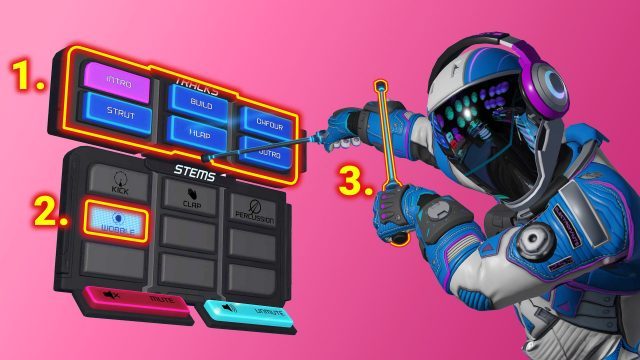
We can see this clearly in the way that the game’s buttons work. While the intuitive idea would be to have buttons that are pressed as they are touched, Electronauts does things differently for the sake of precision and reliability. Instead of simply touching a button to activate it, you actually insert your drumstick into the button and then pull the trigger.

This is a very smart solution to the issue of missing physical feedback in VR. Real life buttons are deeply designed around physical feedback, and this feedback helps you press them reliably. Because there’s nothing to push back on the drumstick in VR, it’s harder to confidently target and activate a physically simulated button.

Asking the user to intersect the button with their drumstick and then pull the trigger to confirm their selection greatly increases the precision of the game’s buttons compared to a physical button simulation.

Hierarchy

Hierarchy is an essential part of any interface. It’s the way in which you organize the functions of the interface so that it’s logical, easy to remember, and easy to access.

Electronauts has a very smart hierarchy where all of the game’s functions are contained within tools, and all of the tools are represented as cubes. To access the functions of any tool, you simply place a cube into a pedestal.

You can think of each cube as it’s own little mini-app, just like the way that smartphone apps are shown as icons on a screen, each containing specific functionality. This makes it really easy to remember where to access certain functions without the interface needing to overwhelm the user by displaying all the functions at once.

With a limit of three cubes active at any one time, Electronauts does a good job of having a clearly organized hierarchy that’s not too deep. A hierarchy that’s too deep—like having folders inside of folders inside of folders—can mean too much time spent digging to reach the function you’re looking for, even if it means everything is clearly organized.

Continued on Page 2: Flexibility »

The post VR Design Unpacked: Everyone Should Know These VR Interface Basics appeared first on Road to VR.


from Road to VR https://ift.tt/utT8ga6
via IFTTT

Google’s ‘Genie 3’ Interactive Generative Video Model Takes Us One Step Closer to the Holodeck

https://ift.tt/0MS1Qnq

DeepMind, Google’s AI research lab, announced the release of Genie 3, a new AI system capable of generating interactive virtual environments in real-time—and bringing us one step closer to the Holodeck.

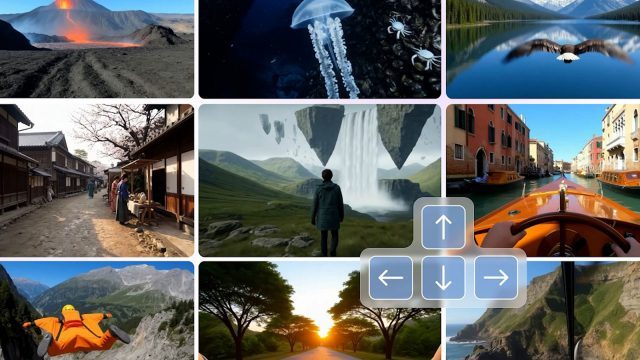
Google says in a DeepMind update that with a simple text prompt, Genie 3 can create dynamic, navigable scenes that run at 24 frames per second in 720p resolution.

Granted, Genie 3 can be only be used on flatscreen monitors, so there’s no telling when we’ll get something similar for VR headsets. For example, Quest 3’s display has a per-eye resolution of 2,064 × 2,208, clocked at a base refresh rate of 90Hz, putting VR on the far end of the performance fringe (as usual).

It’s undoubtedly prescient look at things to come though. Unlike static or pre-rendered simulations, Google says the model generates each frame on the fly, allowing for quicker user interaction and environmental feedback.

What’s more, these generated worlds can remain visually and physically consistent for several minutes, Google says, with the system retaining a form of short-term memory to reflect past actions.

Genie 3 is also capable of simulating a wide range of scenarios, including natural environments, historical settings, and both fictional and animated worlds. Meanwhile, users can trigger “promptable world events,” where users can insert in-world changes via text commands, like altering the weather or introducing new objects.

Beyond the fun of recreating 1800’s Osaka, or making a jet ski appear in the canals of Amsterdam, Google says Genie 3 will also be a tool for embodied AI training, with potential applications in fields like robotics, gaming, and artificial general intelligence research.

For now, there are a few limitations. Google says Genie 3 currently has a limited “action space” for agents, and struggles with accurately modeling multi-agent interactions in shared environments. By “agents,” the company’s referring to AI systems that operate autonomously within the virtual environments, in a way making decisions, taking actions, and learning from experience.

It also faces challenges with simulating real-world locations with “perfect geographic accuracy”, rendering text clearly, and maintaining long-duration interactions beyond a few minutes.

Still, it’s a pretty amazing leap from the sort of non-interactive videos we’re seeing online now, many of which are pretty difficult to tell from the real deal. Will Smith spaghetti-eating simulations are only going to get more lifelike and, with systems like Genie 3, interactive too.

The post Google’s ‘Genie 3’ Interactive Generative Video Model Takes Us One Step Closer to the Holodeck appeared first on Road to VR.


from Road to VR https://ift.tt/uyKSUxf
via IFTTT

Tuesday, 5 August 2025

Meta Releases New AI Features to Make ‘Horizon Worlds’ Development Easier

https://ift.tt/0uekEbW

Meta just released a few new generative AI features for its Horizon Worlds desktop editor, which the company says will streamline the development of user-generated environments on its metaverse platform.

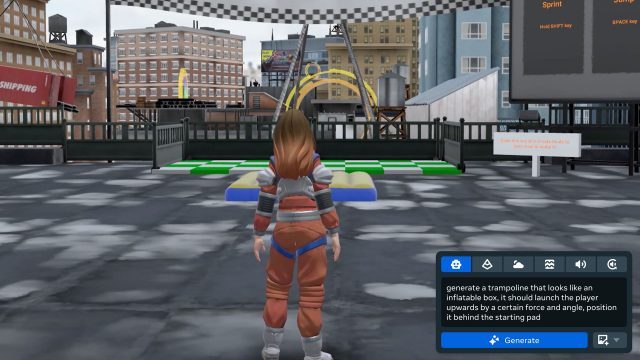
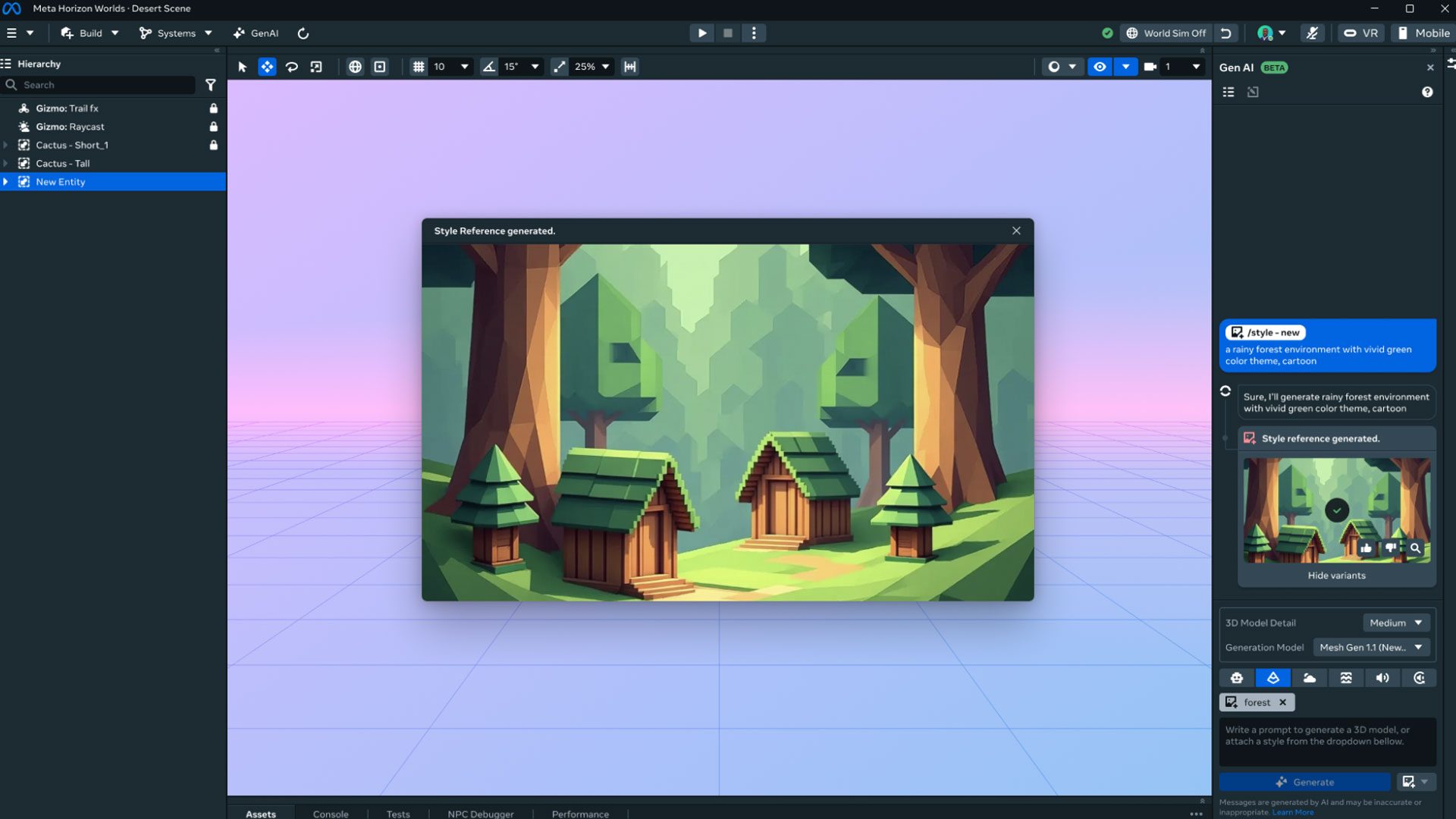
As mentioned in a Meta blog post, the latest Horizon Worlds developer update includes two major tools that should help boost content on the platform: ‘Creator Assistant’ and ‘Style Reference’, which Meta says are designed to accelerate and simplify the world-building process for creators.

Creator Assistant is essentially an AI-powered co-pilot of sorts, offering what Meta calls “context-aware” documentation, automated setup support, and the ability to brainstorm and generate scripts using natural language.

Image courtesy Meta

Meta says its new Creator Assistant is intended to reduce the time and complexity involved in prototyping and iterating Horizon Worlds experiences, making the development process more accessible to solo or small developer teams.

The update’s second major feature, Style Reference, lets users generate, save, and apply consistent visual and audio styles across multiple assets and projects—something Meta says will help creators “focus on creativity and experimentation, rather than repetitive setup tasks.”

The update also expands access to Meta’s GenAI suite beyond its core markets. Creators in India, Singapore, Vietnam, Brazil, Argentina, Mexico, and much of the EU can now use the tools, with more more regions to follow.

Additionally, the Horizon Worlds editor now includes a few more AI-powered features, such as 3D mesh and texture generation, typescript code creation, sky and audio generation for sound effects and ambient environments. You can check out more over on the Gen AI help guide to see all of its current features.

The post Meta Releases New AI Features to Make ‘Horizon Worlds’ Development Easier appeared first on Road to VR.


from Road to VR https://ift.tt/VeEDFGh
via IFTTT

‘Oasis’ WMR Driver Expected to Later This Month, Bringing New Life to Microsoft’s PC VR Headsets

https://ift.tt/EqfHJTY

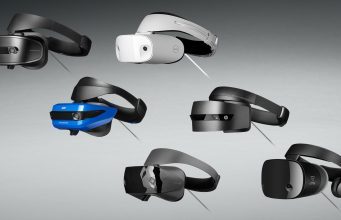
Microsoft stopped supporting its WMR platform on Windows 11 last year, essentially putting an end to its first foray into PC VR headsets. However, an unofficial SteamVR driver called ‘Oasis’ aims to bridge the gap when it releases later this month.

According to Oasis creator Matthieu Bucchianeri, the driver’s tentative global release date is August 29th, which he notes is subject to Valve approving release on Steam.

Oasis is slated to bridge Windows Mixed Reality headset support to SteamVR, which would otherwise need Microsoft’s Mixed Reality Portal to function. This, Bucchianeri says in the project’s GitHub, will include support for full 6DoF tracking along with motion controllers.

As for broad GPU support, Oasis is unfortunately restricted to Nvidia GPUs due to the way SteamVR interfaces with the GPU drivers. Bucchianeri has been trying to gain AMD’s permission, although at this point, he says the effort is “dead in the water.”

Bucchianeri says in a Reddit post this essentially comes down to AMD either “ignor[ing] 3rd party usage flag when LiquidVR attempts to open the device [, or offering] a functional EDID override so we can mask off the flag ourselves.”

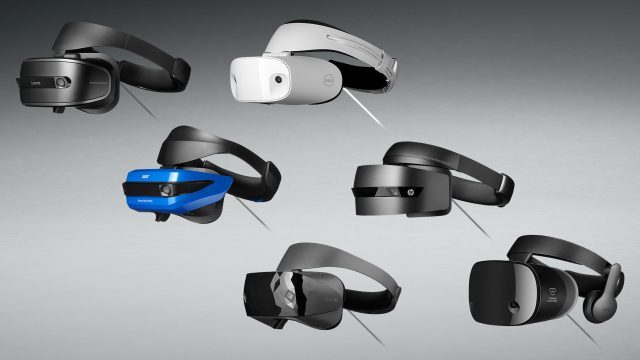
Last October, the company deprecated the WMR platform with the launch of Windows 11 24H2, essentially killing support for a fleet of partner PC VR headsets, which included devices from Acer, Asus, Dell, Lenovo, HP, and Samsung.

Notably, Bucchianeri worked as a software engineer on Microsoft’s mixed reality division. While he currently leads firmware efforts at the company’s Xbox Gaming Devices Ecosystem, Oasis is a personal project.

Bucchianeri notes it doesn’t breech any prior non-disclosure agreements, leverages SteamVR, and doesn’t borrow any Microsoft intellectual property.

The post ‘Oasis’ WMR Driver Expected to Later This Month, Bringing New Life to Microsoft’s PC VR Headsets appeared first on Road to VR.


from Road to VR https://ift.tt/AVwbRNO
via IFTTT

Monday, 4 August 2025

Red Bull’s ‘Touching the Sky’ is an Hour-long Immersive Documentary on Wingsuit Flying and More, Now on Quest

https://ift.tt/LVStyoO

Red Bull and Jonathan Griffith Productions have released Touching the Sky on Quest, now letting you follow wingsuit base jumpers in the European Alps and a paragliding team across the Himalayas in Pakistan in an hour-long immersive documentary.

Captured using custom-built 3D, 360 cameras, the documentary lets you accompany wingsuit and base jump athletes Fred Fugen and Vincent Cotte, who take you on two wingsuit flights in the Italian Dolomites.

“The biggest challenge was in freefall, to fly with such a camera,” Fugen explains in a Red Bull blog post. “It took a lot of work to collaborate with the drone pilots who were in the helicopter. You had to adapt and synchronise together to do the jumps and freefalls. We didn’t have much training together [beforehand], so combining our skillsets was challenging.”

The documentary also features Aaron Durogati and his partner Matthias Weger as they paraglide across the Pakistani Himalayas, who aimed to get as high and deep in to the highest mountains on the planet.

“Flying in Pakistan is quite extreme because the mountains are huge and take expert technique to manage,” explains Durogati. “The thermal flows are unique to those in the Alps. If something happened there, you’re by yourself, and it’s unlikely that rescue helicopters can come to pick you up. In the Alps, you can almost always count on a rescue.”

You can watch the hour-along documentary for free over on Meta Quest TV, exclusively for Quest 2 and above.

If you’re interested in how it was all recorded, Red Bull has published a thirty-minute behind-the-scenes video, capturing the raw experience of what it takes to document such an amazing feat.

The post Red Bull’s ‘Touching the Sky’ is an Hour-long Immersive Documentary on Wingsuit Flying and More, Now on Quest appeared first on Road to VR.


from Road to VR https://ift.tt/5MlKeLq
via IFTTT

Friday, 1 August 2025

Brilliant Labs Unveils All-day Smart Glasses with Color Display, Pre-orders Launch at $300

https://ift.tt/Kj6SqyM

Brilliant Labs unveiled Halo, its next-gen smart glasses that pack in a full-color micro OLED display, bone conduction speakers, and real-time voice-based AI assistant—priced at a surprisingly reasonable $300.

Weighing in at just over 40 grams, Halo builds on the company’s earlier experiments in heads-up displays, including Monocle, a clip-on developer kit released in 2023, and Frame, a slimmer display unit launched a year later.

Halo represents a more consumer-oriented evolution, combining vision correction support, on-device AI, and open-source hardware in a form factor designed for everyday use.

The glasses are powered by a low-power Alif B1 processor with a Cortex-M55 CPU and a neural processing unit (NPU) capable of performing AI tasks directly on the device.

Image courtesy Brilliant Labs

A big feature is the company’s new integrated AI assistant, Noa, which supports real-time chats, promising to not only see what you see, but remember it too for later. And you’re meant to use it all-day, as the company says battery life is rated for up to 14 hours of typical use.

And as you’d imagine, a pair of microphones are onboard so you can talk with Noa, while a low-power optical sensor and six-axis IMU provide input for gesture and tap recognition. Connectivity is handled via Bluetooth 5.3.

Image courtesy Brilliant Labs

That single optical sensor isn’t for taking POV videos or images and posting them on Instagram though, as it’s used just for “AI inference,” Brilliant Labs says. Notably, there’s no familiar capture LED to indicate when it’s recording, like you see on Ray-Ban Meta or Xiaomi AI Glasses—likely because Halo doesn’t natively make video/images accessible to the user.

Noa is slated to be offered in two tiers: a free ‘Basic’ version with memory support and limited usage, and a ‘Plus’ subscription tier that includes full-speed conversational AI. Pricing for the premium tier has not yet been disclosed.

The display optics can be adjusted between +2 to -6 diopters to accommodate users with various levels of vision correction, and prescription lenses will also be available through partner Smart Buy Glasses.

Image courtesy Brilliant Labs

As with Brilliant Labs’ previous projects, Halo is open source. The company has published its design files and source code on GitHub, inviting developers and hardware enthusiasts to experiment with and modify the platform.

Shipping is slated to begin in Q4 2025, with Brilliant Labs noting that shipping is on a “first come, first served” basis. You can pre-order today direct on the Brilliant Labs website, priced at $299.

Check out the specs below:

Brilliant Labs Halo Specs

  • Display: Micro color OLED, adjustable +2 to -6 diopters
  • Audio: 2x bone conduction speakers
  • Processor: Alif B1 with Cortex-M55 CPU and NPU
  • Sensors
    • Low-power optical sensor
    • 2x microphones with audio activity detection
    • 6-axis IMU with tap detection
  • Lenses: Optical-grade with anti-reflective coating
  • Optional: prescription or sunglass lenses
  • Connectivity: Bluetooth 5.3
  • Software
    • Open Source software (available on GitHub)
    • ZephyrOS with Lua scripting
    • Cross-platform mobile companion app
    • Cloud-based AI assistant (Noa)
  • Battery life: Up to 14 hours
  • Fit: Designed for IPD range of 58–72mm
  • Weight: Just over 40 grams

The post Brilliant Labs Unveils All-day Smart Glasses with Color Display, Pre-orders Launch at $300 appeared first on Road to VR.


from Road to VR https://ift.tt/4jbX8kY
via IFTTT
Related Posts Plugin for WordPress, Blogger...