
Tuesday, 27 May 2025

John Wick-inspired Shooter Sandbox ‘Hard Bullet’ Comes to Quest 3 Today, Trailer Here

https://ift.tt/TOSznbw

Gexagon, the developer behind early access PC VR shooter sandbox Hard Bullet, announced the game’s physics-based madness is finally available on Quest 3.

Hard Bullet initially landed on Steam Early Access in 2020, bringing brutal gunfights and physics-based melee action to PC VR headsets—basically like the sandbox mode in Blade & Sorcery (2024), albeit with realistic guns and loads of John Wick-inspired criminal baddies as fodder.

Starting today, the studio has finally released Hard Bullet for Quest 3 and 3S. Check out the graphics comparison below to see the PC VR and the new Quest version side-by-side:

Like the PC VR version, the new Quest version boasts three game modes:

  • RIDE Mode: Introduced in summer 2024, this mode focuses on player progression, offering unlockable weapons and challenges to earn new weapon skins.
  • Sandbox Mode: Allows players to set up custom scenarios and experiment with the game’s physics and mechanics in specially designed environments.
  • Arena Mode: Challenges players to combat waves of enemies or endure endless hordes across various locations from the RIDE mode.

As a physics sandbox, players can also craft their own scenarios, which include tools like the ‘Welding Tool’ to combine in-game objects, a ‘Custom Ammo Workshop’ to modify bullet effects, and the ‘Spawner Tool’ to generate props and enemies.

The game’s array of realistic weapons are available on Quest too, Gexagon says, which includes pistols, revolvers, submachine guns, shotguns, and rifles—all of which includes optional modes: tactical mode for realistic, manual reloading, or arcade mode for automatic reloading.

Additionally, players can wield blades and blunt melee weapons, like tactical knives, ancient swords, and environmental objects too, Gexagon says.

You can find Hard Bullet starting today over on the Horizon Store for Quest 3 and Quest 3S, priced at $20. And for the love of Woo, clear your playspace and wear your wrist straps. Your TVs and monitors will thank you.

The post John Wick-inspired Shooter Sandbox ‘Hard Bullet’ Comes to Quest 3 Today, Trailer Here appeared first on Road to VR.


from Road to VR https://ift.tt/Yiy0lnz
via IFTTT

Pioneering VR Spy Game ‘Unseen Diplomacy’ is Getting a Sequel This Year on Quest 3 & PC VR

https://ift.tt/Cqo0tuE

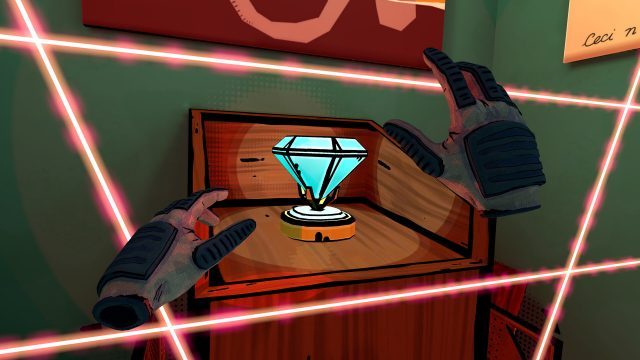
VR indie Triangular Pixels announced its pioneering room-scale VR spy game Unseen Diplomacy (2016) is finally getting a sequel, and it’s coming to Quest 3 and SteamVR headsets this year.

Initially released in 2016 for PC VR headsets, Unseen Diplomacy was one of the first VR experiences to include a unique room-scale locomotion method that “redirected” the user by warping and manipulating the game’s various rooms around you.

Now, veteran VR developer Triangular Pixels announced it’s releasing sequel Unseen Diplomacy 2: Spy Harder sometime this year, which is set to again put its ‘redirected walking’ locomotion front and center, but this time with a full campaign, expanded gameplay mechanics, and deeper strategy.

“We’ve listened to our community and taken everything they loved about Unseen Diplomacy, amped it up and refined it,” says Triangular Pixels’ Katie Goode. “Unseen Diplomacy 2 is bigger, smarter, and more immersive, designed to push the limits of VR espionage action.”

Here’s how the studio describes the action:

In Unseen Diplomacy 2, players take on the role of a spymaster, leading their own elite agency while also getting their hands dirty out in the field in a 1990s inspired retro-futuristic setting with analog technology. Sneak around enemy bases to steal valuable intel and resources, sabotage their plans, and then successfully escape without being noticed. To fully immerse themselves into this role, players will physically crawl, roll under lasers, and dodge side to side while utilizing new gadgets, like the wire clippers, and wearing disguises to dupe the enemy. Those who prefer a less quiet approach can also utilize blow darts. To ensure every mission and campaign feels fresh, Triangular Pixels uses a new system that not only procedurally generates levels, but also tailors the experience based on the space you have and the actions you take.

In addition to the franchise’s usual spying action, Unseen Diplomacy 2 also promises to bring a new strategic layer to the game, letting players recruit agents, manage resources, and deploy operatives on high-stakes missions to infiltrate rogue corporations, mad scientists and secret organizations threatening global stability.

“Every mission will bring you closer to uncovering the truth, and depending on the choices the players make, the road to success varies from playthrough to playthrough,” the studio says.

There’s no release date yet beyond the 2025 launch window, although in the meantime you can wishlist Unseen Diplomacy 2: Spy Harder on the Horizon Store for Quest 3 and 3S (includes mixed reality mode), and on Steam for PC VR headsets.

The post Pioneering VR Spy Game ‘Unseen Diplomacy’ is Getting a Sequel This Year on Quest 3 & PC VR appeared first on Road to VR.


from Road to VR https://ift.tt/O9ZpRgx
via IFTTT

Monday, 26 May 2025

‘Superhot’ Spiritual Successor ‘COLD VR’ Gets a Blast of New Content Next Month in ‘SUB-ZERO’ Update

https://ift.tt/FL2nOqo

COLD VR (2025) developer ALLWARE and publisher Perp Games announced their Superhot-inspired shooter is getting a host of updates next month in a new COLD VR: SUB-ZERO Edition.

As a spiritual successor to smash-hit shooter Superhot VRCold VR serves up a healthy dose of time-distorting action. Instead of time speeding up when you move though, Cold VR completely flips the script. When you move, time slows, forcing you to think and move quickly before enemies can overrun you.

Initially released in February, Cold VR is getting its first big update on June 2nd, which is among a slate of improvements, is set to bring five new levels to the Quest and PC VR versions of the game.

ALLWARE says a new main campaign with improved enemy AI is being introduced for better gameplay flow, which not only tweaks older levels, but also makes the game’s many Backroom levels optional.

Additionally, the game’s intro and Main Menu level are also getting a “complete overhaul” so players can jump into gameplay more quickly, the studio says.

Among the updates coming to ‘Sub-Zero’ is also a new weapon-catching mechanic, improved visuals, support for room-scale movement, and support for bHaptics haptic vests. The studio further confirmed that its long-awaited PSVR 2 version is still on the way in the near future.

In the meantime, you can find Cold VR over on the Horizon Store for Quest 2 and above, and on Steam for PC VR headsets, priced at $20.

The post ‘Superhot’ Spiritual Successor ‘COLD VR’ Gets a Blast of New Content Next Month in ‘SUB-ZERO’ Update appeared first on Road to VR.


from Road to VR https://ift.tt/Xce27Gp
via IFTTT

Friday, 23 May 2025

Meta is Testing a Quest UI Overhaul and 3D Instagram Photos in Latest Horizon OS Release

https://ift.tt/kuMyJDB

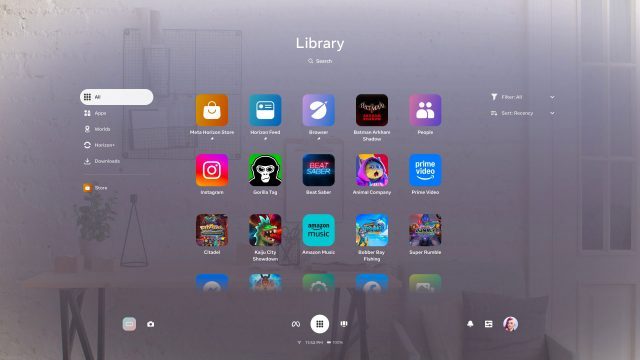
Meta announced it’s now running a test in Quest’s latest Horizon OS release (v77) that overhauls the platform’s dock-based UI for a new launcher overlay. Additionally, Meta says some users will also see 3D Instagram photos in their feed on Quest too, which is neat.

First teased at Connect 2024, Meta is finally bringing Navigator to Quest, which serves as a new centralized hub for apps, quick actions, and system functions.

“As part of our work to develop a fully spatial operating system designed around people, Navigator gives you convenient access to your recently used applications, with the added ability to pin up to 10 items in your library for quick access and seamless task resumption. This makes it easier to multitask in-headset and connect with the people and things you care about most,” Meta says in the v77 patch notes.

Essentially, Navigator is supposed to make it easier to access system-level controls and then quickly return to what you were doing in-headset. More specifically, the new UI should feel pretty familiar to smartphone users thanks to its more traditional layout.

YouTuber ‘The Construct’ shows off Navigator, including a tutorial video and hands-on impressions:

“We designed Navigator based on everything we’ve learned over the last decade. It’s unobtrusive, intuitive, and built from the ground up for the unique needs of spatial computing,” Meta says.

The company says Navigator will begin rolling out as a limited test to some people on the Public Test Channel (PTC) v77, which is expected to roll out gradually to all users over the coming months.

Additionally, Instagram is getting a little love on Quest too, as Meta says it’s currently testing 3D-ified photos on the platform. For some users on PTC v77, Meta’s AI will automatically transform existing 2D photos not originally captured in 3D into an immersive format.

“And it’s an early look at our plans to continue bringing more social and entertainment experiences that are 2D today into a more immersive, 3D future,” Meta says.

Note: To enroll in Quest’s Public Test Channel (PTC), you need to use the Meta Horizon app on your phone and navigate to the ‘Devices’ section. Select your Quest headset and then go to ‘Headset settings’ and then ‘Advanced Settings’. Finally, toggle on ‘Public Test Channel’.

The post Meta is Testing a Quest UI Overhaul and 3D Instagram Photos in Latest Horizon OS Release appeared first on Road to VR.


from Road to VR https://ift.tt/1bwg2qk
via IFTTT

Thursday, 22 May 2025

Valve Founder’s Neural Interface Company to Release First Brain Chip This Year

https://ift.tt/BaURXCF

Valve founder Gabe Newell’s neural chip company Starfish Neuroscience announced it’s developing a custom chip designed for next-generation, minimally invasive brain-computer interfaces—and it may be coming sooner than you think.

The company announced in a blog update that it’s creating a custom, ultra-low power neural chip in collaboration with R&D leader imec.

Starfish says the chip is intended for future wireless, battery-free brain implants capable of reading and stimulating neural activity in multiple areas simultaneously—a key requirement for treating complex neurological disorders involving circuit-level dysfunction. That’s the ‘read and write’ functions we’ve heard Newell speak about in previous talks on the subject.

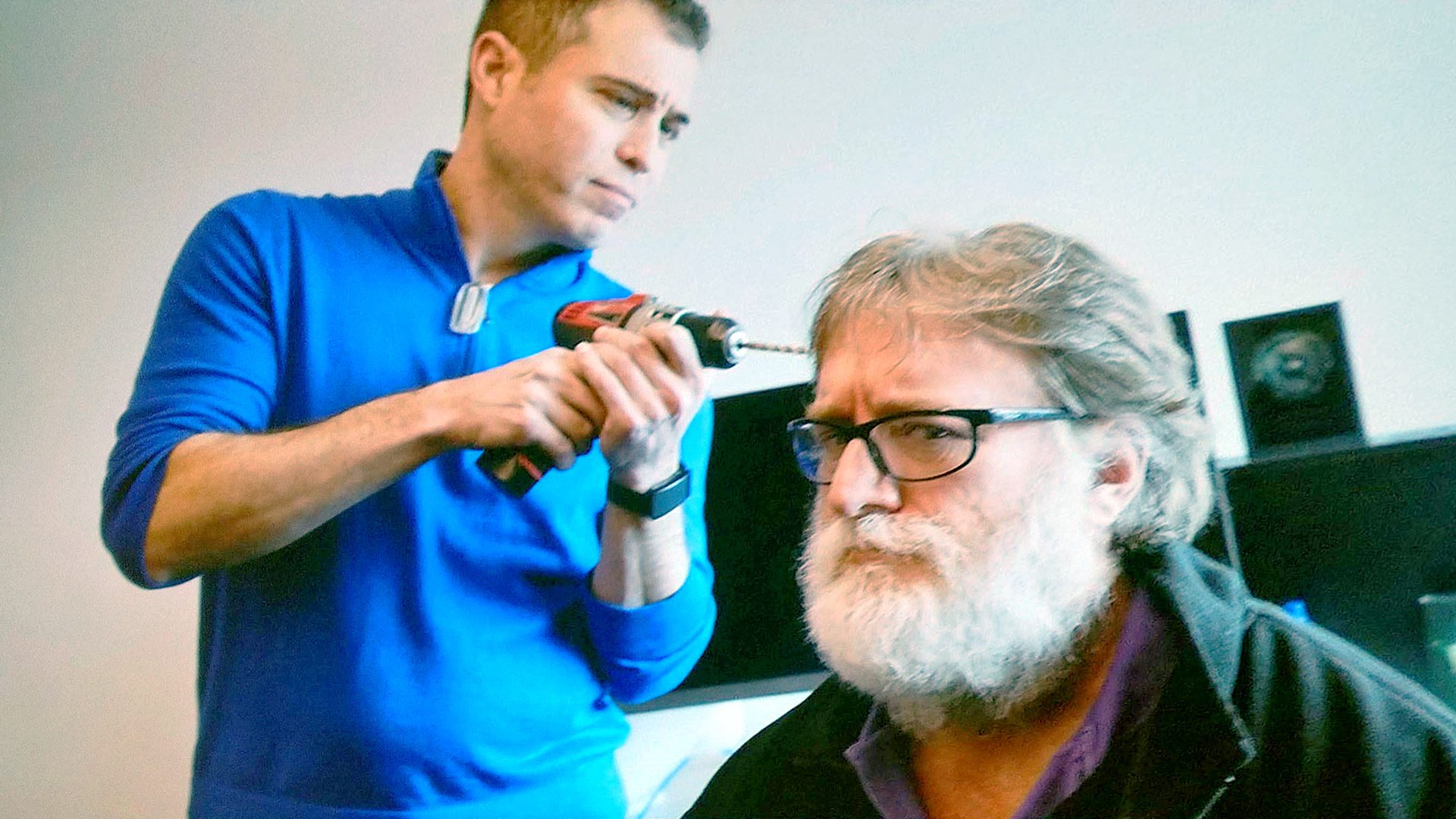
Mike Armbinder (left) and Gabe Newel (right) | Image courtesy Valve

The project aims to overcome current limitations of minimally-invasive neural interface implants, which are often bulky, power-hungry, and difficult to scale across multiple brain regions.

Current clinical technologies, like Elon Musk’s Neuralink (approved by the FDA in 2023), typically focus on single-region intervention in the brain’s motor cortex. In contrast, Starfish hopes to reduce surgical burden through miniaturization, making implants easier to place across multiple sites.

And at just 2 × 4mm, Starfish’s chip is tiny. If you never imaged reading a brain chip spec sheet from a company founded by Valve’s Gabe Newell, well, welcome to the future. Starfish’s first brain chip boasts:

  • Low power: 1.1 mW total power consumption during normal recording 
  • Physically small: 2 x 4mm (0.3mm pitch BGA) 
  • Capable of both recording (spikes and LFP) & stimulation (biphasic pulses) 
  • 32 electrode sites, 16 simultaneous recording channels at 18.75kHz 
  • 1 current source for stimulating on arbitrary pairs of electrodes 
  • Onboard impedance monitoring and stim voltage transient measurement 
  • Digital onboard data processing and spike detection allows the device to operate via low-bandwidth wireless interfaces. 
  • Fabricated in TSMC 55nm process

It’s still early days though. The company is now calling for early-stage collaborators—particularly those working in wireless power delivery, communication, and implantable neural devices—to explore novel applications of this technology ahead of its expected availability in late 2025.

As Newell has long suggested, the real potential lies beyond medicine, noting back in 2023 that “we’re way closer to ‘the Matrix’ than people realize.”

“I think connecting to people’s motor cortex and visual cortex is going to be way easier than people expected and doing things like […] reading and writing to somebody’s motor cortex is way more of a tractable problem than making people feel ‘cold’. And you never would have guessed that,” Newell said in a 2023 interview with IGN. “And I never would have guessed that before going into it. It turns out your brain has really good interfaces for some things and really badly designed, kludgy interfaces for doing other things. And the fact that your immune system gets involved in your perception of temperature means there’s all sorts of weird parts of your brain that participate in the sensation of being cold, whereas your motor cortex [or] your visual cortex are much more tractable problems.”

In 2019, prior to his departure from Valve, the company’s Principal Experimental Psychologist Mike Ambinder also gave some insight into how brain-computer interface might inform immersive games.

“We can measure responses to in-game stimuli. And we’re not always getting [data] reliably, but we’re starting to figure out how. Think about what you’d want to know about your players. There’s a long list of things we can get right now with current technology, current generation analysis, and current generation experimentation,” Armbinder said in his GDC 2019 talk, which was entitled Brain-Computer Interfaces: One Possible Future for How We Play.


Thanks to Brad ‘SadlyItsBradley’ Lynch for pointing us to the news.

The post Valve Founder’s Neural Interface Company to Release First Brain Chip This Year appeared first on Road to VR.


from Road to VR https://ift.tt/7XCNtTf
via IFTTT

New Tobii Partnership Paves the Way for Next-gen Eye-tracking Tech in XR Headsets

https://ift.tt/WVps1N3

Eye-tracking company Tobii announced it’s partnering with Prophesee to develop its next-generation of eye-tracking for AR/VR headsets and smart glasses, which will be based on Prophesee’s unique event-based vision system.

In short, Prophesee makes specialized cameras and sensors that work more like human eyes. Instead of recording everything like standard camera, their technology only captures changes, such as movement or light changes, making it faster, more compact and importantly more power efficient. Applications have included self-driving cars, industrial machines, smartphones, but also soon XR headsets and smart glasses with the help of Tobii.

The collaboration is said to combine Tobii’s industry leading eye-tracking platform with Prophesee’s event-based sensor technology, which the companies say will enable them to develop an “ultra-fast and power-efficient eye-tracking solution, specifically designed to meet the stringent power and form factor requirements of compact and battery-constrained smart eyewear.”

“Event-based vision is a perfect match for the growing demand for low-power, always-on sensing in next-generation wearable devices,” said Luca Verre, co-founder and CEO of Prophesee. “This partnership builds on a strong foundation of collaboration between our teams and expands our joint capabilities into the eye-tracking space. With Tobii’s proven leadership in eye tracking, combined with our experience in event-based sensing, we aim to set a new standard for what’s possible in AR/VR and smart eyewear.”

Emma Bauer, Tobii’s Senior Vice President of Integrations, calls smart glasses “one of the most demanding segments for eye tracking,” as it requires ultra-low power, high performance, and seamless integration into a standard glasses form factor.

Ray-Ban Meta Glasses, Image courtesy Meta, EssilorLuxottica

“Through partnering with Prophesee, we add event-based sensors as a complement to our existing camera technologies, giving our customers even more options and flexibility when designing their products,” Bauer says.

As the global leader in eye-tracking, Stockholm, Sweden-based Tobii has been one of the first companies to supply eye-tracking to consumer VR headsets with its slim and effective eye-tracking modules, allowing for thing like foveated rendering, social VR immersion, and automatic interpupillary distance (IPD) regulation—only three of the many reasons why eye-tracking is a game changer for XR.

Nowadays, you’ll find Tobii eye-tracking tech in a host of modern headsets, including PlayStation VR 2, Pixel Crystal, Play for Dream MR, as well as the 2019-era HTC Vive Pro Eye.

The post New Tobii Partnership Paves the Way for Next-gen Eye-tracking Tech in XR Headsets appeared first on Road to VR.


from Road to VR https://ift.tt/Fw8BA1n
via IFTTT

Google Releases Updated Preview of Android XR Development Tools

https://ift.tt/qjYES62

Google has released its second Developer Preview of the Android XR software development kit (SDK) following its initial release late last year, introducing new features and improvements including wider support for immersive video, better adaptive UI layouts, hand-tracking in ARCore for Jetpack, and more.

Announced at Google I/O, the billet of updates to Android XR SDK is aimed at giving developers more standardized tools to either make their own XR-native apps, or bring their standard Android apps to headsets.

This now includes support for 180° and 360° stereoscopic video playback using the MV-HEVC format, which is one of the most popular codecs optimized for high-quality 3D immersive video.

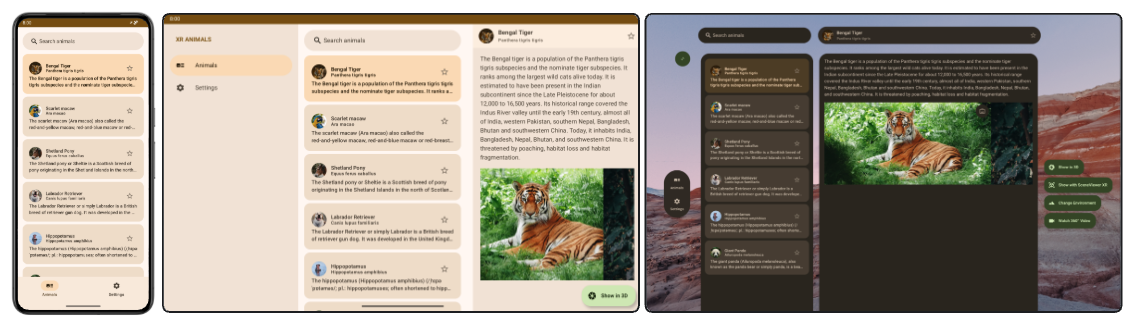
Google announced that Android XR Developer Preview 2 also now has Jetpack Compose for XR, which enables adaptive UI layouts across XR displays using tools like SubspaceModifier and SpatialExternalSurface. Jetpack Compose is Google’s declarative UI toolkit, which aims to standardize UI design across mobile, tablet, and immersive headsets.

Image courtesy Google

A major update in ARCore for Jetpack XR is the introduction of hand-tracking, which includes 26 posed joints for gesture-based interactions. Developers can now find an updated samples, benchmarks, and guides to help integrate hand-tracking into apps.

Material Design for XR has also been expanded, which Google says will help “large-screen enabled apps [to] effortlessly adapt to the new world of XR.”

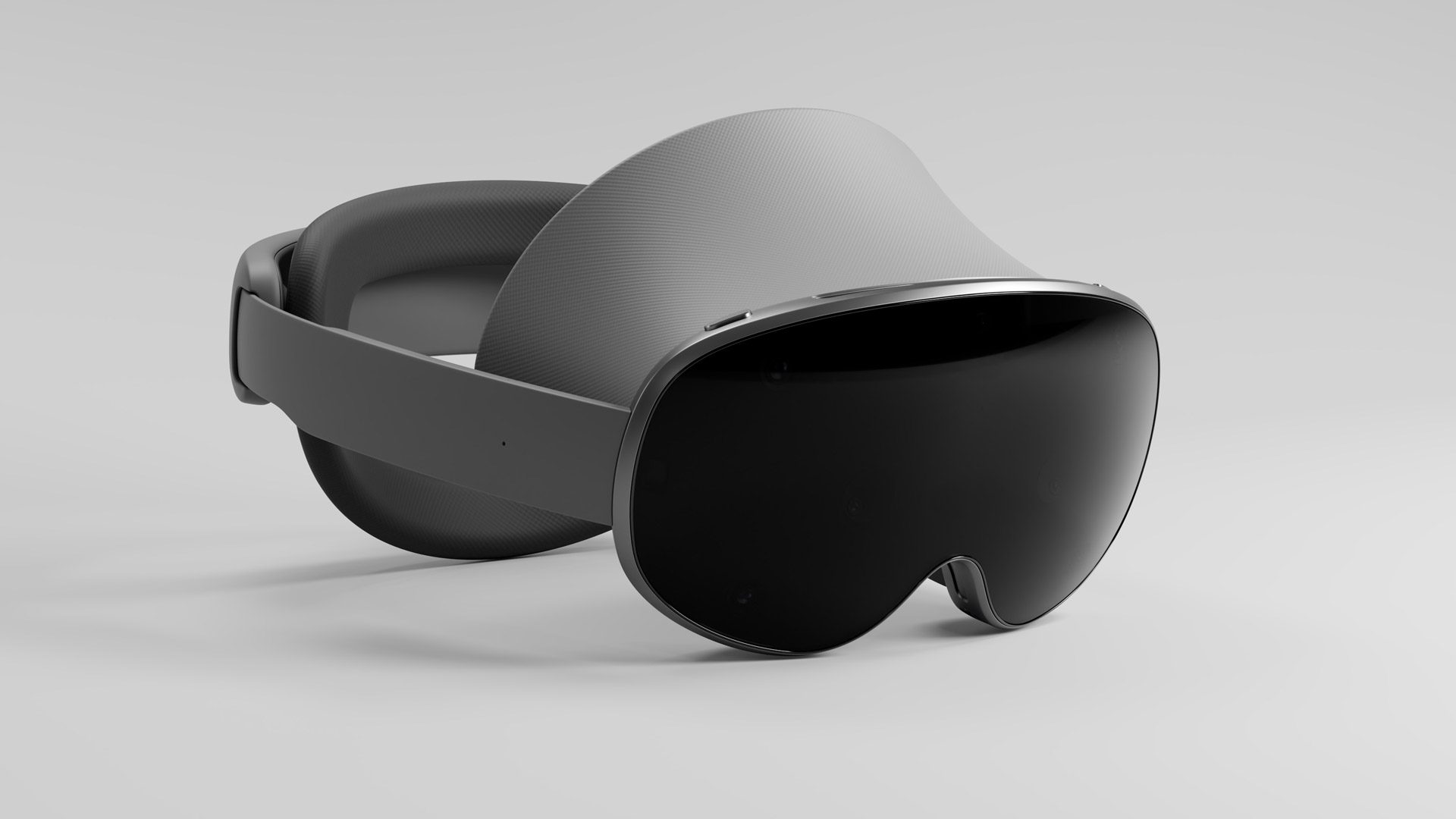
Still, a majority of Android XR developers likely don’t have access to official Android XR headsets, which will include mixed reality headset Samsung Project Moohan and AR glasses XREAL Project Aura when they launch later this year—making its Android XR Emulator an indispensable tool.

Samsung Project Moohan, image courtesy Google

Google says Developer Preview 2 now has improved Android XR Emulator by including AMD GPU support, better stability, and tighter integration in Android Studio, which ought to help with XR app testing and development workflows.

Unity, the most popular game engine for XR development, also now offers access to Pre-Release version 2 of the Unity OpenXR, which brings important performance bumps with Dynamic Refresh Rate and SpaceWarp support through Shader Graph. Unity’s improved Mixed Reality template also now features realistic hand mesh occlusion and persistent anchors.

Additionally, Android XR Samples for Unity have been released, showcasing features like hand tracking, plane tracking, face tracking, and passthrough to give developers a kickstart on integrating those features in their own Android XR apps.

That said, while Android XR wasn’t a exactly a massive headliner at this year’s Google I/O, the company is moving forward by not only releasing Android XR to more partner devices, but also by its releasing Android XR smart glasses from eyewear makers Warby Parker and Gentle Monster at some point.

Google says it’s releasing two main versions of its Android XR glasses: one strikingly similar in function to Ray-Ban Meta Glasses, as well as one with a on-board displays for basic tasks like reading text, viewing photos and videos, and navigation.


You can learn more about Android XR Developer Preview here, which includes more detail on all currently available tools and updates.

The post Google Releases Updated Preview of Android XR Development Tools appeared first on Road to VR.


from Road to VR https://ift.tt/JQ1LyFq
via IFTTT
Related Posts Plugin for WordPress, Blogger...