Monday, 13 January 2025

Pimax Raises Another $13.6M to Accelerate the Development of Its VR Headset Business

https://ift.tt/qMwXZVH

Pimax, the Chinese startup known for its wide field-of-view (FOV) PC VR headsets, has secured an additional ¥CN100 million (~$13.6 million USD) in an extension to its Series C funding.

According to an initial report from 36Kr (Chinese), the investment round was led by Zhuji Jingchuang Rong Investment Co, and supported by previous investor Ivy Capital, which took part in the company’s $20 million Series B in 2020. This brings to company’s overall outside investment to $82.7 million, according to Crunchbase data.

Pimax says its latest funding round will allow it to further expand its R&D group in the US, and establish a new R&D group in Europe. The 36Kr report maintains Pimax’s customer base is largely outside of China, accounting for as much as 80% of the company’s headset sales.

“This is mainly due to the company’s continuous R&D and innovation capabilities, complete product matrix layout, and mature overseas market strategy,” Pimax founder Robin Weng told 36Kr. “It is also due to the general trend of the global high-end VR market entering a stable and rapid growth track.”

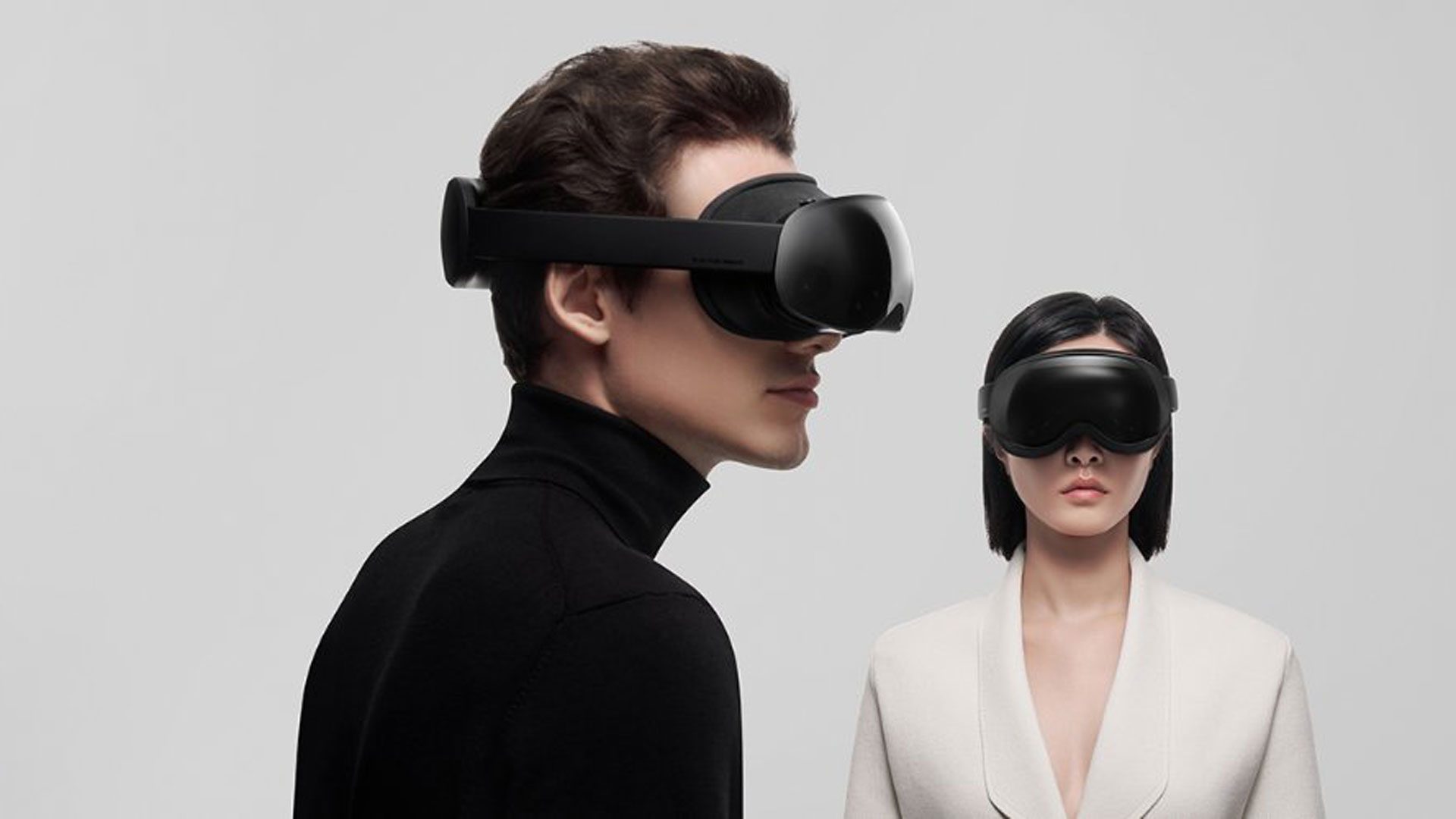
Since its founding in 2015, Pimax is best known for its wide-FOV PC VR headsets, such as its latest ‘Crystal’ series headsets. The company has also shown increasing interest in the burgeoning slim and light headset category with the announcement of Dream Air in December, a slim and feature-rich PC VR headset.
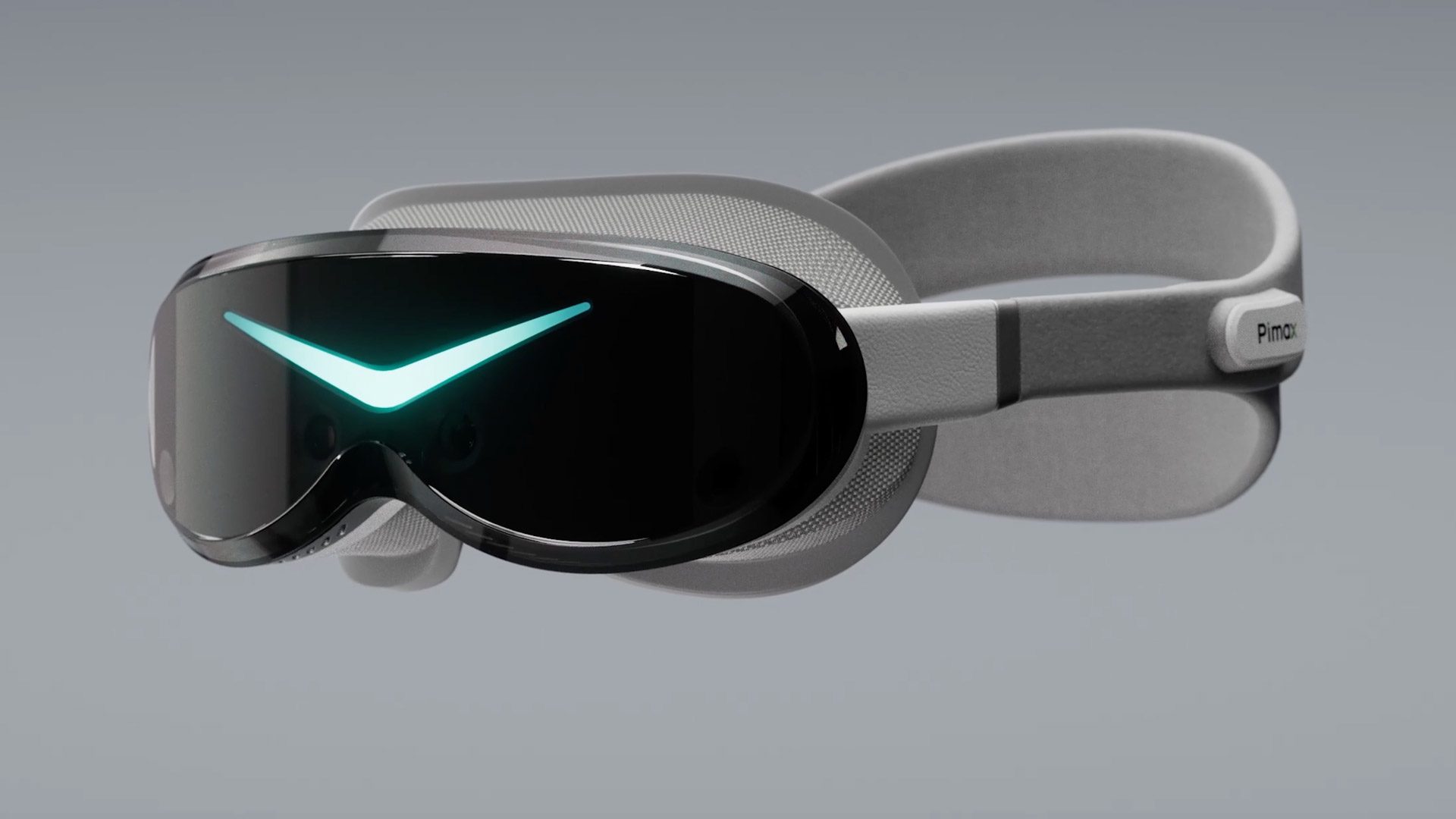
Dream Air | Image courtesy Pimax

Priced at $1,900 and expected to release in May 2025, the company also announce an optional puck-style compute unit ‘Cobb’, which houses a Snapdragon XR2 Gen 2 chipset for standalone VR.

While Pimax has garnered an impressive amount of funding over the years, and largely delivered on its most important promises, the company has some notable challenges ahead.

In November, Pimax introduced a new payment model moving forward, allowing customers to buy their headsets at a lower price and try either its Crystal Light or soon-to-launch Crystal Super risk-free for 14 days. Instead of buying a headset at its full MSRP, the new structure puts requires the user to make an additional one-time payment after the trial period in order to gain continued access to the headset’s required software.

While the program was initially announced to include a 10-day trial period, the company quickly changed course to offer an additional four days after community backlash, and also an ostensible realization that it was obligated to offer 14 days as per consumer protection laws in the EU and UK.

More recently, the announcement of Dream Air seems to continue Pimax’s tendency to reveal new products before delivering on those it has previously announced. Revealed back in April 2024, the company’s Crystal Super headset was originally planned to release sometime in Q4 2024, however that was delayed to Q1 2025.

First batches containing the QLED 57 PPD optical engine are expected to start shipping at the end of January, with additional optical engines slated to release in March and April, the company tells us in a recent Q&A.

As for Dream Air’s separate compute unit, Cobb, Pimax says its has “no exact ETA,” as the company still wants “to add some features that we did not communicate in our Frontier announcement.” Based on Pimax’s past approach, it’s possible we may hear additional announcements before Cobb reaches consumers.

The post Pimax Raises Another $13.6M to Accelerate the Development of Its VR Headset Business appeared first on Road to VR.


from Road to VR https://ift.tt/eUt3dQW
via IFTTT

Friday, 10 January 2025

Vision Pro Knock-off Gets High Praise From Former Quest Engineer

https://ift.tt/zxEbodI

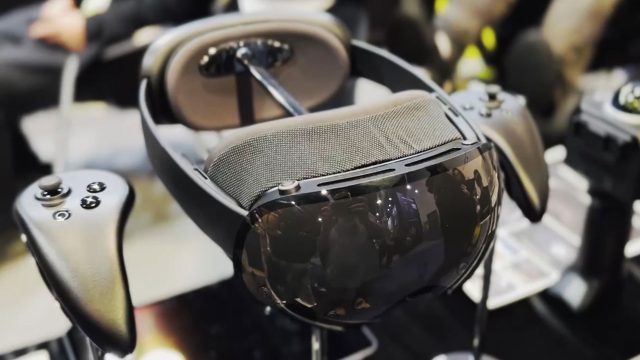
Wait, Apple Vision Pro doesn’t come in black, does it? Nope, but Play For Dream MR does. And with what some are calling the ‘Android Vision Pro’, owing to its Android-based OS, Play For Dream seems to have turned some heads at CES 2025 this past week.

Initially launched in Asia last year, China-based headset creator Play For Dream had its sights on bringing the heavily Vision Pro-inspired mixed reality headset to the West. Launching a Kickstarter campaign in September, Play For Dream MR went on to garner $2,271,650.00 Hong Kong dollars (~$292,000 USD).

Play For Dream MR has packed in a laundry list of modern XR features, including a Snapdragon XR2+ Gen 2 chipset running Android 15, dual 3,840 × 3,552 micro-OLED displays (90Hz), eye-tracking, auto IPD adjustment, wired and wireless PC streaming, and also a Quest Pro-inspired rear-mounted battery and Touch-style controllers.

In short, the headset appears to have it all—even Vision Pro’s user interface.

Design inspirations aside, former Quest engineer Amanda Watson got a chance go hands-on with Play For Dream’s MR headset, noting in an X post it was “absolutely the best all around HMD demo I saw on the floor today.”

“It is quite literally an ‘Android Apple Vision Pro’. but the execution was excellent. Great performance, optics, UI and media capture/playback features,” Watson continues, who departed Meta in 2022.

During her time at Meta/Oculus, Watson worked on a number of Quest-related projects, including both the tethered Link and the company’s Wi-Fi streaming tool, Air Link. At one time, she was the sole developer of Air Link for 13 months prior to its release. So when Watson says something is good, it probably is.

“It has USB and wireless PCVR streaming (I tried USB) — this was more [work-in-progress] quality (frame rate and latency) compared to other features, but it’s a relatively recent feature [as I understand it]. The basics like controller motion were nailed down and resolution was solid.”

Image courtesy Play For Dream

Furthermore, Watson reports its Touch-style controllers were “also very good. They said hand tracking exists, but they didn’t demo it.” Notably, the headset’s pancake lenses had “excellent distortion correction,” which Watson says is “the biggest thing to me personally.”

Established in 2020 under the name YVR, Play For Dream has already launched two generations of standalone VR headsets, its YVR 1 and YVR 2, both of which were released in China in 2022.

Play For Dream MR doesn’t have a firm release date or pricing yet, however the company has said it will come in under $2,000. For more, check out Play For Dream’s website for detailed specs and ordering opportunities when they arrive.

The post Vision Pro Knock-off Gets High Praise From Former Quest Engineer appeared first on Road to VR.


from Road to VR https://ift.tt/XqwLCG2
via IFTTT

Sony’s Enterprise MR Headset Set to Release Next Month, Priced at $4,750

https://ift.tt/TYeCWLs

We haven’t heard much about Sony’s SRH-S1 standalone MR headset over the past year, which the company revealed at CES 2024. Now, the enterprise-focused device has an official launch date and price.

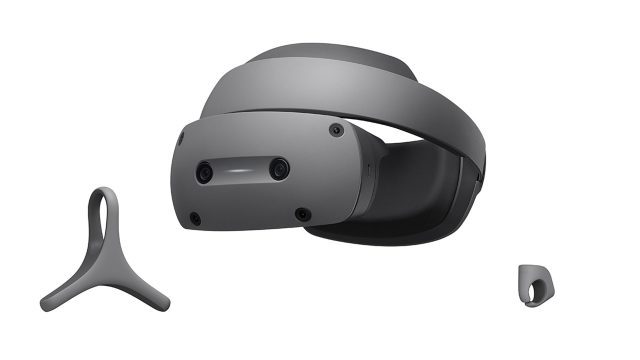
Released in collaboration with Siemens, the soberly-named Sony SRH-S1 is set to launch sometime in February 2025, priced at $4,750, which the companies are squarely aiming at enterprise. Orders begin on January 23rd, 2025, purchasable directly through Siemens.

While previously pitched last year to appeal to creatives, Sony and Siemens are clearly targeting industrial use cases; the companies say SRH-S1 will “enable the industrial metaverse” and enhance product design and manufacturing through Siemens’ set of high-fidelity mixed reality tools.

Image courtesy Sony

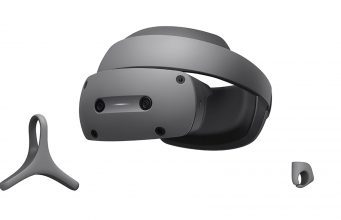
Offering 13.6MP (3,552 × 3840) per-eye using Sony’s own ECX344A OLED microdisplay and a Qualcomm Snapdragon XR2+ Gen 2 chipset, the headset also packs in what Sony calls a “proprietary rendering technology” for real-time 3D object rendering.

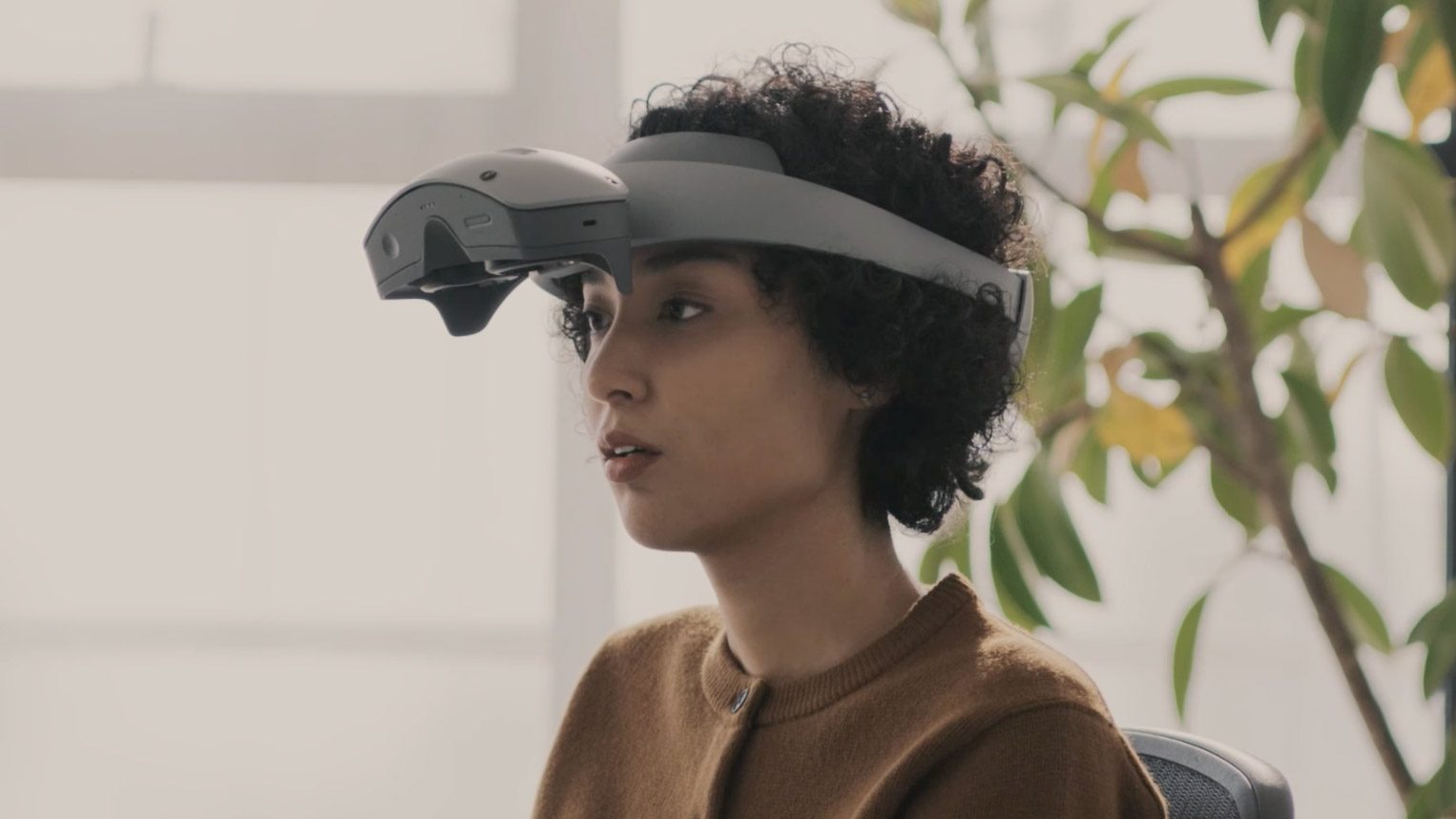
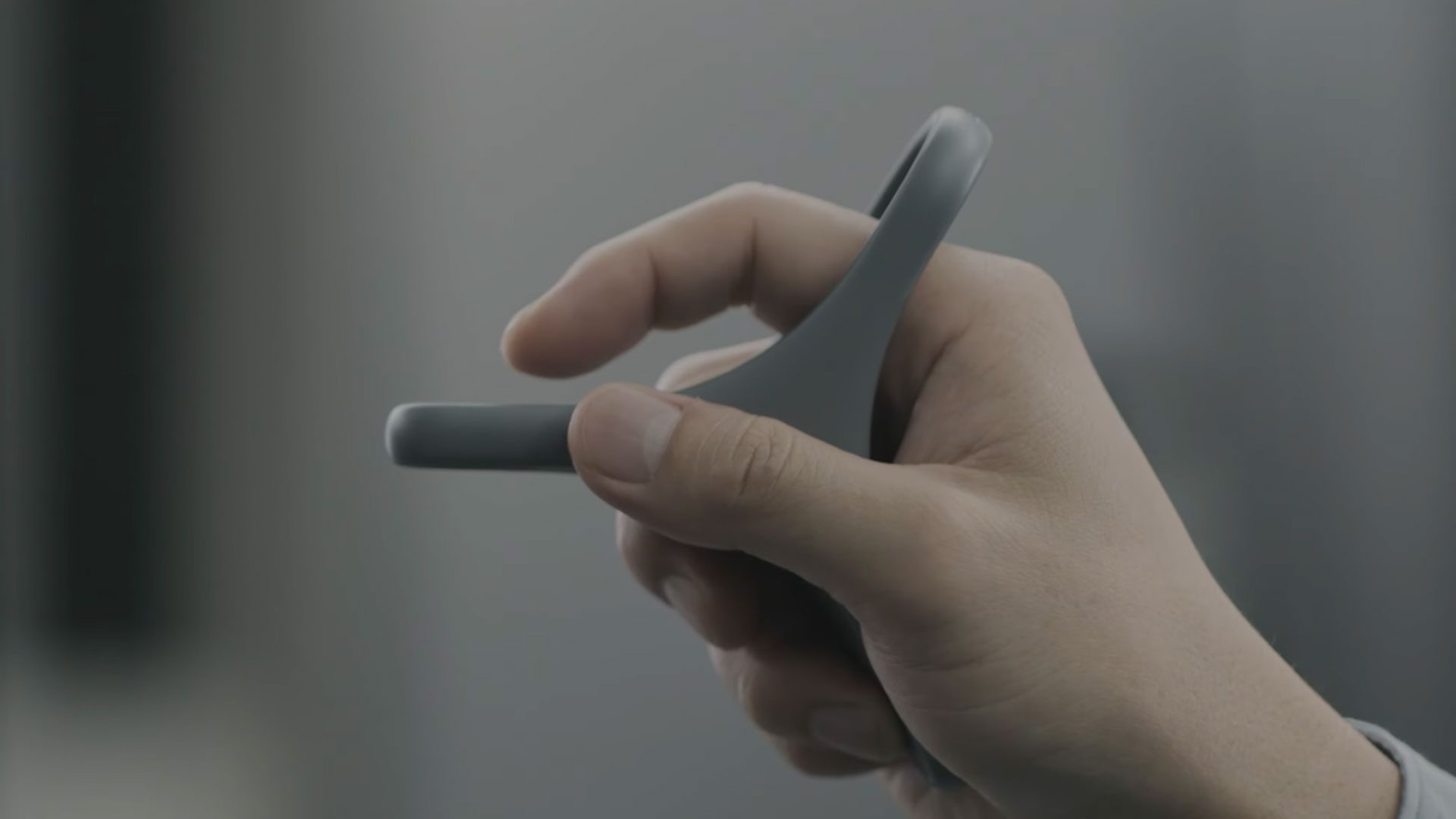
As a mixed reality device, Sony’s SRH-S1 also includes passthrough video, a flip-up visor, and a unique pair of ergonomic controllers designed for intuitive 3D interactions, presented in the form of a stylus-type pointer and ring.

Image courtesy Sony

Over the past year, Siemens has also refined its set of enterprise-focused Immersive Engineering tools, which aim to let SRH-S1 users design 3D assets in CAD, interact with models, and remotely conduct multi-user design reviews via Siemens’ cloud-based NX X platform.

“After previewing the HMD at CES last year, our collective teams have built a set of tools that revolutionize how mixed reality is used in the engineering space – to not only support global collaboration based on high-fidelity 3D models, but to enable co-creation directly on vital 3D CAD data in a managed, secure environment,” said Bob Haubrock, senior VP of Product Engineering Software at Siemens Digital Industries Software.

This follows the announcement at CES this week that Sony is set to launch a creative-focused headset for prosumers, called XYN, which for now doesn’t have a price or release date. While Sony is staying tight-lipped on XYN, which is said to be a prototype at this stage, it appears to indeed be a variant of SRH-S1, denoted externally by its black colorway in comparison to SRH-S1’s grey design.

The post Sony’s Enterprise MR Headset Set to Release Next Month, Priced at $4,750 appeared first on Road to VR.


from Road to VR https://ift.tt/eFLCjE8
via IFTTT

Shiftall Reveals Quest ‘Expansion’ Controller, New SteamVR Controllers

https://ift.tt/O6EMLkF

Shiftall, the Japan-based creators behind MeganeX PC VR headsets, announced two new VR controller accessories at CES 2025—a SteamVR-compatible controller for PC VR, and a unique add-on to Quest Touch controllers that give users a scroll wheel and extra buttons.

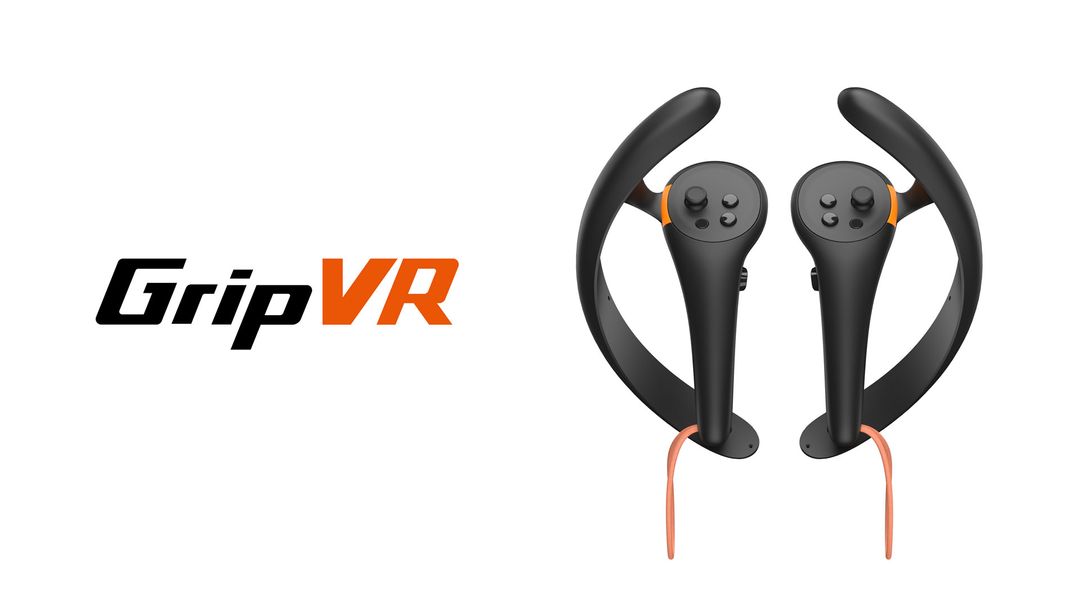
GripVR

Image courtesy Shiftall

Shiftall is bringing out its own standard PC VR controller, called GripVR. Designed for SteamVR Tracking systems (1.0, 2.0), GripVR follows a standard button layout, featuring AB/XY input buttons, pressable joysticks, triggers, and grips—all of which are said to feature capacitive touch sensors.

GripVR is said to offer an eight-hour battery life, rechargeable via its USB Type-C port. Like all SteamVR tracked accessories, it’s set to be compatible with various SteamVR headsets, such as Valve Index, HTC Vive, as well as the company’s MeganeX superlight “8K”.

Shiftall’s GripVR is targeting launch sometime this summer at the estimated price of $299-$399.

AddCon

Image courtesy Shiftall

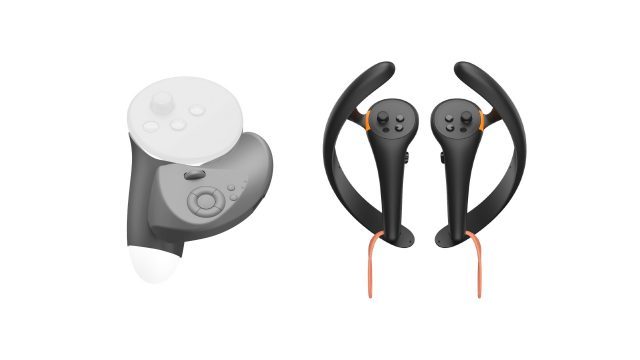
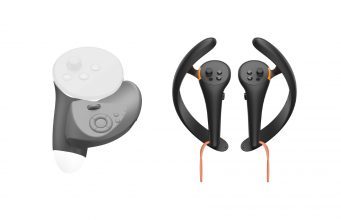
Shiftall also announced AddCon, a unique aftermarket attachment for the left-hand Touch controllers of Quest 3/3S/Pro. The device adds a wheel and buttons to extend the functionality of the controller, which presumably makes it easier to deal with 2D UI elements as well as VRChat specific controls.

Notably, AddCon also includes a shift function via an embedded capacitive sensor on the pinky finger rest, enabling users to toggle between different sets of commands.

Shift all says AddCon is intended for users who require additional control options for VR applications, such as adjusting camera settings or managing avatar functions in VRChat. The controller add-on is said to support over 14 assignable inputs and can be configured using a dedicated PC application, the latter of which can also function as an OSC command transmission device for standalone VRChat setups, Shiftall says.

AddCon connects to Quest over Bluetooth LE or GX6/GX2 dongle, and charges over it’s USB Type-C port. Like GripVR, Add on is targeting a summer 2025 release, priced however at $69 for the single left-hand Touch accessory.

This follows last year’s announcement of it’s latest MeganeX superlight “8K” PC VR headset, which is slated to ship in early 2025, priced at $1,899. As the latest MeganeX, the SteamVR-compatible headset boasts a slim and light profile, and dual 4K high-resolution OLED panels.

The post Shiftall Reveals Quest ‘Expansion’ Controller, New SteamVR Controllers appeared first on Road to VR.


from Road to VR https://ift.tt/gf4wLxm
via IFTTT

Thursday, 9 January 2025

Sony Shows Off ‘The Last of Us’ Immersive Attraction Concept That Should Be VR, But Sadly Isn’t

https://ift.tt/NPA8Un1

Sony unveiled a new location-based entertainment (LBE) concept based on The Last of Us game and TV franchise. While it looks ripe for VR arcades, it appears to be skipping VR headsets altogether for an array of large format LED panels.

The concept, which is currently being shown at CES 2025 in Las Vegas, is said to combine “the latest technologies including Sony’s Crystal LED panels, engaging audio, haptics, scent and atmospherics with interactive PlayStation game content.”

Much like the older CAVE (cave automatic virtual environment) setups, which use projectors instead of headsets, The Last of Us LBE concept experience allows a group of users to explore the infected tunnels below Seattle, which is plagued by a fungal infection that’s turned the world’s population into monsters.

The trailer gives us a few clues how the company hopes to do this, showing off a group of users carrying flashlights and weapons, the latter of which appear to be tracked by SteamVR base stations via HTC Vive tracking pucks.

According to a press release, Sony says it’s currently “exploring ways to expand the value of content IP by developing a proof-of-concept for location-based entertainment with various technologies such as video, audio, and haptics to provide creators with new avenues for expression.”

“This is still in the proof of concept phase,” Neil Druckmann said, studio head of Naughty Dog and co-creator of The Last of Us. “But this new and incredible technology allows us to immerse all of your senses.”

Sony hasn’t said whether it’s actually rolling out The Last of Us experience, or where, however a good bet would be its Sony’s new Wonderverse destination in Chicago, which showcases both VR and non-VR entertainment for Sony IP such as Jumanji, Ghostbusters, Uncharted, and Zombieland.

While Sony has turned a few of its most recognizable IP into VR entertainment experiences over the years, there may be a few reasons behind the CAVE-style setup.

Although undoubtedly expensive to create, a headset-less experience could allow for a much quicker user onboarding process, since participants don’t need to go through tutorials on how to fit into headsets or wear haptic gear. More quickly moving the paying public through the experience is nice, but so is the overall reduction in downtime, such as equipment checks and sanitization, which is a constant part of the VR arcade workflow.

Then again, it could also be just a big commercial for Sony’s Crystal LED panel tech, giving CES-goers something to talk about (present company included).

The post Sony Shows Off ‘The Last of Us’ Immersive Attraction Concept That Should Be VR, But Sadly Isn’t appeared first on Road to VR.


from Road to VR https://ift.tt/CIS76wg
via IFTTT

VR & Flatscreen Indie Hit ‘Exit 8’ is Getting a Live Action Movie This Year, Trailer Here

https://ift.tt/26NQca8

Exit 8 (2023), the indie hit walking simulator for PC and VR headsets, is getting a live action film, bringing its Tokyo underground anomalies to the big screen this year.

Exit 8 is being made into a full-length film for worldwide release in 2025, which is being produced by Toho, the Japanese film company.

Toho is known for producing the Godzilla franchise, and distributing a slew of well-known Japanese films, including Akira (1988), Battle Royale (2000), Spirited Away (2001), as well as many of Akira Kurosawa’s most iconic films.

Image courtesy KOTAKE CREATE, MyDearest Inc.

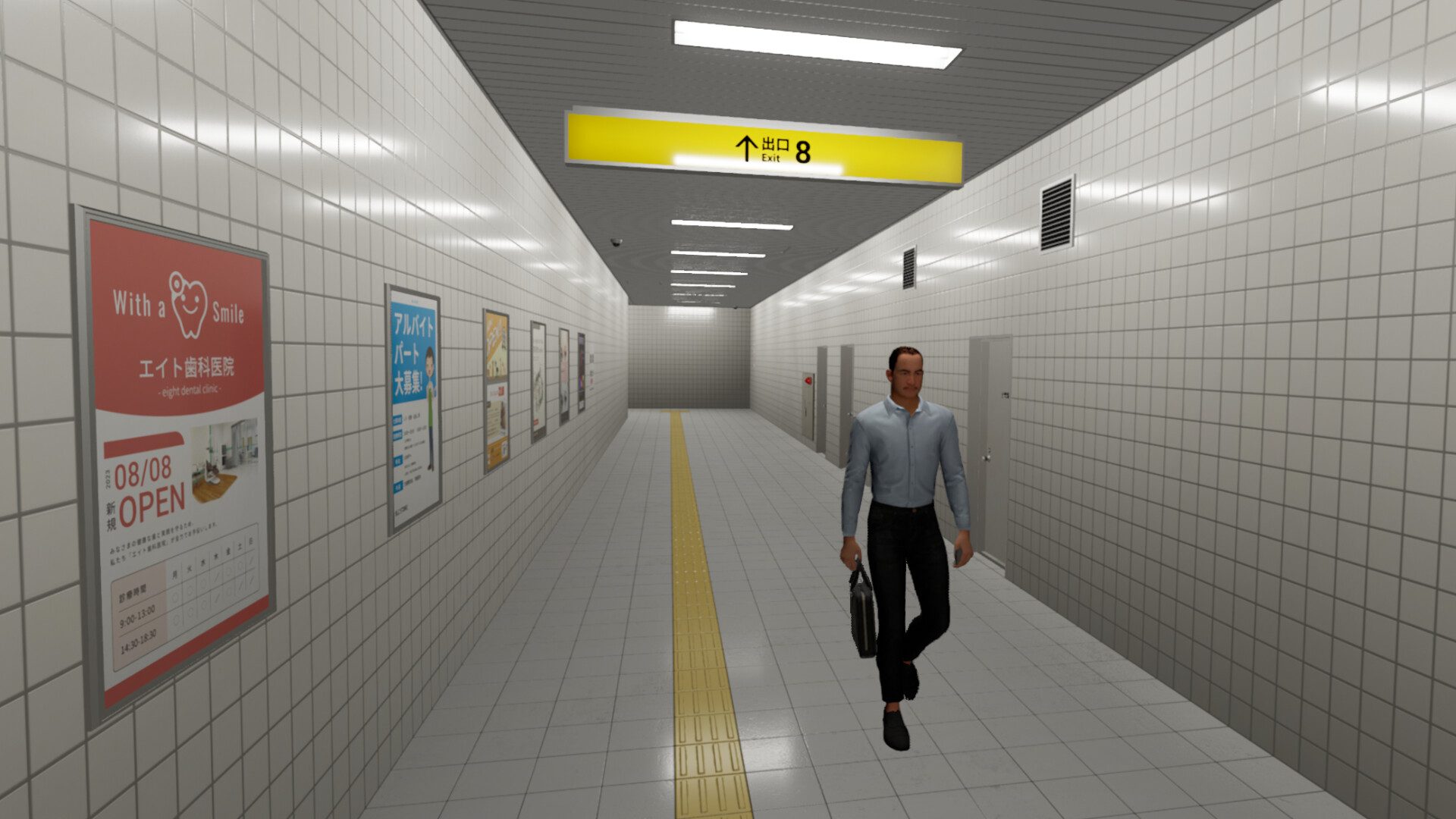
Taking place in a hauntingly sterile Tokyo metro passage filled with anomalies, the player has to reach the eponymous exit eight to survive. It’s part walking sim, part horror adventure, and entirely based on the Backrooms cult Internet lore.

“Make sure not to overlook any anomalies. If you find any anomalies, turn back immediately. If you don’t find any anomalies, keep going. Kindly exit through Exit 8,” the game’s description reads, available on the Horizon Store for Quest and PC VR headsets on Steam.

Here’s what original developer KOTAKE CREATE says on the film’s website (machine translated from Japanese):

“Exit 8” will be made into a live-action movie! I was surprised and grateful because I never expected that the game would be released at the end of November 2023 and then a movie would be announced about a year later.

When I heard about the movie, I wondered how they would turn a game without a story into a movie, but I think it has turned out to be an interesting movie without destroying the world view and atmosphere of “Exit 8”!

I also had the opportunity to visit the filming location, and it was really amazing to see the underground passage and the old man right in front of me! I hope you will look forward to it! I am also looking forward to the release!

Information is still thin, however Toho says it will be available worldwide and only in theaters. Just how the game will be teased out into a full-feature film remains to be seen, but either way color us curious.

The post VR & Flatscreen Indie Hit ‘Exit 8’ is Getting a Live Action Movie This Year, Trailer Here appeared first on Road to VR.


from Road to VR https://ift.tt/dWnH95Y
via IFTTT

Meta’s VR Fitness App ‘Supernatural’ Now Has Over 100,000 Users

https://ift.tt/TPtU9Ma

Meta announced that Supernatural now boasts over 100,000 users, putting its first-party fitness app’s revenue in the millions.

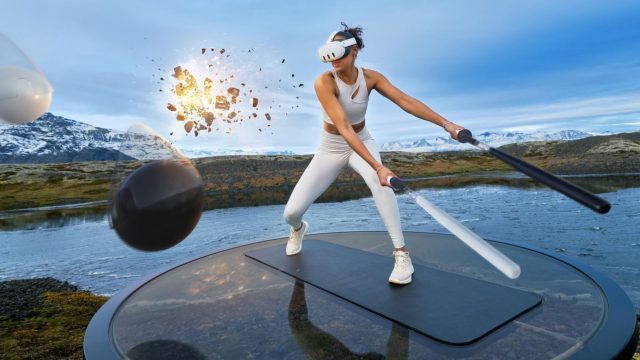
Launched in 2020, Supernatural gamifies fitness with some very Beat Saber-inspired orb-smashing mechanics, which is set to the beat of a poppy soundtrack led by personal coaches in a variety of picturesque locales.

Now, Meta has released its first user figures for Supernatural, saying in a blog post it now counts 110,000 users of the app.

As the first user data released for Supernatural, it’s difficult to tell whether the app has floated or flourished since its release during the COVID-19 pandemic, which saw many gyms closed, forcing users to workout at home. Still, it’s clear Meta is putting some gas behind Supernatural, as the app recently released a workout led by fitness legend Jane Fonda.

Granted, Meta may be counting among its 110,000 users those taking advantage of the 14-day free trial, which you’d expect to be at its peak right now as users are looking to get fit in the new year. Provided Meta is counting actual subscribers though, that handily puts the app’s yearly revenue in the millions.

At $100 per year, or $10 per month, Supernatural’s yearly gross revenue could fit somewhere between $11 million and $13.2 million, or $917,000 and $1,100,000 when calculated monthly. It may also be slightly lower than that, considering the app can also be purchased in Quest 3/3S hardware bundle for an additional $50 than either headsets’ base version, which provides a one-year subscription to the app.

In comparison to leading non-VR fitness apps, Supernatural still has lot of room to grow if it wants to become the ‘Peloton of VR’. According to data compiled by StatistaPeloton’s mobile app subscription posted over $5 million revenue in January 2024 alone.

While Peloton can be used with nearly any mobile device, and be paired with any manufacture of rower, stationary bike, or treadmill, Supernatural’s bottleneck to higher user numbers invariably comes down to the number of Quest headsets in active use.

Meta hasn’t published recent figures on monthly active users (MAU) of its Quest headsets, however a 2023 Wall Street Journal report citing internal figures from October 2022 noted the Quest platform counted 6.37 million MAU.

And the need to recoup on Supernatural is very real, if only to justify the company’s costly legal process started by the United States Federal Trade Commission in 2022 to block the acquisition of original developer Within under the guise of unfairly monopolizing the VR fitness space.

The post Meta’s VR Fitness App ‘Supernatural’ Now Has Over 100,000 Users appeared first on Road to VR.


from Road to VR https://ift.tt/dEH6DXU
via IFTTT
Related Posts Plugin for WordPress, Blogger...