
Wednesday, 8 January 2025

Immersive Web Company Infinite Reality Raises $3 Billion From a Private Investor

https://ift.tt/pXM1U2I

Infinite Reality, a company building an engine for creating immersive web content underpinned with WebXR support, announced it has raised a whopping $3 billion to continue building the company’s “vision for the next generation of the internet.” Not only is this a huge fundraising round, such an investment coming from a single private investor is highly uncommon.

Founded in 2019, Infinite Reality’s flagship product is iR Studio, an engine for building immersive websites that represent visitors as avatars in a virtual environment. iR Studio sites support multi-user and WebXR by default, meaning sites built with the engine can be visited in any XR headset that supports WebXR, directly through a web browser.

The company announced today that it has raised $3 billion in additional funding, bringing its valuation to $12.25 billion. For comparison, a ‘unicorn’ (a startup valued at $1 billion) is a commonly cited benchmark for a highly successful tech startup. That makes Infinite Reality’s $12.25 billion valuation quite rare.

Even rarer, however, is that this $3 billion investment was purportedly made by a single private investor. While there are often $1+ billion investments or acquisitions in the tech world, the money usually comes from an investment firm, a major corporation, or a combination of the two, rather than an individual.

The investor is said to have a portfolio that “focuses on global technology and real estate investments.”

While the identity of the investor has not been disclosed, the sheer amount of the investment likely whittles the list of possible investors down to someone among the 1,000 wealthiest people in the world.

Ashcroft Law Firm, the firm representing the investor in the deal, provided a statement on the client’s behalf:

Our client has made and evaluated several investments in the technology sector. What compelled this investment was not just [Infinite Reality CEO’s] stated vision for the product itself, but his commitment to giving customers ownership of their data. As everyone understands, it is a crucial time for businesses of all sizes to own their data, customers, and intellectual property as AI gains momentum in the marketplace. Recognizing the significance of scalability and mass marketability, our client was particularly impressed by what he believes is iR’s revolutionary product, which caters to individuals and artists seeking to build their brand image with immediate global reach while servicing clientele from small businesses to Fortune 500 companies. It is our client’s belief this investment underscores a pivotal move towards empowering users and redefining ownership in the digital age.

From Infinite Reality’s side, the company says the funding is a win for building a next-generation immersive internet and giving businesses control of their own data.

“While we are excited that our ability to secure this level of funding validates our mission to build an immersive experience platform that will power the next generation of the web, we are absolutely ecstatic to share this news with our customers: businesses all over the world,” says John Acunto, co-founder and CEO of Infinite Reality. “The ability to provide them a platform where they can not only create a great immersive environment, but one where they own their data, own their customer, and own their experience means the world to Infinite Reality—and to me personally.”

Despite its focus on the immersive web, and considering the amount the company has raised, Infinite Reality is not particularly well known in the XR space. In fact the company has seemingly grown into its own little conglomerate, having made several acquisitions of its own over the years.

On one hand, the company has made strategic acquisitions like the AR tech company Zappar, avatar company Action Face, and the immersive web company Ethereal Engine. But the company has also made a series of seemingly disjointed acquisitions like the entertainment and esports business RektGlobal. And, further afield still, the acquisition of the Drone Racing League.

The huge investment by a private investor and Infinite Reality’s assimilation of several different companies certainly make for a unique—but uncertain—situation.

The post Immersive Web Company Infinite Reality Raises $3 Billion From a Private Investor appeared first on Road to VR.


from Road to VR https://ift.tt/5nBOyi9
via IFTTT

Scientists Build an Itty-bitty VR Headset to Better Study Mice

https://ift.tt/lzf3RFb

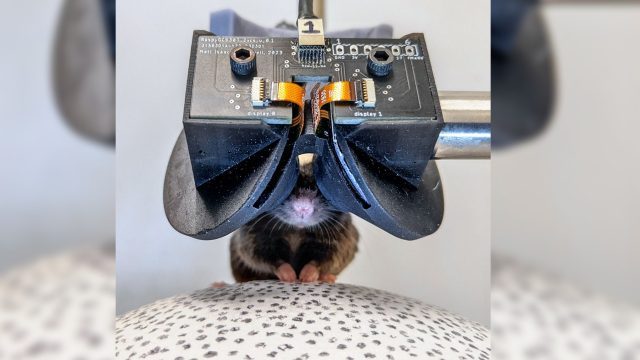
Researchers at Cornell University have developed ‘MouseGoggles’, a miniature VR headset with eye-tracking for mice, which was used to study complex behaviors during neural recordings.

Traditional small-animal VR systems have been limited by their size, immersivity, and lack of advanced features such as eye-tracking. With MouseGoggles, which was the subject of a recently published paper, Cornell researchers hoped to gain greater insight into the mouse brain, which has been the gold standard model for behavioral and neurological studies.

Researchers validated the study by recording neural activity in the visual cortex, showing that the images were presented clearly and effectively. They also found that the VR headset created an immersive experience, as demonstrated by hippocampal recordings, reward-based learning tests, and fear responses to virtual looming objects.

Led by by Chris Schaffer, professor of biomedical engineering in Cornell Engineering, and Ian Ellwood, assistant professor in neurobiology and behavior in the College of Arts and Sciences, the team also hopes to facilitate broader adoption of VR methods in neuroscience research.

“It’s a rare opportunity, when building tools, that you can make something that is experimentally much more powerful than current technology, and that is also simpler and cheaper to build,” postdoctoral researcher Matthew Isaacson told Cornell Chronicle. “It’s bringing more experimental power to neuroscience, and it’s a much more accessible version of the technology, so it could be used by a lot more labs.”

Notably, MouseGoggles were built using low-cost, off-the-shelf components, including smartwatch displays and tiny lenses, to create a compact system. The mini VR headset also relied on widely-available tools such as Godot game engine and a Raspberry Pi 4, which the team rigged with a split-screen display driver.

Ultimately, the team’s work could lead to more interest in creating lightweight, standalone headsets for larger rodents, such as tree shrews and rats. As it is, MouseGoggles are a fixed-head experience that relies on a a ball-shaped treadmill to create the illusion of movement. Researchers also hope to add sensory features like taste and smell, making the VR experience even more immersive.

“I think five-sense virtual reality for mice is a direction to go for experiments where we’re trying to understand these really complicated behaviors, where mice are integrating sensory information, comparing the opportunity with internal motivational states, like the need for rest and food, and then making decisions about how to behave,” Schaffer told Cornell Chronicle.

The post Scientists Build an Itty-bitty VR Headset to Better Study Mice appeared first on Road to VR.


from Road to VR https://ift.tt/DFxAIvd
via IFTTT

Tuesday, 7 January 2025

First Impressions of ‘Surreal Touch’ Third-party Vision Pro Controllers

https://ift.tt/BNnR1xI

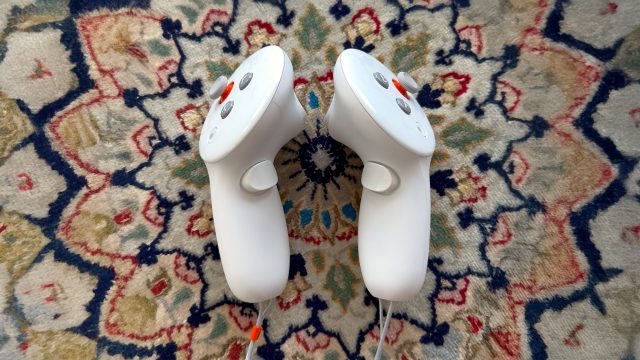
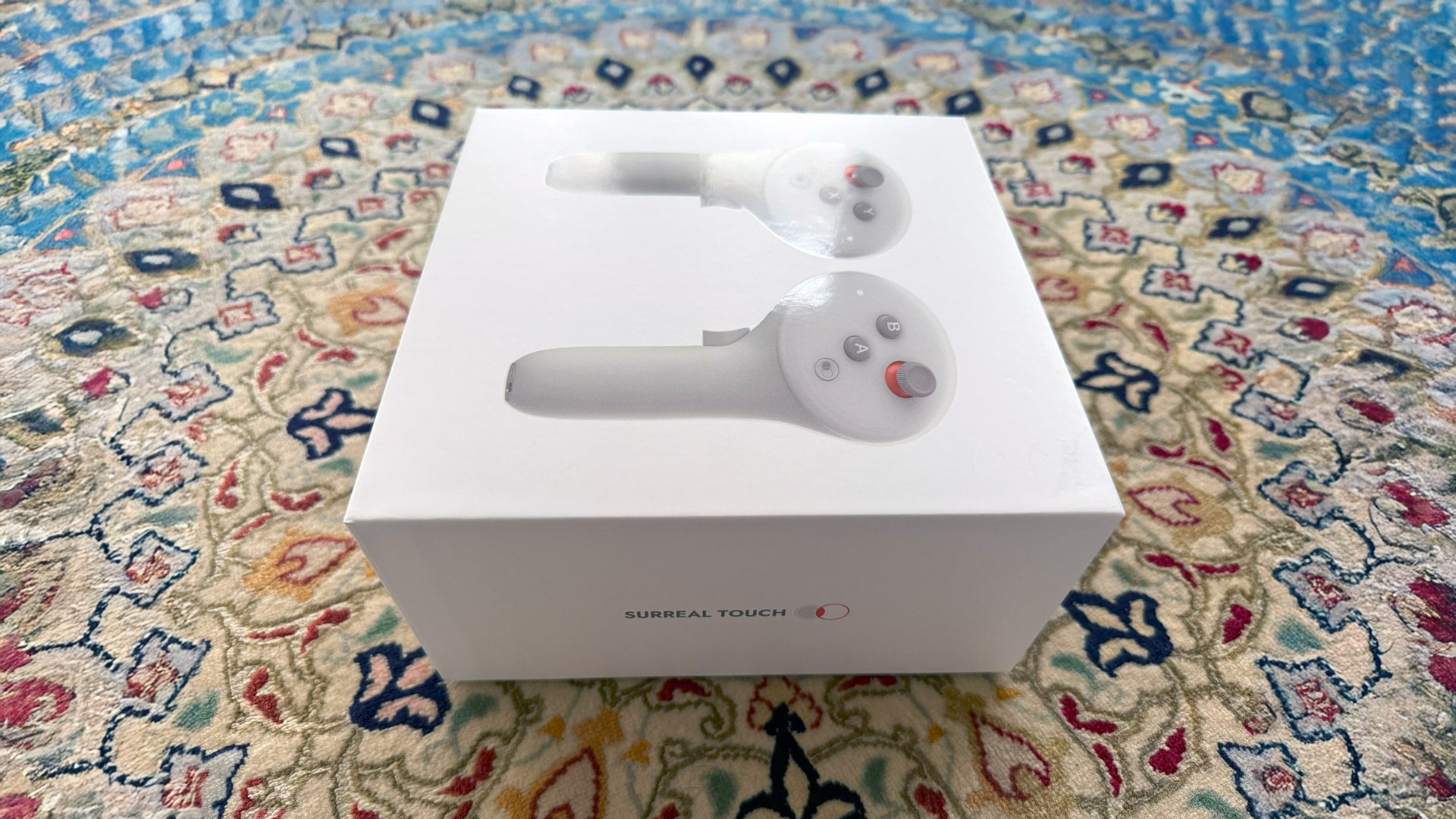
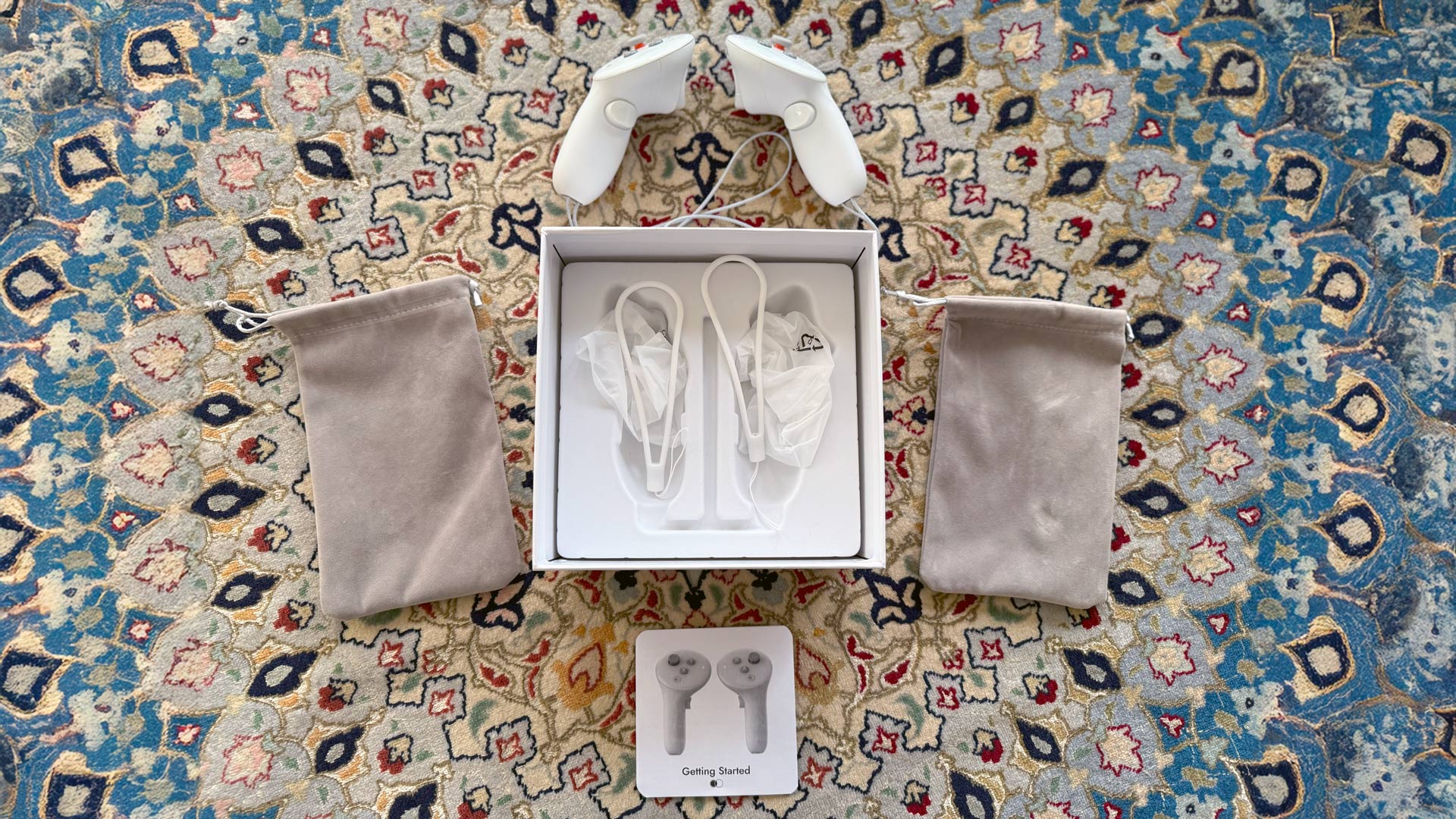
Surreal Touch is a Kickstarter-backed third-party motion controller for Vision Pro. The first batch of controllers began shipping in December (right on time), and early impressions are starting to roll out.

XR industry veteran Nima Zeighami is the creator of the Vision Pro Owners Club on Twitter, and backer #130 of the Surreal Touch Kickstarter, which raised $127,000 to fund the controllers. Zeighami was among the first to receive the production version of the controllers and kindly shared his impressions with us.

Image courtesy Nima Zeighami

The Surreal Touch Vision Pro controllers use on-board cameras to track their position and report it to the headset, similar to Meta’s Touch Pro controllers. An upcoming SDK promises to allow developers to build VisionOS apps that support the controllers directly. In the meantime, the controllers also include software for Windows which allows you to stream PC VR content to Vision Pro, making it possible to play SteamVR content with proper controller support.

Zeighami said a highlight of the controllers was the seamless PC VR streaming thanks to Surreal’s own streaming software. That includes the Surreal Link app on Vision Pro itself, and the Surreal Streamer app installed onto the PC.

It took just 10 minutes for the initial setup to play SteamVR games on Vision Pro with the Surreal Touch controllers, Zeighami said. “Surreal Link is maybe the best and lowest friction experience I’ve ever had with wireless VR,” he said. After the initial setup, jumping back into SteamVR content with the controllers took about a minute total. All-in all, Zeighami was impressed with the software experience.

“I can not harp on this enough: the real magic of Surreal Touch is the software experience more so than the hardware quality or tracking quality. Delivering a high-tech motion controller is a colossal task, but delivering a simple wireless VR streaming app that actually ‘just works’ is almost more impressive,” he said.

But the actual quality of the controller tracking seems to be another question. Zeighami said he was happy with the latency of the controllers, but not as much with the positional accuracy.

“[Surreal] claims less than 10mm positional tracking accuracy and less than 1° rotational tracking accuracy. While I didn’t really find any issues with rotational accuracy, I did have frequent issues with positional accuracy. I often found that the position was much further off than 10mm or 1cm, sometimes closer to around 10cm or in rare instances even more. This seems to happen in adversarial scenarios, where the controller may be pointed at a featureless plane like a plain white ceiling or a large reflective black flat screen TV that’s off. Or when the controller is held in a way where the cameras on it are blocked by something or pointed at my other hand or arm,” he said.

Here’s a look at Surreal Touch being on Vision Pro playing Vertigo 2 on SteamVR:

He compared the tracking quality to that of the original Magic Leap, which shipped with a magnetically-tracked controller.

“[…] Surreal Touch feels reminds me of Magic Leap 1’s controller. It works fine in most scenarios, but you can see it jitter and drift to an offset of a few centimeters pretty constantly. It’s perfectly fine for most apps and games but makes competitive games unplayable and professional creative tools unusable.”

For games with slower hand movements, Zeighami maintains the controllers work well. But for games with lots of fast hand movements, the controllers are likely to frustrate. Beat Saber was rendered nearly unplayable due to the controller’s tendency to lose position and drift far away from the player.

Tracking quality aside, Zeighami gives the controllers a thumbs up on build quality and feel.

“They don’t feel too heavy, and the joystick, buttons, and triggers feel great,” he said. Though he also noted some polish issues.

“Despite the mostly premium-feeling build, the engineering tolerances are not perfect, with the plastic on my left controller not aligning properly with the body, leading to a bit of plastic sticking out slightly rather than sitting flush. In addition, the grip triggers creak when pressed all the way.”

And there’s some missing details, like a lack of capacitive sensing which would allow the controllers to track which buttons or sticks the user is touching. Granted, most VR content doesn’t make use of this feature even on controllers that do support it.

While PC VR streaming works well Zeighami’s account, using the controllers natively with VisionOS (which isn’t designed with controllers in mind) is a different story.

Zeighami says you can activate a “cursor mode,” which allows you to aim a cursor with the controller so you can control Vision Pro’s interface. However, instead of working like a laser pointer (as most controller-based VR interfaces do), the controller seems to emulate a connected mouse, where the rotation of the controller is used to determine the direction the cursor moves.

Further, there’s apparently no way to trigger the ‘Home’ action using the controllers, which means you need to reach your hand up to press the button on the top of the headset, or dangel the controller from the wrist strap and use your hand to do the VisionOS ‘Home’ gesture.

At this early stage there’s not a single native VisionOS app that actually supports the controllers. And Zeighami doesn’t expect there ever will be much traction on that front.

“Almost no developers on Vision Pro will support the Surreal SDK because owners of Vision Pro with Surreal Touch are a tiny niche within a tiny niche. SteamVR is really the reason this exists, so don’t buy these controllers expecting all the best Vision Pro games to start supporting Surreal Touch,” he advises.

Beyond being controllers for Vision Pro, there’s the possibility that Surreal Touch could become the defacto ‘open’ third-party motion controller for any number of VR headsets. That’s possible because the controllers are self-tracked using their own on-board cameras, instead of relying on proprietary tracking algorithms that tie most VR controllers to their respective headset. But the company has yet to release a public native SDK, which means that’s still a pipe dream for the time being.

One place where the controllers get a thumbs up (with no caveats) is their on-time delivery. We’ve seen more than our fair share of Kickstarter projects that ended up months or years overdue. For what appears to be the company’s first-ever product, their go-to-market execution was spot-on.

Image courtesy Nima Zeighami

Zeighami also mused on whether or not he thinks the Surreal Touch controllers for Vision Pro are worth it, considering the current $300 price.

“So what it all really comes down to is a simple question: is it worth [$300] for a pair of controllers just to play SteamVR games on your Apple Vision Pro? Yes, absolutely. This is more of a function of the Vision Pro than the Surreal Touch, but even 2016-era VR games on SteamVR when played on the Apple Vision Pro look better than all but the top-tier games on a Quest 3 […]” he said.”

“So this means that if you are the kind of person who bought a Vision Pro over a Quest, or you have both headsets and are looking to spend dozens of hours or more playing PC VR experiences like the superior version of VRChat, Half-Life: Alyx, Resonite, Boneworks, Skyrim VR, Fallout 4 VR, etc. then Surreal Touch is the obvious choice,” Zeighami said. “It’s not perfect, the tracking quality is below most other leaders in the market, and Surreal Interactive has a lot of room for improvement in the overall quality of their offering. And yet even with those issues, I still think it’s a great experience. Meaning, I not only think it crosses the minimum threshold for usability, I think that it’s a must-buy for anyone interested in experiencing the SteamVR ecosystem on their Apple Vision Pro.”

The post First Impressions of ‘Surreal Touch’ Third-party Vision Pro Controllers appeared first on Road to VR.


from Road to VR https://ift.tt/BSdFtiR
via IFTTT

NVIDIA Announces GeForce Now Cloud Gaming Support for Quest 3/S, Vision Pro & Pico Headsets

https://ift.tt/13SqXzG

NVIDIA announced at CES 2025 that its extending support for its cloud gaming platform GeForce NOW to Apple Vision Pro, Meta Quest 3 and 3S, and Pico headsets.

The announcement doesn’t appear to include support for VR cloud gaming—i.e. the ability to play play VR-native titles—but rather access to standard games playable across Windows, Mac, Android, iOS, and handheld gaming devices.

Users on Vision Pro, Quest 3/S and Pico headsets will be able to stream games via GeForce NOW via browsers when the version 2.0.70 update starts rolling out later this month, Nvidia says.

When it does arrive, Nvidia says we can expect “all the bells and whistles of NVIDIA technologies, including ray tracing and NVIDIA DLSS.” GeForce NOW for VR headsets is said to include support for gamepad-compatible titles on a “massive virtual screen.”

Notably, Nvidia’s cloud gaming service offers users limited access for free, and greater, higher-quality access across various daily passes and monthly subscription options. It also boasts over 2,000 titles in its library.

Nvidia isn’t the first to offer cloud gaming to standalone VR devices. In 2022, Pluto VR brought its short-lived cloud gaming service to Quest. Called PlutoSphere, the companion app was pulled from the store in early 2024 amid a wider crackdown by Meta to remove unapproved cloud streaming services.

Consequently, Microsoft was given the green light to bring its Xbox Cloud Gaming and Game Pass library to Quest in late 2023.

The post NVIDIA Announces GeForce Now Cloud Gaming Support for Quest 3/S, Vision Pro & Pico Headsets appeared first on Road to VR.


from Road to VR https://ift.tt/IqH8wk1
via IFTTT

Sony’s Standalone MR Headset Now Called ‘XYN’, Release Date & Pricing Still to Be Revealed

https://ift.tt/mtcEpvY

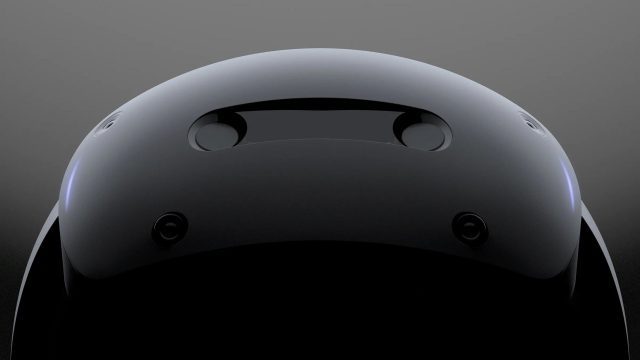
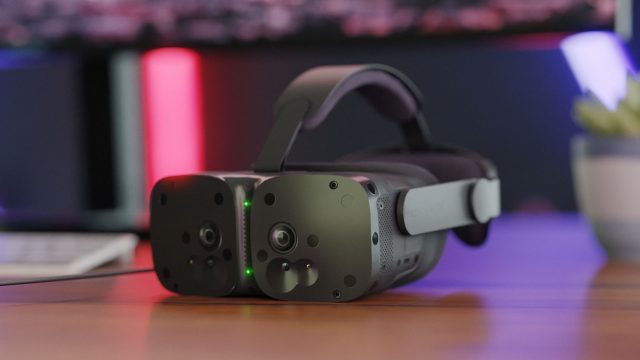
Sony announced its previously revealed XR standalone for enterprise is now called ‘XYN’, which the company is targeting at spatial content creators.

Initially unveiled at CES last year, XYN (pronounced ‘zin’) packs in some impressive displays, offering 13.6MP (3,552 × 3840) per-eye using Sony’s own ECX344A OLED microdisplay.

The display is capable of 90 FPS and 1,000 nits (at 20% duty cycle), with 96% DCI-P3 color coverage, putting it above Apple Vision Pro in terms of resolution and color accuracy.

We got an opportunity to go hands-on with the pre-XYN prototype in July, back when it was still being referred to as the Sony SRH-S1 “content creation system.”

Here’s the short of it: on one hand, the headset’s ergonomics, flip-up design, and display clarity were all great. On the other, the system’s stylus-ring controller combo was very poorly tracked during our demo, and the content shown wasn’t well optimized for its internal Snapdragon XR2 Gen 2 chipset.

Beyond that, information is still thin on the ground. XYN’s price and release date are still uncertain, which is a baffling move as far as product announcements go.

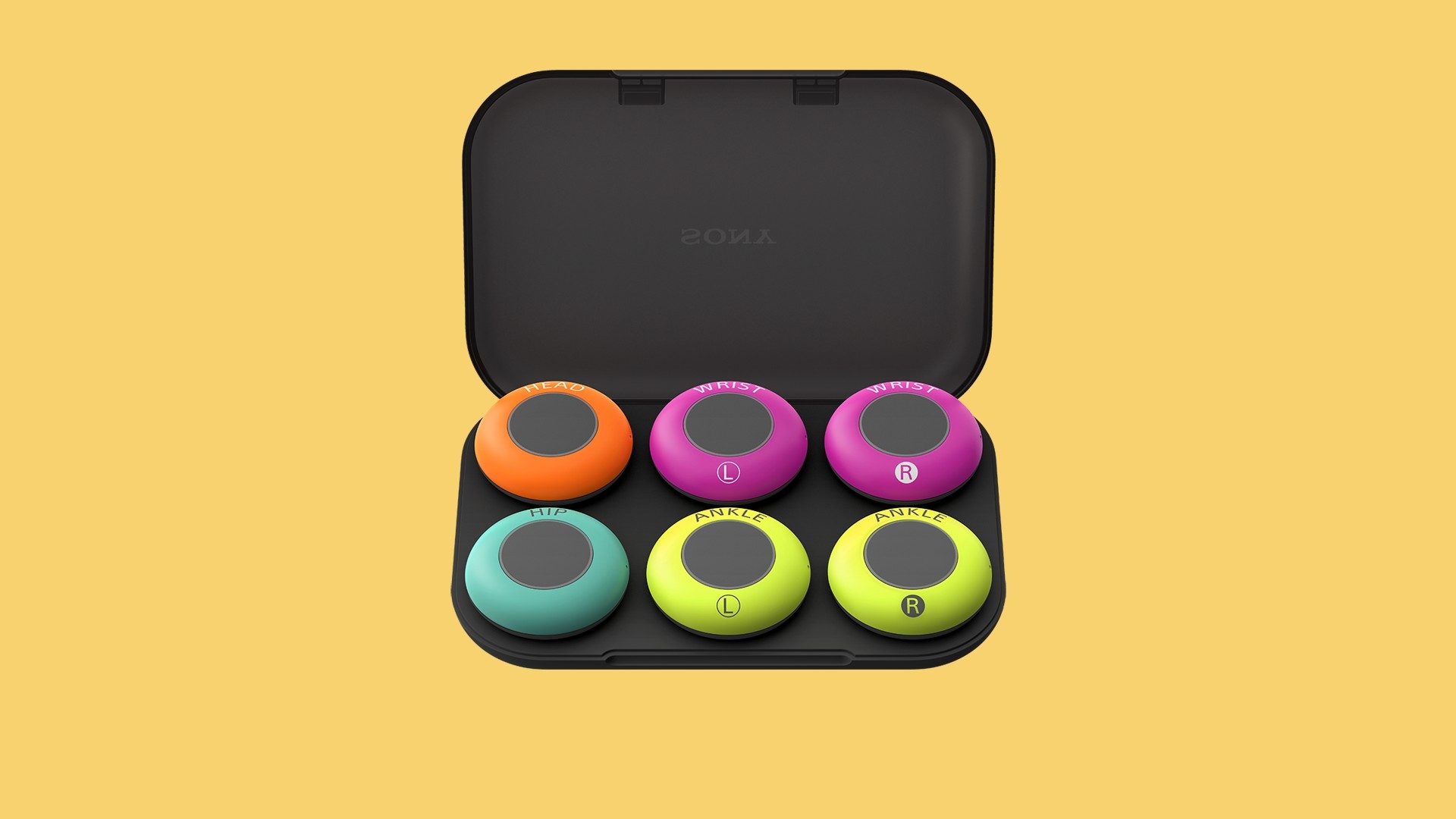
What is known however is that its XYN Motion Studio PC companion software is coming out in March 2025, which supports connection with 12 ‘mocopi’ sensors for more seamless motion capture workflow.

mocopi senesors | Image courtesy Sony

Additionally, Sony is also launching what it calls its XYN Spatial capture solution, which converts images captured with a mirrorless camera and proprietary algorithms into high-quality, photorealistic 3D CG assets.

Notably, the headset itself is said to support “a wide range of third-party tools,” according to XYN’s press release.

That said, you probably shouldn’t expect XYN to compete with Quest on the lower end in terms of price-performance, as Sony’s standalone is targeting businesses and professional users. Notably, two color ways have been seen on the showroom floor at CES 2025 this week, with a black colorway for prosumers and a grey scheme for enterprise.

The post Sony’s Standalone MR Headset Now Called ‘XYN’, Release Date & Pricing Still to Be Revealed appeared first on Road to VR.


from Road to VR https://ift.tt/ru0mqIb
via IFTTT

Monday, 6 January 2025

Somnium Begins Shipping VR1 PC VR Headset in the US, Announces Incoming Price Hike

https://ift.tt/kUahyv0

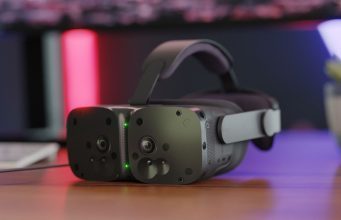
Somnium Space, the Prague, Czechia-based social platform creator, has officially begun launching its PC VR headset, Somnium VR1, in the US. Additionally, the company announced its streamlining the number of available variants, bringing it to just three consumer-focused versions, and also increasing prices soon on its higher-end units.

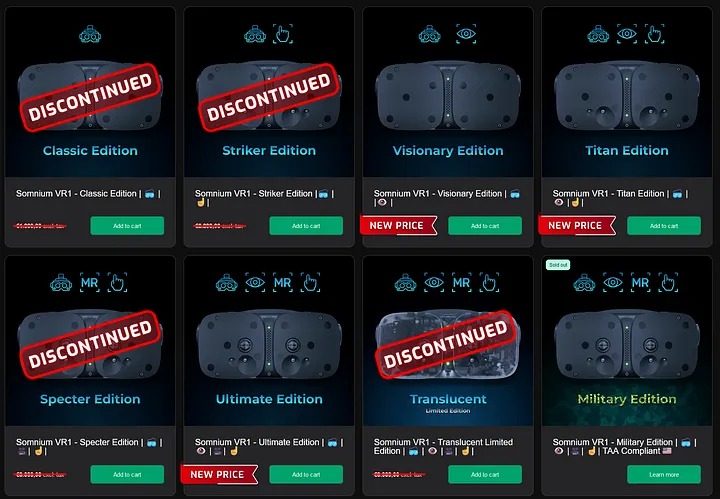
The company says it’s now discontinuing a number of previously offered configurations of Somnium VR1, including Striker Edition, Classic Edition, Specter Edition, and Translucent Edition.

The Classic Edition was previously its entry level, priced at €1,900 (~$1,980 USD), which didn’t include eye-tracking. Now the company’s cheapest VR1 is the Visionary Edition, which does include eye-tracking, and is priced at €2,499 (~$2,600 USD). Notably, these prices don’t include local tax.

Image courtesy Somnium Space

“For those who have already purchased these discontinued editions — don’t worry, your orders are safe, and you will receive them as planned,” the company says in a new announcement. “In fact, owning one of these variants will make your headset even more exclusive and unique.”

Continuing, the company outlines the reasoning behind discontinuing those versions:

“This decision allows us to focus our efforts on delivering the Visionary, Ultimate, and Titan Editions faster and more efficiently, while continuing to meet the highest standards of quality you expect from us.”

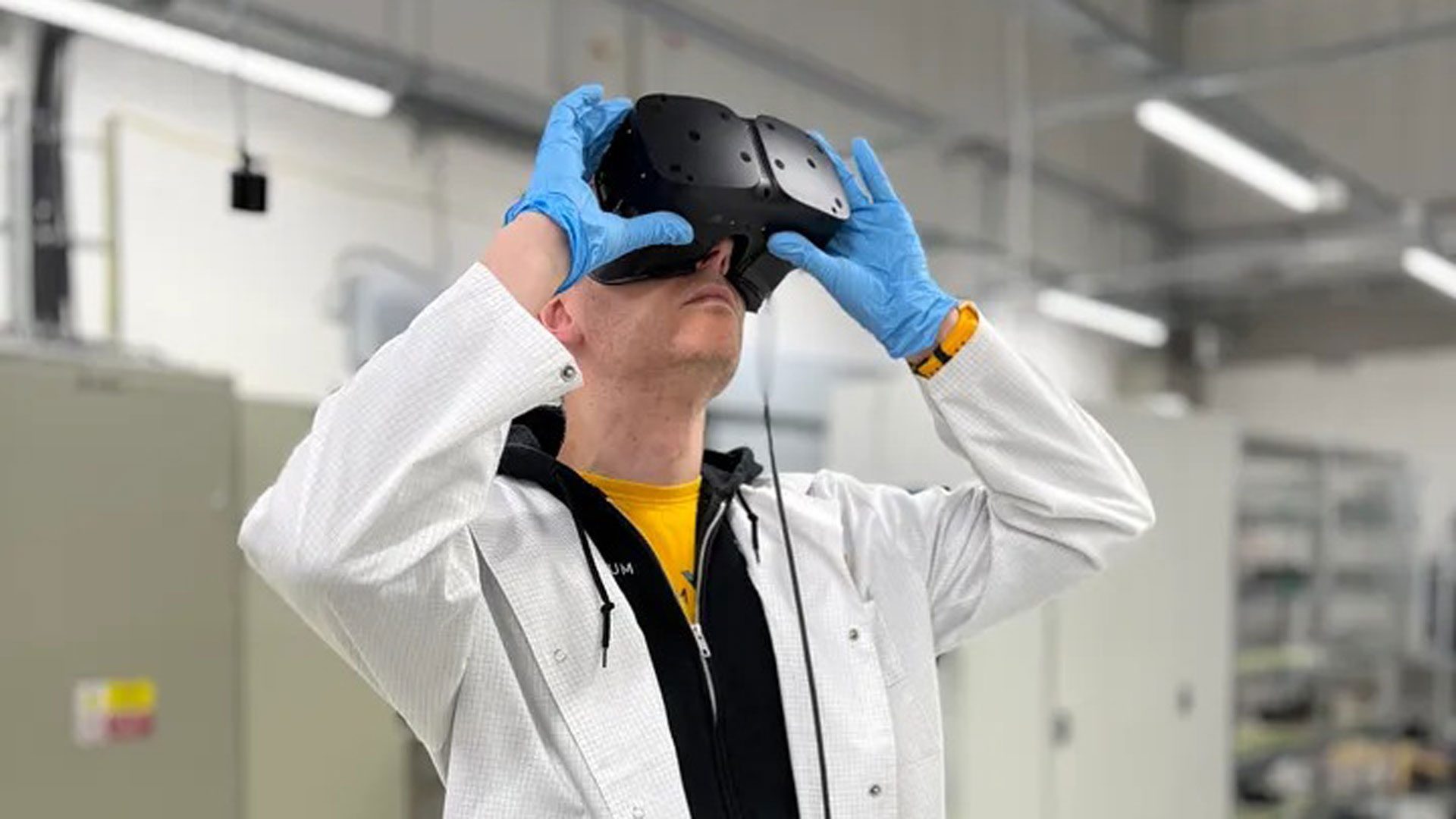
Somnium Space Founder & CEO Artur Sychov conducting quality assurance

Somnium Space is also increasing prices of its Visionary, Ultimate, and Titan Editions. For now, it’s unclear what those new prices will be. The company says it’s keeping current prices until January 16th, 2025. Thereafter, new pricing will be announced and become effective on January 16th, 2025, the company says.

Here’s a recap of its variants and pricing structure as it stands today (tax not included):

  • Visionary Edition (VR, eye-tracking): €2,499 (~$2,600 USD)
  • Titan Edition (VR, eye-tracking, hand-tracking): €2,899 (~$3,020 USD)
  • Ultimate Edition (VR, eye-tracking, hand-tracking, MR passthrough): €3,499 (~$3,659 USD)
  • Military Edition (VR, eye-tracking, hand-tracking, MR passthrough): ???

“While we strive to make Somnium VR1 as affordable as possible, we also refuse to compromise on quality. The production process for these headsets has turned out to be far more complex than initially anticipated. As a result, we will be increasing prices for the Visionary, Ultimate, and Titan Editions,” the company says.

Somnium Space maintains orders made today are currently estimated to arrive in February – March 2025, with shipping regions including most of Europe, the UK and US.

Moving forward into 2025, the Somnium Space says it plans to eventually sell spare parts for the Somnium VR1, including items such as optical modules, main boards, electronics, cables, screens, and more.

Somnium VR1 Specs

  • Display: QLED Mini-Led Fast LCD – 2,880 × 2,880 per-eye
  • Field of view: 130° horizontal, 105° vertical. The VR1 can render up to 140° horizontally, though the actual FOV may vary slightly depending on face and eye shape.
  • Refresh rate: 72 Hz, 90 Hz, upgradeable to 120 and 144 Hz (experimental)
  • Local dimming zones: 576 per eye
  • Eye tracking: 120 Hz, with an open-sourced algorithm that can be used and modified for any use case
  • Connectivity: USB-C, DisplayPort 1.4, 3.5mm audio jack
  • IPD Range: 57 to 76 mm

Looking for a more in-depth look at Somnium VR1? Check out our hands-on from July 2024 to hear our impressions.

The post Somnium Begins Shipping VR1 PC VR Headset in the US, Announces Incoming Price Hike appeared first on Road to VR.


from Road to VR https://ift.tt/eO9oUCn
via IFTTT

Meta Officially Discontinues Quest Pro, Its First (and most expensive) Mixed Reality Headset

https://ift.tt/KpvHcjM

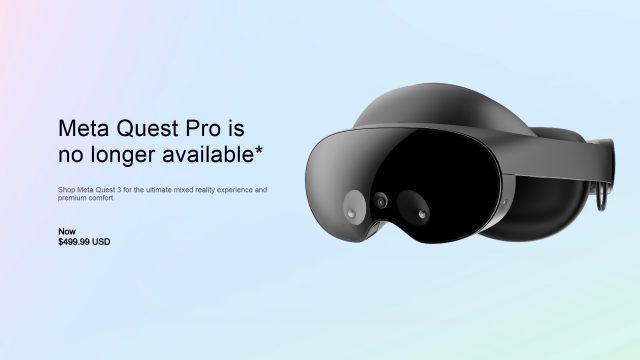
Meta has officially discontinued Quest Pro, the company’s first mixed reality headset.

Meta announced back in September that it was winding down Quest 2 and Quest Pro sales. At the time, the company said remaining stock would be sold through the end of the year or until they ran out, whichever came first.

Now, in place of the Quest Pro order page, Meta is suggesting users to buy Quest 3 “for the ultimate mixed reality experience and premium comfort.” You can still buy Quest Pro’s ‘Touch Pro’ controllers however, as they support Quest 2 and above.

Released in 2022 at the eye-water price of $1,500, Meta hoped to use the headset to kickstart its mixed reality ambitions among consumers, as it was the first to offer color-passthrough, pancake lenses, and both face and eye-tracking—coming in strong contrast to the company’s other offering at the time, Quest 2.

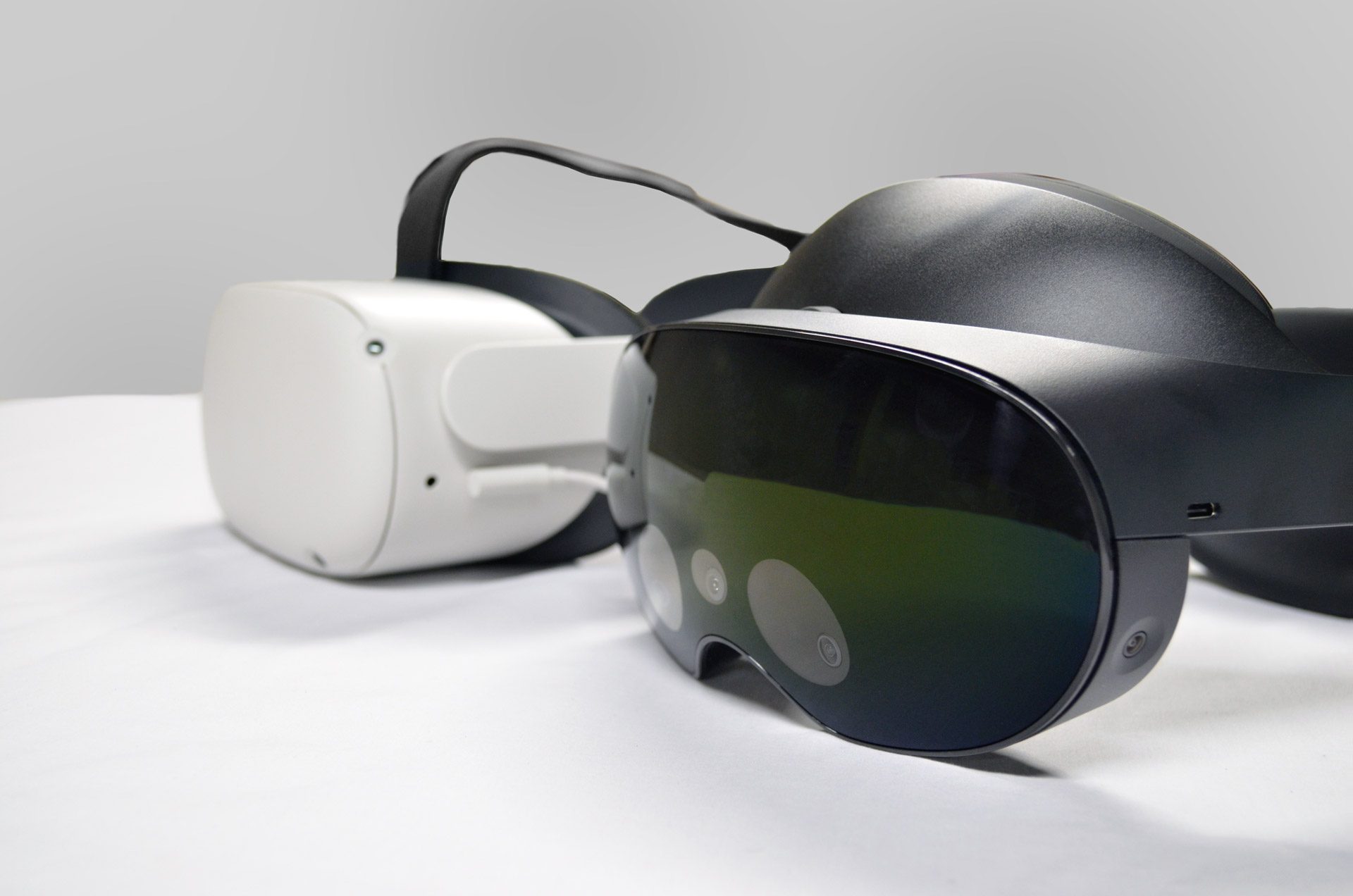
Quest 2 (left) & Quest Pro (right) | Photo by Road to VR

Nearly a year after launch, it was apparent the Pro-level headset wasn’t appealing to users nearly to the degree Meta had initially hoped, prompting the company to knock Quest Pro down to $1,000. To complicate matters, high initial pricing of Quest Pro put a strain on developers, which resulted in very few compelling MR experiences out of the gate.

It was clear what was needed was a more accessible headset. In October 2023, Meta released Quest 3, which housed much of the tech seen in Quest Pro—minus face and eye-tracking, and at the starting price of $499.

Clamping down yet further on price-performance, Meta released Quest 3S a year later, which houses the same Snapdragon XR2 Gen 2 chipset as Quest 3, although including the same cost-saving Fresnel lenses and displays as Quest 2—marking the company’s most energetic push to capitalize on its mixed reality ambitions.

While Meta’s strategy to capture the console price-point with Quest has been a winning strategy thus far, what’s uncertain is whether the company will head back into the ‘Pro’ pricing structure anytime soon. The Information reported earlier last year that Meta was cancelling a potential Quest Pro follow-up, however Meta CTO Andrew Bosworth partically refuted those claims, noting that “there might be a Quest Pro 2, there might not be. I’m not really telling you, but I will say don’t believe everything you read about what’s been stopped or started.”

The post Meta Officially Discontinues Quest Pro, Its First (and most expensive) Mixed Reality Headset appeared first on Road to VR.


from Road to VR https://ift.tt/vj7YdSf
via IFTTT
Related Posts Plugin for WordPress, Blogger...