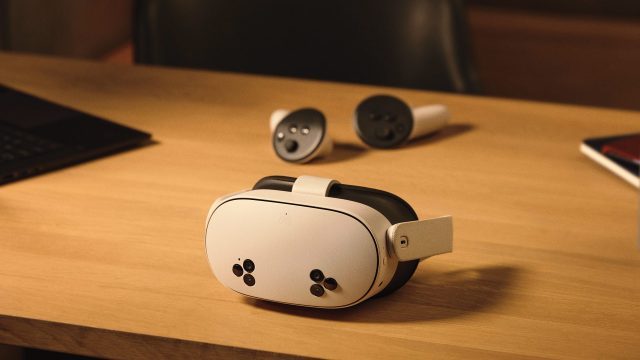
Meta’s final Quest update of the year is bringing some big improvements to hand-tracking and using the headset as a virtual desktop with Windows computers. But it might be some time before the features reach everyone.
Once set up, Meta says Quest 3 and 3S users will be able to simply look at their Windows 11 PC and their headset will prompt to connect them automatically, much like Vision Pro does with Mac computers.
Right now, however, the initial setup takes a few steps. Once you have v72 installed on your headset, you’ll need to do the following:
On your PC:
First, check to make sure you meet the hardware requirements. You’ll need a Meta Quest 3 or 3S headset and a PC running Windows 11 22H2 or newer.
Next, you’ll need to visit the Microsoft Store and download the Mixed Reality Link app, if you haven’t already. Once installed, leave your PC unlocked and put your headset on.
On Quest:
Open the Settings menu in-headset, go to your Advanced settings, and enable the “Pair to PC with Microsoft Mixed Reality Link” experimental feature.
Once Quest detects your PC, you should see a pairing prompt floating above your PC keyboard. If you don’t see the prompt, you can also start pairing manually by opening Remote Desktop from your Library or by going to Quick Settings > Remote Desktop and selecting “Add a new device.”
Follow the prompts until your PC and headset are fully paired.
For now Meta and Microsoft both indicate this feature is “experimental” and in “preview,” so expect a few bumps until the rough edges are smoothed out.
General Keyboard Tracking
Alongside a more seamless virtual desktop setup, another improvement on the way is keyboard tracking to create a cut-out of your keyboard on your desk, even while you’re in a virtual environment.
Quest has supported keyboard tracking for a while, but only for select keyboards. The newest version of this feature includes a tracking model designed to track arbitrary keyboards. This should greatly expand the number of keyboards that will work with the feature (though I’ll be impressed if it works with my weirdo split keyboard).
Meta says this feature will be included for a subset of users on v72, so there’s no guarantee you’ll have it, even if you’re already on v72. If everything goes well, Meta will roll it out to more users over time, and eventually make it a default feature. But that might not be until v73 or later.
Hand-tracking Improvements
Meta has been continuously updating hand-tracking on its headsets. Now with v72 the company is rolling out version 2.3 of hand-tracking, which purportedly reduces latency and improves stability.
Improved hand-tracking should be included for everyone on v72, but Meta notes some specific improvements that will roll out slowly:
We’re making the hand cursor more stable and responsive when navigating the universal menu.
We’re stabilizing the cursor while pinching, ensuring it’s easier to select what you want to select.
We’re improving the responsiveness and stability of pinch-and-drag interactions, like dragging a Browser tab into a new window.
We’re making it easier to use hands in confined spaces, which are especially common in Travel Mode.
Finally, we’re adding a new hand ray visualization to help with locating and targeting with the cursor.
Quest v72 also adds Instagram chat to Quest’s Instagram app, a new and improved Media Gallery for organizing photo and video content on your headset, and live call captions in Horizon Worlds to make it easier for people with limited hearing to communicate with others.
How to Update Meta Quest
Quest updates roll out in batches, so you may need to wait a while until v72 is available to you. Here’s how to check to make sure you’re running the latest version that’s available to you:
Press the menu/Meta button on your right Touch controller to pull up the universal menu.
Click on the clock on the left-hand side of the universal menu.
Select Settings in the top right-hand corner.
System, then select SoftwareUpdate from the left menu
Even if no update is available, restarting your headset sometimes installs pending updates.
If you’re a bit more advanced you can also force your headset to update to the latest version using this tool from Meta.
1 in 3 Quest owners have downloaded Gorilla Tag, making it the most successful game ever on standalone VR. Gorilla Tag, created by studio Another Axiom, has emerged as a standout success in the virtual reality gaming space, not just as a game but as a cultural phenomenon. Launched in 2021, it has quickly amassed over 12 million users and generated more than $100 million in revenue.
Guest Article by JP Minetos
JP Minetos works on the Investment Team at Hartmann Capital, a frontier venture fund investing in Games, VR/XR, Generative AI, and immersive technology, with companies including Flat2VR, Sinn Studio, Tripp, and ShapesXR. JP focuses on VR and Social Gaming, and has worked closely with many top developers on the Quest store. His X account is@jpminetoswhere he shares data and perspectives on XR & the games market. Investment inquiry can be made via DM on X orLinkedIn.
While other games have seen success in VR, Gorilla Tag is unique in that it combines social interaction with a movement system that only works in VR. Much like other revolutionary free-to-play games, such as Fortnite and League of Legends, Gorilla Tag has carved out its own space by fostering a community-driven ecosystem that keeps over a million players coming back daily.
Its rise also signals the emergence of a new sector of games—those built exclusively for VR—driven by the immersive experience only this platform can offer. At the heart of this success is the game’s social nature, compelling gameplay loop, and creative use of free-to-play monetization. However, being primarily played by young teenagers, it sits outside the cultural zeitgeist as a popular game and isn’t covered to nearly the same scope as other successful titles. So why is Gorilla Tag so popular?
Why Gorilla Tag is Successful
Whilst VR falls short against other gaming platforms in compute power, the medium has an over powered feature for engagement: Player embodiment. Unlike flatscreen games where users control a character with a keyboard or controller while looking at a screen, VR players embody characters, making them feel as if they truly are the main character.
This means that spatially native social interactions are more akin to hanging out in real life, rather than zoom. The technical-social disconnect is heavily diminished. Gorilla Tag is at its core a social space with a game of ‘tag’ as the engagement loop. Similar to a poker night with friends or a pickup basketball game, the reason people play is partly for the game itself and partly social.
Gorilla Tag is designed with this in mind and is built to reflect the social nature of the game. Players spawn in a small hub inside of a tree. As soon as they step outside, they’re placed in a random social lobby and thrusted into the playground with a dozen others already there; no searching for servers or waiting for matchmaking.
Voice chat is turned on by default and doesn’t require a press-to-talk action. Players speak into the world, and everyone in the server can hear them. The audio uses spatial proximity chat, where voices vary in position and volume based on players’ physical locations relative to one another.
These circumstances foster natural camaraderie, as players form friendships with those they spend time with. They often ‘friend’ one another on the Horizon platform (Meta Quest’s Operating System) and create private lobbies to continue playing together at different times.
One of the most intriguing observations in user interactions is the natural adherence to in real-life (IRL) social norms. While kids may spam words, groups often physically gather, form social circles, make eye contact, and focus on the speaker. However, if a conversation becomes dull, it’s not seen as rude to leave and start climbing branches. There’s little dead social time or awkwardness. With enough people in a server, multiple subgroups often form, allowing players to hop between them or join a different server, given the ~50,000 concurrent users online.
A common critique among older Gen Z is the “death of the third place”—a space to gather outside of school/work and home. Social media has poorly filled this void, as authentic interaction feels fragmented and lacks the depth of real-life connections.
It’s clear that Gorilla Tag, predominantly played by boys aged 10-18, has become their third place. One-third of the game’s monthly players are logging in daily, with server activity peaking after school hours. Kids are drawn not just by the game itself, but by the chance to meet friends and play on a virtual playground.
To foster a social environment, users need to spend time in a dedicated space for interaction. While Gorilla Tag’s average session time isn’t publicly available, the average for Quest content overall is around 30 minutes—significantly higher than traditional social media. I estimate Gorilla Tag’s average session time to be even longer, similar to other successful VR multiplayer titles, around 60 minutes.
This would align with the average PC gaming session length of approximately 58 minutes (with the top 12% of players reaching 5 hours, making this a conservative estimate).
It’s important to note that these statistics reflect single sessions, and users often have multiple sessions in a day. However, Gorilla Tag excels in retaining users within a single social space, unlike social media, where users frequently jump between different threads or interactions.
Status and In-Game Purchases
The key question remains: how has a free-to-play game like Gorilla Tag managed to generate $100 million in revenue?
While the game is free on the Meta’s Horizon Store, it is priced at $20 on Steam, though the vast majority of installs—over 90%—are on the Horizon platform.
Prior to the mobile gaming revolution, most games monetized through traditional models such as paid titles, downloadable content (DLC), or subscription services like World of Warcraft. However, mobile gaming was a pivotal moment for the free-to-play model, which has since evolved to encompass more complex monetization strategies, including microtransactions in AA and AAA titles.
With 12 million unique users and $100 million in revenue, Gorilla Tag boasts an impressive figures for a free-to-play game. But how exactly does the game generate this revenue? The answer lies in in-game cosmetics.
Given Gorilla Tag’s emphasis on social interaction, players naturally seek ways to express their individuality and status within the game. Cosmetics offer a powerful tool for this, allowing players to personalize their characters in ways that reflect their personalities and achievements. This creates a sense of identity and social prestige within the community, especially when certain items become status symbols.
Within the game, there is a dedicated store area that players physically travel to. Hot and seasonal items are available on a rotating basis, often for a limited time, adding a sense of urgency to purchases. This setup mimics real-world shopping experiences and taps into scarcity-based consumer psychology, where players want to show off their unique or rare cosmetics to others in the game.
The in-game purchasing process is frictionless. Players can quickly browse and select items inside of Gorilla Tag with only one additional Horizon OS confirmation pop-up to finalize transactions. By minimizing the steps needed to make a purchase—and a browsing and try-on process that mimics real-life shopping—Gorilla Tag ensures that players can seamlessly acquire new items, making the buying experience smooth and unobtrusive.
As a result, players regularly purchase new items to keep their avatars fresh and distinctive. This constant cycle of cosmetic updates, combined with a user-friendly transaction flow, has proven to be a highly effective monetization strategy, leading to the game’s significant financial success, unseen before for free-to-play VR titles. Another VR title to surpass $100 million in revenue, Beat Saber, charges for the base-game, with additional revenue thanks to DLC offerings which add more songs and levels to the game.
One of the biggest hurdles for widespread VR adoption is the inherent hardware and user experience (UX) friction associated with accessing VR content. On the hardware side, users need a charged headset, a suitable play area, and the motivation to physically put on the headset. These challenges are universal across all VR applications, including Gorilla Tag.
To alleviate the impact of that friction, Gorilla Tag addresses a different type of friction, specifically tied to UX design. A common complaint in VR gaming is the tedious process players go through just to start an experience, often involving 2D menus, loading screens, and multiple steps before entering the game world. This can feel clunky and counterintuitive for a 3D environment, and if players encounter too many barriers, they may lose interest or abandon the session altogether.
Gorilla Tag mitigates this friction by streamlining the player’s journey from game launch to social engagement. When players start the game, they bypass traditional main menus and complex interfaces. Instead, they are immediately placed into a hub from which they can ‘physically’ navigate into a social lobby with no extra steps. This simple design significantly reduces the time between launching the game and participating in its core experience.
The entire process—from pressing start on the Quest home screen to being inside a social lobby—takes about 10 seconds. This near-instant transition eliminates much of the friction typically associated with VR gaming, allowing players to jump right into the action. By making the game loop accessible in seconds, Gorilla Tag removes one of the key frustrations of VR, contributing to its high retention and daily active user base.
Demonstration of going from putting on my Quest to being in a Gorilla Tag social lobby: ~12 seconds.
Unique to VR: Gorilla Tag’s Groundbreaking Locomotion
When we think of the most talked-about and successful VR games, what do they all have in common? They share a design philosophy that leverages the core strengths of VR—specifically, the immersive tech stack that includes motion controls, six degrees of freedom (6DoF), and spatial awareness. These elements create experiences that are uniquely tailored to VR, making them impossible to replicate on traditional gaming platforms.
Gorilla Tag exemplifies this approach, offering an experience that is not only compelling but also fundamentally tied to the VR medium. At the heart of this is its innovative locomotion system, colloquially known as ‘Gorilla Locomotion.’ Traditionally, player movement in games has been controlled by joysticks or other digital inputs, where characters move in the direction indicated by the controller. Gorilla Tag, however, breaks this mold by requiring players to physically swing their arms to propel themselves through the game world.
Instead of relying on button presses, players use their real, physical arms (which are mirrored by their virtual arms) to push themselves in the desired direction. The only other control input is a grab function that allows players to cling to surfaces. This system is intuitive yet challenging, like learning to ride a bike. It feels awkward at first, but over time, players become more skilled and fluid in their movements. This design invites a more immersive form of play that’s impossible to replicate with traditional game controllers.
There is only a basic, self-serve tutorial to teach the fundamentals of movement. However, new players are often encouraged to ask for tips from more experienced players, fostering a sense of community and shared learning. Veteran players frequently assist newcomers, showing them how to master the game’s core mechanics, such as swinging from branches or scaling trees.
This dynamic movement system sits in the ‘easy to learn, difficult to master’ range, making it highly rewarding for players as they improve. It’s similar to genre-defining games like Counter-Strike or Rocket League, where mastery comes with practice and dedication. This rewarding feedback loop is a major reason why players keep coming back. Gorilla Locomotion has been so successful that it has spawned its own category of VR locomotion, incentivizing other developers to create movement systems that can only exist in virtual reality.
Gorilla Tag has designed a system that feels natural yet challenging and ensures that its gameplay remains deeply tied to the physicality and immersion of VR. This is not a game that could be ported to a traditional screen with a joystick—it’s fundamentally a VR experience, and it helps to keep player retention inside the game.
The Memeability and Social Media Presence of Gorilla Tag
One of the key drivers of Gorilla Tag’s virality is its popularity across social media platforms. Its memeable nature and easy-to-share gameplay have made it a hit among content creators, particularly on platforms like TikTok, YouTube, and Twitch. The game’s distinctive art style and chaotic, physical movement make for highly entertaining clips, leading to millions of views and shares. The rise of user-generated content, from memes to full-length gameplay videos, has contributed to the game’s growing community, with players often showcasing their skills, humorous interactions, or unexpected moments in lobbies. The game’s open-ended nature and social core make fertile ground for this kind of user-generated content.
In particular, Gorilla Tag lends itself to the type of organic, spontaneous content that social media algorithms favor. Videos of players flailing their arms to move, dramatic chase sequences, or hilarious voice chat moments quickly go viral, enticing new players to join in on the fun. Creators across different platforms have built entire followings based on Gorilla Tag content, further embedding the game into the social media fabric. As a result, the game benefits from constant word-of-mouth marketing, with each viral clip acting as free advertising. In an era where games often live or die by their presence on platforms like TikTok, Gorilla Tag has mastered the art of staying relevant by being inherently shareable.
Gorilla Tag’s Impact on the Future of VR Gaming
Gorilla Tag has not only proven to be a financial success but has also set a new standard for what VR games can achieve. Its innovative approach to player movement, its seamless integration of social interaction, and its free-to-play model are shaping the future of VR gaming.
In an industry where hardware limitations and user friction are common barriers, Gorilla Tag has shown that a well-designed game can break through those challenges and create a lasting impact—divorcing the idea that VR games are not commercially scalable.
As VR technology continues to evolve, the lessons from the game’s success influences the next generation of VR titles. From its unique locomotion system to its organic social spaces, Gorilla Tag has set the precedent on how VR can offer experiences that are impossible on other platforms. In doing so, it has helped usher in a new era of social VR gaming, recentering the definition of social.
With its ongoing updates, expanding player base, and cultural resonance, Gorilla Tag is more than just a game—it’s a movement. Its success shows that virtual reality has the potential to transform gaming by offering players a truly immersive, social, and unforgettable experience.
Skydance’s Behemoth (2024) launched last week across all major VR headsets with the proviso from the studio was planning patches to address a variety of performance and gameplay issues.
Developer Skydance Games says we can expect a patch on December 12th, 2024 covering issues experienced across all platforms, which includes Quest 2/3/Pro, PSVR 2, and PC VR headsets via the Horizon Store (Meta only) and Steam.
While we didn’t notice any of the outstanding bugs in our full review on Quest 3, where we gave Skydance’s Behemoth a resounding [8.5/10] for satisfying physics-based combat, immersive visuals, and dynamic locomotion mechanics—some users have noted some fairly pernicious issues, which the studio seems to be addressing now.
Notably, some of the biggest fixes include critical bugs in boss fights, better refining enemy AI gameplay and pathing, and overall stability performance (full list below).
This comes in addition to a “Day 0 Patch” released at launch on December 5th which includes visual fixes on PSVR 2, including awkwardly positioned arms and texture anomalies, and some others across Quest, including clipping weapons, issues with boss progression, and less-than-sharp boot screens.
Here’s the full list of fixes coming on December 12th as mentioned by the studio in a recent post on X:
All Platforms
Continued efforts to adjust game environments as needed.
Refinement of audio artifacts and sound improvements when reported.
Robust improvements to performance and stability with further optimization.
Ongoing efforts to balance and refine enemy AI gameplay and pathing.
Constant improvements to UI and menus.
Setting pixel density at 150 can cause performance and graphical issues.
Enemy “feet sliding” animation when approaching the player.
Sister Superior spin attack does not move far enough towards the player.
Sister Superior has an unused VO line directing the player to “Restrain her with your grapple.”
Need to fix speedrun cinematic timing issues as discovered.
Helmets can break into untextured assets.
Enemy archer attack alignment will be improved.
Loading screen information may not display the correct destination.
Instances of hand jitter when grabbing rope and using climbing posts.
There are floating items in Trapper’s cell.
Major General gameplay is receiving improved balancing.
Player may experience an insta-death issue when touching Shacklehide’s feet.
Tooltip for difficulty change not displaying correctly.
Levers may have inconsistent movement and behavior.
Player may be unable to move for 3-4 seconds after climbing rot wall in act before Shakehide.
The rot area around the corrupt growths cannot be grabbed and passes through user hands.
Quest 3/3s
Some players may experience invisible boss targets, making progression difficult.
In-game controller images may not match the platform.
Game version does not display when entering the game.
Fix issue during Dreddstag fight that can push the player inside the Behemoth mesh.
Player can clip through Shacklehide’s leg while dashing up.
Update is needed for Front End & Options Menus for new haptics.
PSVR 2
Safety warning message can be skipped without it displaying on-screen.
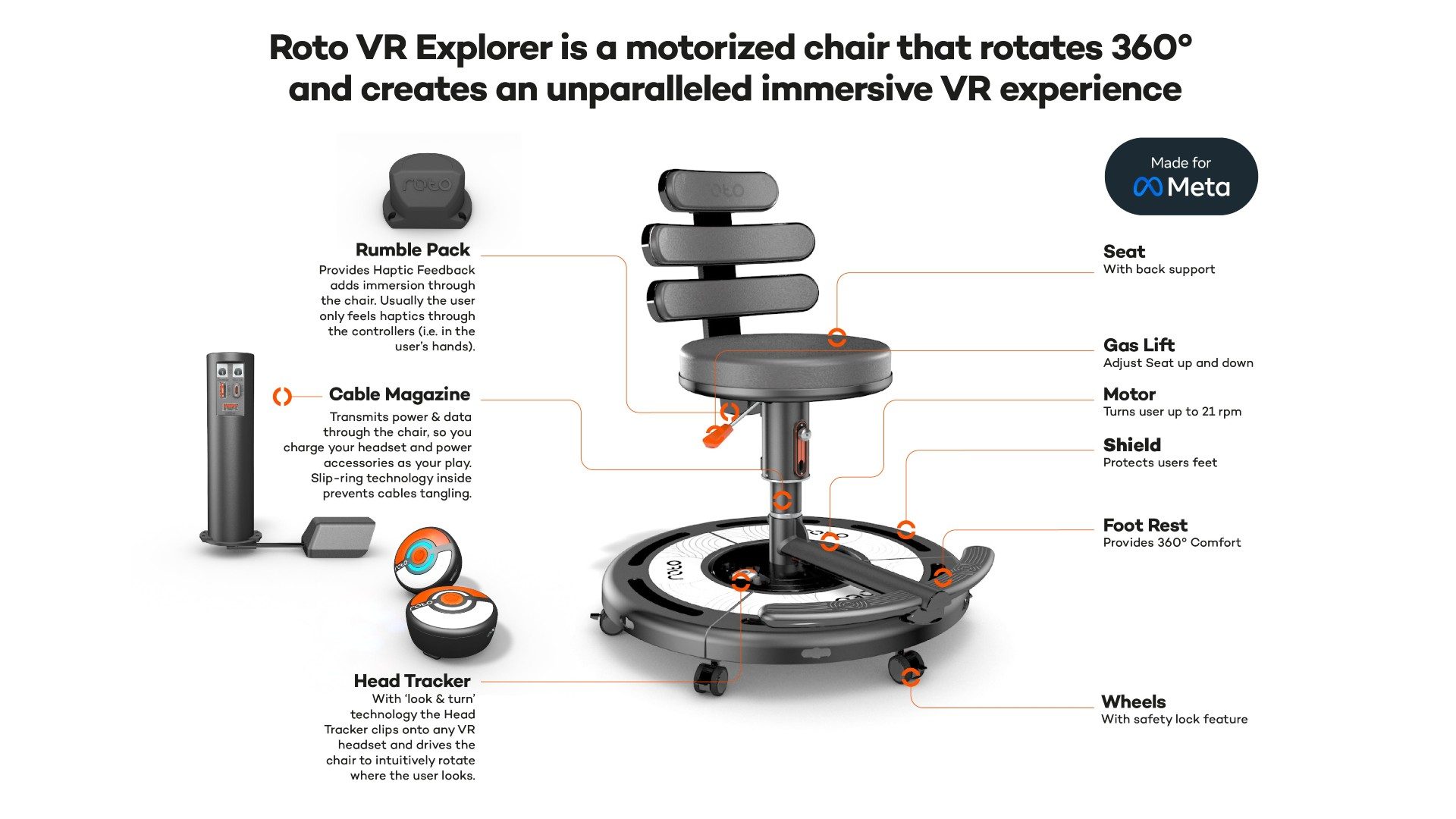
Roto VR, the UK-based creator behind 360-degree VR chairs, announced a new funding round of £2.4 million (~$3 million) which the company says will be used to fulfill demand of its recently launched Roto VR Explorer chair.
Led by Pembroke VCT, the continuation of company’s second funding round includes participation of existing as well as new angel investors from both the UK and US.
According to Crunchbasedata, this brings Roto’s total investments to £3.9 million (~$5 million) following its £1.5 million (~$1.86 million) seed round in April 2020.
As an early investor, Pembroke VCT is continuing its role as a strategic partner, advising on key hires, providing counsel as well as access to its industry network.
Roto says the investment will support its “next phase of growth” following the launch of its Roto VR Explorer chair, the rotating VR chair which released globally for in November 2024, priced at $799.
Funds will be used to “fulfil demand for the launch of the VR Explorer by enhancing operational capacity and broadening its market reach,” the company says.
The company notes its VR chair includes proprietary head-tracking technology which helps align the users’ gaze with physical rotation for improved immersion, coming in addition to the device’s aim to reduce motion-related discomfort from artificial locomotion.
Roto VR Explorer | Image courtesy Roto VR
The company notes it’s already started mass production in China, which will provide “greater cost efficiencies for global distribution” amid the upcoming launch of suspected VR headsets from Samsung and Google, the company says.
Notably, Roto VR Explorer has since been certified by Meta’s ‘Made for Meta’ accessories program in addition to supporting for over 400 Quest games and apps and partnering with retailers in the UK and US such as GameStop and Amazon.
Founded in 2015, Roto VR pressed on following its 2015 Kickstarter, which was cancelled after having fallen short of its £85,000 (~$105,000) goal.
The company then went on to announce the release its first Roto VR chair for consumers and businesses, then-slated to launch in early 2018. That particular version suffered multiple delays, leading many consumers to receive units in late 2019 amid a price raise from $999 to $1,499.
You can learn more about the new Roto VR Explorer on its website, including specs, price and ordering information.
Meta announced it’s partnering with Lightstorm Vision, James Cameron’s 3D film studio, to produce spatial content across multiple genres, including live events and full-length entertainment.
The agreement includes the production of live sports and concerts, feature films, and TV series featuring “big-name IP,” Meta says in a recent blog post, noting that Quest will be Lightstorm Vision’s the exclusive MR hardware platform.
Meta says the collaboration with Lightstorm Vision will include the co-production of original stereoscopic content, but also be geared towards “improving content creators’ ability to make high-quality stereoscopic content through the use of advanced tooling, including employing AI.”
The multi-year partnership was struck after Meta CTO and Reality Labs head Andrew Bosworth demoed some of the company’s latest hardware to Cameron.
“I was amazed by its transformational potential and power, and what it means for content creators globally,” Cameron says. “I’m convinced we’re at a true, historic inflection point. Navigating that future with Meta will ensure ALL of us have the tools to create, experience, and enjoy new and mind-blowing forms of media.”
Cameron is best known for his writing and directorial work on a slew of box office hits, including The Terminator (1984),Aliens (1986),The Abyss (1989), Terminator 2: Judgment Day (1991),Titanic (1997), as well as Avatar (2009) and its sequels.
The filmmaker is also a long-time supporter of 3D, having helped kickstart the rash of 3D films in the 2010s with the development of the Fusion Camera System, which was used to capture stereoscopic 3D for a number of films, including Avatar, Tron: Legacy (2010), and Life of Pi (2012).
A recent report from The Information maintains Meta has started outsourcing some design for upcoming headsets amid a shift to move part of its production out of China. Now, Meta CTO Andrew Bosworth refutes those specific design claims, saying headsets will continue to be designed “in house.”
According to The Information (non-paywalled via SeekingAlpha) Meta is reportedly planning to move half of its Quest headset manufacturing from China to Vietnam, a step done to avoid upcoming steep import tariffs soon to be levied on that country by US President-elect Donald Trump.
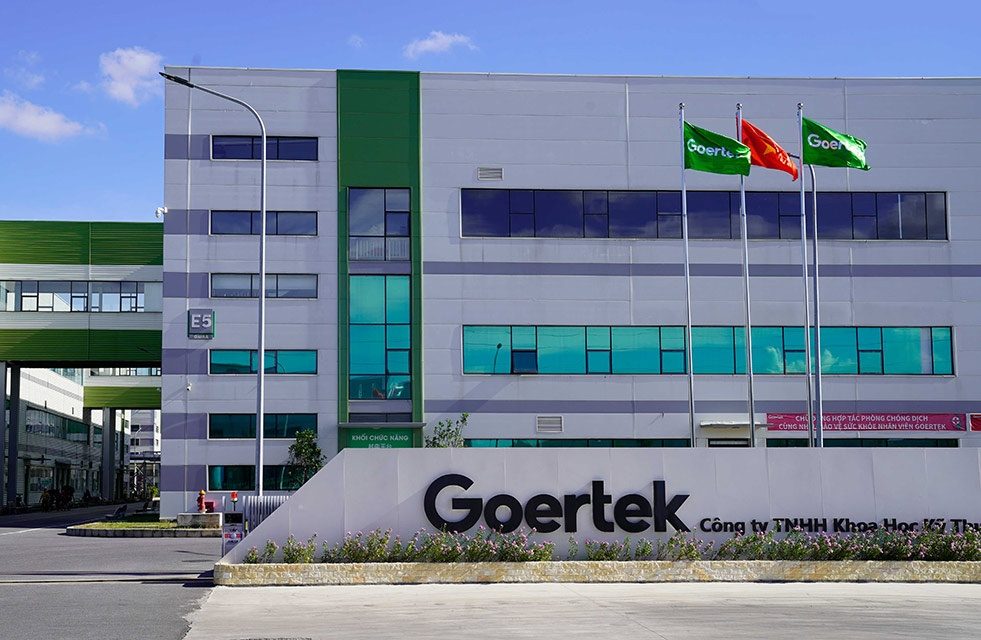
The report additionally alleges Meta is set to shift more of its component design, including lenses and displays, to Goertek, the Chinese original design manufacture (ODM) known for creating both reference designs and manufacturing devices for companies across the XR industry.
Furthermore, Meta has reportedly tapped Goertek and other manufacturers to eventually develop its headsets by 2030, as the company is said to transition to focus more on its lucrative software business. Such a joint design manufacturing relationship would allegedly include Meta outlining goals to Goertek, which then proposes multiple options for Meta to choose from.
Andrew Bosworth, Meta CTO and head of the company’s XR-focused Reality Labs, has however refuted those specific design claims in a recent X post.
“[S]omeone is pushing the design rumor hard to multiple outlets, and that aspect remains false,” Bosworth says. “We continue to design our headsets in house as we have and have no plans to change that. We always partner with our manufacturers to some degree but nothing material is changing there.”
In a follow-up post, Bosworth underlines its work with Goertek will be business as usual.
“To be clear, Goertek is a great partner and as parts of our stack are more mature and used from headset to headset we’re glad to have them carry the designs across which has always been true. But this isn’t a change from how we’ve done business with them even as we scale it up.”
Citing a Meta employee, The Information additionally reports Goertek has begun designing the outer shell for future versions of Meta’s MR headsets, and is now playing a larger role in R&D for other Meta products, including its Ray-Ban Meta smart glasses.
Earlier this year Goertek injected $280 million into its Vietnamese subsidiary, which according to the Shenzhen Stock Exchange filing is said to specialize in manufacturing consumer electronics products, such as headphones, smartwatches, and VR and AR devices.
Indie studio Windup Minds have finally announced its long-awaited virtual pet simulator, Stay: Forever Home, bringing a cute little canine friend to Quest in early 2025.
The studio says Stay: Forever Home blends AR, VR, and unscripted AI to create a more realistic pet companion that is unique to each player, resulting in what it calls a game that “loves you back.”
1 of 3
Image courtesy Windup Minds
Image courtesy Windup Minds
Image courtesy Windup Minds
Built by a team of veteran VR developers behind Meta’s Bogo and First Steps demos, Stay: Forever Home centers around ‘Ember’, a magical canine pal which lives by your side in mixed reality, but can also take you through a door to a charming virtual reality environment for a walk, game of fetch, treats, and maybe “a little mischief” the studio teases.
There’s no launch date yet beyond the “early 2025” release window. In the meantime, you can wishlist it now on the Horizon Store for Quest 2/3/Pro.
The studio is also calling on interested users to join Stay: Forever Home’sDiscord (invite link), where it’s organizing Alpha tests (sign-up form) before launch next year, noting there are limited spots available.


 Right now, however, the initial setup takes a few steps. Once you have v72 installed on your headset, you’ll need to do the following: