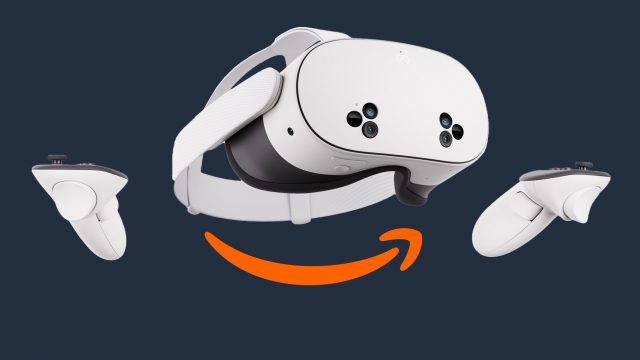
Meta usually launches its newest headsets toward the end of the year, and that usually means the headset itself doesn’t go on sale until the next holiday. But this year is an exception, at least for Amazon which is offering up an impressive Black Friday sale for Quest 3S.
Quest 3S, Meta’s newest headset, launched barely a month-and-a-half ago. So we weren’t expecting to see a substantial discount on the headset until sometime next year.
Considering that credit on Amazon is as good as cash for many shoppers, this is pretty close to getting the headset for $225, making it more affordable than even a Nintendo Switch.
With this Quest 3S deal on Amazon you’ll also get the usual benefits of a free copy of Batman: Arkham Shadow (which we quite enjoyed in our review), and a three month trial of Quest+ (which gives you access to a library of select VR games).
Notably, this Quest 3S Black Friday deal only applies to the Quest 3S (128GB) model. Unfortunately there is no equivalent deal for the 256GB model, nor the pricier Quest 3.
Why is this a great deal? Well, Quest 3S is already an unbeatable value given everything that it offers at an attractive $300 price point. We truly weren’t expecting to see any major deals on the headset this holiday season considering it just launched last month.
Resolution Games, the veteran XR studio behind Demeo (2021) and Racket Club (2023), announced Home Sports, a casual multi-sport VR game exclusively for Quest 3 and Quest 3S.
Slated to arrive on the Horizon Store next month, Home Sports packs in a collection of five social sports, including pickleball, mini golf, hockey, bowling, and badminton, giving off some very Wii Sports (2006) vibes in the process.
Games can be played locally (provided you both own a Quest 3 or Quest 3S), or online for multiplayer action.
Additionally, the studio says each sport adapts to fit your play space, letting you take on each game in any size room, either in virtual or mixed reality.
“Mixed reality is truly revolutionizing the way we play games, blending the physical and digital worlds to create unforgettable, shared experiences,” said Tommy Palm, CEO of Resolution Games. “The launch of Home Sports comes at the perfect time, just as family and friends gather for the holidays. It’s not only an exciting way to get everyone involved—regardless of their level of play—but also a welcoming introduction to VR for those who have never tried it before.”
Get your VR headset carrying case ready, because if you’re visiting family this holiday season, there are a ton of great games out there you should consider showing off to first-timers of all ages.
Consumer VR headsets have been around for nearly a decade now, but many people still haven’t tried it—or worse, tried it and walked away without experiencing the slate of truly awesome VR games out on modern headsets.
And there are a ton of great games out there—a lot more than we can mention here. When you’re cracking out the VR headset though to mixed age group of VR first-timers, you might want to go easy on story-based stuff, or things that require a lot of explanation and artificial locomotion. Whoever you’re entertaining though, just make sure to mirror your headset’s display to a monitor or TV so everyone can watch!
Walkabout Mini Golf
Walkabout Mini Golf barely requires any explanation, as you putt-putt your way through a ton of truly astounding mini golf courses ranging everything from 18 holes inspired by Venice, Italy and a ton of official collabs with the makers of Wallace and Gromit, MYST, Meow Wolf, and more. Everyone can get in on the fun, since putters resize according to you height, making it easy to pass around to kids, teens and adults of all ages. There’s also crossplay with the mobile ‘Pocket Edition’ game, making for more fun for local multiplayer.
Inspired by the Japanese TV show ‘Hole in the Wall’, OhShape is a VR rhythm game where players dance with their full body to go through, punch, and dodge walls following the beat of the music. It’s an easy one to boot up and laugh as everyone tries their best to fit through increasingly difficult shapes.
Beat Saber constantly shows up on our holiday roundups for a reason. Incredibly addictive and easy to pick-up, the block-slashing rhythm game makes for one of the best entry points for VR firstimers, but has enough depth to appeal to all ages and skills. You may want to limit playtime to 5 – 15 minutes per person, giving enough time for failures and song repeats.
Pistol Whip is just as addictive as Beat Saber, but instead of slicing blocks to the beat, you’re shooting dudes John Wick-style. It’s all very stylized, so there probably won’t be much, if any issue with parents worried about on-screen violence, so it should easily appeal to older kids, teens and adults of all ages.
Tentacular is just as silly as it looks. You’re a gigantic, but good-hearted tentacled beast trying to figure out its place in the world who can solve puzzles, but also just flail about and smack the crap out of stuff. It’s probably better for smaller groups, and maybe not the first game you grab as a crowd-pleaser, but definitely worth passing around to puzzle fans in the group.
Blaston is a room-scale, free-to-play dueling game that puts you in a ring to go mano-a-mano, giving you multiple weapons to shoot and dodge around. Online matches are fun for seasoned players and any household with two VR headsets, but there’s also a single player mode for some quicker and easier human vs. AI action. It’s easy to learn, so everyone will probably want a turn.
Puzzling Places is as relaxing and wholesome as a regular 2D jigsaw puzzle, although way more immersive thanks to its hyper-realistic miniatures of beautiful places from around the globe. This is a good one for anyone, although you may want to show it to people who prefer to stay still and seated. It may lack crowd-pleasing wow factor, but it certainly shows off how ‘neat’ VR can be, especially to older family members. And it has a mixed reality mode for Quest.
Old but gold, Superhot VR tosses a little time-bending cartoon violence your family’s way that shouldn’t receive too many odd glances from the older generation. Time moves when you do, so you can plan out tactical punches and gunshots as you Matrix dodge around the red crystalline foes, which shatter in such an oh-so-pleasing way.
Wooorld is like Google Earth for Quest. Browse an immersive, 360 Street View photospheres, or look down at a tinker toy map of 3D cities while in virtual reality or in mixed reality mode. This one definitely appeals to users looking for an immersive hit of nostalgia, as you can visit old homes, cities, countries, anywhere to spark a long conversations and stories down memory lane.
Racket NX may be just what the doctor ordered to get up and burn some post-feast calories, as you thwack balls at a reactive dome around you, racking up points and combos in this futuristic racket sport. Everyone from kids to squash-playing adults can pick it up and start playing in single-player. Even better if you have two headsets, as you can directly compete for the high score.
Angry Birds, but in VR (or MR if you have Quest 2/3/Pro)! Everyone knows it, and everyone can figure out how to play without so much as a tutorial, making it super easy to pass around, and challenge each other to blasting the green piggies in the least number of shots and getting the highest score.
Any of the three I Expect You to Die games are super approachable, and will make for some great fails to watch as VR players are gassed, exploded, and otherwise inventively snuffed out as a result of the trilogy’s deadly escape rooms. Plop down anyone in any of these three games, although any of the three may be better suited for the younger bunch to crowd around and take turns on missions.
There is a young Padawan among you who hasn’t seen the true power of the Force. If you have the time, this is a good one to plop the Star Wars fans among you down and leave them alone for a solid hour in a Galaxy far, far away. It’s not great for crowds, but if you have a bunch of Lets-players in the group, it may just be worth watching too. There are three episodes, but number one is the most approachable, and has the shortest run-time.
Space Pirate Trainer is fundamentally a wave shooter, but it’s still one of the best-looking and most approachable out there. The genre goes a lot deeper than SPT nowadays, but it’s still the easiest one to put on someone’s head without any real explanation required.
Not a VR game as such, but one of the most transformative things you can do for some people not into gaming is put them down in front of a giant virtual screen, and show them that among all else, VR headsets can be their own private theaters. Bigscreen is social, but it doesn’t have to be. Plop your old uncle down in a room in solo mode and let him click around free live TV, or hook it up to a computer to mirror your monitor for anything you already have access to.
Demeo– Like any board game, Demeo takes some explanation to play, but provided you own the game on PC, console or iOS, you can easily play a cross-platform match locally. The tabletop game could easily take up your entire post-festivity lunch too, so be prepared for a longer tutorial, but also a longer and more fulfilling gameplay session. Find it on Quest, PSVR 2, SteamVR, Pico.
Gran Turismo 7 (PSVR 2) – If you don’t mind hauling over a steering wheel controller, you could easily dedicated most of the afternoon to whipping around a set of global speedways in everything from F1 cars to vintage Ferraris, appealing to kids, teens, and motorhead adults alike. Find it on PSVR 2.
Quest Intro Apps – Oculus First Contact, First Steps, and First Encounters (Quest 3) are great ways to ease in newbies if they’re looking to learn more about the headset and common control schemes. Not a ton of crowd-pleasing wow factor, but it might be just the thing for a smaller gathering of would-be Quest converts.
Half-Life: Alyx (PC VR)– It’s not going to be the easiest to show off, since you’ll need to have a specific save state in mind to drop players into, but it’s tough to beat if you’re looking to wow anyone with the best-looking VR games out there. Find it on SteamVR.
Moss 1 & 2 – Both games will immediately appeal to platformer fans, although both in the series may require a quieter environment, and not so much expectation to wow a group. Find it on Quest, PSVR 2, SteamVR.
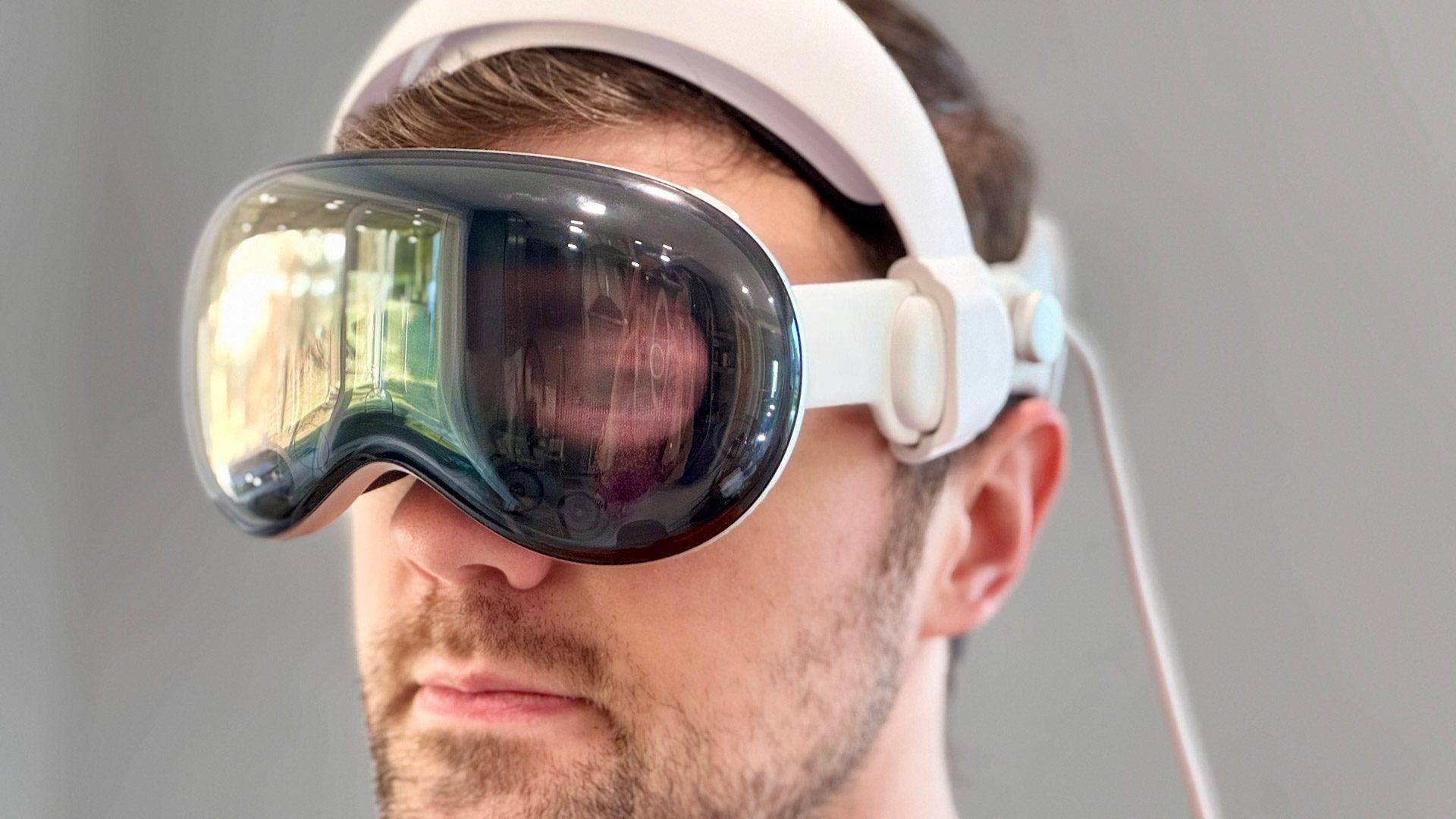
Vision Pro is an incredible headset in many ways, but its most obvious weak point (after the pricetag) is comfort. Apple’s obsession with aesthetics made a headset that’s striking for those looking at it, but less comfortable than it could be for those actually using it. Luckily, fixing this flaw is quite simple.
Many critiques of Vision Pro’s comfort attribute the issue to the headset’s weight. It’s metal after all! So that must be the issue, right?
Well, Vision Pro actually isn’t much heavier than contemporary headsets. Quest 3’s display housing (the headset without the headstrap or facepad) weighs 394g. Vision Pro’s display housing weighs just 81g more at 475g.
Photo by Road to VR
Weight is a key component of headset comfort, but way a headstrap distributes the weight is also a massively important factor.
And to be fair, even Quest 3’s default soft strap isn’t particularly comfortable. Clearly recognizing this, Meta offers an after-market ‘Elite Strap’, which adds 183g, bringing Quest up to 642g (including the facepad). That’s actually heavier than Vision Pro, with its default strap and facepad, at 625g.
Quest 3 with its default soft strap is quite uncomfortable for me | Photo by Road to VR
In the case of Meta’s Elite Strap, adding weight actually makes the headset more comfortable.
Like Quest 3’s default strap, Vision Pro’s default ‘Solo Knit Band’ headstrap also isn’t that comfortable.
Solo Knit Band | Image courtesy Apple
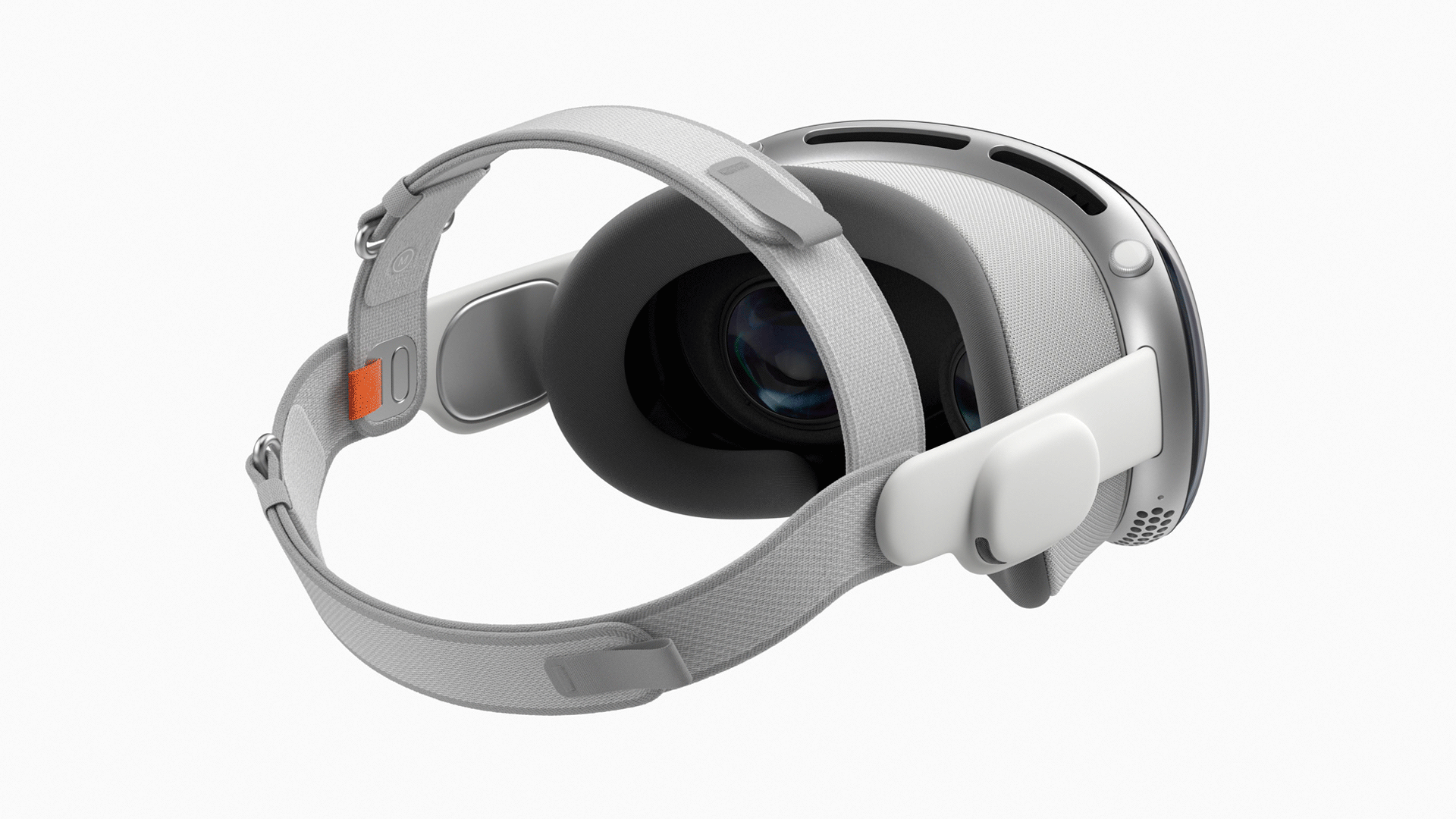
Clearly recognizing this, Apple also opted to include a ‘Dual Loop Band’ headstrap with every Vision Pro. It’s a better (thanks to a top strap for improved weight distribution) but it’s still not great.
Dual Loop Band | Image courtesy Apple
It’s a real shame because on the one hand, the default Knit Band is actually really awesome. It’s soft, cups the back of your head nicely, and is incredibly easy to adjust with a built-in dial on the side. But if you use it, you forgo the benefit of the top strap that comes with the Dual Loop Band. So you can have one or the other, but not both.
It’s obvious that Apple should have just combined the two. Luckily for us, third-party strap options fix this issue for significantly less than an official Elite Strap from Apple—even if they did offer one.
After trying multiple third-party straps for Vision Pro, I’ve finally found one that does exactly I want: it combines with the excellent Knit Band, allows me to use the headset without the facepad (thereby reducing weight), and it gets my eyes closer to the lenses for a wider field-of-view.
Photo by Road to VR
This is the ANNAPRO A2 strap for Vision Pro, and it’s pretty much what Apple should have offered right out of the gate. The $45 pricetag feels very reasonable considering how much better it makes Apple’s $3,500 headset.
I’ve been testing it for a few weeks now and it has made using Vision Pro for long sessions significantly more comfortable. In fact, it’s a huge factor in making the new ultrawide virtual monitor for Vision Pro actually useful. The improved comfort makes Vision Pro much more attractive for day-to-day work.
When the company sent us the headstrap to check out, they also extended a 10% discount code to our readers: be sure to use the code ROADTOVR at checkout on Amazon if you plan to buy one.
The Annapro A2 strap slides easily onto Vision Pro’s struts, and works seamlessly with the Knit Band (it can also work with the Dual Loop if you want even more top-strap support). It includes four different pad sizes (5mm, 12mm, 18mm, and 25mm) in the box, allowing it to fit to different head shapes.
Photo by Road to VR
I found the 5mm pad works best for me, allowing me to wear the headset without the facepad, and bring the lenses as close to my eyes as I comfortably can, resulting in an expanded field-of-view and a more natural AR experience thanks to the open periphery.
Photo by Road to VR
Apple clearly prioritized form-over-function when it came to Vision Pro. They wanted to deliver something that looked no more clunky than a large pair of ski goggles. But that goal led them to compromises on comfort that have become one of the main critiques of the headset.
It’s nice that this can now be fixed thanks to affordable third-party accessories. This particular approach works so well that I wouldn’t be surprised if the next iteration of Vision Pro comes adopts something similar right out of the gate.
Alongside updates to its PC VR headset lineup, Pimax revealed a new financing plan for Crystal Super and Crystal Light which makes both PC VR headsets more affordable, but also alters the payment structure and returns policy in a way that could raise a few eyebrows moving forward.
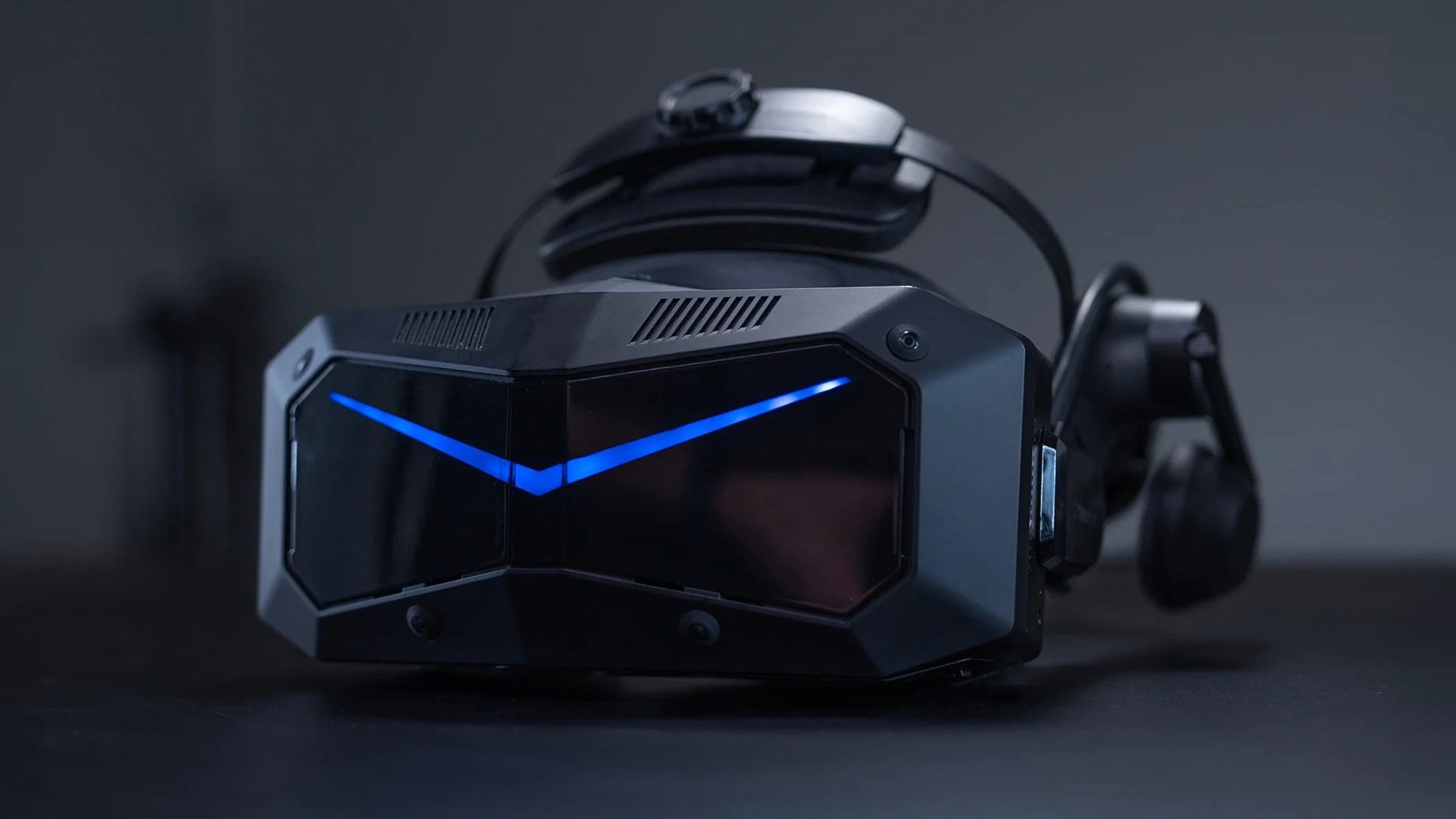
Announced back in April, Crystal Super is set to be the company’s next flagship PC VR headset, offering a base 57 PPD version with QLED panels that features a staggering resolution of 3,840 x 3,840 pixels per eye, a 120-degree field-of-view (FOV), and glass aspheric lenses with a reported 99% light transmission.
Additionally, Crystal Super supports eye-tracking, dynamic foveated rendering, inside-out tracking, and features swappable optical engines as well as offering a smaller, redesigned form factor for improved ergonomics. Principally targeted at VR simmers who already run a top of the line GPU, it basically represents a veritable wishlist of specs when the 57 PPD version arrives sometime in Q1 2025.
Pimax Crystal Super | Image courtesy Pimax
And even more so when the additional optical engines arrive at some point, which includes a micro-OLED engine for $699, and a 50 PPD QLED engine with 135-degree FOV for $399. Pre-orders for those optional add-ons are set to take place early next year.
Along with the fully updated spec sheet and launch of Crystal Super pre-orders, Pimax announced a new pricing structure for both Crystal Super and its previously released Crystal Light which reduces their overall prices, but makes some controversial changes to how the company’s payment structure and returns policy works.
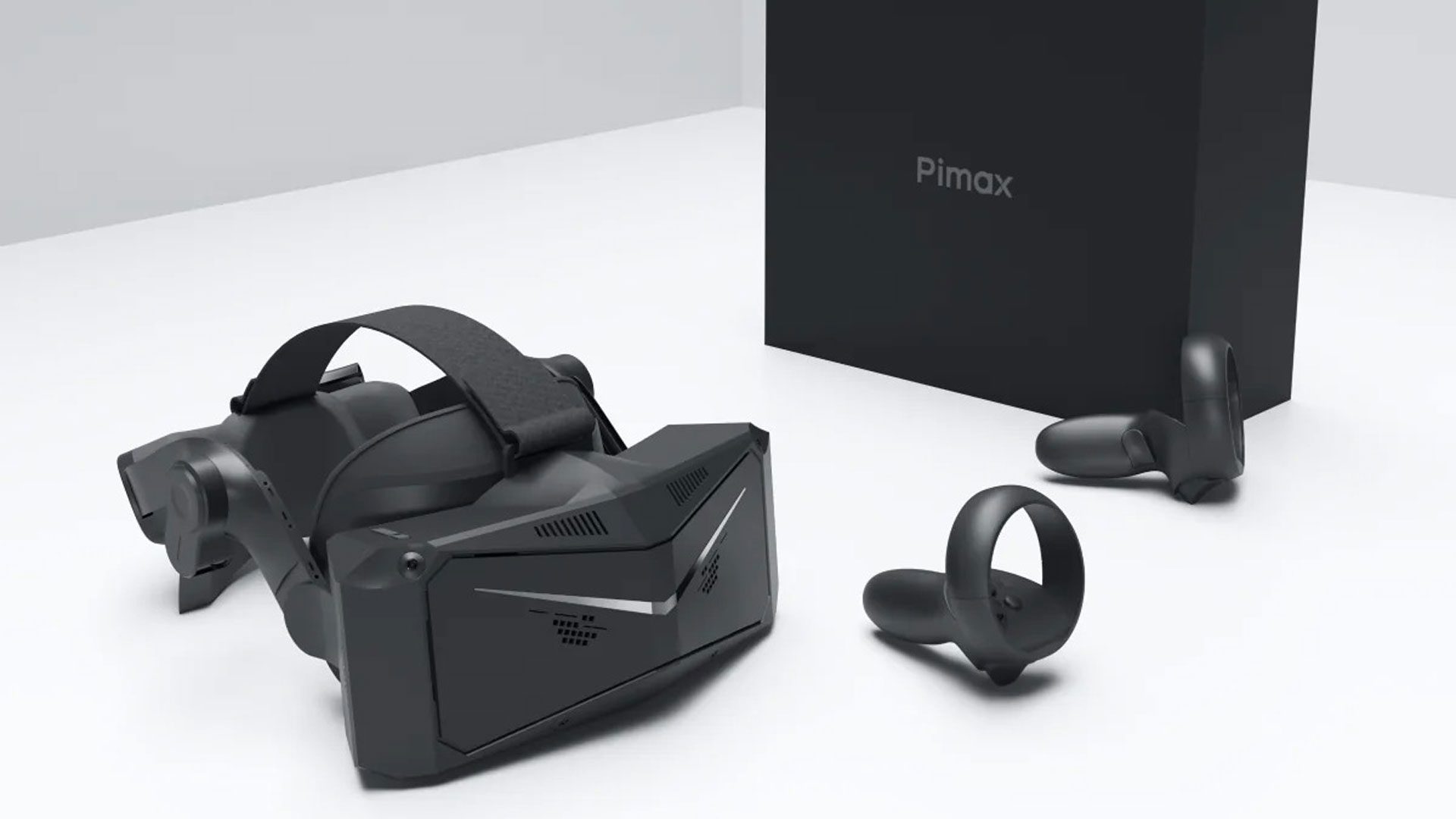
On the face of it, the base price for Crystal Super is going down from the initially announced $1,800 to $1,695. Crystal Light, originally launched at $899, is going to $858. Notably, these pricing tiers both include controllers. As with all things Pimax though, it’s not so straight forward.
Now, the company is introducing a new mandatory financing/membership program, called ‘Pimax Prime’, which allows customers to purchase Crystal Super for $999 upfront, and Crystal Light for $599 upfront.
Pimax Crystal Light | Image courtesy Pimax
Similar to the previous Trial Payment scheme rolled out in May for Crystal Light, Pimax is offering a trial period so you can see if its right for you. When it ends, you’ll be on the hook to choose between one of two payment plans to keep the headset’s software working, or return the headset to Pimax for a full refund.
For Crystal Super, customers can choose between a one-time payment of $696, or a $33 per-month two-year plan ($792 total) for access to the required Pimax Play software. For Crystal Light, the one-time payment costs $259, or $12 per-month two-year plan ($288 total). If monthly payments are missed during the plan, software access is suspended.
After Prime payments are completed however, access to Pimax Play is entirely free for the particular headset in question. That’s seemingly great news if everything goes to plan, and you’re happy with the product, or if you find out it’s not right for you and you want a refund within the trial period.
While Pimax Prime hopes to sweeten the pot with extras such as early access to new software features, exclusive invitations to members-only events, and priority technical support, the payment plan is bringing along with it a fundamental change to how refunds work moving forward, effectively offering some customers less flexibility than before despite a lower overall price.
Through its previous Trial Payment scheme released in May, Crystal Light gave users a 15-day trial period, where customers could make free returns, provided the device wasn’t damaged by the user, and 30 days if damaged in transit. Now, Pimax only offers a 10-day return window in both cases, meaning you’re on the hook for a payment plan after the trial period no matter what.
While return policies vary in the United States, as that country lacks any such federally mandated consumer protection laws, the EU and UK provide consumers with the right to return any physical product within 14 days without justification, and provides two years against faulty goods, which doesn’t cover the usual suspects: user error, misuse, accidental damage, normal wear-and-tear, etc.
Herein lies the problem. As keen-eyed Redditor ‘TotalWarspammer’ points out, Prime isnon-refundable after the 10-day period. Essentially, if you’re on day 10 of your headset and choose to get the best deal by signing up for the one-time payment, and then you change your mind one day later, you may only be able to recoup the upfront price of the headset depending on your local consumer protection laws, but not the mandatory software subscription thereafter.
The jury is still out on whether this calculated gamble could actually be a misstep, as it has the potential to overshadow ostensibly good hardware from a company that has been able to offer niche PC VR headsets at increasingly reasonable prices. Then again, it may be just what you need to see whether a Pimax headset is right for you, as you’ll have a few days to figure it out and send it back for free. Still, paying for access to middleware that should be included for free may simply not sit right with some, no matter the justification behind it.
Pimax says Prime membership aren’t limited to Crystal Light and Crystal Super either, as the program will expand to include the future Pimax VR headsets too. So we’ll just have to wait and see how the community reacts, and whether Pimax’s new strategy really is here for good.
Varjo, the high-end XR headset creator, today announced the release of a new smartphone-based 3D scanning service for enterprise that promises to let users quickly build photorealistic environments and explore them in both VR and on traditional screens.
Called Teleport, the paid app allows users to capture and recreate real-world locations, something the Finland-based company says takes just 5–10 minutes, which is notably faster than traditional photogrammetry methods.
Supported capture devices include iPhones and iPads running iOS 17 or later, which includes a fairly large swath of hardware—from iPhone XR and above, and Apple’s 8th gen iPad and above.
The resultant “digital twins” can be accessed on phones, PCs, or explored with either Varjo’s XR headsets or other major PC VR headsets, the company says.
Powered by advances in Gaussian Splatting and NVIDIA GPU-trained generative models, Teleport’s 3D models are processed in the cloud and then rendered on-device, which means an Internet connection is only required to initially download the model, but not explore it.
Priced at $30 per month, Varjo is currently offering a seven-day free trial of Teleport. Signing up also allows users to view a host of captures for free in standard and high-definition via its web viewer, as well as the highest-level quality captures via its desktop client.
The launch of Teleport comes alongside an expansion of Varjo’s Series D funding round, bringing in new investors such as Beyond Capital, Nishikawa Communications, and NVIDIA. Varjo hasn’t disclosed to amount of its latest funding raise, however the company tells Road to VR this brings its lifetime funding to approximately €180 million ($188 million USD).
The company says funding will support its efforts to accelerate adoption of its XR hardware and software solutions for industrial applications, with CEO Timo Toikkanen noting Varjo will leverage AI and machine learning to further integrate real and virtual environments, enhancing productivity and efficiency for its industrial clients.
Meanwhile, Meta is working on a similar consumer-facing product, which was announced in September, called Horizon Hyperscape. Released as a demo experience to showcase Meta’s vision for photorealism, Meta says that at some point creators will also be able to “build worlds within Horizon by using a phone to scan a room and then recreate it,” although there’s no word on when we can expect the company to roll out the service.
Bigscreen Beyond, the slim and light PC VR headset released late last year, is getting its first ever Black Friday deal. Starting this week, you can nab a free Audio Strap with purchase.
Bigscreen Beyond is small, partly because it relies on the SteamVR tracking ecosystem and doesn’t need inside-out tracking sensors, and partly because it includes dual 2,560 × 2,560 micro-OLED displays, which are paired with space (and weight) saving pancake lenses.
In fact, it’s so light, it weighs in at just a few grams less than the optional Audio Strap itself: 127g Beyond, 160g Audio Strap.
Image courtesy Bigscreen
From Black Friday through Cyber Monday (November 27th – December 2nd), every purchase of Bigscreen Beyond ($999) comes with a free Audio Strap, which is normally priced at $129.
The deal will be available in all supported shipping regions, which includes the US, the UK, most of continental Europe, Ireland, Iceland, Australia, New Zealand, Canada, and Japan.
To get a free Audio Strap with purchase of a Bigscreen Beyond, simply apply the code BLACKFRIDAY24 at checkout.
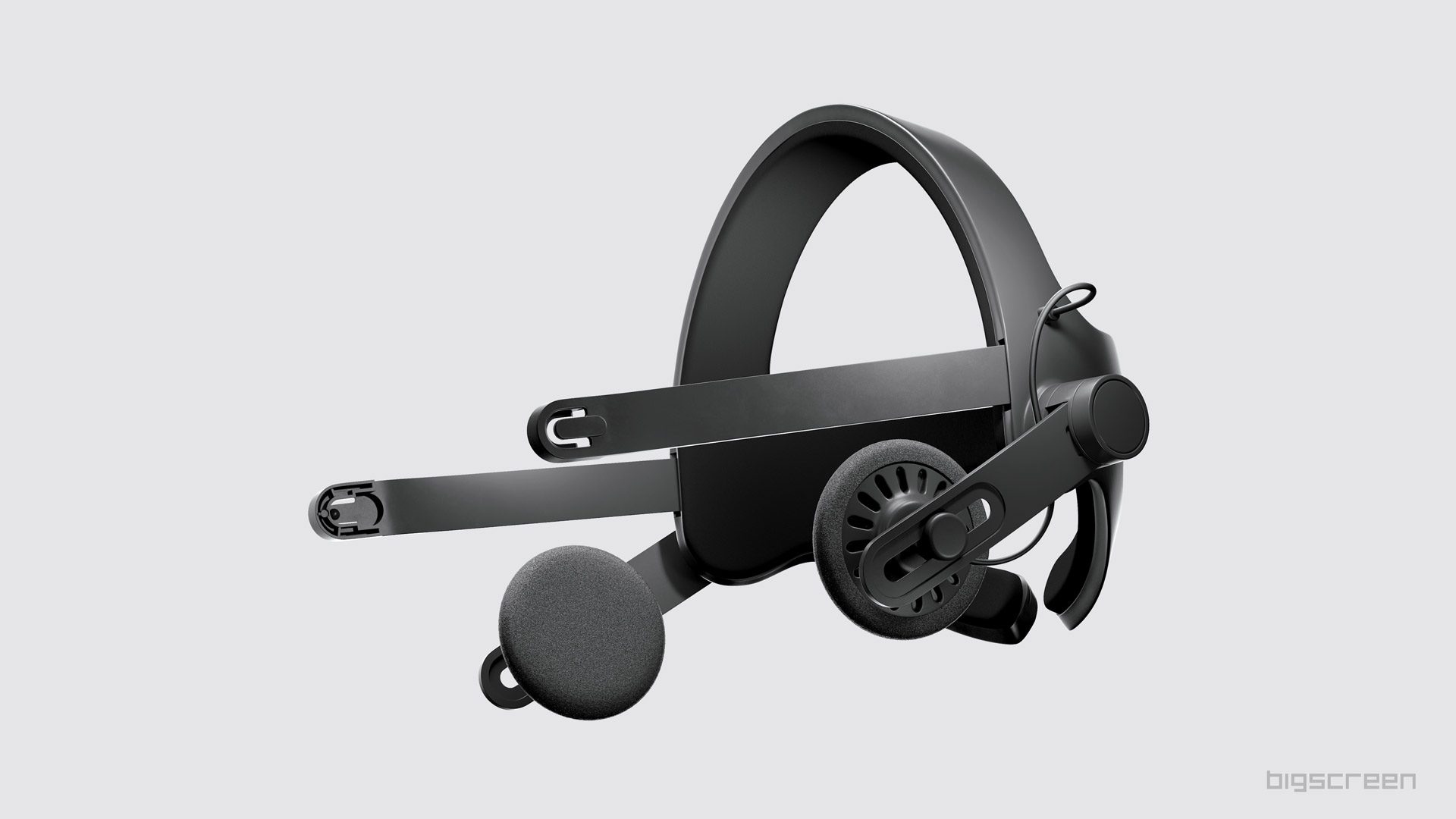
Like many such straps, Bigscreen’s Audio Strap replaces the default fabric strap with a rigid body that cups the top and back of the head, includes an adjustable dial for easy fitting, and features (of course) built-in on-ear headphones.
John Carmack wearing Bigscreen Beyond | Image courtesy John Carmack
The big question though is whether Bigscreen Beyond is worth it. In our deep dive review, we praised the customized face pad, top notch visuals, and compact form-factor, which was truly comfortable for long sessions.
At the time though, we called Bigscreen Beyond “incomplete” since the company still hadn’t shipped the Audio Strap, making the lack of built-in audio a definite sore spot. With a free one in the box though, that’s certainly different story. Make sure to check out our full review to see if it’s right for you.