Monday, 7 October 2024

Meta Orion Interview Dives Deep Into Details Like Resolution, Battery Life, & More

https://ift.tt/hikE7Lc

Meta’s biggest reveal at last week’s Connect conference was definitely the Orion prototype AR glasses, which the company says it’s been working on for nearly five years. It’s a big deal not only because of how compact it is, but because Meta says it wants to eventually turn the prototype into a consumer product.

You may have caught our high-level coverage of the Orion headset here, but our friend Norman Chan from Tested got to sit down with Meta CTO Andrew “Boz” Bosworth to try out the glasses and learn about the Orion project. In typical form, he digs deep into the intriguing technical details of the headset. You can check out his full video below, or scroll further down to get a summary of the technical details Chan learned from his demo and conversation:

Although Orion isn’t ready for mass production, Meta says it’s planning to build around 1,000 units for internal testing. At a purported cost of $10,000 for each prototype, that’s a cool $10 million worth of hardware the company will be shelling out to get enough devices that it can do testing and development at a reasonable scale.

The Orion glasses weigh just 98 grams, which is right under the 100 grams threshold that Meta believes is important for making something that actually looks and feels like glasses rather than goggles. For comparison, the classic Ray-Ban Aviator sunglasses weigh around 30 grams, and Meta’s own Ray-Ban smartglasses weigh around 50 grams. So the Orion AR glasses might be reasonably called glasses, but they’re still chunky bois.

Still, 100 grams is incredibly lightweight if you consider that Orion is packing most of the same fundamental capabilities as Meta’s own Quest 3 headset, which is more than five times heavier at 515 grams.

In addition to the novel silicon carbide lenses we heard about, which help the glasses reach a large (for their size) 70° diagonal field-of-view, Orion also employs MicroLED projectors which are not only tiny, but super bright. Meta says they can output hundreds of thousands of nits of brightness. It’s essential to start with such a bright light source because it’s a complex optical path that loses lots of light along the way. By the time it reaches your eyes, you’ll be seeing just 300–400 nits.

That’s a bit brighter than your average VR headset, but still a long way from bright enough to use outside on a bright day. You’d need around 3,000 nits for reasonable outdoor usability. That means Meta will need to find a brighter light source, or reduce inefficiency in the optical path, if it wants Orion to be something people will wear outside of their homes.

As for resolution, Chan says the main Orion demo has a resolution of 13 pixels-per-degree, which is a bit of a surprise. Because AR glasses often have a smaller field-of-view than their VR counterparts, usually they get an advantage on PPD because the available pixels are spread over a smaller area. But even with a 70° field-of-view, Orion has only about half of the PPD of Quest 3 (25PPD).

However, Meta was apparently also demoing a similar Orion prototype that was 26 PPD, but that came at the cost of image brightness. The company told Chan that its goal is to reach a resolution of 30 PPD by the time Orion becomes a proper product. That’s still far from a ‘retina’ resolution of 60 PPD, but should be enough to make the headset useful for text-based work.

One of the most interesting details from Chan’s interview was the way Orion glasses implement eye-tracking.

Like other headsets, the technique involves illuminating the eye with a series of infrared LEDs, then point a camera at the eye to reverse-engineer the position of the eye based on the visible reflection of the IR LEDs. Usually the IR LEDs are placed in a ring around the lens, but Chan noted that Orion places absolutely tiny LEDs directly in the user’s field-of-view—right on the lens.

In order to make it all invisible to the wearer, the wires that power the LEDs are arranged in a nearly randomized pattern that you could easily mistake as a bit of hair on the lens.

Image courtesy Meta

A random pattern is less eye-catching than a clearly defined pattern (the basis of many optical illusions). Between the random pattern, minuscule thinness of the wires, and nearness to the eye, Chan said it was all but invisible when looking through the lens.

It was also mentioned that the ‘compute puck’, which offloads much of the processing work from the glasses, uses a custom Wi-Fi 6 protocol to communicate, with a range of 10 or so feet.

The custom protocol purportedly focuses on ‘pulsing’ data from the puck (rather than continuously streaming it) to reduce both heat production and power consumption. We can imagine this being a packet-like approach where instead of communicating constantly from the puck to the glasses, outgoing information is gathered over the course of a discrete time period before being packaged and transmitted.

While the puck is plenty large and is said to be capable of “all day” battery life, the glasses themselves can currently run for up to three hours—essentially the same battery life you’d expect from a standalone VR headset.

Compared to research prototypes shown by Meta in the past, Orion isn’t just made to give people a look at the experience the company wants to eventually deliver. Orion is more of a preview of a product that Meta is actively building.

The company says it still plans to make the glasses smaller, higher resolution, and affordable. And so far Meta says it expects the eventual consumer version of Orion should become available before 2030 and cost somewhere around $1,500.

There’s even more details packed into Chan’s video than we covered here! If you want to hear it all, check out the full video.

The post Meta Orion Interview Dives Deep Into Details Like Resolution, Battery Life, & More appeared first on Road to VR.


from Road to VR https://ift.tt/5luwe9Y
via IFTTT

Friday, 4 October 2024

‘Mobile Suit Gundam: Silver Phantom’ Hands-on — Promises of Immersion Dulled By Restrictive Gameplay

https://ift.tt/SGdXYc8

Mobile Suit Gundam: Silver Phantom is a new sort of VR film hybrid for Quest, mashing up a movie’s worth of real-time rendered narrative with sprinkles of first-person gameplay, billing itself an ‘interactive anime’. On paper, it sounds really cool, offering you essentially two ways to step into your favorite anime universe and experience it in all of its Shonen glory. In practice though, it’s a total guessing game of when you can get to have fun, and when you’re expected to just sit back and live out your new life as a camera–person-chimera.

Silver Phantom, which enlists you as the protagonist in the beloved mecha-filled world, will no doubt tickle the fancy of hardcore Gundam fans by virtue of the fact that, well, it’s Gundam, however most others will probably be left scratching their heads. Me included.

But not for the characteristically heavy doses of exposition or patently Japanese social mores on full display—I’m a dusty, old anime fan myself—but because it packs in all of the lesser ills of VR filmmaking while being way too precious with moments of fun.

View post on imgur.com

In Silver Phantom’s quest to offer up both embodiment and immersion though—slightly different concepts—its managed to fumble both at the same time. The film’s narrative richness and visual flash envelopes you entirely (immersion), but is substantively hindered by relying too heavily on replicating traditional shot composition in VR, which is a shame, because everything looks awesome, from characters expressions to the full-blown mecha action happening in space.

While its smattering of first-person game mechanics are meant to make you feel like you’re really there and have an effect on the environment (embodiment), those moments are doled out at seemingly random intervals, leaving you to constantly question why you’re being unceremoniously dropped back into a first-person POV to engage in one-off jobbies—essentially feeling like the little brother who’s only allowed to play with an unplugged controller all while the real action goes on around you, never knowing when your older brother will concede and let you press a few token buttons.

View post on imgur.com

I admire the trio of developers (Bandai Namco Filmworks, Atlas V, Albyon) for taking the risk on developing the two-hour narrative, although it just doesn’t feel like the future of cinematic VR to me, but rather one that has replicated the same mistakes early 360 filmmakers have made ever since enterprise-level VR cameras saw their boom in the mid-2010s.

Switching cameras too often is jarring, and treating your head like it’s on a boom is something you either don’t really mind, or vehemently hate. Either way, it comes at the cost of embodiment, as you never know when your POV will switch, and whether you’re back in your body for brief moments of action.

And (rant continues) instead of letting scenes breathe, and calling the user’s attention to specific action, you’re basically encouraged to keep your head still—worsened by the fact that frame rate is fairly jumpy, making subtitles difficult to read. Granted, you can experience it with English audio and no subtitles, but that does little for those looking to experience it in Japanese with English subs (signature look of superiority). If neither are your first language, it will be a little tough to get used to.

View post on imgur.com

When the final credits roll, Silver Phantom’s replay value comes in the form of an optional mixed reality wave shooter, which feels stylistically similar to the ‘Xortex 26XX’ mini-game in Valve’s The Lab (2016). Going pew-pew-pew with toy-sized Gundams in your own living room will never not make me feel like a kid again, one who was left more than a little scorned by not getting to have more fun during the main event.

There’s also a cool MR gallery that lets you get up close and personal with a handful of mechas—something fans should definitely appreciate.

In the end, you can pay $16 for a substantially worse movie-going experiences, so take it for what you will. It’s a flashy, sometimes fun experience that Gundam fans will probably gel with, which is great. But just not for me.

In the meantime, you can get Mobile Suit Gundam: Silver Phantom on the Horizon Store for Quest 2, 3 and 3S.

The post ‘Mobile Suit Gundam: Silver Phantom’ Hands-on — Promises of Immersion Dulled By Restrictive Gameplay appeared first on Road to VR.


from Road to VR https://ift.tt/42KS9CI
via IFTTT

Thursday, 3 October 2024

Meta’s Head of XR Apologizes to Oculus Founder Regarding His Ousting

https://ift.tt/M2b9vNW

Andrew ‘Boz’ Bosworth, Meta CTO and Reality Labs chief, has publicly apologized to Palmer Luckey, founder of Oculus who was ousted from the company in 2017 for political reasons.

To this day, Meta (ex-Facebook) never publicly confirmed why Luckey was fired, with CEO Mark Zuckerberg even going on record in a U.S. congressional hearing in 2018, saying Luckey’s ousting “was not because of a political view.”

It was however a political action that ostensibly gained Luckey notoriety among company leadership that led to his ousting in March 2017, only three years after Meta acquired Oculus for $2 billion.

Oculus founder Palmer Luckey on stage at Oculus Connect 2015 | Photo courtesy Oculus

“I got fired for no reason. I gave $10,000 to a pro-Trump group, and I think that’s something to do with it,” Luckey said in a 2018 Wall Street Journal interview, referencing his 2016 donation to an anti-Hillary Clinton ad campaign called ‘Nimble America’.

This has understandably left some bad blood between Luckey and Meta at large over the years, with Luckey exiting the consumer XR space entirely with the founding of his own defense technology company, Anduril Industries.

Carmack’s Regret, Boz & Luckey Showdown

Former Oculus CTO John Carmack, who left the company in 2022, reignited the smoldering flame this April in post on X, saying he regretted “not doing more to support and defend Palmer Luckey at Facebook.” According to Carmack, if former Oculus founders had united, things may have panned out differently.

“Unfortunately, FB encouraged ‘bring your whole self to work’, which meant politics was openly present, and rabble rousing was a thing,” Carmack said in a follow-up post. “I would guess that an employee referendum would have gone against Palmer, but it might have been different if there was a unified front of Oculus founders behind him.”

John Carmack at Oculus Connect 5 | Image courtesy Oculus

Additionally, Carmack said he believed Luckey’s firing was due to “hysterical internal employee pressure,” noting further he “[didn’t] think Mark Zuckerberg had a strong personal view on it.”

As a programming luminary and one of the clearest windows into Meta’s internal workings during his time there, when Carmack speaks, it tends to carry a lot of weight, which prompted current Bosworth to enter the conversational fray.

Responding to Carmack, Bosworth called him “woefully incorrect” on his speculation of an employee referendum to oust Luckey, further stating “I am not in a position to correct [,] except to say maybe don’t speculate!”

Then, when Boz claimed he actually defended Luckey before his ousting, it didn’t sit right with the aggrieved party. Here’s Luckey’s response:

“Great story to tell now that I have dragged myself back to relevance, but you aren’t credible. You retweeted posts claiming I donated to white supremacists, and a post saying that anyone who supports Trump because they don’t like Hillary Clinton is a shitty human being. You publicly told everyone my departure had nothing to do with politics, which is absolutely insane and obviously contradicted by reams of internal communications. It is like saying the sky is green. Same goes for you telling people that I wasn’t pressured into saying anything untrue, that any mention of politics and who I was voting for was up to me. Can I post my original statement, the one that was explicitly rejected on account of saying negative things about Hillary Clinton, or is that still considered Work Product? Maybe you are lying, maybe you are just ignorant and willing to launder the lies of others about something you weren’t even around for, but don’t try to play the apolitical hero here.”

If you want to see two multi-millionaires who aren’t running for political office argue with each other, don’t miss the rest of the thread.

Boz Brokers Peace

Nearly five months since the online rift, Luckey was actually invited back to the Meta mothership for the first time since his departure in 2017, where he got a chance to not only try out the company’s Orion AR glasses prototype, but also received a face-to-face apology from Bosworth, which the Meta CTO echoed in a recent post on X.

“I’m glad you came by to check out Orion. I mentioned this in person, but I also wanted to publicly apologize for my previous comments about your time at (then) Oculus. I’m sorry,” Bosworth said. “After reading the recent Tablet piece I dug into some of the events that preceded my time when a different set of people who are no longer at the company were running the group. It turns out I was misinformed but that’s no excuse and since I wasn’t involved I should never have said anything. I’m grateful for the impact you made at the company and in developing VR overall. Looking forward to showing you more of our work in the future.”

Palmer Luckey demoing Meta Orion AR prototype | Image courtesy Palmer Luckey

“Thanks, Boz. Apology accepted,” Luckey responded. “I am infamously good at holding grudges, but Meta has changed a lot over the past 8 years. The people responsible for my ouster and internal/external smear campaign aren’t even around anymore. At some point, the Ship of Theseus has sailed.”

Luckey further stated it was “pretty surreal to be back on campus with you guys, Orion alone was well worth the trip. It is more or less exactly what I would have wanted to accomplish.”

The Tablet exposé referenced by Boz even had kind words directly from Zuckerberg, which Luckey highlights in an X post as not coming from the usual “PR flunkey”:

“I have a huge amount of respect for Palmer—both for what he’s done for VR and for now achieving the rare feat of building multiple successful companies,” Zuckerberg told Tablet in a statement this month, his first regarding Luckey in several years. “He’s an impressive free-thinker and fun to work with. I was sad when his time at Meta came to an end, but the silver lining is that his work at Anduril is going to be extremely important for our national security. I’m glad an entrepreneur of his caliber is working on these problems. I hope we can find ways to work together in the future.”

The post Meta’s Head of XR Apologizes to Oculus Founder Regarding His Ousting appeared first on Road to VR.


from Road to VR https://ift.tt/YkpQ0Hm
via IFTTT

Meta Acquired 9 Leading VR Studios Starting in 2019: Here’s What’s Happened Since

https://ift.tt/gOE5hdn

Meta has aggressively expanded its VR game portfolio with the acquisition of nine VR studios since 2019. We take a look what’s come of these deals over the last five years.

Acquisition by Meta usually means a few things. Sometimes it means studios get a ton of new resources and the sort of stability that comes with being beamed up into the mothership of any platform holder. It can also mean less flexibility in what developers can do, as they’re beholden to maintaining hit game properties that got them the attention of Meta in the first place, or forced to develop for a single platform.

In all, Meta has acquired nine studios that have demonstrated varying post-acquisition performance—only few of which have seemed to really break the mold by offering up increasingly compelling follow-up content.

Beat Games – Known for Beat Saber, Acquired 2019

Image courtesy Beat Games, Meta

Meta acquired Beat Games in 2019 to ensure that Beat Saber would continue evolving with new features and content, while emphasizing that the studio would maintain some independence.

While the block-slashing rhythm game has seen regular updates and DLC music packs from major artists, perhaps the biggest addition to the game itself, since the acquisition, is the inclusion of multiplayer. Meanwhile, other promises have gone unfulfilled, like custom sabers and a mixed reality mode—both of which have been teased a year or more ago.

There’s been no fundamental changes to the core Beat Saber formula. One might think that’s because the once-innovative Beat Games had moved on to working on its next big project. Alas, five years later there’s still no indication that Beat Games is working on anything but keeping Beat Saber going.

Considering that Beat Saber is one of VR’s most profitable games, this surely makes sense. But Beat Games doesn’t appear to be pushing the envelope, or signaling release of anything new beyond what we’ve already seen. Its founders Jan Ilavsky, Jaroslav Beck, and Vladimir Hrincar have also all since left the company, leaving it increasingly dependent on Meta’s direction.

Post-acquisition Grade: B

Sanzaru Games – Known for Asgard’s Wrath, Acquired 2020

Image courtesy Sanzuru Games, Meta

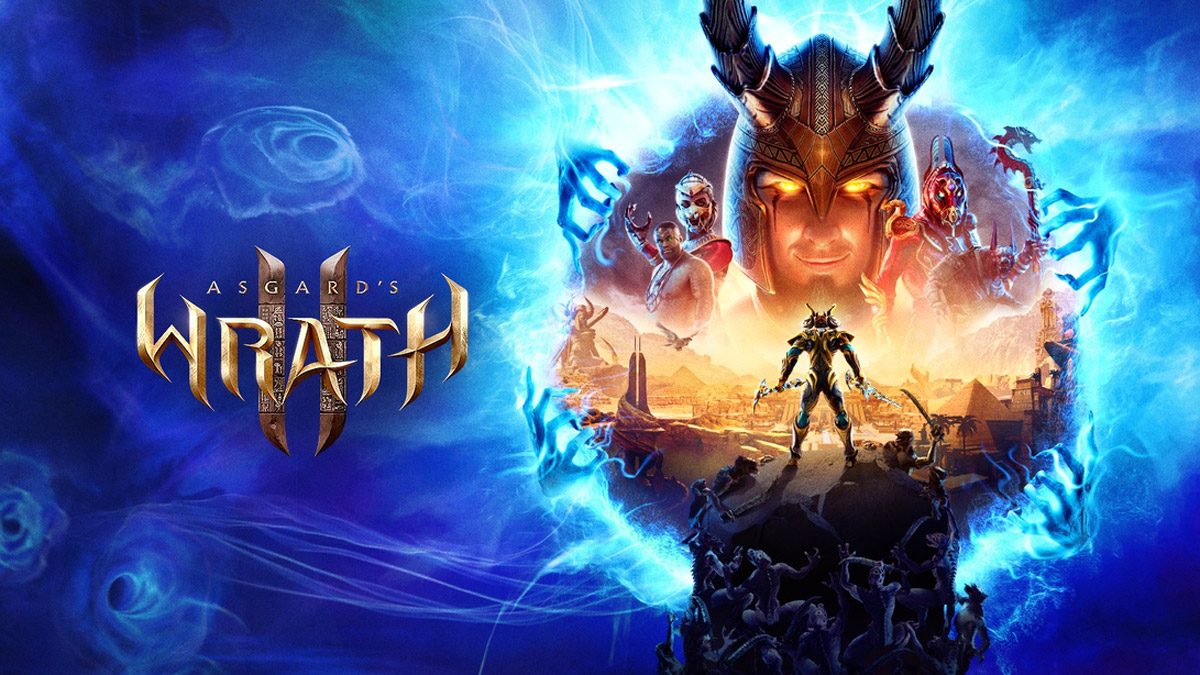
At the time of its 2020 acquisition, Meta indicated that Sanzaru would continue to develop large-scale VR titles, building off the success of Asgard’s Wrath (2019), a Rift-exclusive RPG that came out one year before the acquisition.

In 2023, the studio served up Asgard’s Wrath 2. Not only did the studio deliver a sequel, it managed to cram it within the confines of Quest 2 and Quest 3, a challenging feat compared to the much more powerful PC platform that its predecessor had shipped on.

However, this created something of a rift. Although the sequel is set in an entirely new location and has a new storyline, if you didn’t own a VR-ready PC you simply can’t play the original game on Quest, which was a definite sore spot.

Still, the sequel is widely considered a benchmark for visual fidelity on Quest, nabbing the game a solid [4.2/5] user review score. But it took some serious time. It was nearly four years from the acquisition to the launch of Asgard’s Wrath 2. While we can appreciate the challenge of switching the studio’s entire workflow to build games for Quest, we certainly hope it won’t take another four years to see what the studio does next.

Post-acquisition Grade: B+

Ready at Dawn – Known for Lone Echo & Echo VR, Acquired 2020

Image courtesy Ready at Dawn, Meta

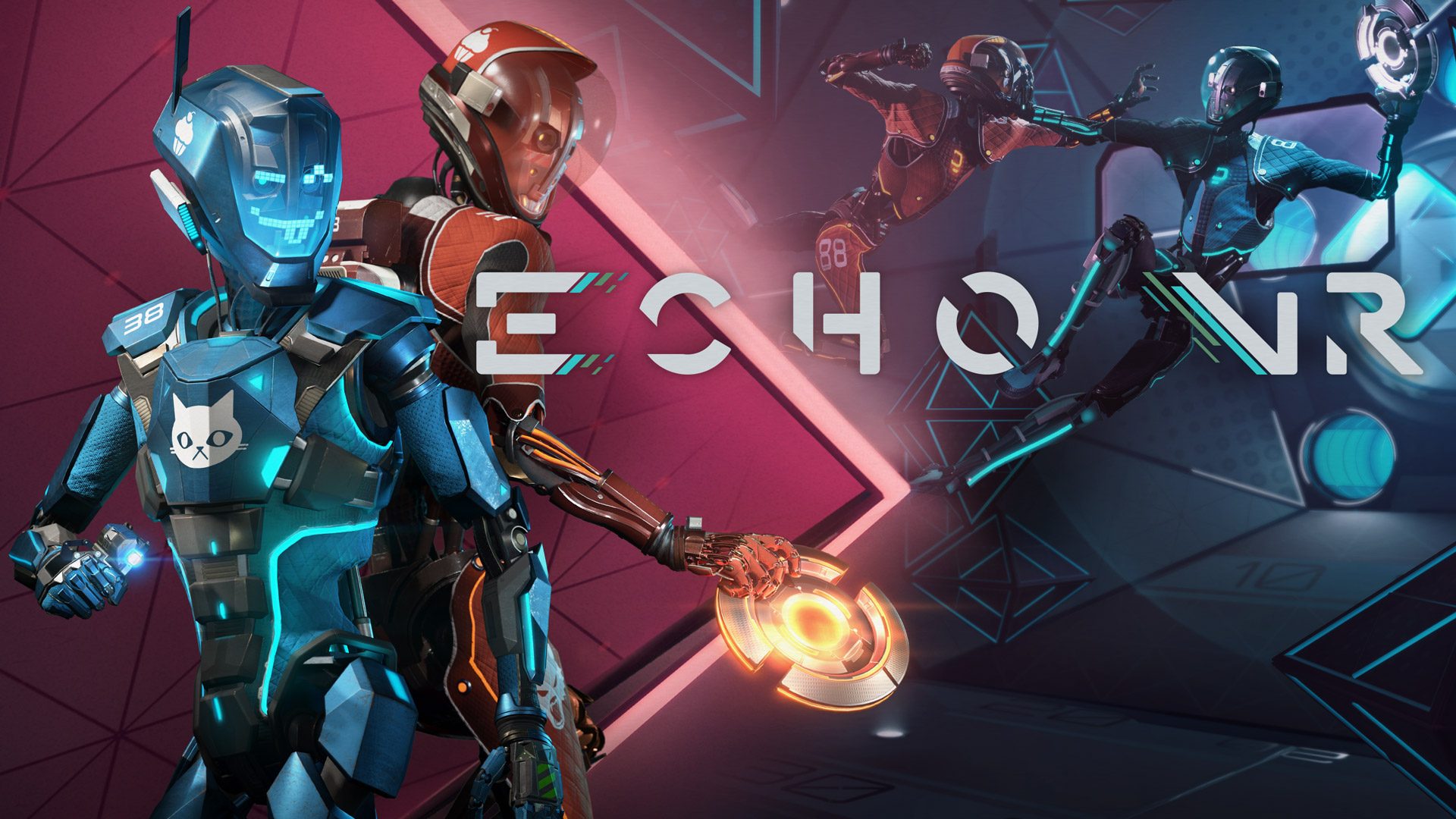
Ready at Dawn is the studio behind Lone Echo, which launched in 2017 as one of VR’s biggest and best looking games in the days before Quest. Its signature zero-G locomotion was so flexible that the studio even spun out a separate multiplayer game called Echo VR.

Eventually, development on Lone Echo II began, with announced plans to launch in 2019. But a series of delays ensued. Meta came along and aquiried Ready at Dawn in 2020, seemingly willing to help the studio complete the game and build on the social success of Echo VR.

The studio did eventually release the single-player adventure Lone Echo II for Rift in 2021. And given Meta’s shifting focus from PC to Quest, it was widely expected the studio would bring the still-loved Echo VR over to the new headset.

But things didn’t work out that way. It was only three years after the acquisition that Ready at Dawn announced it was sunsetting Echo VR.

The decision rightfully disappointed fans, although the studio said it was “focusing on our next project,” which seemed promising. Then, in August 2024, Meta shut down the studio entirely.

Post-acquisition Grade: F+ (see me after class)

Downpour Interactive – Known for Onward, Acquired 2021

Image courtesy Downpour Interactive

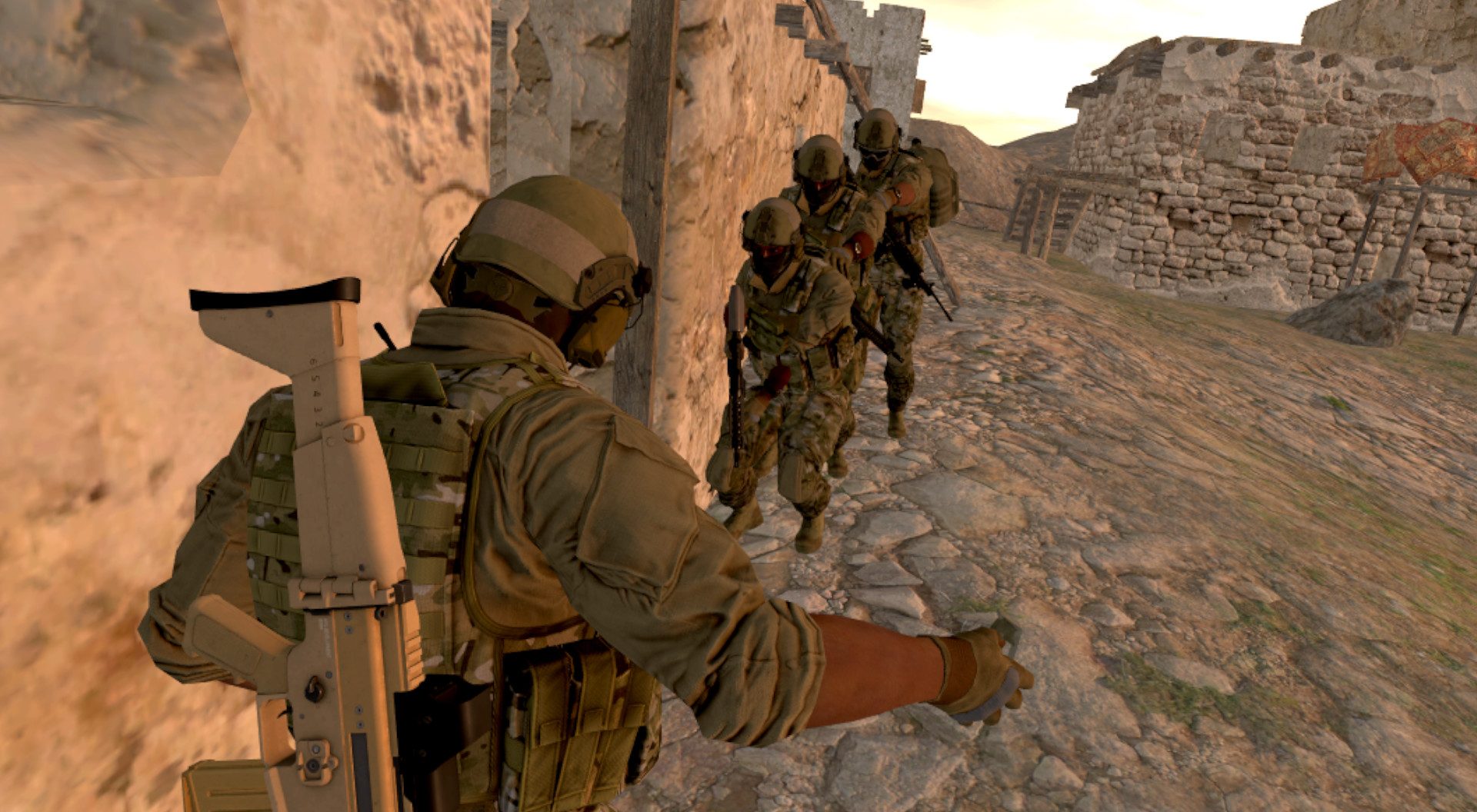
Onward has been a mainstay for VR mil-sim players since it released on Steam and Rift in 2016. With the acquisition of Downpour Interactive in 2021, Meta saw this as an opportunity to support a popular game, noting at the time it wanted to help “in growing Onward as one of the foremost multiplayer VR games.”

A year before its acquisition, Onward suffered a pretty bumpy launch on Quest, although it’s seen improvements in stability and visuals, still garnering the game a strong following to this day and a whopping 17,000 user reviews on Quest, putting it at a solid [4.2/5] in user ratings.

Still, Onward post-acquisition advancements have been incremental rather than transformative.

While Meta has made good on its promise to keep the game cross-platform, the port to Quest drew wide criticism from players who noted a major graphical downgrade in the PC version that was deemed necessary to get the game onto Quest while still supporting both platforms.

Like Beat Games, one might have thought the pace of updates meant was busy brewing up its next big game, but no such thing has been announced. And it’s unclear if it ever will be; studio founder and CEO Dante Buckley left the company in March 2023, just one month before Meta announced wide-ranging layoffs at Downpour and Ready at Dawn.

Post-acquisition Grade: C

Continue on Page 2 »

The post Meta Acquired 9 Leading VR Studios Starting in 2019: Here’s What’s Happened Since appeared first on Road to VR.


from Road to VR https://ift.tt/R5ahCcu
via IFTTT

Wednesday, 2 October 2024

‘Hitman 3 VR: Reloaded’ Studio XR Games Lays Off Majority of Staff

https://ift.tt/AmKtNnU

XR Games, the Leeds, UK-based studio known for Hitman 3 VR: Reloaded (2024) and Zombieland VR: Headshot Fever (2021), have laid off a reported 86 percent of its staff.

The information was shared by María Fernanda Díez Huerta via LinkedIn, who was Head of Production at XR Games from 2021 – 2023. Huerta reported on Tuesday the studio has now laid off 72 employees, retaining only 12 out of around 84, something she notes “goes beyond restructuring.”

This includes a number of positions in art, programming, QA, production, game design and IT.

Neither XR Games nor its CEO Bobby Thandi have made a public announcement addressing layoffs yet, however it’s hard to imagine it doesn’t have something to do with the generally unfavorable reception of Hitman 3 VR: Reloaded, a Quest-exclusive port of the stealth-action title that proved to be a visual and mechanical mess at launch.

The layoff round comes amid two high-profile projects currently in production by the studio: Zombie Army VR, a VR shooter based on the popular franchise from Rebellion, and Starship Troopers: Continuum, an online co-cop shooter created in partnership with Sony—announced just a day before news of the layoffs first broke.

XR Games isn’t the only one who’s tightened its belt though. VR veteran studio nDreams announced in mid-September it was laying off around 17 percent of the studio. This comes amid the backdrop of a number of top publishers and studios reducing headcounts, such as Embracer Group, Unity, Microsoft, EA, Sony, Epic Games, Take-Two Interactive and Riot Games.

Other VR studios affected this year also include Meta’s Ready at Dawn (Lone Echo, Echo VR), Sony’s London Studio (PlayStation Worlds, Blood & Truth (2019), and indie developer Archiact (Doom 3 VR Edition).

The post ‘Hitman 3 VR: Reloaded’ Studio XR Games Lays Off Majority of Staff appeared first on Road to VR.


from Road to VR https://ift.tt/bC8hGRJ
via IFTTT

Tuesday, 1 October 2024

Refurbished Quest 3 on Amazon is the Headset’s Best Deal Yet

https://ift.tt/tbHEs6M

In an effort to reposition the price ladder for its flagship headset, Meta is aiming to get the 128GB model of Quest 3 out the door for good. A new refurbished Quest 3 deal on Amazon is the best we’ve seen yet.

Amazon US is currently selling a refurbished Quest 3 (128GB) for $380 and the refurbished Quest 3 (512GB) for $450 through its ‘Renewed Premium’ program.

While you can buy refurbished Quest 3 units for the same price directly from Meta, Amazon’s deal has a considerable extra perk: instead of the 30-day return policy you get with Meta, Amazon’s Renewed Premium program includes a no-questions-asked one year return (or replace) policy. That gives you some extra piece of mind in case you get unlucky with a refurbished unit that doesn’t hold up over time.

Amazon also guarantees Renewed Premium products will have no lens scratches, at least 90% of the original battery life, and “no signs of cosmetic damage (scratches, dents, and other) are visible when the product is held 12 inches away.”

If you were about to pull the trigger on a brand new Quest 3S, these Quest 3 deals are definitely worth considering.

A new Quest 3S (128GB) is $300. The refurbished Quest 3 (128GB) will cost $80 more, but you get the benefit of majorly improved lenses and a higher resolution display. Ultimately that means a much clearer looking image inside the headset.

Then there’s the Quest 3S (256GB) which costs $400 new. Meanwhile the refurbished Quest 3 (512GB) costs just $50 more, which gets you not only the improved lenses and higher resolution display, but also double the storage.

The post Refurbished Quest 3 on Amazon is the Headset’s Best Deal Yet appeared first on Road to VR.


from Road to VR https://ift.tt/J8zIgVd
via IFTTT

Meta Overhauls ‘Horizon Worlds’ Avatar System for More Realistic Representation

https://ift.tt/zcP14dl

Announced at Connect last week, Meta is launching its next-generation avatars in Horizon Worlds today, giving users a lot more customization options to choose from before jumping into the company’s social VR platform.

Starting today, users can dig even deeper into adjusting their avatars’ appearance, including features like customizable body proportions, nose shape, eye size, and lip size. Like its previous avatars system, these also work across Meta’s other platforms, including Facebook, Instagram, and Messenger.

The sort of flash marketing images you’ll see with smiling and laughing avatars only really paints a part of the picture though, since the sort of smooth, Pixar-esque scripted avatar animations seen on flatscreen simply aren’t a thing in VR. Still, the new avatar system brings a lot more flexibility to the table, which Instagram user ‘mistermavix’ shows off in a recent video:


View this post on Instagram


A post shared by Mavix (@mistermavix)

Meta says in the most recent Horizon Worlds v182 release notes that world creators should make sure their virtual environments are ready for updated avatars, which includes things like making sure features of their worlds interact with the new avatars’ expanded range of body shapes and sizes.

Specifically, attachable items, lighting, and interactable objects like furniture may need adjustments to accommodate the new avatars, Meta says, noting that doorways and walkways should also be reviewed to ensure they comfortably fit the varied avatar proportions.

This follows an update in August last year that finally brought legs to Meta avatars, which came amid a greater push to attract more users to Horizon Worlds with the launch of support for Android and iOS mobile devices as well as standard PC browsers.

The post Meta Overhauls ‘Horizon Worlds’ Avatar System for More Realistic Representation appeared first on Road to VR.


from Road to VR https://ift.tt/hDoKInC
via IFTTT
Related Posts Plugin for WordPress, Blogger...