Creating a great arena shooter is hard, as many VR developers can attest. Gaining critical mass is important to keeping the casual ‘jump-in, jump-out’ style gameplay quick and fresh, and mechanics need to be engaging if it’s going to be a VR-native. Now nDreams-owned studio Near Light announced they’re aiming to do just that with FRENZIES.
Developed by Near Light and published by nDreams, Frenzies fuses the studio’s gunplay from Fracked and Synapse, throwing players into five-round matches which promise to be a “chaotic lucky dip of iconic and unconventional.”
This includes solo and team-based round types, such as ‘Red Light, Green Light’ and something called ‘Glitter Pig’.
“The last thing you can accuse FRENZIES of is being boring,” says Near Light studio head Paul Mottram. “Taking inspiration from classics like Quake and Unreal Tournament, we wanted to inject some unpredictable excitement back into the genre while retaining what makes VR shooters so special. We think FRENZIES nails that sweet spot.”
It’s coming to Quest and PSVR 2 at some point, however the studio says Quest players will have the chance to step into the FRENZIES arena later this month when the game heads into a closed alpha period.
We’re hoping to learn more closer to launch of the closed alpa, so check back soon.
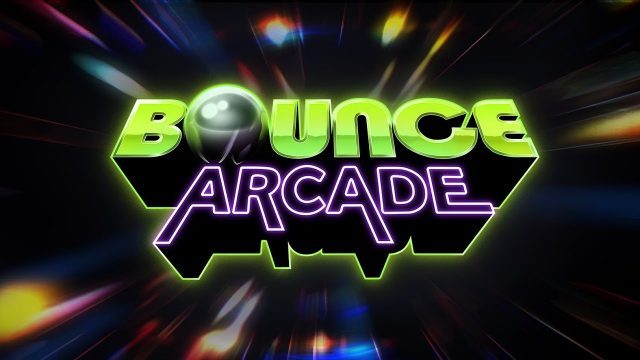
Bounce Arcade, recently announced and launching this Fall, looks like a unique fusion of pinball and VR, in a way that’s truly native to the medium. It’s an example of the body of VR-native gameplay mechanics that’s still in its infancy.
All video games trace their lineage to arcade games.
I’m not necessarily talking about games in a big cabinet, but any game which has little in the way of narrative, characters, and progression. They’re primarily built around mechanics that are just plain-old fun.
With Pong (1972) we figured out how one axis of input could work. With Pac Man (1980) we added two axes and enemies to chase the player. Super Mario Bros (1985) figured out how we would fit a larger and more complex world onto a small screen. And Star Fox (1993) on SNES laid the groundwork for navigating 3D worlds from a third-person perspective.
It’s the mechanics that drove these games—the ones that are so fun they don’t even need narrative, characters, or progression for them to feel complete.
It took 21 years to get from Pong to Star Fox. And since then, games have only grown in complexity, but only by building on core mechanics that were invented long before.
Platformers that are not conceptually distant from Super Mario Bros are still huge. So are games using third-person views and on-screen reticles for navigation and aiming.
I could go on-and-on with these examples, but the point is, they take time to figure out. And it’s not until you figure them out that you can create compelling games with all the other stuff on top, like narrative, characters, and progression.
It took decades of work to find these core mechanics and eventually turn them into the huge games we know and love today. But, all that work was done specifically for flatscreen games made for controllers or keyboards and mice.
When a new medium like VR comes along—with a whole new kind of input like 6DOF motion controllers—we can borrow from the flatscreen realm, but ultimately the medium needs to invent the mechanics that feel truly native to it.
Many VR games borrow too much from the world of flatscreen gaming. They don’t sufficiently answer the question ‘why play this in VR instead of on a flat screen?’. And these games tend not to find much commercial success.
Then something like Beat Saber comes along. Rhythm games have been around for a long time; but Beat Saber took the overall concept of a rhythm game and paired it with a core mechanic that is truly VR-native. The way you use your body to slice cubes in Beat Saber can’t be replicated in any medium other than VR.
Beat Saber found a core mechanic that feels great in VR. And one day that mechanic will be the foundation for a game that’s not just the arcadey expression of the mechanic, but a large and complex game instead.
But there’s still so much to invent and discover when it comes to VR-native mechanics.
All of this is to say, I love seeing new and creative gameplay ideas that feel truly at home in VR. And what I’ve seen of the recently announced Bounce Arcade immediately struck me as one of those ideas.
We’ve already seen plenty of pinball machine simulations in VR. The kind where you’re literally standing in front of a pinball machine and pressing buttons to flip the flippers.
But Bounce Arcade is taking the overarching concept of pinball and truly and creatively reimagining it for VR. Your fists are the paddles and the world around you is the playing field. It’s a fresh look at what pinball even means when you’ve got the power to alter the player’s entire reality and allow them to bring their hands into the game world.
Bounce Arcade is coming to Quest sometime this fall. So far pricing and other platforms are unconfirmed.
But this isn’t to say that all VR games are destined to be arcade games. To the contrary—what I’m saying is the medium still needs to spend time experimenting and innovating on core VR-native mechanics.
Only once a sufficient number of them are discovered and refined will we start to see a real mass of larger and more complex games that feel properly at home in VR. It’s actually pretty easy with a little imagination to see how you could extend Bounce Arcade’s underlying mechanic into a much more complex and less arcade-centric game.
And honestly, I think there are many more of these VR-native mechanics already out there that simply haven’t gotten enough attention. That’s a huge reason why I’m working on the Inside XR Design video series to highlight these kinds of learnings. If you’ve read this far, I have to imagine you’re interested enough in this topic that you’d probably enjoy checking out the episodes published so far.
A new VR Games Showcase is kicking off next month, promising a peek at ‘AAA’ VR games and major updates coming from a number of studios, including nDreams, Vertigo Games, Schell Games, Flat2VR Studios, and IO Interactive.
Coming August 15th and presented by VR veteran Jamie Feltham, the inaugural VR Games Showcase will cover a variety of games targeting Quest, PSVR 2 and PC VR.
The showcase is set to feature over 15 titles and announcements, including Hitman 3 VR: Reloaded gameplay, updates from Flat2VR Studios, and new titles from Combat Waffle Studios, the team behind Ghosts of Tabor.
We’re also set to learn about what’s next from Vertigo Games, nDreams, Schell Games, Fast Travel Games, Beyond Frames, and more studios which will be revealed closer to the showcase.
“Announcements have been carefully curated in order to deliver a tight, focused event that highlights the best VR has to offer in 2024 and beyond,” Feltham reveals, noting that many of the featured titles will also be shown to press and content creators in the recently announced Home of XR megabooth at Gamescom 2024.
The VR Games Showcase is slated to air on Thursday, August 15th at 12:00 PM ET (local time here).
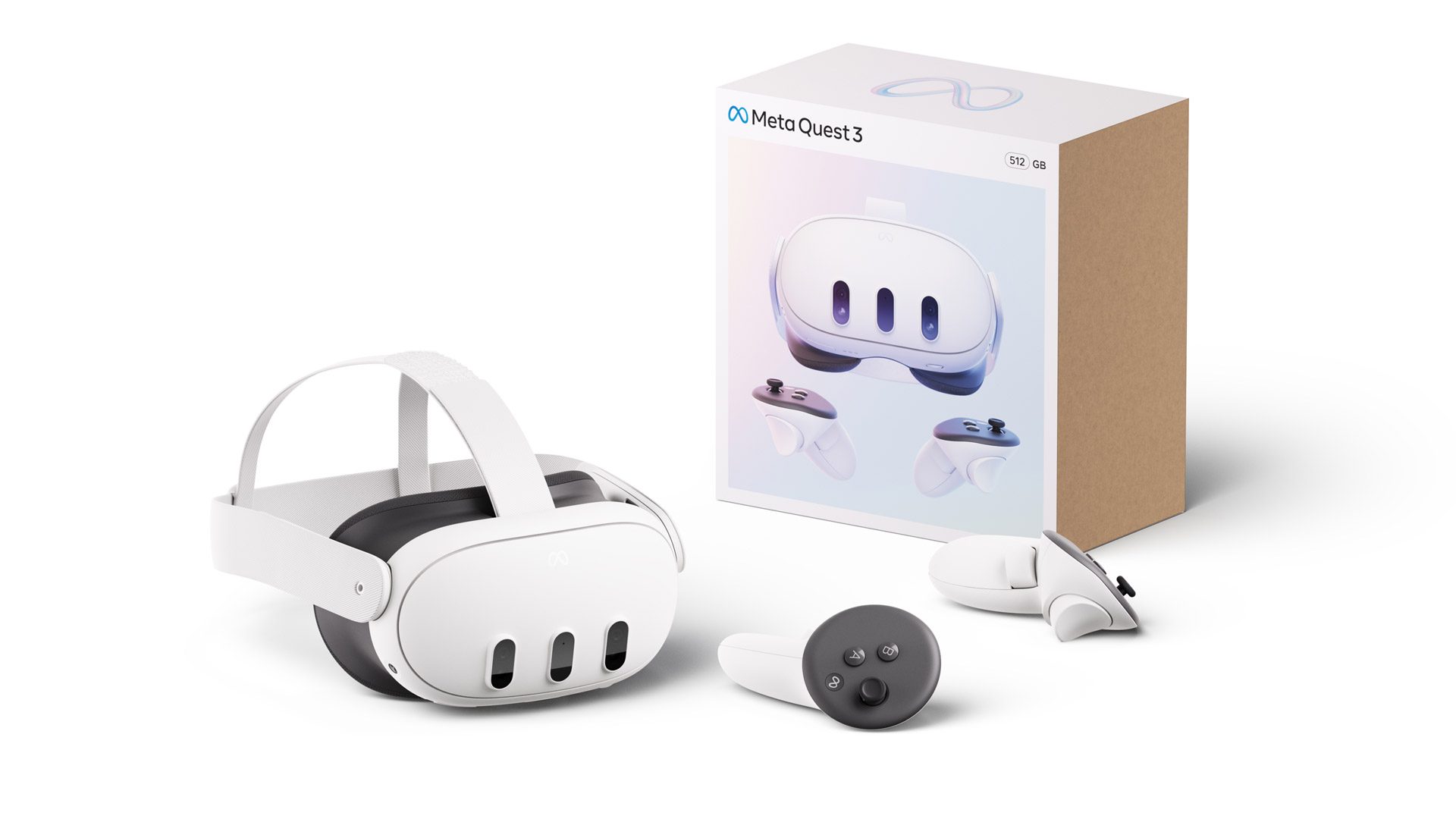
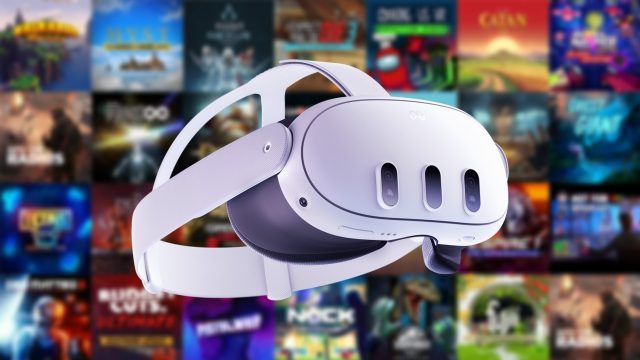
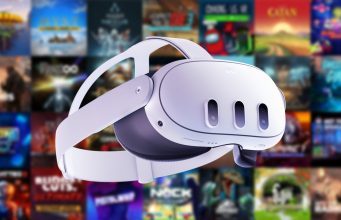
We’re in a bit of a gulf now that Quest 2 is sold out and Meta is likely preparing to drop a new, cheaper device pretty soon to fill its shoes. To keep the headset sales chugging though, Meta announced it’s offering 0% financing on Quest 3.
Meta says eligible people in the US can finance a Quest 3 starting today at 0% APR through Affirm, which lets you pay $25 per month for a 128 GB headset, or $35 per month for the 512 GB model—both of which is paid over the course of 24 months.
Granted, that comes out to $100 more than if you bought the 128 GB variant outright, and $190 more for the 512 GB variant, however Meta is offsetting this by offering an included 24-month subscription to its Meta Quest+ game service and Meta Warranty Plus coverage.
Image courtesy Meta
Meta Quest+ features two curated monthly games and access to a pool of titles, which normally costs $60 annually, and Meta Warranty Plus coverage costs $40 for two years of coverage on the 128 GB variant, and $50 for the 512 GB variant. Essentially (if you’re approved), you’ll spend less than you would if you purchased everything separately.
But should you really buy a Quest 3 on credit, which will necessarily lock you into two years of ownership? We can’t answer that question, because it depends on your financial situation, however the company is likely making some pretty big moves fairly soon which could change your mind one way or the other.
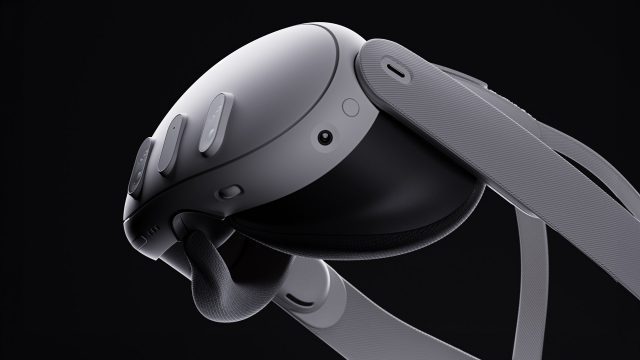
Earlier this summer a leak seemingly confirmed that Meta is launching up a new, cheaper Quest headset 2024, reportedly called Meta Quest 3S, which is likely set to replace Quest 2 as the low-end device.
Granted, Meta still hasn’t let the cat of the bag on Quest 3S, which we’re hoping to learn more about at Connect 2024 in September, however the company has confirmed it’s going to release its XR operating system to third-party OEMs for the first time, which is set to include Quest-like mixed reality headsets from ASUS, Lenovo, and Xbox.
Whatever the case, Quest 3 is an extremely competent XR headset, which you can read more about in our full review from when it launched in October 2023.
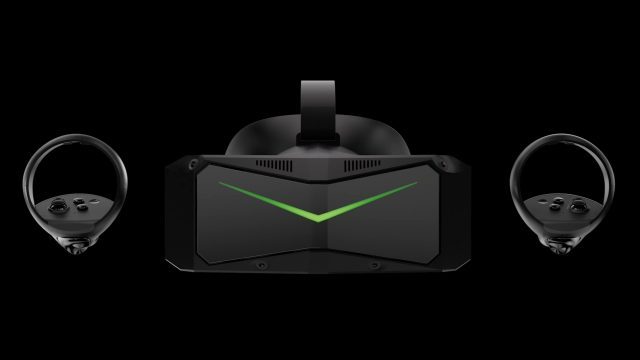
Pimax announced that Crystal Super, its next high-resolution PC VR headset, is actually going to be a bit slimmer than originally planned, showing off a reduction in the headset’s exterior during a new update video.
Unveiled earlier this year alongside Crystal Light, the Crystal Super variant is a bit of a different beast, including the addition of eye-tracking, automatic interpupillary distance (IPD) adjustment, and the ability to swap between two optional display modules and two optional lenses for varying pixel density and field-of-view (FOV).
While Crystal Super was ostensibly slated to be as big as the others in the Crystal lineup, Pimax announced it’s reduced the exterior size by “nearly 30 percent,” showing off a new, smaller design.
It still seems to be in early stages of development, however the company has shown off non-functional prototypes and renders of the form factor in the video, seen below:
Its display modules boast 3,840 × 3,840 per-eye resolution, letting the user choose a QLED & mini-LED (120Hz) display or a micro-OLED (90Hz) display.
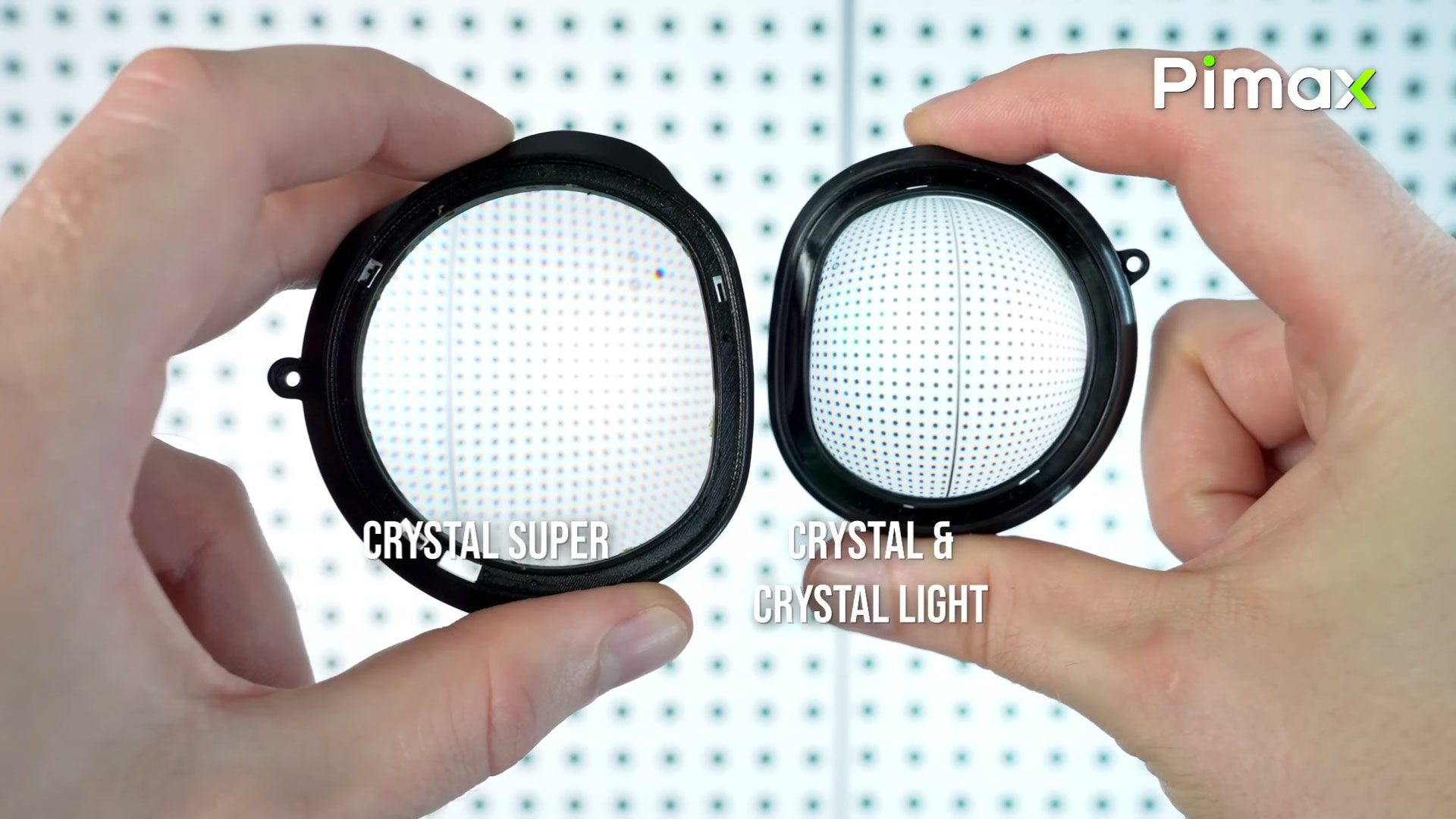
Both versions of Crystal Super however allow you choose between two different lenses: one that provides 50 PPD and a slightly higher FOV of 130° horizontal, and another with 57 PPD and a slightly lower FOV—still to be announced.
Pimax says Crystal Super’s lenses are indeed “30 percent bigger” than those found on Crystal and Crystal Light. The image below is of the 50 PPD lens.
Image courtesy Pimax
The QLED version will be ready first, the company says, noting that it’s the model with the most pre-orders. Additionally, the company says the lens providing 57 PPD and a lower FOV is still in development.
The base model with QLED display is priced at $1,800 with inside-out tracking, while the micro-OLED model is priced at $2,000. A bundle with both display modules is also available for $2,400. Controllers and optional SteamVR tracking faceplate are sold separately.
Meta’s App Lab distribution channel for early access games is still around, but it won’t be for long. Although Meta made App Lab content searchable on the main store for the first time earlier this summer, now the company is preparing for App Lab’s complete dissolution next month, putting more of a Steam-like emphasis on Early Access moving forward.
Update (July 8th, 2024): Meta announced in a developer blogpost that starting August 5th, all content previously shipped in App Lab will be on the main Horizon Store (ex-Quest Store). Notably, this will feature all existing App Lab apps, including those under development and under review.
The company is also allowing developers to use ‘Early Access’ badges for their games, although previous App Lab games are not required to use it.
Image courtesy Meta
Meta notes that all apps submitted to the Horizon Store must meet a variety of Virtual Reality Checks (VRCs), which include a number of performance, security, tracking, and functionality checks.
The original article detailing App Lab discoverability follows below:
Original Article (May 14th, 2024): Meta is making its operating system and app store available on third-party VR headsets sometime soon, and one of the bigger changes coming to the platform is the blurring of the barrier between the Main Store and App Lab.
Besides offering a way for studios to publish their titles in early access, App Lab also lets any developer who meets basic technical and content requirements ship software on the platform, effectively making it open to studios of any size.
Now App Lab has its own section of the store, making those indie titles and early access games a lot more visible. To boot, App Lab games were previously hidden in the Main Store, but are now showing up in search results, appended with the new ‘App Lab’ section title.
Meta has also removed the previous pop-up warning as well when viewing an App Lab game, replacing it with a smaller note next to the game’s user rating, stating “This app may be experimental or still in development.”
Elevating App Lab games makes a good deal of sense considering how well indie titles like Gorilla Tag have fared through the parallel distribution in the past, which to date is not only the platform’s most reviewed game, but has also generated the most revenue on Quest. It’s likely the company will look to further dissolve the boundaries between Main Store and App Lab as it begins licensing Horizon OS (ex-Quest OS).
French startup Lynx hasn’t had an easy time of getting headsets out the door, much less funding its small hardware startup, which is dedicated to producing its R-1 mixed reality standalone. There seems to be some light at the end of the tunnel though, as Lynx CEO Stan Larroque announced that a batch of R-1 headsets should be shipping out soon.
Larroque details the plan to distribute an additional 400 units between July and August in a recent Kickstarter update, noting that the units were assembled earlier but were delayed due to financial issues with the assembler Compal.
While those issues have now been resolved and those headsets are set to ship, Larroque details what he calls an “excruciating” last 12 months, which he maintains isn’t related to the headset itself, but rather the tough fundraising environment for XR hardware in Europe.
“We were supposed to close a 30M€ deal at the end of April, term sheet signed and everything. And it didn’t happened [sic] because the European investor didn’t really have the money and lied to us. This was almost a death sentence, it’s the worst thing that can happen to a startup,” Larroque says.
Reeling from the admitted near death sentence, the company suffered another setback with a French public fund:
“Another one is a French public fund lying to us in their will to commit to our company. They took more than 6 months to do a due diligence, we spent hundreds of hours on the case with them (they were supposed to commit 15M€). They issued a [letter of intent] in July 2023. All that to realize they were badmouthing about us behind our backs to other potential co-investors. A VC shared those emails with me and it depressed me so much.”
Lynx announced some additional positive news. In the update, Larroque says the company is now collaborating with a “big financial US partner,” and remains optimistic about its product and roadmap, noting there is significant interest in defense, industrial, and medical sectors.
The company has attracted additional funding outside of R-1’s successful Kickstarter campaign from late 2021, which brought in $800,000 in crowd funds. In 2019, prior to the Kickstarter, Lynx secured a seed round of $2 million. According to data obtained by Crunchbase, its most recent Series A secured in 2022 from Somnium Space, bringing to the startup $4 million, making for a total of $6.8 million in funding to date.
Similar to Meta Quest 3 or Apple Vision Pro, Lynx R-1 provides mixed reality experiences thanks to its passthrough sensors and onboard Snapdragon XR2 chipset, although the company hopes to make it a more open and versatile device.