Codemasters, the EA-owned developer behind the F1 racing franchise, announced F1 23 is coming to consoles and PC next month, again bringing its high-profile racing game to VR.
F1 23 is coming to PlayStation 4|5, Xbox Series X|S, Xbox One and PC on June 16th, which is confirmed to include VR support on PC.
Codemasters hasn’t said whether it’s also coming to PSVR 2 on PS5, so we’ll just have to wait and see. As it is now, F1 22 only supports PC VR headsets, and not PSVR.
Here’s how the studio describes the upcoming installment:
A new chapter in the thrilling “Braking Point” story mode delivers high-speed drama and heated rivalries. Race wheel-to-wheel at new Las Vegas and Qatar circuits, and earn rewards and upgrades in F1 World. New Red Flags add an authentic strategic element, and the 35% Race Distance feature delivers more action and excitement. Drive updated 2023 cars with the official F1 lineup of your favorite 20 drivers and 10 teams. Create your dream team and race to win in My Team Career Mode, compete in split-screen or in the expanded cross-platform multiplayer, and be more social with new Racenet Leagues.
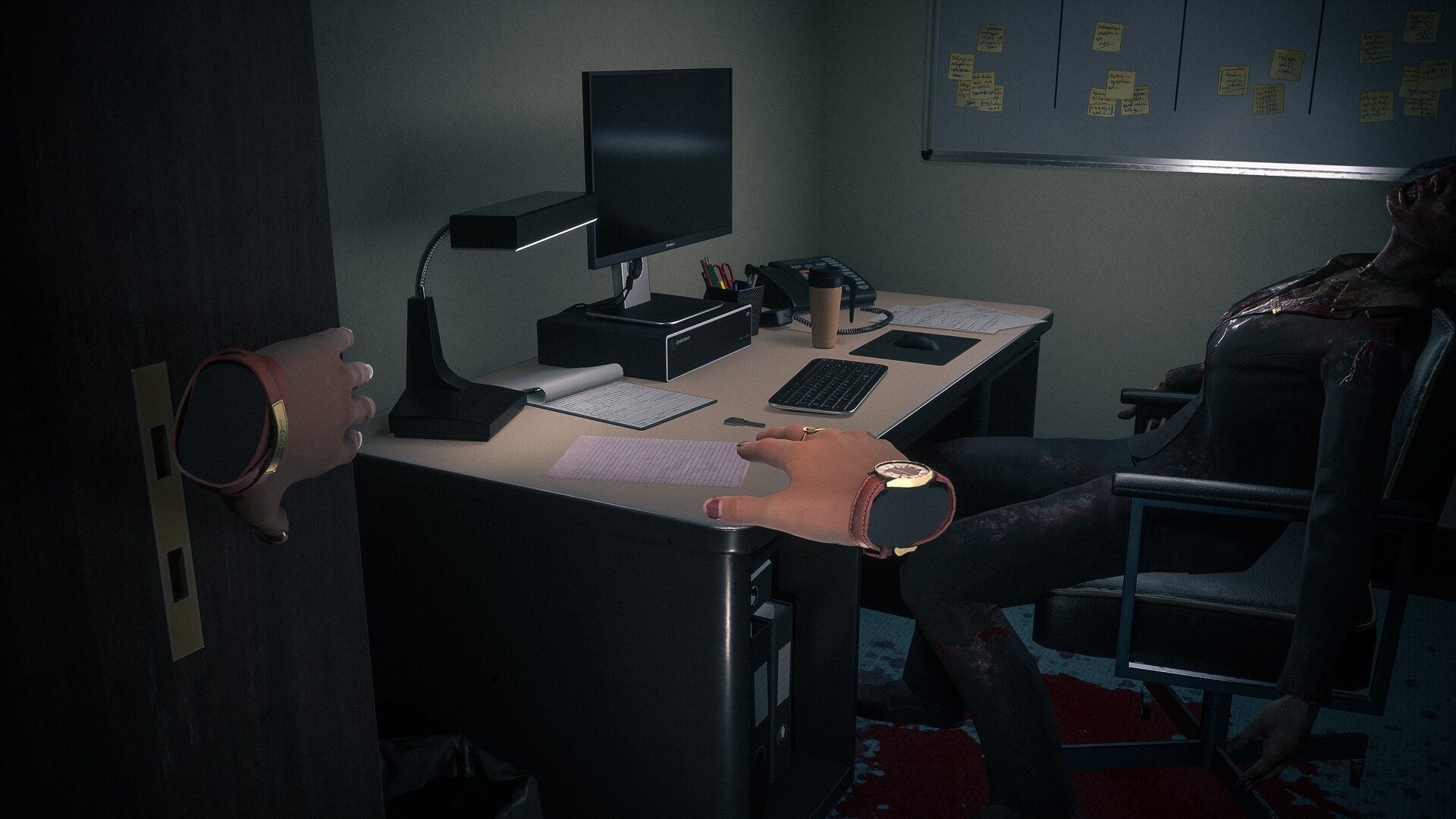
Propagation: Paradise Hotel offers some patently terrifying moments of horror, but between the ever-lingering danger of zombified attacks and a few giant bosses—making for a very Resident Evil-inspired experience—there’s a bit of clunk that tarnishes what could have been a more memorable and cohesive experience. Still, it’s functionally a pretty solid zombie adventure that makes a clear departure from the franchise’s roots as a static wave shooter.
Propagation: Paradise Hotel Details:
Available On:SteamVR, Quest Release Date: May 4th, 2023 Price: $20 Developer: WanadevStudio Reviewed On: Quest 2 via PC Link
Gameplay
It’s the zombie apocalypse, and you’re bumming around the bowels of a non-descript hotel in some non-descript part of the world. You won’t have a lot of time to hang with your fatherly security guard pal though because you have to go and find your sister, who is gone for some reason. Okay, so the setup isn’t spectacular, but at least the zombie kill’n is pretty good, right? I’ll lead with an emphatic “yeah, mostly!”
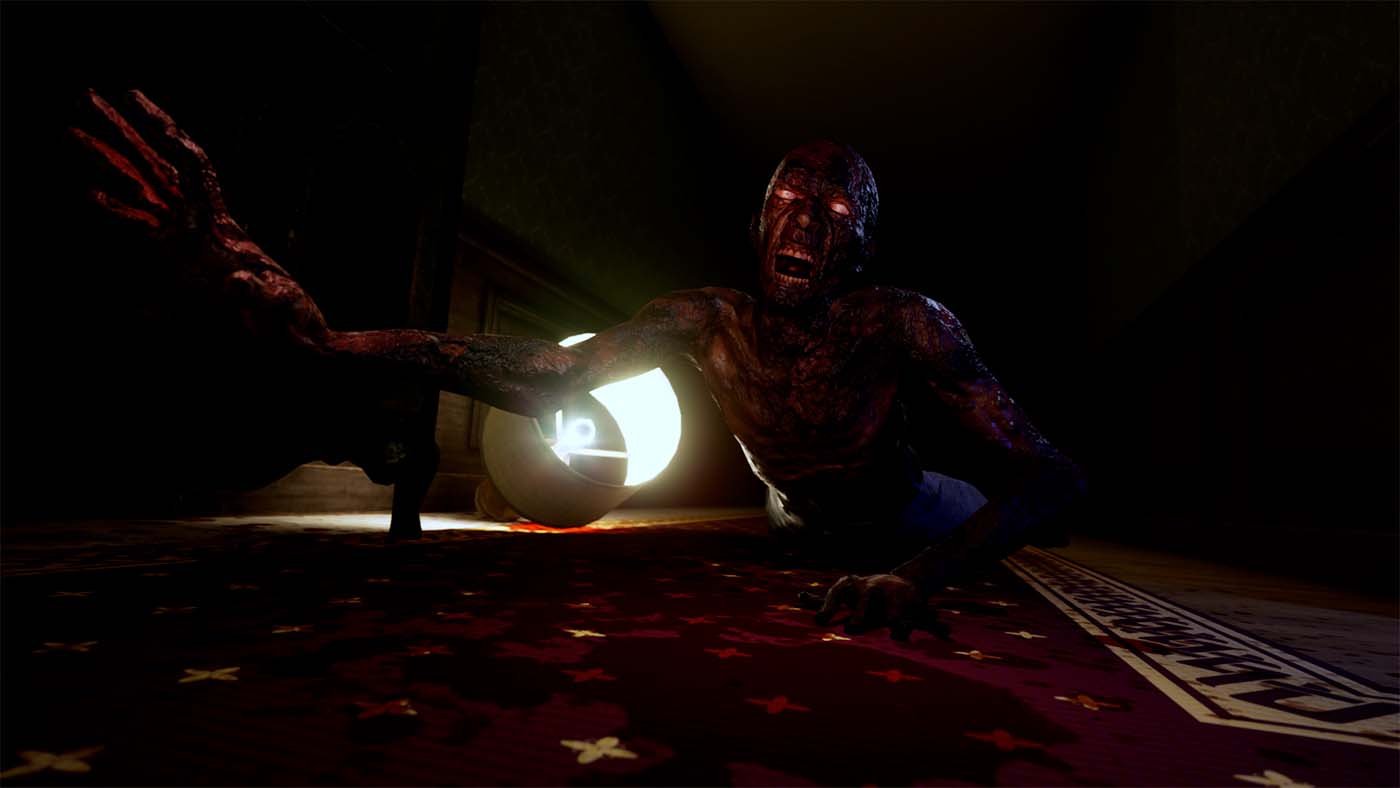
Rule number one of zombies: shoot them in the head. That’s the ironclad directive you’re probably most familiar with, but there are some caveats in Propagation: Paradise Hotel. Shooting zombies in the head multiple times with a pistol makes them very sleepy. No, really. Shoot a zombie three times in the head and they’ll quietly lay down on the ground for a while. Sometime later, usually when you’ve tripped another lurch forward in the narrative, he’ll pop back up at a patently inopportune time to bother you once again.
As clear of a departure from zombie orthodoxy this is, the effect it had on me was something I can’t say I’ve felt in a zombie shooter before. Instead of worrying about walkers popping out from the ceiling (there are a few) or shambolically oozing out from closed doors or windows, you become much more fixated on every single corpse laying in the hallway, of which there are many. You aren’t roaming through an infinite hellscape either, as you’ll be backtracking, learning the layout of the hotel, and tip-toeing around zombies whilst pointing a gun in their face, lest they reawaken and start harassing you again.
Image courtesy WanadevStudio
In effect, any one of them could be waiting for you to lower your guard, open their eyes and grab onto your ankle. Sadly, a preemptive shot in the head is completely ineffectual, which is a letdown in the Immersion department, but more on that below. Just the same, you’ll be cautious because you can’t discount a single corpse, which is a new type of creepy that really kept me on edge. Knowing this, I would have loved the option to cut off some heads to put an end to the contant revisitations, but that’s just not in the cards.
That’s basically the case until you get a shotgun in the latter half of the game, and then those walkers lay down for good because you’ve effectively stumpified their infected brains (finally). What was previously one-on-one battles ramp up to three-on-one battles, putting the game’s only other gun (and most powerful) to the test. You’ll also start to rush through a few new classes of zombie in addition to some more difficult baddies, which offers some interesting variety in difficulty. Will you run into three walkers? One scorpion-style zombie? A ripped dude that can take a ton of shots to the face?
Image courtesy WanadevStudio
While there are a few difficult and unique zombies, there’s really only one true boss in the game. Full disclosure: I disliked it, and while I won’t spoil anything here, rest assured you’ll probably be frustrated too with how to take him down. He is ultra lame, and you’ll want to mute the game just so you don’t have to hear your character constantly shout ad nauseum “I need to knock him out!”
Ok. No. I will spoil the boss. Skip this paragraph if you want to avoid the spoiler: What does “I need to knock him out” even mean?? Don’t I need to kill this bastard? Do I need to knock him out before I kill him? Is that a hint? Do I need something to do that? Maybe I need to call the elevator and rig up something to knock him out? Maybe I need to escape the lobby and head up the stairs to get something I missed? Maybe I need to explode a fire extinguisher in his face to knock him out? Nope. My hand phases right through those, so it can’t be that. Maybe I need to die a dozen times before I learn he has a specific attack pattern with a singular weak point, hit it three times and meander my way to sequel-bait then the end credits? Yup, that’s it.
Anyway, many of the mechanical bits of Propagation: Paradise Hotel are very functional, and work well. The body-based inventory system isn’t overloaded, so you always have what you need, like a medical spray on your left flank, a flashlight that you can clip to your chest or hold in your hand, your 9mm pistol on your right, or the shogun over your shoulder. It’s all there and easy to grab. This compliments a 2D menu that you can pull up, which as mission-essential items, the map, settings, etc.
It’s not easy changing up a user’s expectation of level design when we all know what to expect more or less in a space as familiar as a hotel. Still, the game throws a few curveballs your way to keep you from mechanically looking through every room in the hotel, which spans seven levels. Still, the story itself didn’t feel like a compelling enough driver to keep you moving forward. The found notes add a little flavor, but don’t do enough to flesh out the background of what’s actually going on, leaving you to mostly just bump your head against each task until its complete so you can move onto the next.
Finally, the game, which took me around 3.5 hours to complete, also includes a few puzzles, although all solutions are published in found notes, so you just have to be thorough in your shelf-opening game.
Immersion
Everything about Propagation looks the part, but very little is actually interactable, making it feel more like a flatscreen game than it probably should. There are a few key items you can pick up and use, but everything else is pure set dressing. I don’t want to underplay just how good the game looks, as it offers a visual acuity and variety that makes each room unique, and not at all the sort of copy-paste experience you’d logically expect from a motif that is basically supposed to look extremely uniform. Still, you can’t grab that fire extinguisher, or even pick up a bottle of detergent. You can only open doors and drawers, and interact with keys, key cards, and important notes.
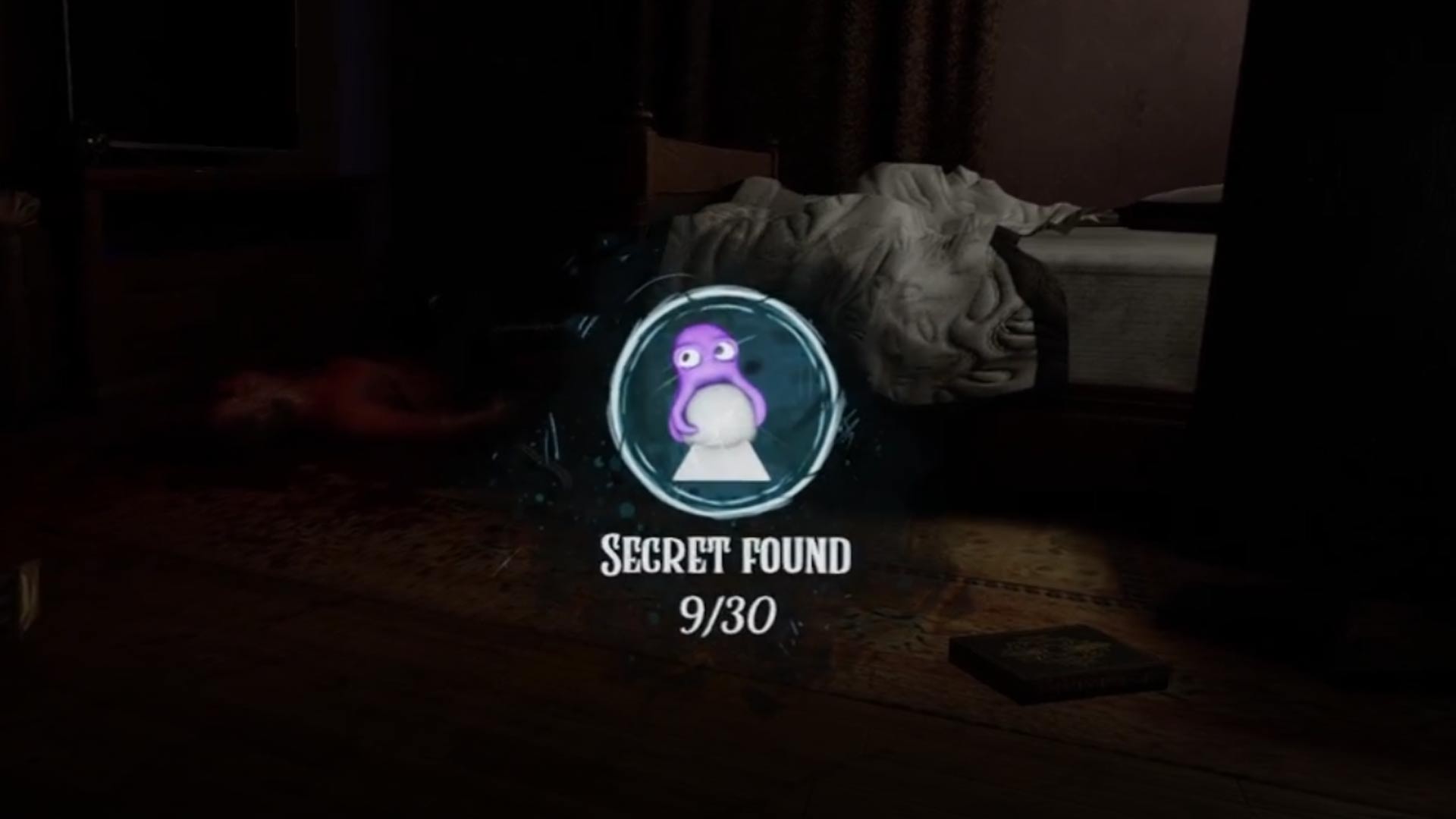
That already feels pretty gamey enough, but just as things start getting good, you grab for an item and a big achievement pops up to ruin the atmosphere—because apparently you need to be constantly reminded that you just collected nine out of 30 secret items. I’d like my full field of view please, since I’m under constant threat of death and everything.
Image captured by Road to VR
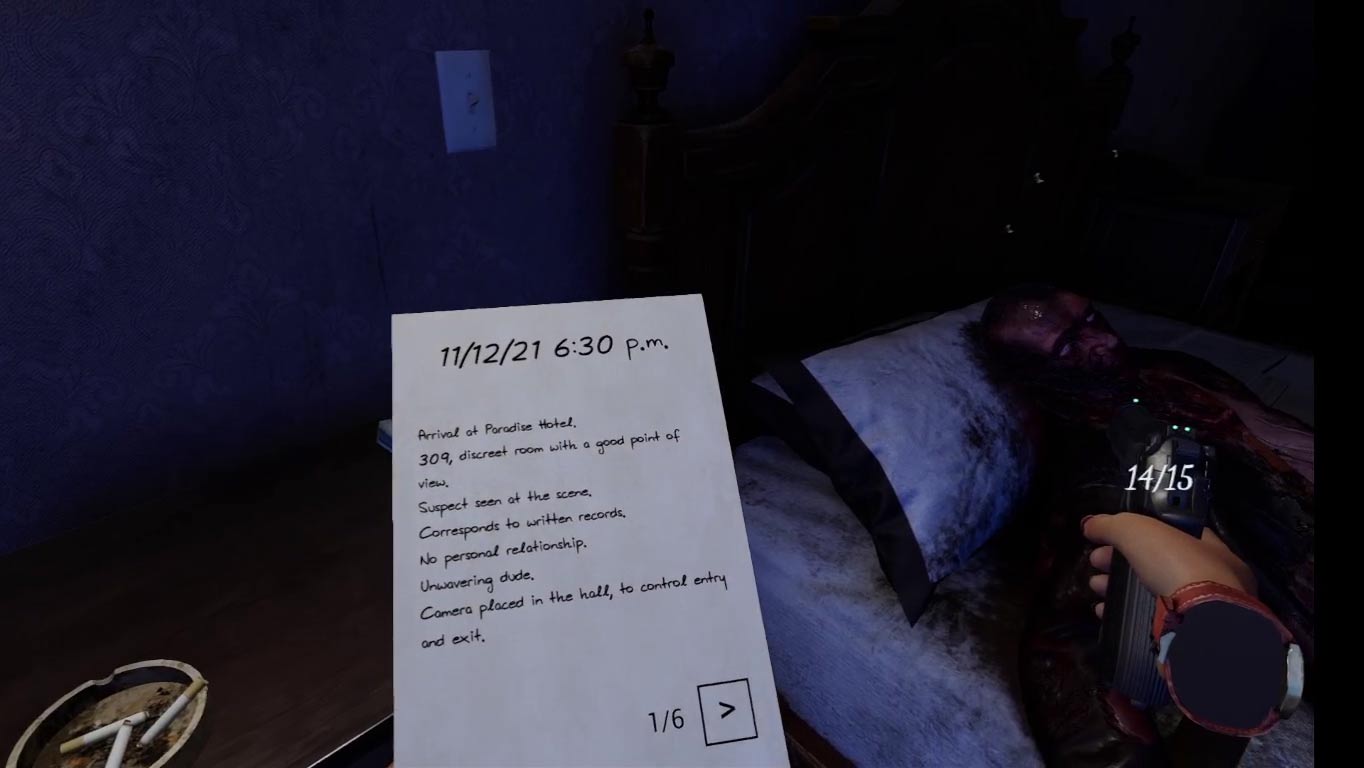
One of the big narrative drivers is the game’s found notes, and I generally like the mechanic for its ability to either drive the narrative or unobtrusively flavor its back story. In VR, they can be especially immersive since you’re handling something that’s more of a physical artifact than just a bunch of text on a screen. This is where Propagation fails somewhat, as all notes feature a physical ‘next’ button at the bottom that you have to click, making it more like interacting with an eReader than something that was actually written by someone who lived, survived, and maybe even died in the hotel.
Maybe the notes could be shorter? Maybe they could have used the back of the paper? Maybe a different font? Whatever the case, interacting with a piece of paper shouldn’t feel this unnatural in a VR game.
Image captured by Road to VR
And the wacky unorthodoxy doesn’t stop there. While reloading weapons is a pretty standard experience, the gun’s ammo counter system is definitely not standard. The number indicated isn’t how many bullets you have in the gun, it’s how many are in the magazine. So, if you have 15 bullets in a fresh mag, as soon as you chamber one, the counter says 14.
That’s all well and good for the pistol, but if you forget it when using the shotgun, you may find yourself in deep dog doo-doo as you unintentionally cycle a live round out of the weapon by mistake. Provided you’ve loaded up the shotgun and chambered a round, you may have 3/4 rounds displayed. Once you’re in a tense battle though, and you’re displaying 0/4, you simply can’t be sure whether that 0/4 means you still have one in the chamber, or you don’t. You’ll load back up, shell by shell, until you’re at 4/4 again, but you don’t have any discernible visual indication whether you still have an empty chamber or not, so you cycle the pump just in case. An unspent shell flies out, lands on the floor, and disappears.
While it’s visually interesting and a mostly serviceable shooter despite those inherent flaws, the cherry on the cake is undoubtedly the game’s voice acting, which was clearly farmed out to native French speakers putting on their best American accents. This ranges from “I went to high school in Ohio for a year and picked up the accent pretty well,” to “How do you do, fellow American?” It’s more of an eccentricity than a knock per se, but it leaves me questioning where the hell I am on planet Earth.
Comfort
As a 100 percent walking-based experience that doesn’t include forced locomotion, like on a rollercoaster or similar vehicle, the game proves to be very comfortable, save a single moment when there is some camera shaking. With a wide range of standard comfort options, most everyone will be able to play Propagation: Paradise Hotel without too much issue.
Propagation: Paradise Hotel’ Comfort Settings – May 8th, 2023
Painting VR goes spring cleaning in its latest update, adding a zero gravity mode and updated visuals next week on Quest 2 and Steam.
Released last year following 2021's App Lab launch, Oisoi's Painting VR offers a more casual sim than Vermillion, focusing on acrylic painting instead of wet-on-wet oil painting. Announcing the 2023 Spring Refresh, the latest update includes a zero gravity mode, support for seated play and "many quality-of-life updates" like dry and un-dry paint options. That also introduces a visual overhaul, which you can see in the trailer below below:
0:00
/
We praised Painting VR back in 2021, comparing its physics to Boneworks and stating how its "accessibility, quality, and mesh of ideas that break reality exactly when you want them to really struck us as something special." Since receiving its full release last year, Painting VR on Quest now supports multiplayer, Meta Avatars 2.0 and mixed reality passthrough.
Painting VR is available now on PC VR via Steam and the Meta Quest platform, while the Spring Refresh update arrives on May 9.
Operation Wolf Returns: First Mission VR revives Taito's arcade shooter once more, arriving next month on Quest 2, PSVR 2 and Pico 4.
Published by Microids, Operation Wolf Returns: First Mission VR is a new entry in the Operation Wolf series, Taito's 1987 arcade light gun shooter. Previously announced for flatscreen platforms and Quest 2, that's now targeting a June 22 launch on VR platforms only, which now includes PSVR 2 and Pico 4. While a trailer hasn't been shown, Microids did provide the following screenshots:
🚁🐺 Operation Wolf, the cult arcade game from TAITO is back in a revisited version!
Speaking in a press release, Microids states First Mission VR "will remain faithful to the spirit of the original game while premiering a new artistic direction." You can read the official description below:
In its solo VR campaign, play as a special agent fighting a new criminal organization. In addition to arms and drug trafficking, the organization, led by the mysterious General Viper, has developed a powerful new weapon. After discovering several of its bases, you will be sent to dismantle the organization, destroy the weapon and free the hostages held captive in surrounding camps.
Operation Wolf Returns: First Mission VR arrives on Quest 2, PSVR 2 and Pico 4 on June 22. A flatscreen version is also planned for PC and all major consoles in Fall 2023.
Car Detailing Simulator is available now for Quest 2 and Quest Pro, but you might want to take a look at some of the finer details before jumping in.
It’s been a big week for Quest games, with Car Detailing Simulator the latest in a string of releases that dropped this week. According to the store description, Car Detailing Simulator will see you “renew and restore any car to its former glory, as per the demands of your discerning customers” and “transform neglected vehicles into stunning and well-maintained machines that can be the envy of all.”
Sounds pretty good on paper, but the game also comes from the same team as Car Mechanic Simulator, which released last August. At the time, we noted that it fared quite poorly with initial user reviews and ran at a very low resolution in-headset. Mechanic Simulator stills sits at an average of just three stars on the Quest Store, so we briefly jumped into Car Detailing Simulator to see how it stacks up.
Unfortunately, the opening moments of Car Detailing Simulator don’t leave a great impression. There are some basic design problems that are immediately clear – there's very little player guidance and the opening sequence is quite confusing to navigate in terms of figuring of what the game wants you to do. The game also features performance stutters from the get go. In terms of visuals, there’s a lot of jaggy edges and a few graphical quirks when moving your hands around. It looks rougher than you'd expect from the average Quest title.
Granted we did only try the opening 10 or so minutes, but even so, the quality level seemed about on par with the middling experience found in Car Mechanic Simulator. Ignoring any game design quicks, those very early instances of graphical bugs and performance hitches aren’t a great sign.
For diehard motorheads, maybe there’s something beefy to be found under Car Detailing Simulator’s hood, but we’d recommend caution for those in search of a shinier release with a bit more polish.
Vertigo 2 (2023), the sci-fi VR shooter adventure from Zach Tsiakalis-Brown, readily invites comparisons to Valve’s indomitable Half-Life: Alyx, but now the developer is taking another note out of Valve’s playbook by offering a way to create your own Vertigo-based levels and modes in with its sandbox DLC.
Update (May 4th, 2023): Zach Tsiakalis-Brown announced Vertigo 2’s Level Editor is now in open beta, something the developer calls “very early.” Tsiakalis-Brown notes the editor is “subject to major changes and I cannot guarantee that levels you make now will not break later.”
The editor includes most props. models, enemies and bosses from the game’s campaign. It also includes basic event triggers to control level flow and basic control over enemy and allegiance AI. To join the beta, switch to the “sandbox” beta branch on the game through Steam. Beta testers are encouraged to join the Discord server to report bugs, comment on features, etc.
The original article follows below:
Original Article (April 20th, 2023): Tsiakalis-Brown announced the level editor today in a tweet:
Tsiakalis-Brown says it will be a free update, and have Steam Workshop support, which means you’ll be able to share your creations much in the same way we’ve seen Half-Life: Alyx mods in the past.
The editor is said to be an in-VR affair, inviting comparisons to the Sandbox DLC released for Vertigo Remastered (2020 ), which includes what Tsiakalis-Brown called at the time “a vast expansion that brings new game modes, new weapons, and a level editor and workshop.”
“Let your creativity run wild and share custom levels with the world, or re-experience the campaign with remixed combat and a brand new arsenal,” the Vertigo Remastered DLC’s description reads.
You can follow along as Tsiakalis-Brown builds the sandbox DLC on Twitch here for more. He says he won’t stream the entirety of the sandbox’s development, although notes it’s “already looking better than the Vertigo Remastered sandbox.”
Following last month's reveal, Crimen - Mercenary Tales now secures a May 25 release date on Quest 2 and Pico.
Developed by Carbon Studio, the developers behind Warhammer Age of Sigmar: Tempestfall and The Wizards series, Crimen - Mercenary Tales is a new VR arcade slasher set in the 17th century. Featuring cel-shaded visuals mirroring comic books, the game takes place across "eight hilarious escapades narrated by a cast of eight charismatic personalities" as you explore castles, pirate ships, ancient temples and more. Here's the new release date trailer:
You can find an official description from Carbon Studio:
Hunt a vampire through an army of spawn; fight off undead Spanish conquistadors in a haunted Aztec temple; invade a Saxon fortress; steal an aristocrat’s fortune (for love!).
Take up historically accurate 17th century arms in Arcade-style combat and puzzles, presented in eye-catching cel-shaded art and cheeky narration. Explore towering castles, ancient temples, derelict pirate ships, and an idyllic countryside through these eight compelling character-driven tales.
Crimen - Mercenary Tales arrives on May 25 for Quest 2, Quest Pro and the Pico platform.