Wednesday, 3 November 2021

‘The Twilight Zone’ VR Game Coming Soon to Quest & PSVR

https://ift.tt/3mHTAac

The Twilight Zone is getting a VR game, and it’s slated to release soon on Quest and PSVR.

Based on the iconic anthology series, The Twilight Zone VR is said to feature three self-contained single-player episodes which will span the sort of genres we’ve come to expect from the franchise: hard sci-fi to psychological horror.

Developed by UK-based studio Pocket Money Games, The Twilight Zone VR features contributions from gaming veteran Rob Yescombe (The Invisible Hours, Rime, Farpoint) and screenwriter Dwayne Alexander Smith (Forty Acres). VR publisher Fun Train is serving as executive producer, known for its work on Tarzan VR and The Exorcist: Legion VR.

“The team of creatives and developers we’ve assembled are true visionaries who have a deep reverence for The Twilight Zone franchise,” says Douglas Nabors, Fun Train CEO. “Nobody has made an anthology like this before that encompasses so many divergent experiences – all in the same game.”

There’s no solid release date on Quest and PSVR, however the studio says it’s coming soon. In the meantime, the studio is offering slots for closed beta testing on Quest, which will support both Quest and Quest 2.

The developers say that, while a PC VR version isn’t currently in the works, it’s not entirely out of question.

The post ‘The Twilight Zone’ VR Game Coming Soon to Quest & PSVR appeared first on Road to VR.


from Road to VR https://ift.tt/3k3QifP
via IFTTT

Secret Of Retropolis: VR Point-And-Click Hits Oculus Quest Store Tomorrow

https://ift.tt/eA8V8J

After releasing on App Lab earlier this year, VR point-and-click throwback, The Secret Of Retropolis is launching on the official Oculus Quest store tomorrow.

We first wrote about the game from indie studio Peanut Button earlier in 2021 when it released on both Steam and Meta’s experimental storefront. The Secret of Retropolis is a gorgeous-looking throwback to classic adventure games from developers like Lucasarts, set in a retro-futuristic city with a film noir vibe. Check out a trailer below.

The experience is intended to be accessible for first-time VR users, with players solving puzzles using spring-operated arms that can reach out into the environment to grab things. Its assets were also made inside Oculus Quill, resulting in a striking hand-painted look.

We’ve seen a number of App Lab titles make their way over to the official Oculus Quest store of late. The former serves as a means for developers to get their content onto Quest without having to pass the strict curation policies for the full store. Meta has often stressed that success on App Lab doesn’t necessarily mean your app will come to the full store but, clearly, that’s the case for some developers.

This won’t be the last stop for the game. Peanut Button is also working on a port for the HTC Vive Flow, making it one of the few genuine gaming experiences to come to the slim VR headset. No date for that release just yet, though.

Are you going to be picking up The Secret of Retropolis on Oculus Quest? Let us know in the comments below!


from UploadVR https://ift.tt/3BEnrVp
via IFTTT

Meta Offered a Glimpse into the XR R&D That’s Costing It Billions

https://ift.tt/3mFCKZD
During the Connect 2021 conference last week, Meta Reality Labs’ Chief Scientist, Michael Abrash, offered a high-level overview of some of the R&D that’s behind the company’s multi-billion dollar push into XR and the metaverse.

Michael Abrash leads the team at Meta Reality Labs Research which has been tasked with researching technologies that the company believes could be foundational to XR and the metaverse decades in the future. At Connect 2021, Abrash shared some of the group’s very latest work.

Full-body Codec Avatars

Meta’s Codec Avatar project aims to achieve a system capable of capturing and representing photorealistic avatars for use in XR. A major challenge beyond simply ‘scanning’ a person’s body is getting it to then move in realistic ways—not to mention making the whole system capable of running in real-time so that the avatar can be used in an interactive context.

The company has shown off its Codec Avatar work on various occasions, each time showing improvements. Initially the project started off simply with high quality heads, but it has since evolved to full-body avatars.

The video above is a demo representing the group’s latest work on full-body Codec Avatars, which researcher Yaser Sheikh explains now supports more complex eye movement, facial expressions, and hand and body gestures which involve self-contact. It isn’t stated outright, but the video also shows a viewer watching the presentation in virtual reality, implying that this is all happening in real-time.

With the possibility of such realistic avatars in the future, Abrash acknowledged that it’s important to think about security of one’s identity. To that end he says the company is “thinking about how we can secure your avatar, whether by tying it to an authenticated account, or by verifying identity in some other way.”

Photorealistic Hair and Skin Rendering

While Meta’s Codec Avatars are already looking pretty darn convincing, the research group believes the ultimate destination for the technology is to achieve photorealism.

Above Abrash showed off what he says is the research group’s latest work in photorealistic hair and skin rendering, and lighting thereof. It wasn’t claimed that this was happening in real-time (and we doubt it is), but it’s a look at the bar the team is aiming for down the road with the Codec Avatar tech.

Clothing Simulation

Along with a high quality representation of your body, Meta expects clothing with continue to be an important way that people want to express themselves in the metaverse. To that end, they think that making clothes act realistically will be an important part of that experience. Above the company shows off its work in clothing simulation and hands-on interaction.

High-fidelity Real-time Virtual Spaces

While XR can easily whisk us away to other realities, teleporting friends virtually to your actual living space would be great too. Taken to the extreme, that means having a full-blown recreation of your actual home and everything in it, which can run in real-time.

Well… Meta did just that. They built a mock apartment complete with a perfect replica of all the objects in it. Doing so makes it possible for a user to move around the real space and interact with it like normal while keeping the virtual version in sync.

So if you happen to have virtual guests over, they could actually see you moving around your real world space and interacting with anything inside of it in an incredibly natural way. Similarly, when using AR glasses, having a map of the space with this level of fidelity could make AR experiences and interactions much more compelling.

Presently this seems to serve the purpose of building out a ‘best case’ scenario of a mapped real-world environment for the company to experiment with. If Meta finds that having this kind of perfectly synchronized real and virtual space becomes important to valuable use-cases with the technology, it may then explore ways to make it easy for users to capture their own spaces with similar precision.

Continued on Page 2 »

The post Meta Offered a Glimpse into the XR R&D That’s Costing It Billions appeared first on Road to VR.


from Road to VR https://ift.tt/3k3Yr3Q
via IFTTT

Tuesday, 2 November 2021

Microsoft Teams Will Add Avatars In Early 2022

https://ift.tt/eA8V8J

Microsoft will use audio cues to animate avatars in an upcoming 2022 release of its Mesh For Teams software, and it’ll allow employees to represent themselves as avatars during meetings.

The new features should launch as a preview of the Mesh for Teams software in the first half of 2022.

“Sometimes I just want to be able to sit in my chair downstairs and have my heat pad on, but maybe it’s not that appropriate,” said Katie Kelly, a principal project manager at Microsoft working on Mesh for Teams, in a prepared statement. “I’d love to be able to turn on my avatar. I’m still present and engaged, and the people that are there feel like I’m present and engaged.”

Meetings may show a personalized avatar, a live video, a static picture, or a bubble with initials. The system will add animations and expressivity to the avatars based on audio in the initial release, but “the ambition is to closely follow that with Microsoft’s plethora of AI technologies so that we can use the camera to insinuate where your mouth is and mimic your head and facial movements,” Kelly said.

The move closely resembles how Meta’s Horizon Workrooms system bridges headsets and flat screens. Last year, Apple acquired the startup Spaces which had arrived at a similar solution for remote work.


from UploadVR https://ift.tt/3GNVo9G
via IFTTT

Zuckerberg: Meta Will Continue To Subsidize Headset Cost

https://ift.tt/eA8V8J

Meta CEO Mark Zuckerberg gave insight into the company’s current and future hardware business model at Connect 2021, indicating that the plan is to continue to sell devices at cost or with subsidies to help build a larger ecosystem with as many users as possible.

The Quest 2 starts at just $299 despite having a higher resolution, more features, and less weight than its predecessor.  That entry level price, however, may just be the start for Meta’s long-term ambitions.

Back in March, Zuckerberg confirmed that the company’s business model for headsets was focused on offering a low price above everything else.

Last week at Connect 2021, Zuckerberg gave further details about Meta’s commitment to this model, now and going forward. You can read a transcription below or watch from the 43:15 mark on the video embedded above.

Most of all, I’ve come to believe that the lack of choice and high fees are stifling innovation, stopping people from building new things and holding back the entire internet economy. We’ve tried to take a different approach. We want to serve as many people as possible, which means working to make our services cost less. not more.

Our mobile apps are free. Our ads’ business model is an auction, which guarantees every business the most competitive price possible. We offer our creator and commerce tools either at cost or with modest fees to enable as much creation and commerce as possible.

And it’s worked. Billions of people love our products. We have hundreds of millions of businesses on our platform, and we have a rapidly growing ecosystem and a thriving business.

That’s the approach that we want to take to help build the metaverse too. We plan to continue to either subsidize our devices or sell them at cost to make them available to more people. We’ll continue supporting sideloading and linking to PCs, so consumers and developers have choice rather than forcing them to use the Quest Store to find apps or reach customers. And we’ll aim to offer developer and creator services with low fees in as many cases as possible. So we can maximize the overall creator economy, while recognizing that to keep investing in this future we’ll need to keep some fees higher for some period to make sure that we don’t lose too much money on this program overall.

After all, while a growing number of developers are already profitable, we expect to invest many billions of dollars for years to come before the metaverse reaches scale. Our hope though is that if we all work at it then within the next decade, the metaverse will reach a billion people, host hundreds of billions of dollars of digital commerce and support jobs for millions of creators.

You can read more about what Meta executives had to say about the metaverse last week, or check out our round-up of everything announced at Connect 2021.


from UploadVR https://ift.tt/3w7rlFf
via IFTTT

Twilight Zone VR Game Announced For Oculus Quest, PSVR

https://ift.tt/2YeXka4

Here’s a suitably weird announcement – there’s an official Twilight Zone VR game on the way.

The Twilight Zone VR is coming to Oculus Quest and PSVR as three self-contained episodes. The game’s developed by Dimension Hunter studio Pocket Money Games and is produced by Fun Train, the VR publisher behind the excellent The Exorcist: Legion VR series and the less excellent Tarzan VR.

Like those games, The Twilight Zone VR will be comprised of different episodes. This one will have three self-contained installments. Fun Train says those episodes will span different genres from horror to sci-fi. Here’s a short teaser trailer, though it doesn’t reveal too much.

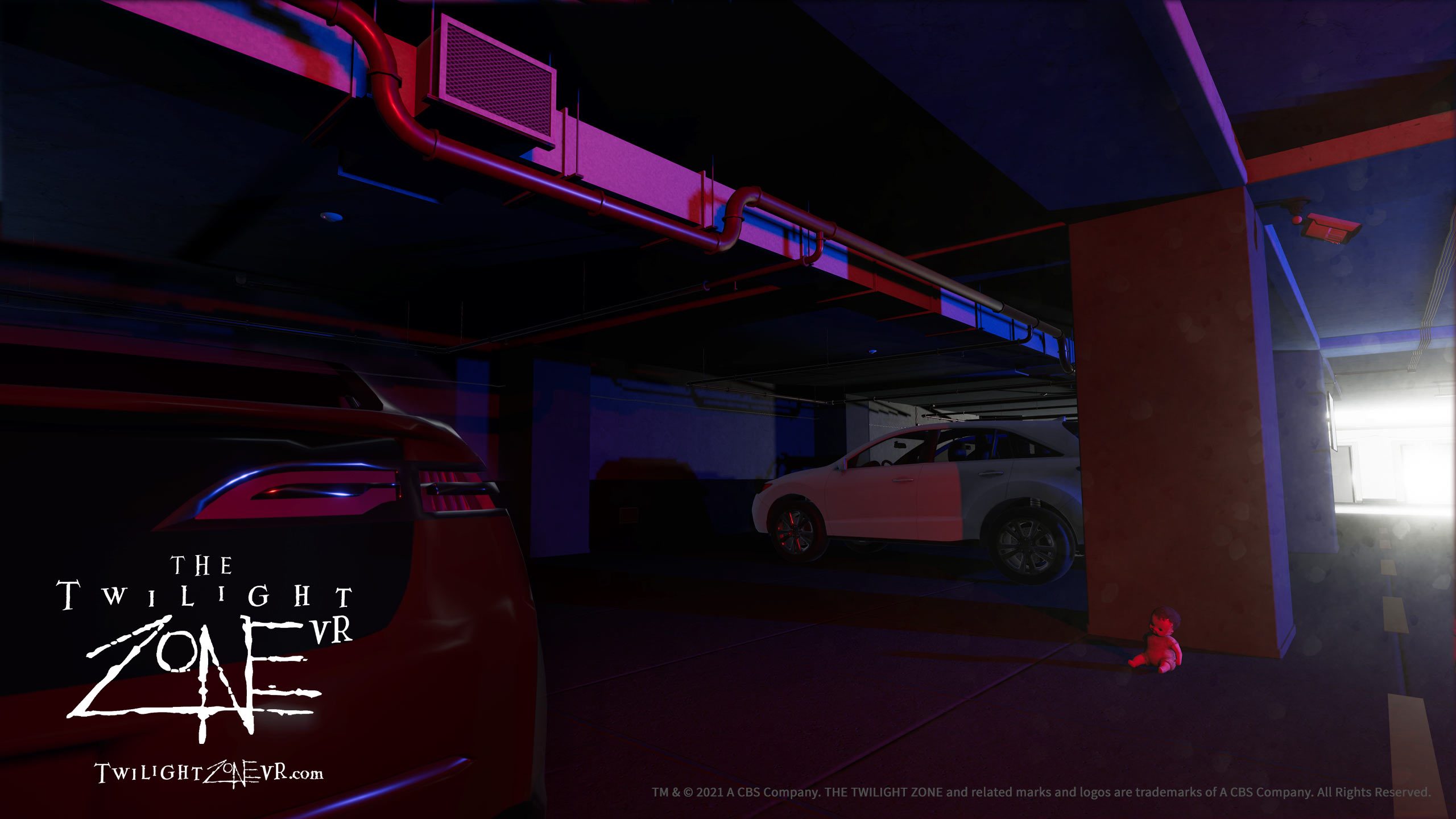
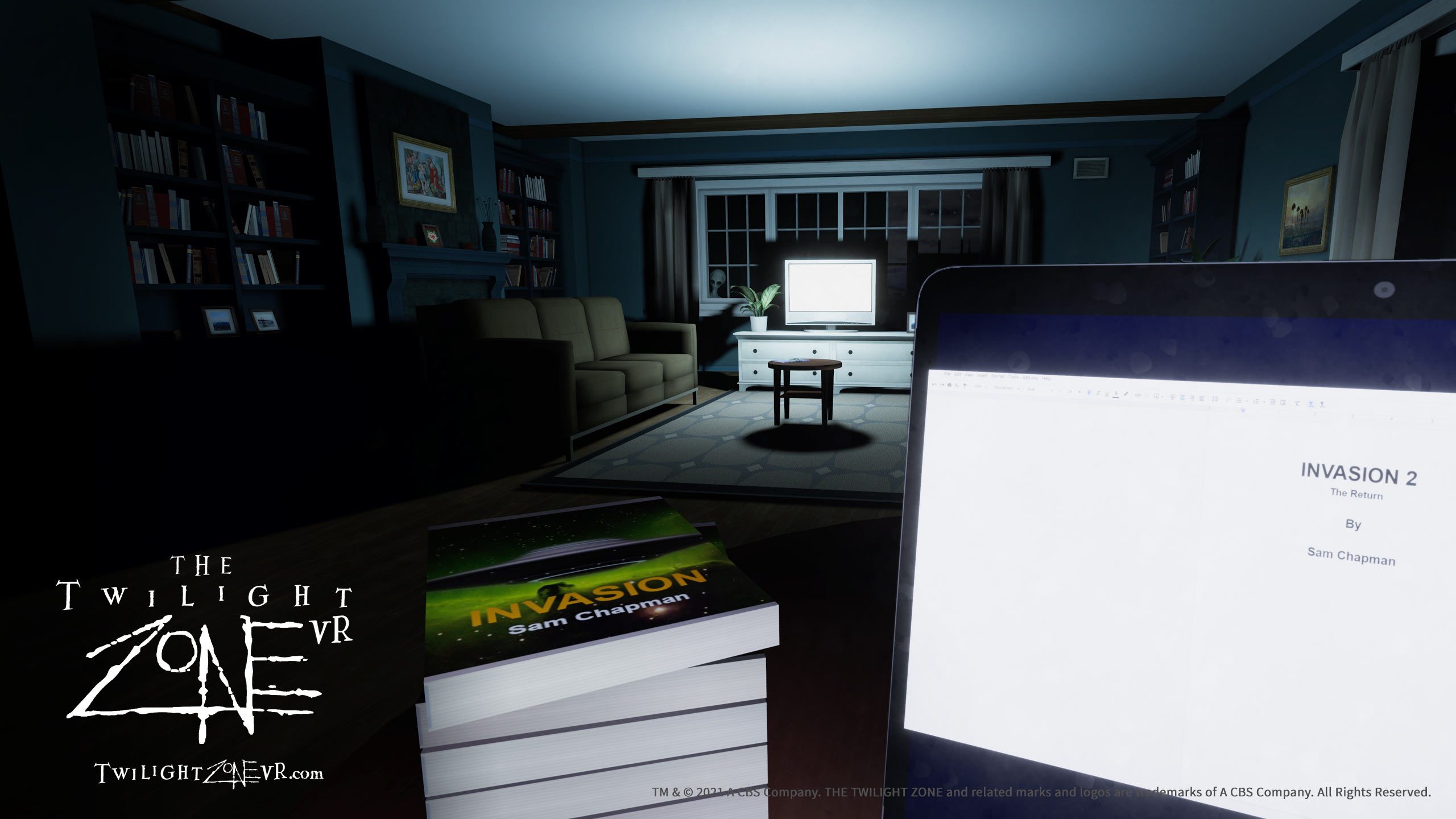
Details about the experience are light right now, though you can sign up for an upcoming beta. We do have some initial screenshots, which show UFOs, aliens and car parks with abandoned dolls.

The Twilight Zone VR Screenshot

The Twilight Zone VR Screenshot

The game will also feature writing from The Invisible Hours and Farpoint scribe, Rob Yescombe as well as Dwayne Alexander Smith.

Not too much to go on, then, but there’s definitely a lot of potential here. The Twilight Zone originally ran from 1959 – 1964, with each episode telling a supernatural story of mystery. The series has had a huge impact on popular culture — not least thanks to its iconic theme tune — and there’s definitely a lot that could be done with taking the concept into VR.

The Twilight Zone VR Screenshot (4)

The Twilight Zone VR Screenshot

Currently there’s no release date for The Twilight Zone VR, though it’s likely we’ll see more in 2022. Are you interested in the game? Let us know in the comments below!


from UploadVR https://ift.tt/3k1JU94
via IFTTT

Quest 2 Now Shows Pets, People, & Android Phone Notifications

https://ift.tt/eA8V8J

The Quest 2 system software can now alert those wearing the device to people or large pets entering the play space.

The new version 34 of the Quest system software rolling out starting this week adds an experimental setting on Quest 2 for Space Sense. The system “allows you to see things like people and pets entering your Play Space when using Roomscale Guardian.”

“In addition to Space Sense, we’re currently testing additional guardian features as part of this release. Keep in mind that these features are still in development and won’t be seen by all users,” Meta posted in its release notes.

Facebook is also adding its first 2D apps to the Oculus store with Web apps for Facebook, Instagram, Smartsheet, and Spike available for use with another experimental feature — multitasking.

Another long-awaited feature for Quest owners is now part of the system software as well, with notifications from Android phones now available alongside iOS devices. I’ve personally never been able to get the phone notifications feature to work with my iPhone and Quest 2, but let us know in the comments what sort of experience you’ve had with the feature.

Meta also announced additional voice commands supported by those who have activated it in the menu. You can double-press the Oculus button, click it in the menu, or use the experimental wake phrase “Hey Facebook” to issue a voice command.

The company also enabled “secure pairing for Air Link to enhance security and improve your experience for Air Link” and adjusted the way standby works to improve battery life.


from UploadVR https://ift.tt/2ZL0Qd5
via IFTTT
Related Posts Plugin for WordPress, Blogger...