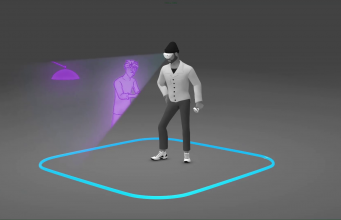
The Quest 2 system software can now alert those wearing the device to people or large pets entering the play space.
The new version 34 of the Quest system software rolling out starting this week adds an experimental setting on Quest 2 for Space Sense. The system “allows you to see things like people and pets entering your Play Space when using Roomscale Guardian.”
“In addition to Space Sense, we’re currently testing additional guardian features as part of this release. Keep in mind that these features are still in development and won’t be seen by all users,” Meta posted in its release notes.
Facebook is also adding its first 2D apps to the Oculus store with Web apps for Facebook, Instagram, Smartsheet, and Spike available for use with another experimental feature — multitasking.
Another long-awaited feature for Quest owners is now part of the system software as well, with notifications from Android phones now available alongside iOS devices. I’ve personally never been able to get the phone notifications feature to work with my iPhone and Quest 2, but let us know in the comments what sort of experience you’ve had with the feature.
Meta also announced additional voice commands supported by those who have activated it in the menu. You can double-press the Oculus button, click it in the menu, or use the experimental wake phrase “Hey Facebook” to issue a voice command.
The company also enabled “secure pairing for Air Link to enhance security and improve your experience for Air Link” and adjusted the way standby works to improve battery life.
It seems Quest owners are about to get a healthy dose of new features in the v34 update, something Meta CEO Mark Zuckerberg says will bring the previously leaked ‘Space Sense’ Guardian system, push notifications in VR from Android phones, and mixed reality app publishing to both the Quest Store and App Lab.
Update (November 2nd, 2021): Meta CEO Mark Zuckerberg posted a teaser of v34 on Facebook, giving cursory mention of the headline features coming to Quest starting today.
“Quest v34 update landing soon with Space Sense, a new guardian that lets you see people, pets and objects entering your VR space,” Zuckerberg says. “If you use Android, you’ll now be able to get phone notifications in VR. And if you’re building mixed reality apps, you’ll soon be able to ship them in the Quest Store or App Lab.”
The company provided a bit more detail in an Oculus blogpost, saying that v34 is rolling out starting today. The article below details the previous Space Sense leak.
Original Article (September 13th, 2021): Guardian, the playspace boundary for Quest, may be getting a facelift and a name change to go along with an upcoming feature, which could arrive in Quest’s upcoming v33 software update.
Called Space Sense, the feature was first discovered by German programmer ‘Basti564’. Mining through hidden v32 files, Basti found a video buried within that shows off Space Sense’s features.
Under the video was also menu text explaining what Space Sense does:
See Your Real-World Surroundings in VR
Enable Space Sense to see outlines of people and things in your Room-scale boundary. Staying aware of what’s around you while in VR helps keep you and others safe.
You can see outlines up to 9 feet away as long as it’s still within your boundary, and directly in front of your headset. You can turn this feature off anytime in Settings.
The implementation isn’t foolproof; someone can always walk up behind you outside of the sensors’ field of view. Considering the number of videos of people getting blasted by Touch controller punches, it’s undoubtedly good news for people with pets, kids, and people unfamiliar with how VR works though.
Space Sense isn’t live yet, however it’s slated to be one of the biggest additions to Quest’s roomscale detection system as of late. Guardian has mostly remained the same since launch of the Quest platform in 2019, save a feature added last year which detects static objects within a playspace such as tables or chairs left in the way during the setup process.
Meta (formerly Facebook) announced a mixed reality headset at its Connect 2021 dev conference last week—code named Project Cambria. The company’s official teaser video is supposed to leave a little something to the imagination, however leaked 3D models have surfaced now that seems to show a convincing view of the headset.
Here’s that teaser in case you missed it:
Prior to its unveiling at Connect, a number of leaked videos revealing Project Cambria were posted on Twitter by user Bastian which was reportedly found in the ‘Seacliff’ firmware—ostensibly an internal name designation used by Meta.
If that wasn’t enough, Bastian also uncovered black and white models of Project Cambria, which he has now reconstructed into a full 3D model, rendering the black version within a VR headset for full effect.
In the video you can get a better look at the headset’s strap, which appears to be a bit of a mix between PSVR’s halo strap and the Quest 2 elite strap that both cradles the occipital bone and the forehead.
The reconstructed model also gives us a closer look at the headset’s Touch controllers, which have a noticeable inward slope in comparison to the flat button area in previous Touch designs. Like we’ve seen in previous leaks, the Touch controllers appear to house their own optical sensors, or depth sensors of some sort.
There’s even the model of the charging cradle, which we also saw in the previous how-to promo.
Notably included in the 3D model is the Oculus logo. Meta announced last week that the Oculus naming scheme will be phased out sometime in early 2022, as the Oculus Quest line becomes Meta Quest. This may imply that the Meta rebranding wasn’t known to the Oculus team at the time, or that the model itself was an earlier representation before the name change was internally discussed.
Meta says Project Cambria will launch “next year,” however there’s still no pricing or more precise launch window. Check out the Connect announcement of Project Cambria to learn everything we know about the upcoming headset.
After a lengthy delay, gravity-focused VR puzzler, Gravitational, arrives on PSVR and PC VR next week.
The game from Brazil-based Electric Monkeys arrives on both platforms on November 11. An Oculus Quest version hasn’t yet been announced, though it’s always possible we see that later down the line. Check out the new story-focused trailer for the game below which shows off plenty of new gameplay.
Gravitational casts players as Sebastian, a physically-challenged scientist that uses a wheelchair. Sebastian specializes in gravity-defying technology and works for a giant corporation named Gravcorp (man, these people really like gravity). When his work goes wrong, he’s forced to undergo a challenging journey to the facility’s reactor to shut it down.
As the trailer shows, that means using handheld devices to move objects and make paths as well as dive into zero gravity areas. We’ll be interested to see exactly what types of challenges Electric Monkeys throws our way.
If you’re planning to play on PC then you can already sample the game via a free SteamVR demo.
Will you be playing Gravitational? Let us know in the comments below!
Warp Frog is considering bringing its popular VR combat game, Blade And Sorcery, to the upcoming PS5 VR headset, but not the original PSVR.
The developer confirmed as much in an FAQ about the upcoming Quest 2 version of the game, Blade And Sorcery: Nomad. Warp Frog reasoned that, even though the PSVR platform was more powerful than a Quest 2, the limited tracking with the PlayStation Move controllers “would not be great for B&S.”
But what about a possible version for PSVR 2 (which isn’t the headset’s official name just yet)? We’re expecting to hear more about Sony’s next-generation VR headset for its PS5 console soon, but we already know it boasts improved horsepower and controllers.
“We are really excited about PSVR2,” Warp Frog wrote. “PS5 performance is also on par with PC, which means in theory we could port the PC version of B&S without much difficulty, and possibly even without compromising graphics at all.
“It’s still too soon to make any announcements, but we are interested in porting B&S on PSVR2, as soon as it’s possible for Sony. But for now, let’s just say “we will see” and no promises, haha.”
PSVR 2’s improved features have drawn the attention of other previously PC VR-exclusive developers. Boneworks studio Stress Level Zero suggested there was a high chance they support the next platform should it meet the right requirements. You can keep up with everything we know about the new headset right here.
Would you want to play Blade And Sorcery on PSVR 2? Let us know in the comments below!
Last month HP announced that it was releasing a new Reverb G2 headset with some tweaks designed to improve field-of-view and controller coverage. We got out hands on the new headset and put it through the paces.
Reverb G2 is a decent headset and in our review we really loved the clarity of its display and lenses, but were a bit let down by the limited field-of-view. And even though the headset had notably better tracking coverage compared to prior Windows VR headsets, it still had some blind spots that were easy to notice during regular use.
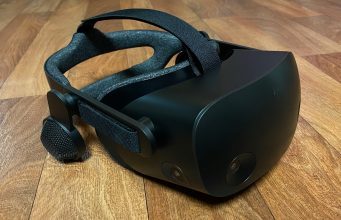
Now HP has released a slightly updated version of the headset in the US which hopes to specifically address these issues, along with improving compatibility with AMD GPUs. We got our hands on the new Reverb G2 and compared it to the original.
HP is still calling the new version of the headset the ‘Reverb G2’, but for clarity let’s call the original the G2 and the new version the G2.1.
Eye-relief & Field-of-view
Photo by Road to VR
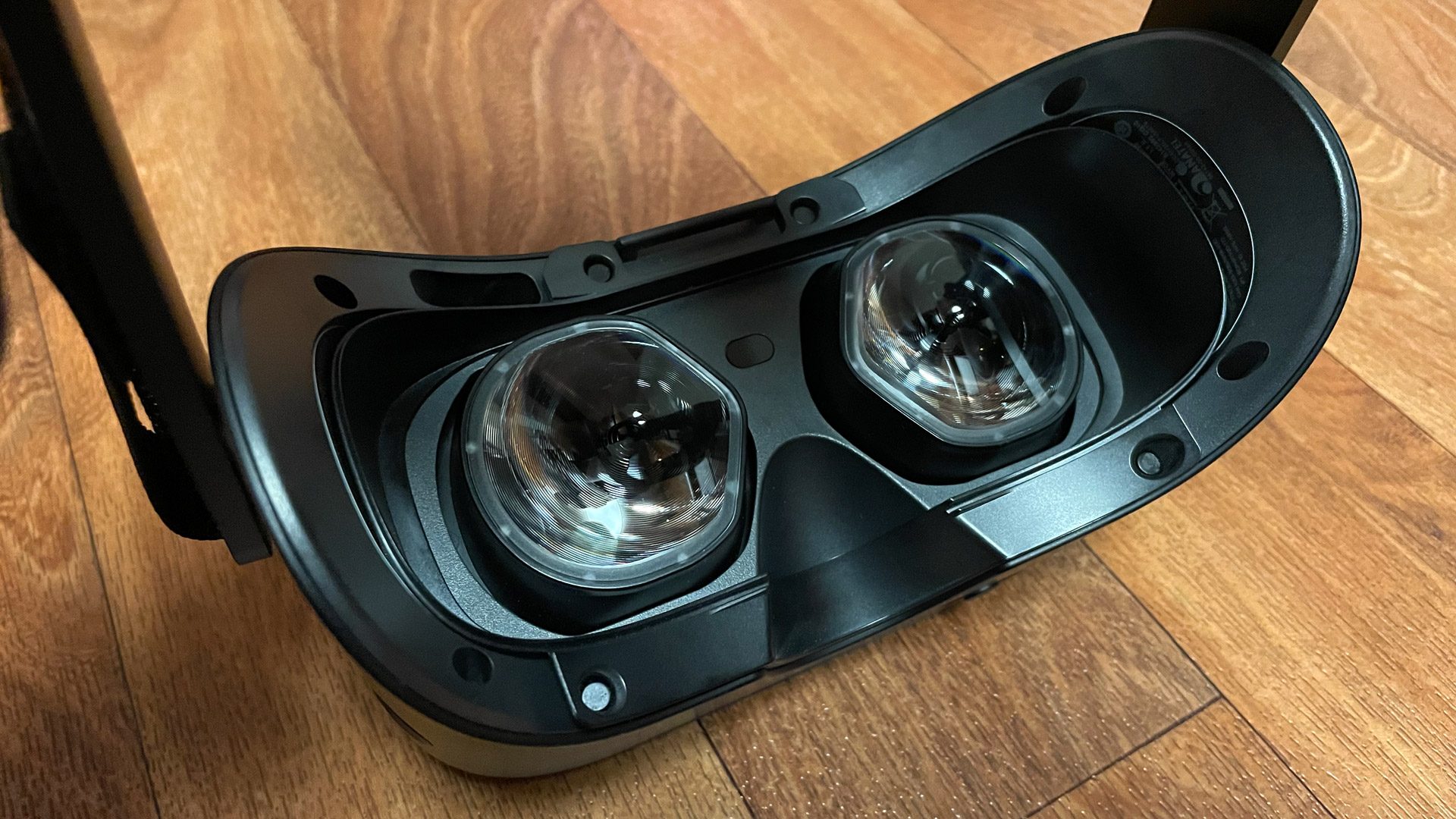
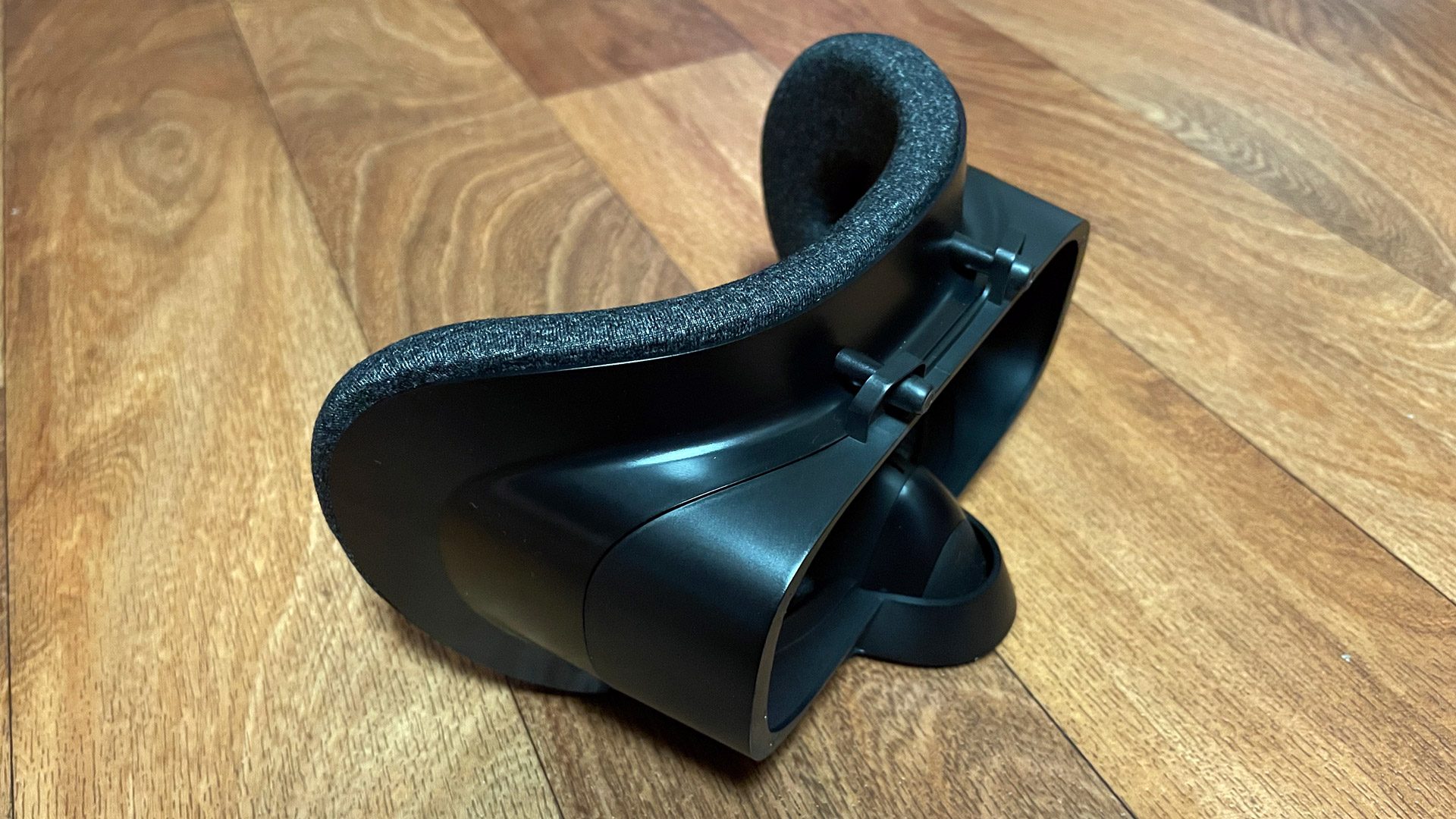
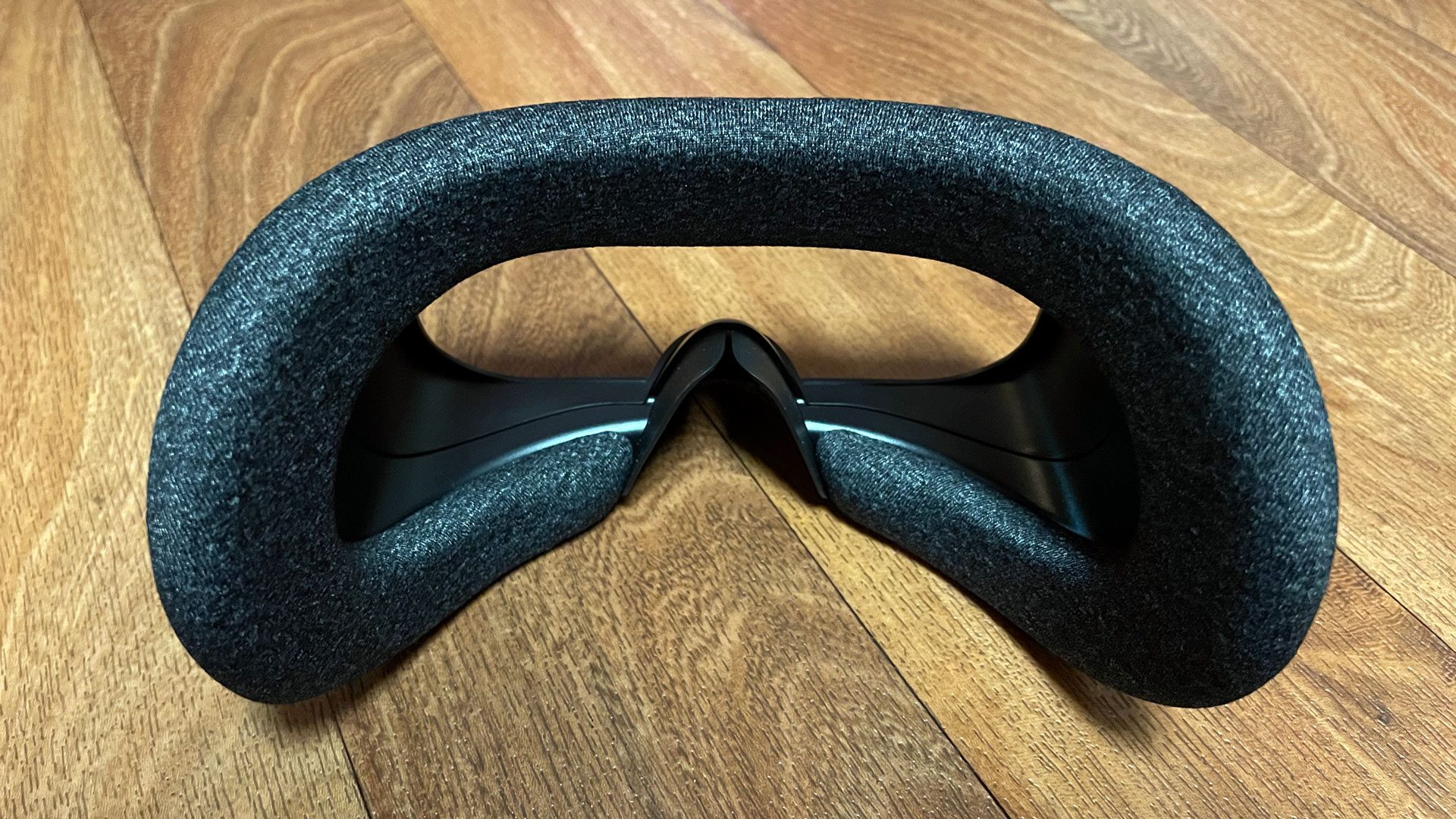
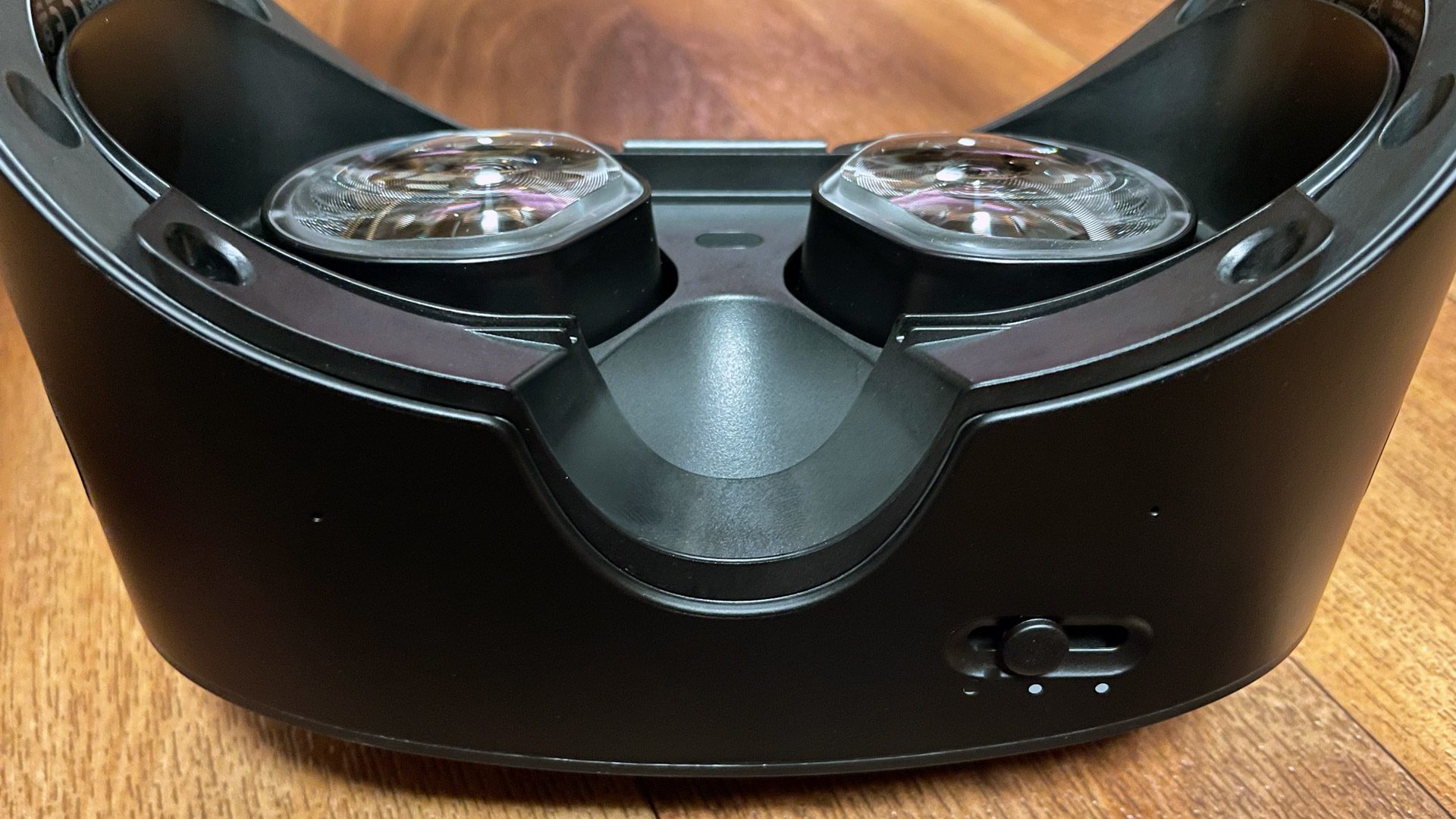
The Reverb G2.1 comes with a new facepad which can be reduced from the original fixed eye-relief distance of 15mm to 9mm. This is accomplished with a simple spacer which comes pre-installed in the G2.1. In my experience with the original G2, there was a good deal of field-of-view left on the table because of the fixed eye-relief. In theory, removing the spacer to drop down to 9mm should help people like me get closer to the headsets maximum field-of-view.
1 of 2
Photo by Road to VR
Photo by Road to VR
Indeed, removing the spacer brought a noticeable improvement in both vertical and horizontal field-of-view. Here’s a look at measurements comparing the field-of-view of the G2 and the G2.1.
Reverb G2 vs. G2.1 Field-of-View – Personal Measurements (no glasses, measured with TestHMD 1.2)
Horizontal FOV
Vertical FOV
Original Reverb G2 Eye-relief (15mm)
82°
78°
Reverb G2.1 Eye-relief (9mm)
98°
88°
Absolute Minimum Eye-relief (facepad removed)
98°
88°
You can see that using the 9mm setting on Reverb G2.1 increased my horizontal and vertical field-of-view by 16° and 10° respectively.
Compared to running the same field-of-view test with the facepad completely removed, I got the very same results (because at that point the screen becomes the limiting factor over eye-relief). That means that the 9mm setting of the Reverb G2.1 allows me to perfectly maximize the headset’s field-of-view.
Now I want to be clear… this might not be the case for everyone using the headset; it depends entirely on the topology of ones face. Some people may already be getting the maximum field-of-view (or close to it) at 15mm, and going down to 9mm would only serve to reveal the edges of the display instead of expanding the field-of-view.
As for me, the 9mm setting was just right in that it maximized the headset’s field-of-view without revealing the edges of the display—which is generally preferred because the hard boundary of a display is somehow more immersion-breaking than the soft boundary of a lens.
Photo by Road to VR
There’s really only one downside to this change and that’s a slightly smaller nose cavity, no matter if you’re using the spacer or not. If you have a big nose and the original G2 feels tight there, the G2.1 could put bothersome pressure on your nose.
The spacer itself is such a simple part and I’m really glad HP went out of its way to include it in the new version of the headset to make it easier for everyone to dial in the eye-relief to get the most from the field-of-view.
The spacer of the Reverb G2.1 perfectly fits the headset’s shape | Photo by Road to VR
The spacer is perfectly formed to the headset and snaps onto its magnetic attachment points, and then the facepad snaps over top of it using the same magnets.
If you’re curious, yes you can use the new spacer and/or the new facepad with the original Reverb G2; both will fit perfectly onto the headset (you can also use the old facepad with the new headset). However, using the new spacer with the original facepad (which would take you to a 21mm eye-relief) sort of works, but the two parts lack a perfect seal which causes some light leakage that can be annoying.
French startup Lynx launched the long-awaited Kickstarter campaign for Lynx R-1 earlier this month, a standalone MR headset (capable of both VR and passthrough AR). Starting at €530 (or $500 if you’re not subject to European sales tax), the headset passed its initial funding goal in under 15 hours of launch and is now well on its way to doubling it.
Update (November 1st, 2021): The Lynx Kickstarter has doubled its funding goal, currently at €600,000 of €300,000 (~$693,000 of $346,500). One week remains in the headset’s crowdfunding campaign which expects its first shipments in April 2022.
The Lnyx team recently showed a closer look at the headset’s Ultraleap-based hand-tracking capabilities, including occlusion and drawing.
The company plans to livestream an update on November 4th which it says will cover topics like SteamVR, the headset’s developer SDK, and the upcoming AWE event which Lynx plans to attend.
Update (October 15th, 2021): Less than two weeks since its launch, the Lynx Kickstart is approaching twice is funding goal, currently sitting at c488,000 of €300,000 (~$567,000 of ~$348,000). With 24 days remaining, the project looks likely to exceed the double mark and then some.
$1,500,000 – Option for $50 travel case (photo here)
The company says it may add additional stretch goals moving forward.
Lynx also shared a demo of the headsets hand-tracking in action (which is powered by Ultraleap):
Update (October 6th, 2021): The Lynx R-1 campaign has passed its €300,000 goal, and now sits at around €320,000 nearly one full day later. There’s still no talk of stretch goals, although if it keeps up its current pace we that may change here soon.
Lynx also provided an update this morning to clarify that Lynx R-1 does indeed cost $500 for people not subject to European/French value-added tax (VAT). It was previously reported that the Early Bird tier was around $615, however it now the creators have created a dedicated funding tier without VAT for non-EU backers. We’ve made note of these changes in the article below, and have adjusted all pricing tiers.
Original Article (October 5th, 2021): Lynx R-1 features the same Qualcomm XR2 chipset as Oculus Quest 2 and HTC Vive Focus 3, and like those two it’s also based on a heavily modified version of Android. Plug it into a VR-capable computer, and the creators say you’ll be able to play SteamVR content too when it launches next year. Jump to the Kickstarter here if you already know what’s up.
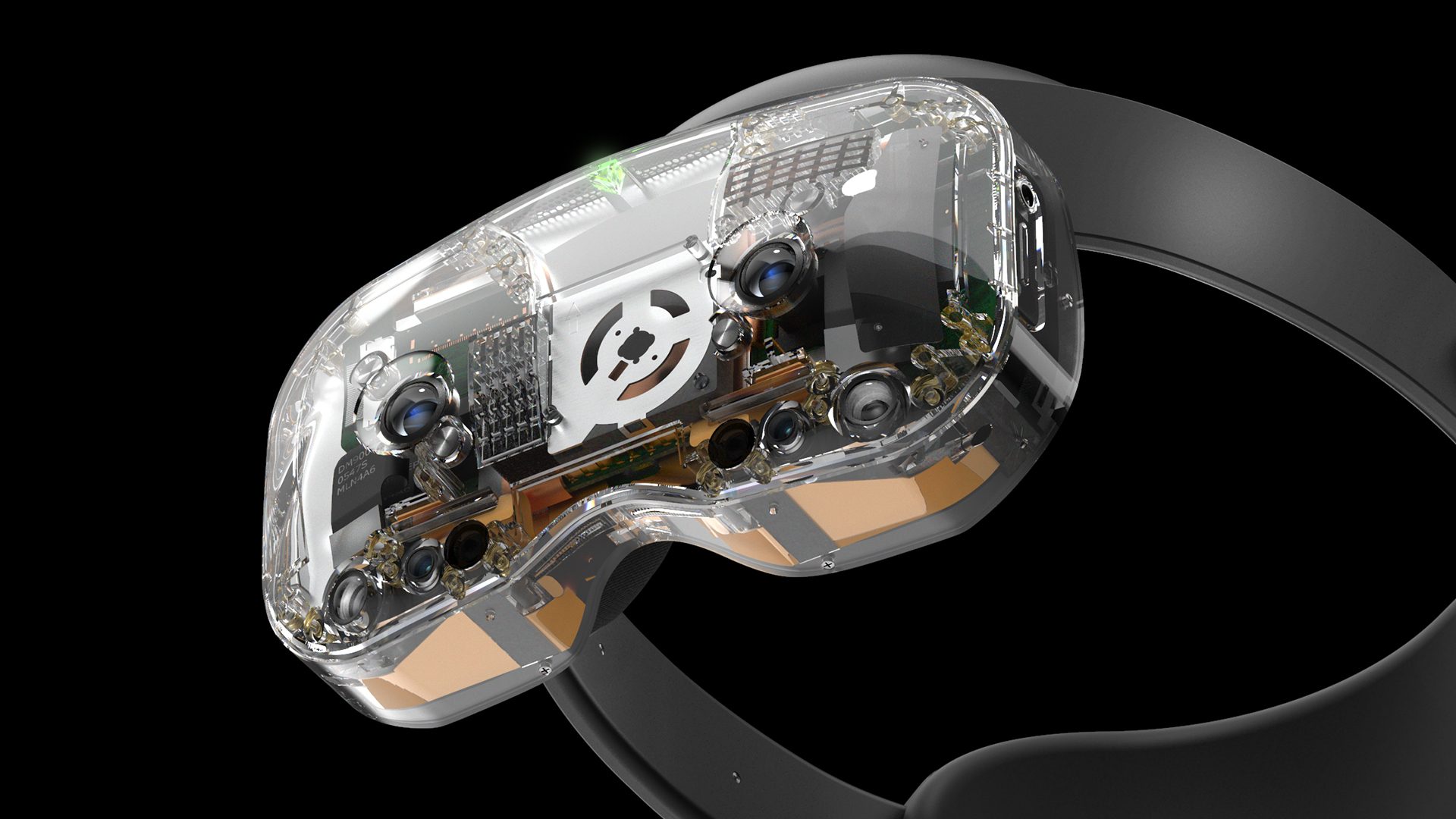
For everyone else: what sets it apart though is it’s tuned from the ground-up to play full VR games and do both passthrough augmented reality, making it a mixed reality headset by definition. Another hardware quirk: it also features a novel optic called a “four-fold catadioptric freeform prism,” which is said to slim down the size of Lynx R-1 seemingly beyond what current Fresnel-style lenses have achieved. More on specs below.
Lynx is hoping to appeal to a pretty wide swath of would-be backers, as it offers both a Professional Edition starting at €950 (or $900 without VAT) and a consumer-oriented version at €530 (or $500).
A Limited Edition version is also available for €745 (or $700 without VAT), which features a fully transparent faceplate. Only 1,000 of those are being made available through the campaign, so get ’em while they’re hot.
Initially started as an enterprise-focused company, Lynx R-1 Professional Edition offers few things over the consumer version; with that tier, you can resell the headset and also receive pro-level support from Lynx. All headsets—save the €4,999 tier where backers can meet the team and receive a signed model a month early—are slated to ship in April 2022.
Image courtesy Lynx
All versions are also coming with a 1m USB-C cable, USB-C Charger, VR facial interface for a more immersive experience, and fabric headstrap for added comfort.
Since it relies on hand tracking, motion controllers aren’t the ‘out-of-the-box’ control method. CEO Stan Larroque tells Road to VR that its 6DOF controllers are based on Finch Technologies ‘Shift’ controller hardware, something we’ve seen in practice with HTC Vive Focus in the past. Those are available as a separate €100 (or $90 without VAT) add-on tier via the headset’s Kickstarter.
The campaign is shooting for €300,000 (~$350,000) for its initial funding goal, although we can bet it will go well beyond that if any of the recent VR hardware campaigns from this past year are any indication. Tundra Tracker, a small motion device using the SteamVR tracking standard, managed to net over $1 million back in April, and the Yaw2 motion simulator chair garnered a whopping $2.7 million in June.
Here’s a look at the headset’s specs.
Lynx R-1 Specs
1,600 × 1,600 LCD @90Hz per eye, with ultra low-latency Color Passthrough for Augmented Reality
Qualcomm XR2 chipset with 6GB of RAM and 128GB internal storage
6DOF rom-scale
Optical Hand tracking
Cameras: 2 B&W for positional, 2 IR cameras for hand tracking, 2 visible light cameras for passthrough
WiFi 6 and Bluetooth 5
PCVR compatible with SteamVR over WiFi
SD card slot for up to 1TB of external storage
Two stereo speakers, 4 microphone array and a 3.5mm Jack TRRS