Meta is doubling down on VR fitness with the acquisition of the Quest-exclusive Supernatural fitness service.
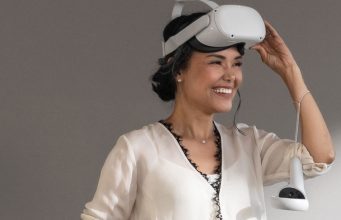
Chris Milk’s startup Within is the team behind Supernatural, which launched exclusively on Oculus Quest in 2020. While on the surface Supernatural appears to be just another rhythm game like Beat Saber, the startup leaned into Quest’s wireless features with a wider library of music which supported moving in 360 degrees to songs. Sweat-soaked workouts are available on a subscription basis and driven partially by supportive coaches who offer commentary in your ears. The service’s coaches are led by Head of Fitness Leanne Pedante and she’s become a bit of a VR celebrity to the rapidly growing Supernatural Facebook group where people share their fitness journeys and share support.
Pedante recently joined me in our virtual studio for a discussion about VR fitness and discussed how the technology might help people achieve their exercise or fitness goals without leaving the house.
“I think if you had asked me in 2019 my answer would be so different than what I think now,” Pedante said. ” I think we are just probably only seeing the beginning because things like accessibility to Wi-Fi, price points of the hardware dropping, and really there’s so many people who don’t want to go into a gym, they don’t want to have to drive somewhere to do their workout. There’s just so many reasons to bring it inside. So yeah, I think we’re probably only kind of seeing the beginning of this.”
Supernatural recently added boxing to the service and Meta VP Jason Rubin wrote in a blog post “Supernatural will continue to be operated independently as part of Reality Labs, and will continue to create fitness, wellness and social experiences in VR.” Financial terms of the deal weren’t disclosed in the announcement and the transaction is subject “to customary closing conditions and regulatory approval.”
“I think VR is opening the door to everybody who doesn’t want to go to a gym because they’re afraid of being judged, there’s mirrors, they don’t want to see what their body looks like working out in the mirror,” Supernatural superfan Chesney Mariani recently told us. “There’s nobody around. The only person that’s around is you, maybe a partner, your animals. And it makes it a lot easier to exercise when you’re in there. You can’t see anybody when you’ve got the headset on. So you’re in there, you’re quote ‘alone.’ Nobody’s judging you now.
Lots of people are talking about “the metaverse” after some tech companies laid claim to the term in recent months. Here’s what Mark Zuckerberg, Andrew Bosworth, and John Carmack have to say about the “metaverse” and their place in making it a reality.
The term “metaverse” originates from the 1993 novel Snow Crash by Neal Stephenson where it is described as “a computer-generated universe that his computer is drawing onto his goggles and pumping into his earphones. In the lingo, this imaginary place is known as the Metaverse. Hiro spends a lot of time in the Metaverse. It beats the shit out of the U-Stor-It.”
And then:
“Hiro is approaching the Street. It is the Broadway, the Champs Élysées of the Metaverse. It is the brilliantly lit boulevard that can be seen, miniaturized and backward, reflected in the lenses of his goggles. It does not really exist. But right now, millions of people are walking up and down it. The dimensions of the Street are fixed by a protocol, hammered out by the computer-graphics ninja overlords of the Association for Computing Machinery: Global Multimedia Protocol Group.”
Nearly 30 years after those words were published we see Fortnite, Roblox, Minecraft, Rec Room, VRChat, and others building out systems very much resembling Stephenson’s description of this “metaverse.” And since 2014, with the acquisition of Oculus VR for billions of dollars, Mark Zuckerberg has been continually sharpening his vision of building a company that could play a major part in the next generation of personal computing. Zuckerberg and soon-to-be chief technology officer Andrew Bosworth think a lot of people will be wearing computerized goggles and glasses before the end of the decade, and they want Meta to play a role in shaping its use.
This year, with more than 68,000 employees, he expects the investment in this specific vision to cost them $10 billion in profits, an amount that’s likely to increase annually for the next several years. Meanwhile, socially aware apps like Horizon Home, Horizon Worlds, and Horizon Workrooms are the organization’s latest efforts to realize “distance defying” technology not just on headsets, but eventually across a wide range of devices.
Here are recent comments Zuckerberg and Bosworth made in a call with journalists ahead of Connect which summarize just how significant a change society is in for when these technologies become commonplace. Plus, there’s a bonus comment below from John Carmack, Independent AI Researcher and “Consulting” guide to “Oculus VR”.
What Is The Metaverse?
Mark Zuckerberg, October 2021:
“We see the metaverse as the successor to the mobile internet…the kind of differentiating and defining factor of it is that it can help deliver a sense of presence…being able to be present at work no matter where you want to live without a commute, being able to go to a concert with a friend instantaneously, being able to teleport as a hologram into your parents’ living room to catch up with them…it’s like an embodied internet. Today, I think we look at the internet, but I think in the future, you’re going to be in the experiences…we view our role here as helping to stitch together some of these things.
Andrew Bosworth, October 2021:
The watch word of the metaverse is continuity. The feeling that when you go from one place to another place, there’s some things that… identity come with you. So avatars is important… your digital goods come with you…Can your friends come with you? Can you travel together? Can you stay in communication while you move from place to place?
The Metaverse Will Be Synchronous
Andrew Bosworth, October 2021:
The metaverse will be a largely synchronous experience. Whereas most of the technology being built today in content moderation is focused on asynchronous experiences. I think there’s real societal questions here. To what extent do we want anybody, companies or governments, to be supervising our synchronous conversations in the digital equivalent of the city park?
Muting Harassment And Always-On Body-Worn Cameras?
Andrew Bosworth, October 2021:
Can we keep a buffer of the last 10 or 15 seconds of interaction? And if you report that you are choosing basically to share that recording with an authority who can review it, that obviously has privacy implications for both parties. And so that’s something as an idea that we have, but… we have to have a conversation as a society. What are the privacy and integrity trade-offs we want to make? And I do think they end up feeling very different than the ones we’ve made historically because so many of these experiences are going to be real time. The degree to which we want surveillance is probably low but that also means the number of guarantees we can make are limited, but I do feel very confident that we can give very strong controls to each individual to control their environment, to control their ability to feel safe and secure in their own experience by virtue of just the power of things like muting, which are disproportionately useful in these environments.
For some context here check out a recent conversation with ITIF policy analyst Ellysse Dick:
John Carmack And Architecture Astronauts
Now John Carmack, who these days describes himself as an Independent AI Researcher as well as a “Consulting” guide to “Oculus VR”, doesn’t actual have an actual say in Meta’s strategy. Still, Carmack has been contributing to the VR efforts at Oculus for a very long time and he does, on occasion, openly speak his mind. This week during his annual a stream of consciousness talk Carmack shared some thoughts about Facebook and Oculus attempting to build the Metaverse:
“I was quoted all the way back in the nineties as saying that building the metaverse is a moral imperative. And even back then, most people miss that I was actually making a movie reference, but I was still at least partially serious about that. I really do care about it and I buy into the vision, but that leaves many people surprised to find out that I have been pretty actively arguing against every single metaverse effort that we have tried to spin up internally in the company from even pre-acquisition times. You know, I want it to exist, but I have pretty good reasons to believe that go setting out to build the metaverse is not actually the best way to wind up with the metaverse. And my primary thinking about that is a line that I’ve been saying for years now, in general relation to my arguing against these efforts, is that the metaverse is a honeypot trap for architecture astronauts and. Architecture astronaut is a kind of chidingly pejorative term for a class of programmers or designers that want to only look at things from the very highest levels, that don’t want to talk about GPU, micro architectures or merging network streams, you know, or dealing with any of the architecture asset packing, any of the nuts and bolts details, but they just want to talk in high abstract terms about how well we’ll have generic objects that can contain other objects that could have references to these and entitlements to that and we can atomically pass control from one to the other. And I just want to tear my hair out at that because that’s just so not the things that are actually important when you’re building something. But, um, you know, but here we are, Mark Zuckerberg has decided that now is the time to build the metaverse. So enormous wheels are turning and resources are flowing and the efforts definitely going to be made. So the big challenge now is to try to take all of this energy and make sure it goes to something positive and we’re able to build something that has real near-term user value because my worry is that we could spend years and thousands of people possibly and wind up with things that didn’t contribute all that much to the ways that people are actually using the devices and hardware today. So my biggest advice is that we need to concentrate on actual product rather than technology architecture or initiatives.”
If you missed anything from Connect 2021 you can catch up with this video supercut:
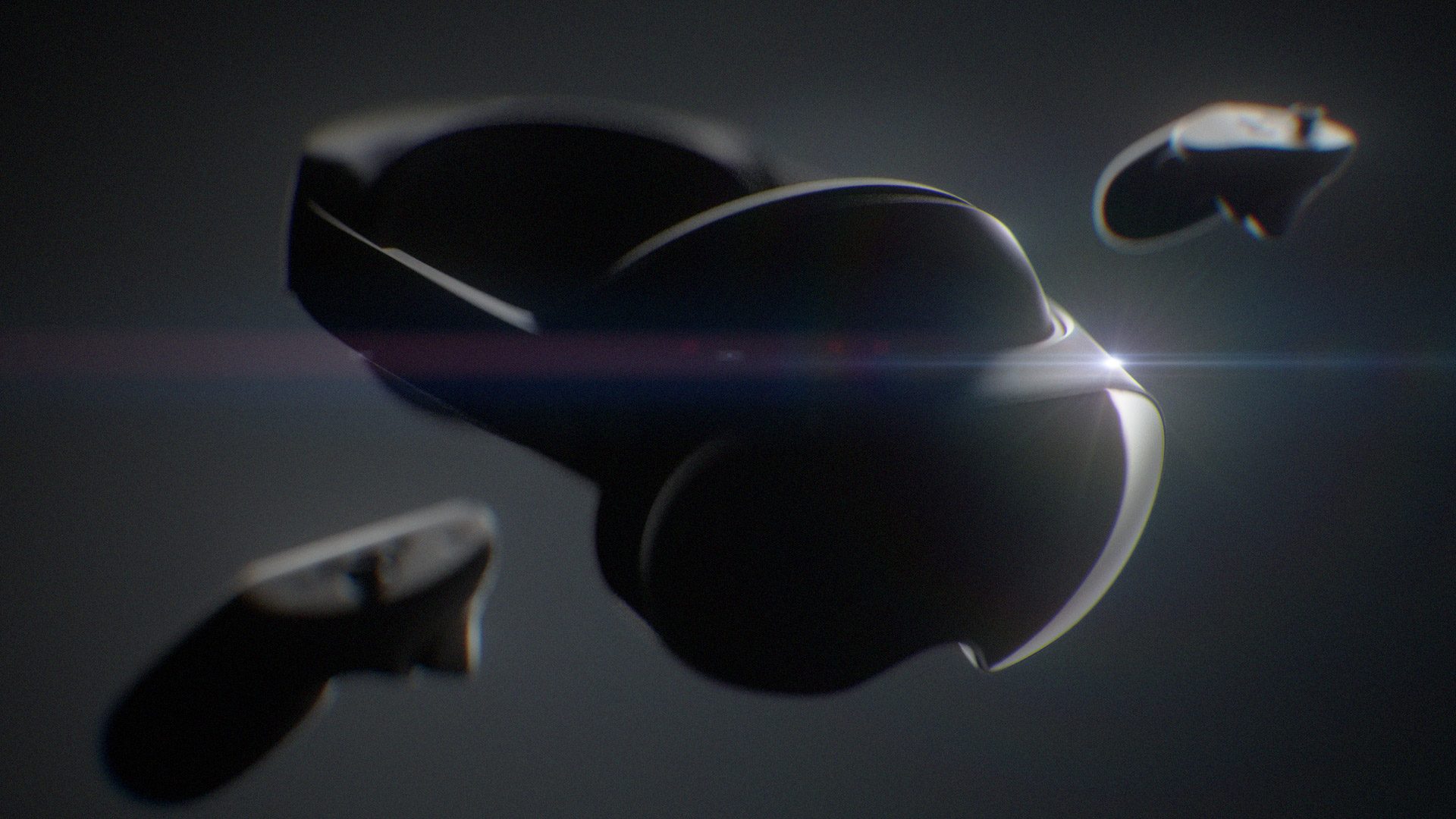
Facebook today confirmed Project Cambria, the MR headset which was spotted in a recent leak. The company says it’s a high-end headset designed to roll out more advanced technology before being able to bring it down to the price point of the Quest line. Project Cambria is said to be launching sometime next year.
If you followed along earlier this week you’ll already be at least a little bit familiar with Project Cambria; the headset’s look was revealed in leaked videos, but there were few details to be gleaned from it otherwise.
Today during Facebook Connect the company confirmed the headset, which is codenamed Project Cambria. Facebook CEO Mark Zuckerberg said that the headset “isn’t the next Quest,” though it will be compatible with the Quest platform.
Image courtesy Facebook
The way Zuckerberg explains it, Cambria is a high-end headset (and will be “at the higher end of the price spectrum”) which will include advanced technology that the company wants to experiment with before considering bringing it to the more affordable Quest product line.
Project Cambria Specs and Features
We don’t know a whole lot of specifics about Cambria yet, but the company did confirm a handful of things.
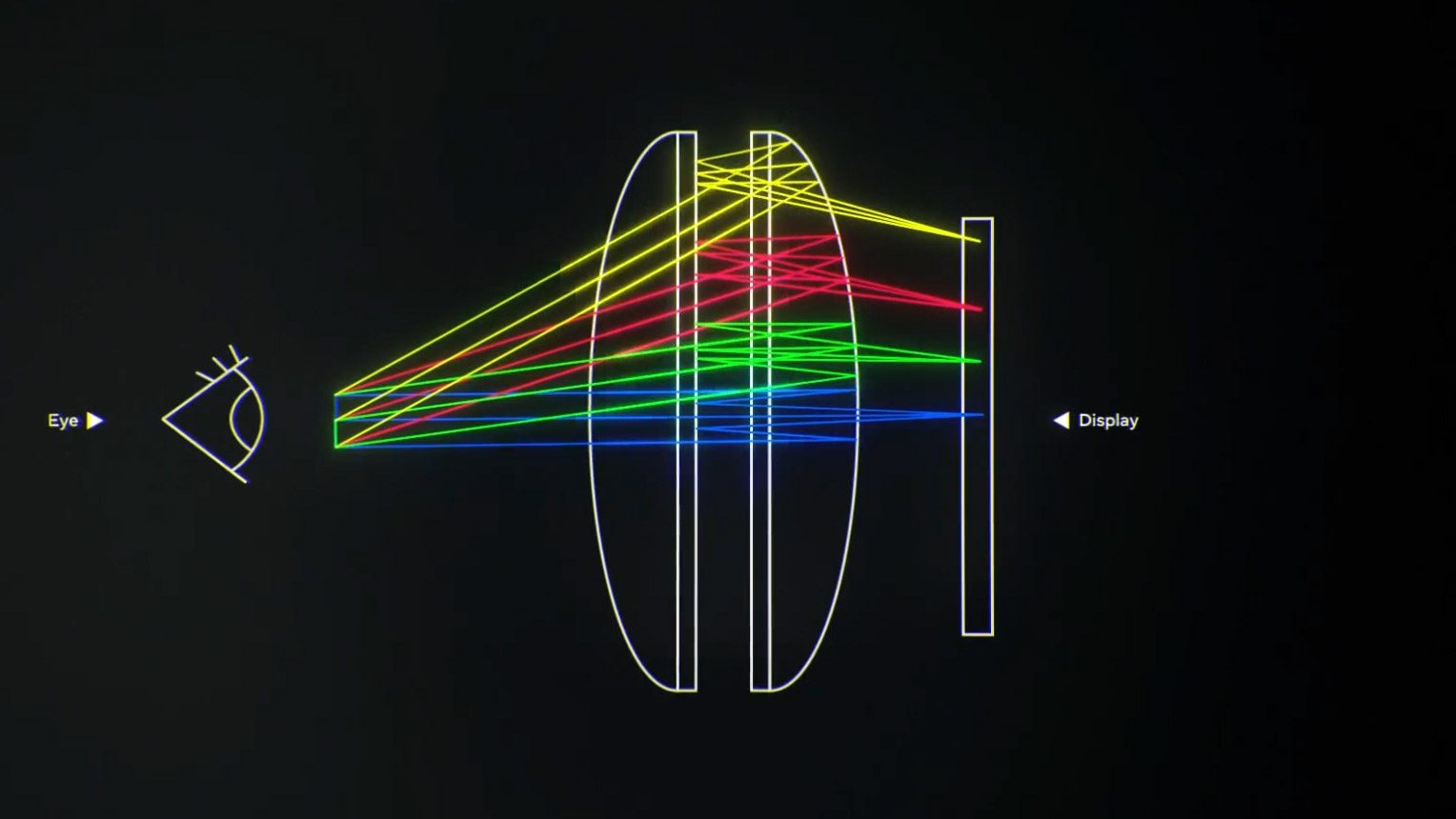
For one, the headset will include “high-res color mixed reality passthrough,” which will make it better for mixed reality applications. It will also use pancake optics to reduce the headset’s bulk.
Image courtesy Facebook
Eye-and face tracking will be included to provide a more realistic representation of the user within the virtual world.
From the leak and teaser photos we can also see that the controllers are ditching the tracking rings and are likely tracked with on-board cameras.
Project Cambria looks like it will lean much more into its mixed reality capabilities than Quest 2 is currently capable of.
Project Cambria Release Date
Facebook said that the Project Cambria headset will launch “next year,” but offered no additional details on timing or price, though the company says it’s already working with developers to begin building experiences for the headset.
Facebook today announced that it’s working with Rockstar Games to bring Grand Theft Auto: San Andreas (2004) exclusively to the Oculus Quest 2 headset.
The company said in its Facebook keynote today at Facebook Connect 2021 that it has been working “for years” to bring the game to VR.
“This new version of what I think is one of the greatest games ever made will offer players an entirely new way to experience this iconic open world in virtual reality,” Facebook CEO Mark Zuckerberg said.
Rockstar Games previously announced it had started production on an “AAA open world title in VR” back in July 2020, which came on the heels of its VR port of L.A. Noire (2011) to the medium. This follows a trend of established studios reformatting older games, such as Capcom’s Resident Evil 4 (2005), for the Oculus Quest 2 hardware.
There’s no release date on the books yet, as Facebook and Rockstar have only just tipped their collective hats by saying it’s currently in development. We’re sure to learn more at the Oculus 2022 Gaming Showcase.
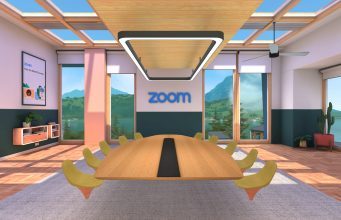
Facebook launched Horizon Workrooms back in summer, bringing to Quest a new enterprise-focused virtual collaboration platform that connects both VR and video chat users in the same place. Soon the app will let you choose from different environments which will be customizable to some degree—a prescient step on the way to Facebook’s vision of its metaverse.
“Later this year we’ll introduce customizable rooms in Workrooms, giving you the ability to choose from a wide variety of different environments to get work done, and place your own company logos or team posters in your rooms,” the company said today during its annual Connect dev conference. “This will let people adapt their virtual workspaces to match individual company styles, cultures, and branding guidelines.”
So far Horizon Workrooms has only offered a few standard boardroom spaces. That isn’t changing terribly much with the ability to do things like modify colors, decorations, and import company logos and posters, however the ostensibly conservative update coming to the app later this year is definitely another bid to make Facebook and its VR hardware more attractive to companies looking to stay distanced and distributed. You know, the ‘new normal’.
Facebook surprise-launched Horizon Workrooms back in August, which lets VR and video chat users work and physically collaborate in the same virtual space. Since then it’s included support for things like Zoom Meeting and Zoom Whiteboard for better cross-platform collaboration, and also included more intuitive whiteboards, instant Remote Desktop connection, and AR keyboard labels in its v1.1 release.
And customizable Workrooms environments aren’t the only thing on the agenda this year either, as Facebook continues to refine its expansion into enterprise VR to make it cheaper and more attractive. It’s building towards the 2023 release of dedicated ‘Work Accounts’ which will essentially let companies adopt the consumer Quest hardware instead of having to buy the more expensive Quest for Business kit for $800.
This comes on the tails of a Facebook hiring spree that will see an additional 10,000 people added to its ranks in effort to build its version of the metaverse, or what you might define as a connect platform of virtual experiences and worlds that share some level of connectivity, interoperability, and identity.
At Facebook Connect 2021 today, the company announced it will be releasing a new Quest for Business program that’s rebooting its enterprise-focused VR software by bringing its growing suite of business tools to the consumer version of Quest 2, which you can buy from anywhere.
Facebook will be allowing what it calls ‘Work Accounts’ for Quest 2, which will be selectable alongside personal Facebook accounts for standard VR gameplay.
The Work Account login is said to be a “business-only login” that lets work-focused Quest 2 users collaborate with coworkers and access productivity apps like the recently released Horizon Workrooms, Spatial, ENGAGE,Gravity Sketch and more from the Oculus Store—all without using personal Facebook account details or avatars.
Image courtesy Facebook
Quest for Business is slated to let companies access dedicated platform functions like account management, mobile device management (MDM) solutions, SSO integration, and will also work with thing like Facebook Business Manager and Portal later this year.
The new program heads into closed beta later this year, and will expand to select businesses in 2022. The company says it hopes to launch Quest for Business to all interested companies sometime in 2023.
It’s not clear whether it will be offered under a subscription pricing model. Whatever the case may be, it at least seems the startup cost for hardware will be greatly reduced, as the Quest 2 base model (128GB) only costs $300.
In the meantime, Facebook says it will be winding down its previous Quest for Business program later this year. The original Quest for Business hardware was physically identical to the consumer headset, however it was priced at $800 and didn’t have access to the consumer Oculus Store. Under the old system, the Oculus Quest 2 enterprise SKU arrived with an extended two-year warranty, one year of the Oculus for Business software platform, and premium support.
A Facebook spokesperson told Road to VR that current Oculus for Business customers and independent software vendors (ISVs) have “several options” once the company entirely replaces it with the rebooted version.
Business customers will be able to migrate their headsets to the consumer version if they’re interested to take part in the upcoming Quest for Business beta periods. There’s also the option to simply continue using Oculus for Business without any changes, including enterprise-level support and warranties for Oculus for Business in accordance with the company’s Enterprise Use Agreement. An expanded FAQ will be published on the company’s business-facing website which should give deeper explanation.
Facebook announced at its Connect 2021 AR/VR developer conference today that Oculus is finally replacing its janky cloud save system for one that will work with every Quest app automatically.
If you’re a hardcore Quest user you may already be used to saying goodbye to game progress as you inevitably make room for a new app and delete the old—it’s certainly been the bane of VR journos everywhere.
That’s supposed to change here later this year, Facebook says, as it’s offering an overhauled Cloud Backup system that should be applied to the entire catalogue of games and apps on the Store.
It’s slated to let Quest users back up all device data such as game progress or settings, something the company says works “at the filesystem level, with no coding required.”
Many games currently on the Store don’t support cloud saves, but those that do have encountered issues recently.
In August, multiple developers noted that Quest’s cloud save system was malfunctioning. Soon after, Oculus released a statement in its developer forums advising app devs to “not use the Oculus platform’s current Cloud Storage service (v2) as it is causing some applications to not launch.”