Thursday, 28 October 2021

New Oculus Avatars Available To All Unity Developers In December

https://ift.tt/3GyRnFY

Unity developers will be able to integrate the new Oculus Avatars 2.0 from December, with Unreal Engine support coming next year.

Announced at last year’s Connect in September 2020, Avatars 2.0 replaces the legacy Oculus Avatar SDK first launched with the Oculus Touch controllers in late 2016. Back then avatars had an basic monochromic style with the eyes always hidden by a virtual headset or sunglasses. A major update released alongside Oculus Go in 2018 added skin tones, and another just before Oculus Quest in 2019 added lipsync, microexpressions, and simulated eye movement.

The new avatar system is a total replacement for the old system, not an update. It trades the semi-realistic aesthetic for a more playful cartoonish style. In April Facebook added an editor for the new avatars to the Quest and Rift system menus and launched a private beta for the new SDK. The beta included PokerStars, Topgolf with Pro Putt, Epic Roller Coasters.

While the editor lets you create a full body avatar, but in apps you’ll only see from the torso up. While a VR system with head and hand tracking can make a reasonable guess as to your elbow position, it’s not really possible to do the same for legs.

Facebook is using the new avatars across its entire Horizon suite of social VR apps. That will include Horizon Home, the coming update to Quest’s Home software adding social features. As part of its “metaverse” push, Facebook hopes as many third party apps as possible leverage the SDK so users have a consistent virtual identity across a wide range of apps. However, there’s no word yet on whether the SDK supports other VR platforms such as SteamVR. Multi-platform developers will be unlikely to be enticed if they have to integrate a different avatar SDK for each system.


from UploadVR https://ift.tt/3CqMiNM
via IFTTT

After The Fall Release Date Revealed For December

https://ift.tt/eA8V8J

At long last, the After The Fall release date has been revealed, and it’s not too far away.

Vertigo Games’ long-awaited follow-up to Arizona Sunshine lands on the Oculus Quest 2, PSVR and PC VR headsets on December 9 with full cross-play support between all devices. As previously revealed, a port to the original Quest headset will follow in 2022.

Check out the release teaser trailer for the game with a few snippets of gameplay below.

After The Fall Release Date Revealed

After The Fall is positioning itself to be VR’s take on Left 4 Dead or, for a more recent reference, Back 4 Blood. It’s a co-op first-person shooter (FPS) for up to four players in which you’ll tackle a frozen LA wasteland overrun with monsters. Missions are designed as short sharp bursts in which you’ll fight for survival and come up against boss battles.

This release date has been a long time coming; we first announced After The Fall at the UploadVR Showcase in 2019. We had originally expected the game to launch in 2020, but it was delayed towards the end of the year. Another delay saw it slip from a summer 2021 window to its current date. Rest assured that Vertigo Games is still planning a closed beta for the game ahead of launch, which you can sign up to take part in over on an official website.

We’re currently shining a spotlight on the game as part of our Upload Access coverage. Check out a brand new interview with Vertigo Games just below. We’ll have more coverage of the game in the coming weeks.


from UploadVR https://ift.tt/3GHiAGX
via IFTTT

Facebook: ‘More Options’ For Oculus Quest Login Within The Next Year

https://ift.tt/eA8V8J

Facebook CEO Mark Zuckerberg signaled the company will be “making it so you can login into Quest with an account other than your personal Facebook account.”

Here’s the full comment from Zuckerberg in the Connect keynote:

“As we’ve focused more on work, and frankly as we’ve heard your feedback more broadly, we’re working on making it so you can login into Quest with an account other than your personal Facebook account. We’re starting to test support for work accounts soon, and we’re working on making a broader shift here, within the next year. I know this is a big deal for a lot of people. Not everyone wants their social media profile linked to all these other experiences and I get that, especially as the metaverse expands.”

While not exactly detailed about the path forward the comment does indicate Facebook is at least listening to feedback since it imposed a Facebook account requirement last year.

This news is breaking, updates to come.


from UploadVR https://ift.tt/3nEV2JL
via IFTTT

Oculus Store Apps Can Soon Use Mixed Reality – Spatial Anchors & Scene Capture Coming Later

https://ift.tt/2ZyKKmK

Developers can ship Oculus Quest apps or updates with mixed reality from the next SDK version. Spatial Anchors are coming soon, and Scene Capture will arrive next year. Facebook calls these  capabilities the Insight SDK.

Basic mixed reality functionality has been available to developers as the Experimental Passthrough API since August. But apps on the Oculus Store or App Lab weren’t allowed to use it, restricting distribution to third party methods like SideQuest. With the next SDK update the Passthrough API will no longer be experimental and will be permitted on the Store and App Lab.

The API lets developers use passthrough – the view from the Quest’s greyscale tracking cameras – as a layer (eg. the background) or on a custom mesh (eg. a desk in front of you). Since black & white isn’t particularly appealing, passthrough can be stylized with edge rendering, a color overlay, or posterization.

Coming soon, Insight SDK will get experimental support for Spatial Anchors. These world-locked reference frames will let apps place content in a specific position users mark in their room, and the headset will remember these anchor positions between sessions.

Next year, Facebook plans to add Scene Understanding as an experimental feature. Don’t be fooled by that name though, this isn’t an automatic system. Users will be prompted to mark out their walls and furniture, and to enter their ceiling height – a process called Scene Capture. This needs to be done for each room but the headset should remember the Scene Model between sessions.

With Spatial Anchors and Scene Understanding, Facebook says developers will be able to attach a virtual screen to a specific place on your wall, show your real furniture in VR, or have a character walk around your room with realistic occlusion. In the short term however mixed reality functionality will be much more basic, and future hardware with color cameras will be needed to make the experience truly compelling.


from UploadVR https://ift.tt/3mlWOjv
via IFTTT

Oculus Quest Devs Will Get Speech Recognition, Tracked Keyboard, Hand Interaction Library

https://ift.tt/3nCQwvr

Oculus Quest developers will get speech recognition with the next SDK release. Tracked keyboard support and a Unity hand interaction library are planned for next year.

Called Voice SDK Experimental, speech recognition will be powered by Wit.ai, a voice interface company Facebook acquired in 2015. The company says this will enable searching for in-app content and “voice driven gameplay” such as verbal magic spells or a conversation with a virtual character. Facebook says Voice SDK is “free to sign up and get started”, which may suggest using it in a full app will incur a fee.

Tracked Keyboard support will arrive next year. Oculus Quest already supports a tracked keyboard – specifically the Logitech K830 Bluetooth model – but it currently only works in Oculus Home, for 2D apps like Oculus Browser. Allowing developers to bring a tracked keyboard into their apps could open up new productivity use cases. In the mean time, Immersed built their own manual system for showing your keyboard in VR.

Adding hand interactions such as grabbing and pushing is still a challenge in VR development. While there are a number of interaction frameworks available, each has its shortcomings and some require importing a heavy library developers may not need. Facebook says its Interaction SDK Experimental Unity library, slated for next year, “can be used together, independently, or even integrated into other interaction frameworks”. It will support both controllers and hand tracking, and include “a set of ready to use, robust interaction components like grab, poke, target and select”.

Developers will also be able to ship mixed reality apps on App Lab and the Oculus Store, with Spatial Anchors coming soon and Scene Capture coming next year. You can read more about the mixed reality developer features here.


from UploadVR https://ift.tt/311rSwQ
via IFTTT

Oculus Expanding Quest Mixed Reality Capabilities With Enhanced Developer Tools

https://ift.tt/2PwAH8n
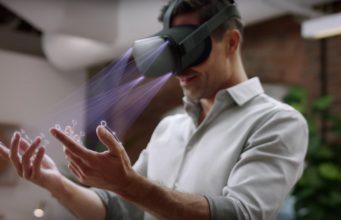
Oculus plans to further open up the mixed reality capabilities of Quest with new tools that will allow developers to build apps which more intelligently integrate with the user’s real room. In the near future developers will also be permitted to distribute mixed reality apps to customers via the Quest store or Oculus App Lab for the first time.

Oculus first began unlocking Quest’s mixed reality capabilities with the Passthrough API which allowed developers to tap into the headset’s pass-through video view for the first time earlier this year. Now the company is announcing a more advanced set of tools, which it calls the Presence Platform, which will allow developers to build more advanced mixed reality applications.

The Presence Platform includes the Insight SDK, Interaction SDK, and Voice SDK.

Insight SDK

The main building block of the insight SDK is the Passthrough feature, which developers previously had access to in an experimental form. That feature is moving out of its experimental form and into general availability starting with the next developer update.

Additionally, the Insight SDK includes Spatial Anchors which gives developers the ability to place virtual objects in the scene and allow them to persist between sessions. For instance, a piano learning app could allow you mark the location of your piano, and the app could then remember where the piano is any time you open it.

The Insight SDK further includes Scene Understanding, which Oculus says allows developers to build “scene-aware experiences that have rich interactions with the user’s environment.” This includes geometric and semantic representation of the user’s space, meaning developers can see the shape of the room and get a useful idea of what’s in it. For instance, the Scene Understanding feature will allow developers to know what parts of the scene are walls, ceilings, floors, furniture, etc all of which can be used as a surface on which virtual content can be naturally placed.

Oculus says the developer will see a “single, comprehensive, up-to-date representation of the physical world that is indexable and queryable.” You can think of this like the headset building a map of the space around you that developers can use as a guide upon which to build a virtual experience that understand your physical space.

However, users will need to do some work on their end in order to generate this map for apps that need it, including marking their walls and tracing over their furniture.

Crucially Oculus says that the Insight SDK will enable developers to build feature-rich mixed reality apps “without needing access to the raw images or videos from your Quest sensors.” We’ve reached out to the company to further clarify if Oculus itself will send the raw sensor footage off of the headset for any processing, or if it will all happen on-device.

The Scene Understanding portion of the Insight SDK will launch in an experimental form early next year, according to the company.

Interaction SDK

Another part of the Presence Platform is the Interaction SDK which will give Unity developers a ready-made set of simple interactions for hands & controllers, like poking buttons, grabbing objects, targeting, and selecting. This saves developers time in building their own versions of these commonly used interactions in their apps.

Oculus says the goal of the Interaction SDK is to “offer standardized interaction patterns, and prevent regressions [in tracking performance of specific interactions] as the technology evolves,” and further says that the system will make it easier for developers to build their own interactions and gestures.

The company says that the Interaction SDK (and the previously announced Tracked Keyboard SDK) will become available early next year.

Voice SDK

The Voice SDK portion of the Presence Platform will open up voice-control to Quest developers, which Oculus says can drive both simple navigation functions (like quickly launching your favorite Beat Saber song with your voice) and gameplay (like casting a voice-activated spell).

The system is based on Facebook’s Wit.ai natural language platform which is free to use. Oculus says the Voice SDK will arrive in an experimental form in the next developer release.

Mixed Reality Apps on the Quest Store and App Lab

While not all of the Presence Platform SDKs will arrive at the same time, as of the next Quest developer release, devs will be allowed to ship mixed reality apps via the Quest store or App Lab. That release is expected next month.

The World Beyond Sample App

Early next year Oculus says it will make available a sample project called The World Beyond which developers can use as a starting point for building atop the Presence Platform features. The app will also be made available to users.

The post Oculus Expanding Quest Mixed Reality Capabilities With Enhanced Developer Tools appeared first on Road to VR.


from Road to VR https://ift.tt/3vRC8mK
via IFTTT

Facebook Boosts AR Developers Tools for Forthcoming AR Glasses

https://ift.tt/3GvED3e

Today Facebook announced that it plans to expand the capabilities of its Spark AR platform to give developers more tools to build experiences that leverage existing smartphone-based AR and the company’s upcoming AR glasses.

Facebook has made no secret that its Ray-Ban Stories camera glasses are just its first step toward building full blown AR glasses. But just as the hardware continues to be refined, the software must evolve too.

Facebook’s Spark AR Studio toolset was initially built largely around AR face filters but has been steadily expanding with more features. The latest updates improve the platform’s understanding of things beyond the user’s face, like their entire body and the world around them. The company says it’s “working toward fully-featured AR glasses” and hopes the new capabilities of Spark AR will “illuminate the path to AR glasses.”

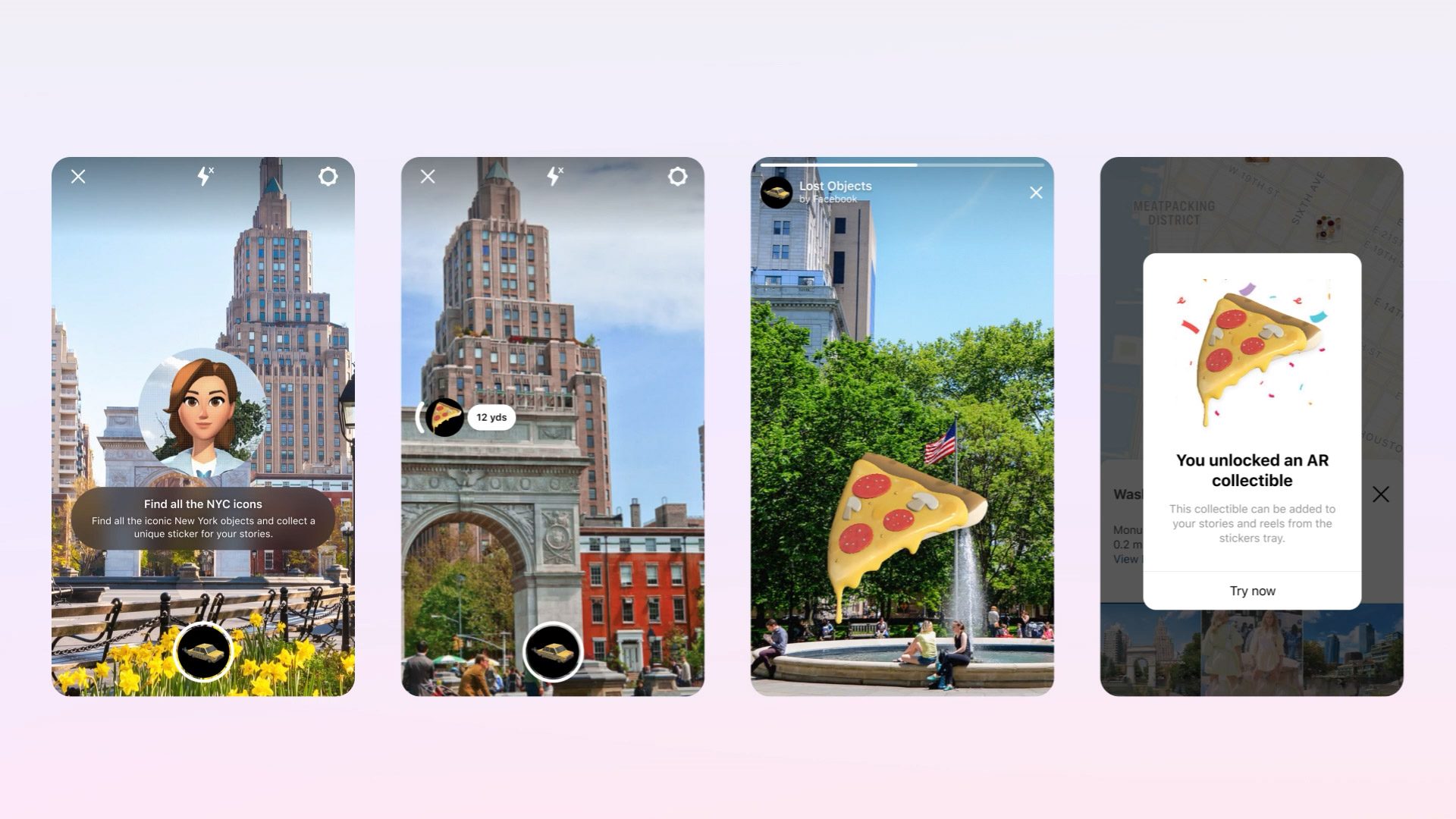
The updated toolset will soon support geo-mapped experiences for public spaces which will allow for location-based AR experiences that will be accessible from specific locations. This could enable experiences like a scavenger hunt, guided tour around a city, or even a murder mystery where you have to go find clues in the real world.

Image courtesy Facebook

Facebook says it’s testing this geo-locked AR capability with select partners, but will open it up to everyone in 2022.

Beyond geo-awareness, the company says it’s adding body and hand-tracking to Spark AR Studio which will allow developers to easily anchor AR effects to a person’s body. The capability will support “20 different 2D key points” which can be applied to a single person or multiple people.

Hands can be tracked specifically as well, and Facebook says a hand bounding-box will be the first function of a “multi-phased capability rollout” which will ostensibly add additional hand-tracking features (like, perhaps, finger-tracking) in the future.

Facebook says that body and hand-tracking in Spark AR Studio will be available “soon.”

The company is also building out what it calls a “virtual objects pipeline” for AR, which will make it easy to place virtual 3D objects in the scene which can include text, characters, GIFs, stickers, and more, all of which will support an understanding of depth, occlusion, and plane tracking to convincingly existing in the space. This developer feature will come in 2022, according to Facebook.

The post Facebook Boosts AR Developers Tools for Forthcoming AR Glasses appeared first on Road to VR.


from Road to VR https://ift.tt/2ZsImxi
via IFTTT
Related Posts Plugin for WordPress, Blogger...