The critical question that remains in this final part of the series: Who will be the dominant companies of this multiverse era who build the most popular virtual worlds? Will one virtual world achieve a monopoly or will there be many worlds we hop between on a daily basis? Will the most influential company be the developer of a certain world or an infrastructure layer underpinning many worlds?
Valve released more than 10 minutes of gameplay footage for Half-Life: Alyx and said buyers of Index hardware would get access to two SteamVR Home locations inspired by the game on Wednesday, March 4.
Valve Index hardware has been completely sold out in recent weeks. The company’s hardware production was impacted by the coronavirus but they said they expected to get a limited supply back in stock before the release of the first new Half-Life game in more than a decade on March 23. We expect those to sell out fast so sign up to “Notify Me” on the Index hardware page if you’re gonna try to grab one.
The home environments are some of the pre-order bonuses for folks who purchased Valve Index hardware prior to the game’s release. Others include alternate gun skins for Alyx’s weapons and content for Counter-Strike: Global Offensive themed after the game.
The company also released some new Half-Life merchandise, with some of it available now and some coming soon. There’s also a poster on the way of Alyx’s key art that looks like it will be in limited supply.
We’re looking forward to diving into Half-Life: Alyx and know our readers are too. It’ll work with all SteamVR-compatible headsets, though some optional interactions in the game only work on the Valve Index controllers.
Are you ready to dive into Half-Life again? Let us know in the comments.
New HTC Pro Eye solutions make VR more accessible to businesses of all sizes.
HTC has had a busy first quarter. The company recently unveiled a fleet of new Vive Cosmos headsets for every level of VR users and new faceplates that will expand the functionality of your Cosmos.
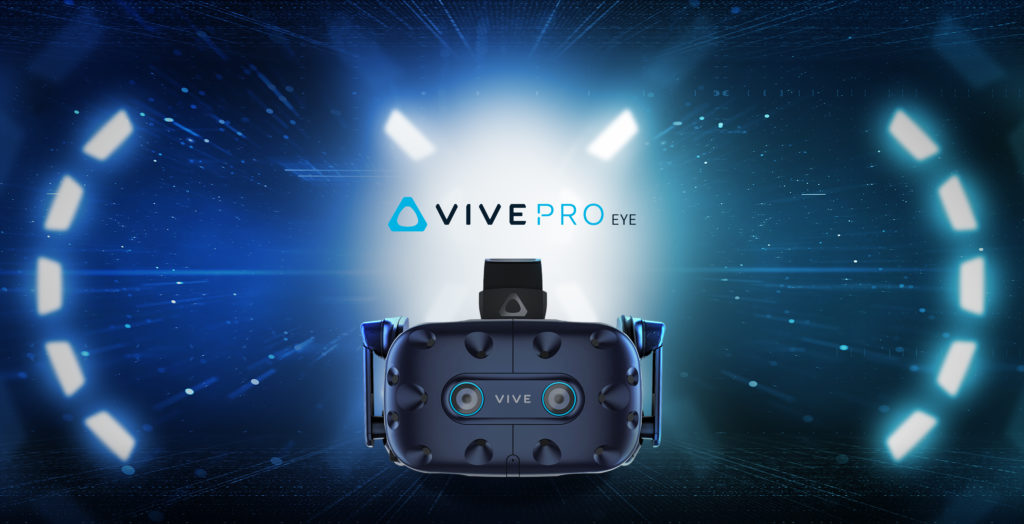
Up next for HTC is a full suite of enterprise Vive Pro Eye solutions that will give businesses of all sizes the tools to explore or expand in areas such as training and simulation, consumer feedback and analytics, gaze-oriented navigation, and many other enterprise solutions.
To do this, HTC is rolling out new additions to the Vive Pro Eye family. The Vive Pro Eye Office and the Vive Pro Eye Office Arena Bundle offer organizations everything from extended business and warranty services for dedicated and expedited customer service support with their VR Pro Eye headsets to additional base stations for larger VR spaces.
Vive Pro Eye Office ($1,599) includes all of the features that come with Vive Pro Eye plus the added bonus of Vive Enterprise Business Warranty and Services, offering an expedited customer service experience and an extended warranty in a single package in case your company runs into any issues with hardware.
Vive Pro Eye Office Arena Bundle ($2,350) offers businesses everything included in the Vive Pro Eye Office package along with the ability to set up a larger 33’ x 33’ operating space for destination entertainment via two additional SteamVR 2.0 base stations and a 20m fiber cable.
Along with HTC’s Pro Eye bundles, Vive has simplified its business warranty and support program. The new Business Warranty and Services (formally called Advantage) will help businesses protect their VR investment and are included as standard in any “Office” bundle. The package includes a two-year limited commercial-use warranty, support, and services. Features like next-business-day email response and expedited product repair minimize downtime.
As if that weren’t enough, HTC is dropping the price of their Vive Pro Eye to $1,399 (originally $1,599) making it easier for companies to bring VR into the fold of their organization.
Built for business and professional users who are utilizing VR for everything from workforce training, research, or entertainment, HTC’s Vive Pro Eye offers native eye-tracking, high-resolution visuals, increased comfort, and the precision of external tracking in VR environments. HTC’s new offerings for their Vive Pro Eye series delivers three levels of enterprise VR solutions and support, giving companies the ability to select the best option based on their various needs and use cases.
In an official press release, Yves Maitre, CEO of HTC said, “Companies today need access to a diverse set of hardware and VR solutions built for their specific needs, and we developed these offerings to provide our enterprise customers with increased choice and the important tools and services to make VR an integrated tool within their business.“ Maitre adds, “As business use cases for extended reality become more prominent and diverse, the new Vive Pro Eye series delivers multiple ways to address the majority of VR use cases today.”
Since the introduction of VR and AR, companies of all sizes across various industries have turned to immersive tech to train thousands of people safely and efficiently. Whether it be the fields of manufacturing, medicine, transportation, consumer research, real estate, and everything in-between, companies are realizing the value of VR. By incorporating the Vive Pro Eye into their daily operations, companies can experience a new level of immersive training, conduct deeper product research, and deliver more intuitive and engaging experiences to both their customers and employees.
The new Vive Pro Eye Office and Pro Eye Office Arena Bundle Enterprise solution will be available in Q2. For more on Vive Pro Eye, please visit enterprise.vive.com.
It’s just three weeks until Half-Life: Alyx is with us. To celebrate, Valve just released the first full footage of the game, with over 10 minutes to enjoy.
New Half-Life: Alyx Gameplay
The first and most lengthy of these videos seems to pick up with Alyx in a train station. The player is sneaking through the rubble, taking down headcrabs and monsters as they go. Items are thrown back towards the player with a flick of the wrist of the new gravity gloves, too.
What’s really impressive here is the physics on show. When Alyx opens up a locker door, objects tumble out as if they’ve been there all along. To avoid surveillance, Alyx puts a bucket over a camera. Also of note here is a weapon workbench that allows players to add modifications to a pistol. The upgrades are then put to use in a pretty grueling fight. A health station, meanwhile, gets Alyx back to full strength with a series of injections. Gnarly.
The next video changes up the style, showing some hacking puzzles Alyx encounters and some pretty incredible scenery, promising production values the likes of which we’ve rarely seen in VR. Notably, this video uses smooth locomotion, whereas the first uses teleportation.
Finally, the last video includes a construction yard shootout using the game’s dashing mechanic. Alyx takes the fight to the Combine, opening car doors for covers, hiding in portaloos (and finding helpful items in them… ew). And, yes, this is the scene with the small error in a screenshot released last month (literally).
Excited yet? We definitely are. Half-Life: Alyx touches down on PC VR headsets via SteamVR on March 23rd. If you own a Valve Index headset, you’ll get a copy of the game for free. Plus the game makes exclusive use of the Index controllers.
Were you impressed by this new Half-Life: Alyx gameplay? Let us know in the comments below!
The developers of Crisis VRigade, the most popular download on the SideQuest sideloading platform for Oculus Quest, say they’ve been rejected for sale on Facebook’s official store for a second time.
Diego Martín of developer Sumalab confirmed as much on Twitter this weekend. An email from the Oculus submissions process reads: “After a thorough review of your submission, your application has not been accepted to receive Oculus Quest publishing access at this time.” Instead, the email suggests submitting the game to Oculus Start, a program to support independent VR developers.
Crisis VRigade is an arcade-style shooter in which players shoot their way through a handful of levels. Since its first rejection, the game amassed over 70,000 downloads as a free app on SideQuest. We’re quite fond of it, but the game is light on content, with just a few levels to play through on PC VR and PSVR.
Speaking to me over email, Martín stated that the developer doesn’t know why the game has been rejected a second time; Facebook hasn’t given the team any indication. “Maybe the blocky graphics that can be misleading about the graphic capacity of the Quest,” Martín speculated. “Another guess is about the Trump masks we’re using as an [sic] tribute to Point Break (A movie from 1991). No pro/anti Trump intention here, but it may have some sensitivities that we’re not aware of.”
This lack of information, Martín says, is a source of frustration for the team. “We’re not against strict curation process,” the dev explained. “The Sony curation process is hard and very thorough indeed, but the main difference is that Sony provide an explanation of the things they want you to change to publish your game. We’re open to make changes to our game, but we’re blind here, they send a template mail rejecting our game but with no explanation why they don’t want it. So we don’t know what to change to be approved.”
Facebook introduced a strict curation policy for Quest when it launched the headset last year. It’s meant that the standalone device has seen a paced rollout of mostly high-quality games. But plenty of other developers beyond Sumalab have also had their games rejected for sale. Arvore’s Pixel Ripped 1995 is coming to the platform, for example, but the original game, Pixel Ripped 1989, isn’t. Meanwhile Electric Hat Games started selling the Quest version of its VR climbing game, To The Top, on SideQuest instead. In fact it’s sold enough to encourage the team to keep working on a sequel.
Martín, meanwhile, told me that Sumalab considered selling Crisis through SideQuest too, though the team is yet to decide on next steps following the rejection. That said, it will continue to work on the Quest version, and will soon be adding support for three player co-op — which arrived on PC VR and PSVR earlier in the year — and the game’s third level soon. It’s also working on a sequel to the game, called Crisis VRigade 2.
Cooperative Innovations is living up to its name with the upcoming Spaceteam VR. Alongside the main multiplayer mode for up to six VR users, people with smartphones and tablets can join in on the fun too.
With this feature, players can use an app to join in with a VR player’s game. They’ll be represented as robots, but the core of the game will remain the same; keep your ship functioning as you hurtle through space by yelling out commands to others to follow and listening out for orders relating to yourself. As you can probably imagine, chaos quickly ensues.
The smartphone and tablet version was, of course, how the original version of Spaceteam was played. The VR version adds in a bunch of new features like interactive commands to repair terminals and customizable avatars.
Any mix of VR and mobile players can fill out a six-player game, giving Spaceteam an interesting versatility for party play in VR. Plus, the Oculus Quest and PC VR versions of the game will all support cross-play, as will a PSVR version that will launch soon after the original editions.
Spaceteam just had a showing at PAX East in Boston, where it was the final game showcased in the Omegathon livestream. Nearly 40 minutes of gameplay is below.
Hot off the heels of introducing new models of its Vive Cosmos consumer headset, HTC is today introducing two new editions of its enterprise-focused Vive Pro Eye device, along with a small price cut.
The Vive Pro Eye itself is now down to $1,399/£1,299 from $1,599/£1,499. Initially introduced last year, the Vive Pro Eye is very similar to the HTC Vive Pro, boasting improved ergonomics and screen resolution over the original Vive. As the name suggests, though, the Vive Pro Eye features eye-tracking, which can be used as a form of VR input or foveated rendering.
The first new offering for the kit is the $/1,599£1,551 Vive Pro Eye Office. This comes packaged with HTC’s ‘Vive Enterprise Business Warranty & Service’. The second is the $2,350/£2,280 Vive Pro Eye Office Arena Bundle. This adds in an extra two SteamVR 2.0 base stations, allowing for wider tracking areas (up to 10 m by 10m) and is fitted with a 20m fiber cable. As these extras suggest, this is intended for people using VR across a wide area, like arcades.
This news comes just after HTC revealed new bundles for the Vive Cosmos, including a cheaper Cosmos Play option and a SteamVR faceplate option for $899. Cosmos is HTC’s consumer-focused offering whereas Vive Pro Eye is largely intended for enterprise customers, though there’s nothing stopping VR enthusiasts picking it up. Judging by these prices, though, you’ll need deep pockets.
Does this Vive Pro Eye price cut have you considering picking up HTC’s headset? Let us know in the comments below!