Sunday, 2 December 2018

Firefox Reality VR Browser Gets Support For 7 New Languages, Bookmarking, And More

Mozilla has announced the first major update for Firefox Reality, its open source cross-platform browser for AR and VR headsets, ushering in support for 7 new languages in addition to a handful of other new features.
By way of a brief recap, Mozilla first unveiled Firefox Reality in April, pitching it as an easier way for manufacturers not only to integrate a browser into their headsets, but adapt it to suit their needs. At launch Firefox Reality supported the HTC Vive Focus and HTC Vive Wave platforms, but was later offered as a download for HTC Viveport, Oculus Go, and Daydream.
Thus far, Firefox Reality has supported English only, but with version 1.1 of the browser it will also cater to French, Italian, German, Spanish, Chinese (simplified and traditional), Japanese, and Korean.
Thus far, Firefox Reality has supported English only, but with version 1.1 of the browser it will also cater to French, Italian, German, Spanish, Chinese (simplified and traditional), Japanese, and Korean.
Above: Firefox Reality: Choose your language
Additionally, Firefox Reality will now support voice search in these seven languages too, while it also sports an upgraded theater viewing mode that works with 360-degree videos.
Above: Firefox Reality: Voice search
Elsewhere, the new Firefox Reality browser now also offers search suggestions in the URL bar, and it supports bookmarking.
While most of the main headset manufacturers already offer their own browsers, Firefox Reality may be appealing to some users for cross-platform syncing, meaning they can access the same bookmarks and browsing history inside their Oculus Go as they do on their phone or laptop. For now, the bookmarking functionality inside Firefox Reality is limited to saving and viewing locally; however, Mozilla said that cross-device syncing will be arriving soon.
Above: Firefox Reality: Bookmarking
Growing market
The global AR and VR markets are estimated to be a $18 billion industry this year, according to IDC — around double the figure of 2017 — and this could rise to as much as $100 billion by 2023.
We’re seeing significant investment and resources expended on next-gen devices spanning VR, AR, and mixed reality. Amazon-backed North recently launched $999 Alexa-powered holographic glasses, and Acer introduced a detachable OJO 500 Windows Mixed Reality headset with built-in speakers. Elsewhere, Finnish startup Varjo raised $31 million for a industrial VR headset with human-eye resolution, while Mojo Vision launched its “invisible computing” AR platform out of stealth with more than $50 million in funding.
And that is the environment that Mozilla is trying to adapt Firefox to. The platforms of the future are leaning heavily toward VR, AR, and mixed reality, with “voice” playing a pivotal part of the interface interactions.
In the future, Mozilla said that it’s looking into supporting content-sharing across browsers, multiple windows and tabs, and other features that you’ll no doubt be familiar with from Firefox on other platforms.
Firefox Reality 1.1 is rolling out for Viveport, Oculus, and Daydream headsets.
This post by Paul Sawers originally appeared on VentureBeat.
Tagged with: firefox, Firefox Reality, mozilla
The post Firefox Reality VR Browser Gets Support For 7 New Languages, Bookmarking, And More appeared first on UploadVR.
from UploadVR https://ift.tt/2riHiYq
via IFTTT
DigiLens Raises Funding For Holographic AR Displays From Niantic And Mitsubishi Chemical

DigiLens has raised a new round of funding from Pokemon Go maker Niantic and Mitsubishi Chemical’s Diamond Edge Ventures to develop holographic waveguide displays for augmented reality applications.
Terms of the deal weren’t disclosed, but it is the third round of funding for DigiLens. The investment will let Sunnyvale, California-based DigiLens continue to make quality holographic waveguide displays for global automobile, enterprise, consumer, avionics and military brands.
Previously, DigiLens raised $25 million in May from Germany’s Continental, a tech company interested in automotive applications for holographic displays. At that point, the company had raised $60 million.
“We are thrilled to have Niantic and MCHC join Continental AG and our other strategic investors,” said Chris Pickett, DigiLens CEO, in a statement. “These investments will strengthen the ecosystem of support for DigiLens, its licensees and their customers for the manufacturing of large volumes of displays at consumer price points that cannot be matched by other technologies.”
DigiLens is creating proprietary nanomaterials and core technologies for transparent, augmented reality (AR) displays for several global industries. The new relationship with Mitsubishi Chemical will result in first-of-its-kind plastic material for waveguide displays that will be lighter, less expensive and nearly unbreakable, which is especially important for eye-glass thin smart glasses and displays for smart helmets.
Niantic makes consumer AR gaming experiences with titles such as Pokemon Go, Ingress, Ingress Prime, and the forthcoming Harry Potter: Wizards Unite. Niantic CEO John Hanke has made no secret that he wants to help push augmented reality technologies forward.
“Niantic has spent years transforming the world into a game board,” said Hanke, in a statement. “DigiLens is on an amazing path, in collaboration with MCHC, to bring more affordable and accessible hardware experiences to players around the world, making it possible for characters and game play to be seamlessly woven into the real world, supported by compelling safe and lightweight plastic AR displays.”
Mitsubishi Chemical Holdings makes advanced materials, and it created Silicon Valley-based Diamond Edge Ventures in July 2018 to engage with startup companies and the venture community worldwide.
“We could not have found a better first investment than DigiLens, as it demonstrates how MCHC’s advanced technology can help create a new market through strategic partnership with a world technology leader.” said Patrick Suel, president of Diamond Edge Ventures, in a statement. “Through this investment, we also become an active participant in an AR/VR technology ecosystem projected to have broad impact across [industries], and we will accelerate adoption of a new computing platform that will benefit users worldwide”
The company has developed a photopolymer material and holographic copy process to manufacture precision diffractive optics by printing rather than traditional expensive methods like precision etching. The resultant eyeglass display has higher efficiency and wider field of view at a low cost.
DigiLens has formed strategic partnerships with other HUD and AR market leaders including Panasonic, Sony, Rockwell Collins, Continental and Foxconn.
This post by Dean Takahashi originally appeared on Venturebeat.
Tagged with: DigiLens
The post DigiLens Raises Funding For Holographic AR Displays From Niantic And Mitsubishi Chemical appeared first on UploadVR.
from UploadVR https://ift.tt/2zDWhRw
via IFTTT
Saturday, 1 December 2018
U.S. Army To Receive 100,000 Microsoft HoloLens Headsets
Microsoft lands $479M contract to put the MR headsets into the hands of soldiers in active combat zones.
Mixed reality will be joining the ranks of the U.S. Army thanks to a huge $479 million contract between the legendary military branch and Microsoft. According to a Bloomberg article, Microsoft HoloLens technology will be used to increase the lethality of soldiers by enhancing their ability to detect, decide, and engage the enemy.
Several companies went through the bidding process, including HoloLens’s biggest competitor, Magic Leap, but it was Microsoft who ultimately won the bid to partner with the Army as a non-traditional defense contractor.
When the HoloLens first hit the market in 2016, the AR device received positive reviews among AR/VR industry experts, as well as leaders from other industries. Unfortunately, the device never caught on the way Microsoft had hoped for with roughly 50,000 initial sales worldwide.
This new contract would position the U.S. Army as Microsoft’s biggest and most influential HoloLens consumer, which could give the AR device a much-needed boost in terms of product awareness and sales. It could also seal the deal for AR’s role in modern day warfare, cementing its importance as a highly-effective tool during combat operations.
The hardware packed into Microsoft’s HoloLens will give the Army a big advantage when they eventually find themselves in stressful battle situations. Soldiers will have hands-free access to a device that uses multiple sensors for voice and hand gesture control, a built-in camera that can record on command,high-speed processing power, and Microsoft’s Dynamics 365 Remote Assist. Combined, the HoloLens has the ability to keep soldiers connected and informed on the battlefield in real-time.
The adoption of this new technology does raise several concerns, such as the necessary power requirements, as well as security – could the enemy hack into the devices?
If you do the math of the transaction, this means that the Army will be paying roughly $4,790 per headset, which is much more than what the Development Edition of the HoloLens cost in 2016, but slightly less than the Commercial Suite which costs $5,000 per headset. This is most likely because Microsoft will be supplying the Army with a military-grade HoloLens that will be able to withstand the grind of a combat situation, but will also include requested extra technology such as thermal sensing and night vision, the ability to measure vital signs such as breathing and “readiness”, the ability to monitor for concussions and hearing protection, and will be providing technical support and training to the military branch.
The U.S. Army has envisioned using an AR Tactical Helmet for some time now to provide sensor imagery with 3D mapping for improved operational maneuver, as well as increase a soldiers ability to maneuver the combat zone and improve survivability in dangerous operations. This contract would bring the Army’s vision to fruition.
A Microsoft spokesman told Bloomberg, “Augmented reality technology will provide troops with more and better information to make decisions. This new work extends our longstanding, trusted relationship with the Department of Defense to this new area.”
The U.S. Army along with the Israeli military have using the HoloLens as a training tool, but bringing the HoloLens to the battlefield could be vital to their survival in combat situations.
“We believe in the strong defense of the United States and we want the people who defend it to have access to the nation’s best technology, including from Microsoft,” said Microsoft president, Brad Little in a recent blog post. Little goes on to say, “You’ll find Microsoft technology throughout the American military, helping power its front office, field operations, bases, ships, aircraft and training facilities. We are proud of this relationship, as we are of the many military veterans we employ.”
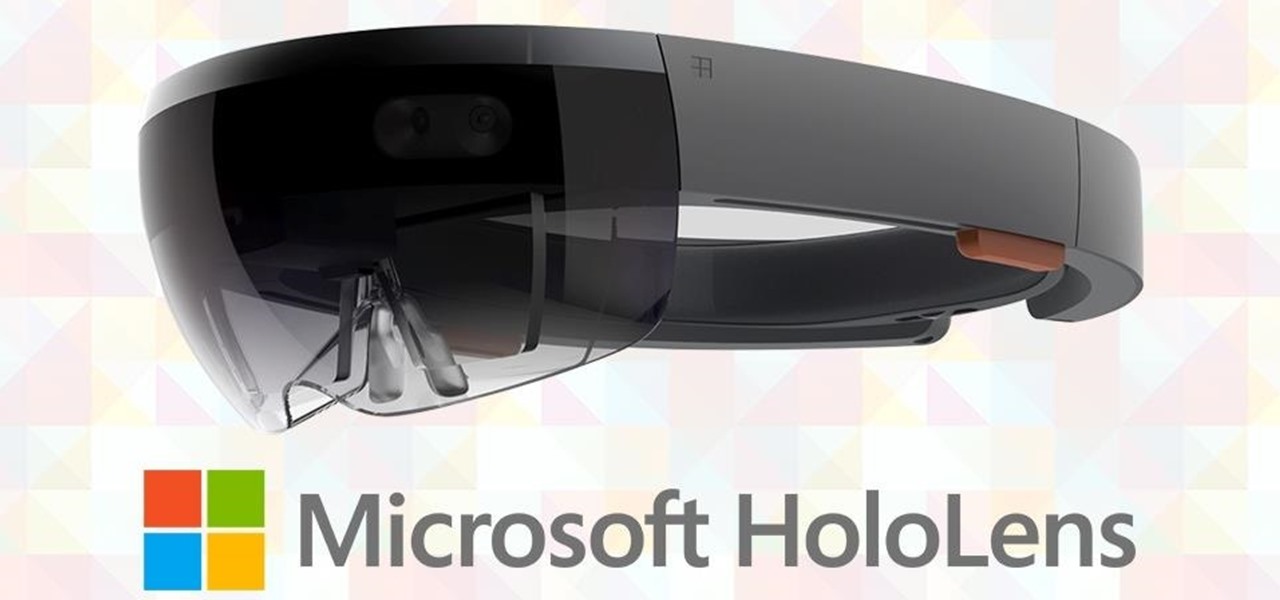
HoloLens’s role would not be limited to front line combat action. The military could also put the Microsoft’s HoloLens into the hands of Army doctors and members of the military not in combat.
Through the contract, Microsoft is expected to deliver 2,500 headsets to the Army within the first two years, and then show that they are moving forward to large scale production that would meet the requirements of the agreement.
There’s no information about when the U.S. Army would expect all 100,000 HoloLens devices from Microsoft.
Image Credit: Microsoft / IDF
The post U.S. Army To Receive 100,000 Microsoft HoloLens Headsets appeared first on VRScout.
from VRScout https://ift.tt/2BL6xbX
via IFTTT
HTC Considers ‘Shadow VR’ Their ‘Oculus Quest’ Competitor

A couple of weeks ago at an HTC event in San Francisco, CA I had the chance to talk with Dan O’Brien, General Manager at HTC. In addition to alluding to the company’s positive VR hardware sales, he also elaborated on the announcements surrounding the Vive Focus launch, the Vive Wave SDK, Viveport store, and specifically, their consumer-focused strategy for the budding standalone VR headset market.
The Vive Focus is a standalone VR headset with inside-out tracking (similar to Windows VR and Oculus Quest) that allows the user to walk around the room without cords, a PC, or even a smartphone powering it. It comes with a single 3DOF controller (which means you can rotate and move your wrist but can’t reach into the digital space like you can lean with your head) and is based on the Vive Wave SDK. There is a dev kit for two 6DOF Vive Focus controllers I got to try, but who knows how far off that is and it won’t be standard.
Interestingly, given the relatively premium price for Vive Focus (either $599 or $749 depending on the service package you purchase) it’s targeted specifically at the Enterprise market — not consumers.
“Right now, customers that will find [Vive Focus] valuable are typically early adopters that buy all the new tech, we’re fine with that, but the Wave SDK really enables us to talk to consumers with other hardware partners,” said O’Brien. “So Shadow Creator and Shadow VR, which is launching at a price point of $399, is a very consumer friendly price point. And with that, we have the ability to enter the mobile space at different price points with partners and not just putting the burden on ourselves.”
Naturally, as the discussion expanded and mentions another headset, powered by the Vive platform, at the same $399 price point as the upcoming Oculus Quest standalone, things got interesting. Clearly that’s their main competitor here, right?
“I haven’t [tried Quest], but I think it’s great for the community, it’s great for the VR industry, and I think we’re gonna learn a ton about price points and adoption levels,” said O’Brien. “We’re still talking about an early adopter consumer mix, we’re not at early mass yet. Products like Quest and some of the Wave platforms like Shadow VR will teach us a lot about those price points and adoption levels. We’re really focused on the products that we are delivering, like Focus, on giving a complete Enterprise solution and answering a lot of the problems we see out there.”
So it seems like a major piece of HTC’s strategy going forward, especially in the realm of standalone consumer VR, is partnerships with other hardware manufacturers that they can get to use the Wave SDK and access Viveport as their primary marketplace.
“The Wave SDK serves as two pieces: the backend for developers, to actually bring their content in and make it work with our standalone product, but it’s also the run time,” said O’Brien. “So we provide that run time to the hardware partners so that they can access that. The front-end is the actual store and the content distribution piece, so Viveport is the default store for all Vive Wave SDK hardware OEMs…We can’t go into the contractual details, but we are an open platform. We want to go work with other hardware partners that want to get into the space. But it’s not like just making one product and putting it into the market, you actually need a lot of content to support that.”
Tagged with: Oculus Quest, shadow vr, Vive Focus, vive wave, Viveport
The post HTC Considers ‘Shadow VR’ Their ‘Oculus Quest’ Competitor appeared first on UploadVR.
from UploadVR https://ift.tt/2FTCXVQ
via IFTTT
Spheres Review: Finding Poetry And Symphony In The Wonders Of The Universe

Spheres is an educational VR space app unlike any other. Whereas the likes of Star Chart and Titans of Space can enamor you with fantastical sights and plentiful facts, Spheres is the first VR app to truly embrace the awesome force of our universe and harness your headset to showcase it like never before. It does so in spectacular fashion, making it little wonder as to how it secured a seven-figure deal.
The Darren Aronofsky-produced experience consists of three episodes, each around 10 minutes in length. Every installment explores a particular phenomenon within our galaxy and beyond, from the warped machinations of a black hole to the birth of the planet we inhabit. Writer/Director Eliza McNitt finds a common thread to link these installments – sound. We watch magnetic fields soar past our ears, screeching as they go, and tap away at the beginnings of the universe as if it were a xylophone that’s had its bars scattered across the cosmos.
There’s a privileged beauty to experiencing it akin to hearing whale song for the first time. But it’s a visual feast, too, exposing the invisible workings of our galaxy in ways that are truly a sight to behold. Crucially, there’s interactivity at its heart. Spheres doesn’t just want you to watch, it wants to turn you into a celestial being capable of moving planets and toying with the very DNA of our universe. The blend of these three pillars — sight, sound and interaction — creates a 30-minute package that’s constantly astounding you in one way or another, like an interstellar playground that keeps on giving.
But it’s the second episode, narrated in measured whispers by Jessica Chastain (who only fuels the Interstellar comparisons we’ve already made), that’s the real standout. It’s a no-compromise journey into the center of a black hole with dizzying but extraordinary results. A light show like no other ensnares you as you find yourself in a hectic haze of gravity. Perhaps most tellingly, it’s an educational experience I won’t soon forget.
Spheres is VR’s equivalent to Planet Earth or Blue Planet, a high-production tour de force that will sweep you up in the majesty of the universe around us and leave you wide-eyed and overwhelmed. It’s one of the most competent showcases of how VR can truly give you an experience unlike anything else, and it’s not to be missed.
Final Say: Must See
Spheres is available now on Oculus Rift for $9.99.
Tagged with: Spheres
The post Spheres Review: Finding Poetry And Symphony In The Wonders Of The Universe appeared first on UploadVR.
from UploadVR https://ift.tt/2PeCcWO
via IFTTT
