Wednesday, 1 August 2018

Pixel Ripped 1989 Review: Highly-Concentrated Nostalgia Meets VR

https://ift.tt/2AyEdv0

Pixel Ripped 1989 Review: Highly-Concentrated Nostalgia Meets VR

I’m a sucker for clever subversion gimmicks. One of my all-time favorite video games is Spec Ops: The Line, a war game that makes you feel like a horrible person for killing people you were led to believe were the bad guys. Virtual Virtual Reality is an excellent, self-aware VR experience that I insist everyone give a shot. And now Pixel Ripped: 1989 takes everything you love about classic, retro gaming and makes your nostalgia look and feel tangible.

In Pixel Ripped you take on the role of Nicola, a second-grade student that’s just as nerdy and obsessed with video games as most kids back in the late 80s and early 90s. Throughout the adventure you play her Gear Kid handheld (essentially a Gameboy) in which you control Dot, an 8-bit-sized heroine in the same vein as Mega Man. The bad guy is trying to take over both the digital and physical (VR) world so it’s up to you to stop him once the dimensions begin to merge together. It’s a VR game within a game…within a game? Sort of?

Perhaps what I like most about Pixel Ripped, other than the ingenious premise and wonderfully nostalgic presentation, is just how consistently inventive it all is. From the opening moments that see you hurtling down a retro-futuristic stylized tunnel of sound and color to the small references to gaming’s past, present, and future, I was constantly surprised. Just when you start to think you’ve seen all the tricks it has in store for you, it throws another curve ball.

For example, Pixel Ripped starts out simply enough as a basic 2D sidescrolling platformer game. You move from left to right, shoot bullets at baddies, and jump over gaps. We’ve all done that before. But then it starts to flip that concept on its head as you collect pixels to slowly evolve and build up your character. Then the levels merge into the world around you as it becomes more than just a game within a game. Before long, it’s not even a platformer at all, as the retro characters and VR world meld together into something that’s so powerfully nostalgic it’s almost overwhelming.

The actual platforming bits are extremely well done, thankfully, as that is the bulk of the game. If you ever played any of the classic Mega Man NES games then you’ll know what to expect in terms of not just the controls, but the difficulty as well. You should expect to die a lot which is perfectly fine given the source material. It wouldn’t feel authentically retro if it wasn’t frustratingly difficult from time to time.

Some of the VR interactions could have used some work as well. For example, during some of the levels you’re sitting in class playing the Gear Kid under the desk secretly. If the teacher spots you then you run the risk of getting thrown into detention, which can be a real bummer. To avoid this you need to shoot spitballs at different items around the class to distract her. It works well, but actually shooting the spitball requires looking at it on your desk for a few seconds, waiting, then looking at something in the world, waiting, and then having it shoot automatically.

It feels like an awkward break in the otherwise smooth, immersive action. A quick toggle on the controller (in my case, Oculus Touch controllers) would have helped.

Since I was playing with Touch instead of a gamepad, each of the controllers were basically representing one of my character’s hands. Luckily Touch has the B and A buttons in the same placement as the Gear Kid (shown below) so it felt fine, although I did miss a trust d-pad. Analog sticks for 2D platformers never felt right to me.

Pixel Ripped has an excellently realized world that oozes personality. While sitting in class Nicola has gaming magazines, game cartridges, doodles, and branded backpacks strewn all over the place. When you pause the game a HUD pops out of her Power Glove-laden wrist to give you a list of options.

The music is a wonderful combination of chip tune stylings with a modern twist. For all intents and purposes, Pixel Ripped nails that feeling of having your nostalgia come to life. So it felt like a bit of a shame that the whole thing is only around five levels (with some unlockables and collectibles spread about) and can be finished in just around three hours, or maybe double that if you want to find every last hidden thing.

Final Score: 8.5/10 – Great

Pixel Ripped is a love letter to all things classic gaming. From the inventive melding of retro graphics with a modern VR game setting to the way it subverts medium stereotypes by putting you in the dress and shoes of a grade school girl with a trusty Gameboy, it’s hard not to smile while playing this nostalgia-fueled adventure. A few minor hiccups hold it back from truly transcending the medium as a whole, but anyone that has fond memories of video games from the 80s and 90s absolutely needs to check this one out.

Pixel Ripped: 1989 is out now on Steam for Rift, Vive, and Windows VR for $24.99 with a 20% launch window discount as well as on the PSN Store for PSVR for $24.99. Check out these official review guidelines to find out more about our process. 

Tagged with: ,

The post Pixel Ripped 1989 Review: Highly-Concentrated Nostalgia Meets VR appeared first on UploadVR.


from UploadVR https://ift.tt/2MavJvh
via IFTTT

How Survios crafted a creative music VR experience with Electronauts

https://ift.tt/2n3K2Hi

Electronauts is a music creation experience.
The founders at Survios are true believers in virtual reality, and they’ve poured a lot of effort into the hit VR games Raw Data and Sprint Vector. Now they’re switching from games to something more like an immersive music experience with Electronauts. The VR app will enable music fans to remix, compose, and perform their own music, rif…Read More

from VentureBeat https://ift.tt/2KiDopu
via IFTTT

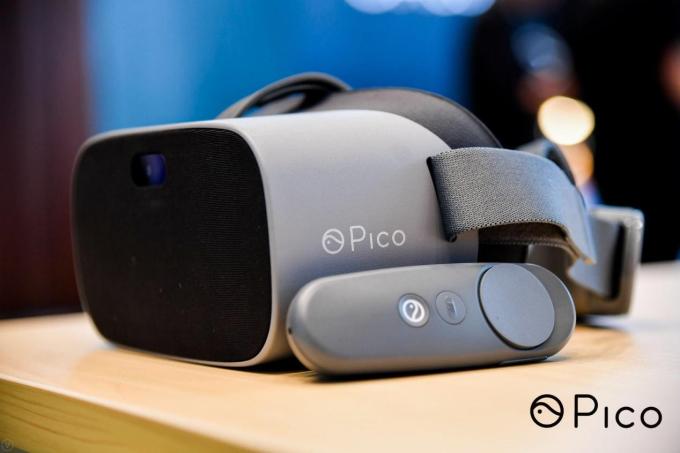
Pico nabs $24.7M to create VR hardware that challenges Facebook, Google

https://ift.tt/2M9GHRC

While there aren’t many VR hardware startups raising cash out there these days, there are far less that are securing investments to actually build the VR headsets themselves.

Even as established tech giants are having a rough go-ahead with the headset market, Beijing-based Pico Interactive is looking to give it a go with a focus on standalone VR headset hardware that can keep up with the innovations of larger firms.

Pico has closed a $24.7 million Series A led by GF Qianhe and GF Xinde Investment with participation from Jufeng S&T Venture Investment and others, the company said in an announcement. This is the startup’s first bout of outside funding since its founding in 2015.

VR hardware had plenty of entrants around Pico’s founding, but as Oculus competitors were forced to slash prices to keep up with aggressive pricing, margins disappeared leaving relatively scant space for startups. Pico has made its bet on moving past PC or console-based systems and focusing strongly on self-contained standalone headset options.

Coinciding with the funding announcement, Pico also offered details on a new standalone headset being released in China called the Pico G2, an updated version of the Pico Goblin that is built on Qualcomm’s 835 chipset. The company’s hardware runs on HTC’s Vive Wave VR platform.

The company also says that it is planning to release its own augmented reality hardware in 2019.


from TechCrunch https://ift.tt/2v8P5ul
via IFTTT

More VR Devs Are Looking To Rift For Next Project Instead Of Vive

https://ift.tt/2q7ATN4

More VR Devs Are Looking To Rift For Next Project Instead Of Vive

Every year XRDC (formerly known as VRDC) releases survey results from an “Innovation Report” that’s compiled with responses from over 600 professionals across the VR/AR/MR community. This year most of the survey results are about what you’d expect if you have even a passing interest in the VR/AR market, but there were a couple points that stood out as surprising or significant.

Both of the past two years (2016 and 2017) showed a clear trend: Vive was more popular than Rift with developers. In both years devs were mostly working on current Vive projects and had more plans to work on Vive again as opposed to Rift (or any other platform, for that matter) but now the tides are shifting.

When asked: “Which AR/VR/MR platforms will your next title be released on? (choose all that apply),” for the first time the majority of respondents selected Rift instead of Vive. Here are the 2017 (last year) and 2018 (this year) results side-by-side:

This shift is supported by other recent data, too. For starters, according to Steam hardware surveys as of early July, Rift has surpassed Vive in terms of current headset usage as well. When you consider that the Vive’s native VR platform is Steam, that’s even more surprising.

It’s also worth noting that last year’s results did prove true in that more devs are currently working on Vive projects (45.41%) than Rift projects (41.38%).

Also of note is the fact that over 40% of respondents indicated that their current VR/AR/MR projects are being funded by existing internal company funds, rather than outside investment. In fact, more developers reported dipping into personal funds (26.6%) than relying on angel investors (9.15%), clients (21.59%), crowdfunding (2.59%), external publishers (3.45%), or venture capital investments (8.46%).

According to the survey, 1 in 3 developers (about 32%) are working on a platform exclusive project (such as Marvel Powers United VR for Rift or Firewall: Zero Hour for PSVR) which is in line with last year’s response (31%). Considering the fact that 95% of all respondents believe in the long-term sustainability of VR/AR/MR, things are looking good for the health of the market and the confidence of its developers.

If you’re interested in reading the full survey, you can sign up for a copy from XRDC right here. Let us know what you think of these results down in the comments below!

Tagged with:

The post More VR Devs Are Looking To Rift For Next Project Instead Of Vive appeared first on UploadVR.


from UploadVR https://ift.tt/2vpRhwJ
via IFTTT

Dr. Splorchy Presents: Space Heroes Review – I’m A Field Of Grass Bro!

https://ift.tt/2v8jBEF

Dr. Splorchy Presents: Space Heroes Review – I’m A Field Of Grass Bro!

The older Accounting gets, the better I’m convinced it is. As VR gaming has doubled down on shooters and RPGs, Squanch Games’ eccentric debut (built in partnership with Crows Crows Crows) remains one of the few experiences to explore the truly weird and unpredictable side of the tech. That’s why I was so excited to learn Squanch would next be producing a series of smaller, experimental titles for Google Daydream, and why I just spent a lot of time trying to figure out what Dr. Splorchy Presents: Space Heroes really is.

Well, it’s just a wave shooter… I think?

Available now on Daydream, Space Heroes initially looks like it’s going to be another madcap journey through the weird and wonderful mind of Justin Roiland and co. And in some respects it is, but after two playthroughs I left underwhelmed.

Things start out strangely enough. You find yourself on a space station with your undeniably testicular-shaped brother, who teaches you the basics of wave-based combat and puzzle solving and spouts nonsensical one-liners at you (“I’m Clemon Lemons!”). Before long, though, you find yourself trapped in a reoccurring cycle of shootouts and trial-and-error challenges, all fuelled by those squeaky voices, angry expressions and stuttered dialogue that give Roiland’s characters life.

At first, it seems like Space Heroes might be some sort of rollercoaster choose your own adventure ride that evolves based on both your decisions and your mistakes. Puzzles, for example, usually have hilariously morbid consequences should you make a bad move, which is basically impossible not to do. Much like Accounting’s infamous knife scene, Space Heroes got the biggest rise out of me when my actions led to something completely unexpected.

It’s a shame, then, that about 10 minutes into the adventure, Space Heroes starts to funnel you down a set path.

Shooting soon becomes the only option, and Space Heroes becomes infinitely less interesting the moment that happens. Combat is punchy and efficient; you tilt your head from side-to-side to dodge incoming bullets and flick the Daydream controller up and down to reload. But it’s also almost redundantly easy and surprisingly shallow. There’s one area, about four times of enemies, a handful of powerups and even just a few levels. The entire thing can be seen through in less than an hour, in fact. The only thing separating it from the flood of other wave shooters out there is Roiland’s sense of humor, which does admittedly give the game a distinct identity.

Ultimately, though, I ended up feeling like I was just a real-life lab rat testing out a prototype for a deeper shooting game. The real shame is that there’s a lot here that suggests something deeper lies beneath the surface. In the opening minutes you communicate with your brother via nods and head shakes, but it’s the only time in the game you’ll do it. Between rounds, you’re asked a series of bizarre questions, but I couldn’t tell you what if any effect they were really having on the experience other than trying to get me to laugh. I deliberately tried to do everything differently on my second playthrough and the ending was nearly-identical.

There are times in which the game is practically begging you to defy it and, given Squanch’s legacy, you’d expect to be rewarded for doing so. Instead, you’re just fed a slightly different line before you get the same outcome as always.

I was constantly hoping that Space Heroes was about to descend into Accounting-style anarchy, that I was just missing the secret ingredient that unlocked a whole new world of possibilities, but in the end its characters and plot felt like a red herring. The reality is that it’s a nicely dressed wave shooter that kept a smile on my face over the course of 60 minutes, but came up short when I started to look deeper. Even if you wanted to replay it for the shooting alone, you’d have to sit through the same story segments to get to that specific section.

Final Score: 6/10 – Decent

I don’t know what Squanch and Google are planning for their future collaborations, and it’s quite possible that Dr. Splorchy is set to return, but I’d be lying if I didn’t say I was a little disappointed by Space Heroes. Though it initially looks like the game might be a sprawling selection of weird and wonderful possibilities, you’re eventually funneled into an entertaining if forgettable wave shooter and the number of choices you make throughout seem to have little effect on the end result. Hopefully this is just the foundation for bigger and better things to come.

Tagged with:

The post Dr. Splorchy Presents: Space Heroes Review – I’m A Field Of Grass Bro! appeared first on UploadVR.


from UploadVR https://ift.tt/2vsflPL
via IFTTT

Modders Are Bringing Wolfenstein 3D, Doom And Heretic To VR With Motion Controls

https://ift.tt/2AymOCE

Modders Are Bringing Wolfenstein 3D, Doom And Heretic To VR With Motion Controls

Both id Software’s Wolfenstein 3D and Doom were landmark achievements in 3D videogame design, truly putting players in the body of their virtual protagonist for the first time. It’s fitting that id’s John Carmack is currently continuing the journey he started decades ago at Oculus, then, but fans of these original games are also updating them to support VR too.

Last month the ongoing Doom VR mod saw an update that added support for one of the lesser-known games built using id’s engine, Heretic. Originally developed by Raven Software, Heretic trades massive guns and monsters for sorceries and, well, more monsters. It’s a little bit of a trip to get the game running in VR (full details are here), but if you do you can play through the entire original game using motion controls. What a time to be alive, eh?

You can see Doom running below:

And Heretic is here:

Not only that, but another modder is also working on a VR version of id’s other classic shooter, Wolfenstein 3D. Reddit user Brandalf-the-Green this week showcases their work on the first 10 levels of the game, which again includes motion controls (complete with updated gun models) and allows you to peek around corners using positional tracking. The developer plans to release the game on itch.io once a few more tweaks have been made.

Of course, id is now a part of Bethesda, which itself has already released a VR Doom game and is currently working on a VR spin-off for the Wolfenstein series too.

Bringing old school shooters into VR may seem like a strange thing to do, but this can actually be one of the most fascinating and enjoyable ways to experience VR — and express how far gaming has come — yet seen. In fact Bevan McKechnie’s Compound, a VR shooter that draws directly from early 90’s-era shooters, is arguably one of the best FPS titles in VR thanks to its classic design. What’s old really is new again.

Tagged with: , ,

The post Modders Are Bringing Wolfenstein 3D, Doom And Heretic To VR With Motion Controls appeared first on UploadVR.


from UploadVR https://ift.tt/2v4G3i4
via IFTTT

Pico Raises $24M Series A Funding, Goblin 2 Standalone Headset Announced

Related Posts Plugin for WordPress, Blogger...