
Tuesday, 24 February 2026

‘Evangelion’ VR Game Will Primarily Use Hand-tracking, Increasing Ease-of-use at Cost of Interaction Fidelity

https://ift.tt/Rd2gSOy

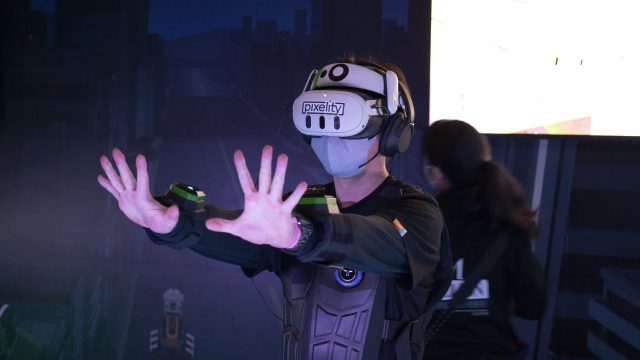
At the Neon Genesis Evangelion 30th Anniversary event in Tokyo this weekend, Pixelity showed off its upcoming XR game EVANGELION: Δ CROSS REFLECTIONS, revealing it’s going all-in on hand-tracking.

The News

On stage at the event, game director MK Choi gave a quick overview of the game, noting that Evangelion: Cross Reflections will feature “controller-free interaction, utilizing hand-tracking technology that allows players to perform all actions using only hand and finger movements.”

Demo booths were available on-site, giving a few lucky event-goers a first public hands-on with the game. We haven’t seen a full demo session in action yet, although X user ‘togepytogepi‘ showed off a bit of the hand-tracking-based interactions, seen in the videos below:

From the video, it appears the user is punching, shooting and selecting specific buffs that trigger quick-time events, requiring the user to punch a series of stars in order.

While the demo appears to focus on combat and less on story elements, X user ‘EVA_Armaros‘ also managed to capture what appears to be the game’s first official hype video:

Evangelion: Cross Reflections is slated arrive as a three-part series based on the story of all 26 episodes of the original anime, with the first instalment expected to arrive in 2026. The studio hasn’t detailed target platform yet, however it seems fairly clear we can count at least on the Quest platform.

There are set to be new characters however, as following Choi’s presentation, four voice actors portraying the game’s newly created characters took the stage: Gakuto Kajiwara as Martin Dason Holloway, Hana Hishikawa as Rimi Okada, Tasuku Hatanaka as Tomohito Yagi, and Manaka Iwami as Erisa Nozaki.

On stage, it was also announced that global hands-on events are scheduled to take place throughout the year leading up to release this year. We’ll be following the studio’s X profile for more information in the meantime.

My Take

Although Evangelion: Cross Reflections could include support for standard VR controllers, the decision to primarily rely on hand-tracking essentially signals that it’s targeting much casual gameplay.

At least from the limited gameplay we’ve seen—which rightfully might even be in-progress tutorial stuff—it’s suggesting that Evangelion fans should probably expect something more in the vein of a VR narrative experience, similar to what we saw with Mobile Suit Gundam: Silver Phantom.

Personally speaking, I honestly it’s going going to be as on-rails as Mobile Suit Gundam: Silver Phantom, which felt like it was straddling passive film and dulled gameplay stuff. For me, it ended up feeling more like an extended demo (or brand activation) than something that really tapped into the immersive possibility of having your own mecha fighting robot.

The post ‘Evangelion’ VR Game Will Primarily Use Hand-tracking, Increasing Ease-of-use at Cost of Interaction Fidelity appeared first on Road to VR.


from Road to VR https://ift.tt/DSOI9ks
via IFTTT

Monday, 23 February 2026

Meta’s ‘Horizon Plus’ Game Subscription Service Now Has Over 1M Active Members

https://ift.tt/hdluHWU

Meta announced that its Horizon+ game subscription service topped over one million active subscribers.

Reality Labs VP of Content Samantha Ryan revealed the figure in a developer blog post, noting the service now boasts a games catalog of over 100 titles in addition to its rotating dip of monthly games.

Popular titles include Ghosts of Tabor, Job Simulator, Red Matter, Red Matter 2, Cubism, Pistol Whip, Moss, Maestro, Into Black, Racket Club, Demeo Battles, and Asgard’s Wrath 2. You can see the full list here.

Notably, this is the first time Meta has revealed active subscriber numbers for Horizon+, which was previously known as ‘Quest+’ when it first launched in 2023.

Meta’s Q4 2025 earnings didn’t offer much granularity when it comes to Reality Labs revenue, however since Horizon+ costs $8 per month, or $60 per year, this could put its revenue somewhere between $60 – $96 million.

Granted, that’s provided the company isn’t actually counting users of its three-month trial period as ‘active’ members, an offer that automatically comes with purchase of any new Quest 3 and Quest 3S. It also assumes the one million subscriber figure was relatively stable throughout 2025, and didn’t see any dramatic spikes that would otherwise skew that estimation lower.

Additionally, Ryan notes Meta had “a tremendous holiday season that was on par with our 2024 results — all despite the fact that we didn’t launch any new devices for the year.”

Furthermore, Ryan says that total payment volume on the Quest platform remained similar year-over-year in 2025, with in-app purchases making a +13% increase.

The post Meta’s ‘Horizon Plus’ Game Subscription Service Now Has Over 1M Active Members appeared first on Road to VR.


from Road to VR https://ift.tt/T2VjUZA
via IFTTT

Meta Separates ‘Horizon Worlds’ from Quest, Going “almost exclusively mobile”

https://ift.tt/2nf5OYK

Meta announced it’s separating Horizon Worlds from the Quest platform, as the one-time social VR app is going “almost exclusively mobile” moving forward.

The News

“Our goal remains constant: to empower developers and creators as they build long-term, sustainable businesses,” said Samantha Ryan, VP of Content at Reality Labs. “We used to have a pretty well-defined audience for VR, but as we’ve grown, we’ve attracted new audiences—who want different things—and the onus is on us to make sure that each of these distinct groups can find the apps and games that appeal to them.”

Here, Ryan is referring to evolution of it userbase. In February 2025, the company announced that younger users were helping to push a new emphasis on free-to-play content.

Image courtesy Meta

“That’s why we’re changing our roadmaps to increase your chances for success. We’re explicitly separating our Quest VR platform from our Worlds platform in order to create more space for both products to grow,” Ryan said. “We’re doubling down on the VR developer ecosystem while shifting the focus of Worlds to be almost exclusively mobile. By breaking things down into two distinct platforms, we’ll be better able to clearly focus on each.”

This largely echoes statements made by Meta CTO Andrew Bosworth last month defending layoffs affecting 10 percent of its Reality Labs, wherein he explained that higher costs and a fractured development process led to the decision.

“Having to build everything twice—once for mobile and once for VR—is a tremendous tax on the team. You’d rather grow a giant audience and then work from a position of strength,” Bosworth said.

While Worlds promotion is being removed from Quest’s suggested content feed, at the time of this writing Horizon Worlds is still downloadable from the Horizon Store for Quest. It remains to be seen when Worlds will be decoupled entirely.

My Take

While Meta has never shared concurrent user numbers for Horizon Worlds, one of the key limiters in the beginning was undoubtedly the need for a Quest headset to play. It wasn’t available on anything else, which is fine when you have a addressable concurrent userbase in the multimillions—something even the most popular VR platform can’t claim at this point.

Notably, before Meta released on Android and iOS in late 2023, other social VR platforms had already made strides in the direction of bringing support to mobile, including class leaders VRChat and Rec Room. So, Meta followed suit, and quickly found out that kids with cellphones were spending more time and money in Horizon Worlds than Quest users.

And ultimately, some of this came down to control. Ostensibly hoping to avoid publicly-damaging controversy from the get-go, Meta initially kept a fairly tight leash on user-generated content, including complexity and visual richness of worlds. Even now, user avatars are fairly basic, with the pipeline of customization funneled to purchasable accessories rather than user-generated avatars, like you might see in VRChat.

That said, Horizon Worlds experienced a much slower and rockier start than Meta likely thought it would following its initial release on Quest in 2021. In retrospect, Meta’s more recent decision to mix user-generated Worlds with actual VR apps in the Store feed was probably a last ditch effort to get Quest users finally interested in Worlds—even if by accident.

The post Meta Separates ‘Horizon Worlds’ from Quest, Going “almost exclusively mobile” appeared first on Road to VR.


from Road to VR https://ift.tt/74lytTE
via IFTTT

Friday, 20 February 2026

Snap’s Top AR Exec Quits Ahead of Specs Consumer Debut

https://ift.tt/t1JZ2nk

Scott Myers, Snap’s top executive in charge of Specs, has left the company ahead of the planned release of its consumer AR glasses.

The News

Myers reportedly left his six-year tenure at the company due to a dispute with Snap CEO Evan Spiegel, tech outlet Sources claims, characterizing the dispute as a “blow-up” centered around the company’s strategy.

A Snap spokesperson confirmed Myers’ departure on Reddit, nothing that Specs are still on track for release this year:

“Scott Myers has decided to step down from his role at Snap. We thank him for his contributions and wish him the best in his next chapter. We can’t wait to bring Specs to the world later this year. We remain focused on disciplined execution and long term value creation for our developer partners, community and shareholders.”

Myers came to Snap in 2020 to oversee all aspects of Specs, including hardware, software, product and operations. He previously held senior positions at SpaceX, Apple, and Nokia, according to his LinkedIn profile.

Snap Spectacles (gen 5) | Image courtesy Snap Inc

This comes at a critical moment for Snap. In September 2025, Spiegel noted in an open letter that the company is heading into a make-or-break “crucible moment” in 2026, positioning Specs are an integral part of the company’s future.

“This moment isn’t just about survival. It’s about proving that a different way of building technology, one that deepens friendships and inspires creativity, can succeed in a world that often rewards the opposite,” Spiegel said.

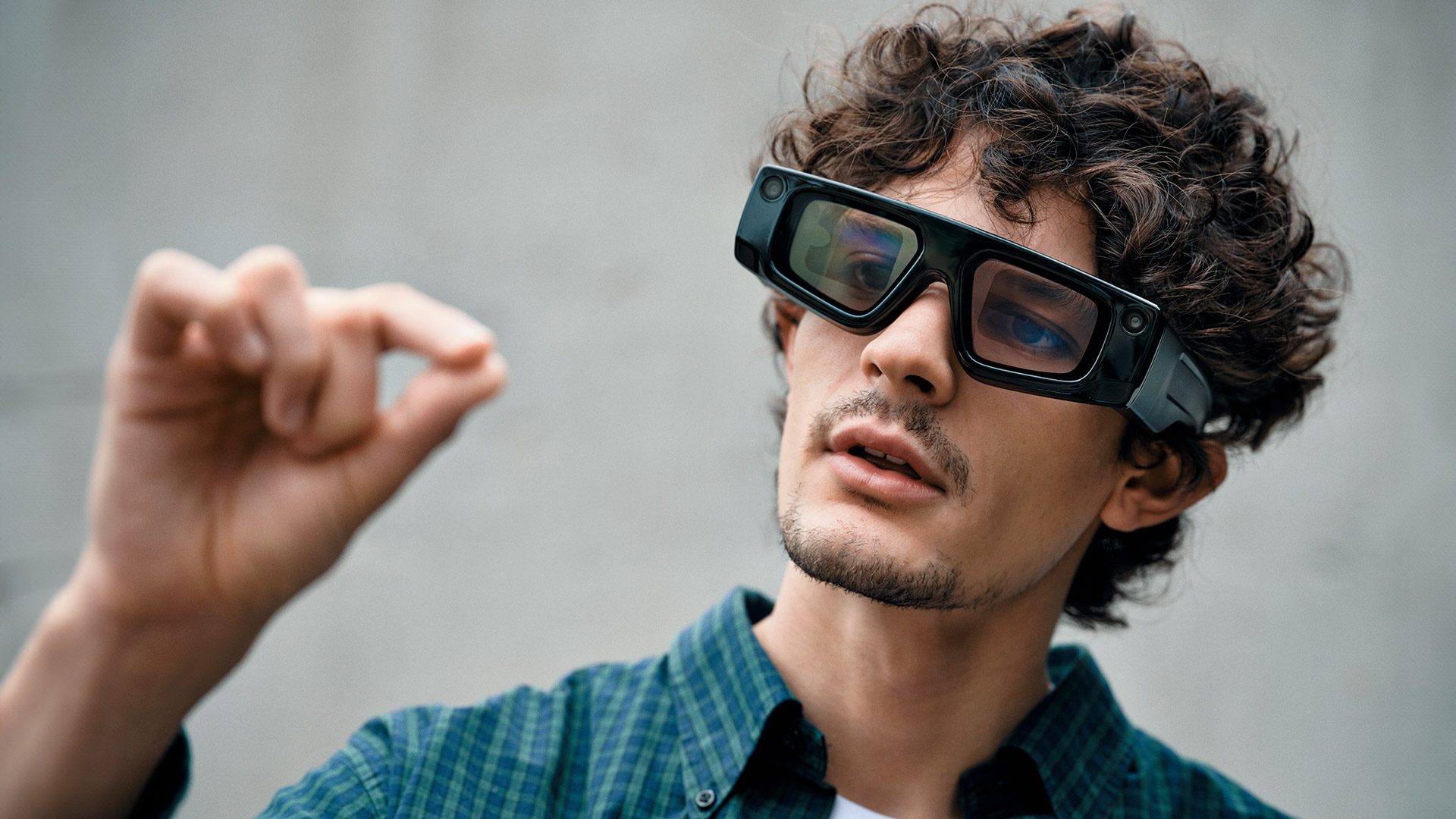
The consumer version of Specs is set to be the company’s sixth generation glasses following the release of its fifth-gen hardware in 2024. As ‘true’ AR glasses (re: not smart glasses like Meta Ray-Ban Display), the device is ostensibly set to frontrun some of Snap’s largest competitors.

My Take

It’s uncertain why Myers left Snap; the company even disputed the “blow-up” narrative with TechCrunch, providing no other reasoning, which makes Myers’ departure an even greater mystery—especially on the eve of the company’s big consumer AR glasses launch.

Speculatively speaking, there is at least one recent sign that could point to trouble brewing in the background. Myer’s departure follows a recent move by the company to form a wholly-owned subsidiary dedicated to Specs.

Snap says the so-called ‘Specs Inc’ subsidiary will primarily allow for “new partnerships and capital flexibility,” including the potential for minority investment. More concretely, Specs Inc also insolates Snap from any potential failure.

Whether that betrays a lack of confidence is unclear, although the top executive who oversaw the release of the fourth and fifth-gen versions—notably the only two with displays and AR capabilities—doesn’t smack of confidence.

The post Snap’s Top AR Exec Quits Ahead of Specs Consumer Debut appeared first on Road to VR.


from Road to VR https://ift.tt/8iIUwjz
via IFTTT

Thursday, 19 February 2026

Pico to Showcase VisionOS and Android XR Competitor at GDC Next Month

https://ift.tt/8Za5rSL

Pico announced that it’s showcasing the core OS and platform capabilities of its upcoming XR headset ‘Project Swan’ at next month’s Game Developers Conference (GDC).

The News

Project Swan is going to be Pico’s next flagship XR headset, the company says in its GDC session description, which is also slated to run PICO OS 6, the next version of the company’s Android-based operating system.

While the company hasn’t expressly said it will also reveal Project Swan’s hardware at GDC in March, Pico says it will provide “an overview of Project Swan’s graphics performance, multimodal interaction system, and developer toolchain, as well as practical guidance on bringing existing apps or games into spatial computing workflows,” which is set to include “concrete examples and live demos.”

Pico 4 Ultra | Image courtesy Pico Interactive

“This session introduces the core OS and platform capabilities that enable developers—from XR specialists to non-XR app, web, and game creators—to build or adapt content for this emerging medium,” Pico says. “It presents a new paradigm for spatial experiences in which games and apps coexist, allowing a primary experience to run alongside companion applications in a shared environment.”

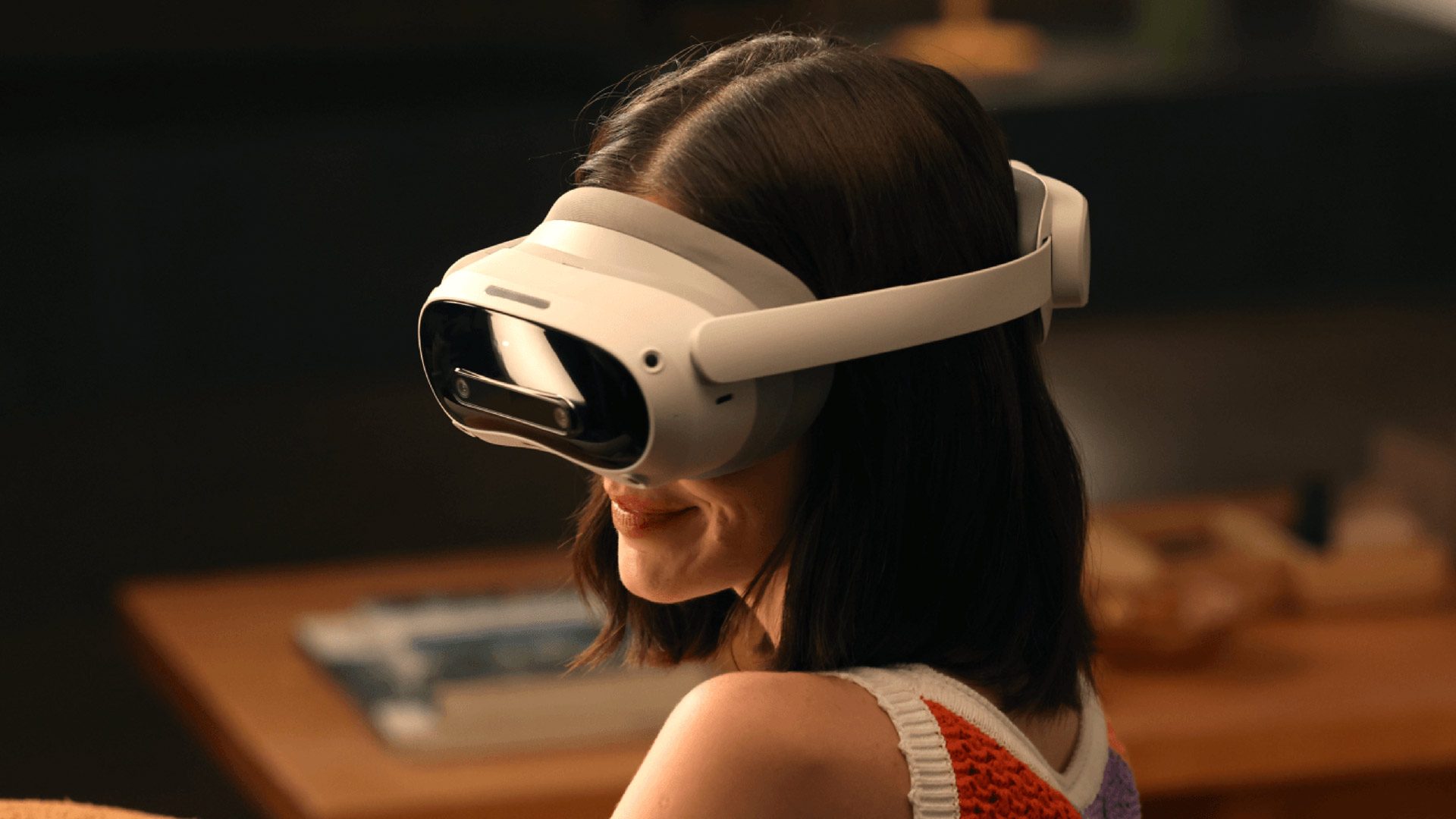
The Information initially reported last summer that Project Swan is set to be a slim and light headset weighing in at around 100 grams, which allegedly features a hybrid design that offloads processing to a tethered compute puck. Other reported features include hand and eye-tracking for input.

Then, in November 2025, Zhenyuan Yang, Vice President of Technology at Pico parent company ByteDance, revealed the headset will house a self-developed chip with a custom microOLED display, the latter of which is said to approach 4,000 PPI—slightly higher than that of Apple Vision Pro’s 3,386 PPI.

Furthermore, Yang said Pico’s microOLED displays reach an average 40 PPD (over 45 at center), and addresses brightness limitations by incorporating microlens (MLA) technology and optical compensation for uniform color and luminance.

We expect to learn more at GDC next month, which takes place March 9th – 13th at the Moscone Center in San Francisco, California.

My Take

Project Swan is slated to mark a significant next step for the company. Pico’s parent company ByteDance ostensibly isn’t throwing money at its XR division like it was before though, so it’s a new game.

Battle lines have shifted since Pico first launched its Pico 4 series headsets in 2022 though. Back then, Pico was nipping at Meta at its peripheral territories in East Asia and Europe, relying on its unique access to the Chinese market, and leaning heavily into enterprise. It also released Pico 4 Ultra in 2024, a direct competitor to Quest 3.

That same year, Apple released Vision Pro, priced at $3,500. A year later, it followed up with an M5-based hardware refresh at the same price point, while Google formally launched Android XR alongside Samsung’s Galaxy XR headset, priced at $1,800—moves that effectively reframed the competitive landscape.

Rather than racing to the bottom, companies are increasingly targeting the high end, as early expectations around mass-market consumer adoption seemed to have faltered, with Meta’s recent pullback from funding first-party Quest content possibly signaling a broader shift in how the industry approaches the consumer XR segment.

That said, I’d expect Project Swan to straddle the prosumer-enterprise segment, as the company’s next flagship probably won’t be cheap enough to make any grand overtures to consumers while simultaneously offering the very same consumer-oriented platform Pico built up over the years, which hosts a wide array of XR games and apps.

To me, this increasingly puts Pico more in competition with visionOS and Android XR, rather than as a direct competitor to Horizon OS. That said, Meta’s upcoming headset could possibly arrive next year, which is reportedly also a slim and light headset tethered to a compute puck, which may put all four—Apple, Google, Meta and Pico—in the same boat.

The post Pico to Showcase VisionOS and Android XR Competitor at GDC Next Month appeared first on Road to VR.


from Road to VR https://ift.tt/xnXYmjA
via IFTTT
Wednesday, 18 February 2026

Apple Reportedly Accelerates Smart Glasses Development Amid Wider Push for AI Hardware

https://ift.tt/ld8ASuH

Apple is reportedly accelerating the development of smart glasses, as the company is ostensibly making a shift toward AI-centric hardware.

According to a report from Bloomberg’s Mark Gurman, Apple is ramping up development of its forthcoming smart glasses, which are slated to head into production as early as December 2026, with public release expected sometime in 2027.

Apple’s smart glasses are being positioned to compete with Meta and EssilorLuxottica’s most recent smart glasses, the report maintains.

While this mostly echoes previous reports from last October, Apple appears to be accelerating development, having recently distributed a broader set of glasses prototypes within its hardware engineering division.

According to an all-hands meeting with employees earlier this month, CEO Tim Cook supposedly also hinted that Apple would be pushing hard into AI devices, noting that the company was working on new “categories of products” centered around AI.

“We’re extremely excited about that,” Cook said in the internal meeting, saying “[t]he world is changing fast.”

Citing people familiar with Apple’s plans, the smart glasses (allegedly codenamed ‘N50’) are said to include two cameras: a high-resolution camera for photos and video, and another dedicated to computer vision tasks. The high quality onboard cameras and overall build quality are expected to set it apart from competing products, the report maintains.

Array of Meta smart glasses | Image courtesy Brad Lynch

Similar to Meta’s audio-only smart glasses though, Apple’s N50 hardware isn’t expected to include a display of any kind, instead relying on cameras, speakers and microphones for things such as phone calls, AI queries, listening to music, and capturing images.

Apple allegedly floated the idea of partnering with eyewear brands—similar to Meta’s partnership with EssilorLuxottica or Google’s partnership with Warby Parker and Gentle Monster—the company seems to have more recently decided on developing in-house designs, which are said to arrive in a variety of sizes and colors.

“Early prototypes of the glasses connect via a cable to a standalone battery pack and an iPhone, but newer versions have the components embedded in the frame,” Bloomberg reports. “The design uses high-end materials, including acrylic elements intended to give the glasses a premium feel. Apple is already discussing launching the device in additional styles over time.”

This comes as Apple is investing more heavily in AI in effort to better compete with Google and OpenAI, which comes part and parcel with a critical redesign of Siri. The report also maintains Apple is working on an AI-powered pendant and AirPods with expanded AI capabilities—all three of which will rely on visual input.

Notably, the report maintains that all three will rely on connection to iPhone. Apple did not respond to Bloomberg’s request for comment.

The post Apple Reportedly Accelerates Smart Glasses Development Amid Wider Push for AI Hardware appeared first on Road to VR.


from Road to VR https://ift.tt/rifLeZN
via IFTTT

Tuesday, 17 February 2026

VisionOS Update Gives Devs Improved Tools for VR Cloud Streaming

https://ift.tt/oVQKT8G

Apple Vision Pro just got a new update that brings Foveated Streaming to the headset, essentially the same bandwidth-saving feature Valve is bringing to its upcoming Steam Frame headset.

The News

As noted by VR supply chain analyst Brad Lynch, foveated streaming has arrived on Vision Pro via the latest visionOS 26.4 beta update, which landed on February 16th.

Much like Valve’s foveated streaming solution for Steam Frame, Apple’s implementation uses Vision Pro’s eye-tracking to optimize the streamed image to serve up the highest quality at the very center of your view, according to recent Apple developer documentation.

If you have an existing virtual reality game, experience, or application built for desktop computers or a cloud server, you can stream it to Apple Vision Pro with the Foveated Streaming framework.

Foveated Streaming allows your endpoint to stream high quality content only where necessary based on information about the approximate region where the person is looking, ensuring performance.

Additionally, Apple notes that on Vision Pro, foveated streaming allows for a sort of hybrid approach to computing: you can display visionOS spatial content alongside streaming content, such as a flight simulator rendering a cockpit using RealityKit while processor-intensive landscapes are streamed from a remote computer to the device.

The key difference is the focus and implementation. Valve seems to be applying Foveated Rendering globally, meaning all Steam apps will benefit out of the box. Valve’s focus is also on local PC streaming, which is done via a direct Wi-Fi 6E connection.

Instead, Vision Pro apps and games need to be specifically integrated with Apple’s version of the technology, with Apple additionally supporting NVIDIA’s CloudXR SDK, which allows developers of existing VR apps created for desktop computers as well as cloud servers to stream to Vision Pro.

My Take

On the face of it, it looks like Apple is matching Valve punch-for-punch with foveated streaming, although I wouldn’t take this as Apple meaningfully looking to compete with the upcoming Steam Frame on the consumer end of things.

The $3,500 Vision Pro M5 refresh likely won’t come down in price anytime soon, and I don’t suspect Apple is trying to get a bunch of PC VR developers onboard to create consumer-facing versions of their apps that will need to be specifically integrated with Vision Pro foveated streaming.

If I were an enterprise user though, I would may be pretty interested in the new update, as this opens up one of the key features Steam Frame is bringing to the table.

Being able to push more compute-intensive apps to a headset they likely already own could stop some companies from justifying a Steam Frame(s) purchase, which Apple is all too happy to oblige—especially as the recent memory and storage crisis has seen components shoot up in price so dramatically, causing Valve to take reassess pricing and release date of Steam Frame.

The post VisionOS Update Gives Devs Improved Tools for VR Cloud Streaming appeared first on Road to VR.


from Road to VR https://ift.tt/AwckQZY
via IFTTT

SlimeVR Launches Crowdfunding Campaign for Thinner & Lighter Full-Body Trackers

https://ift.tt/3qof0eO

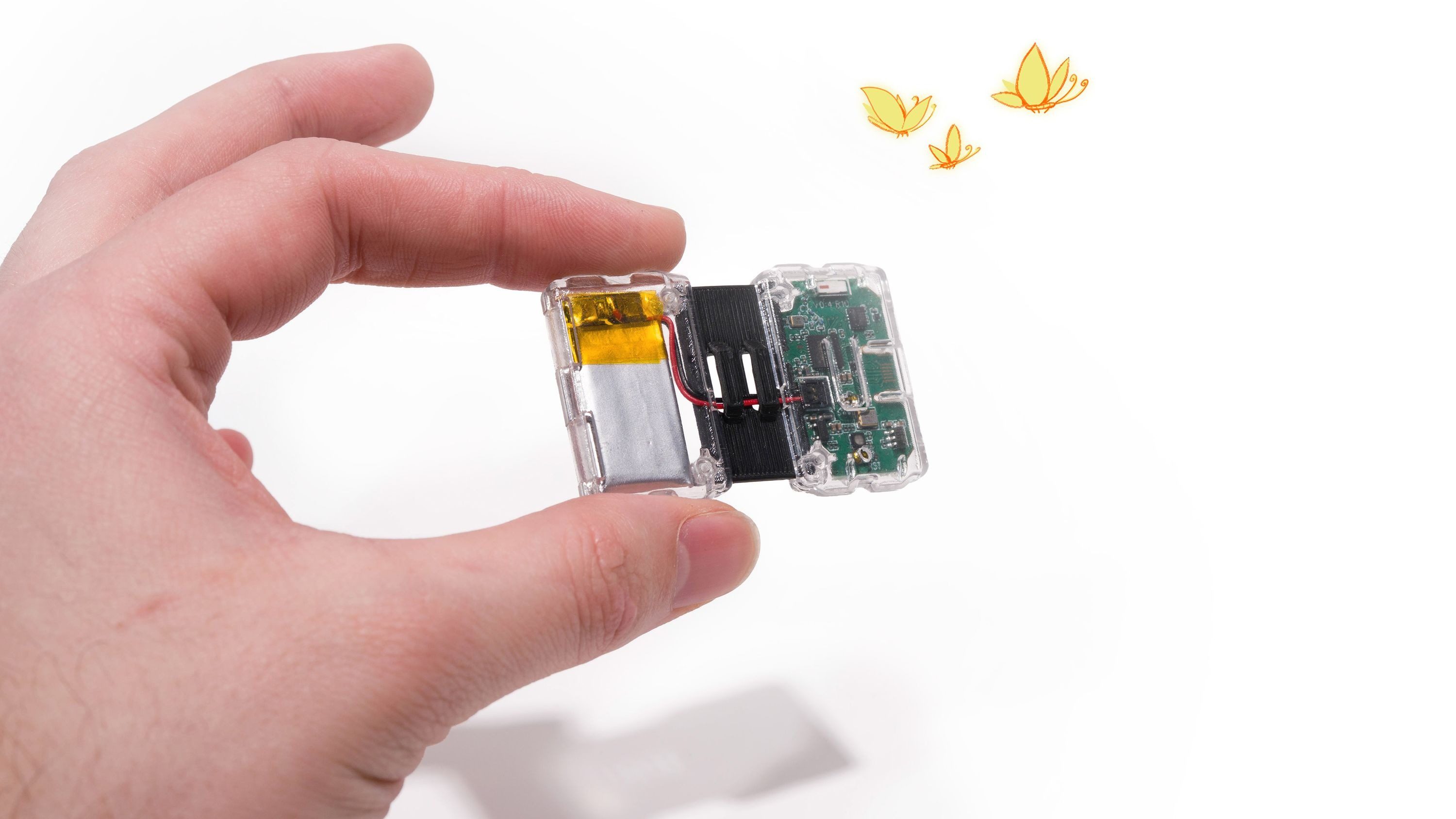
SlimeVR has launched its next crowdfunding campaign, this time looking to get backers excited about its next-gen ‘Butterfly’ body trackers, which promise to be thinner, lighter, and offer a longer-lasting battery.

SlimeVR’s crowdfunding campaign for the new Butterfly Trackers quickly crossed its $180,000 funding goal when it went live on February 9th, now sitting at over $347,000 from nearly 760 backers.

Much like the original SlimeVR Full-Body Tracker, which attracted more than $9 million in 2021, the IMU-based body tracking solution lets VR users better articulate their avatars without the need of base stations or external sensors of any type. It’s also handy for things like motion capture and VTubing.

Image courtesy SlimeVR

That said, Butterfly Trackers are built using the same tracking technology and the ICM-45686 IMU chip by TDK as the original, something SlimeVR notes also includes the same long drift reset times and tracking quality.

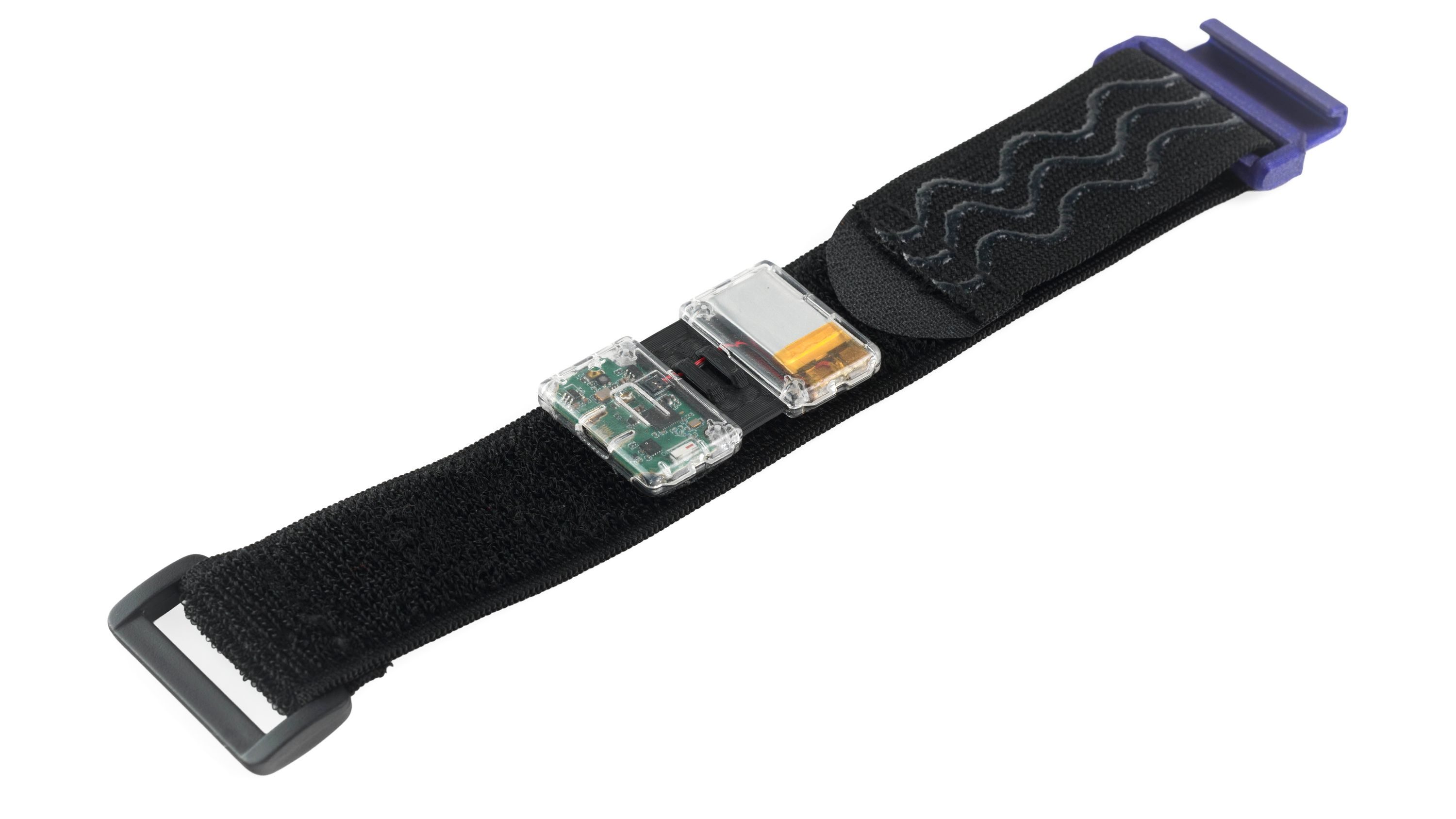
The key innovation however is the inclusion of a custom 2.4 GHz dongle instead of Wi-Fi, which essentially allows the trackers to be smaller, lighter, and have a longer battery life. SlimeVR estimates each tracker can last up to 48 hours on a single charge, which is more than double its original Full-Body Trackers.

And because they’re so thin and light, this also includes a few new methods of attachment, including directly via straps, clips, and even iron-on patches.

Image courtesy SlimeVR

Notably, all SlimeVR trackers are compatible with standalone headsets, including Meta Quest, Pico, or Steam Frame, as well as any headset that uses SteamVR.

The campaign’s lowest backer tier is the ‘Core Set Bundle’, which includes six Butterfly Trackers for $279, which are estimated to ship by Aug 31st, 2026. SlimeVR says the six-unit bundle is enough to track the position and rotation of your hip, knees, and chest, as well as the position (re: not rotation) of your feet.

You can check out the full specs list and additional funding tiers over on the SlimeVR Butterfly Tracker Crowd Supply campaign, which ends March 19th.

The post SlimeVR Launches Crowdfunding Campaign for Thinner & Lighter Full-Body Trackers appeared first on Road to VR.


from Road to VR https://ift.tt/UOutf94
via IFTTT
Monday, 16 February 2026

‘VRChat’ Breaks All-Time Concurrent User Record with Japanese Anime Concert

https://ift.tt/8rFud53

VRChat announced it just topped its all-time user peak, bringing in over 150,000 concurrent users to attend a Japanese language concert.

VRChat Community Head ‘Tupper’ confirmed on X that the social VR platform hit a new all-time high of 156,716 concurrent users over the weekend.

The platform played host to Sanrio Virtual Festival, a music and anime culture festival taking place from February 8th to March 8th, although it was the main act that drew in glut of the fans though—a musical performance by Kaguya, the main character from Netflix anime series Cosmic Princess Kaguya! 

You can check out a clip of the concert below, courtesy YouTuber ‘Koge’s Game Streaming Channel’ (こげのゲーム配信ちゃんねる):

If you want to catch the act ‘live’ in VRChat, you’ll have three more occasions. Bookmark this link when it’s time:

  • Sunday, March 1st 18:00 [JST]
  • March 7th (Sat) 12:00 [JST]
  • Sunday, March 8th 12:00 [JST]

Notably, the month-long festival will include performances from a host of VTubers and musical groups, and also includes a virtual theme park featuring Sanrio characters such as Hello Kitty.

This follows VRChat’s most recent record-breaking event, which took place during the recent New Year’s Eve celebration. Then, the platform welcomed in a peak of 148,886 concurrent users during the Central Time Zone ball drop.

While we don’t know the specific numbers for how the Japan time zone fared during the NYE ball drop, at the time Tupper said Japan-based users had “a strong showing,” noting the number “did surprise me.”

VRChat has long been a popular platform in Japan, however lately it seems to have broken through to mainstream Japanese culture. In June 2025, McDonald’s Japan opened an official VRChat world, which came as part of a larger marketing campaign involving popular VTubers.

The post ‘VRChat’ Breaks All-Time Concurrent User Record with Japanese Anime Concert appeared first on Road to VR.


from Road to VR https://ift.tt/5n0Q4RS
via IFTTT

Friday, 13 February 2026

Vision Pro Finally Gets Native ‘YouTube’ App with Full Immersive Video Library

https://ift.tt/OJc7Bhm

Vision Pro users have been waiting over two years for a native YouTube app. Now, it’s finally here—thankfully also including support for immersive videos.

The News

Google first announced that a YouTube app was “on the road map” shortly after Vision Pro’s February 2024 launch, although it never gave a specific release window, leaving users searching for alternatives beyond simply opening YouTube in Safari, which notably didn’t include native support for spatial video.

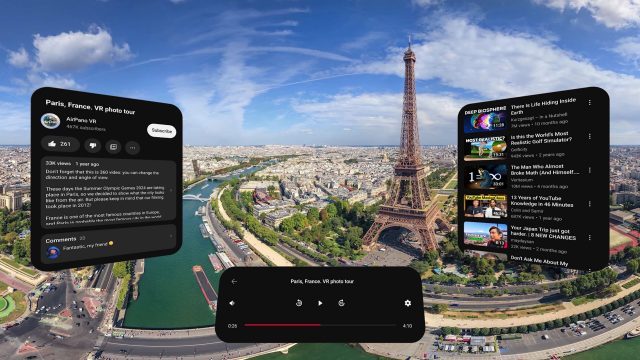
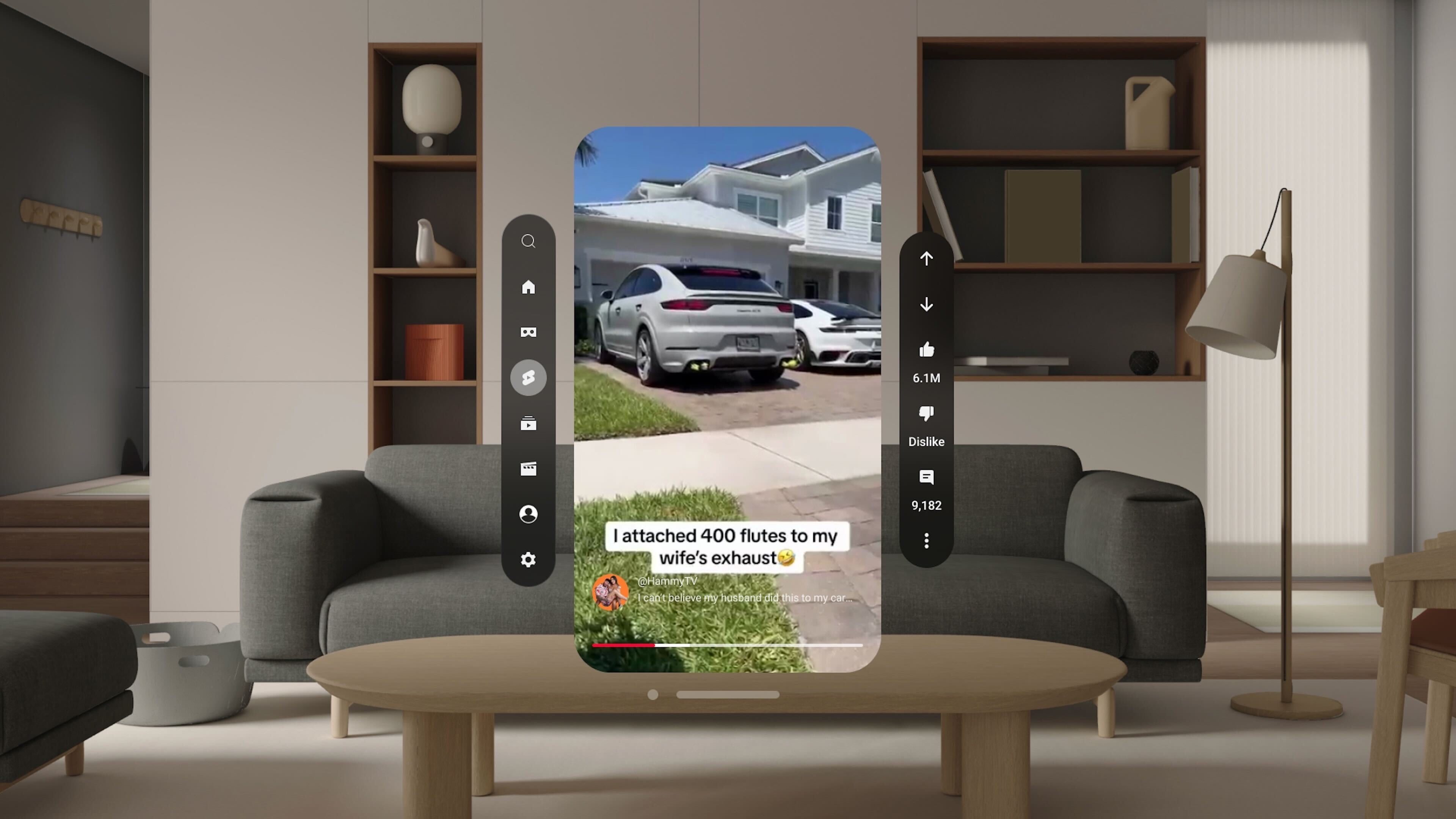
The official YouTube app, which is now available on the App Store, now gives Vision Pro users access to every YouTube video and Short, which includes access to all of the regular YouTube features, such as subscriptions, playlists, and watch history.

Image courtesy Apple, Google

What’s more, the official YouTube app also comes with support for viewing spatial videos, which including all 3D, VR180, and 360 videos on the platform. Vision Pro users can find them by navigating to the app’s dedicated ‘Spatial’ tab.

Additionally, Google maintains YouTube for Vision Pro also includes video playback up to 8K for the M5 version, which was released last October.

My Take

There’s no official explanation out there (yet), although there are probably a few reasons why YouTube didn’t come to Vision Pro up until now.

The most obvious to me: Apple’s $3,500 XR headset likely presented a limited return on investment for Google, which may or may not have been influenced by the companies’ historical platform rivalry. Notably, there is still no Gmail, Chrome, Docs, Drive, Photos, Maps—no Google-owned app on Vision Pro except YouTube right now.

That said, YouTube did make a spatial version of its app for Android XR, which was released with Samsung Galaxy XR last October. The relative timing makes me think the release on Vision Pro was more of a knock-on effect of having already built than leadership at YouTube specifically determining that now would finally be profitable, as I don’t suspect the M5 hardware refresh has significantly driven additional consumer interest.

Whatever the case, YouTube has now found itself on the hook for maintaining the app across three distinct XR platforms: Android XR, visionOS and Horizon OS.

The post Vision Pro Finally Gets Native ‘YouTube’ App with Full Immersive Video Library appeared first on Road to VR.


from Road to VR https://ift.tt/9ojfJHP
via IFTTT

Thursday, 12 February 2026

Meta Sold Over 7 Million Smart Glasses Last Year, Effectively Tripling Sales in 2025 Alone

https://ift.tt/ACSH4ev

EssilorLuxottica reported its Q4 2025 financial results, revealing the company sold over seven million smart glasses last year.

The French-Italian eyewear conglomerate has been making smart glasses in partnership with Meta since the launch of the original Ray-Ban Stories in 2021.

Now, in its fourth-quarter results, EssilorLuxottica revealed it sold over seven million smart glasses last year—more than tripling sales since last reported.

In February 2025, the company announced it had sold two million Ray-Ban (Gen 1) smart glasses since release in late 2023.

Image courtesy Brad Lynch

It’s no wonder 2025 was a landmark year for the company though. Alongside Meta, EssilorLuxottica not only released a hardware refresh of its popular Ray-Ban Meta glasses, but also Oakley Meta HSTN, Oakley Meta Vanguard, and the $800 Meta Ray-Ban Display glasses—the company’s first smart glasses to include a heads-up display.

In addition to its smart glasses efforts, EssilorLuxottica maintains that 2025 marked a further acceleration in its “evolution from an optical company into a leading medtech and big-data group,” owing to growth across both its Nuance Audio hearing-aid glasses and AI-driven healthcare platform.

While Meta and EssilorLuxottica are current market leaders in smart glasses, the XR wearables race has really only just begun. As it appears today, companies largely see smart glasses as a first step towards creating all-day AR glasses of the near future, with  potential contenders including Google, Samsung and reportedly also Apple.

The post Meta Sold Over 7 Million Smart Glasses Last Year, Effectively Tripling Sales in 2025 Alone appeared first on Road to VR.


from Road to VR https://ift.tt/pNZ2rXY
via IFTTT
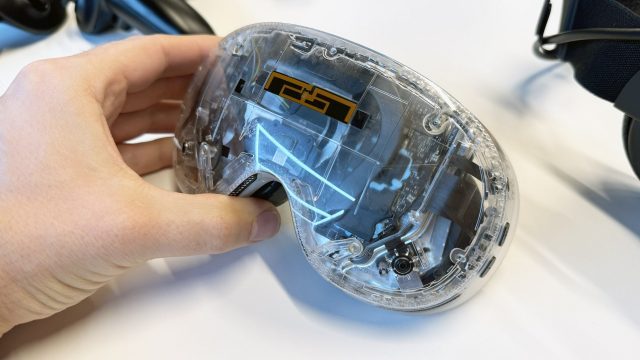
‘Battlefield’-like VR Shooter ‘Forefront’ is Coming to PSVR 2 with Cross-Play

https://ift.tt/hHdsk28

Triangle Factory announced that its Battlefield-inspired VR shooter Forefront is finally coming to PSVR 2.

There’s no release date yet beyond the studio’s initial announcement, however Triangle Factory has confirmed that when it does, the 32-player shooter will “support cross play with other VR platforms.”

Created by the same studio behind Breachers (2023) and Hyper Dash (2021), Forefront serves up an experience that should be pretty familiar to fans of the Battlefield series.

Boasting an expansive, semi-destructible environments, 16v16 battles include the ability to pilot everything from helicopters, tanks, humvees and boats as you push objectives.

Currently, Forefront is available in early access across all other major VR headsets, including Quest, SteamVR, and Pico headsets. And it’s done very well for itself in the last three months since it launched into early access.

We’ll be keeping an eye out for official release dates, but in the meantime you can wishlist Forefront over on the PlayStation Store for PSVR 2.

The post ‘Battlefield’-like VR Shooter ‘Forefront’ is Coming to PSVR 2 with Cross-Play appeared first on Road to VR.


from Road to VR https://ift.tt/jhIpz8U
via IFTTT

Wednesday, 11 February 2026

‘Star Citizen’ VR Support Isn’t Prime Time Yet, But It’s Getting There

https://ift.tt/cigDvyp

Cloud Imperium Games (CIG) added experimental PC VR support to Star Citizen late last year, taking a first step in fulfilling a more than decade-old promise. Things are getting increasingly serious though after the release of its second post-VR update.

Update Alpha 4.5 initially brought a VR theater and full VR mode to the game in December, which lets users play the bulk of the game in PC VR headsets for the first time, including walking, flying, EVA, combat, and using menus.

Granted, it’s still a (very) experimental mode, which initially required some users to even add VR config lines to the game’s directory to get it working, done in addition to keeping track of keybinds to cycle through VR modes on the fly.

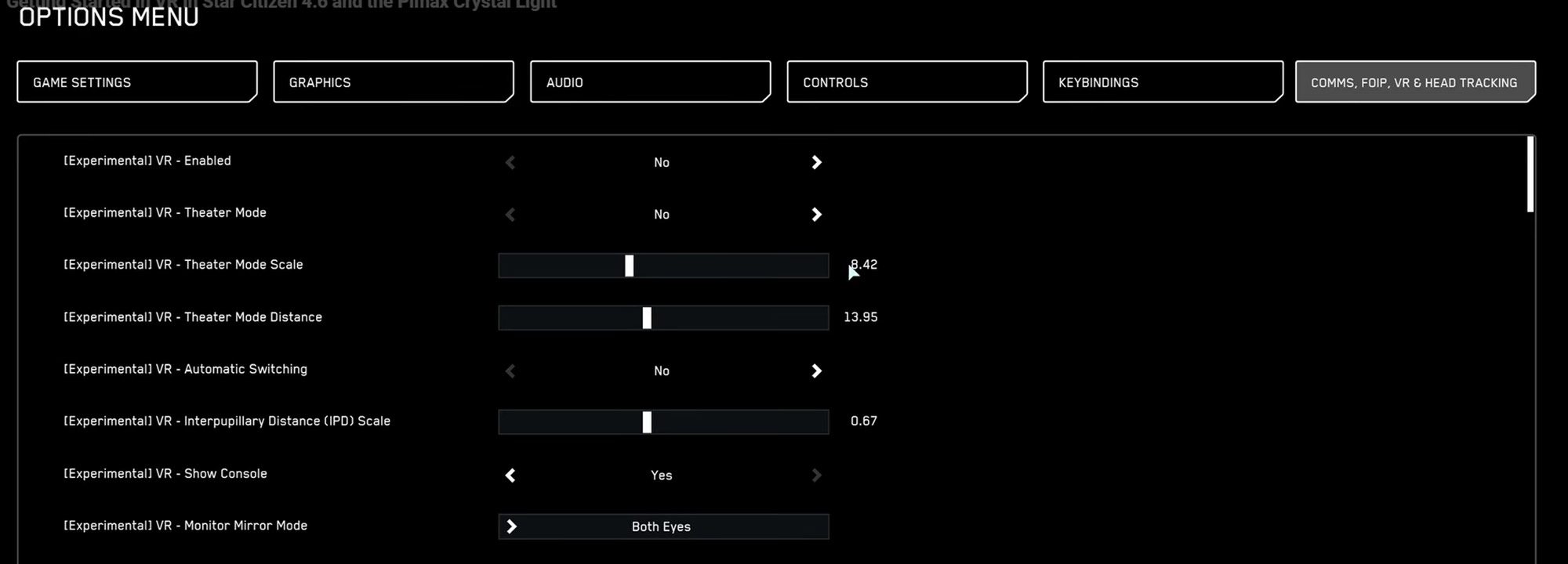
Now the studio has released Star Citizen 4.6, adding for the first time an official VR option in the settings menu, making managing and enabling VR mode at startup a much easier affair.

Image courtesy Ray’s Guide

Although 4.6 doesn’t radically expand VR features, it’s certainly a vote of confidence that VR support is not only still on track, but moving closer to the core of the game. Still, it’s polished a number of usability issues, such as better menus and a smoother overall experience.

That said, as mentioned in a recent ‘Ray’s Guide’ video, players still need to carefully tune OpenXR settings, upscaling options, and in-game VR stuff, such as UI scale, distance, and IPD alignment just to get comfortable results. Users also typically need to switch between full VR and theater mode constantly for inventory and kiosk interactions, which is a definite immersion breaker.

That, and it doesn’t include VR motion controller support yet, making control remapping almost mandatory at this point, with many users relying on a mix of controllers, keyboards, HOTAS, and voice command software to manage the game’s enormous number of bindings.

As Silvan-CIG says in the 4.5 update announce in December though, all of its done in the spirit of open development.

“This is not our full VR launch. When that day arrives, we will make plenty of noise about it. What we are rolling out today is an opportunity for some early hands-on time, very much in the spirit of Open Development, so you can jump in, see how things are shaping up, and help guide what comes next.”

That said, creating a VR-native out of a Star Citizen is a tall order. Looking ahead, CIG’s biggest challenges will probably be centered around balancing those ambitions with the rest of the game’s development, which is constantly growing in scope and graphical complexity.

The post ‘Star Citizen’ VR Support Isn’t Prime Time Yet, But It’s Getting There appeared first on Road to VR.


from Road to VR https://ift.tt/ILOmYub
via IFTTT

Tuesday, 10 February 2026

Ray-Ban Smart Glasses Get Massive Utility Boost with Cool (but risky) ClawdBot Hack

https://ift.tt/q5xG4dS

If you’re comfortable mucking around with a new open source project, you could be shopping on Amazon just by looking at an object with your Ray-Ban Meta smart glasses.

Ray-Ban Meta smart glasses are pretty useful out of the box, offering photo & video capture, calls, music playback, and your standard assortment of AI chatbot stuff. They don’t have an app store though, which means you’re basically stuck with a handful of curated services.

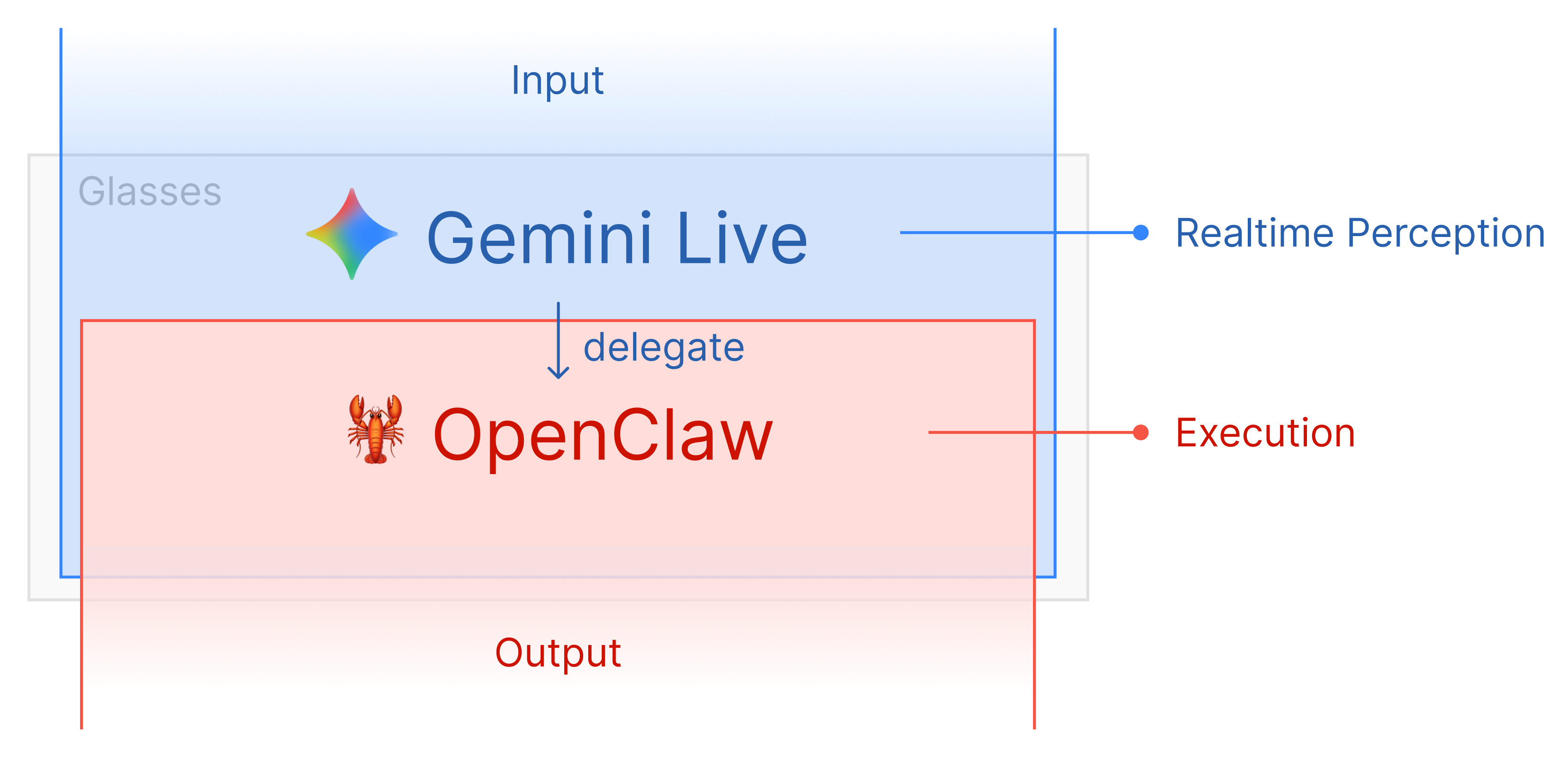
Now, indie developer Sean Liu released an open-source project called VisionClaw that links Ray-Ban Meta smart glasses with OpenClaw (aka ClawdBot), essentially giving the autonomous AI agent eyes and ears.

Check out VisionClaw in action below, courtesy Liu:

OpenClaw isn’t an AI model like ChatGPT or Google Gemini though. It’s an agentic layer—essentially a complex messaging layer built on top of an AI model that interacts with services on your behalf, like sending emails, managing shopping lists, or controlling smart home devices—just three of the 56+ tools OpenClaw can integrate with right now.

Basically, it works like this: VisionClaw uses Gemini Live for real-time voice and computer vision, which can do things like describe what you’re seeing and answer questions—basically the same sort of tasks you can do with the glasses’ native Meta AI.

Image courtesy Sean Liu

But once you want to actually interact with an app or service—like when you want to send a message over email or your favorite non-Meta messaging app like Signal or Telegram—Gemini Live hands off the request to OpenClaw, which takes action.

Users looking to run VisionClaw will need an iPhone, as Liu’s codebase is written as an Xcode/Swift app that specifically uses Meta’s Wearables Device Access Toolkit (DAT) for iOS to connect the phone to Ray-Ban Meta glasses.

Beyond that, you’ll also need a fair understanding of the risks involved with running OpenClaw on your personal hardware.

While it can do some pretty amazing things, it’s a third-party bit of software that could require you to input passwords, API keys, and personal information, which can open the user up to malicious actors. Notably, OpenClaw’s skill integrations could be written by anyone, so users need to be especially vigilant.

The post Ray-Ban Smart Glasses Get Massive Utility Boost with Cool (but risky) ClawdBot Hack appeared first on Road to VR.


from Road to VR https://ift.tt/Ayv1sg4
via IFTTT

Friday, 6 February 2026

Studio Behind VR’s Most Popular Golf Game Aims to Solve a Key Challenge with Golf Training Sims

https://ift.tt/ChtAUTn

The studio behind GOLF+ (2020) is aiming to expand the game this year in a bid to solve some of the most persistent problems in off-course golfing simulators: building real-world muscle memory in a virtual environment.

Golf+ CEO Ryan Engle announced that the studio’s popular golf sim is getting “major product updates” this year, which is set to include a new social lobby, UI improvements, and over a dozen new courses.

In addition, Engle showed off a fresh look at a mixed reality mode which ostensibly tracks real-world golf balls and clubs so players can work on driving, iron play and putting in a Sim Golf environment.

Check it out in action below:

Traditional golf simulators use large 2D impact screens and sensors to measure ball speed and direction. While they’re generally considered effective for practicing full swings and driving, they tend to be less reliable at the slower ball speeds used in putting and short-game shots.

Worse yet, these sorts of simulator screens lack parallax, as courses are projected at a fixed viewpoint. Looping in a mixed reality setup though could allow golfers to not only build muscle memory with a real ball and club, but have the benefit of golfing in a more realistic environment.

It’s unsure whether the studio intends on releasing the mixed reality implementation as an update to the current game, or releasing a separate version for location based golf sims.

Engle says however we should expect Golf+ on more platforms in the near future. Although it’s currently only available on Quest, the studio shared plans to expand the game to PC VR headsets.

Additionally, the studio says it’s exploring flatscreen PC gameplay, as well as offering a “unified experience with shared physics, multiplayer, and cross-play across all platforms.”

The post Studio Behind VR’s Most Popular Golf Game Aims to Solve a Key Challenge with Golf Training Sims appeared first on Road to VR.


from Road to VR https://ift.tt/HtC1GVI
via IFTTT

Thursday, 5 February 2026

Valve Reconsiders Steam Frame Price & Release Date Amid RAM & Storage Shortage

https://ift.tt/O4SX6v1

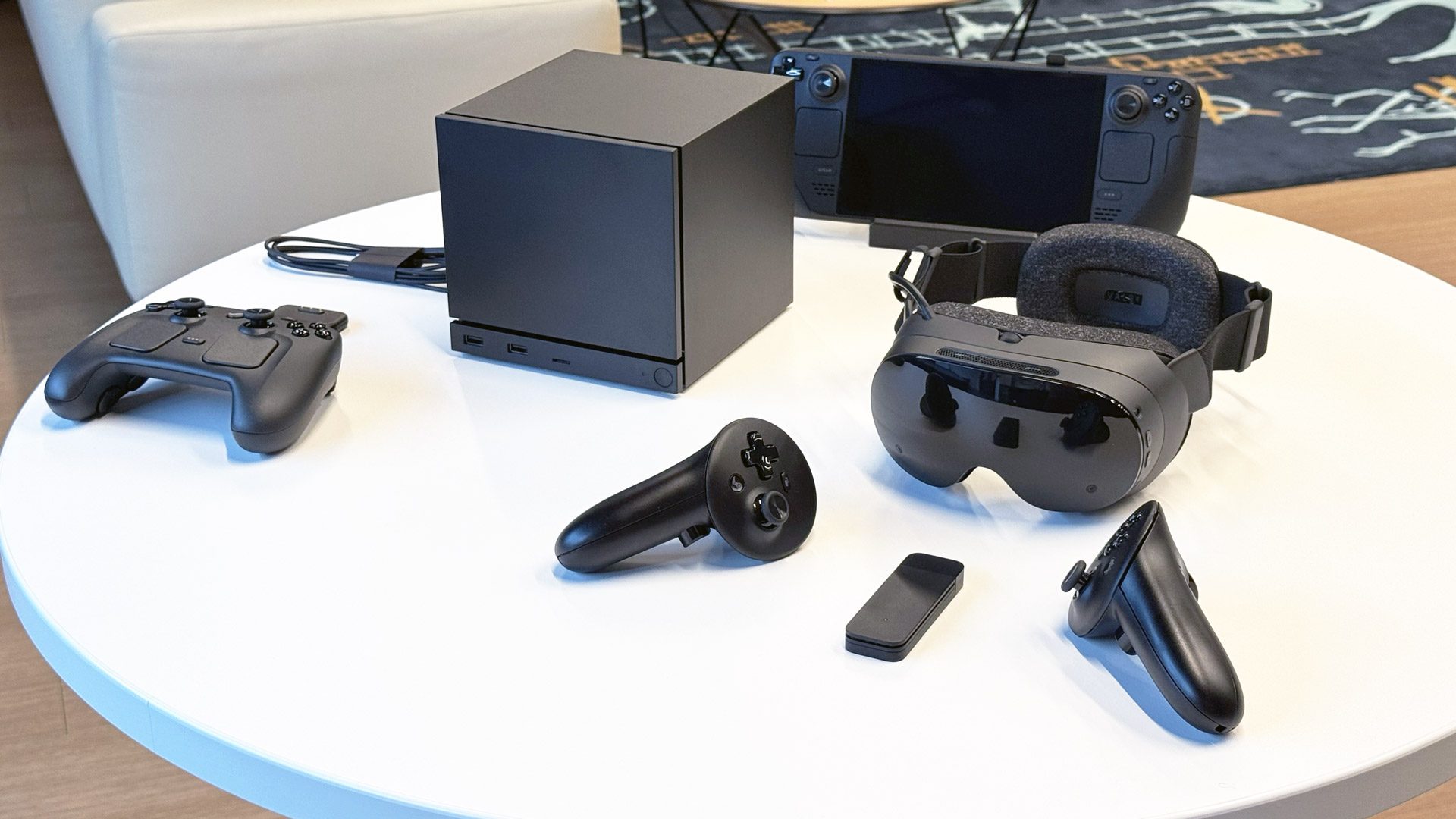
Steam Frame is still shipping sometime in the first half of 2026, although now Valve says the current component shortage has led the company to revise both price and release date of the standalone VR headset.

Valve announced in a hardware news update that Steam Frame, Steam Machine, and Steam Controller are all being affected by the component shortage.

“When we announced these products in November, we planned on being able to share specific pricing and launch dates by now,” Valve says. “But the memory and storage shortages you’ve likely heard about across the industry have rapidly increased since then.”

Photo by Road to VR

Due to a surge in demand from AI and data centers, RAM and storage prices have increased significantly since this time last year, with PCPartPicker data charting a 300 percent price increase in DDR5 RAM alone.

As component availability dwindles and prices rise, Valve says it “must revisit […] exact shipping schedule and pricing,” noting that both Steam Machine and Steam Frame have especially been affected.

Still, Valve says that its hoping to ship all three products in the first half of the year—ostensibly releasing sometime before July 1st.

Valve told Road to VR in November that it expects the price of Steam Frame to be ‘cheaper than Index’, although the company didn’t qualify pricing further than that. At its 2019 launch, a Valve Index ‘full kit’ was priced at $1,000 (headset, controllers, SteamVR trackers), while the headset alone was priced at $500.

While Valve hasn’t commented on what Steam Machine will cost, it confirmed with YouTuber ‘Skill Up’ back in November the PC won’t be subsidized like a console.

Price estimations are fairly scattered at this point. Linus Tech Tips has suggested the lowest configuration could fetch somewhere around $700, based on a custom PC built on comparable parts.

In early January, Czech retailer Alza may have leaked Steam Machine’s pricing, with the  512GB model priced around $950 USD and the 2TB model at $1,070 USD.

Looking for more Steam Frame news?

Valve Unveils Steam Frame VR headset to Make Your Entire Steam Library Portable: Valve shows off Steam Frame, the standalone headset that can stream and natively play your entire Steam library—with only a few caveats right now.

Hands-on: Steam Frame Reveals Valve’s Modern Vision for VR and Growing Hardware Ambitions: We go hands-on with Valve’s latest and greatest VR headset yet.

Valve Says No New First-party VR Game is in Development: Valve launched Half-Life: Alyx (2020) a few months after releasing Index, but no such luck for first-party content on Steam Frame.

Valve is Open to Bringing SteamOS to Third-party VR Headsets: Steam Frame is the first VR headset to run SteamOS, but it may not be the last.

Valve Plans to Offer Steam Frame Dev Kits to VR Developers: Steam Frame isn’t here yet; Valve says it needs more time with developers first so they can optimize their PC VR games.

Valve Announces SteamOS Console and New Steam Controller, Designed with Steam Frame Headset in Mind: Find out why Valve’s new SteamOS-running Console and controller will work seamlessly with Steam Frame.

Steam Frame vs. Quest 3 Specs: Better Streaming, Power & Hackability: Quest 3 can do a lot, but can it go toe-to-toe with Steam Frame?

Steam Frame vs. Valve Index Specs: Wireless VR Gameplay That’s Generations Ahead : Valve Index used to be the go-to PC VR headset, but the times have changed.

The post Valve Reconsiders Steam Frame Price & Release Date Amid RAM & Storage Shortage appeared first on Road to VR.


from Road to VR https://ift.tt/5Exc3OH
via IFTTT

Wednesday, 4 February 2026

Quest Update Brings New ‘Surface Keyboard’ Feature, UI Changes & More

https://ift.tt/jrAflak

Meta released a new update for Quest that brings a host of new features, including a new ‘Surface Keyboard’ that lets you type on any flat surface.

Meta has already started rolling out Quest’s v85 update on the public test channel (PTC), making it the first major update since the company revealed it was shaking up Reality Labs in a bid to shift focus to AI and smart glasses.

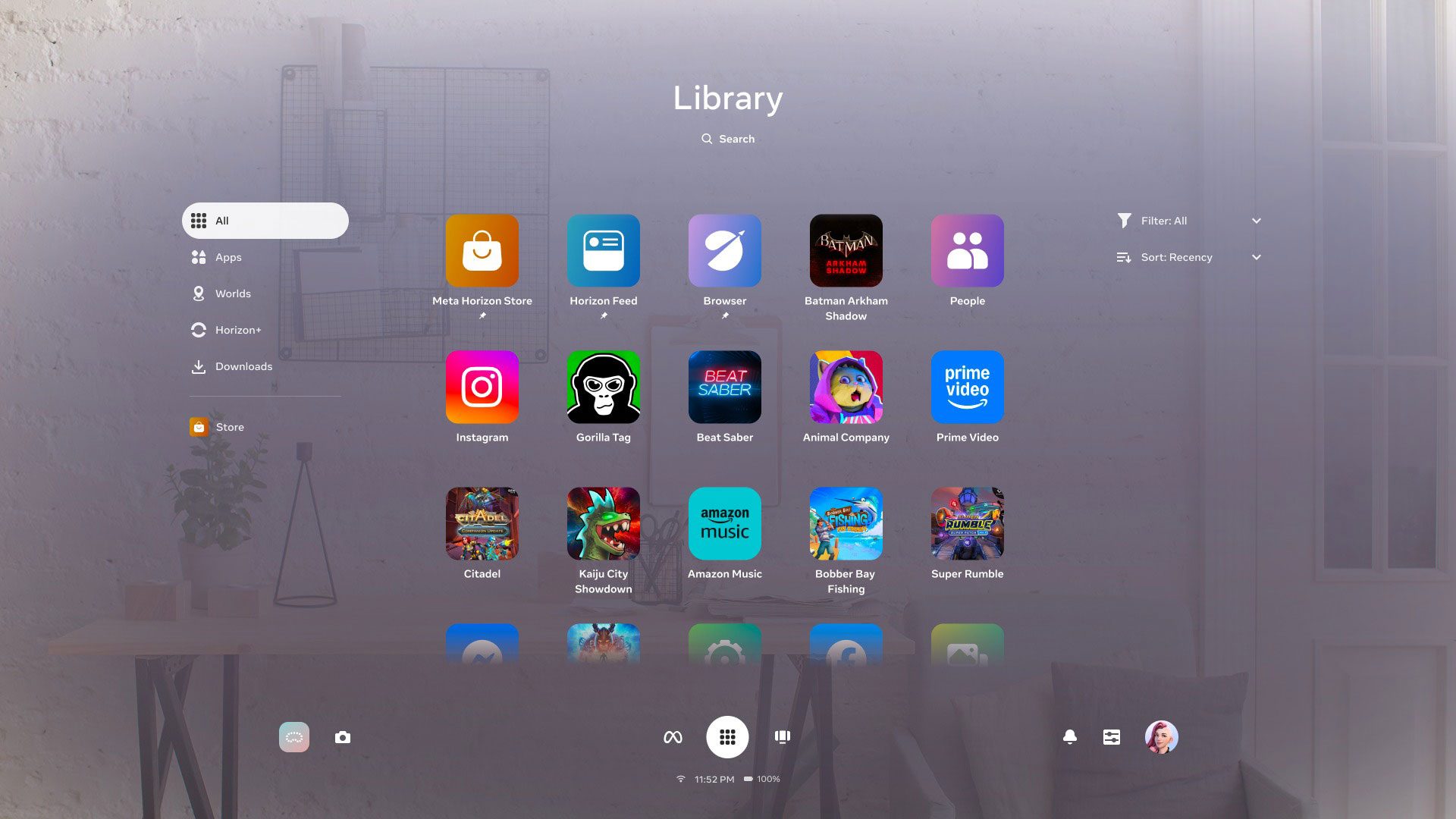
According to the v85 patch notes, the update is set to retire ‘Horizon Feed’, which released with v57 in late 2023, bringing a mishmash of user-created Worlds, apps, games, and Reels.

The update is also set to make Navigator the default UI, which overhauls the platform’s dock-based UI for a more mobile-style launcher overlay.

Image courtesy Meta

For years now, if you wanted to type something on Quest you had three main methods: use the floating keyboard, pair a physical keyboard which the headset can actually track, or use voice for text input.

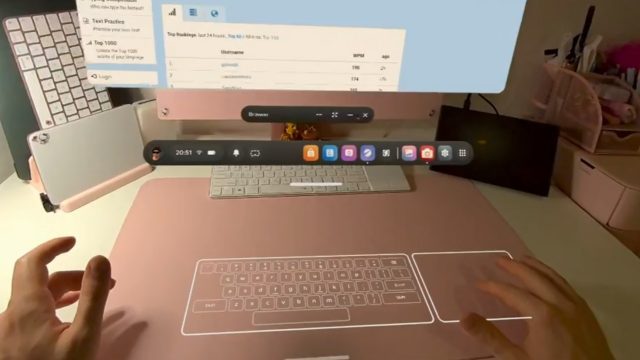
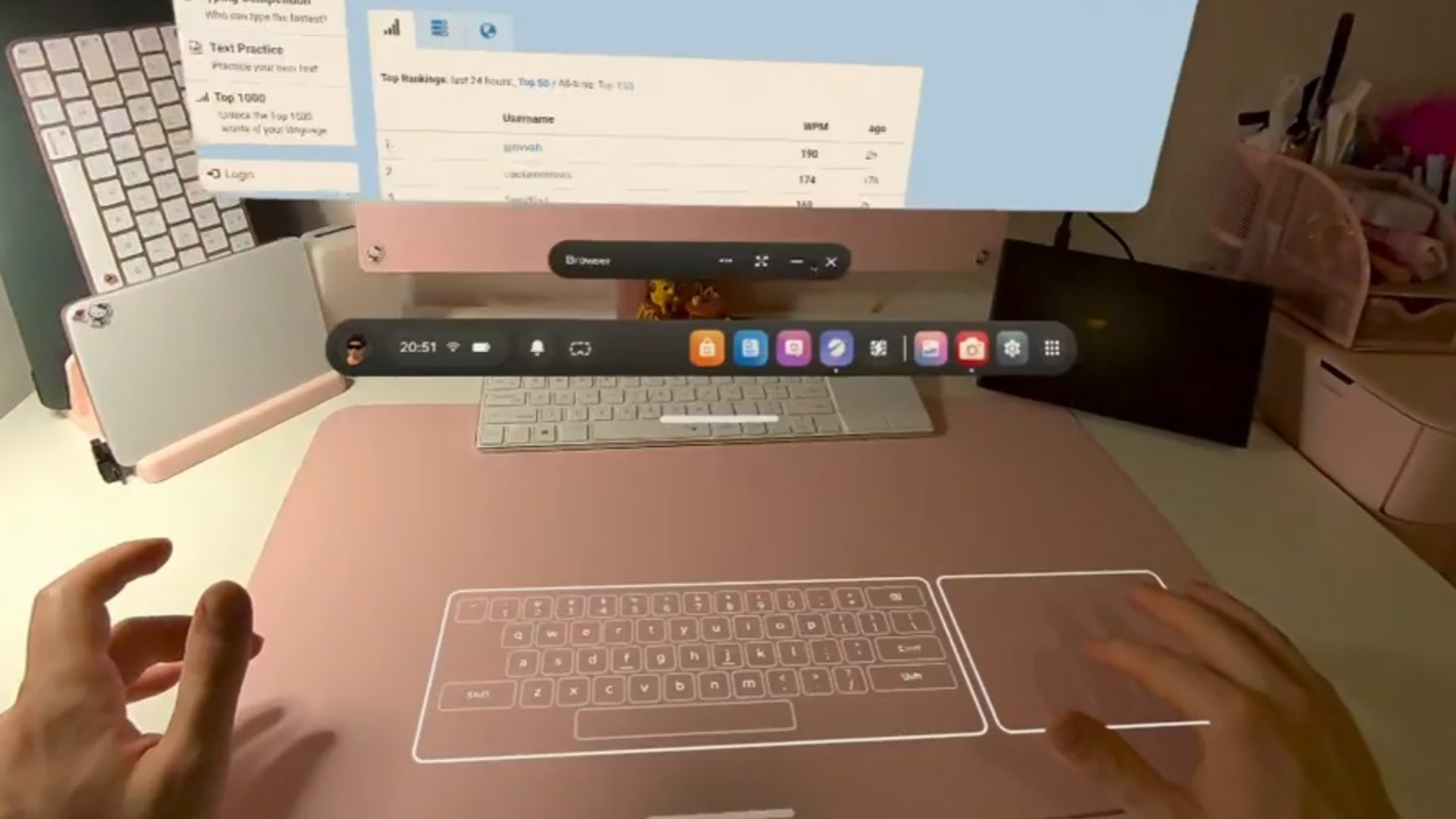
Now, Meta is rolling out ‘Surface Keyboard and Touchpad’ as an experimental feature on Quest 3, which allows users to input text and control a mouse by simply mapping them to a desk or table.

Image courtesy ‘amtexe

Meta says the new Surface Keyboard is ideal for “casual productivity, browsing, messaging, and 2D applications,” as it includes a basic key set.

Meanwhile, the virtual touchpad supports index-finger actions like move, click (tap), drag (double tap and move) and two-finger scrolling with your index and middle finger. Meta says however that a physical keyboard “is still advised for high-volume writing.”

Quest 3 users who are enrolled in the PTC can opt into the feature from the ‘Experimental’ section of ‘Settings’. If you’re not already, here’s how to enroll in PTC:

  1. Open the mobile app, tap Menu in the bottom-right corner, then tap Devices.
  2. Tap Headset settings, then tap Advanced settings.
  3. Tap the toggle next to Public Test Channel to try to join Quest PTC.
    • If the toggle doesn’t work, Quest PTC is currently full and not available.

Another feature is the newly redesigned activity bar, which is said to allow for quicker and easier access to controls like recording, calls, and media.

Other updates include the ability to temporarily hide virtual hands via quick actions, customize the Quest 3S’ action button to trigger preferred system actions with short or long presses, and scan for malware. You can check out the full v85 (PTC) release notes here.

The post Quest Update Brings New ‘Surface Keyboard’ Feature, UI Changes & More appeared first on Road to VR.


from Road to VR https://ift.tt/7OX3eol
via IFTTT
Related Posts Plugin for WordPress, Blogger...