Rec Room is shutting down in June. Meta’s Horizon Worlds is searching for greener pastures on mobile. Now, VRChat co-founders say there’s no need to worry about the social VR platform’s future.
“In case you were wondering, VRChat is not going anywhere,” studio co-founders Graham Gaylor and Jesse Joudrey say in a recent blog post.
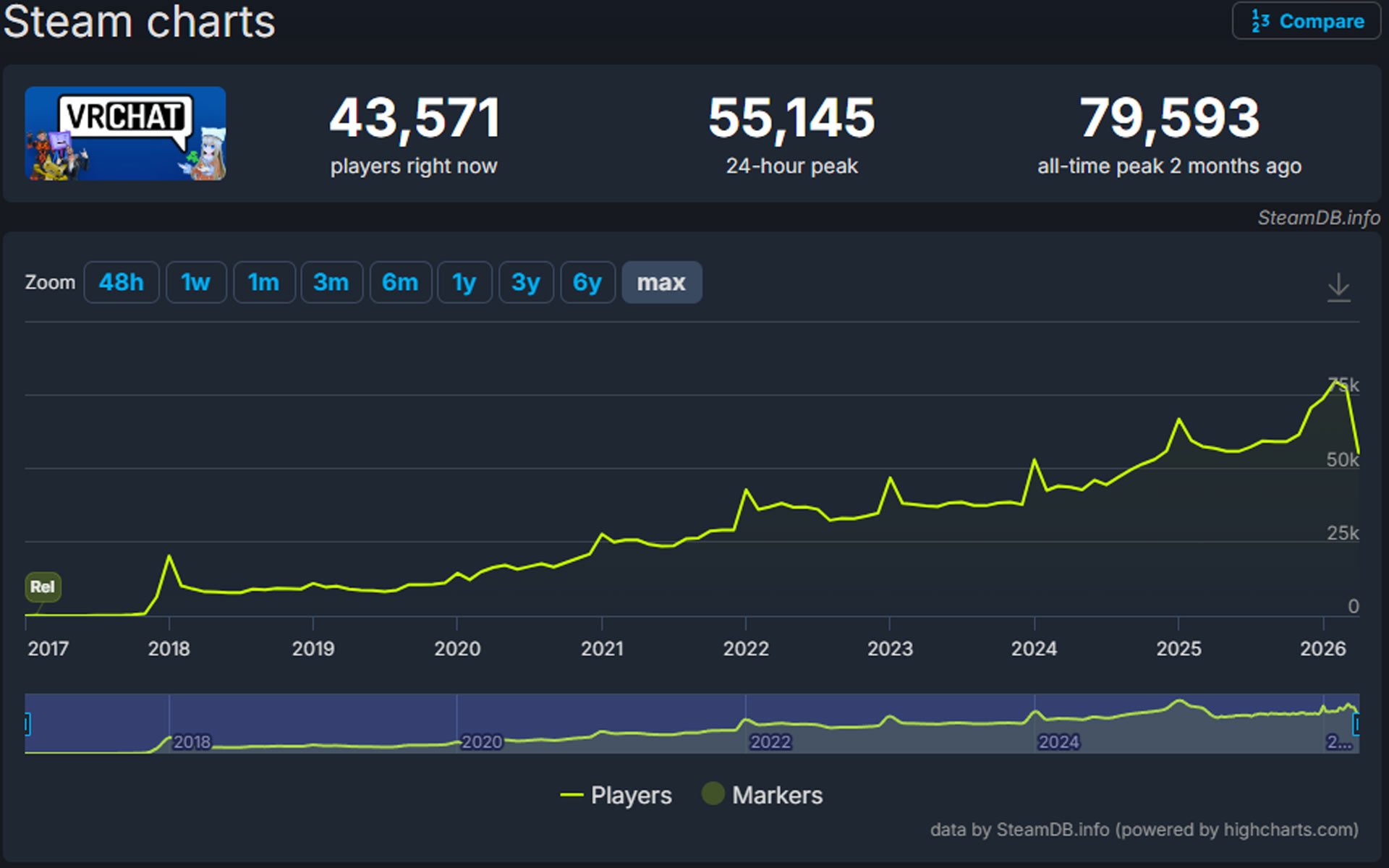
According to Gaylor and Joudrey, who founded VRChat in 2014, some of that confidence comes from the platform’s ability to consistently bring in record numbers of visitors across Quest, SteamVR, Pico headsets, PC, and mobile devices.
“Last New Year’s Eve, nearly 150,000 people were in VRChat at the same time—celebrating a worldwide event for yet another year. Most of those folks had visited us for New Years multiple times before, but for some, it was their first time,” the studio founders say. “It’s been three months since, and we’ve broken that user record twice since then. Our latest record? Nearly 160,000 people in VRChat at the same time.”
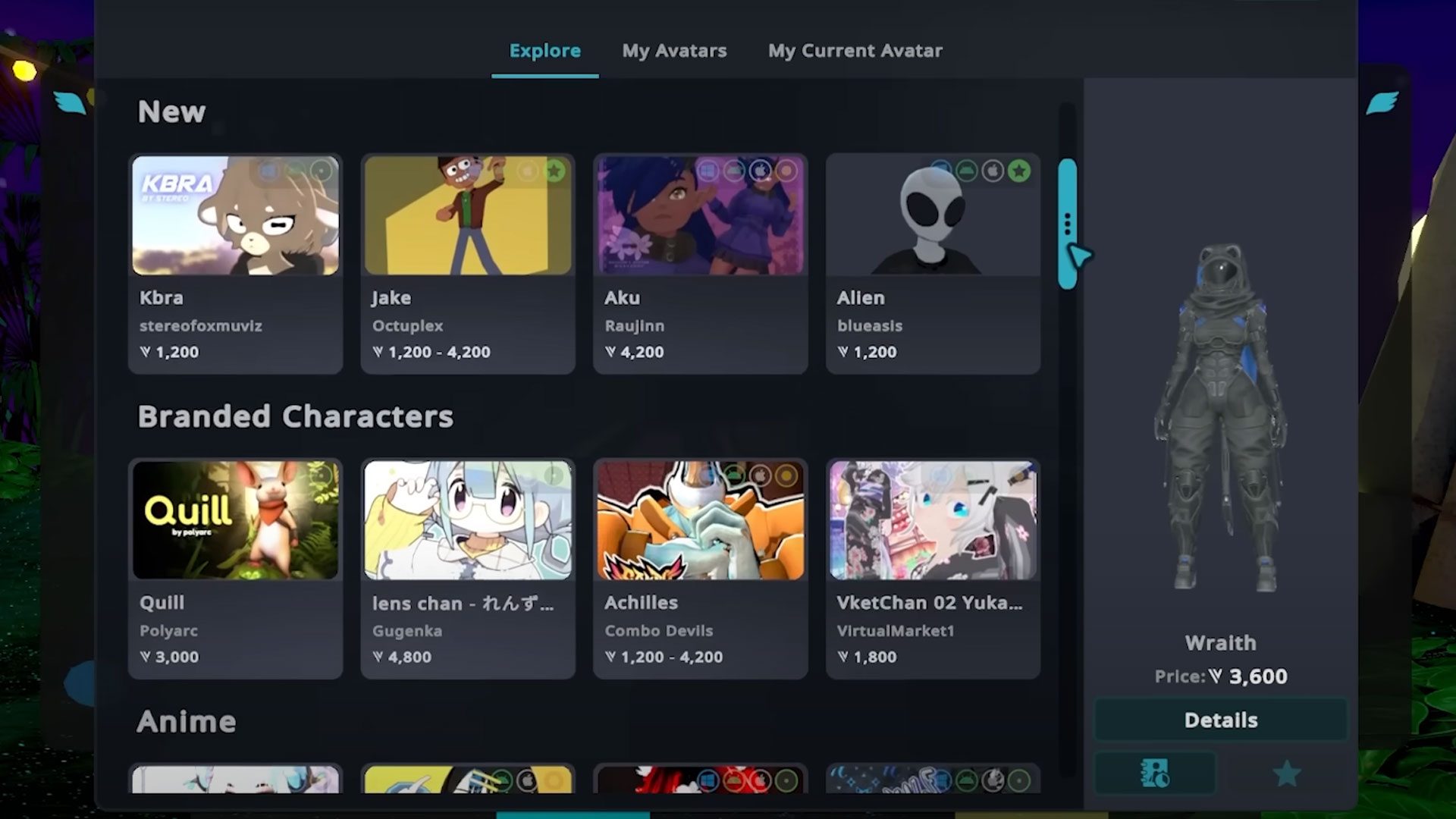
VRChat Avatar Marketplace | Image courtesy VRChat
While those sorts of events periodically bring in usership peaks, it’s what people buy once they’re in VRChat that matters. And its creator economy is booming, the founders say.
“Not only that, but our creator economy, avatar marketplace, and first-party stores are all growing. Creators like Studio TrickForge, spookyghostboo, and nawty have made VRChat a place where they can create amazing communities, experiences, and identities, all while earning for their hard work. We onboard more creators every day.”
Notably, the platform rolled out its centralized marketplace for avatars and virtual items in mid-2025, which uses its in-game currency, VRChat Credits. Prior to this, users mostly bought and sold avatars through third-party markets, such as Booth or Gumroad, essentially making for a new revenue stream VRChat could tap into.
Gaylor and Joudrey say however one of the biggest reasons VRChat is still kicking in a time of market headwinds is its communities.
“Our community is the thing that makes VRChat different from every platform that has come and gone. You create worlds that defy imagination. You build avatars that embody expression and identity in ways never seen before. You welcome strangers into your communities, make them feel at home, and often change their lives for the better.”
This follows some pretty worrying signals from the broader VR gaming segment. It was revealed in January that Meta is making a monumental shift in its priorities as a supporter of VR gaming, as its Reality Labs XR division has shifted focus to AI and smart glasses.
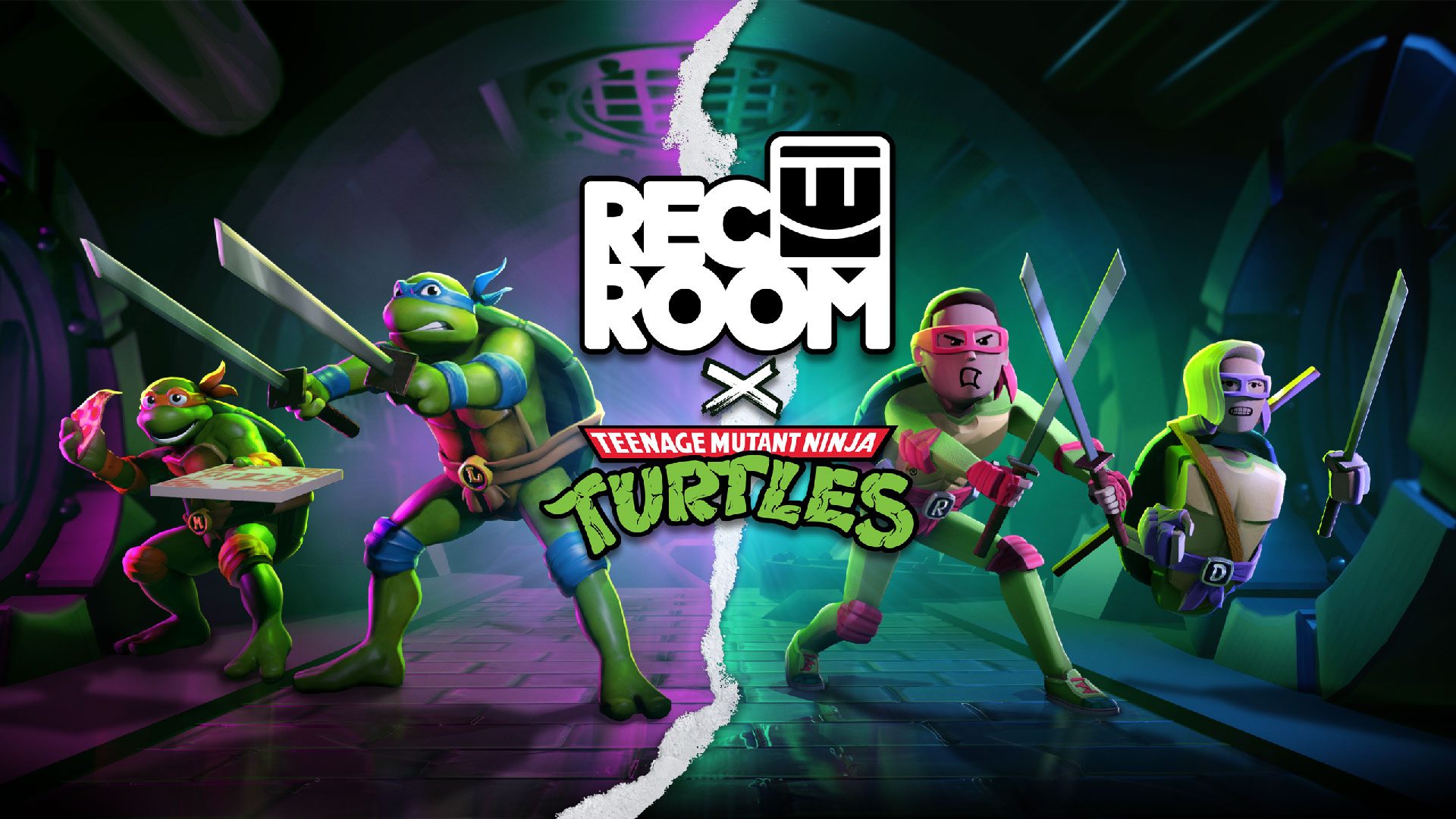
Teenage Mutant Ninja Turtles: Empire City is officially coming to Quest, PC VR headsets, and Pico headsets on April 30th.
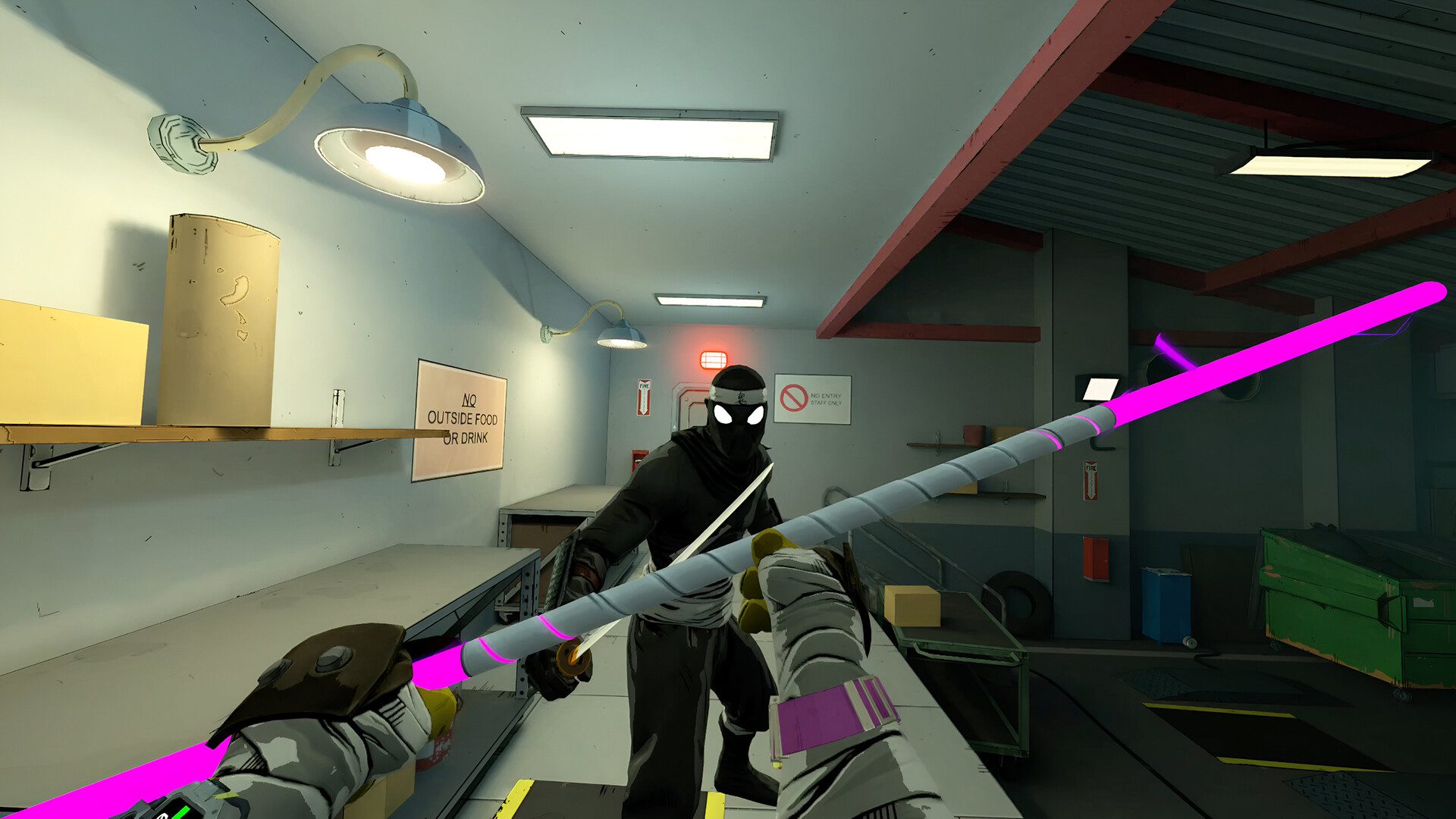
Developed by Cortopia Studios and Beyond Frames Entertainment, TMNT: Empire City is serving up a co-op supported campaign, letting you team up with up to three other tubular turtles as you battle against the dreaded Foot Clan.
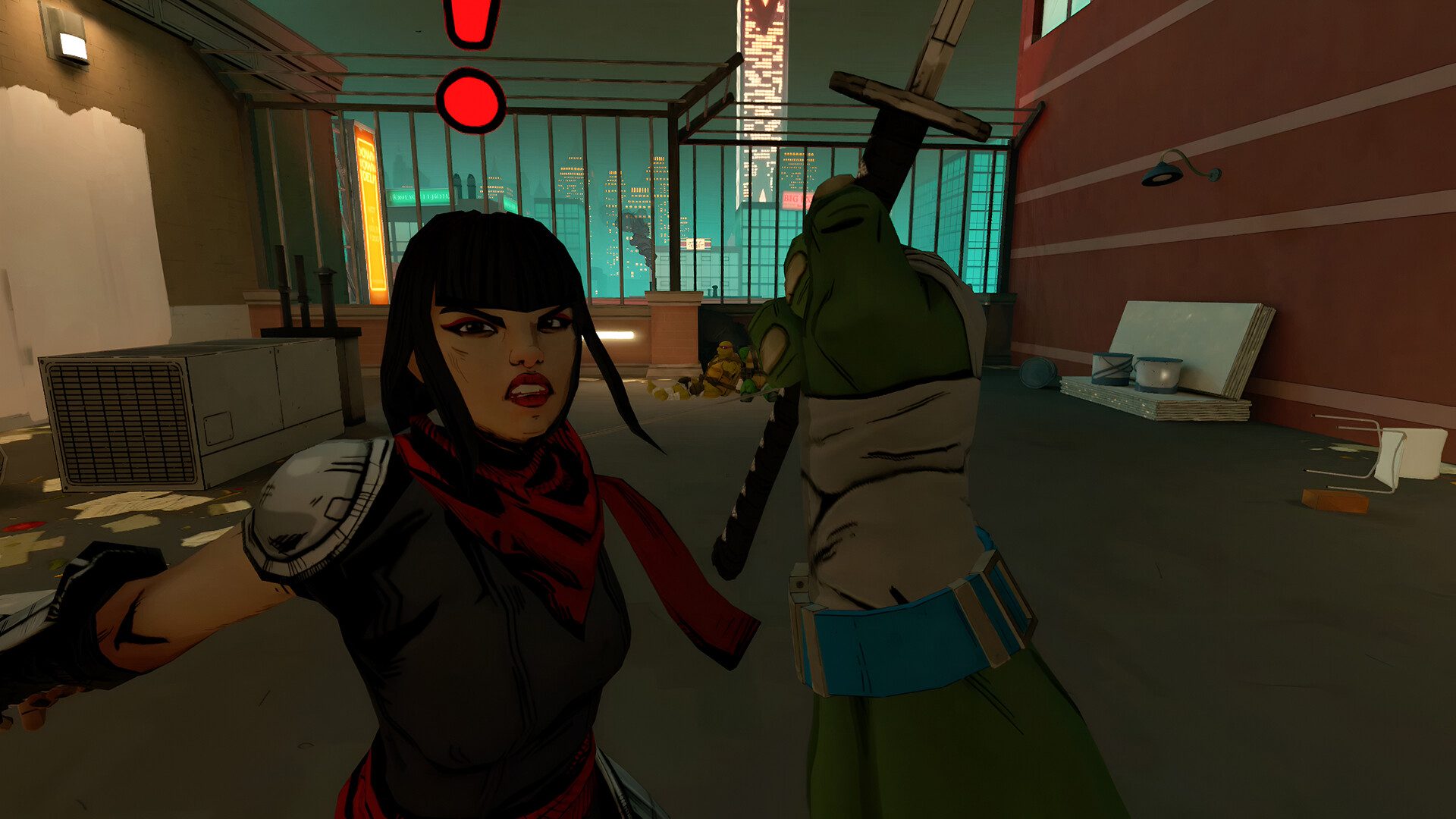
Set after the fall of series’ antagonist Shredder, Foot Clan leader Karai looks to fill the power vacuum, coming from her native Japan to bring order to the chaos in the New York chapter of the Clan.
Image courtesy Cortopia Studios
Ace St. Germain, Beyond Frames Entertainment CEO and Creative Director of Empire City at Cortopia Studios, calls Karai’s approach to leadership “very different” from Shedder’s though.
“How she decides to lead is ultimately up to the players’ relationship with this world,” St. Germain says.
The short of it: the studio seems to have absolutely nailed the Turtles aesthetic and vibe, offering up seemingly a cel shaded universe ripped straight from the comic books.
Image courtesy Cortopia Studios
I’m looking forward to sussing out the game’s combat more than the 15-minute demo allowed, which will undoubtedly be a major component to this narrative-based VR beat ’em up.
What I can say though is it looked promising, as much of the melee action I saw seemed to be pretty tactical, requiring users to strike, parry, block and retreat from unblockable blows.
Ahead of its April 30th launch, fans can pre-order Teenage Mutant Ninja Turtles: Empire City on the Horizon Store for Quest 3 with a 20% discount off its regular $25 price, bringing it to $20. You can also wishlist the game on Steam for PC VR headset and Pico headsets today.
Social VR platform Rec Room, once valued at $3.5 billion, announced earlier this week that it will be shutting down in June. The studio says it never quite figured out how to turn a profit, though top avatar creator blueasis maintains the story is a bit more complicated.
If you’ve ever seen the weird little VRChat avatar ‘Brush the Marmoset’—a staple of Internet memes since 2020—you’re likely already familiar with blueasis.
While they’re one of the OG 3D character and environment artist on VRChat, they’re also the top creator on Rec Room, which gives them a fair bit of insight into why the platform’s decade-long existence is soon coming to an end.
Image courtesy blueasis
As one of the most well-funded VR companies to date, the Seattle-based studio attracted over $294 million since its founding in 2016. Its most recent round came in December 2021, bringing to the company $145 million and briefly giving it a $3.5 billion valuation.
Despite its popularity and enviable startup runway, the company said earlier this week it “never quite figured out how to make Rec Room a sustainably profitable business. Our costs always ended up overwhelming the revenue we brought in. We spent a long time trying to find a way to make the numbers work.”
In a thread on X, blueasis gives an insider perspective on why they think Rec Room is closing up shop. In short, it wasn’t a bad creator economy or lack of returning users; the company just sort of … bungled things.
“I joined Rec Room 1.5 years ago to participate in their avatar cosmetics program,” blueasis recounts. “I made lots of items (2000~) honed my craft, became the number 1 seller on the entire platform, met awesome creatives & talked directly with the team.”
Image courtesy Rec Room
“My estimation of the shutdown; overhiring during the covid boom, making promises they couldn’t keep, continually gambling on new players & tech before focusing on the core experience & existing players.”
Having joined in late 2024, blueasis says it was “immediately obvious that the community was unhappy.”
“Spending so much money on player acquisition, mobile, console etc, with little to no payoff, these users rarely became creators, rarely spent money on the platform etc. The people who cared about the platform, PC, VR, did! but they were neglected in favor of ‘growth’.”
It was ostensibly that gamble to push for rapid expansion that ultimately tipped the studio into its first big tailspin: in August 2025 the company laid off around half of its staff, citing costs related to a surge in low-level content flooding the platform from users on mobile and console.
“I think by the time they realized this it was too late, the numbers were already dire, so they had to keep trucking along in any direction that would make them revenue, which just meant more gambling new features to hope something stuck, AI pet chat bot was a big one people hated.”
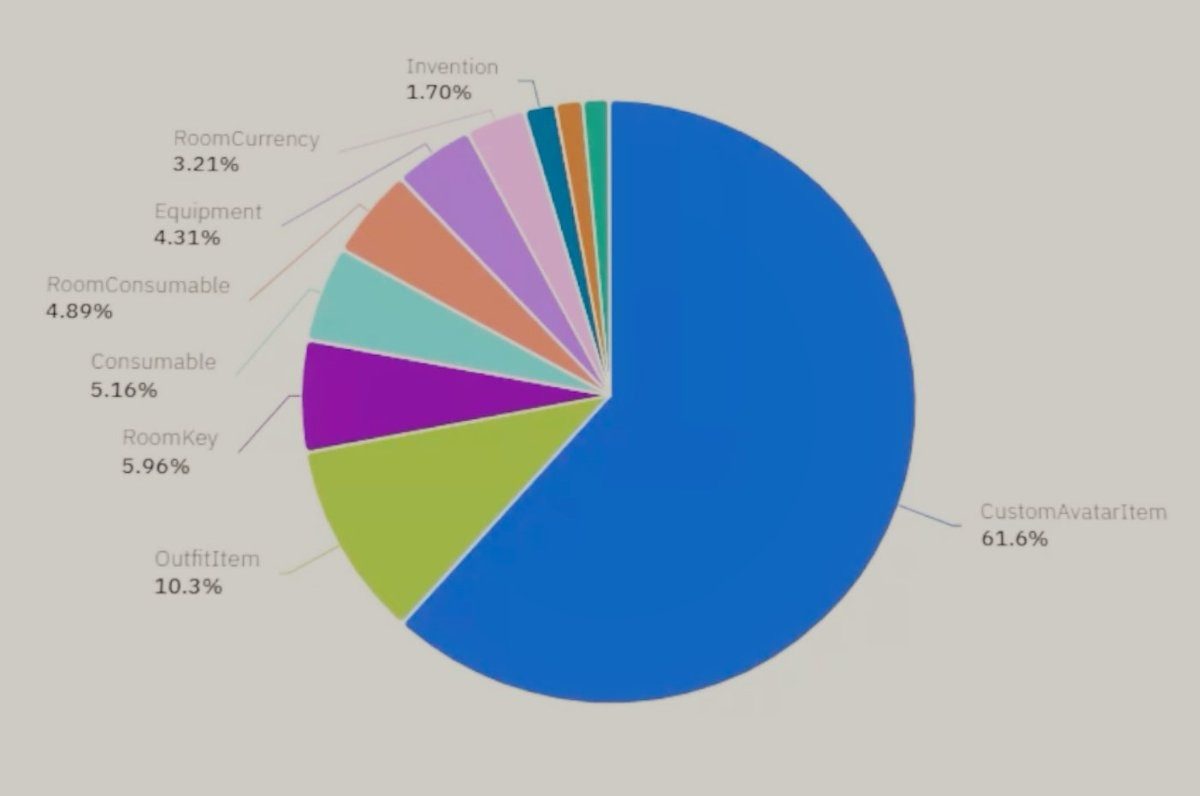
Blueasis says the platform’s push for user-generated avatar cosmetics was “their biggest success,” which they reveal accounted for 60% of player spend, “outselling Rec Room original items by 10x.”
In September 2025—notably just one month after laying off half its staff—the company announced it was paying out more than a million dollars per quarter to creators. That’s a lot of money coming in, a lot leaving into the hands of creators, and surprisingly little captured by the company.
Blueasis highlights the popularity of the UGC avatar cosmetics program and its outsized share of player spend, although the platform’s modest rake on creator sales may also be a big contributing factor.
While the company retains 70 percent revenue after paying platform fees on first-party content, when it comes to UGC, Rec Room only takes a 30 percent rake. This leaves creators with the bulk of the revenue, meaning Rec Room retained far less from top-selling items.
In the end, low fees are usually a powerful tool to help acquire an initial userbase. But they aren’t a lasting strategy, especially when new users aren’t contributing to the ecosystem in a way that offsets costs. And it seems the studio got interminably stuck in that dangerous gap between aggressive user acquisition and eventual platform stability—and just never managed to climb out.
Black Mirror, the hit sci-fi anthology series on Netflix, is getting its own VR experience soon—set to debut at VR destination Infinity Experience in Montreal, Canada next month ahead of wider rollout.
Developed by VR studio Univrse and Banijay Live Studio, THE BLACK MIRROR EXPERIENCE is slated to mash up physical environments with VR headsets, drawing on themes of the award-winning television series.
According a press statement, The Black Mirror Experience creates a scenario that will “force visitors to make [the] same choices” as seen in the show, which explores society’s complex relationship with technology and the moral quandaries often faced by characters.
Image courtesy Banijay
“Groups are invited to the exclusive opening of Phaethon’s showroom – a tech giant about to unveil its most ambitious creation yet: LifeAgent, a robot designed to simplify your life, understand your desires, and help you become your best self. At first, everything feels seamless. Reassuring. Almost perfect. Until it doesn’t,” the studio explains.
The experience supports up to six players (ages 12+), and will be offered in French, English, and Spanish. It’s slated to launch first at the Infinity Experience location in Montreal on May 21st, however more locations will be announced “soon,” the studio says.
Notably, Infinity Experience operates in seven cities across North America. In Canada: Montreal, Edmonton, Calgary, Quebec City, and Mississauga. In the US: Chicago and Atlanta.
Created by Charlie Brooker, Black Mirror returned for its seventh series on Netflix in April 2025, produced by Broke & Bones, with Brooker, Jessica Rhoades, and Annabel Jones as executive producers. Black Mirror is primarily owned by Banijay Entertainment.
Polyarc, the studio behind VR puzzle-platformer series Moss, announced it’s significantly reducing the size of the company, marking another VR pioneer currently experiencing existential turmoil.
The studio released word via a LinkedIn post on Tuesday, noting that layoffs come amid an “unsuccessful team-wide effort to secure funding following the cancellation of a major project.”
Speaking to GamesIndustry.biz, Polyarc says layoffs are affecting 30 employees. According to DevOps Director Alex Holodak (via UploadVR), the studio let go two-thirds of staff, putting the remaining team somewhere around 15 people.
Polyarc isn’t alone in its recent financial troubles. Rec Room, one of VR’s most prominent social platforms, announced this week it’s officially shutting down in June. Meanwhile, VR veteran nDreams, the studio behind recent action-adventure game Reach (2025), signaled earlier this month that it’s going through significant layoffs and studio closures.
Notably, Meta’s recent shift in priorities at its Reality Labs XR division not only came alongside the closure of a number of several internal game studios, but also the revelation it was pulling funding from a number of projects already in progress.
Polyarc hasn’t confirmed whether its now-cancelled project was a result of Meta pulling funding.
Founded in 2015 by ex-Bungie develo[ers, the Seattle-based studio self-published the first Moss in 2018, receiving not only near-universal praise, but also more than 120 global industry awards and nominations. Moss was released across all major VR platforms at the time, including PSVR, PC VR headsets, and the original 2019-era Quest.
Then, in 2022 Polyarc released the hotly-awaited sequel, Moss: Book II. which managed to nab the The Game Awards’ Best VR/AR Game and the VR Awards’ VR Game of the Year. Moss: Book II is widely regarded as a stellar follow-up, getting a solid [8.5/10] in our full review.
In 2025, the studio followed up with its multiplayer real-time battler Glassbreakers: Champions of Moss, which offered up a roster of 12 Champions for squad-based arena battles.
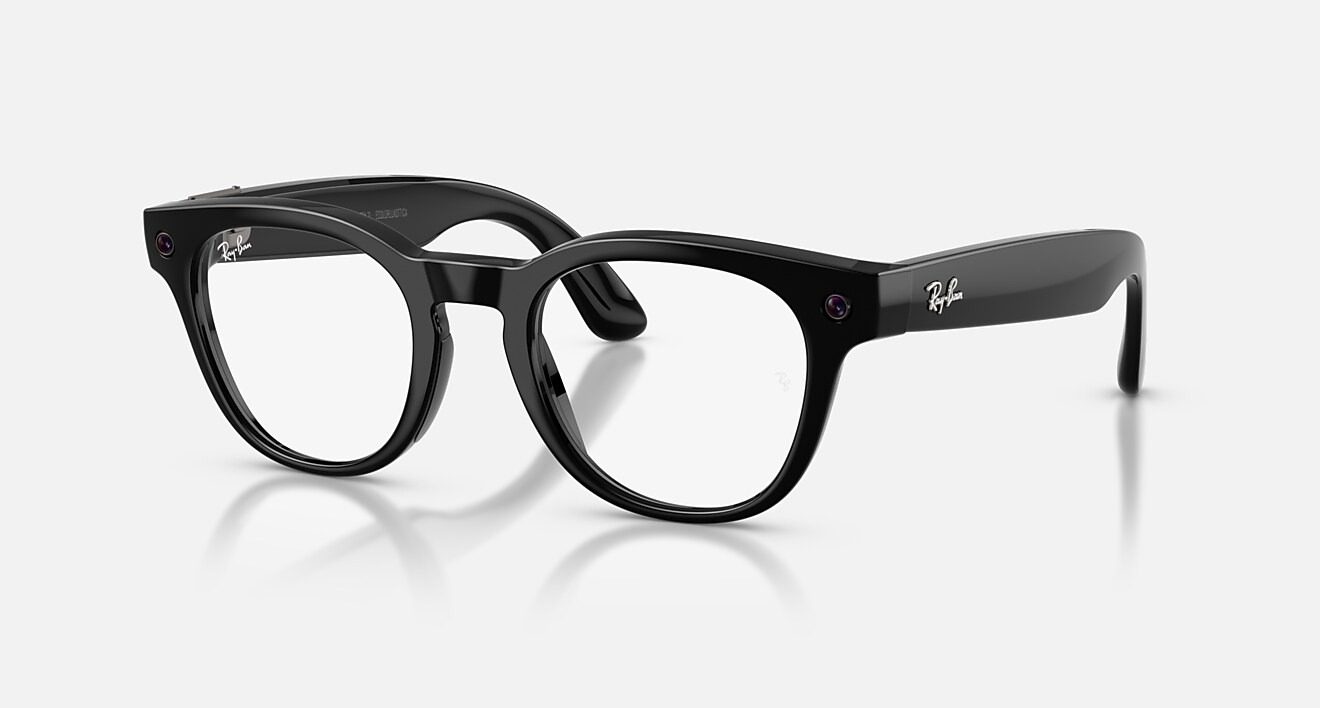
Meta announced it’s pushing an update to Ray-Ban and Oakley Meta smart glasses that’s slated to make nutrition tracking easier by letting Meta AI visually suss out food before you eat it.
The News
Over time, the company says that a user’s food log will inform “increasingly personalized insights that get more useful, helping you make healthier, more informed choices.”
Meta says it will be somewhat of a manual process though, as users need to prompt Meta AI to log their food in addition to inputting specific nutrition goals.
Ray-Ban Meta (Gen 2) | Image courtesy Meta
While we’re not there yet, Meta says in the future glasses will be able to understand what you’re eating and automatically log your food, which in turn opens up even more personalized nutrition insights since you don’t have to remember to log every meal.
For now though, the company envisions users asking Meta AI questions like “What should I eat to increase my energy?” which will output a suggestion based on your food log and fitness goals.
Meta says the new feature will be available to users aged 18+in the US “soon” across all Ray-Ban Meta and Oakley Meta smart glasses, with its Meta Ray-Ban Display glasses getting the update sometime later this summer.
My Take
Meta doesn’t do health tracking; its smart glasses don’t track your heart rate, steps, activity, sleep (of course not), calories burned, O² levels—nothing.
Granted, they can link with Garmin smart watches which can do those things, although the glasses themselves essentially only act as a sort of audio relay, repeating the info sensed and stored by the Garmin app, meaning Meta can’t really do anything truly useful with the bulk of your health data. Notably, Meta smart glasses don’t tie into Samsung Health or Apple Health either, putting a majority of users’ health data out of Meta’s reach.
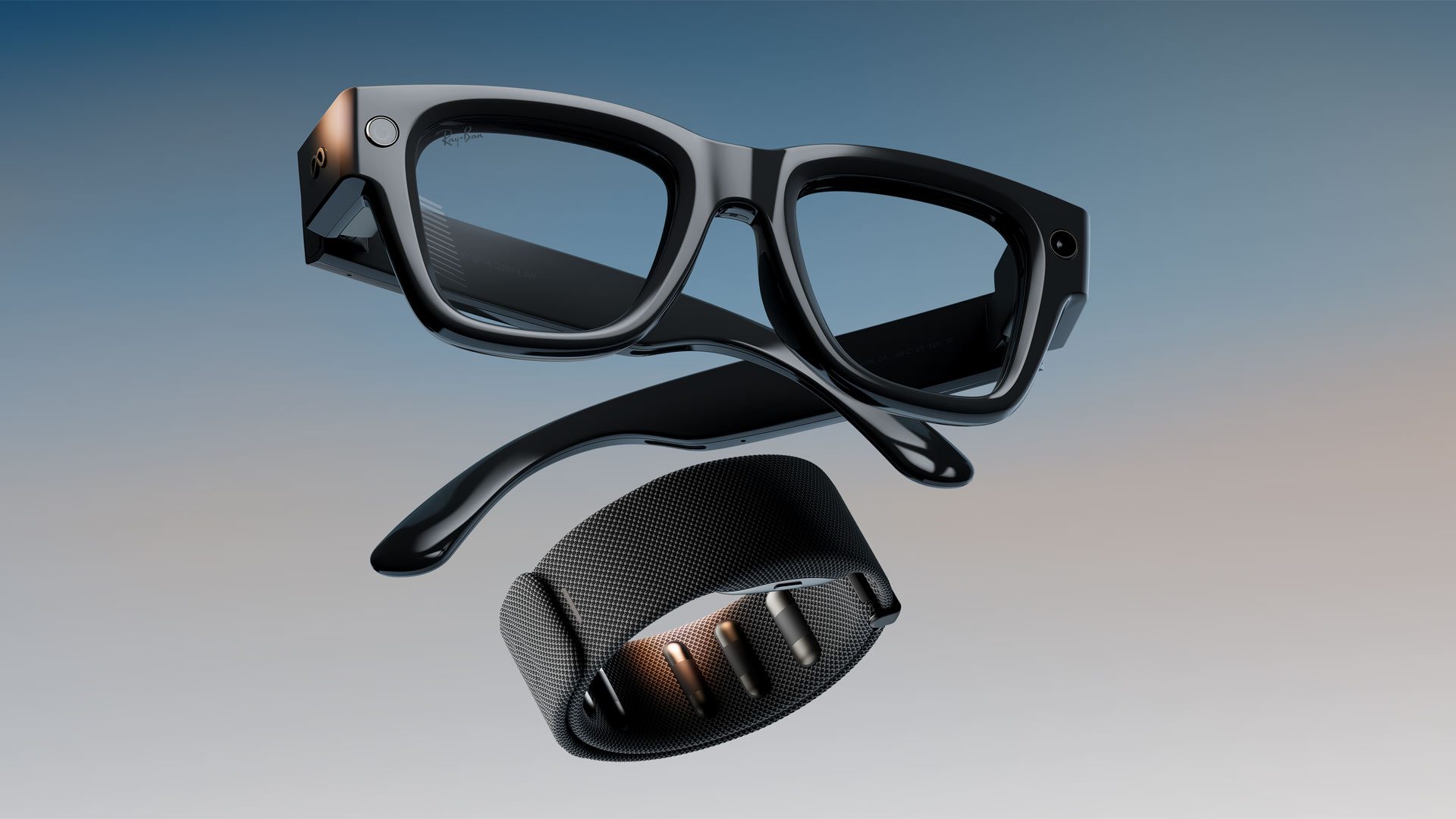
Meta Ray-Ban Display Glasses & Neural Band | Image courtesy Meta
But it probably won’t always be that way. Meta seems to be leveraging what it can feasibly (and cheaply) do right now without having to cut any expensive licensing deals with dominant players in the smart watch segment.
The company does have a vector to get all of that data one day though. Meta Ray-Ban Display comes with a wrist-worn Neural Band controller that uses surface electromyography (sEMG) which lets users quietly write out messages and manipulate UI. I can imagine a near future where Neural Band has a packet of sensors similar to a smart watch, albeit without the display.
Provided Meta goes that specific route, the company wouldn’t need to integrate with existing health ecosystems at all for its future smart glasses. It will already have everything it needs to close the loop on what you’re eating and how you’re burning it off.
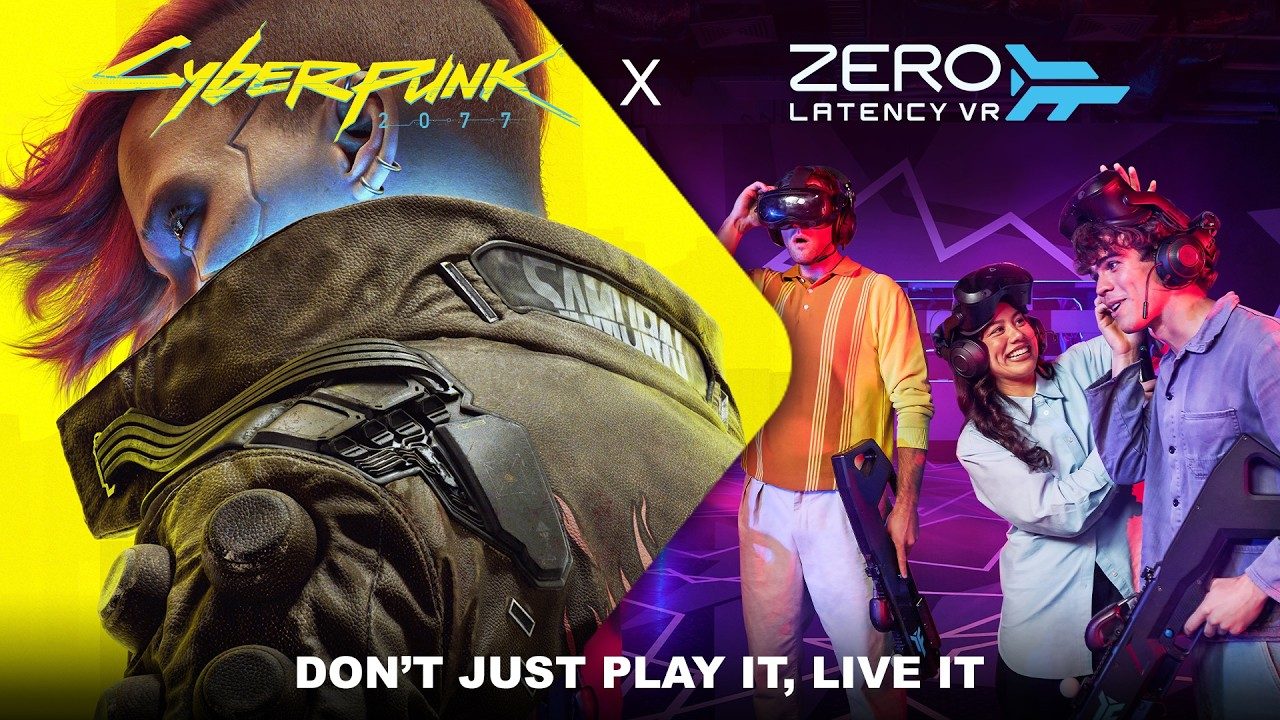
CD Projekt Red announced it’s working with Zero Latency VR to bring Cyberpunk 2077 to out-of-home VR destinations.
Zero Latency VR calls the forthcoming experience “based on the world of Cyberpunk 2077,” but built specifically for the company’s untethered, free-roam technology.
What’s more, the studios say they’re bringing the co-op experience to Zero Latency VR’s locations worldwide “soon”. At the time of this writing, Zero Latency VR operates over 140 locations across 30 countries
When it will release still isn’t clear. The studio says additional details about the experience will be announced at a later date.
Image courtesy CD Projekt, Zero Latency VR
In the trailer, we see running, gunning and team-based missions. Notably, multiplayer or any form of co-op isn’t available in Cyberpunk 2077 yet, making it the first time fans will be able to walk the streets of Night City together.
“It will allow players to physically move together through a shared space, offering a new way to explore the world of Cyberpunk 2077,” Zero Latency VR says. “This will be a self-contained experience capturing the atmosphere and style of Night City beyond its original screen-based format, as seen in the original video game.”
This follows a controversy involving prolific VR modder Luke Ross, who removed his R.E.A.L. VR mod suite following a DMCA takedown issued by CD Projekt in January for seemingly breaking the TOS regarding paywalled fan content.
Although Ross has since partially reinstated the mod suite for free, it doesn’t come with support for Cyberpunk 2077, as well as a number of other games that could prove equally litigious due.
Meta and eyewear partner EssilorLuxottica announced two new “optical-forward” pairs of Ray-Ban Meta glasses, which are said to support nearly all prescriptions.
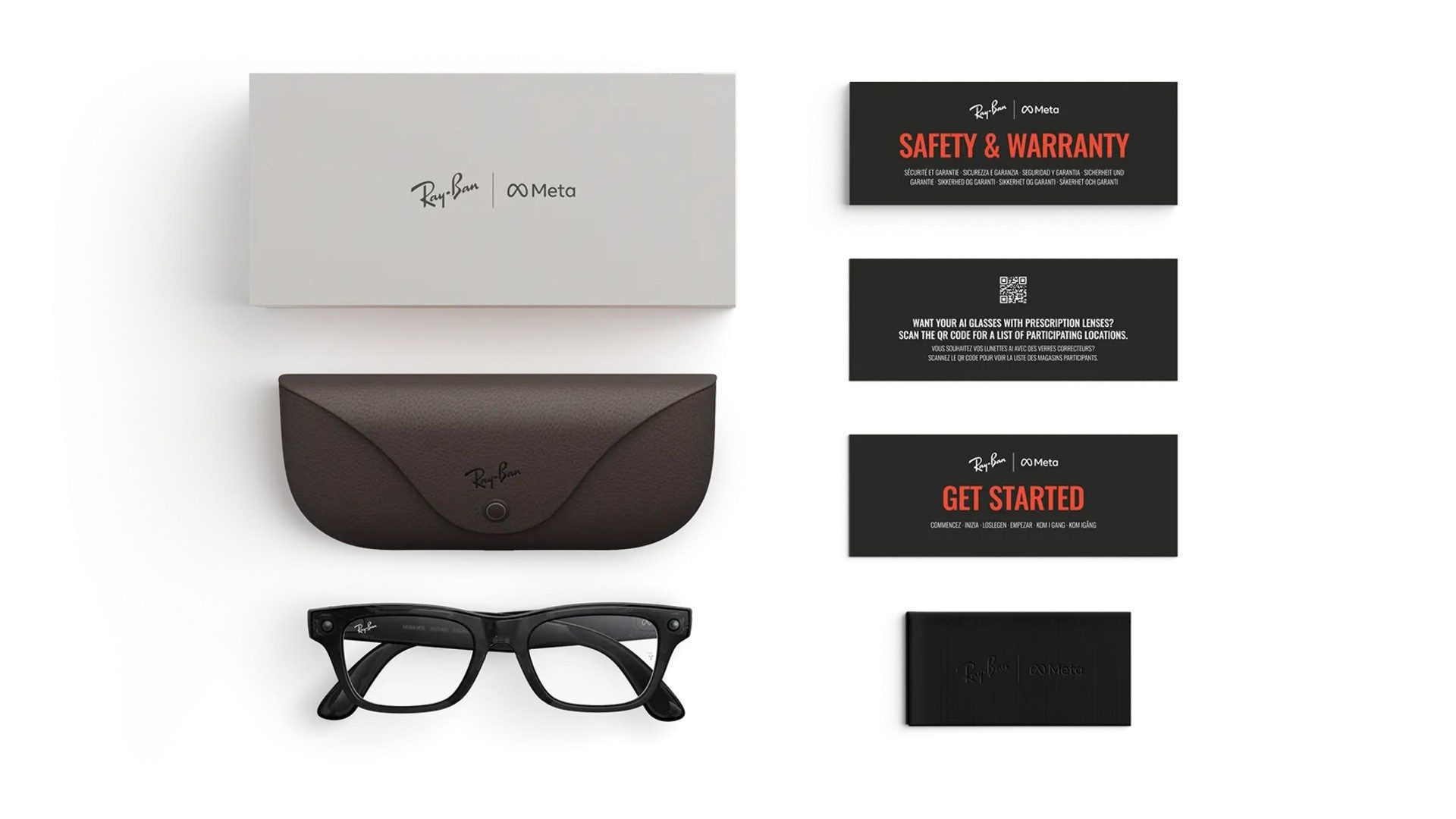
Ray-Ban Meta and Oakley Meta smart glasses can already be paired with prescription lenses, although the latest pairs of Ray-Ban Meta smart glasses are coming with new ergonomic features: overextension hinges, interchangeable nose-pads, and optician-adjustable temple tips, things designed to give users a more custom fit.
Ray-Ban Meta ‘BLAYZER’ model | Image courtesy Meta, EssilorLuxottica
In a blog post, Meta announced it’s offering two new frame styles: a rectangular ‘Blayzer Optics’ design available in two sizes (Standard and Large) and a more rounded ‘Scriber Optics’ frame. Both come with a Dark Brown charging carrying case, with pricing starting at $500.
Colors include Matte Black, Transparent Black, and Transparent Dark Olive, although Meta is also releasing seasonal colors, such as Transparent Matte Ice Grey and Transparent Stone Beige.
Ray-Ban Meta ‘Scriber’ model | Image courtesy Meta, EssilorLuxottica
Both new Blayzer and Scriber frames will be available for pre-order in the US starting today from Meta.com and Ray-Ban.com, as well as at optical retailers in the US and and select international markets starting April 14th.
Meta also announced it’s releasing new lens and color options for Ray-Ban Meta (Gen 2) and Oakley Meta lines. New options include:
Vanguard Black with Prizm Black Lenses
Vanguard White with Prizm Rose Gold Lenses
Vanguard Black with Prizm Transitions® Ember Lenses (arriving later this Spring)
Vanguard Prizm Transitions Cobalt Lenses (arriving later this Spring)
HSTN Black with Prizm Dark Golf Lenses
HSTN Light Curry with Clear to Brown Transitions Lenses
Coming this spring and summer, Meta is also releasing three new limited-time seasonal colors for Ray-Ban Meta (Gen 2).
For the Skyler style: Shiny Transparent Peach with Transitions Brown Lenses. For Headliner: Matte Transparent Peach with Transitions Grey Lenses. For Wayfarer: Shiny Transparent Grey with Transitions Sapphire Lenses.
Rec Room, one of VR’s most prominent social platforms, is shutting down in June, with its creators noting they “never quite figured out how to make Rec Room a sustainably profitable business.” According to a GeekWire report (via Skarred Ghost), Snap has acquired select assets from Rec Room, which also includes talent moving to its XR-focused Specs Inc. subsidiary.
The News
Rec Room is slated to shut down servers on June 1st, 2026 at 12:00 PM PT (local time here), the studio announced in a blog post on Monday night.
“Over the past decade, Rec Room grew into something amazing, reaching over 150 million players and creators along the way. Players made over half a billion friends on the platform,” the studio says.
The Seattle-based studio managed to attract over $294 million since its founding in 2016. Its most recent round came in December 2021, bringing to the company $145 million and a $3.5 billion valuation.
Cracks began to show in August 2025 however, as the company laid off around half of its staff, citing costs related to a surge in low-level content flooding the platform from users on mobile and console.
Although Rec Room says “millions of people” are still showing up to spend time in its platform—available across VR headsets, console, PC, and Android and iOS mobile devices—the company says the business simply isn’t sustainable.
“Despite this popularity, we never quite figured out how to make Rec Room a sustainably profitable business. Our costs always ended up overwhelming the revenue we brought in. We spent a long time trying to find a way to make the numbers work.”
Image courtesy Rec Room, NFL
Some of this comes down to difficult market conditions in the gaming industry, Rec Room says, compounded by Meta signaling a monumental shift in its priorities as a supporter of VR gaming.
“But with the recent shift in the VR market, along with broader headwinds in gaming, the path to profitability has gotten tough enough that we’ve made the difficult decision to shut things down.”
Notably, earlier this month Meta announced it’s allowing Quest users to use a legacy version of Horizon Worlds, although the company is shifting focus to develop the virtual social platform “almost exclusively” for mobile.
This comes amid a GeekWire report that Snap has acquired select assets from Rec Room in addition to hiring a number of its staff to work in the company’s Specs Inc subsidiary, which is working on the company’s upcoming XR glasses. The report suggests neither company has signaled that Rec Room will live in any capacity at Snap however.
As a last goodbye, Rec Room released a video recapping the last decade (seen below), including special events, games, and its evolution as a user-generated content platform.
My Take
While sad, Rec Room is being wound down in probably the most responsible way possible, as the company is making sure its third-party creatives will be paid out while it gives everyone at least two months for everyone to figure out next steps. This even includes the ability to download room and invention data for anyone who wants to recreate their own room in a game engine, such as Unity.
And love it or hate it, it also means VR headset-owning kids now have one less place to go to hang out. Over the years, Rec Room essentially became VR’s de facto family-friendly platform, as the studio pioneered the space as one of the first user-generated VR platforms to include built-in child safety layers.
I’m far from the right person to point parents to alternative platforms, although I can safely say VRChat is not the right place, as it lacks a dedicated kid mode, and often plays host to adult content that is generally poorly regulated.
More importantly though, the loss of Rec Room marks the death of one of the most valuable VR companies outside of Meta—one that notably pioneered a VR creator economy which the company said last year was paying out more than a million dollars per quarter to creators.
This should not only give VR game developers pause, but also the investor class, who can now point to not only the failure of Horizon Worlds on VR headsets, but one of the earliest, most consistent, and most accessible platforms too.
Meta and EssilorLuxottica appear to be preparing two new Ray-Ban smart glasses for launch, according to US Federal Communication Commission (FCC) filings from earlier this month.
As first reported by Janko Roettgers in his Lowpass newsletter, Meta hardware partner EssilorLuxottica has filed with the FCC two new devices which appear to be the next generation of their Ray-Ban smart glasses.
The FCC filing in question contains the names ‘Ray-Ban Meta Scriber’ and ‘Ray-Ban Meta Blazer’, describing them as “production units”, which could mean launch is fairly close.
Array of Meta smart glasses | Image courtesy Brad Lynch
Typically, FCC filings are one of the last stops before launch, as we saw with the last three hardware generations of Ray-Ban smart glasses, all three of which released less than a month after their respective FCC filings.
The company’s second-gen smart glasses released in 2025 include hardware refreshes of its popular Ray-Ban glasses, as well as Oakley Meta HSTN, Oakley Meta Vanguard, and the $800 Meta Ray-Ban Display glasses—the company’s first smart glasses to include a heads-up display.
As Roettgers points out, the new FCC filings are largely devoid of details or images of the devices, however a charging case was mentioned in testing—an accessory provided with all generations of the companies’ smart glasses.
Model numbers for Blazer and Scriber, respectively RW7001 and RW7002, are also new, which suggests we’re dealing with a new hardware generation.
Additionally, the devices were tested using the Wi-Fi 6 U-NII-4 band (5.9 GHz). Notably, the company’s latest smart glasses use Wi-Fi 6E (6 GHz), which does not operate in the 5.9 GHz U-NII-4 band.
This comes amid a significant shift in priorities at Reality Labs, Meta’s XR division. In January, the company laid off at least 10 percent of staff at Reality Labs, as the company has doubled down on AI and smart glasses, and reduced spending on first-party VR content.
Meanwhile, the smart glasses segment has been very successful for the Meta-EssilorLuxottica partnership, with the French-Italian eyewear maker revealing earlier this year that it had sold over seven million smart glasses last year, effectively tripling sales from all prior years in 2025 alone.
The Boys: Trigger Warning feels like a game caught between two priorities: delivering a brutal, irreverent VR adaptation of its source material, and serving as a timely piece of franchise promotion. It nails just enough of the show’s tone and spectacle to pull you in, but beneath the surface is a surprisingly shallow experience that rarely lives up to the power fantasy it promises.
Developer: ARVORE Publisher: Sony Pictures Virtual Reality Available On:Quest, PSVR 2 coming soon Reviewed On: Quest 3 Release Date: March 26th, 2026 Price: $30
Gameplay
The Boys: Trigger Warning is a pretty familiar revenge story. Just like how Hughie’s girlfriend is flagrantly mowed down by A-Train in season one of the show, tragedy strikes protagonist Lucas Costa during a fateful encounter with the Armstrongs, a family of low-level ‘Supes’.
On the brink of death, The Boys juice you up with the superhero drug ‘Compound V’, both saving your life and putting you on the path of vengeance, giving you permanent telekinetic powers so you can infiltrate Vought and hunt down the Armstrongs one-by-one.
Image captured by Road to VR
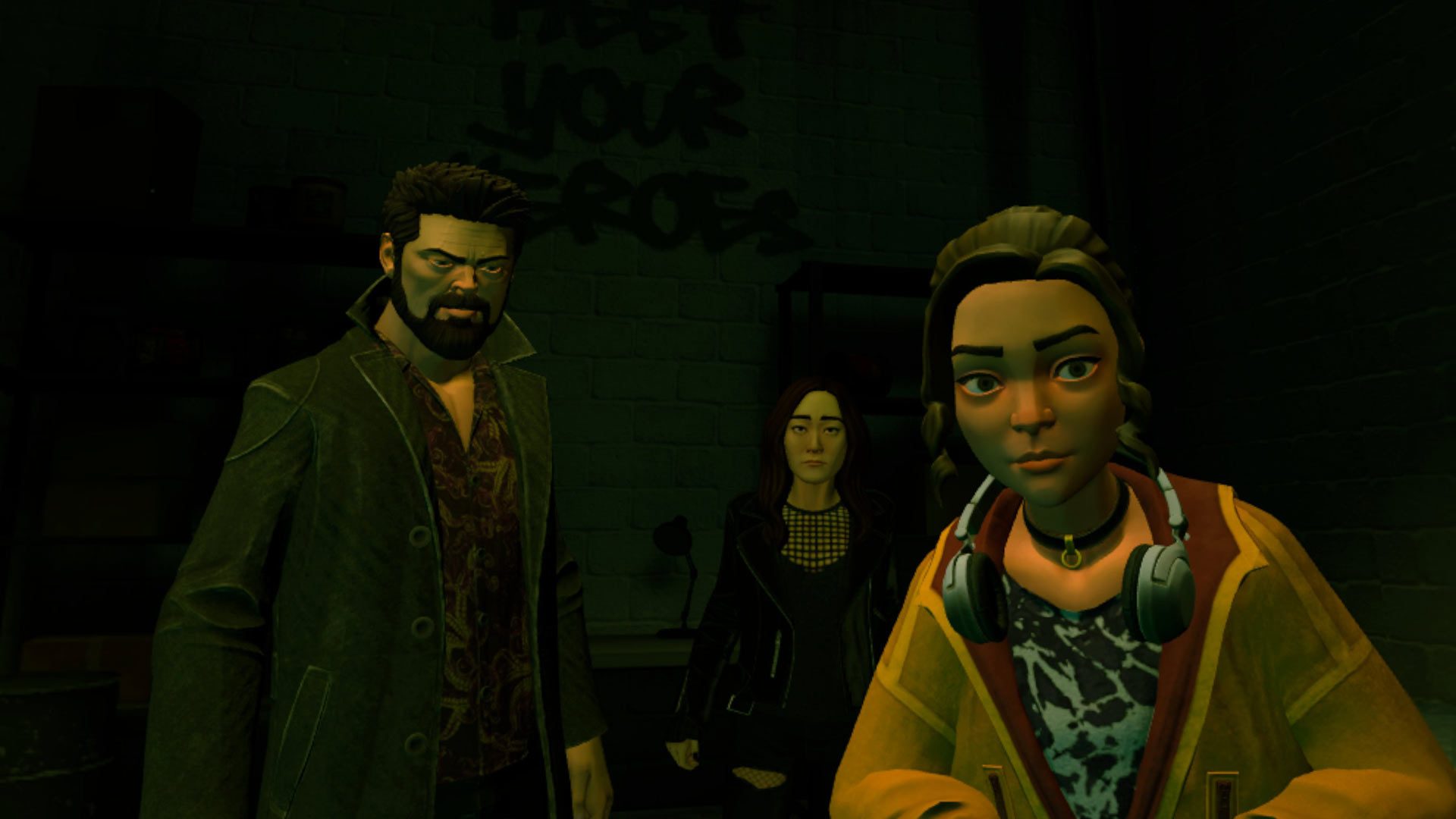
The narrative is comfortably familiar, well-worn even, although the game does serve up a somewhat toned down version of the series’ patented ‘WTF’ moments. Its cartoony (and sometimes glitchy) visuals seem to soften what would otherwise be much more shocking reveals.
Extreme violence and coarse language are on full display though, as you pop heads like bloody grapes, smash dudes to death with Homelander-brand dildos (star and stripes forever), and hear Butcher call anyone and everyone a cunt. It is The Boys we’re talking about here, after all.
Image courtesy ARVORE, Sony Pictures Virtual Reality
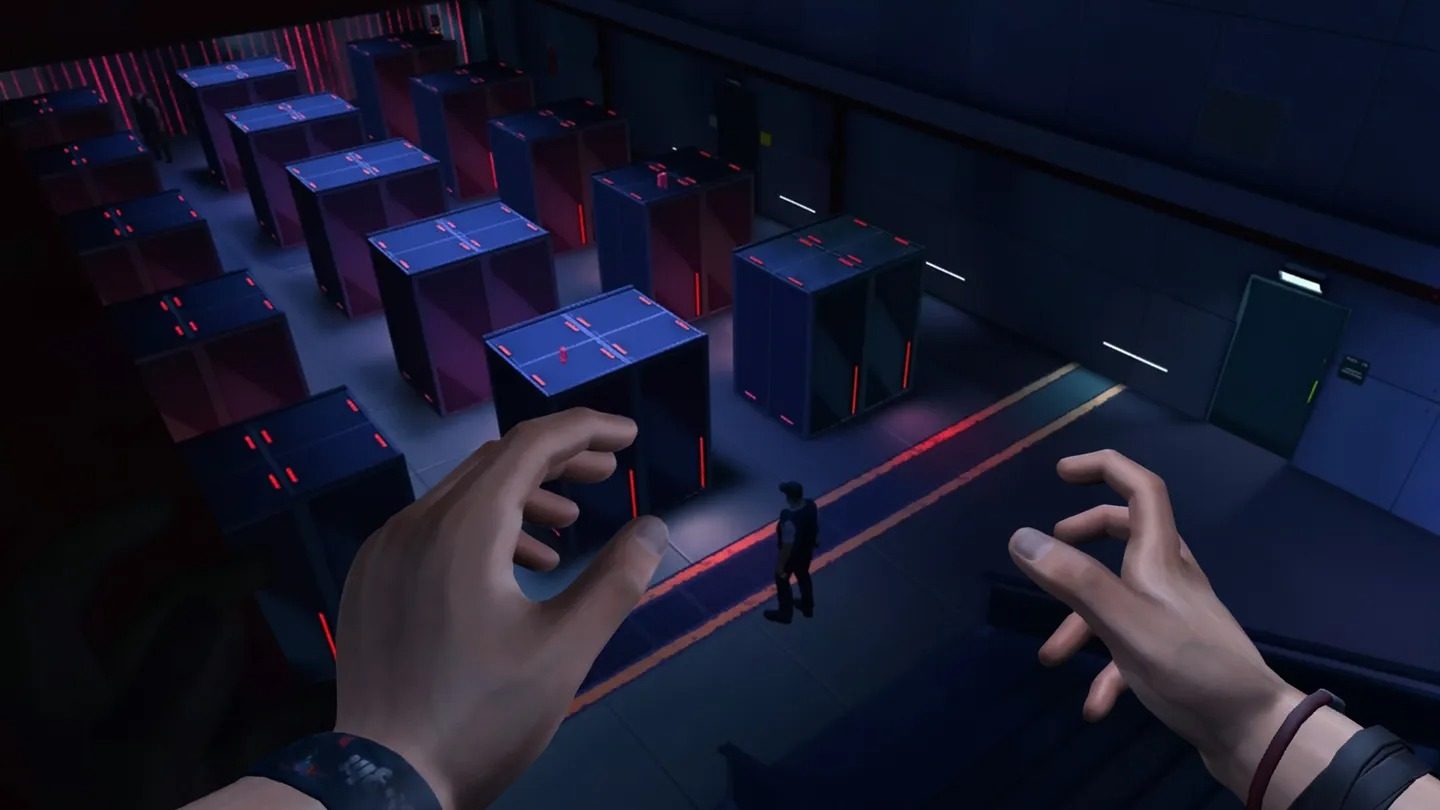
As for powers, you can grab and fling objects from afar to knock out baddies, teleport to close locations, x-ray through walls to see enemies, and pop heads by sneaking up behind them. Unfortunately, all of the game’s AI enemies are as distressingly stupid as the low-level guard seen below, but more on that in the Immersion section.
It’s admittedly a very cool and appropriately-balanced set of abilities, potentially positioning The Boys: Trigger Warning as a pretty good stealth-action game. I say “potentially” because I think a cool game is under there somewhere.
As it is, it feels both rushed and curbed in service of becoming a brand engagement vehicle—because let’s face it, the VR game is dropping just days ahead of The Boys’ final season coming next month. The consequence: it does very little to stop you from just bulldozing through levels, which seems to cheapen things.
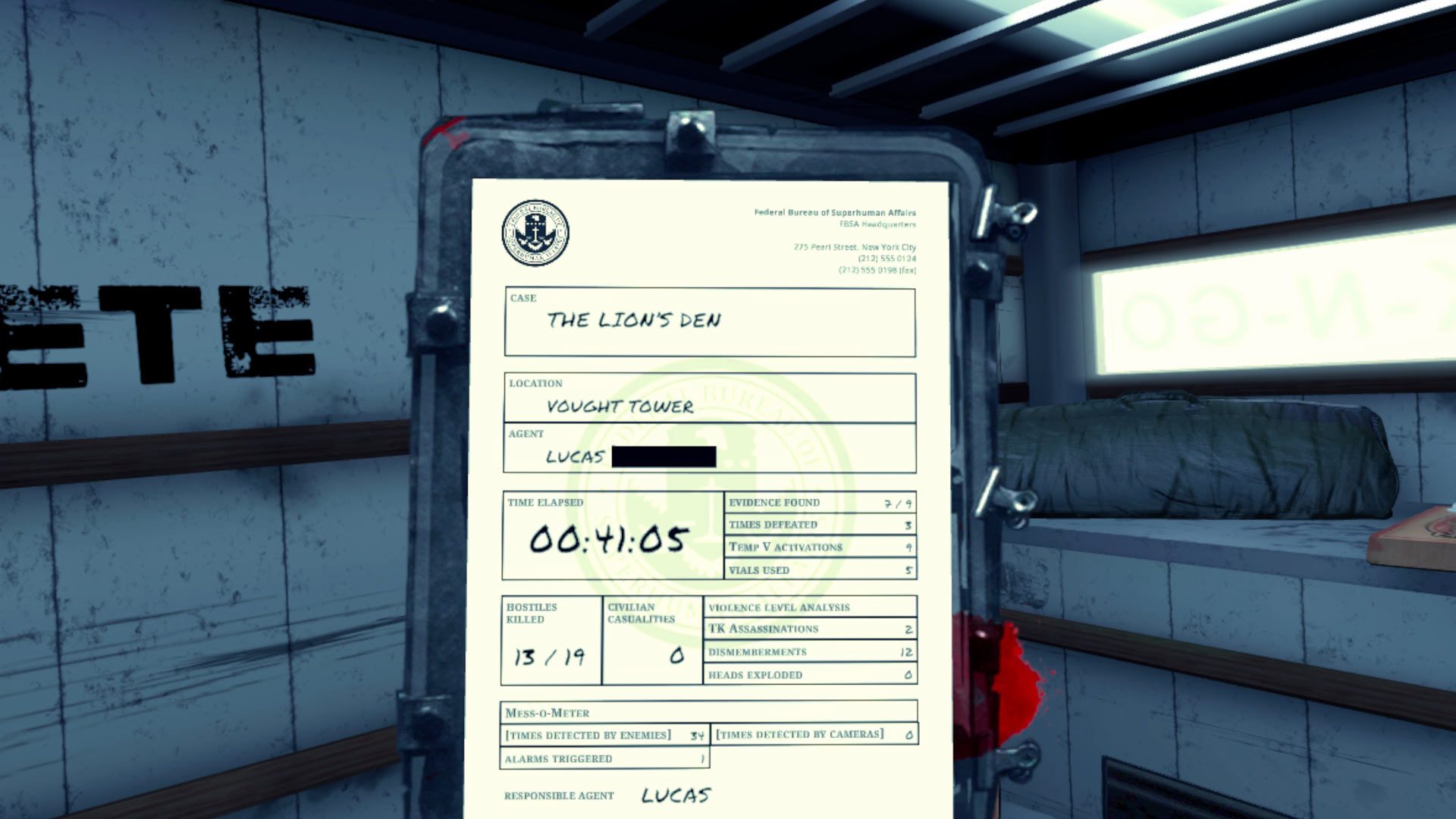
As far as I can tell, the only thing you can ‘earn’ are nominal achievements on your end-mission report card. As it is, there are no upgrades, unlockockables, or any way to select specific missions from the past to replay them.
Image captured by Road to VR
That said, it’s not all stalking through Vought’s office buildings and popping heads, although that is a bulk of the game. You’re also able to temporarily use three specific powers collected throughout the course of the game, which become much more important during its two boss fights (yes, only two) and handful of one-off encounters with higher-level baddies that require brute force tactics.
‘Bone Blades’ let you spawn giant blades so you can easily slice through bad guys, ‘Active Camouflage’ lets you bypass security cameras and guards, and ‘Laser Eyes’ let you blast lasers, well, out of your eyes, easily killing anyone in your path. They’re all really smart and cool editions, but I can’t help but feel like they may be a little too over powered.
Realistically, this lets you play in either stealth-action mode, or as a beat ’em up with no real incentive to choose either play style. As it is, the three regular enemy types are very simple to kill, and no amount of blaring security klaxons can really stop you.
Boss fights, of which there are only two, highlight some of the flaws in the game’s combat system. Controls are fairly densely packed; you not only have to jab yourself with one of three Temp V syringes on your belt holster, but you have to activate those power by holding down both he triggers and grip buttons, which essentially restricts your ability to teleport, since it also uses the trigger to activate.
Image courtesy ARVORE, Sony Pictures Virtual Reality
That said, I would consider level design to be very good, as it offers up plenty of hidden areas to explore, some of which contain much needed re-ups of Temp V, found notes, and audio logs. To be honest, I never bothered much with the found notes or logs though, as you have to physically pause to read or hear them.
With four hours of gameplay, I left feeling a bit confused overall. As a narrative experience, it feels right at home with The Boys. As a game though, it feels somewhat rushed, and maybe even toned down in difficulty to better serve as a brand engagement vehicle.
Immersion
A definite highlight for me is the game’s narrative, which really does the source material justice. Temp V isn’t good for your brain, and the more you take it, the more you start to see things. Big Soldier Boy isn’t real, and can’t hurt you. Maybe…
Image captured by Road to VR
I would have otherwise said the cartoony vibe was also a great fit for the VR adaptation, although some pretty robotic rigging puts it at odds with some of the more premium and refined elements on display.
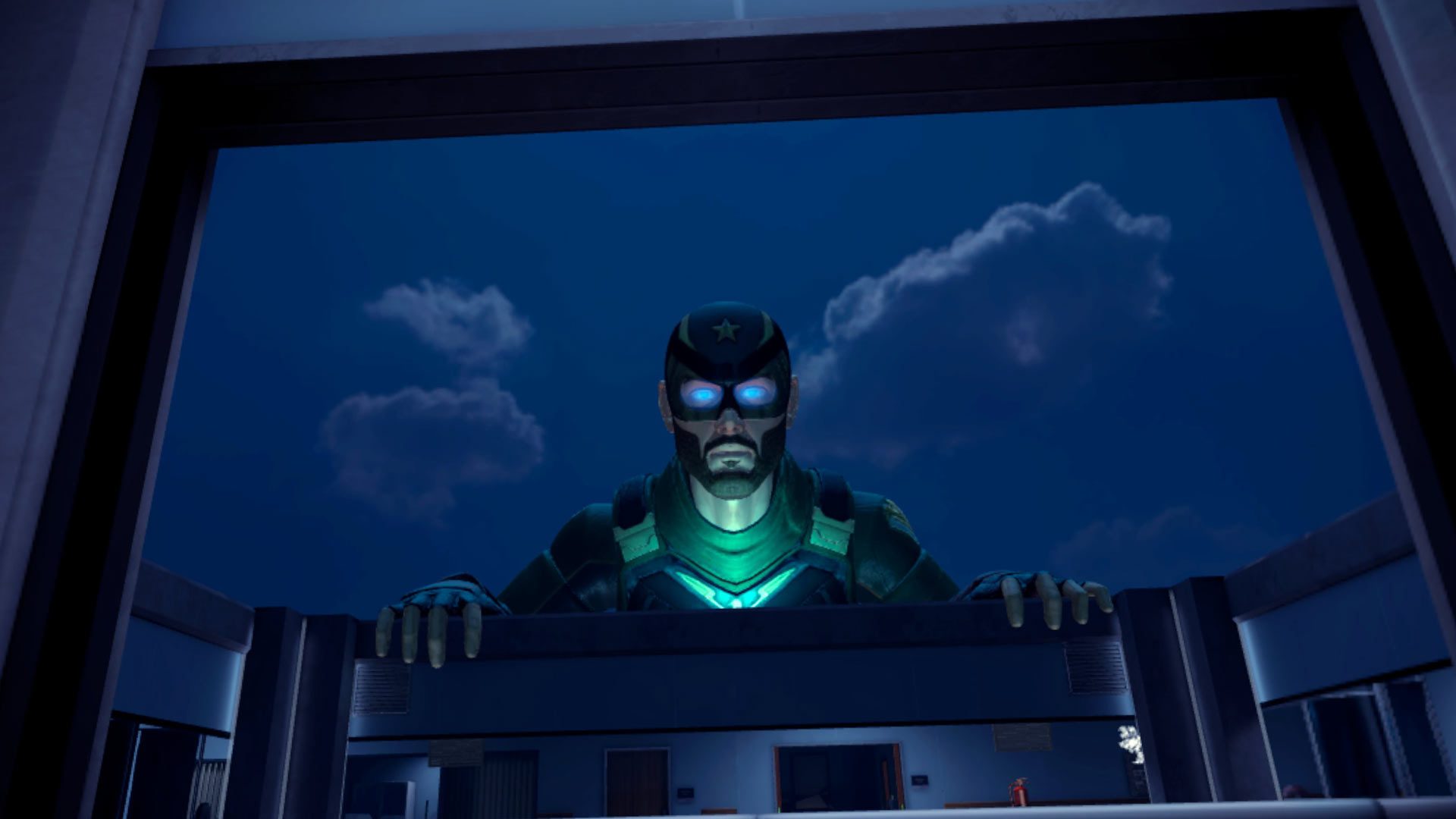
Laz Alonso (Mother’s Milk), Jensen Ackles (Soldier Boy), Colby Minifie (Ashley Barrett), and P.J. Byrne (Adam Bourke) have all reprised their roles in the game as voice actors. Although Butcher and Homelander are a big part of the game too, notably neither Karl Urban nor Anthony Star took part, which I was very surprised to learn when the credits finally rolled. Seasoned voice actors Gary Furlong (Butcher) and Jake Green (Homelander) served up excellent impressions, so much so I had to double take.
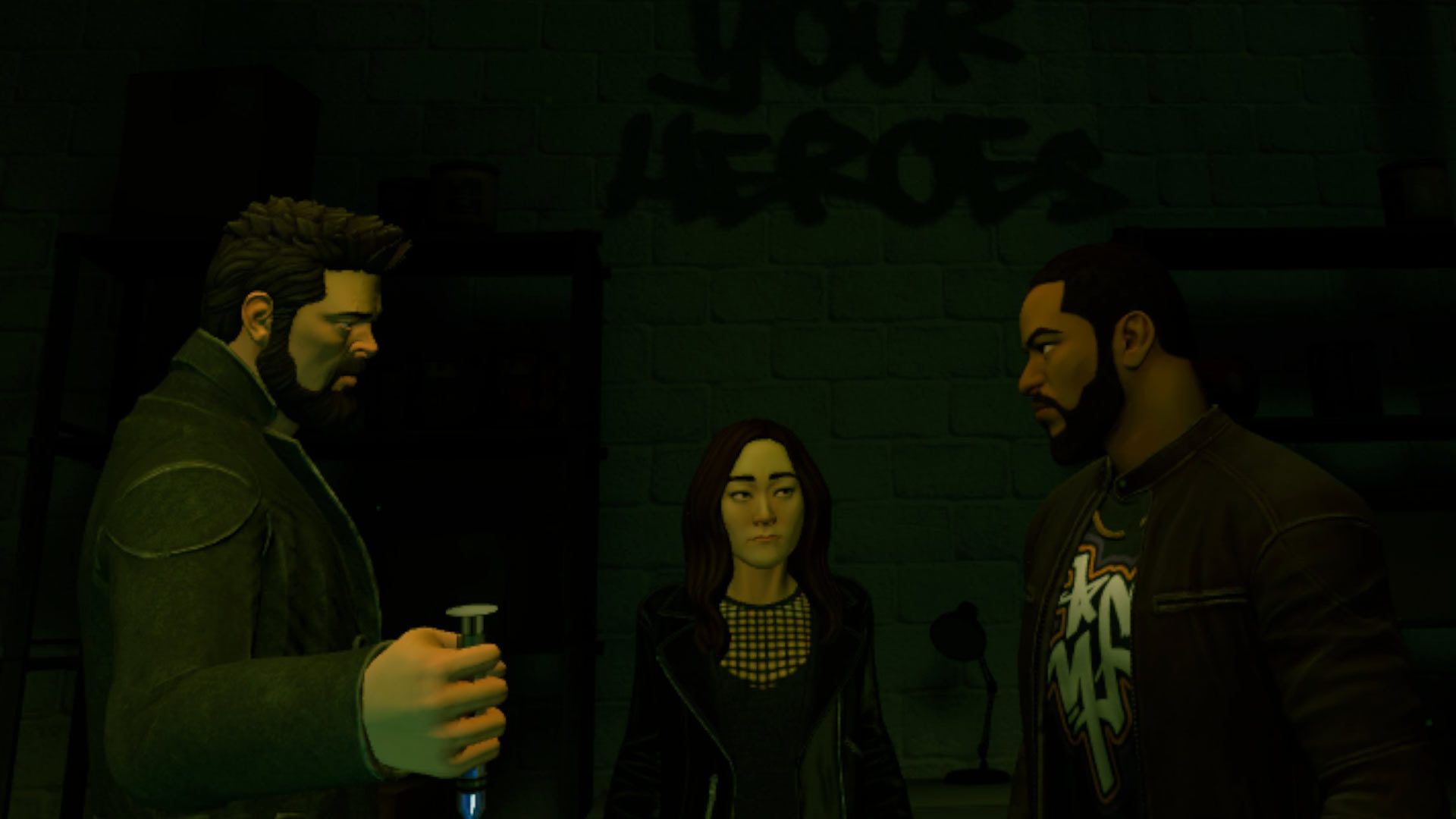
Still, characters feel robotically animated, with mouths looking more like they’re chewing on peanut butter than actually talking. It’s an odd thing to watch, especially since exposition dumps mostly happen when you’re just sitting on a stool and MM and Butcher are giving you a lecture, or prepping you for the next mission.
Image captured by Road to VR
Enemy AI is also just so bad it’s funny. Much like pigs, enemies can’t look up. They also apparently can’t see too far down an unobstructed corridor either, making stealth hits way too easy. At one point, when I realized just how much time I was wasting creeping through air ducts, I just decided to go ham and clear out every level by continuously juicing my Bone Blade Temp V. Who cares if an alarm goes off? Or if I’m caught on CC TV? It literally doesn’t matter, because there is effectively no reward, no penalty, or much of anything that can stop me from getting to that end mission screen.
As for object interaction, most of it is done via telekenisis, so you don’t physically pick up anything. It’s probably for the best, as your virtual hand position is off by a few inches, which makes coming out of VR a very strange experience for the first few minutes. As a touch typist, I kept hitting hitting the wrong keys on my keyboard when jotting down my thoughts after missions—totally throwing my body’s proprioception out of whack.
In all, if you’re a fan of The Boys, you’ll probably really appreciate the level of care when it comes to voice acting, general art direction, and narrative. Still, characters feel too wooden and robotic to be believed, and gameplay too dumbed down to be truly engaging.
Comfort
While there’s the full range of comfort options, I found that point of view would involuntarily move when inside air ducts, and even sometimes when standing still on solid ground, which can be uncomfortable since it’s not controlled by the user. Moving your stick corrects this behavior temporarily, although I imagine it will be the subject of a future update.
Otherwise, the game is very comfortable, provided you don’t push past your personal limits for frenetic movement, like you might need for boss fights or more-packed enemy encounters.
The Boys: Trigger Warning Comfort Settings – March 26th, 2026