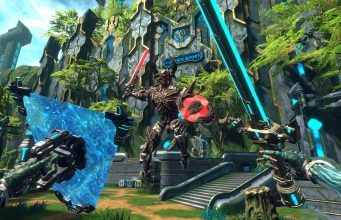
Originally released on PSVR 2 and PC VR earlier this year, Arken Age (2025) is now available on Quest 3, bringing some of the most immersive and engaging single-player action we’ve experienced in 2025.
Back in August, developer VitruviusVR announced the single-player, combat-focused adventure was coming to Quest 3 and Quest 3S sometime in November. But it got a release date bump, which means it’s actually now available on the standalone platform.
Arken Age is one of those highly-polished games that understands VR design from the get-go, seemingly drawing inspiration from some of the best, offering up shades of Stormland (2019) and Lone Echo (2017) to boot.
While we haven’t popped into the Quest port yet, early user reviews are however promising. Many reviewers laud it for its immersive combat, well-realized visuals, and mature VR mechanics—everything we knew it had in the first place, but reassuring to hear from first-time players on Quest.
The game currently sits at a [4.9/5] user score at this early date, which only accounts for 68 user reviews at the time of this writing.
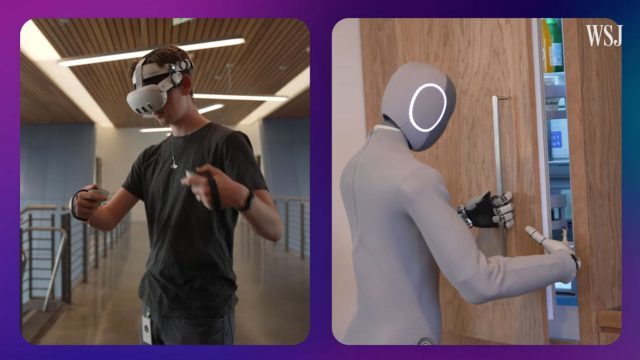
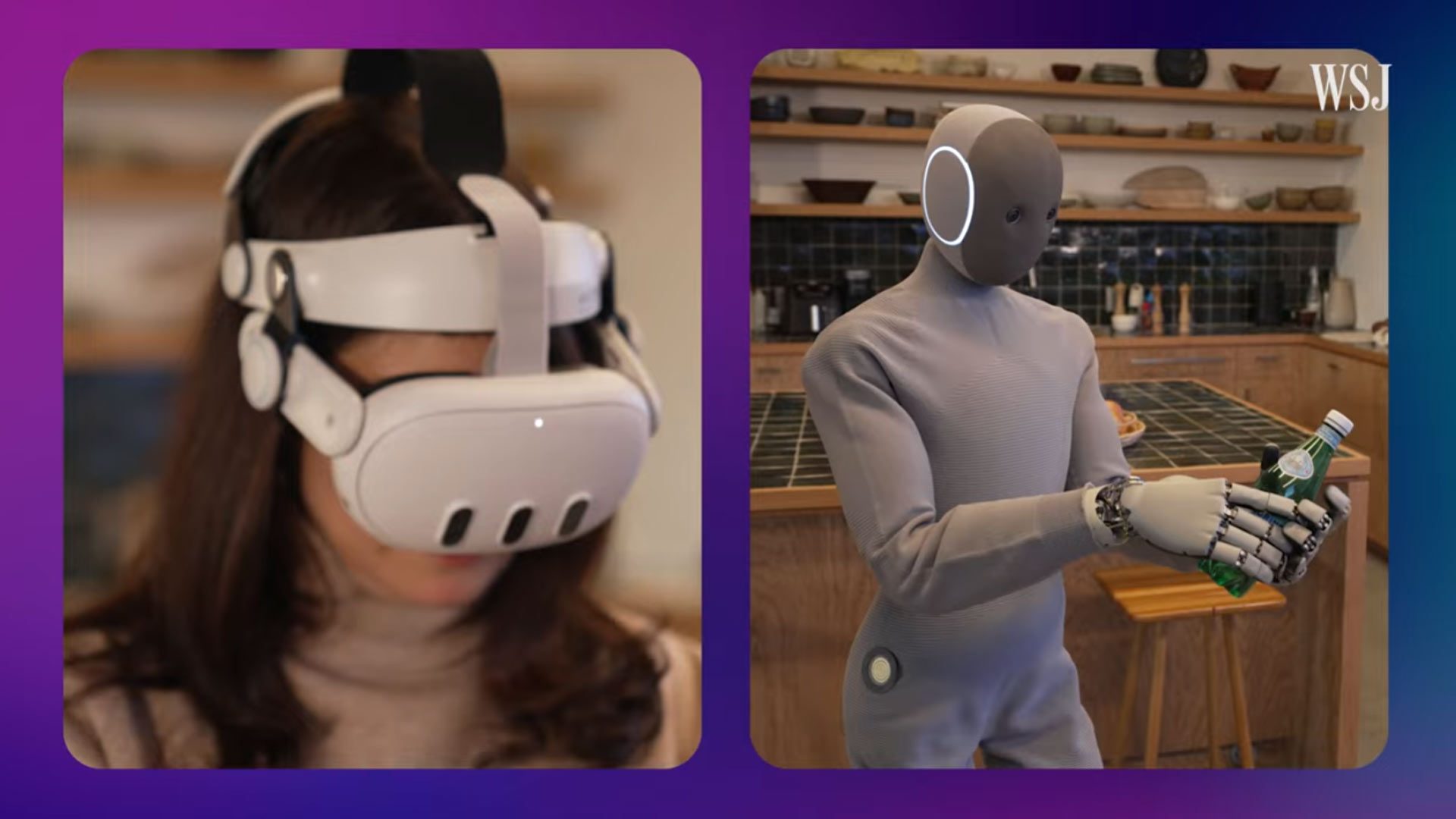
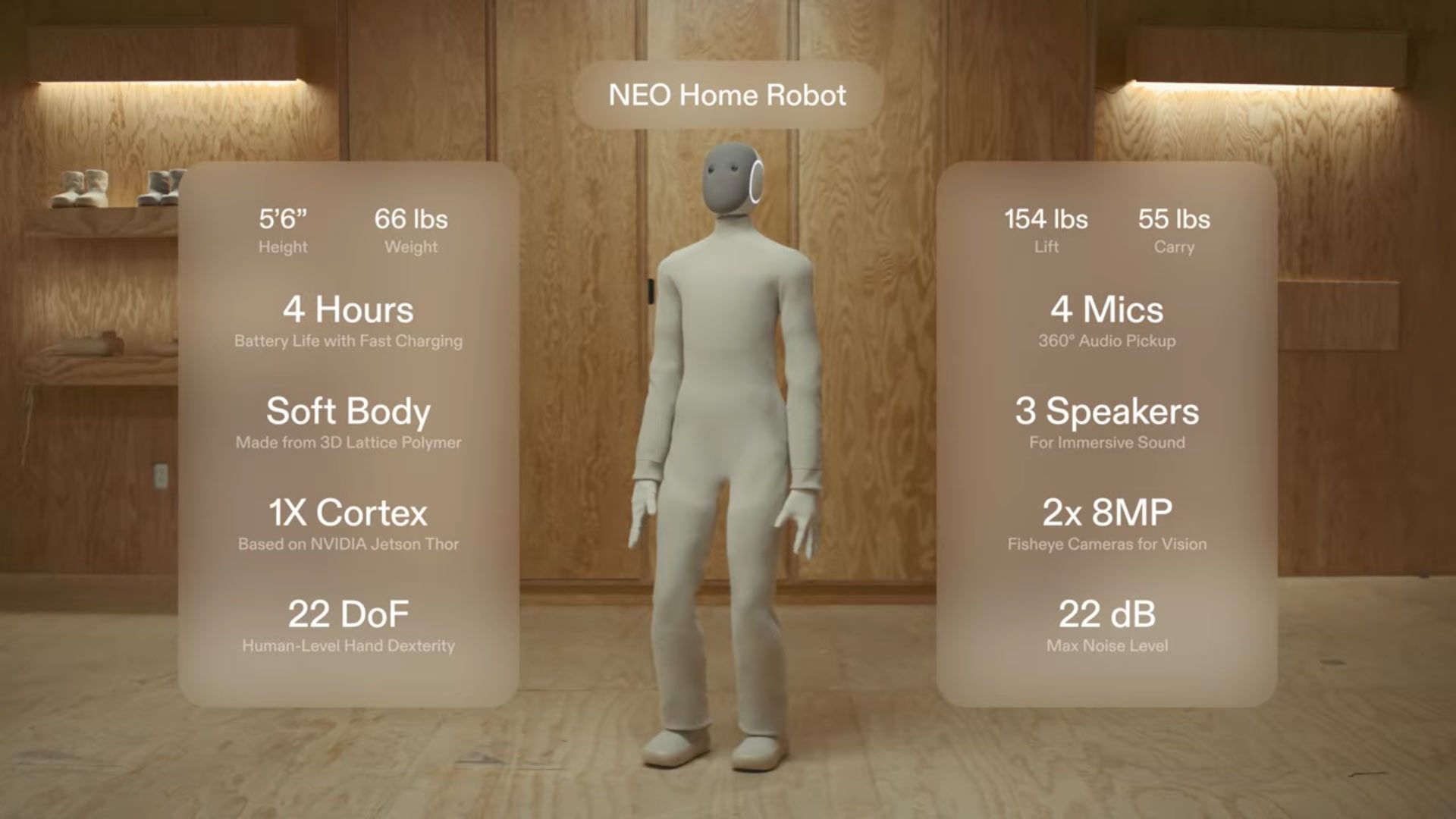
NEO is a humanoid robot from Palo Alto-based robotics startup 1X that could one day autonomously help out around your home. For now though, it’s using human operators wearing Quest 3 headsets to pick up the slack and teach Neo’s neural network the ropes in the process.
The News
The 66 pound, sweater-wearing robot doesn’t seem very capable on its own, at least for now. As Joanna Stern from The Wall Street Journal puts it in a recent interview (seen below), Neo’s neural network needs a helping hand to “learn from more real world experience,” like how to load a dishwasher, fetch a bottle of water from the fridge, or clean up the kitchen counter.
It’s doing that by looping in humans who wear VR headsets to teleoperate Neo during user-scheduled intervals in ‘Expert Mode’, which also includes a configurable list of more difficult tasks you want a Neo’s teleoperators to perform.
Image courtesy The Wall Street Journal
While Neo is said to be capable of numerous household tasks, it can’t pick up overly heavy items, hot things, or sharp things, 1X CEO and Founder Bernt Børnic says, which probably means it won’t be cooking a soufflé or helping you move a bedside table any time soon.
There are a few more limitations. While Neo can be limited from entering specific parts of your home, and even potentially blur out humans to preserve privacy, Børnic frames privacy concerns as a sliding scale of user permissions. The more data you give up, the better Neo can work.
“I think it’s quite important for me to just say that, in 2026, if you buy this product, it is because you’re okay with that social contract,” Børnich tells WSJ. “If we don’t have your data, we can’t make the product better. I’m a big fan of what I call like ‘big brother, big sister’ principle, right? Big sister helps you. Big brother is just there to kind of monitor you. And we are very much the big sister. Depending on how much you want to trade, we can be more useful, and you can decide where on that scale you want to be.”
Notably, during Neo’s demo with WSJ, the robot wasn’t performing any tasks autonomously. Still, Børnich says that Neo will do “most of the things in your home autonomously” when it ships next year, noting that the quality of work will “vary and will improve drastically quite fast as we get data.”
Neo is currently available to reserve for a $200 refundable fee, arriving in three different colorways; grey, taupe, and black. Neo is expected to ship in the US sometime in 2026, priced at $20,000 for outright ownership, or for a $500 monthly subscription. Watch the full demo and WSJ interview below for more:
My Take
For now, if you can afford to hire a daily maid service, you can probably afford Neo, which makes the $20,000 price tag an intriguing value proposition.
After all, there aren’t any traditional employment contracts, sick days, domestic insurance policies, or any other quality of life concerns to contend with—only a four hour battery life that can be quick charged when it runs flat. That, and you’ll probably need to launder Neo’s turtlenecked jumpsuit every once in a while.
Image courtesy 1X
Still, I’m not so sure Neo delivers as a maid replacement quite yet, at least after watching WSJ’s demo. Even with a human controlling it, who uniquely understands how a refrigerator door works and how to fold a shirt neatly, it still struggles to do basic tasks better and faster than a human without an expensive robot body. Okay, faster isn’t exactly that important, since you can schedule tasks when you’re away.
That said, some of that initial awkwardness seen in the WSJ demo can be explained by the input method itself. As they are today, off-the-shelf consumer VR headsets like Quest 3 don’t provide the sort of proprioception you need to instantly understand that a surface is soft and pliable, or hard and fragile. An onboard neural network might, but we haven’t seen that in action yet beyond what the company’s hype video, seen below.
Let’s call it what it is: experts teleoperating Neo is a stopgap measure. As it is now, having a teleoperator use a headset and two motion controllers to guide a robot makes for some very slow and deliberate movement, as they’re likely only going on visual cues alone—a bit like trying to pour a glass of red wine when both your hands are completely numb. There’s also probably a fair bit of latency too, but if the job gets done, then you probably don’t care who did it—neural network or telehuman—or what challenges they faced along the way.
For now, I wonder how much time a teleoperator will have to spend painstakingly pouring laundry detergent into a cup, only to accidentally spill it. Does it have the dexterity to clean up the sticky mess? And what happens if it knocks over my priceless Ming vase? Or the dog takes a leak on my marble floors and Neo slips and falls, covering itself with dog piss? What sort of mess will I (or my human maids) have to contend with when I get back to my sensibly decorated villa?
Forgive the flagrant ‘rich guy’ framing above, but those are the only realistic scenarios I can muster at this stage. Whatever the case, I think it’s far too early to jump to the usual perils provided by Black Mirror, I, Robot (2004), or even Battlestar Galactica. More than anything, I think people buying Neo will more likely be asking themselves “what will my friends say when they learn I have a robot butler?” And probably not much else.
Still, there are other implications that go beyond using Neo as a walking, talking Google Nest, as neat as that may be. Provided Neo owners can connect using a Quest 3 like we see in the hype video, you might be able to telecommute back home to see where you left your keys, make sure the back door is locked, or check up on the dog to make sure they haven’t gotten into the pantry. Maybe not worth $20,000, but it’s a neat use case 1X should leverage if they haven’t already.
Despite running Road to VR for 14 years, I’ve rarely had the opportunity to talk behind-the-scenes about the publication and my philosophy for covering this fascinating industry. Luckily I recently sat down with industry fellow Tony Vitillo to do just that.
After crossing paths at industry events over many years, Vitillo recently invited me to sit down for the inside scoop on Road to VR and my take on this moment in the industry.
You can watch, listen, or reach the full interview below.
Introduction
Tony: Hello everyone from Tony the Skarred Ghost. Today I’m super excited to hear some a person of the XR space team a lot which is Benjamin Lang from Road to VR and we’re going to spend some time together talking about a lot of cool things. Hey Ben, thanks for joining me.
Ben: Thanks for having me Tony. It’s nice to finally have a kind of formal conversation here after we’ve interacted for so many years in the industry.
Tony: Yeah, I mean it’s been a long time for both of us, even much longer for you. So, but we’ll talk about this, but let’s start by, I guess maybe there are still a couple of people, I guess maybe just a couple that still don’t know you. So, can you introduce yourself?
The Origins of Road to VR
Ben: Sure. So I’m Ben Lang. I am the co-founder and executive editor of Roadtovr.com. I started this back in 2011, so we’re coming up on 15 years, next month I think. Yeah, I just I was really curious about virtual reality and augmented reality technology kind of in the early days actually before Oculus was founded. Oculus was founded like late 2011, maybe early 2012 or at least the the Kickstarter was 2012 for the original Oculus Rift. So I was a little bit before that and nothing was really happening in the space at the time.
My curiosity was really: where did virtual reality go? A lot of people are familiar with the fact that in the late 80s, early 90s, there was VR kind of had a moment in the spotlight there. There were things happening, but it kind of just completely petered out. And by the time that I had started Road to VR in 2011, there was no real such thing as like a consumer VR product on the market that you could just go buy. It was all like the the stuff that did still exist was all medical, high-end military. it just it wasn’t it never happened for consumers. So I was like what happened to that? So I got really curious about where the technology was then and where might it go 15 years later and hence hence “Road to” VR. So I wanted to sort of chart where we were and where things might go in the future. And now here we are.
We went from when I was writing about kind of just scraps of information to a couple years later we had the Oculus Rift Kickstarter and what we started to call the VR community starting to come along. Now everybody says the VR industry or the XR industry. This is a whole multi-billion dollar industry that’s happened that’s grown up and I’ve watched it from the beginning to today. So, I have luckily a lot of context for what’s going on and I’ve been reporting on all of that as we’ve gone along and hoping to try to help people understand where where we’re at and again, where we’re where it’s all heading.
What Led You to Start Road to VR Before Oculus was on the Scene?
Tony: Yeah, that’s that’s pretty fascinating story because you started before the Kickstarter campaign and I always wondered if you had like the feeling that something was happening or it was just luck. I mean, you just had this passion and then the after something happened. Did you start Road To VR because you felt Oculus was coming?
Ben: Yeah, I mean I’d love to say I just, it was total prophecy, but let’s be honest, it was some luck. But I will say there was a the thesis behind it was at the time in 2010-2011 I was actually doing tech journalism prior to Road to VR. I was writing about smartphones and tablets and pocket computers and all these things. So I was immersed sort of in the tech space and I was seeing that we were having things like touchscreens, like Siri, like Kinect, and Wii and what I was seeing in those things was that computing was moving away from a keyboard and a mouse or a controller and it was starting to become more human-centric. The way that we were interacting with our devices was starting to become more natural.
And so I started to think about from that like where does this go as it becomes more and more natural? It sort of it feels like that ultimate destination is not only are you like touching the digital content, you’re actually looking at it it’s actually surrounding you or it lives in your environment, hence the ‘I wonder what happened to VR and where might it go in the future’; so yeah that was it was a bit of a hunch and it was a bit of right time right place.
I started road to VR when I was in college really as a total side hobby project. Just to learn for myself what was going on. And by the time I graduated college, it was like, okay, people are actually interested and things are starting to happen. Should I go full-time with this? And 15 years later or so, apparently I made a career out of it.
Philosophy on Writing VR Product Reviews
Tony: Well, I think you deserve the success you have. I mean, I always mention you and my blog as my “review hero”. I think you’re a great journalist. I want to steal something of your knowledge. Before getting back to talking about VR, I want to talk about the intersection of VR and journalism and ask you for instance, how do you approach writing a good review? What are the criteria to write a good review? Maybe about a game or about a hardware.
Ben: I try my hardest to not get wrapped up in the hype of stuff. And this isn’t even purely a professional thing. I’m a pretty avid gamer. I like movies. We see trailers for games and movies and, they all look awesome. I just, for whatever reason, I’m pretty good at not letting my hype levels build something up. And I’m also not particularly forgiving about the circumstance of the thing’s creation. And that’s not to say I don’t appreciate all the hard work and the struggle that goes into making things, even if they don’t turn out amazing.
But the way that I tend to approach reviews is a pretty pragmatic thing as someone who does this as a job. My thought is my audience is the audience of readers. My job is to help them understand if the thing that I’m reviewing is worth their time and their money. If I’m serving any other purpose other than that, I don’t think I’m doing them justice. I don’t think I am giving my audience what I hope they get out of the site. So I do my best to really ask myself (for a game review), am I having fun? You can talk about the graphics and you talk about all this and all that, but like if I’m not compelled to be going through this game, if I’m just not enjoying it, then I’m not going to get distracted by those other factors —like, oh, it took five years to make and it was a miracle that it got off the ground or whatever. Again, appreciate all that, but when it comes to answering the question for my audience, is this worth your time and money? That’s really where my focus is.
I don’t want it to like come off sounding like I don’t care about developers. That’s actually completely not the truth at all. That’s just my kind of take on reviews. When it comes to developers, I mean, ask around the industry. Like, I’ve been hands-on with a lot of projects before they were ever announced, giving people advice on marketing and design and comfort. There’s a lot of stuff that I do because I want to see great content. I want to see developers succeed. That’s all really important for keeping VR growing.
But I do occasionally get comments on like a review where I’m like “I didn’t think this game really pulled it off.” We didn’t give it the best score in the world. And I’ll get a comment that’s like, “you’re you’re destroying the VR industry. You are ruining this by giving this game a bad score.”
And I understand that reaction, but it kind of blows my mind because I think if you take, more than 10 seconds to come up with that knee-jerk reaction, you realize that if I’m artificially inflating a score of a of a game that I didn’t really think I liked, but I thought, “Oh, this is going to hurt the the industry.” All I would be doing is setting an incorrect expectation for people.
If I say “this is a great game” and really it was down here, but I was sort of fluffing it for the sake of the industry or the developer or something, all I’m doing is having people think, “okay, the VR people are saying this game is great, but I don’t think it’s very good. So, if this is what they’re calling a great VR game, then there must not be very many good great VR games.”
So, I really think that honesty is actually in the industry’s long-term interest. I think it is the healthiest thing you can do. For me it’s not about cheerleading. It is about trying to give constructive honest feedback and help people understand is this product or game for them? And hopefully that honest feedback means that developers can change and see what needs to be tweaked instead of just saying like “this game is amazing” when it’s just not. So yeah that is my approach to reviews. But again, it’s not that I don’t care about the industry. It’s that I genuinely think that this approach to honest, objective, and trying to keep everybody like on the same page and not being super promotional; I think that is in the industry’s interest in the long term.
Principles of Good VR Journalism
Tony: I think that’s that’s very wise. I totally agree with you also because anyway, people then play the game if this is not good, they immediately comment saying that it’s bad. So it’s makes no sense to to lie about stuff and this is a very good way of working. Do you think there are also some rules that a good VR journalist should follow more in general not only about reviews about sources about rumors we have a lot of them? Do you have some let’s say lessons to share about how to be a good VR journalist?
Ben: I don’t think it’s even unique to VR, I mean there’s a lot of basic stuff. As any journalist, you should be you should be confident in the information. If you’re not confident in the information, you should say, “This is a rumor. We haven’t verified it.”
I would say are fairly unique in this sort of day and age of media in general, which has become very influencer heavy. I wouldn’t call myself an influencer. Not in the way that most marketing or PR people use the term. We kind of live in this world where influencers are sort of an outgrowth of marketing and so they’re many of them—not all of them—are kind of the hype people for some of these products and services and whatever. They form a close relationship with some company or many companies to get products and they know in the back of their head “if I’m not saying good things about this about this product then I’m not going to be on this company’s good terms anymore. I’m not going to get the cool freebies blah blah blah.”
So we really try to from the very beginning to have steered Road to VR toward more journalism and reporting versus influencer marketing. People approach us all the time with the same kinds of deals and perks and things that they offer to influencer type people and we just have a pretty hard line and set of rules to guide how we’re going to handle that stuff.
So, for instance, many games will send influencers like a ‘swag kit’ with all kinds of cool stuff, statues or memorabilia from the game. And they expect influencers to, post coverage on this and say, “This is so cool. I got this figurine from the game. I can’t wait to play it. It’s awesome. Look how cool it is.” And our stance is when people come to us asking if we want that swag kit, we just say, “We appreciate the offer, but if it’s not directly related or necessary to our coverage of the thing, then we would politely decline.” And it’s just it’s a lot of little details like that we really try our best to keep in place and stay truthful to make our reporting good.
I will say, for a lot of people, this doesn’t matter one bit. We have passed up tons of money over the years in deals and offers to do this stuff, because I personally think it’s important and it is the kind of reporting and information that I would like to read from sources that do these kinds of things. Most people don’t really care. So it is an unfortunate reality of the media landscape that we live in that by doing these things you actually make it harder for yourself in terms of running a sustainable business. We’ve managed to get by because we’re a scrappy team and we know what we’re doing. But it is the harder path for sure. But I wouldn’t I wouldn’t do it any other way. It’s just so important to me. And I hope that maybe one day people will be a little more willing to support people who operate in this way in their interest, not in the interest of advertisers or marketers or these other kind of parties that are behind them.
Getting Featured on Road to VR
Tony: Well, that’s very interesting. By the way, if I can tell you an opinion from outside actually you are at very high reputation because people can feel that you are very serious and not appreciate that both by gifts or other stuff like that. So it will pay in the long run. I’m pretty sure about that but in the short run it’s it’s problem for the money. I mean we all we all know that we are not in the best moment for the ecosystem.
But compliments of what you’re doing and since we all love your magazine actually many people me included in the past for some things I did try to get coverage on your magazine but you’re mostly two people, you and Scott, that write most of the articles and of course you cannot write 50 articles per day so you have to be very selective. How can people let’s say be chosen as the as the topic of some articles you’re writing on your blog, your magazine?
Ben: It’s a good question. And yes, I’ve definitely fielded incoming, things from you and cool stuff that you’ve done and we’ve also reported on some news that you’ve broken and stuff like that. So, we do source you. But, to be to go back to what I was talking about, we try to be kind of objective with our coverage.
We love you and the stuff that you do. But when you came out and have asked us in the past to maybe cover something that you were working on, it’s not a guaranteed thing just because we have some kind of relationship. And that’s important to us. So, it comes down to two things. I mean, the primary one is a bandwidth. As you said, we can’t write 50 articles a day. I would love to. There are a lot of things that I have to pass on that I think are really interesting, but we simply don’t have the time for it, unfortunately. That is the that is kind of the number one thing that stops us from covering stuff. If I could cover everything that I found interesting, we’d have a lot more stuff going out the door. But you’re right, we have to be selective about it. And what that ends up coming down to is usually just kind of a priority list.
So something like what you were working on may have started at the top of the list. And I’m just using as an example. This wouldn’t be exactly how it happened, but it might; I might be going through my inbox and through my feeds and looking for what I’m going to cover in a given period. And that thing might have been at the top of my list and then maybe I get through and there’s some other thing up here and another thing and I start on that list and I just don’t always make it to the bottom of that list unfortunately.
We really do our best but we’re trying to we’re trying to balance solid reporting and giving a lot of context and analysis in our articles compared to just repeating what a company has said that you could just go read what they already said. So, we spend a lot of time trying to make sure that our reporting is adding some value as opposed to just sort of rehashing the facts out there. And unfortunately, that takes quite a bit more time.
So, I would say, in terms of like, okay, “we want to pitch road to VR, how do we do it the best way?” Please email us or reach out. Like, I read all of it. I can’t always respond to all of it, but I read all of it. I appreciate it. I appreciate seeing what people are working on and what they’re doing. And I would say I’ve covered some really small projects that maybe somebody thought “it’s not worth the pitch” but I just thought was really unique and interesting and for whatever reason I wanted to highlight this thing. For me it comes down to a lot of like interesting design and interaction and development stuff I find particularly intriguing. But of course we have to cover the major news stuff anyway.
So I would say comes down sometimes to individual sort of reporter interest. So we have me and Scott who are doing the vast majority of the content on Road of VR and as two different people we have different interests and things that are going to pique our interest and that we’re going to want to write about. I think if you want to pitch us or really any other publication rather than just throwing something at the publication as a whole, go to some authors that have written about similar things that you’re working on and get an idea of, okay, this person tends to cover, let’s say new launch trailers for games. If there’s one person that really focuses on that, try to reach out to them specifically and say, “Hey, I’ve read your reporting. I see what you do. I love that you keep me up to date.” Make make an effort to understand who you’re actually talking to in the first place. I think that goes quite a long way. Compared to just sending a generic pitch out the door.
And yes, that’s more work. Of course, but in the day and age of AI, you can get a real leg up on that by getting some information and maybe using it to write more custom prompts faster than you would have been able to do it by hand. So there’s a lot of different things out there, but for us in particular, definitely reach out. You never know what really might pique our interest. And keep us up to date. There have been some projects where somebody has written and we read it and we just didn’t have the time to do it. And then on the third time that they sent us information and they reach a certain milestone, we said, “Oh, this has reached a point where we think we’d like to cover it now.” So, it’s not like, “Oh, we just want one and done, get out of there.” It’s really sort of a combination of our bandwidth, our interest, and again, we love to stay up to date even if we’re not necessarily able to write about everything people send us. Like, please keep it coming. We like to be in the loop and seeing what’s happening.
Marketing Advice for Indie VR Studios
Tony: Well, that’s a very good suggestion to all the people outside there and especially some category of people I’m interested into is the VR indie game studios because there are many people with the small studios that try to succeed in this space where it’s very hard to be noticed by magazines to be featured on the stores because that’s a huge problem since you work anyway between you are an expert of the of our ecosystem, you have knowledge about marketing, about journalism, etc.
In general, what suggestion do you want to give maybe to these people to try to be noticed and be successful in general? So, not only talking about feature being featured on your magazine.
Ben: So, similar thing it is definitely making sure that you understand your audience. And that’s both who you’re developing for and then who you are sort of pitching to try to find coverage. So let’s just say there’s other outlets out there. You should really spend, do your 30 minutes of basic research to understand what are like my top five targets that I would love to be able to be covered in and go understand a little bit or learn a little bit, research a little bit about what is it that they do. Understand their mission.
The closer you get to understanding who you’re actually pitching to, the easier it’s going to be. And again, like I say, I find it, tends to be very valuable to go find a specific person rather than just the name of the organization and send it to some generic, inbox. If you can find a specific person and reach out to that specific person and they’ve covered stuff that you’ve done before or I’m sorry, covered things that are similar to what you’re working on, they’re probably interested in what you’re working on, too. And you can you know make that pitch to them.
I think also there is a I would say a minimum bar of polish that is somewhat important. Ideally when you’re sort of pitching your game or app or whatever it is, you should think about how do I make this how do I make this as easy as possible for the person to cover me? In many cases, one of the biggest things to do for that is help them approach them with a thesis. Don’t just say, “I’m making a game.” Look at it. It’s fun. Approach them with a thesis.
It’s, “I’m making a game. It has this particularly unique feature that I’ve spent a lot of time on that does X, Y, and Z better than, any other game in its genre. Help them have an angle. They don’t necessarily have to take your angle, but if you approach them with an angle for what makes your thing unique, that is going to get you so much farther than just coming and saying, “I’m working on a thing. Please look at it and figure out what’s interesting about it and write and do that work for me to figure out what’s interesting to tell your audience about.”
Much more much more effective if you have inside your own head an idea of what makes your game unique and stand out, what you’re especially proud of with this thing. And I think that’s not even just for marketing. Like, if you’re building something, you can’t just build like a similarly good version of another thing that’s very similar. Otherwise, why would people who are already using that go to another thing? There’s got to be a standout feature. There’s got to be a hook that really makes people want to try your experience.
So, you should know that from the beginning how and be building actively building your app to foster this hook that you’re creating. And then that all ends up, that doing that basic groundwork of knowing what is my hook, what is what am I trying to do to make this game stand out? Like a very specific thing, not just like I’m making a great shooter. It’s like a very it should be a very specific thing. I’m making a shooter which has the best weapon handling or the best weapon customization ever seen in VR. You got to you got to believe that you’re building that and deliver it. Otherwise, you’re just making a shooter. And there’s lots of them out there.
So, yeah. It’s be specific about sort of your vision. And once you do that work to know what you’re building in the first place, it’s going to be so much easier to pitch your thing. Because if you started with that thesis and building the product, you’re not inventing a story out of out of thin air from what you made, you are sort of, staying true to what you’re what you’re actually working on in the first place. And that’ll make everything else easier. It’ll make trailers easier. It’ll make pitching easier. It’ll make selling easier.
Design Tips for VR Experiences
Tony: So yeah, that’s a very it’s a great advice. I think it’s a very good advice for all the indie developers out there. And I want to ask you another advice about another topic because one of the columns I like the most from you delving into VR design. So interaction design of VR experiences etc. And I know you wrote quite a good number of articles about that so you cannot summarize them in five minutes now, but if you can choose maybe a couple of suggestions you want to give people in general about how to design their experience. So, it’s good to use and maybe also manageable.
Ben: Yeah, that’s definitely a tough one. Because it is a huge area. And so, yeah, I try my best in my coverage to help sort of raise up and highlight the design side of VR development. I think there and AR, XR, all of it really. I think there are there is a huge emphasis on the sort of coding or programming side of development and I don’t see nearly as many resources on the design side which I think for VR is extremely important because on the one hand it’s more challenging because it’s 3D and on the other hand it well it’s multi-dimensional. It’s not your mouse and keyboard input. But on the other hand it’s newer.
We can’t carry over so many of the paradigms that have, come up over the last 25 years of gaming of flat screen gaming design. They just don’t translate. I see I see this mistake happen a lot. Like you’ll have someone who says, “Okay, I want to make an RPG.” So, they take what a flat screen RPG looks like and kind of bring it into VR, but they don’t do the the heavy design work. So, you’ll have like a VR RPG with a with like a laser pointer inventory management. And there’s like a lot of inventory management and like pointing with a laser pointer and dragging and dropping and put equipping my stuff by dragging a square picture onto a picture of my guy. It does not necessarily fun in VR.
And so if you don’t do the it’s the difference between taking a concept and taking a feature. So, if UI management with a big grid and a bunch of icons is a feature, you don’t want the feature, you want the concept. In RPGs, it is fun to get equipment. It is fun to equip new stuff. It is fun to get those upgrades. But the fun part is not using the laser pointer, using your mouse, and dragging it around, at least not in VR. So you need to think about how do I bring how do I bring inventory management to VR in a way that is native and enjoyable to VR instead of just bringing the feature as it was built on flat screen.
And you can say this about so many things and it’s hard to completely like the way that flat screen inventory management works. There’s a there’s a common set of ideas now that most people understand and when a new game comes up they pretty much bring those ideas over maybe little tweaks here and there but for VR you’re in fairly uncharted territory. And so I think the best way to approach this, is actually not invent it from scratch if you don’t have to. Because there are a lot of VR games out there and there is a lot of really smart design out there that if you have a wide enough knowledge of having played enough VR content, you will see some really smart little things that people have done.
Inventory management, weapon management, how a door works, like all this stuff is out there, and it pains me to see VR developers spend a ton of time reinventing them when another developer has already showed a pretty darn good shot at it, like a good starting point that could be brought over and adopted, save you a bunch of time, and let you work on your actual unique thing that no one else has done yet.
So that’s the whole reason why you mentioned I have this video series and article series called Inside XR Design. I’m sure you can find, if anyone’s interested, find the, just search it on YouTube. It’s all there. In those videos, I’m trying my hardest to find games that are doing things uniquely well that have not been recognized or re, we haven’t seen that their what they their contribution to the design repeated anywhere. It hasn’t made its way into the design language of VR for a million reasons. Sometimes the game is not popular enough or it’s hard to people don’t want to put on the headset and look at it and say, “Okay, I’m going to recreate it and I’m going to take off the headset and jump into my game.” It’s difficult.
So, I’m trying to get those ideas out of the headset for people so they don’t have to go in themselves and look at it. Put them in a video, make it accessible. I want everybody to learn from this stuff. Maybe even learn what people have done wrong, that’s important, too. And I want people to be able to build on this. Why I would hate to see developer waste time, trying to rethink about again, how exactly should a door open when there’s great examples of the best way to do that out there already. Or how do we how do we spawn people? How do we move people comfortably? Like there’s all these what I think of in my head as lessons out here where I’ve played these games and said, “Wow, that is look at that. They did an awesome job with that.”
For instance, the cover system in Synapse comes to mind. You can like grab any wall with your hand and you can move your body around with it and it makes this really natural peaking, cover system that I haven’t seen replicated in a lot of places. And then you’ll have games where it’s a functionally a cover shooter, but they don’t give you that tool. They just expect you to be crouching down and it’s a sort of a worse experience for it. Why not attach that feature? Like there’s so many of these little lessons.
So, inside XR design is there to try to highlight some of these interesting design contributions. Less development, more on the design, the why behind how it works as opposed to the how it works like coding and programming. And yeah, it’s there’s a thousand things and it’s tough for VR developers. I absolutely understand that. And that’s sort of why I think trying to build upon the base foundation of what’s been done already gets you so much further than going in and saying I have to make every single system and feature from scratch as if I as if no one else has done it before.
So yeah, it’s sometimes people are trying to carry over features from the flat screen stuff which is not good and other times people are trying to recreate VR native features from scratch which is also it’s not the worst thing but it’s going to take you a lot more time and effort. So finding the VR version of the flat screen feature and going from there I think is tends to elevate VR games to be more immersive and more interesting. And frankly, a VR game needs to be more fun to play in a headset than it would be on a flat screen. That’s like a critical bar. Otherwise, why would I put on the headset in the first place?
The Evolution of XR Over the Last 15 Years
Tony: Oh, that’s amazing. So, now I want to get back, let’s say, to the origins. You said you started in 2011 and now it’s almost 15 years, etc. So, how have you seen the evolution of the XR ecosystem? I mean what has remained the same? What has changed? What has gone in a different ways from the original plan? I mean what’s your perception of the evolution of the space in the last 15 years?
Ben: I think the thing that stands out to me probably is that I think hardware like headsets, let’s talk about VR in particular, has evolved more slowly than I would have expected. I mean yes let’s go back 14 years to the Rift DK1 we have come a long way since then but since let’s say the Oculus Rift CV1 the first Oculus headset it had six degrees of tracking and not too long after launch it had full motion controllers—things are not fundamentally different today, the headsets are functionally in the same class of size and weight we have the same tracking features for six DoF on head and hands.
There’s definitely improvements to the experience generally. Standalone is a big help. Wireless is a big help. Inside out tracking is huge. But like the box that we were in our head, I still would have forecasted or at least hoped would change faster, become smaller, more comfortable, but we’re still kind of in the same place.
My hope is that once we sort of reach all the good enough levels of things like field of view and resolution, then the size will start coming down. Cuz we exist in this space where at the beginning resolution had to be like the most important thing. It was just screen door effect and all of that was really rough. It was distracting. It reduced immersion. So, we had to get that up. So, in order to increase the resolution, it’d be very difficult to both increase the number of pixels on the screen while also shrinking the size of the screen. That’s like doing, double the work all at once.
So, the headsets have, I think, stayed the same largely because we’ve wanted to get like the baseline like the tracking and the resolution and the various features up to where it’s like we’re good enough and we don’t have to go any further. I’m in a Vision Pro right now and the resolution on this thing I would be fine if it stayed this way forever. It there’s diminishing returns. It could get a little bit better. But it’s really quite good. And if I was given a choice between double the resolution on the next version of this headset or half the size of the headset, I would 100% go half the size on the headset.
So, I think we are just hitting this peak hopefully where we’re where we’re kind of maxing out on the features that we even want in the form factor. And then hopefully from there the emphasis becomes smaller, more comfortable, etc.
On the software side of things, I still sort of I’m still waiting patiently for something like Vision Pro to become closer in cost to Quest because that competition is extremely healthy and it’s been missing in the VR industry for a long long time. So Facebook at Meta has been here for since the beginning essentially and their approach from the very start has been let’s aggressively subsidize these devices to make them affordable and get them in the hands of people and that’s nice for consumers in the short term no doubt but it’s made it extremely difficult for real competition.
So, you had companies like HTC and Valve and even, Microsoft and some of their partners making headsets, but it was extremely hard for any company to make a headset that was even if it was comparable in quality to what Facebook was making, it was extremely hard for them to make it cost the same. It would just inevitably be more expensive. And that sort of makes the that makes the competitive landscape extremely difficult to break into which means the kind of leading player which has been meta for the longest time kind of just doesn’t need to respond too much to what other headsets are doing well because they know like yeah you might have a cool new feature or better resolution or wider field of view or whatever but our headset is half the price of what you’re charging that just makes it really hard for anyone out there doing something better to really influence and push meta to be more aggressive or more innovative.
And this is just the nature this isn’t unique to the VR situation. This is the nature of competition in general. So now that Vision Pro is on the market and it has been for almost 2 years now. We are starting to see some real competition, which is weird because this headset is way more expensive, but Apple has done whether it’s their brand or just the work that they’re doing. Whatever it is, Meta has been a lot more responsive to what Apple has done. I think because Meta understands that Apple is a true competitor at their scale.
Even though this headset is so much more expensive than the Quest headsets today, Meta has made a lot of changes that are improvements or features that have been added, from Vision Pro. It’s not to say that they’re not doing other cool stuff on their own and have other features that Vision Pro doesn’t have. But it is the first time that we’re really seeing them respond. And that’s making headsets and VR better for everybody. If one company comes up with a really cool idea that just works really well, the others hopefully should adopt it and give that to their users, too.
So, I’m really looking forward to this headset or future versions of this headset to come down much closer in price to where Quest is at cuz it’s going to amplify that competition. It’s going to make Meta respond faster and be more innovative to retain customers who might otherwise say, “hm, yes, the Vision Pro 3 is twice as expensive, but it’s got a lot of great stuff.” As opposed to just being just as good, but still twice as expensive.
So I’m really looking forward to that and I think that’s going to ex if we look at if I look back over the last 15 years and then ahead to the next 15 years I think the next 15 years are going to show a much faster pace of improvement compared to what we’ve seen over the previous 15. Again we you form factor look back at DK1 I’m in a vision pro functionally we’re still in the same class size class and even weight class so yeah I’m really looking forward to that competition really finally coming online I hoped years ago Apple would have jumped in to make this happen sooner but things take a little longer than they than they seem but I think once that happens it’s going to be a really good thing all around and going to lead to better products more adoption lower costs.
The Current State of XR
Tony: Well that’s been great summary about the past 15 years and maybe accuse some cues about what is going to happen in the future. But what about the present? Because we are in a bit of a transition phase like where mixed reality didn’t really take off. Meta is changing its priorities. I mean connect most of the talks were about smart glasses and horizon worlds. I mean there was some mention of the Quest but it seems not to be the top priority. The Apple and Google are coming but are still in another category. So how do you see the current situation? How would you describe it?
Ben: It is a really interesting time. I think Meta I don’t think it’s their official slogan anymore but move fast break things was for a long time their ethos and it I think it kind of continues to be. And for web development and app development, maybe that worked really well. I don’t think it works great, or at least we haven’t seen it work particularly great when it comes to like a brand new medium like VR.
I think when you’re if you’re just building and iterating on apps, that’s good and great. Go for it. Go to town. But when you’re like making fundamentally new like interfaces and paradigms for how people are going to interact with this stuff, I think it really benefits from having a strong foundation and a strong vision for how it should work and how it should feel as opposed to saying let’s just keep keep making stuff and then see if people like it and then try to make it more. It’s like they’ve meandered a lot.
I see this particularly in their in the software. I think Meta’s hardware is really great. Their hardware team has always been good. They’ve delivered some of the best, consistently some of the best headsets on the market from a hardware standpoint. But on the software, it just feels like there’s not a whole lot of just feels very scattered. It feels like there’s a lot of people who want the headset to do a lot of different things and it ends up not being particularly cohesive.
And now I think we’re seeing that sort of scatteredness of just kind of wanting to chase after what looks like it is doing well. As it as it happens. We’re seeing that sort of now with the headsets too. So I think Meta saw that their smart glasses did well and so of course they want to pursue that.
My my hope is that what looks in the near term right now like in the next one to two years what looks like a distraction for Meta is actually part of a longer plan that actually plays out in the long run. And I don’t think that’s impossible. I think Zuck actually does have a very long-term outlook as he claims to. I mean, he was the one, starting this stuff up back when they acquired when they acquired Oculus. I think it was 2014 if I recall correctly. He did it thinking 10 years later, we want to have something. And we need to start that project now in order to in order to be there before other people are.
So, I do think he has a genuinely long-term view. And so I’m hoping that this, distraction from VR or immersive immersive XR is actually just two things happening from two different sides. So right now, of course, they need to deliver on a product that they see as working. It’s just they’re not not going to work on that, which is trying to expand the glasses. But I do think that while the glasses are like starting small and with the minimum features and then trying to add more as you go and then you’ve got the, VR headsets or AR headsets, XR headsets, whatever you want to call them, mixed reality, whatever meta is calling them now. Is like starting with the maximal feature set and then trying to make it smaller.
And I don’t think those things can’t happen and exist simultaneously and eventually hopefully meet in the middle. Ideally, we’re we’re trying to make the headsets smaller and more comfortable. And Ideally, we’re trying to load the what is today smart glasses with just an AI chat assistant or a tiny static display. Hopefully, we’re trying to get more wider fields of view, more tracking, more immersive features in there.
So, I empathize with the feeling of it being like, “Oh, no. It feels like they’re like forgetting about VR because in this last connect, we didn’t hear a lot about it because, I’m a I’m a I’m a player. I’m a user of the headset. Obviously, I’m very immersed in the in the technology.” But looking at this longer term, I don’t think I hope it’s not going to turn out to actually be a distraction, but it’s actually sort of two parallel tracks that are hopefully going to converge at some point.
And again, I think this will all the pace of this will all be dictated based on what the competition looks like. So, Apple is probably doing something very similar. They’re probably in the, in their labs working on something that again is more like focuses heavily on form factor at the cost of some features, whereas Vision Pro is like heavily features and it costs some form factor. I think they’re going to do the same thing. And depending upon who hits the market at at what time and what the response is, that’s going to drive the pace of which one gets pushed faster at any given moment.
But in the end, I think they do all sort of converge. We want to be able to wear something that is comfortable that can be immersive, but can also be like get out of the way and not annoy us. It would be great to be able to walk out the door and see nothing on my display except for floating turn by turn directions when I want them. And then when I walk back in my door, have a whole room full of, virtual apps pinned to my walls, the weather, my mail, my calendar, and then hit another button on the same headset that takes me to a fully immersive social space to hang out with some friends or play games.
We want that all-in-one headset. What we’re seeing right now is the very beginning of, the head the little glasses headset on this side and we’re seeing the larger headsets on this side. We we want them we want all that to be in one. All the features, tiny tiny package. I think that’s where Meta is heading. So what might seem like a distraction I think is actually burning the candle from both ends.
Recent XR Excitement: Neural Band Input
Tony: Well, I agree with you. And by the way, since there is one thing that we have in common that as you said in the beginning, we both you and me are not easy to get excited about something. We don’t fall much for the hype. And I want to ask you is there something that you have tried maybe in the last 12 months or whatever that instead you said oh this is really cool I mean whatever can be software can be hardware one thing that you really said okay this can be can have interesting ripple effects for the future.
Ben: I would say actually most recently it would be the neural band that is shipping with the the Ray-Ban Display. So from the perspective of an XR person who a 20° static HUD display in glasses doesn’t excite me too much. The neural band that comes with the glasses which is used for the input. It’s basically like pinching, looking and pinching with with Vision Pro, which works really well, but without needing to have your hands within the frame of view, field of view of the camera, which is a big benefit because if you’re going to be walking around outside and you want to interact with your headset, like start a music track, you don’t want to talk to your headset in public. It’s just it’s just weird and it’s probably not ever going to seem normal if you’re in a crowded space and you start talking to your device.
But being able to have a wristband that can be down at your side and you can make really subtle pinch and swipe gestures to be navigating what’s on the screen. I think that is a I think that’s the future of input for sort of all day devices for a long time. For for immersive games, we’re going to want the full hand tracking, the full controller tracking. But if you just need to be able to navigate a menu and, hit thumbs up a message or start a song or what have you, being able to do it in a very tiny, like with really little motions, I think for AR glasses and stuff where you want to be outside, that’s going to be the way to go for a long time.
I think it’s very smart because it’s already functionally a device people wear. They could easily make it a watch. They could easily make it a smartwatch, health tracker kind of thing. And so it’s not like something brand new. It’s not like telling people, hey, wear like a special backpack or wear like a like a heavy necklace that has this technology in it. It’s just something people are many people are already wearing. And would make sense like even if you only used it to control your glasses 5% of the time, if you’re still getting watch and alarms and health tracking out of it, it’s already a good product.
I’m wearing a smartwatch right now. You can’t see it cuz this isn’t my real hand. But I’m already getting all that value out of it. So, if you can take all that value that people already know in a smartwatch and then add the technology that you need to be able to do these like really subtle inputs, I think that’s just like an obvious it’s like a pure win. There’s really minimal downside to it. And so why it’s exciting is not just because it’s a good idea, but what they showed works really well. At least in, the 15 to 30 minutes that I had to test it myself. Zero calibration. Just it, swipe, tap, pinch, pinch different fingers, it’s all working.
So, that’s the thing that’s exciting me going forward. I would actually So, I’m in Vision Pro. Great headset for a lot of reasons. The pinching works great. The one problem with it is when your hand is out of the field of view of the camera and it can’t see it, which is rare because they have the downward facing cameras, but it does happen. If Apple said, “Hey, we could instead of watching your hands with the cameras, we could just do the sensing with the watch and do exactly the same look and pinch for the interface, but we’re going to sense it with the watch.” I would say yes, please do it. I think it would make it more consistent.
And I think it’s it’s better for that particular for the basic need of pointing and clicking on a thing or making selections. I think that is the better approach. Again, obviously you want full hand tracking for different reasons, controller tracking, all that stuff. But yeah, so that is what I think is sort of the wow like ripple effect in the next couple years. I think this is going to become the way for a lot of outdoor devices. Whereas I think just like on this headset, we’ll see an Android XR and probably future Quest headsets that the camera-based look to pinch with eye-tracking will probably be the way for for devices like this in the near future and then again hopefully we have some convergence eventually.
A Fun Story from the Early Days of XR
Tony: I hope so. So luckily we are getting towards the end of this interview and I want to ask you as let’s say the final question since you have been in the space for a lot of time do you have a fun story maybe from the early days that you want to share with us?
Ben: I have a few but I will share one for now maybe maybe more another time. One that comes to mind is I think it was one of the early Connect conferences back when it was still Oculus Connect back when Palmer [Luckey] was still with the company. So I was there attending the event to cover it for press at some point. I can’t remember the exact circumstances, but I think I was invited back to the house where Palmer and like some of the early like Oculus people I think they were living there at the time. It was in the Bay Area. I think they had like 10 people living in one house in the Bay Area cuz they were like, they they were pretty young at the time and they were just like, let’s all crash and jam and they were having fun and hacking, stuff together and they’re hardware and, software nerds together basically hanging out.
So, somebody invited me to come back and be like hang out after the conference for a little bit. People are from the industry are coming back and hanging out. So, I went and was chatting with Palmer there and some of his friends and people he was working with and at some point they were like I was like, “What is that thing? What is that big metal thing right there? Why is it in your kitchen or wherever?” It wasn’t it wasn’t like in a workshop, I don’t think. It was just like on their kitchen table or something crazy. I was like, “What is that?” And Palmer’s like, “Oh, it’s a ramjet.” And I was like, “What is what is a ramjet?”
And he explained that this was some, novel type of engine that has particular pros for I don’t I can’t remember the exact explanation, but it was this like it was a funny moment for me to realize that like Palmer’s friends were such nerds that they were like working on this completely other technology other than like other than VR after having just been acquired by this company. They’re still nerding out and working on like other crazy projects.
And why this is funny to me is not just that, but this interest in like ramjets, which I think they’re reasoning for like launching, like basically launching miniature rockets and just figuring out how to do that better and better. It was the earliest glimpse that I have looking back that foretold where Palmer ended up where he is now, which is after getting kicked out of Facebook or Meta, he founded a military contracting company and basically started building this kind of technology as a full full-time thing.
So it was like that was like a little hint that he had this other interest in him that so many years later I saw translate into him getting super serious about it and saying we can build this stuff like I can build a headset I can build this stuff and obviously the company Anduril has become really successful raised a ton of money big valuation so pretty funny like so on the one hand you have a guy who had a huge as far as startups go, huge acquisition on a thing that he built and then had this middle time where he eventually got kicked out and then over here founded another company and had another not an acquisition but huge valuation.
And but at the same time it’s like it’s this guy who was like had a ramjet in his kitchen and was like, “Yo, come hang out and like have some beers or whatever after the conference back at like our our tech frat house essentially.” So, it’s just funny. It’s just funny to see the the through line there after so many years. And Palmer remains a really interesting character. He always kind of has been. He hasn’t not exactly been the typical typical tech guy. So it’s been cool to see.
Closing Remarks and Promotion
Tony: Well, that’s amazing. The final final question is always the same. Is there anything else you want to say? The mic is yours.
Ben: Please check out Inside XR Design. I really put my my heart into the episodes that I’m making. And then again, the goal is really to share with people what I think is design that is worth knowing about. There are some hidden gems in there. There’s some details from from bigger games. I really hope that I can save people time and give you the lesson without having to put on a headset and play through the full game.
This is just, this is stuff that this is stuff that I’ve seen from playing games over the last decade in VR and finding where stuff works so well that is memorable, really memorable to me. I’ve gone back to some older games that are still doing things better than, than we ever see in new content today. And for the most part, I think the reason we’re not seeing that is simply because these are sort of hidden things. It’s not obvious to know where to go to find these little smart designs when it comes to, VR interaction and such.
So, if you’re interested in development design, check that out. I hope you learned something maybe that you hadn’t seen before or inspired by something. And again, hopefully I would love to see people see something that inspires them, build upon it, and show everybody how to do that thing even better. It’s sort of the on the shoulders of giants kind of situation and we need that to be happening more in VR I think than it is. So yeah hopefully there’s some value there to be had for people. I think we’re up to like almost 2 hours of content on that series and more to come.
Tony: That’s amazing. So thanks man for being part of this interview. Thanks for sharing your knowledge. You know I have to say you’re public you’re amazing. One of the best journalists we have in our space. Thank you. And thank you also for everyone who watching or reading this interview. Have everyone a good day next. Thank you.
Magic Leap announced this week at the Future Investment Initiative (FII) in Riyadh, Saudi Arabia its latest AR hardware plans along with a renewed partnership with Google.
The News
Google and Magic Leap announced in May 2024 a “strategic technology partnership” to secure key technology needed to make compact AR glasses. We’ve heard little about the partnership since, however now Magic Leap has provided an update.
The Plantation, Florida-based AR unicorn today announced it’s extending the partnership through a three-year agreement with Google that will position it as “an AR ecosystem partner to support companies building glasses,” including work on display systems, optics, and system integration for AR devices.
Additionally, Magic Leap and Google showed off an AI glasses prototype at FII, which the companies say will serve as a prototype and reference design for Google’s Android XR ecosystem. Android XR is designed to run on a variety of XR devices, including the recently launched Samsung Galaxy XR (ex-Project Moohan), as well as future AR glasses, and smart glasses from a variety of hardware partners, including Samsung, Warby Parker, and Gentle Monster.
Image courtesy Magic Leap
“The demo shows how Magic Leap’s technology, integrated with Google’s Raxium microLED light engine, brings digital content seamlessly into the world,” Magic Leaps says. “The prototypes worn on stage illustrate how comfortable, stylish smart eyewear is possible and the video showed the potential for users to stay present in the real world while tapping into the knowledge and functionality of multimodal AI.”
Note: It’s uncertain whether the prototype above is new, or actually Google’s previously teased smart glasses seen at Google I/O this year. We’ve reached out to Magic Leap and will update when it’s more clear.
“Magic Leap’s optics, display systems, and hardware expertise have been essential to advancing our Android XR glasses concepts to life,” said Shahram Izadi, VP & GM of Google XR. “We’re fortunate to collaborate with a team whose years of hands-on AR development uniquely set them up to help shape what comes next.”
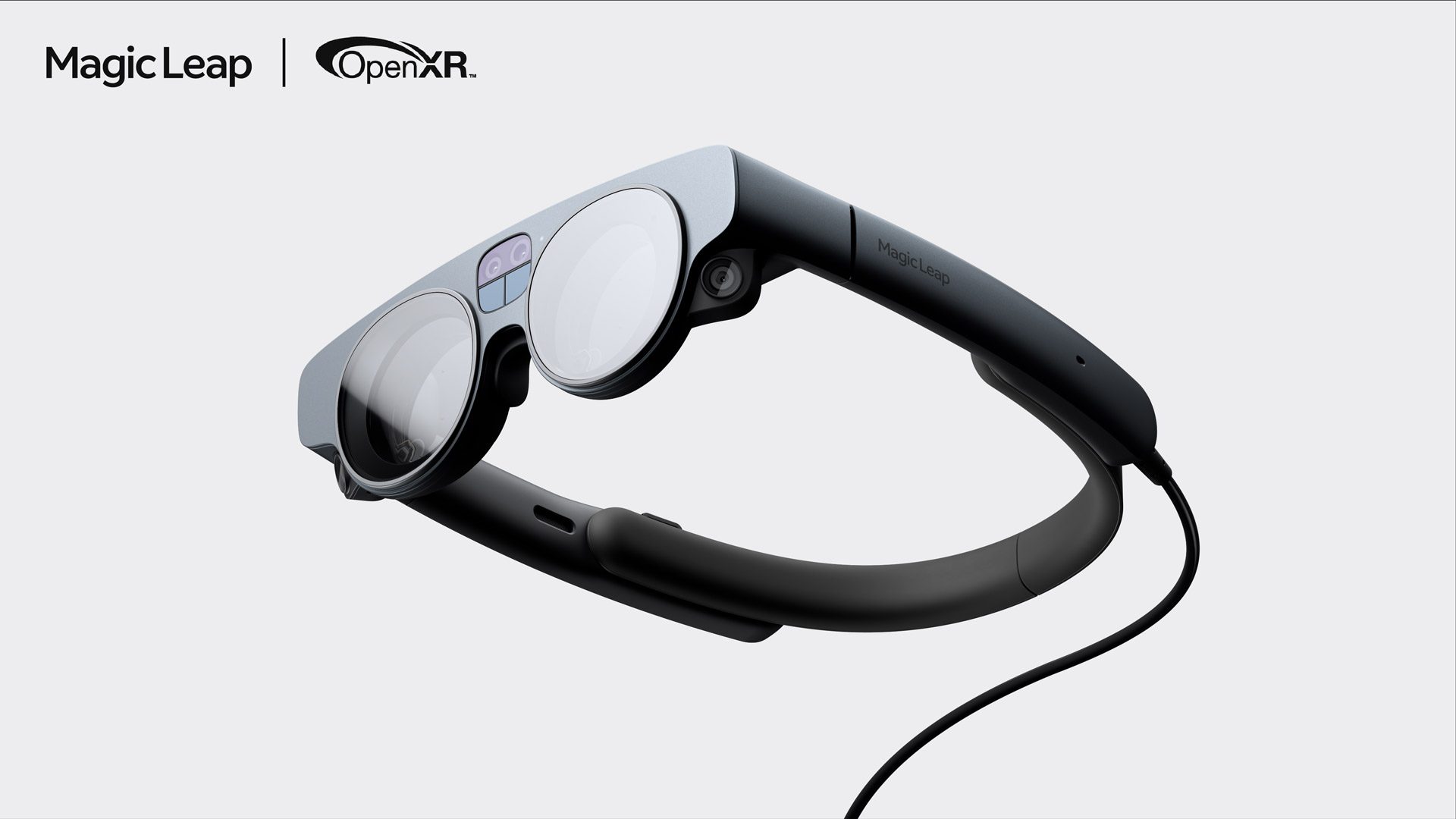
Magic Leap 2 | Image courtesy Magic Leap
Founded in 2010, Magic Leap promised to revolutionize AR with its lightfield display technology, raising over $4 billion in funding from major investors like Google, Alibaba, Qualcomm, AT&T, Saudi Arabia’s Public Investment Fund, and Axel Springer.
Its first headset, Magic Leap 1 (also stylized as ‘One’) however underperformed and struggled to find a viable consumer market when it launched in 2018, forcing the company to pivot to enterprise and medical applications. This came alongside a leadership shakeup that would see founder Rony Abovitz step down as CEO in 2020, making way for Pegggy Johnson, formerly of Qualcomm and Microsoft.
A year after the enterprise release of Magic Leap 2 in 2022, Johnson would be replaced as CEO by Ross Rosenberg, previously of Bain Capita, Danaher, First Solar and Belden. Rosenberg currently leads the company.
My Take
At the release of Magic Leap 1 in 2018, and consequently the height of consumer PC VR headsets, Magic Leap held conferences, courted influencers and media, and funded a fleet of expensive third-party apps aimed at gamers and casual users. The world didn’t even have a viable standalone VR platform yet, and Magic Leap was hoping to kickstart AR headsets—not glasses—as the next dominant consumer computing platform.
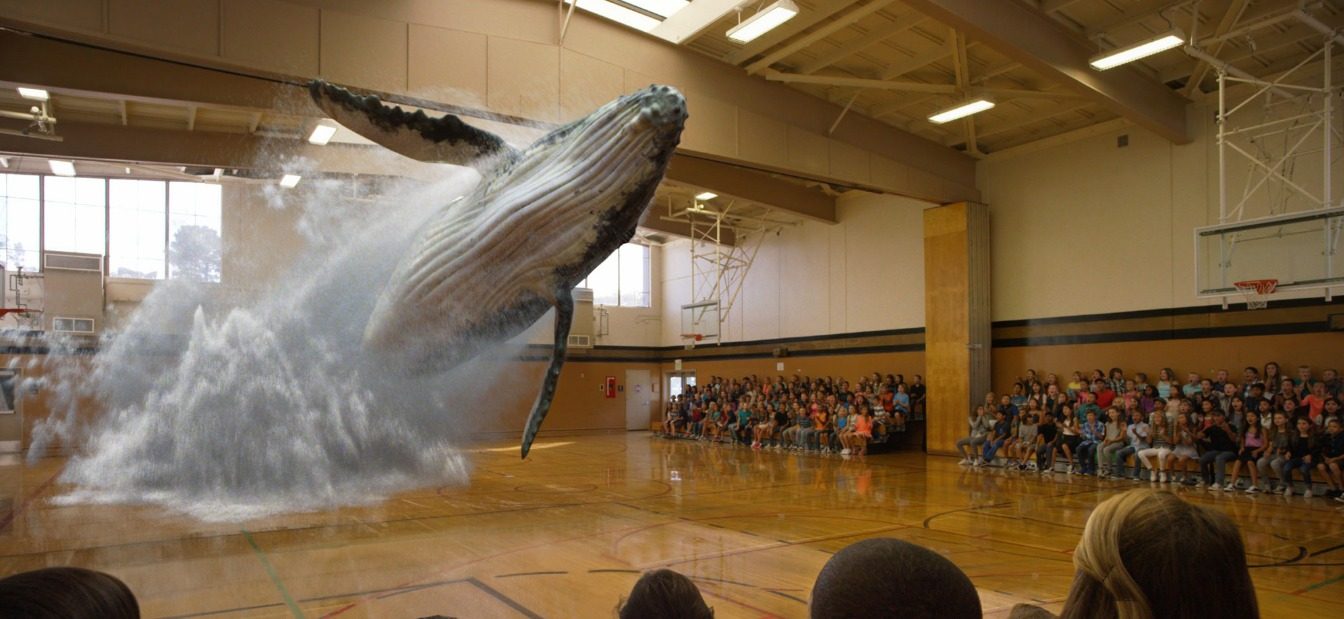
The company also presumably burned through a good portion of its multi-billion dollar runway in the process to launch something that the market, developers, and even Magic Leap itself didn’t really seem ready for. I, like most in the early days of XR, was skeptical. Too many pie in the sky (or ‘whale in the sky’) marketing videos. Never enough substance or clear direction to tell where things were really going for the company.
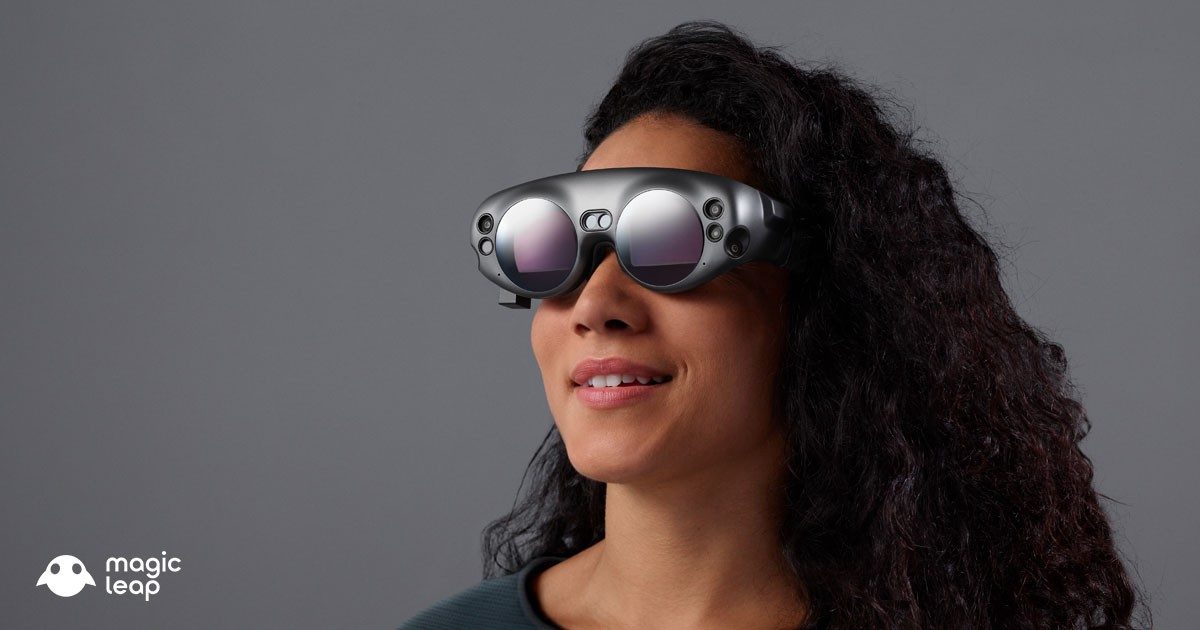
Magic Leap 1 | Image courtesy Magic Leap
What’s more, Magic Leap 1 didn’t even really outperform Microsoft’s staunchly enterprise HoloLens AR headset, or deliver on its promises of “lightfield photonics” to allow for multiple focal planes. Its first ‘Creator Edition’ ML1 headset contained a waveguide-based display with two focal planes. Nothing revolutionary, and at $2,300, too expensive of a platform for most consumer-focused studios to stomach.
But it did provide Magic Leap 2 to enterprise in 2022, which is exactly where it should have focused the entire time. But going that route from the get-go would have been less flashy, and probably less capable of attracting historic levels of funding.
Magic Leap Concept Art (2015) | Image courtesy Magic Leap
Barring all else, Magic Leap’s greatest sin was undoubtedly being a decade too early. Only now it seems that companies are building out the requisite customized chips, waveguides, light engines, everything, and slimming it down into a digestible form factor. And big players like Meta, Google, Samsung and (likely, but unconfirmed) Apple are hoping to use smart glasses first before serving up anything AR remotely targeted at consumers.
In the end, there’s a good reason Magic Leap is still kicking, even this late in the game. The company’s latest funding round was a $590 million debt financing deal struck in January 2024, led by Saudi Arabia’s Public Investment Fund. It seems to have the operational cash on hand, and has been rightfully deflated to make better use of it. That, and there’s still real know-how at Magic Leap to go along with a genuine pile of patents, which I suspect the company is leveraging as it makes its second big transition: from enterprise headset platform creator to glorified AR parts supplier to a company that could really play a big part in the coming AR glasses revolution.
Meta is rolling out Horizon OS v81, the latest major update for Quest. The update focuses on Home personalization, the new Windows 11 remote desktop, and reducing friction tl entering Meta’s Horizon Worlds social VR platform.
The News
The new Immersive Home experience is getting a customization bump, now allowing Quest users to pin windowed apps and choose from new scenic environments.
The v81 update also includes a redesigned Passthrough Home, which lets you do the same in mixed reality, like anchor apps in physical surroundings so you can keep Spotify on your dresser, Photos on your wall, and WhatsApp on your desk. You can place objects in Passthrough too, like an avatar mirror or a portal to ‘Horizon Central’, the Horizon Worlds hub.
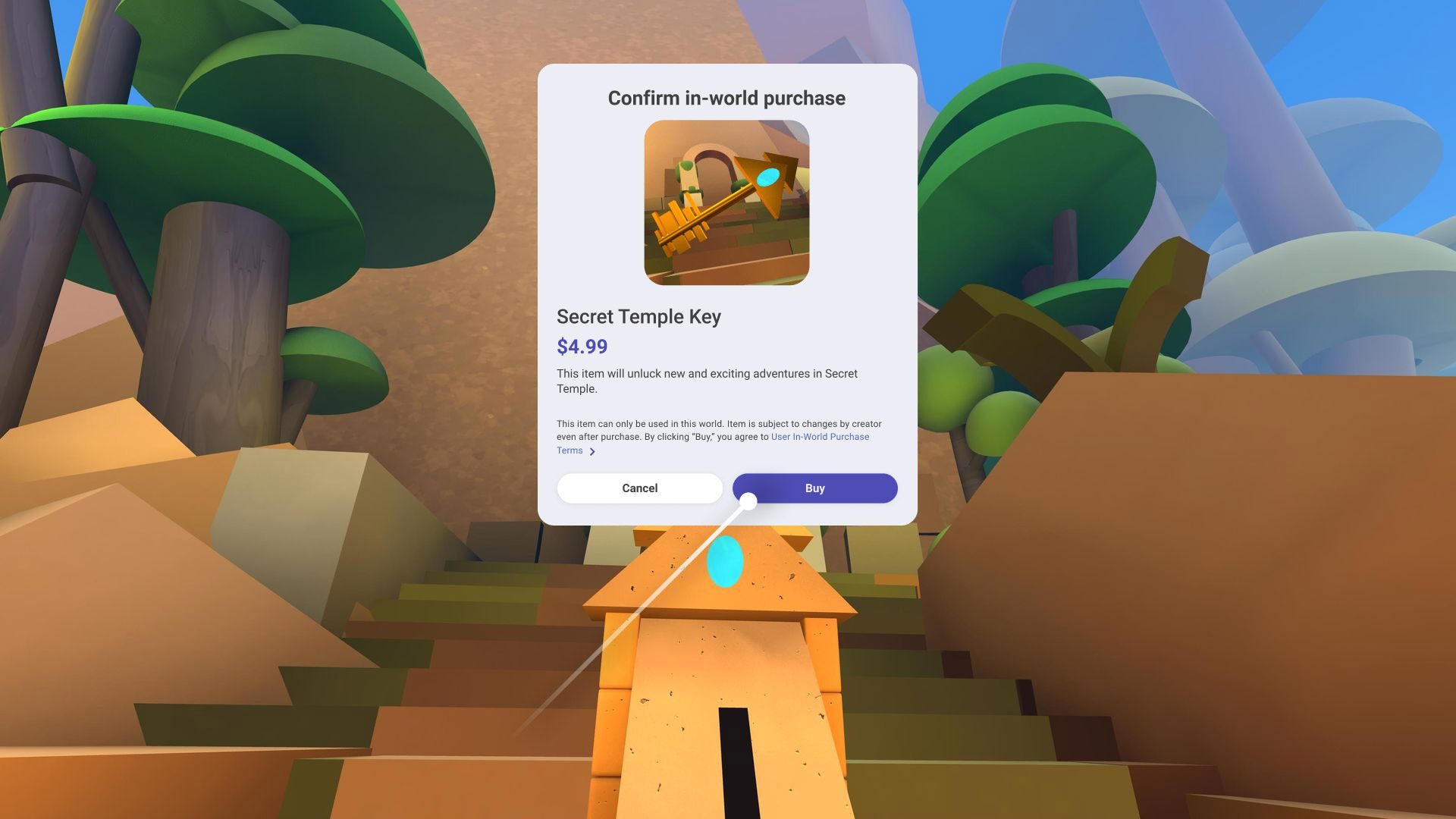
In v81, Horizon Central has also been completely rebuilt, now supporting more users in a larger, more detailed space and featuring faster travel between destinations. It also introduces a digital storefront for avatar items and a new Arena for live concerts, comedy shows, and sports events.
Image courtesy Meta
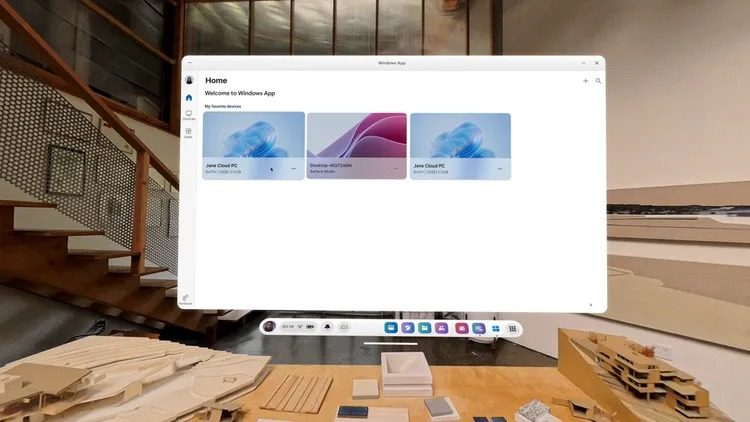
v81 also introduces the new ‘Mixed Reality Link’ function, which was built in collaboration with Microsoft to bring Windows 11 and Windows 365 to Quest. Essentially a remote desktop, Mixed Reality Link supports multiple virtual monitors for both VR and MR workflows. What’s more, future Windows 11 PCs will include Mixed Reality Link by default.
Other highlights include Full Passthrough, which lets players quickly view their real-world surroundings while in apps like Beat Saber, and Shareable Links for VR photos and videos via the Horizon mobile app.
Users can also open up to 12 app windows simultaneously, enjoy a streamlined Welcome Screen, and take advantage of Universal Resize and Ratio Locking for better display control.
To see the gamut of Home changes coming to v81, check out YouTuber ‘Virtual Moose’s’ video below:
Like all Quest software updates, Horizon OS v81 is rolling out gradually, so make sure to check your OS version in-headset to see whether you’ve received the update. You can check out the full release notes here.
My Take
Having remote connectivity to Windows 11 is cool, and so is the ability to more thoughtfully decorate your Home in VR and MR modes. Still, I think the real meat of the update is how Meta is bringing Quest users closer to Horizon Worlds, love it or hate it.
It’s been a long-term strategy that I think is finally paying off. Okay, it’s probably not actually generating a meaningful profit right now, even with its rake of digital item sales, but it’s moving in that direction.
Image courtesy Meta
Meta has made some pretty big strides in the past few years. Starting in 2023, a new wave of first-party games made way for even more detailed user-generated content, which can even be done with AI generation nowadays—cutting down the time and difficulty level of producing your own environment.
Arguably the biggest leap in solidifying Horizon Worlds’ position as the de facto social VR platform on Quest is Meta’s new Horizon Engine though, which purportedly speeds up World loading and allows “well over 100” users in a single space. That may not be a big deal for casual user-generated worlds, but it does affect branded live events: comedy shows, sports, immersive film screenings, etc.
I see it a bit like having a more comfortable headstrap. You can put up with the default flappy headstrap, sure, but it creates subconscious friction to donning the headset the next time around. Meta lowering user friction to Horizon Worlds is basically the same thing, which could mean the difference between a user showing up to Horizon Worlds once in every blue moon to multiple times per week for events and hang-outs.
Meta hasn’t released user statistics, so I can’t say for sure, although the fact that Horizon Worlds hasn’t been quietly abandoned of otherwise put on the back burner at this point says to me that Meta is making headway in growing its user base.
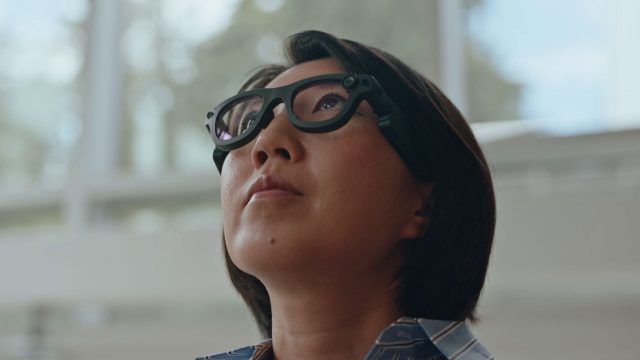
Meta announced it’s shipping out Project Aria Gen 2 to third-party researchers next year, which the company hopes will accelerate development of machine perception and AI technologies needed for future AR glasses and personal AI assistants.
The News
Meta debuted Project Aria Gen 1 back in 2020, the company’s sensor-packed research glasses which it used internally to train various AR-focused perception systems, in addition to releasing it in 2024 to third-party researchers across 300 labs in 27 countries.
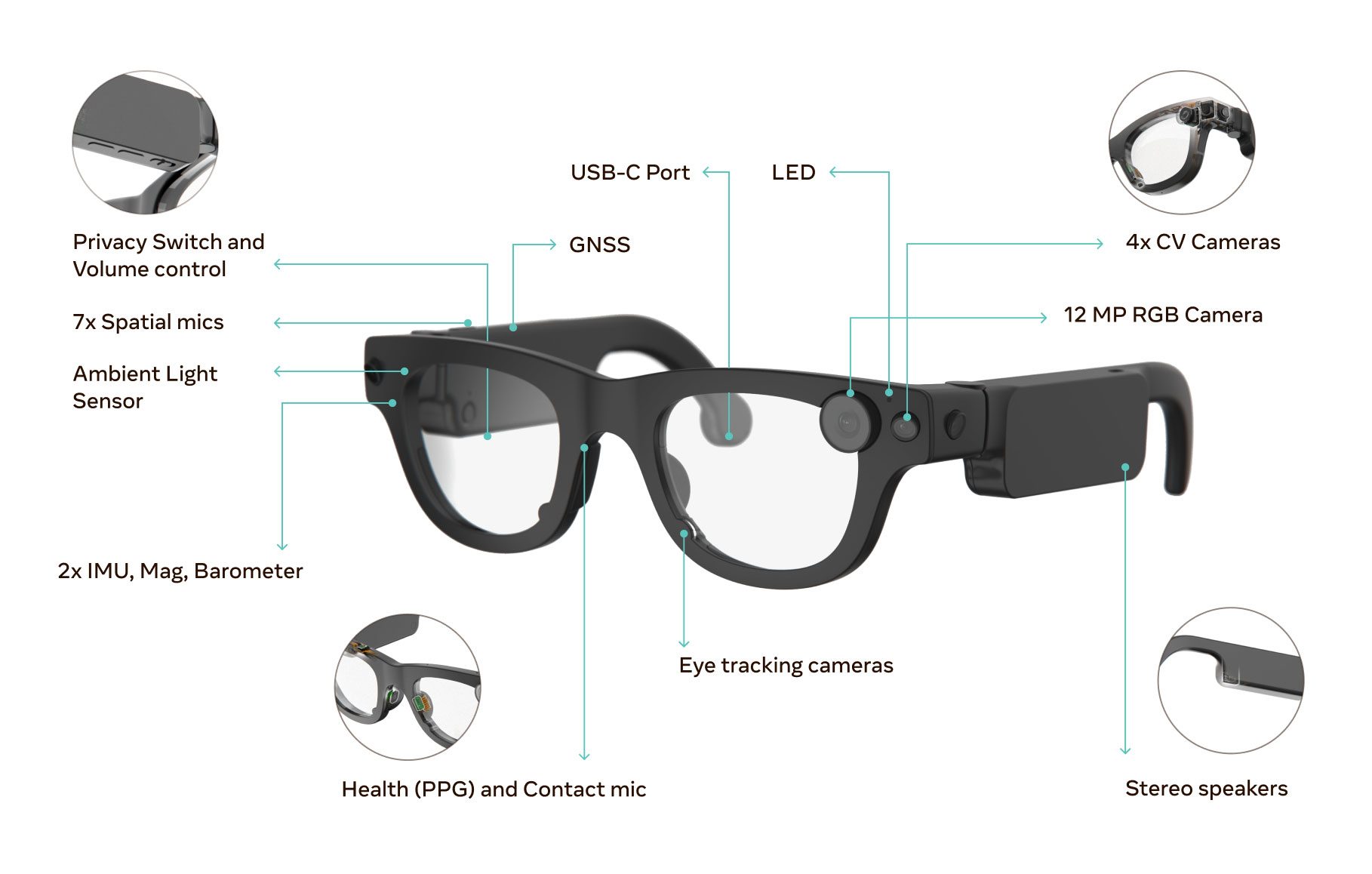
Then, in February, the company announced Aria Gen 2, which Meta says includes improvements in sensing, comfort, interactivity, and on-device computation. Notably, neither generation contains a display of any type, like the company’s recently launch Meta Ray-Ban Display smart glasses.
Now the company is taking applications for researchers looking to use the device, which is said to ship to qualified applicants sometime in Q2 2026. That also means applications for Aria Gen 1 are now closed, with remaining requests still to be processed.
The whitepaper details the device’s ergonomic design, expanded sensor suite, Meta’s custom low-power co-processor for real-time perception, and compares Gen 1 and Gen 2’s abilities.
Meanwhile, the pilot dataset provides examples of data captured by Aria Gen 2, showing its capabilities in hand and eye-tracking, sensor fusion, and environmental mapping. The dataset also includes example outputs from Meta’s own algorithms, such as hand-object interaction and 3D bounding box detection, as well as NVIDIA’s FoundationStereo for depth estimation.
Meta is accepting applications from both academic and corporate researchers for Aria Gen 2.
My Take
Meta doesn’t call Project Aria ‘AI glasses’ like it does with its various generations of Ray-Ban Meta or Meta Ray-Ban Display, or even ‘smart glasses’ like you might expect—even if they’re substantively similar on the face of things. They’re squarely considered ‘research glasses’ by the company.
Cool, but why? Why does the company that already makes smart glasses with and without displays, and cool prototype AR glasses need to put out what’s substantively the skeleton of a future device?
What Meta is attempting to do with Project Aria is actually pretty smart for a few reasons: sure, it’s putting out a framework that research teams will build on, but it’s also doing it at a comparatively lower cost than outright hiring teams to directly build out future use cases, whatever those might be.
Aria Gen 2 | Image courtesy Meta
While the company characterizes its future Aria Gen 2 rollout as “broad”, Meta is still filtering for projects based on merit, i.e. getting a chance to guide research without really having to interface with what will likely be substantially more than 300 teams, all of whom will use the glasses to solve problems in how humans can more fluidly interact with an AI system that can see, hear, and know a heck of a lot more about your surroundings than you might at any given moment.
AI is also growing faster than supply chains can keep up, which I think more than necessitates an artisanal pair of smart glasses so teams can get to grips with what will drive the future of AR glasses—the real crux of Meta’s next big move.
Building out an AR platform that may one day supplant the smartphone is no small task, and its iterative steps have the potential to give Meta the sort of market share the company dreamt of way back in 2013 when it co-released the HTC First, which at the time was colloquially called the ‘Facebook phone’.
The device was a flop, partly because the hardware was lackluster, and I think I’m not alone in saying so, mostly because people didn’t want a Facebook phone in their pockets at any price when the ecosystem had some many other (clearly better) choices.
Looking back at the early smartphones, Apple teaches us that you don’t have to be first to be best, but it does help to have so many patents and underlying research projects that your position in the market is mostly assured. And Meta has that in spades.