Tuesday, 30 September 2025

Meta Ray-Ban Display Waveguide Provider Says It’s Poised for Wide Field-of-view Glasses

https://ift.tt/7oBbtSs

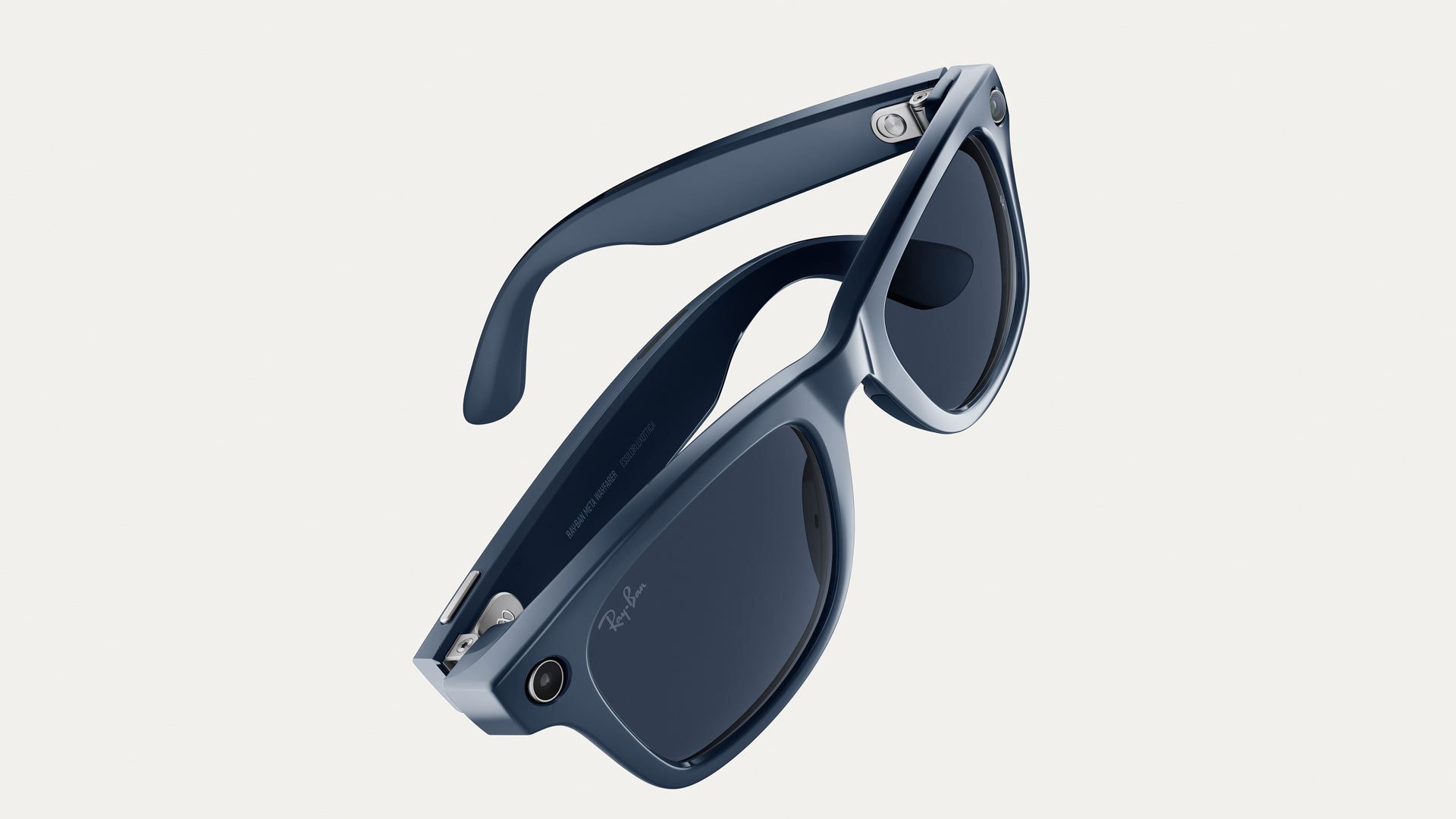
SCHOTT—a global leader in advanced optics and specialty glass—working with waveguide partner Lumus, is almost certainly the manufacturer of the waveguide optics in Meta’s Ray-Ban Display glasses. While the Ray-Ban Display glasses offer only a static 20° field-of-view, the company says its waveguide technology is also capable of supporting immersive wide field-of-view glasses in the future.

The News

Schott has secured a big win as perhaps the first waveguide maker to begin producing waveguides at consumer scale. While Meta hasn’t confirmed who makers the waveguides in the Ray-Ban Display glasses, Schott announced—just one day before the launch of Ray-Ban Display—that it was the “first company capable of handling geometric reflective waveguide manufacturing in [mass] production volumes.”

In anticipation of AR glasses, Shott has spent years investing in technology, manufacturing, and partnerships in an effort to set itself up as a leading provider of optics for smart glasses and AR glasses.

The company signed a strategic partnership with Lumus (the company that actually designs the geometric reflective waveguides) back in 2020. Last year the company announced the completion of a brand new factory which it said would “significantly enhance Schott’s capacity to supply high-quality optical components to international high-tech industries, including Augmented Reality (AR).”

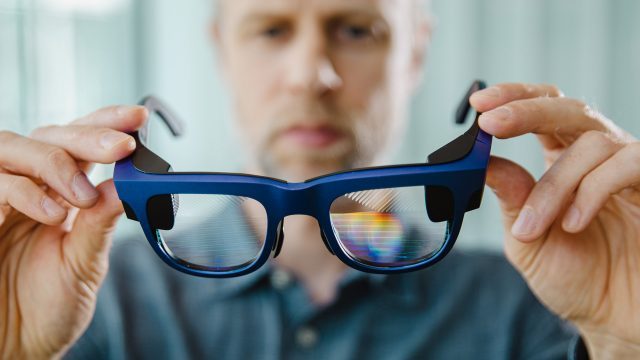
Image courtesy Schott

Those investments now appear to be paying off. While there are a handful of companies out there with varying waveguide technologies and manufacturing processes, as the likely provider of the waveguides in the Ray-Ban Display glasses, Schott can now claim it has “proven mass market readiness regarding scalability;” something others have yet to do at this scale, as far as I’m aware.

“This breakthrough in industrial production of geometric reflective waveguides means nothing less than adding a crucial missing puzzle piece to the AR technology landscape,” said Dr. Ruediger Sprengard, Senior Vice President Augmented Reality at Schott. “For years, the promise of lightweight and powerful smart glasses available at scale has been out of reach. Today, we are changing that. By offering geometric reflective waveguides at scale, we’re helping our partners cross the threshold into truly wearable products, providing an immersive experience.”

As for the future, the company claims its geometric reflective waveguides will be able to scale beyond the small 20° field-of-view of the Ray-Ban Display glasses to immersive wide field-of-view devices.

“Compared to competing optical technologies in AR, geometric reflective waveguides stand out in light and energy efficiency, enabling device designers to create fashionable glasses for all-day use. These attributes make geometric reflective waveguides the best option for small FoVs, and the only available option for wide FoVs,” the company claims in its announcement.

Indeed, Schott’s partner Lumus has long demonstrated wider field-of-view waveguides, like the 50° ‘Lumus Maximus’ I saw as far back as 2022.

My Take

As the likely provider of waveguides for Ray-Ban Display, Schott & Lumus have secured a big win over competitors. From the outside, it looks like Lumus’ geometric reflective waveguides won out primarily due to their light efficiency. Most other waveguide technologies rely on diffractive (rather than reflective) optics, which have certain advantages but fall short on light efficiency.

Light efficiency is crucial because the microdisplays in glasses-sized devices must be both tiny and power-efficient. As displays get larger and brighter, they get bulkier, hotter, and more power-hungry. Using a waveguide with high light efficiency thus allows the displays to be smaller, cooler, and less power-hungry, which is critical considering the tiny space available.

Light and power demands also rise with field-of-view, since spreading the same light across a wider area reduces apparent brightness.

Schott says its waveguide technology is ready to scale to wider fields-of-view, but that probably isn’t what’s holding back true AR glasses (like the Orion Prototype that Meta showed off in 2024).

It’s not just wide field-of-view optics that need to be in place for a device like Orion to ship. There’s still the issue of battery and processing power. Orion was only able to work as it does because a lot of the computation and battery was offloaded onto a wireless puck. If Meta wants to launch full AR glasses like Orion without a puck (as they did with Ray-Ban Display), the company still needs smaller, more efficient chips to make that possible.

Additionally, display technology also needs to advance in order to actually take advantage of optics that are capable of projectinga wide field-of-view

Ray-Ban Display glasses are using a fairly low resolution 0.36MP (600 × 600) display. It appears sharp because the pixels are spread across just 20°. As the field-of-view increases, both brightness and resolution need to increase to maintain the same image quality. Without much room to increase the physical size of the display, that means packing smaller pixels into the same tiny area, while also making them brighter. As you can imagine, it’s a challenge to improve these inversely-related characteristics at the same time.

The post Meta Ray-Ban Display Waveguide Provider Says It’s Poised for Wide Field-of-view Glasses appeared first on Road to VR.


from Road to VR https://ift.tt/0IK9UfZ
via IFTTT

Monday, 29 September 2025

VR Design Unpacked: The Formula for Great VR Game Trailers

https://ift.tt/W0S2kEd

Our series Inside XR Design explores the best of immersive design. Today we’re talking about how to make an incredible VR trailer using just in-game footage. No mixed reality setups, no complicated compositing—just smart planning and a proven playbook. And keep reading, because at the end, I’ll share a checklist of key technical considerations to make your trailer shine, and share a trailer that exemplifies everything we’re about to talk about.

Editor’s Note: One of the games prominently featured in this episode, Hellsweeper VR, just passed its second anniversary! This has coincided with a huge 60% discount for the game on Steam. In celebration of the game’s release anniversary, we’re bumping this episode back up to our front page to highlight the great example the game has set for engaging VR trailers.

You can find the complete video below, or continue reading for an adapted text version.

First, a quick check to make sure we’re on the same page about why trailers matter in the first place.

Here’s the thing: your game doesn’t sell your game. Your trailer sells your game.

You could make the greatest game in the world, but if you can’t show people why they should try it in the first place, then lots of people will just never will. So I cannot stress this enough… you can’t let the marketing of your game be an afterthought to your game development. It’s part of your game development. If you spend years making a game but just a few weeks making the thing that attracts people to buy it, that’s just not the optimal way to allocate your time.

So, how do you craft a trailer that turns heads—even without the complexity of mixed reality capture? Let’s break it down in three easy lessons.

The Hook

The first and maybe even most important lesson we’ll talk about today is: the hook. The hook is the thing that makes your game stand out. It’s one very specific thing that people see and say “I wanna to do that.”

It could be really cool combat, a unique art style, a creative gun, or a fun looking mechanic that other games don’t have. It’s your game’s signature.

Whatever the hook is, it should stand out as uniquely fun or interesting compared to other games in the same genre (and yes that means you should be actively playing other games in the genre in which you’re working). Without the hook, people won’t see a clear reason to buy your game over another similar game.

And here’s something that’s really important to understand: for your trailer to have a hook… your game needs to have a hook. If you don’t already know right now what your game’s hook is… figuring that out is step number one before you even think about making a trailer.

Ok now let’s look at an example to the hook in action. The first trailer we’re going to look at is from a game called Hellsweeper VR (2023) from developer Mixed Realms. Watch and see if you can tell me what the hook is:

Ok so what’s the hook? If you said something like “unique combat,” you got it. Literally before any logos appear, we see 10 seconds of some genuinely unique-looking VR combat with the player using interesting weapons and powers and flying through the air.

And the game’s combat continues to be emphasized throughout the whole thing. They don’t stop and bore us with lore or some abstract exposition, they just keep showing the hook. The trailer is saying “this is why you want to play our game.”

Show, Don’t Tell

And that brings us to our next point: show, don’t tell. Great trailers don’t tell you what’s great about a game. They show you. And in VR, this is even more critical—people need to see the fun to understand why they should put the headset on to check your game out in the first place.

Boneworks (2019) by developer Stress Level Zero nails this concept by letting its gameplay speak for itself. Let’s watch:

The way this trailer links together lots of these very unique moments that players can experience in the game creates a picture in our mind about what it will feel like to play the game.

Story Structure

And that brings us to our third lesson: tell a story.

Now, importantly, when I say “tell a story,” I’m not saying “explain your game’s narrative.”

Your goal is to show viewers what they will do, and how they will feel when playing your game. So that’s the story your trailer should tell.

And while it might be tempting to just capture general gameplay footage and then figure out how to cut the clips together later, a better approach is to decide ahead of time what the most important things are that you want viewers to see.

Not only should you decide exactly what moments you want to show, you should also arrange them in a narrative arc. Simply put, that means an introduction, rising action, and a climax to leave the audience with something memorable.

That’s exactly what developer Respawn Entertainment did with this excellent trailer for Medal of Honor: Above and Beyond (2020). As we watch, notice how they carefully choreographed and then acted out intentional moments to create a cohesive story about how players will feel as they play the game.

Continue on Page 2: Technical Checklist & Final Example »

The post VR Design Unpacked: The Formula for Great VR Game Trailers appeared first on Road to VR.


from Road to VR https://ift.tt/IG0TiNU
via IFTTT

Friday, 26 September 2025

Meta to Open Second Permanent Store in Preparation for Next Wave of Smart Glasses

https://ift.tt/yxiJBF8

Meta announced its LA-based pop-up store is returning as a flagship retail location, which is slated to arrive alongside more Meta branded pop-ups in New York and Las Vegas.

The News

The company opened its first retail store in Burlingame, California in 2022, located right next to its Reality Labs HQ.

Back then, it featured Meta Quest 2, Ray-Ban Stories smart glasses (now called Ray-Ban Meta), and its now-defunct Facebook Portal smart home device. The store still exists, although it’s stocked with new devices: Quest 3S, Ray-Ban Meta (Gen 2), and the soon-to-launch Meta Ray-Ban Display glasses.

Partnered with EssilorLuxottica, Meta already has a pretty wide mix of online and brick-and-mortal retail locations, including Ray-Ban Stores, LensCrafters, Sunglass Hut, Best Buy and Meta’s online storefront. And it’s about to get a few more.

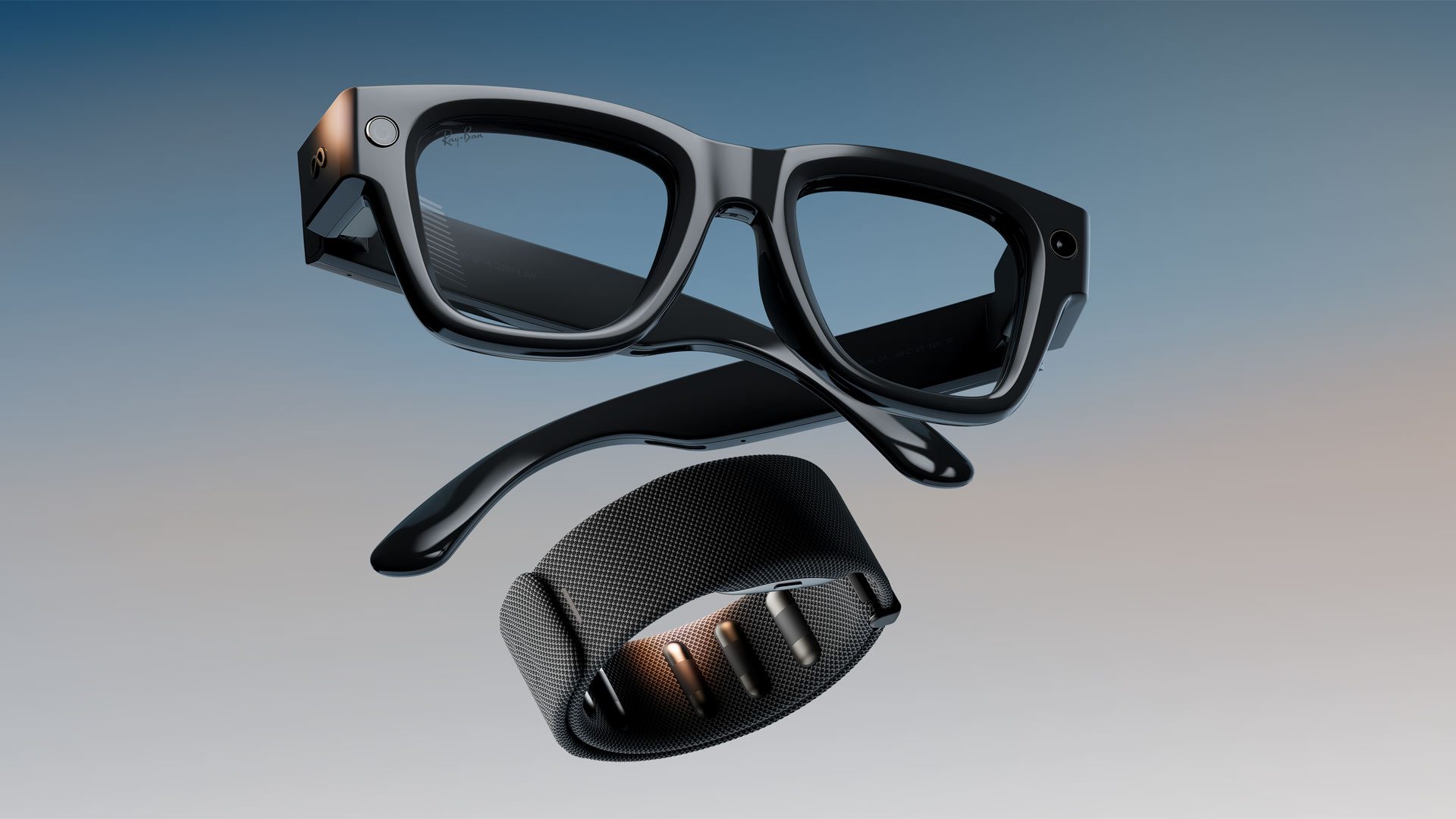
Meta Ray-Ban Display Glasses & Neural Band | Image courtesy Meta

Now, Meta says its bringing back its LA pop-up from last year on October 24th, which is said to expand to over 20,000 square feet of permanent retail space. In perspective, that’s about as big as one of the larger Trader Joe’s or a newer Aldi.

Located on Melrose Avenue, the multi-level retail concept is launching with a theme too, which Meta says will be ‘Skating in Southern California, From Dogtown to Present’, slated to celebrate the Santa Monica skate scene and its evolution through the years.

The expansion is for good reason too. The new flagship store isn’t just devoted to Ray-Bay Meta glasses, but the the full line-up of smart glasses and XR headsets. That includes Meta Ray-Ban Display & the Meta Neural Band, Ray-Ban Meta (Gen 2), Oakley Meta HSTN, Oakley Meta Vanguard, and Quest 3/3S headsets.

Meta says both its Burlingame and LA flagship store will host a “premium demo experience” for Meta Ray-Ban Display glasses, although you can count on a similar experience at both Las Vegas and New York City pop-ups soon to follow.

The Las Vegas pop-up is slated to open on October 16th at the Wynn Las Vegas, including a 560-square-foot space. The New York pop-up opens November 13th, located on 5th Avenue in Midtown Manhattan.

My Take

While Meta Ray-Ban Display glasses were the biggest news to come out of Connect last week, the soon-to-launch glasses likely aren’t shooting for broad availability. Not only are they over double the price of its audio-only smart glasses at $800, but you actually need an in-person consultation to find the right size for both the glasses and included Neural Band, which means booking a demo at those stores mentioned above.

And despite committing to its second permanent retail location, it also doesn’t appear Meta’s own brick-and-mortar ambitions are going to be very broad either—at least not in the near term. That may change eventually though, as true all-day AR glasses supplant smart glasses as the next big thing. But let’s not get ahead of ourselves.

Smart glasses with built-in displays (i.e. not AR glasses) are very much in the same “what the heck are those” stage that VR went through a number of years ago—compounded by the fact that users need to make sure they even fit (and look good) in the first place.

Inside Meta’s LA Pop-up Store (2024) | Image courtesy Meta

But as the current ‘experimental’ first gen of Meta Ray-Ban Display gives way to more mature hardware, the company will probably need those retail chops if they hope to further seed the best version of the Meta brand image—a familiar model pioneered by none other than its biggest future rival, Apple.

While you can just as easily buy at Best Buy or online, there’s a reason every major city has an Apple Store or two (or three). Repairs, trade-ins and access to the full gamut of devices are all important aspects to physical retail, but arguably more important is the tangible brand image that comes with it—something Meta doesn’t really have right now. Can Meta Stores be cool? If its LA location is any indication, they’re definitely trying.

In the near term though, it seems the company’s 2024 LA pop-up has served the company well enough to trust the Melrose Avenue location to pump their more mature smart glasses platform alongside the new Display model—probably (and sadly) less than they care about showing off Quest right now. After all, Ray-Ban Meta has been pretty dang profitable, handily selling over two million Ray-Ban Meta (Gen 1) following its release in 2023. And the thing doesn’t even have an app store.

The real prize all along though has been those all-day AR glasses still yet to come, and Meta knows it. And they may just be preparing for it right now. Okay, let’s get way ahead of ourselves.

The big caveat in the following prediction is whether Meta truly wants to go toe-to-toe with Apple. Anyway, here’s my imaginary retail playbook for Meta, which I’m happy to disavow at any point. I don’t have any special information, only a speculative hunch from watching the company’s moves over the last decade.

  • 2026 – 2027: a deliberate creep of permanent retail based on performance of pop-ups during its smart glasses phase, possibly covering two generations of Display glasses.
  • Before 2030: Meta releases first AR device (before 2030, Meta says), and more flagship retail locations are added. The company still relies on EssilorLuxottica partnership to demo and move product.
  • Closer to 2030: A second gen of AR glasses arrives, marking more mature hardware and app ecosystem. Wider rollout of permanent retails locations across key cities.

If Meta wants to be more like Apple, that is.

The post Meta to Open Second Permanent Store in Preparation for Next Wave of Smart Glasses appeared first on Road to VR.


from Road to VR https://ift.tt/drSgxO1
via IFTTT

‘Hitman’ Update Finally Puts PC VR Version at Parity with PSVR 2, Includes ‘Freelancer’ Mode

https://ift.tt/rXKO1MT

IO Interactive announced that Hitman World of Assassination has finally got its long-awaited PC VR patch, bringing new life to a sorely neglected port.

The News

IOI released VR support for Hitman 3 (2021) on PC back in 2022, later rebranding in 2023 to Hitman World of Assassination, which included the full trilogy—PC VR support and all.

Still, PC VR support left much to be desired, omitting some of the quality of life stuff, like some iffy two-handed interactions and sometimes buggy visuals, which were largely addressed in the PSVR 2 port when it launched back in March as a $10 paid upgrade to the PS5 game as well as its own $40 ‘Part One’ bundle.

Now, with the latest ‘Season of the Dragon’ patch, the PC VR version is at feature parity with the PSVR 2 port, coming free to all owners of the Standard Edition or above on PC.

The new patch includes:

  • Two-Handed Tweaks – aiming of two-handed weapons has been improved; it is now based on the position of both hands. Previously, it was based on the main hand, adjusted slightly with the support hand.
  • Weapon Collision – weapon collision is improved when wielded with both hands; it is now based around the barrel of the weapon. This should help to prevent drifting when holding a sniper above railings.
  • Bullet in the Chamber – reloading a non-empty magazine doesn’t require you to rack the slide, as per the last patch. Now a chambered bullet is visible when racking the slide.
  • Sharpened Scope – improvements to instances where far away objects could become invisible when looking through a sniper scope, causing great difficulty when sniping from certain vantage points.
  • Third-person Moments – various key moments and kill opportunities are now in third person.
  • Better Cutscenes – some starting and exit cutscenes are now 3D instead of using the 2D “cinema mode” screen.
  • Better Object Interaction
    • Intuitive Interactions – various improvements to touch interactions, including adding hand poses when your hand comes into proximity with them.
    • Pistol Placement – when starting a mission, concealed weapons (e.g. pistols) are no longer stored in a hip holster. Instead, they are placed in the inventory wheel.
    • Grip Position – improved the alignment of various items when they’re held.
    • Holster Feedback – changed how the feedback works for holsters.
    • Toggle Grip – Enabling this allows you to release the grip button while keeping items in your hand.
    • Two-Handed Aiming – controls how weapons are aimed when wielding them with both hands.
    • Firearm Angle – split previous firearm angle option into two options for one-handed and two-handed weapons.

Additionally, both PSVR 2 and PC VR versions now include the rogue-like ‘Freelancer’ mode as well as access to ‘The Sarajevo Six’ DLC and more than 50 Escalations, Elusive Targets, and Elusive Target Arcade Contracts.

As for the PSVR 2 version, IOI says it improved black levels, as some players noted that they weren’t as “inky” as they should be.

If you’re still playing on the original PSVR, IOI says those changes made for PSVR 2 have been integrated “to provide a more consistent experience.”

My Take

Hitman World of Assassination is known for getting near-monthly updates that include new missions and targets, often which feature paid DLC, such as the new ‘The Dragon’ Arcade contract featuring Bruce Lee for $5.

Love it or hate it, it’s a live-service model that needs to keep chugging. Whatever the case, it’s basically made the SteamVR-compatible version the best VR version of the game right now (finally), especially if you have a hefty GPU capable of pushing graphics as high as they can go in VR.

And tightening up access to that DLC pipeline on PC VR—the second most populous VR platform—makes sense, especially as the PSVR 2 platform wanes with the lack of strong support from Sony. Notably, VR support is free on PC VR, which isn’t the case for PSVR 2.

Granted, PC VR probably doesn’t represent a gold mine of DLC purchases—a majority of owners undoubtedly play in flatscreen. Still, leaving PC VR lagging behind PSVR 2 as the game starts its end-year slate of DLC feels like a broader marketing push to scoop up relevance wherever it can be found.

Considering Quest, VR’s most populous platform, doesn’t support the game, but rather a tuned down (and widely panned) standalone version of Hitman 3, IOI could be trying to maximize where it reasonably can with (relatively) little effort.

The post ‘Hitman’ Update Finally Puts PC VR Version at Parity with PSVR 2, Includes ‘Freelancer’ Mode appeared first on Road to VR.


from Road to VR https://ift.tt/YLNl4DE
via IFTTT

Thursday, 25 September 2025

Valve Expands ‘Steam Link’ PC VR Streaming to More Headsets and Opens the Door to Android XR

https://ift.tt/CYxbnKw

Valve today announced that it’s bringing its wireless PC VR streaming software, Steam Link, to five more headsets from PICO and HTC. The company also plans to make it easier for headset makers to bring Steam Link to even more headsets in the future.

The News

Valve has released Steam Link on the PICO Store and HTC’s Viveport store.

Supported Pico headsets include the Pico 4 Ultra, Pico 4 (and 4 Pro), Pico Neo3 (and Neo3 Link). The first supported HTC headset is the Vive Focus Vision, and Valve says support will be added for the Vive XR Elite “later this year.”

Steam Link makes it easy to play PC VR games by allowing supported headsets to connect wirelessly to a PC on the same network. Users can then access their library of PC VR content through the SteamVR interface, and delve deep into the largest library of PC VR games, many of which aren’t available on standalone headsets, like Half-Life: Alyx (2020).

As part of the announcement of Steam Link launching on new headsets, Valve said it also plans to release a Steam Link APK so that “other hardware manufacturers [can] validate Steam Link support on their headsets.” That should mean that future headsets will be able to more easily add support for Steam Link with little to no involvement with Valve.

Valve also said the APK will “allow users of unsupported headsets to explore compatibility and available features,” which means modders and tinkerers might be able to tap into Steam Link’s capabilities even on technically unsupported headsets.

My Take

Steam Link was first launched on Quest 2 and Quest 3 back in 2023. It was an unexpected move, but reaffirmed Valve’s commitment to make SteamVR accessible to as many headsets as possible. Adding support for a new wave of headsets shows that the company, despite its often glacial pace, still wants to make SteamVR a great platform for developers, users, and headset makers.

Compared to typical corporate behavior, Valve’s focus on making SteamVR as widely accessible as possible is shown to be a priority even higher than selling its own VR headset. In fact, Steam Link is the reason that Quest 3 became my main PC VR headset over Valve’s own Index headset.

While Pico headset support had been rumored for some time, the announcement of the forthcoming Steam Link APK release wasn’t something I saw coming.

This should make it much easier for headset makers to enable Steam Link support on their headsets, perhaps without even needing a thumbs up from Valve. This move appears to be in anticipation of future Android XR headsets, the first of which are expected to launch before the end of the year.

And it sounds like users will also be able to get access to the Steam Link APK, which means people will be able to experiment with sideloading and modding onto other headsets.

It’s unlikely (since the APK is for Android OS), but there’s at least a chance that someone could reverse-engineer it and make a derivative version that works on something like Vision Pro. That remains to be seen and will depend heavily on how open Valve is with the Steam Link APK and associated developer documentation.

If you want an idea of where Valve’s broader VR strategy is likely headed—including future VR hardware—I wrote an extensive analysis of the company’s recent and rumored VR developments earlier this year.

The post Valve Expands ‘Steam Link’ PC VR Streaming to More Headsets and Opens the Door to Android XR appeared first on Road to VR.


from Road to VR https://ift.tt/9AKaN37
via IFTTT

‘Microsoft Flight Simulator’ is Coming to PSVR 2 Next Year Following PS5 Release

https://ift.tt/jIJoeSl

Microsoft Flight Simulator 2024 developer Asobo Studio announced it’s finally releasing the game on PS5 and PS5 Pro later this year, with PSVR 2 support slated to follow in 2026 as a free update.

Microsoft Flight Simulator 2024 is set to launch on the PS5 platform on December 8th, bringing with it up to 125 aircraft in the ‘Aviator Edition’, including aviation history’s most iconic: from ultralights, fighter jets, helicopters to commercial airliners.

There’s no word yet on whether multiplayer (cross-play or otherwise) will be available at launch, however it looks as though the PS5 port isn’t going to be a ‘lite’ version. Asobo says in a PS blogpost it will let you fly “anywhere on the globe at any time of day or year, land at over 40,000 airports and runways and at over 60,000 helipads.”

The studio says PSVR 2 owners will be able to jump in with Sense controllers when the free update arrives sometime in 2026. There’s no word yet of whether PS5-compatible HOTAS, such as the Thrustmaster T.Flight HOTAS 4, will be supported.

Here’s a breakdown of all versions officially launching on December 8th, including pre-order links:

Notably, if you pre-order any edition, you’ll receive the Northrop T38-A Talon for free. Pre-orders of the Deluxe, Premium Deluxe or Aviator Editions also include early access a few days before official launch (Dec. 3rd).

What’s more, you may be able to take part in a beta test before launch. To apply for the ‘Microsoft Flight Simulator Insider Program’, simply sign up over at the game’s Insider Registration Portal, complete the survey and make sure to check ‘PlayStation 5’ as your preferred platform.

The post ‘Microsoft Flight Simulator’ is Coming to PSVR 2 Next Year Following PS5 Release appeared first on Road to VR.


from Road to VR https://ift.tt/7Qj2pmB
via IFTTT

Wednesday, 24 September 2025

‘Gunman Contracts’ Gameplay Shows Off Visuals & Gunplay That Rival ‘Half-Life: Alyx’

https://ift.tt/pdDyPbv

Gunman Contracts – Stand Alone is slated to arrive on PC VR headsets in early access this year, bringing an action movie-inspired shooter adventure that’s definitely aiming high.

Solo dev ANB_Seth and publisher 2080 Games released the game’s tenth devlog, showing off more of the game’s punchy gun mechanics at the newly unveiled home base: ‘The Hive’. We get an eye-full of target shooting, weapon customization, and taking on packs of baddies in training mode.

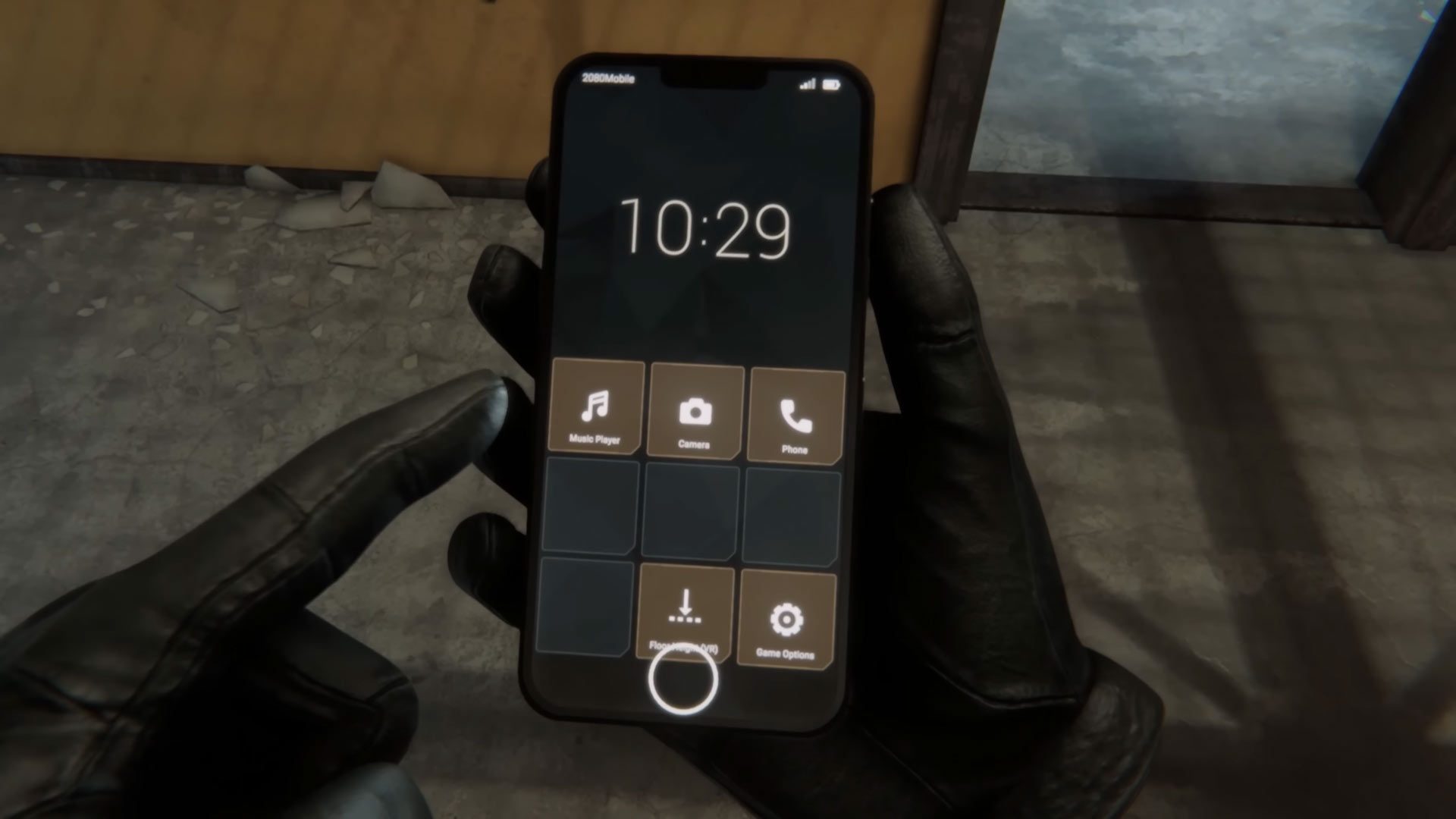
The video also shows off a neat settings menu—a smartphone stored in your left wrist slot—letting you scroll through environmental music, snap a picture, and maybe even make a call.

Image courtesy ANB_Seth, 2080 Games

While Half-Life: Alyx (2020) is an impressively high target when it comes to visual fidelity and gunplay, ANB_Seth has some of the best experience in the field. They’re the very same solo developer behind ‘Gunman Contracts’—one of the best, and most full-featured HLA mods out there.

Although ‘Gunman Contracts’ (the mod) requires HLA, Gunman Contracts – Stand Alone is just that: a standalone game. At its early access launch, ANB_Seth says it should have around 5-6 contracts, including various modes, all of which are built from the ground-up and not repeats of the action seen in the mod series.

Having worked with 2080 Games since late 2024, ANB_Seth says the publisher’s backing has allowed them to invest “even more time into the project, expand its scope, and accelerate time to release,” developer ANB_Seth explains in a Reddit post. “Still, I’m still a one-man dev team and I’m pushing as hard as I can to release this year – fingers crossed!”

That leaves ANB_Seth only around three months left to hit the 2025 early access release window, which could suggest we’re going to see much more of the game as finishing touches are applied, so we’ll be keeping an eye out.

In the meantime, you can wishlist Gunman Contracts – Stand Alone on Steam, which will launch in early access with both PC VR and flatscreen modes. There’s no word yet on whether the game is coming to other platforms, however ANB_Seth said last year ports to Quest or PSVR 2 are “actually realistic.”

The post ‘Gunman Contracts’ Gameplay Shows Off Visuals & Gunplay That Rival ‘Half-Life: Alyx’ appeared first on Road to VR.


from Road to VR https://ift.tt/3AZXsMh
via IFTTT

Tuesday, 23 September 2025

Hideo Kojima’s Studio Partners with Niantic Spatial on Enigmatic AR Game of the “near future”

https://ift.tt/A42TONv

Hideo Kojima’s production company and Niantic Spatial released a new teaser showing off a concept for an AR game that the studios see as a “significant moment for both companies.”

The teaser, seen below, follows a player wearing a futuristic pair of augmented reality glasses, and traversing a very Death Stranding-inspired landscape.

“A new dawn. In the near future. Move beyond the screen,” a tagline reads. “The future starts today,” the teaser continues, revealing what could be ally, or fellow competitor on the horizon.

Speaking to IGN, Kojima isn’t revealing much at this point, although it’s clearly a geolocated, multiplayer AR game he’s after.

“I can’t really speak about details yet but, if you’re climbing a mountain… there’s still entertainment there,” Kojima tells IGN. “It’s like the real Death Stranding in the real world, and you can connect with people, or you can connect with the actual environment there in your city. Previously it was like virtual reality, but this time I’m thinking about connecting with the real environment.”

Niantic Spatial CEO John Hanke, a principal creator behind the company’s smash hit mobile game Pokémon Go, sees the project as a way of getting people to play together socially.

“I hope that it creates [an environment] that brings people together to play,” Hanke says. “If there’s one thing need we have in our society right now, it’s something that unifies us and doesn’t pull us apart. And I think that storytelling… has always been humanity’s way of coming together. And technology can support that. It can divide it too, but with an inspiring creator it can be an important force in the world.”

Niantic Spatial further says the partnership is a “significant moment for both companies and a shared vision to push the boundaries of what’s possible in interactive storytelling.”

There’s no release date yet—or target platform for that matter, simply because no such consumer AR device exists at this point. Devices like Meta’s Orion prototype (or something based on it) and Snap’s next-gen Spectacles aren’t out yet, making the trailer more of a concept showcase at this point.

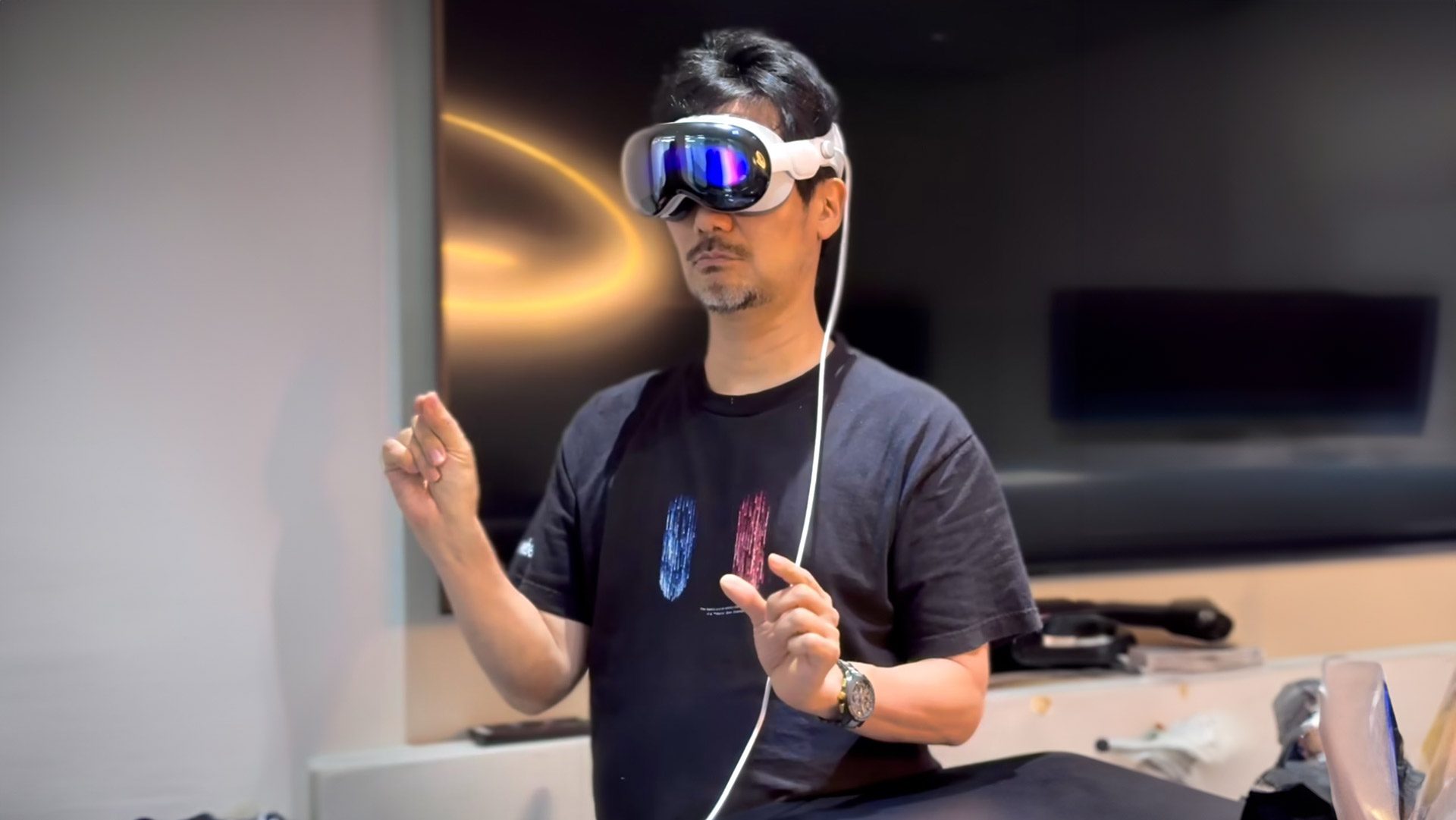
Hideo Kojima wearing Apple Vision Pro | generative extend based on an image courtesy Hideo Kojima

Still, Niantic Spatial has been working specifically in AR since the parent company sold its gaming division responsible for Pokémon Go to Scopely for $3.85 billion in March.

A few months later, the company released XR pet sim Hello, Dot for Quest 3, a mixed reality offshoot of Peridot Beyond for Snap Spectacles, Pause with Peridot and Snap-a-Dot for Web AR.

What’s more, the company says it also aims to build “spatial intelligence that helps people better understand, navigate, and engage with the physical world,” noting it hopes to leverage its geospatial AI and AR tech in enterprise applications.

The post Hideo Kojima’s Studio Partners with Niantic Spatial on Enigmatic AR Game of the “near future” appeared first on Road to VR.


from Road to VR https://ift.tt/cp2GDXu
via IFTTT

Monday, 22 September 2025

Samsung Android XR Headset Rumored to Release Next Month, Undercutting Apple Vision Pro

https://ift.tt/0btk5lB

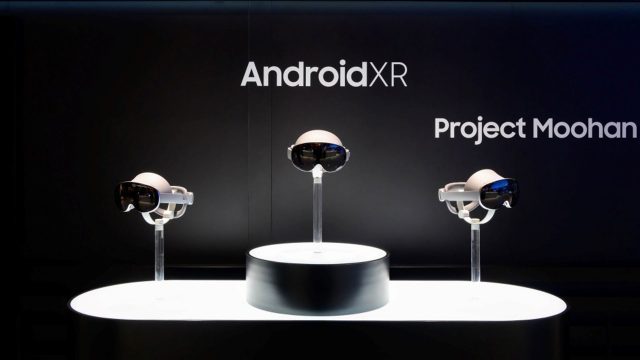
Samsung could be launching its Project Moohan mixed reality headset next month, according to a report from South Korea’s ETNews (Korean), which hopes to take on Apple Vision Pro in the prosumer XR segment.

Citing industry sources, ETNews maintains that Samsung’s Mobile Experience division will unveil Moohan (Korean for ‘Infinite’) online on October 21st—likely in the morning of October 22nd in Korea, which will include specs, price and the ability to purchase the headset.

South Korea’s Newsworks previously reported that Samsung would unveil Moohan during an event scheduled for September 29th, with sales coming on October 13th in a Korea-first debut, however the latest ETNews report maintains the schedule was adjusted due to Samsung’s shifting marketing strategy and final quality checks.

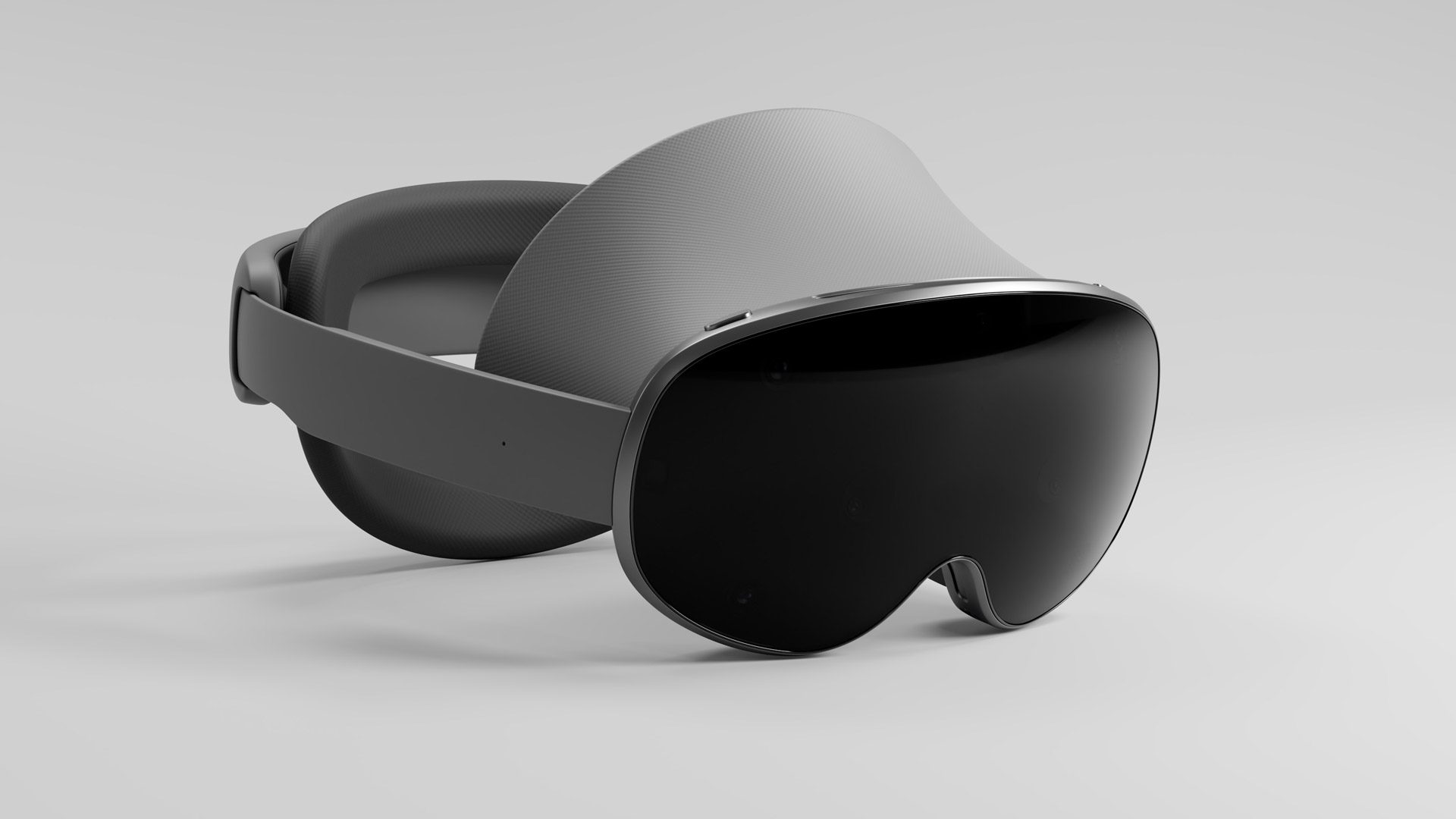
Samsung Project Moohan | Image courtesy Google

It’s uncertain whether Moohan is now aiming for a global launch out of the gate, or sticking to the previously reported Korea-first strategy. Moohan is expected to be priced between between ₩2.5 and ₩4 million South Korean won—or between $1,800 and $2,900 USD—which is seen as way of undercutting Vision Pro ($3,500).

As the first XR headset running Google’s Android XR operating system, Moohan could serve as a foil to Apple’s VisionOS operating system for Vision Pro, which gives users access to most iOS apps in addition to standalone content created specifically for the device—a sharp contrast from Meta’s Horizon OS for Quest, which requires developers to manually port Android apps to the platform.

The inclusion of Android XR will not only give Moohan access to the massive library of Android smartphone apps and native XR content (ostensibly ported from Quest), but also includes the ability to natively stream PC VR games, like Quest.

The device is expected to integrate Google’s multimodal AI, in addition to supporting voice, hand and eye-tracking as input methods. We’re still waiting to hear about Moohan’s long-promised first-party motion controllers.

As for specs, Moohan is said to feature micro-OLED panels supplied by Samsung Display, packing in a pixel density of 3,800 ppi, running on Qualcomm’s Snapdragon XR2+ Gen 2 chipset with 16GB of RAM. Samsung has been tight-lipped on specs since Moohan was first unveiled late last year, so we’re waiting to hear more.

And it appears Samsung isn’t casting a very wide net with Moohan either, according to the report. The company is allegedly only targeting an initial shipment volume of around 100,000 units, with later targets adjusted according to early demand.


You can learn more by checking out our hands-on with Project Moohan from December 2024, which includes everything from comfort, display clarity, and details on its Android XR operating system.

The post Samsung Android XR Headset Rumored to Release Next Month, Undercutting Apple Vision Pro appeared first on Road to VR.


from Road to VR https://ift.tt/HekzhnW
via IFTTT

Friday, 19 September 2025

Quest is Getting an Official ‘Discord’ App Next Year

https://ift.tt/qa0cZsl

Meta CTO Andrew Bosworth said last May that he would “love” for Quest to have some sort of Discord integration, although it seemed it was up to Discord to make the first move. At Connect this week, Meta announced Discord is officially coming to Quest next year.

While Quest users can technically log into Discord via Quest’s web browser, it’s far from perfect. But in 2026, Discord says a native window app is coming to Quest, which ought to make multitasking even easier. Those window apps allow users to keep apps in view while playing VR games, meaning you don’t need to exit or pause the game in progress.

Meta calls Discord on Quest a “massive opportunity for VR developers,” thanks to the messaging platform’s wide user base among gamers.

“Think about it: Discord is home to a highly engaged community of more than 200 million monthly active players who spend a combined 1.9 billion hours playing games each month across thousands of titles on PC alone,” Meta says in a developer blog post. “With the launch of the Discord app on Quest, VR devs will have an incredible discoverability engine at their disposal.”

Neither company has confirmed anything beyond basic multitasking, however a native app release could point to some greater functionality that PC players already enjoy. Game presence support, or automatically showing what game you’re currently playing to other Discord users, could be on the list. We’re also hoping for improved performance, persistence, and possibly system-level notifications for things like messages and calls.

Still, some of the top wishlist items may be out of reach. While we’ll be waiting for the full release in 2026 to tell, it’s unlikely users will be able to stream headset POV to Discord, either as a game stream or as a video chat input. Another reach may be access to Quest’s ‘avatar selfie cam’ for Discord video chats, which would require the company to integrate Camera2 or CameraX API.

Something else you probably shouldn’t expect: the ability to invite friends to VR games through Discord, which only a handful of desktop games support on Discord at the moment. Whatever the case, we’re holding out hope for the full-fat Discord users experience, which we should learn about more in the coming months.

The post Quest is Getting an Official ‘Discord’ App Next Year appeared first on Road to VR.


from Road to VR https://ift.tt/GqPCVMF
via IFTTT

Why Ray-Ban Meta Glasses Failed on Stage at Connect

https://ift.tt/0vTLnJZ

Meta CEO Mark Zuckerberg’s keynote at this year’s Connect wasn’t exactly smooth—especially if count two big hiccups that sidetracked live demos for both the latest Ray-Ban Meta smart glasses and the new Meta Ray-Ban Display glasses.

Ray-Ban Meta (Gen 2) smart glasses essentially bring the same benefits as Oakley Meta HSTN, which launched back in July: longer battery life and better video capture.

One of the biggest features though is its access to Meta’s large language model (LLM), Meta AI, which pops up when you say “Hey Meta”, letting you ask questions about anything, from the weather to what the glasses camera can actually see.

As part of the on-stage demo of its Live AI feature, which runs continuously instead of sporadically, food influencer Jack Mancuso attempted to create a Korean-inspired steak sauce using the AI as a guide.

And it didn’t go well, as Mancuso struggled to get the Live AI back on track after missing a key step in the sauce’s preparation. You can see the full cringe-inducing glory for yourself, timestamped below:

And the reason behind it is… well, just dumb. Jake Steineman, Developer Advocate at Meta’s Reality Labs, explained what happened in an X post:

Unfortunate, yes. But also pretty foreseeable, especially considering the AI ‘wake word’ gaffe has been a thing since the existence of Google Nest (ex-Home) and Amazon Alexa.

Anyone with one of those friendly tabletop pucks has probably experienced what happens when a TV advert includes “Hey Google” or “Hey Alexa,” unwittingly commanding every device in earshot to tell them the weather, or even order items online.

What’s more surprising though: there were enough people using a Meta product in earshot to screw with its servers. Meta AI isn’t like Google Gemini or Apple’s Siri—it doesn’t have OS-level access to smartphones. The only devices with default are the company’s Ray-Ban Meta and Oakley Meta glasses (and Quest if you opt-in), conjuring the image of a room full of confused, bespectacled Meta employees waiting out of shot.

As for the Meta Ray-Ban Display glasses, which the company is launching in the US for $799 on September 30th, the hiccup was much more forgivable. Zuckerberg was attempting to take a live video call from company CTO Andrew Bosworth, who after several missed attempts, came on stage to do an ad hoc simulation of what it might have been like.

Those sorts of live product events are notoriously bad for both Wi-Fi and mobile connections, simply because of how many people are in the room, often with multiple devices per-person. Still, Zuckerberg didn’t pull a Steve Jobs, where the former Apple CEO demanded everyone in attendance at iPhone 4’s June 2010 unveiling turn off their Wi-Fi after an on-stage connection flub.

You can catch the Meta Ray-Ban Display demo below (obligatory cringe warning):

The post Why Ray-Ban Meta Glasses Failed on Stage at Connect appeared first on Road to VR.


from Road to VR https://ift.tt/cusBOpA
via IFTTT

Thursday, 18 September 2025

New Meta Developer Tool Enables Third-parties to Bring Apps to its Smart Glasses for the First Time

https://ift.tt/9tz3GkF

Today during Connect, Meta announced the Wearables Device Access Toolkit, which represents the company’s first steps toward allowing third-party experiences on its smart glasses.

If the name “Wearables Device Access Toolkit” sounds a little strange, it’s for good reason. Compared to a plain old SDK, which generally allows developers to build apps for a specific device, apps made for Meta smart glasses don’t actually run on the glasses themselves.

The “Device Access” part of the name is the key; developers will be able to access sensors (like the microphone or camera) on the smart glasses, and then pipe that info back to their own app running on an Android or iOS device. After processing the sensor data, the app can then send information back to the glasses for output.

For instance, a cooking app running on Android (like Epicurious) could be triggered by the user saying “Hey Epicurious” to the smart glasses. Then, when the user says “show me the top rated recipe I can make with these ingredients,” the Android app could access the camera on the Meta smart glasses to take a photo of what the user is looking at, then process that photo on the user’s phone before sending back its recommendation as spoken audio to the smart glasses.

In this way, developers will be able to extend apps from smartphones to smart glasses, but not run apps directly on the smart glasses.

The likely reason for this approach is that Meta’s smart glasses have strict limits on compute, thermals, and battery life. And the audio-only interface on most of the company’s smart glasses doesn’t allow for the kind of navigation and interaction that users are used to with a smartphone app.

Developers interested in building for Meta’s smart glasses can now sign up for access to the forthcoming preview of the Wearables Device Access Toolkit.

As for what can be done with the toolkit, Meta showed a few examples from partners who are experimenting with the devices.

Disney, for instance, made an app which combines knowledge about its parks with contextual awareness of the user’s situation by accessing the camera to see what they’re looking at.

Golf app 18Birdies showed an example of contextually aware information on a specific golf course.

For now, Meta says only select partners will be able to bring their app integrations with its smart glasses to the public, but expects to allow more open accessibility starting in 2026.

The examples shown so far used only voice output as the means of interacting with the user. While Meta says developers can also extend apps to the Ray-Ban Display glasses, it’s unclear at this point if apps will be able to send text, photo, or video back to the glasses, or integrate with the device’s own UI.

The post New Meta Developer Tool Enables Third-parties to Bring Apps to its Smart Glasses for the First Time appeared first on Road to VR.


from Road to VR https://ift.tt/fUX473g
via IFTTT

Wednesday, 17 September 2025

Meta Reveals Next-Gen Ray-Ban & New Oakley Vanguard Smart Glasses

https://ift.tt/LzuxAjJ

Undoubtedly the smart glasses headliner of Meta Connect this year was the new $800 Meta Ray-Ban Display Glasses, which pack in a single display into a familiar Wayfarer-style package. Alongside it though, Meta showed off two new smart glasses: the Oakley Meta Vanguard and next generation of Ray-Ban Meta.

Oakley Meta Vanguard – $499 (available Oct 21)

Oakley Meta Vanguard | Image courtesy Meta

Before Meta and Essilor Luxottica released Oakley Meta HSTN in July, we were definitely envisioning something more like the new Oakley Meta Vanguard. But it’s better late than never, as Meta has just unveiled its sleek, blade-like frames they say are “built for high-intensity sports.”

Rated at IP67 dust and water resistance, Meta Oakley Vanguard is supposedly durable enough for sweaty workouts or rainy rides, with it targeting sports like cycling, snowboarding, and running.

Oakley Meta Vanguard | Image courtesy Meta

Notably, like many of its traditional specs, the new smart glasses use Oakley’s Three-Point Fit system, which includes three interchangeable nose pads for a more secure fit, with Meta noting the frames are optimized for use with cycling helmets and hats.

They also include an onboard 12MP, 122° wide-angle camera sensor for capturing video up to 3K resolution, with modes including Slow Motion, Hyperlapse, and adjustable image stabilization.

And just like Ray-Ban Meta, it features open-ear speakers, notably rated at six decibels louder than previous Meta Oakley HSTN models, including a wind-optimized five-mic array to provide clear audio for taking calls, using voice commands, or listening to music while training.

The newest Oakley’s also integrate with Garmin, Strava, Apple Health, and Android Health Connect, delivering post-workout summaries and real-time stats through Meta AI. Athletes can check heart rate, progress, or other data hands-free with voice prompts.

Oakley Meta Vanguard | Image courtesy Meta

Available in four frame/lens color combinations, the glasses weigh 66g and offer up to nine hours of mixed use (or six hours of music) on a single charge, with an additional 36 hours via the charging case. Quick charging is said to bring the glasses to 50% in just 20 minutes, Meta says.

Like all of the other Meta smart glasses on offer, they include 32GB of storage for over 1,000 photos or 100 short videos, the company says.

Since it’s built for high-intensity sports, it also means the company is introducing replaceable lenses, starting at $85. Here are all four models available for pre-order, including the lenses you’ll be able to mix and match later.

  • Oakley Meta Vanguard Black with PRIZMTM 24K
  • Oakley Meta Vanguard White with PRIZMTM Black
  • Oakley Meta Vanguard Black with PRIZMTM Road
  • Oakley Meta Vanguard White with PRIZMTM Sapphire

Oakley Meta Vanguard is now available for pre-order through Meta or Oakley, priced at $499 and launching October 21st.

They’ll be available in the US, Canada, UK, Ireland, France, Italy, Spain, Austria, Belgium, Australia, Germany, Sweden, Norway, Finland, Denmark, Switzerland, and the Netherlands. Meta says they should also eventually launch in Mexico, India, Brazil, and the United Arab Emirates later this year.

Ray-Ban Meta (Gen 2) – Starting at $379 (Now Available)

Ray-Ban Meta Wayfarer (Gen 2) | Image courtesy Meta

While the company considers its next Ray-Ban Meta Glasses “Gen 2”, they’re technically the third generation following the release of Ray-Ban Facebook Stories in 2021 and Ray-Ban Meta in 2023.

Naming scheme aside, the latest Ray-Ban Meta smart glasses are delivering the same improvements seen in Oakley Meta HSTN, and essentially the same base functionality. While it can play music, do real-time translation, and hands-free calls, it also offers better photo and video capture than its predecessor.

Its ultrawide 12MP camera sensor is rated for photo capture up to 3,024 × 4032 pixels and video from 1200p at 60 FPS 1440p at 30 FPS, and 3K at 30 FPS—all of which are up to three minutes in length.

Ray-Ban Meta Wayfarer (Gen 2) | Image courtesy Meta

Like Oakley Meta HSTN, Ray-Ban Meta (Gen 2) boasts up to eight hours of continuous use and an additional 48 hours from the charging case, plus quick charge to 50% in 20 minutes in the charging case.

And it probably goes without saying, but all of Meta’s smart glasses make heavy use of its own Meta AI, which includes things like voice search queries (“Hey Meta!”), reading QR codes, suggesting recipes, saving notes, etc.

Ray-Ban Meta Skyler (Gen 2) | Image courtesy Meta

Additionally, the device includes Bluetooth 5.3, Wi-Fi 6, 32GB of storage, and an IPX4 water-resistance rating for light rain or splashes.

And like the 2023 model, the new Ray-Ban Meta smart glasses offer gads of frame and lens combinations: 27 in total across its Wayfarer and Skyler models, which include options for large or low nose bridges.

It is also getting a price bump over the first-gen, which were launched in 2023 for $299. Ray-Ban Meta (Gen 2) starts at $379 for standard lens options, and will be available with polarized lenses ($409), transitions lenses ($459), and prescription lenses (pricing varies).

You can find all of those models and lens combinations starting today over at Meta and Ray-Ban.com.


We’re currently on the ground at Meta Connect this year, so check back soon for all things XR.

The post Meta Reveals Next-Gen Ray-Ban & New Oakley Vanguard Smart Glasses appeared first on Road to VR.


from Road to VR https://ift.tt/iUKcLWl
via IFTTT

How to Watch Meta Connect for All Things XR, Kicking Off Today @5PM PT

https://ift.tt/nfdgqt7

Meta Connect 2025 is nearly here, with company CEO Mark Zuckerberg only a few hours away from telling us what’s next for the most influential company currently working in XR.

The keynote is starting unusually late this year, coming today at 5PM PT / 8PM ET (local time here), where Zuckerberg will take the stage to share Meta’s latest developments in mixed reality, AI, the metaverse and wearables. 

Note: that last one may be a big focus this year, as the company seemingly leaked its lineup of next-gen smart glasses built with Essilor Luxottica yesterday, including a model that includes a single monocular display.

We’re currently at Meta Connect, so we’ll be reporting on all of latest in XR news to come from the event. You can follow along live via YouTube at 5PM PT to catch the big keynote:

Still, there’s no telling what else the company has in store, with many questions still lingering from last Connect, which was only a few months after Meta announced it was not only open its Horizon OS to third parties for the first time, but also allowing a fleet of Quest-like headsets from Asus and Lenovo to come to market.

Like most years, we’re expecting to hear more about Quest games, experiences, and the company’s social VR platform, Horizon Worlds. Whatever the case, we’re always ready for a Connect curveball, so check back for our continued coverage of breaking news, previews, and more.

The post How to Watch Meta Connect for All Things XR, Kicking Off Today @5PM PT appeared first on Road to VR.


from Road to VR https://ift.tt/t6wjfOZ
via IFTTT
Related Posts Plugin for WordPress, Blogger...